

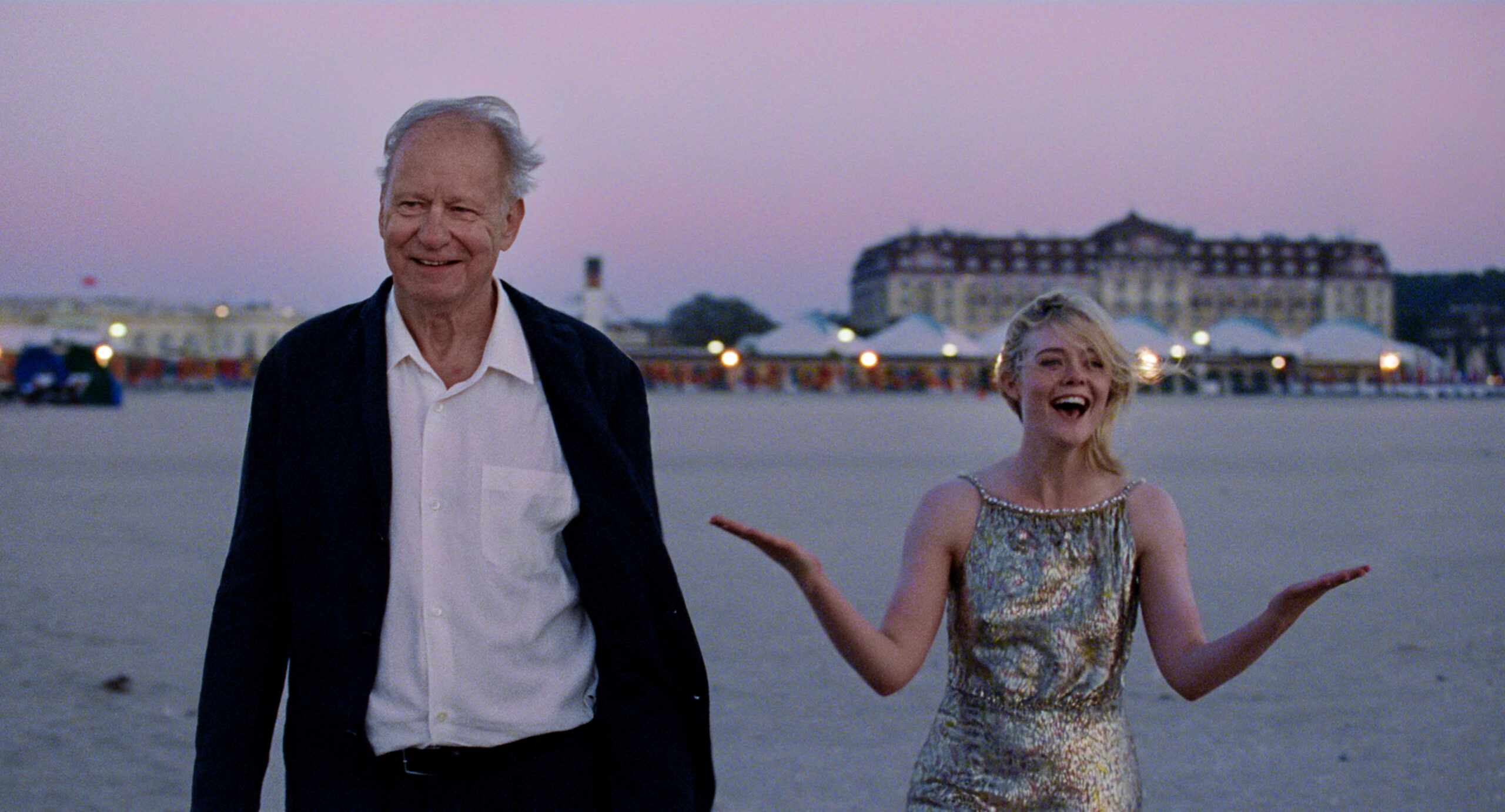
With preliminary Oscar voting almost over—it ends at 5pm PST on December 12th—and the shortlists being revealed on December 16th, I have compiled my final predictions of the 15 films that are most likely to make it in the International Feature category. Afterwards, you can read my analysis of 85 of the 86 submissions, which first published on November 21, 2025. And at the very end, take a look at my list of the most outstanding performances in 5 categories as well as some stats.
Short List Predictions
France: It Was Just an Accident
Norway Sentimental Value
Brazil: The Secret Agent
South Korea: No Other Choice
Tunisia: The Voice of Hind Rajab
United Kingdom: My Father’s Shadow
Ukraine: 2000 Meters to Andriivka
Spain: Sirat
Iraq: The President’s Cake
Germany: Sound of Falling
North Macedonia: The Tale of Silyan
Denmark: Mr. Nobody Against Putin
Palestine: Palestine 36
Taiwan: Left-Handed Girl
Argentina: Belen
Possible
Jordan: All That’s Left of You
India: Homebound
Iceland: The Love That Remains
Japan: Kokuho
China: Dead to Rights
Italy: Familia
Belgium: Young Mothers
Morocco: Calle Málaga
Egypt: Happy Birthday
Slovenia: Little Trouble Girls

My Personal Top 15
Norway Sentimental Value
Brazil: Secret Agent
India: Homebound
Spain: Sirat
Japan: Kokuho
China: Dead to Rights
Italy: Familia
United Kingdom: My Father’s Shadow
Tunisia: The Voice of Hind Rajab
Ukraine: 2000 Meters to Andriivka
Hungary: Orphan
Canada: The Things You Kill
Austria: Peacock
Georgia: Panopticon

My Runners-Up
Bhutan: I, the Song
South Korea: No Other Choice
South Africa: The Heart is a Muscle
Latvia: Dog of God
Argentina: Belen
France: It Was Just an Accident
Estonia: Rolling Papers
Croatia: Fiume o Morte!
Belgium: Young Mothers
Slovakia: Father

Nominations are announcement January 22, 2026. And the Oscars are March 15, 2026.
An Analysis of 85 of the 86 International Feature Academy Award Submissions.
Last year I saw 81 of the 85 films competing. And it was exhausting and thrilling. You can read last year’s coverage HERE.
But do it again? Nope. Never.
Never say never…
As I began to watch the films, both in theaters and on my big screen 4K HDTV, I started getting sucked in by the stories. Most of the films are extraordinary, often from countries with very limited budgets and a small film industry. These works shed light on our humanity and connection. They introduce us to divergent cultures, spotlight atrocities being committed and inspire dialogue. Some are just really funny or tell a fascinating story. They need champions. (If only there was some way to make ALL these films accessible to audiences. Some intrepid soul should confer with AMPAS about establishing an International Feature Oscar submission streaming app. But I digress…)
Another major reason I went full-speed ahead was my friend Rodrigo Gutierrez, who as far as I can tell is the only other journo who devotes as much time and energy to International Feature Oscar coverage–visit his site HERE. He kept on me about it. And, together, we helped each other. It’s not easy figuring out who to contact. About a third of the entries have the cash and capabilities to hire press reps and public relations firms, but many do not.
Each year I plead with the Academy to consider increasing the International Feature category to allow for 10 nominations. This year is no exception, with one of the best cinematic lineups ever.
It doesn’t help that the same countries (with exceptions) are recognized year after year. Last year was no exception with four nominations coming from the six most nominated countries. At least Latvia got to crash the party. Those six countries are France, Italy, Germany, Spain, Japan and Denmark.
This year’s looking like there may be a deviation from the norm since, of those six, France is the only good bet, with Spain possible. Many prognosticators agree that the five nominees are already locked. (France, Norway, Brazil, Tunisia & South Korea). But I wouldn’t be placing bets quite yet.
Another growing factor in the IF race is the power of Cannes and Venice as world premiere grounds for future entries.
Besides the need to expand the number of nominees (and why have no other journos called for this?) the process itself needs a rethink since after the number of “required viewing films” that are “equitably distributed” AMPAS members are then free to watch whatever they choose. They will usually decide on the most heavily promoted films. Smaller films get lost in the shuffle. (See the rules at the link at the very end of the piece.)
This year there were 92 films submitted. Six of those films did not make it to the official list handed to AMPAS members who are currently watching the movies via the Academy Screening Room.
Films Submitted Not on the Final List
Cambodia: Tenement
Kazakhstan: Cadet
Papua New Guinea: Papa Buka
Senegal: Demba
Tajikistan: Black Rabbit, White Rabbit
Thailand: A Useful Ghost
I saw two of the above and review them near the end of this analysis.
This year I was able to see 85 of the 86 films in consideration. I view all of them in their entirety—some more than once. I tried numerous times to get a screener for the Nepalese film: Anjila, but no one ever responded.
I have simplified the sections this year:
-
Simply The Best (in my highly subjective opinion)
-
Likely to Make the Short List (Deserved & Critics Darlings)
-
Gems/Dark Horses That Should Be in the Conversation
-
Worthy of Consideration
-
The Rest (Not My Cup of Film Tea, But Could Be Yours)
And away we go!
Simply The Best (in my highly subjective opinion)
These are the seven films I loved the most.
Norway: Sentimental Value (Joachim Trier)
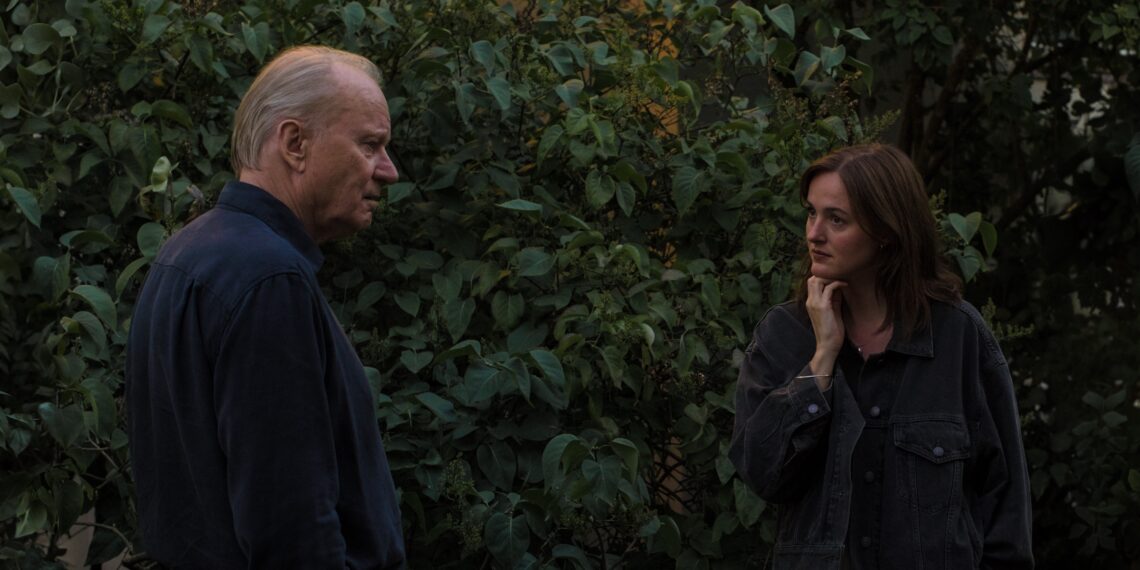
Joachim Trier’s Sentimental Value hit me on a transcendent level. The film is a psychologically complex look at one family and how art can often further damage and/or heal deep-seated wounds.
This Bergmanesque masterwork may also snag a slew of other nominations, including Lead Actress (Renate Reinsve), Supporting Actor (Stellan Skarsgård), Supporting Actress (Inga Ibsdotter Lilleaas and/or Elle Fanning), Original Screenplay (Trier & Eskil Vogt), Director (Trier) and Best Picture.
The film just picked up five European Film Award nominations: Best European Film, Best Director and Best Screenplay Best Actress (Reinsve) and Best Actor (Skarsgård).
Read my full New York Film Festival review HERE.
Watch my VIDEO chat with Inga Ibsdotter Lilleaas HERE.
Watch my VIDEO chat with Joachim Trier & editor Olivier Bugge Coutté HERE.
Watch my VIDEO chat with Stellan Skarsgård HERE.
Norway has garnered six nominations, no wins. The last nomination was 2021 for Trier’s The Worst Person in the World. Halfdan Ullmann Tøndel’s daring Armand made the short list last year
This is Norway’s 47th submission.
NEON released Sentimental Value in theaters on November 7, 2025.
Brazil: The Secret Agent (Kleber Mendonça Filho)

Running a very close second is Kleber Mendonça Filho’s brilliant, subversive and singular cinematic ride, The Secret Agent, which should be a shoo-in for a nomination. And Wagner Moura is a strong Best Actor contender.
Had Brazil not (justly) won last year, I would say they had a great shot, but the last time a country won this award two years in a row was Denmark for Babette’s Feast in 1987 and Pelle the Conqueror in 1988.
Read my full New York Film Festival review HERE.
WATCH my VIDEO chat with Wagner Moura HERE.
WATCH my VIDEO chat with Kleber Mendonça Filho HERE.
Brazil’s submissions have been nominated five times with one-win, last year for Walter Salles’s I’m Still Here. The last nomination the country had prior to that was in 1998 for Salles’s Central Station.
This is Filho’s third official entry. Neighbouring Sounds was put forth in 2013, and Pictures of Ghosts made the cut in 2023, while Aquarius and Bacurau were overlooked in 2016 and 2019, respectively.
This is Brazil’s 55th submission.
NEON will release The Secret Agent November 26, 2025.
India: Homebound (Neeraj Ghaywan)

Neeraj Ghaywan’s Homebound is a compelling, emotionally rich story of two dreamers trying to escape their birth circumstances, amidst bigotry and hatred. It’s that rare cinematic treasure that can pleasantly touch and surprise even the most jaded moviegoer.
WATCH my VIDEO chat with Ghaywan HERE.
Set in Northern India and loosely based on a New York Times op-ed piece by Basharat Peer, the film centers on the intensely strong friendship between Chandan Kumar (Vishal Jethwa) and Mohammed Shoaib Ali (Ishaan Khatter).
Both are lower class, lower caste. Chandran is from a former “untouchable” caste, still very much looked down on and Shoaib is Muslim. They have major familial obligations but few options of improving their status. Both are set on taking the national police exam, so they won’t be as mistreated as they usually are. The uniform commands respect.
The problem is there are a ridiculous number of entrants also hoping to be selected for the few available spots. When the results of the exam finally come in (after almost a year), one of the boys is selected, the other is not. But that’s really only where the story begins.
I won’t detail the various plot turns, suffice to say when the pandemic hits, the story takes a grim and heartbreaking detour. It’s interesting to see how people in different parts of the world reacted to COVID and how quickly certain people desperately needed to lay blame and behave in the most despicable ways. That alone makes the film significant.
Ghaywan, who was mentored by Executive Producer Martin Scorsese, is smart in establishing a believable, unwavering bond between the boys so we are totally invested in their respective journeys. He also doesn’t shy away from showing the cruel, horrific prejudices and discrimination inherent in the Indian culture when it comes to religion and caste. These boys are at the mercy of the class they were birthed into.
Interesting to note, there is a definite homoerotic nature to the boys’ relationship that, of course, goes overtly unexplored. But the love they have for one another is palpable.
Both Jethwa and Khatter are astonishingly good. The gifted Khatter has a particular penetrating subtlety that is potent.
The screenplay, by Ghaywan with story credit to Peer, Ghaywan and Sumit Roy tends to lean on obvious dialogue, but that’s quibbling. The narrative is quite strong. The film feels epic, despite the 122-minute running time.
The final quarter is absolute devastating. I was gutted. But the final shot provides a note of transcendence. Perhaps in the next life things might be different.
This profound film isn’t as much as plea for empathy as much as a questioning of whether it is even inherent in humans to behave with compassion.
Scorsese’s name should add the gravitas the film needs to get it shortlisted. And if enough voters see it, it should be nominated.
India has received three nominations, no wins, for Mehboob Khan’s Mother India in 1957, Mira Nair’s Salaam Bombay! in 1988 and Ashutosh Gowariker’s Lagaan in 2001. In 2022, Pan Nalin’s Last Film Show made the shortlist.
There was some controversy over the Film Federation of India selecting Kiran Rao’s Lost Ladies last year over Payal Kapadia’s All We Imagine as Light. I personally liked Lost Ladies more.
India has been submitting on and off since the second year the category was officially established.
This is their 58th entry.
Spain: Sirât (Oliver Laxe)

This brave gut-punch cine-spectacle has proven divisive, but Oliver Laxe’s merciless look at a group of desperate people on the apocalyptic brink, is a wonder to behold. And stands up magnificently on a repeat watch. See it on the big screen, if possible, but see it! It’s astonishing stuff, if you are patient and alert.
Sirât received four European Film Award nominations including Best European Film, Best Director, Best Actor (Sergi López) and Best Screenplay (Santiago Fillol & Oliver Laxe).
Read my full New York Film Festival review of Sirât HERE.
Watch my Video chat with Oliver Laxe HERE.
Spain has been nominated 21 times and won 4 awards (1982’s Begin the Beguine, 1993’s Belle Époque, 1999’s All About My Mother, 2004’s The Sea Inside).
The country was last nominated in 2023 for Society of the Snow, directed by J.A. Bayona.
This is Spain’s 68th submission.
Sirât is currently playing in New York and Los Angeles, courtesy of NEON.
Japan: Kokuho (Sang-Il Lee)

Sang-Il Lee’s beguiling epic, Kokuho, spans 50 years in the life of a Kabuki actor. It’s a remarkable achievement.
This stunningly photographed (by Blue is the Warmest Color DP Sofian El Fani) three-hour cinematic masterwork begins in Nagasaki in 1964. and centers on 14-year-old Kikuo (a fantastic Soya Kurokawa), a budding Kabuki player who watches his father, a Yakuza leader, murdered by rival gangs. He seeks revenge and then finds himself mentored by Hanjiro (Oscar nominee Ken Watanabe) one of Japan’s most famous Kabuki actors. Hanjiro has a son, Shunsuke (Keitatsu Koshiyama), a less passionate Kabuki artist, who Kikuo bonds with. Hanjiro seems to favor Kikuo and rehearses the two boys mercilessly. Both play the female parts in this traditional form of theater.
The film then jumps a number of years, and we find Shunsuke (now Ryûsei Yokohama) and Kikuo (now Ryô Yoshizawa) vying for Hanjiro’s attention and affection. Kikuo is more driven—desperate to become a great Kabuki artist.
Several more decades pass, as the young men grow, evolve, fight, self-destruct, reconnect, rebound—always via the Kabuki backdrop and the desire to be the best.
Lee (Pachinko) has fashioned a tribute to this great art using long shots and close-ups and allowing each moment to linger so they sear into our mind. As someone who wasn’t super familiar with this particular form of theatre, I was absolutely mesmerized.
The screenplay, by Satoko Okudera, based on the novel by Shuichi Yoshida, is sometimes uneven—the narrative turns aren’t always as sharp or credible. But the keen direction, haunting score, amazing camerawork, exceptional production and costume design and, especially, lead performance, keep the audience captivated and invested in the story.
Yoshizawa is nothing short of astonishing as Kikuo, playing him from teen years to middle age. There is never any attempt to sanitize the character. We are privy to the price he pays for his full commitment to his craft. And the price his loved ones play as well.
And the bond between both men is quite strong. I even sensed a homoerotic energy between Kikuo and Shunsuke.
The film has become a box office sensation in Japan as the second highest grossing Japanese live-action film of all time.
Kokuho is about the transformative power of art, a vital and necessary reminder in these scary times.
Watch my VIDEO chat with Sang-Il Lee’s HERE.
Japan has been nominated 18 times, including two years ago for Perfect Days, and won 3 honorary awards and 2 competitive Oscars (Yōjirō Takita’s Departures in 2008 and Ryusuke Hamaguchi’s Drive My Car in 2021.)
The country has submitted 69 times, since the inception of the category. They did not submit in 1976.
GKIDS released Kokuho November 14th in Los Angeles and Hollywood and will release it in New York on November 21st.
China: Dead to Rights (Shen Ao)

Shen Ao’s Dead to Rights exposes the horrific atrocities committed by the Japanese army towards Chinese soldiers and civilians known as the Nanjing massacre, beginning in 1937. Much like the Nazis saw the Jewish people as subhuman, the Japanese felt the same about the Chinese in the 1930s, referring to them as pigs.
Ao was drawn to the project when he came across the true story of a young man working as an apprentice in a photo studio who accidentally developed images he wasn’t supposed to see. He was left with a choice, destroy them or keep them, risking his life in the process. The decision to hide them allowed the truth to be exposed.
Dead to Rights works so stupendously because, while Ao has epically recreated the backdrop of the horrifying invasion of the Chinese capital, he focuses the story on two handfuls of characters that the audience gets to know and root for. Firstly, the young postman Liuchang Su, aka A Chang (a superb Liu Haoran), who doesn’t evacuate Nanjing in time and is mistaken for a “Lucky Photo Shop” apprentice by the official photographer for Imperial Japan, Ito Hideo (Daichi Harashima, perfectly devious). Ito is in charge of propaganda photography yet can’t help taking pix of the massacres as well.
Su quickly learns the craft in order to survive and begins to develop the photos—some revealing atrocities–with the help of a Chinese soldier hiding in the home (Zhou You).
Guanghai Wang (Wang Chuan-jun), who is Chinese but aiding the Japanese in order to survive, helps Su with his cover. In exchange Su agrees to protect Wang’s mistress, opera singer, Yuxiu Lin (Gao Ye, fantastic), by requesting two passports out of the city once his job is done. Both Su and Yuxiu soon discover an entire family hiding under the floorboards, who become crucial to the narrative.
The fate of these people keeps the audience in suspense and hugely invested in the outcome.
The director does not shy away from graphically depicting the heinous manner in which the Japanese soldiers slaughtered innocent men, women and children–beheadings, mass shootings and hurling babies to the ground—for starters.
He also shows the great heroism of a small group of people willing to risk their lives to expose these truths.
The production values are extraordinary. I especially commend the stirring score by Fei Peng and the stunning cinematography by Cao Yu.
My only complaint is that, in the final reel, the post-WW2 trials are shown, but in a hurried fashion. (FYI: There were tribunals like these done in Nuremberg with the Germans after the Holocaust.) This sequence deserved more coverage. Perhaps, a companion film one day?
There have been a few features and docs about the Nanjing genocide. But this may be the definitive one.
The film has grossed over $500M, internationally.
China has received two nominations for Zhang Yimou films, Ju Dou (1990, co-directed by Yang Fengliang) and Hero (2002). Yimou has the most submissions with nine. He was also nominated for Raise the Red Lantern, submitted by Hong Kong in 1991.
Last year’s selection, Fang Li’s The Sinking of The Lisbon Maru was disqualified because more than 50% of the film was in English.
This is China’s 39th submission.
Dead to Rights released in the U.S. in August 2025. VOD release date pending.
Italy: Familia (Francesco Costabile)

I was surprised and joyous when I heard that Italy submitted Francesco Costabile’s stunning film, Familia. Surprised because there were a couple of major front-runners that weren’t as good, but had more cache’. Joyous, because it’s one of my favorite Italian films in recent memory. It’s a cinematic roller coaster about familial abuse that is rich with terrific performances and sends out a powerful message about generational damage.
This is one of those indie gems that, if seen by enough members, could make the short list easily.
Read my review from the 2024 Venice Film Festival HERE.
Watch my VIDEO chat with director Francesco Costabile HERE.
Italy has received 30 nominations and has won 14 times (3 were honorary in 1947, 1949 and 1950), holding the record for most wins. Fellini was the first to win in competition with La Strada in 1956 and Paolo Sorrentino’s The Great Beauty was the last to win in 2013. Sorrentino’s The Hand of God (2021) and Matteo Garrone’s stirring Io capitano (2023) were the last films to be nominated.
Maura Delpero’s ravishing Vermiglio made the short list last year.
Italy has been submitting for 69 years, since the conception of the award, in competition, but curiously did not submit in 1973.
Likely to Make the Short List (Both Deserved & Critics’ Darlings)
The following films are all well-made. They also have major publicists, press reps and industry insiders working to urge AMPAS members to see, consider and appreciate them—nothing wrong with that as several of the films from my BEST list do as well. Most are critics’ darlings–some, deserved all the praise they’re getting.
Tunisia: The Voice Of Hind Rajab (Kaouther Ben Hania)

Tunisian helmer Kaouther Ben Hania has been nominated for Oscars in two categories, Best Documentary for Four Daughters in 2023 and Best International Feature for The Man Who Sold His Skin in 2021. Both were richly deserved.
Now, she’s taken on the harrowing true story of a 6-year-old Palestinian girl trapped in a car, struggling to survive, with Israeli forces outside shooting at anything that moves. Red Crescent volunteers are on the phone with her, while others are desperately trying to get through all the ridiculous yet necessary red tape hoops to get a rescue team to her.
The director perspicaciously uses the real voice of little Hind Rajab, who continuously pleads with the various dispatch operators to come save her. There are four staffers, some more skilled than others. And Hind, herself, has lost her innocence. She is fully aware that the family members lying next to her in the car are not sleeping. She knows they’re dead.
With The Voice Of Hind Rajab, Ben Hania expertly blends actual audio with dramatically staged reenactments of what went on at the call center. And by keeping things claustrophobic, the intensity builds authentically without the need to travel outside, and the inevitable conclusion is made all the more calamitous since we’ve gotten to know the fictionalized characters who are fighting to save this girl.
WATCH my VIDEO chat with Ben Hania HERE.
The day of the press screening at the Venice Film Festival I woke up sick so I missed it and could not get into another one. The response at all screenings was off-the-charts positive with audience members in tears. The official premiere drew the longest led ovation in the history of the Biennale. The film also won the Silver Lion.
And now with Brad Pitt, Joaquin Phoenix, Rooney Mara and Jonathan Glazer on board as executive producers, the film is almost certain to be shortlisted and snag a nomination, even in this very competitive year.
I am someone who is very sympathetic to the nuances of the conversation regarding the Israeli/Palestinian conflict. I don’t simply like and repost easily manipulated and propagandized stories and photos via my social media feed. And I do not support groups that (even veiled) seem to align with Hamas. But, to me, this film could have been about a little girl slaughtered by Hamas on October 7, 2023. Or a little boy killed by Russian forces in Ukraine. Murder is murder. The hate that led to this kind of tragedy cuts to the heart and soul of Ben Hania’s work. Hind Rajab and all the little girls and boys victimized by all the power-mad leaders of the world—many who use religion to promote their vile agendas—well, their stories must be told. Their voices need to be heard. And Ben Hania is to be commended for doing so.
All that said it’s also a nail-biting, gripping and emotionally devastating movie.
Ben Hania’s film received a European Film Award nomination for Best Film.
In 2023, Ben Hania’s Four Daughters made the short list and The Man Who Sold His Skin, received a nomination in 2020.
This is Tunisia’s 12th submission.
Willa will release the film in New York and Los Angeles on December 17, 2025, with a national rollout to follow.
France: It Was Just an Accident (Jafar Panahi)

Winner of this year’s Palm d’Or, Jafar Panahi’s It Was Just an Accident is looking at a host of major Oscar nominations and is almost certain to be one of the five for Best International Feature. It will possibly be named in the Best Director, Screenplay and, even, Best Picture categories. Whether the film truly merits all the acclaim is up for debate. But it’s certainly an impressive achievement.
It Was Just an Accident received three European Film Award nominations, Best Film, Director and Screenplay.
Read my full New York Film Festival HERE.
France holds the record for the most nominations with 39. Their submissions have won 12 times (including 3 honorary) but not since 1992 with Indochine. France was nominated last year for Jacques Audiard’s Cannes sensation, Emilia Pérez, which was the front-runner… until it wasn’t.
France has submitted 70 times and is the only country that has consistently entered the awards competition every year since the inception of the competitive category in 1956, winning 3 honorary awards prior to that date.
It Was Just an Accident is a NEON release and opened on October 15, 2025, at Film at Lincoln Center.
South Korea: No Other Choice (Park Chan-wook)

Never underestimate the popularity of Park Chan-wook. His latest film, No Other Choice is a satiric festival favorite wowing critics. He’s made one of only two South Korean-language films to break into the Best Picture category (Decision to Leave). So, while this movie may fall a bit short when it comes to daring, it’s certainly great entertainment with some keen social commentary thrown in.
Read my full New York Film Festival HERE.
Watch my VIDEO chat with Park HERE.
South Korea has been nominated once and won—Parasite in 2019, which also copped Best Picture (over 1917, gads). In addition, the country was shortlisted twice, in 2018 for Lee Chang-dong’s Burning and in 2022 for Chan-wook’s Decision to Leave, which was also nominated for Best Picture.
This is the country’s 38th submission.
No Other Choice is being released by NEON in select theaters Christmas Day and everywhere in January 2026.
United Kingdom: My Father’s Shadow (Akinola Davies Jr.)

Winner of a Caméra d’Or Special Mention at this year’s Cannes Film Festival, My Father’s Shadow was inspired by director/co-writer Akinola Davies Jr. and his co-writer brother Wale Davies’ actual relationship with their late father.
Set in Nigeria in 1993, as the results of the presidential election are questioned, the film is seen through the eyes of two remarkable young boys, played by real-life brothers Godwin Chiemerie Egbo and Chibuike Marvellous Egbo, who long to spend time with their overworked father, Florian (Sope Dirisu).
The deceptively simple story has dad deciding to take his two boys with him journeying from rural Nigeria to the busy capital city Lagos, where he plans on demanding the six month back pay he is owed, from his boss. Mom is away at work and Florian is rarely home, but he is hero worshipped by his sons.
En route to Lagos, they encounter a strong military presence–two weeks prior there was a massacre at a place called Bonny Camp where people were protesting the election results not being revealed.
The boys share a playful brotherly bond and rivalry. And the viewer watches them watching their father—privy to snippets of his other life in the big city which may include an occasional dalliance with a pretty woman.
The narrative takes a stunner of a shift in the final scene that adds an extraordinary layer to the storytelling, making one wonder about everything experienced up to that point. It’s potent stuff.
Dìrísù is flawlessly enigmatic. He’s dignified, graceful and…sly.
My Father’s Shadow is both a wonderful tribute to a loving father and a frightening warning about the insidious nature of authoritarianism.
This film deserves to make the short list!
The movie garnered a European Film Award nomination in the European Discovery category.
The UK has been nominated three times, and won once, two years ago for Jonathan Glazer’s The Zone of Interest. Last year, Sandhya Suri’s Santosh was shortlisted.
This is their 22nd submission.
MUBI has the U.S. rights to My Father’s Shadow.
Ukraine: 2000 Meters to Andriivka (Mstyslav Chernov)

2000 Meters to Andriivka is another harrowing, powerful documentary by the Oscar-winning filmmaker Mstyslav Chernov (20 Days in Mariupol) and follows a Ukrainian platoon’s attempt to liberate a destroyed village. The photojournalist and director, via helmet-cam footage and voice-over explanation, put the viewer right smack in the midst of this dangerous endeavor.
And, most devastating, Chernov will often tell us what fate lies in store for each soldier, most will perish.
The film debuted at Sundance and won the World Cinema Documentary Directing Award.
2000 Meters to Andriivka is also eligible in the Documentary Feature category.
Ukraine has never been nominated.
Two years ago, Ukraine submitted Chernov’s 20 Days in Mariupol, which made the short list but didn’t receive an International Feature nomination. However, it did, rightly, win the Best Feature Documentary Oscar.
This is the country’s 18th submission.
The film opened this past summer via PBS Distribution/Frontline/AP.
Iraq: The Presidents Cake (Hasan Hadi)

The critiques of the 1990s regime of Saddam Hussein are pointed but never overwhelm Hasan Hadi’s directorial debut, The President’s Cake. Hadi is more concerned with exploring the difficult, almost impossible living conditions most Iraqis were forced to live in, while the upper echelon of the government, led by Hussein, basked in wealth. Specifically, the film looks at misogyny and the horrific treatment of children.
The writer-director does so by chronicling a nine-year-old girl, Lamia’s odyssey when she is selected, at random, to prepare a cake for the president’s birthday. Her ailing grandmother doesn’t have enough money for the ingredients and has decided to give Lamia to a couple to care for her. Lamia flees, with her trusty rooster in tow, and sets about finding the ingredients herself.
This is yet one of quite a few submissions that relies heavily on the performance of a pre-teen girl and Baneen Ahmed Nayyef is terrific, making you care and root for her, and fear for her when predators hover.
The Presidents Cake has moments of great sadness, but it is also a keen satire with some hilarious bits that deflect from the little protagonist’s impossible situation.
Iraq has never been nominated.
This is the country’s 14th submission.
The President’s Cake will be released by Sony Pictures Classics on February 6, 2026, expanding nationwide, February 27, 2026.
Taiwan: Left-Handed Girl (Shih-Ching Tsou)

Shih-Ching Tsou’s first solo feature, Left-Handed Girl, is another film that benefits greatly from the remarkable performance of a very young girl, Nina Ye. She’s not only adorable but heartbreaking as I-Jing, the youngest child of single-mom Sho-Fen (Janel Tsai) who also has a petulant teen daughter, I-Ann (Shih-Yuan Ma).
Set in Taipei, where mom and her girls have returned to start a new life, Left-Handed Girl sheds light on the odd superstitions and horrible misogyny that still exists in the Taiwanese culture and how impossible it is for a working class woman, with kids, to survive.
Shih-Ching co-wrote the film with four-time Oscar-winner Sean Baker (Anora), who is also the movie’s editor and one of its producers. And, imagine, it features sex workers—although that isn’t essential to the plot.
As someone who is left-handed and was told stories by my father about how they tried to force him to write with his right hand in grade school, this film hit close to home. The grandfather character tells I-Jing that her left hand is “evil and belongs to the devil.” He also proudly declares: “If it were the old days, and you insist on using your left hand, you’d be hung up and beaten.”
The film rightly challenges such antiquated ideas while telling a compelling story and Shih-Ching has a vibrant and arresting filmmaking style—quite impressive.
Watch my VIDEO chat with Shih-Ching HERE.
Taiwan has been nominated three times, all Ang Lee films–The Wedding Banquet and Eat Drink Man Woman in 1993 and 1994, winning for Lee’s Crouching Tiger, Hidden Dragon in 2000.
This is the country’s 51st submission.
The film is currently in theaters and will be premiering on Netflix on November 29, 2025.
Germany: Sound of Falling (Mascha Schilinski)

Courtesy of MUBI
Sometimes I am just not in tune with my journo brethren. Mascha Schilinski’s Cannes award-winner Sound of Falling is certainly a good example—a film I greatly admire but a film that I found confounding and frustrating. It may very well make the shortlist.
Sound of Falling garnered three European Film Award nominations, Best Film, Director and Screenplay (Mascha Schilinski & Louise Pete).
Read my full New York Film Festival review HERE.
Germany has garnered 23 nominations, with 4 wins–1979’s The Tin Drum, 2002’s Nowhere in Africa, 2006’s The Lives of Others, 2022’s All Quiet on the Western Front. This is counting the five East German submissions which sometimes competed against West Germany. It is the third most nominated country behind France and Italy.
The country has received two consecutive nominations in the last two years, Mohammad Rasoulof’s The Seed of the Sacred Fig, last year and Ilker Catak’s The Teacher’s Lounge in 2023.
This is Germany’s 66th submission.
MUBI released Sound of Falling in NYC on November 14, 2025.
North Macedonia: The Tale of Silyan (Tamara Kotevska)

Cinematically, Tamara Kotevska’s strange, gorgeously shot, The Tale of Silyan is a remarkable achievement blending the documentary plight of Macedonian farmers with a lyrical if truly maddening folk story about a father, so upset with his son’s desire to escape his dreary and dreaded farm life, that he curses him and the son turns into a stork, never to be human again. The titular stork remains in the village, but cannot communicate with his family, nor does the stork community accept him because he’s not fully stork. Karma kicks in and dad is abandoned by all of his loved ones, seeking better opportunities in Germany. Then, a touching irony occurs between father and stork-son.
I had a real problem with one of the key narrative elements which basically has the poor son remain a stork forever, now living with dad as some kind of happy ending, because dad has returned to toil the soil (after giving up)—which is fine, but what of Silyan? Why not let the poor boy go off and find a better life? Wouldn’t that be the real fatherly thing to do? I am still trying to measure that against the lovely story about this mythical wondrous creature. And, yes, I know it’s based on a popular folk tale, but it left me pissed off.
The film is also eligible in the Documentary Feature category.
North Macedonia did not submit last year. In 2023 the country submitted Goran Stolevski’s queer-themed Housekeeping for Beginners.
North Macedonia has been nominated twice (Before the Rain in 1994 and Honeyland in 2019), no wins.
This is the country’s 21st entry.
The film has been acquired by National Geographic/Documentary Films.
Denmark: Mr. Nobody Against Putin (David Borenstein & Pavel Talankin)

David Borenstein is a documentary filmmaker based in Copenhagen, Denmark. His latest feature, Mr. Nobody Against Putin, won a World Cinema Documentary special jury prize at this year’s Sundance Film Festival. The movie was shot secretly over the course of two years and focuses on Pavel ‘Pasha’ Talankin, a respected teacher at a small Russian primary school who dared to challenge Putin’s attempt to brainwash and indoctrinate young students. Pasha refused to adhere to forced education mandates after Russia’s invasion of Ukraine.
The doc is funny, insightful and courageous just like Pasha, proving some people are still willing to speak out against oppression—even if it means risking their own freedom.
Talankin is the co-director of the film, which is also eligible in the Documentary Feature category.
Denmark has been nominated 15 times with 4 wins (Pelle the Conqueror in 1987, Babette’s Feast in 1988, In a Better World in 2010 and Another Round in 2020)
Magnus van Horn beguiling and unsettling submission, The Girl with the Needle, received a nomination last year.
This is Denmark’s 63rd submission.
Iceland: The Love That Remains (Hlynur Pálma)

While I appreciated the surreal touches in Hlynur Pálmason’s frustrating feature, The Love That Remains, I am, once again, in the critical minority. Yes, the film boasts stunning shots of the Icelandic landscape but his cinematic capture of a year in the life of a broken family just did not move me. And I lost interested early on. I wasn’t a fan of his last film, Godland, either and it made the 2023 short list.
I will say the film’s two leads, Saga Garðarsdöttir and Sverrir Gudnason do admirable work.
Iceland has been nominated once in 1991 for Children of Nature.
This is Pálmason’s third film submitted. A White, White Day was the first in 2019.
The country was also shortlisted in 2012 for Baltasar Kormákur’s The Deep, 2021 for Valdimar Johannsson’s Lamb and last year for Kormákur’s enchanting, Touch.
This is Iceland’s 46th submission.
Janus Films will release the film January 30, 2026.
Palestine: Palestine 36 (Annemarie Jacir)

Annemarie Jacir’s Palestine 36 documents the period between 1936 and 1939 following several stories that intertwine during the British Empire’s rule over the area, as Palestinian villagers grew increasingly angry over their land being take over. Jews, fleeing persecution in Europe, were displacing them, via colonialist Britain. And revolt turned into a bloody battle.
The film features an impressive international cast including Hiam Abbass, Billy Howle, Liam Cunningham, Saleh Bakri, Robert Aramayo, Dhaffer L’Abidine, Yasmine Al Massri and Jeremy Irons. Karim Daoud Anaya is especially good in the pivotal role of Yusuf.
Jacir’s ambition is to be applauded as she’s telling several stories in mosaic fashion. But the film doesn’t really shed light on what led up to the events of 1936. Some historical background would have been appreciated. And the idea of redefining terrorists acts as noble, and part of a justified resistance is super questionable and a slippery slope.
Of course, Jacir has every right to her own filmic portrayal of historical events, but viewers have a right to question the veracity of these narratives. And I wish more journos would do so. If Oliver Stone had directed, he’d be crucified.
The filmmaking is impressive, even when the script is wonky. But the portrayal of the British as monstrous villains with no nuance, felt heavy handed. I give props to actors like Irons who manage to rise above their one-dimensionally written roles.
The film has a good shot at making the shortlist—for political reasons.
This is the fourth entry directed by Jacir after Salt Of This Sea (2009), When I Saw You(2013) and Wajib (2018),
Palestine has received two nominations, both for Hany Abu-Assad films, Paradise Now(2006) and Omar (2014).
Last year, From Ground Zero was shortlisted.
This is their 18th submission.
The film was acquired by Watermelon Pictures for North America.
Gems/Dark Horses/Please Consider
These are the films that should be in the conversation, but don’t necessarily have the funds or countries with big wallets– or weren’t critic’s darling. I implore voters to seek these out.
Hungary: Orphan (Árva) (László Nemes)

When I saw it in Venice, I called László Nemes’ Orphan (Árva), the first essential film of the year and I still feel it’s a significant achievement, despite mixed reviews. Hungary was smart to submit it because the film deserves to be seen, especially with all the misinformation and antisemitism running rampant in the world, thanks to social media manipulation.
Read my full Venice Film Festival review HERE.
Hungary has been nominated 10 times with two wins (István Szabó’s Mephisto in 1981 an Nemes’s Son of Saul in 2015). Szabó has the most Hungarian Oscar submissions with 5.
This is the country’s 61st entry.
Canada: The Things You Kill (Alireza Khatami)

Alireza Khatami’s Lynchian mindfuck, The Things You Kill, picked up the Directing (World Cinema Dramatic) Award and centers on an English lit university professor, in Turkey, discovering damning secrets surrounding the death of his mother. A thrilling, bewildering and game-changing twist takes the viewer on an unexpected journey that confounds expectations.
Winner of the World Cinema Dramatic Directing Award at Sundance this year, Alireza Khatami’s mindfuckery The Things You Kill centers on Ali (Ekin Koç), an English Literature University Professor, in Turkey, who has a very tumultuous relationship with his abusive father, Hamit (Ercan Kesal). When his ailing mother dies, he becomes convinced that his father is responsible and obsessed with seeking revenge.
But this is in no way an ordinary tale of vengeance. The bracing, bewildering narrative takes a sharp turn that leads the audience on an unexpected odyssey that confounds expectations.
The film is a daring, transfixing work that examines antiquated ideas of masculinity and patriarchal power.
Khatami also has a blast with perception vs. reality when he switches up two roles—I will stop there. You have to experience this enigmatic work to appreciate its riches.
Canada has received 7 nominations and won once for Denys Arcand’s The Barbarian Invasions in 2003. Four films by Arcand have been submitted, 3 receiving nominations.
Last year Canada made the short list with Matthew Rankin’s fab Persian-language entry, Universal Language.
This is the country’s 51st submission.
Cineverse released the film in New York on November 14th and will expand to Los Angeles and additional markets November 21st.
Austria: Peacock (Bernhard Wenger)

One of the most delightfully absurd, keen meta-satires on the list is from Austria, Bernhard Wenger’s first-feature, Peacock. This one’s another bit of mindfuckery and boasts a fantastically freaky lead turn by Albrecht Schuch.
Read my full Venice Film Festival review HERE.
Austria submissions have received four nominations and two wins, The Counterfeiters (2007) and Amour (2012). Both Great Freedom (2021) and Corsage (2022) made the short list.
This is Austria’s 49th submission.
Peacock was released in theaters, by Oscilloscope, on September 19, 2025.
Bhutan: I, the Song (Dechen Roder)
 Never underestimate Bhutan.
Dechen Roder has crafted a haunting, moody, beguiling look at trust, identity and desire, with her second feature, I, the Song.
The film opens as Nima (Tandin Bidha), a shy, awkward schoolteacher is fired from her job after a “blue” video went viral on WeChat. The clip seems to show Nima in a compromising position with a man who is not her bf. But Nima insists it is someone else in the video. No one believes her, including her bf, and she goes on a quest to find the real girl. She meets a host of characters who immediately think she’s Meto (also played by Bidha), her much more outgoing doppelgänger. They include, Meto’s ex, Tandin (Jimmy Wangyal Tshering), a singer of angry loves songs, Meto’s boss Phuntsho (Jimmy Wangyal Tshering) as well as friends and family members, including her loving grandmother.
Roder then crosscuts Nima’s potentially life changing odyssey with Meto’s ominous journey. What really happened to her? The way we find out is quite clever.
This is highly stylized and compelling stuff, and sometimes the lines of identity blur. Who are we really seeing? Is something mystical going on? And what is the grandmother blathering on about?
Bhutan has only submitted four other times, receiving an Oscar nomination for Pawo Choyning Dorji’s Lunana: A Yak in the Classroom in 2023, after it was disqualified in 2022 for not having an AMPAS-approved selection committee. In 2023, Dorji’s The Monk and the Gun, was shortlisted.
This is their fifth entry (counting Lunana twice).
South Africa: The Heart is a Muscle (Imran Hamdulay)

Set in Cape Town, Imran Hamdulay’s feature film debut, The Heart Is A Muscle, is an exceptional, uncompromising work about hothhead Ryan (Keenan Arrison) a young man trying to escape his violent past and make a decent life with his wife and 5-year-old son. But past sins come back to haunt him when, after an odd set of circumstances, someone from his youth reenters his life.
Early in the film Ryan’s son vanishes and there’s a frenzied search which leads Ryan to falsely accuse someone of taking his child. These tense, anxiety-inducing scenes lay the groundwork for a deeply moving character study. The movie never goes where you expect it to and is surprisingly thoughtful and graceful.
Arrison delivers a rich, nuanced performance. His Ryan is a much more complicated man than his early, proud behavior would let on. He’s been seriously damaged by his father but is bent on working through his trauma and not passing it onto his son. Arrison has a riveting, unforgettable confession scene, late in the movie, with an excellent Melissa de Vries who plays his wife Laila.
The film premiered at this year’s Berlinale and only disappoints in the final moments. Why filmmakers insist on non-endings is beyond me. Ambiguity is fine. Leaving us with nothing, is not.
South Africa has been nominated twice and won for Tsotsi in 2005.
This is their 21st submission.
Latvia: Dog Of God (Gints Zilbalodis)

Latvia received its very first International Feature Oscar nomination last year with Gints Zilbalodis’ mystical, much beloved animated feature, Flow, which went on to a surprise Oscar win for Best Animated Feature—which thrilled the lovely Joey Moser here at The Contending. This year they’re submitting another animated film, one far more daring and wackier than Flow. There’s a different kind of cat featured in Lauris and Raitis Ābele’s nasty, profane and debauched delight, Dog of God. And it’s not a pretty one. And it gets rimmed. I’ll leave it at that.
One of the opening moments has a burly, crab tattoo’d man tearing off someone’s testicles using chains. And that’s just for starters.
Set in a 17th century Latvian village of Zaube, this macabre gem follows a few townsfolk including an over-zealous masochistic Pastor who mistreats his young orphan errand boy—who may be his son. The Pastor soon accuses the town maid and potion maker, Neze, of witchcraft (he alleges she stole his “holy straw”). Meanwhile a wealthy, glutinous Baron can’t seem to get it up for his plump wife, until Neze makes a potion for him. And during Neze’s witchcraft trial, that burly man referenced above arrives to proclaim himself as a werewolf and the “dog of God.” Toss in a very gay Hitler-lookalike who is referred to as a “dirty whore rag,” and you have quite the concoction.
The story comes from Latvian folklore, and the movie builds to bundles of climaxes that make The Substance look tame.
Produced by Tritone Studio and US company Lumiere Lab, the animation is spellbindingly awesome, and the first-time filmmakers tackle heady issues such as religious hypocrisy, sexual deviance, misogyny and the horrific behavior of the upper classes—for starters. The film world premiered at this year’s Tribeca Film Festival.
Destined for cult status, this is the kind of animation that will be right up the alley of fans of filmmakers like Lars von Trier, Yorgos Lanthimos and David Lynch.
Dog of God received two European Film Award nominations, Best Film and Best Animated Feature.
The film is also eligible in the Animated Feature category and is the ONLY animated film among the 86 submissions.
This is the country’s 17th submission, no wins and that one nomination.
Georgia: Panopticon (George Sikharulidze)

When we first meet cute, 18-year-old Sandro (a transfixing Data Chachua in his first major film role), he’s on a bus copping a feel off a random girl. And throughout the movie he creepily enjoys goosing women and gazing at them rather inappropriately. But when his girlfriend suggests they have premarital sex, he goes rather berserk. Repressed, much? But Sandro has terrible role models. His mother has abandoned him to pursue her own career in the U.S. And his father has gone off to become a monk, leaving him with his ailing grandmother and a footballer friend, Lasha, who is a borderline neo-Nazi. The one woman who pays him attention is Lasha’s mom (Ia Sukhitashvili, absolutely wonderful), who he lusts after.
Writer-director George Sikharulidze’s captivating and perspicacious feature debut, Panopticon, closely follows this lovable/loathsome floppy-haired pervert stuck in a world heavily influence by extreme right-wing ideology and extreme religious indoctrination —which seems to clash with his bourgeoning sexual awakening and how it almost destroys him. (See Familia for more boys becoming fascists stories.)
Chachua is quite a find, his face registering so many different feelings and emotions but also managing to be stoic and mysterious.
Sikharulidze shows us a Georgia where it’s near impossible for a young man to not fall in with the wrong crowd, but he also ends the film on a transcendently hopeful note—one that honors the complex character he and Chachua have created.
Panopticon is a film that probably won’t have a ton of money behind it, but one that truly deserves consideration.
See my VIDEO chat with director Sikharulidze HERE.
Georgia has been nominated once in 1996 for Nana Jorjadze’s A Chef in Love.
Giorgi Ovashvili’s Corn Island made the short list in 2014.
This is the country’s 24th submission.
Argentina: Belén (Dolores Fonzi)

Based on the book “We Are Belén” by Ana Correa, and set in the conservative province of Tucumán, Argentina, Dolores Fonzi’s Belén opens in 2014 with a 23-year-old woman (Camila Plaate) in massive lower abdomen pain being taken to the hospital by her mother. In too short a time the woman miscarries and is then arrested by law enforcement, treated horrifically, and accused of infanticide. She incredulously spends two years in jail without a real trial and is then sentenced to eight years in prison.
Then Soledad Deza (Fonzi) takes over her case.
Deza valiantly fights for to get the woman, now known as Belén (the Spanish word for Bethlehem), justice and, in the process and under many threats, turns the case into a global movement.
Fonzi is terrific, a ball of determination. And her 11th hour courtroom speech is worth the wait. Fonzi proves a triple-threat having also co-written the screenplay. She’s aces in all three departments.
Belén is a gripping, often nail-biting, angering piece of cinema in the tradition of great legal dramas like The Verdict as well as the female empowering movies that were made in the ‘70s and early ‘80s usually starring Jane Fonda, Sally Field, Diane Keaton or Jessica Lange.
The film is an important testament to the systemic injustice towards women in so many countries. And how, sometimes, right wins out.
Argentina’s submissions have received eight nominations and two wins (The Official Story (1985 and The Secret in Their Eyes (2009). The country was last nominated in 2022 for Santiago Mitre’s Argentina, 1985.
This is Argentina’s 52nd submission.
Belén was released in theaters by Amazon MGM Studios on November 7th and began streaming on Prime on November 14th.
Estonia: Rolling Papers (Meel Paliale)

I was really taken with Meel Paliale’s incisive, witty and clever look at contemporary youth in Estonia. “This is a film about young people who don’t know what to do with their lives,” says Paliale. But it’s not one of those silly Hollywood-type movies that pretends it’s a slice-of-slacker-youth life when it’s just an excuse to show aimless youth getting high. Paliale is after something deeper.
Rolling Papers centers on Sebastian (Mihkel Kuusk) who works as a grocery store clerk and finds his world shaken by free spirit Silo (Karl Birnbaum) who infiltrates his way into Sebastian’s life and psyche, convincing him to smoke some weed, close the store and go to the beach for a skinny dip, attend a party and, ultimately, quit his job. Silo dreams of going to Brazil, where it will, at least, be warmer!
At the party, Sebastian meets Nora (Maria Helena Seppik) and the second half of the film focuses on that messy relationship…until it doesn’t.
The story (by Paliale and Unmet Pilling) is cunning and meta having the cinephile characters comment on how film narratives usually deviate from true character movement in their second half and, instead, become dictates to story. And just as Rolling Papersappears to be going in that direction, it shifts gears.
The characters begin to question how they’ve been conditioned to live their lives a certain way with emphasis on school and work, over everything else. Instead, they wish to figure things out their own way.
Kuusk grounds the film is an authenticity with a subtle yet charismatic performance. And there’s a definite homoerotic vibe going on between Sebastian and Silo—even though they’re ostensibly straight.
Estonia has received one nomination in 2014 for Zaza Urushadze’s Tangerines.
This is their 23rd submission.
Croatia: Fiume o Morte! (Igor Bezinović)

Croatian director Igor Bezinović audaciously chronicles the rise and reign of a fascist whose strategies and maneuvers will feel awfully familiar to many Americans today.
Fiume o Morte! is a fascinating hybrid documentary where contemporary people from the streets of the Croatian city of Fiume today are asked to portray real-life major and minor figures from over 100 years ago. The director then, masterfully, uses amazing archival photos, paintings and video to recreate many of the wonderful and terrifying moments from the time via scenes and stills.
It’s a unique and brazen experiment that works magnificently.
The true story takes place in 1919 when a famous Italian nationalist poet and army officer, Gabriele D’Annunzio decides to occupy the city of Fiume—today called Rijeka—and turn it into an independent city-state. Arguably, the scariest part of this insanely riveting story is just how the populace allowed it to happen, with very little protest (sound familiar?)
During his reign D’Annunzio took control of all of Fiume, slapping newspapers that dare to criticize him with fines. His attitude, “Whoever isn’t with me is against me.” (Again, I ask, sound familiar?).
All of this happened before Mussolini became Italy’s dictator.
Bezinović’s idea of inviting current locals to take part is a stroke of genius juxtaposing them with images from over 100 years ago. The director also has chats with people about what they know about D’Annunzio, which proves both startling and hilarious.
Too many hybrid docs lately are strictly being done, it seems, to manipulate the work into a polemic. Bezinović takes a creative yet authentic approach. He wants to tell the story as straightforward as possible, from the evidence that remains from the period. In doing so and including locals retelling the saga of the 16-month occupation, he has created vital cinema.
Fiume O Morte! copped two European Film Award nominations, Best Film and Best Documentary Feature and is also eligible in the Documentary Feature Oscar category.
Croatia has yet to receive a nomination and was disqualified once.
This is their 35th submission.
Belgium: Young Mothers (Jean-Pierre & Luc Dardenne)

Jean-Pierre & Luc Dardenne have crafted an intense, gritty and authentic film that’s worthy of Ken Loach, with Young Mothers. The film premiered at this year’s Cannes Film Festival where it won the Best Screenplay and Jury Prizes.
This poignant work focuses on four working-class teen girls who are either pregnant or have just had their baby. (A fifth mother is seen briefly, but her story has a happy spin.) Not surprising, the project was developed from the Dardenne Brothers having conversations with real young girls struggling with motherhood.
One expectant mom, Jessica (Babette Verbeek), is anxious to meet her real mother (India Hair) for the very first time, desperate for that connection.
Perla (Lucie Laruelle) has had her child and is hopelessly in love with the boy’s father, Robin (Gunter Duret), but her feelings seem to be unrequited.
Young Ariane (Janaina Halloy Fokan) is on the verge of placing her child in foster care, but her mess of a mom (Christelle Cornil) wants her to change her mind.
Julie (Elsa Houben) is a barely recovering addict with a devoted boyfriend Dylan (Jef Jacobs). Both are doing their best to care for their young daughter.
All the actors are wonderful.
Young Mothers explores the realities of these struggles and how the current system is populated with workers who do care about these young people and want the best for them and their newborns. The film is filled with a few amazing moments, one in particular involving a baby’s smile.
Also, this isn’t a doom and gloom sit, as the Dardennes choose themes of resilience and hope over desperation and destitution.
Belgium’s submissions have received eight nominations but no wins. Lukas Dhont’s Close was the last to be nominated in 2022.
This is the Dardennes fifth time representing Belgium. Previous films submitted were, Rosetta (1999), The Son (2002), The Child (2005) and Two Days, One Night (2014)—none were nominated—the latter wasn’t even shortlisted but did garner a Best Actress Oscar nomination for Marion Cotillard.
This is the country’s 50th submission.
Slovakia: Father (Otec) (Tereza Nvoto)

This devastating feature from Tereza Nvotová explores a parents’ worst nightmare with empathy and compassion.
Read my full Venice Film Festival review HERE.
Slovakia has never been nominated.
This is Slovakia’s 29th submission.
Morocco: Calle Málaga (Maryam Touzani)

Carmen Maura captivates in Maryam Touzani’s Spanish-language feature debut, Calle Málaga, a gorgeous film about one woman’s defiance.
Read my full Venice Film Festival review HERE.
Morocco has never been nominated. This is their 21st submission.
Luxembourg: Breathing Underwater (Eric Lamhene)

Buoyed by a wonderfully nuanced lead performance by Carla Juri, Eric Lamhene’s first feature, Breathing Underwater, is an exceptional look at the anguish and heartache of abused women.
Emma (Juri) has fallen down the stairs of her upper middle-class home and is in hospital with many bruises. She also discovers she’s pregnant. Instead of leaving with her husband Marc (Luc Schiltz), she opts to go to a women’s shelter where she spends the next three nights crying her eyes out, and annoying Khadij Véro (Tshanda Beya Mputu) one of the more easily perturbed shelter dwellers. But slowly, Emma finds solace and peace of mind there among these strong and fragile (yes you can be both) women.
Yet every time she meets up with Marc, she’s a bit more shattered, and more determined to walk away.
When it’s revealed that Emma threw herself down the stairs, it doesn’t come as a surprise since there are worse kinds of abuse than being beaten. Emma has suffered psychological torture as well as rape.
Breathing Underwater feels incredibly authentic. It also allows for hope.
With 20 submissions, Luxembourg has yet to be nominated or shortlisted.
Switzerland: Late Shift (Petra Volpe)

Leonie Benesch, who should have been Oscar-nominated for her incredible work in last year’s egregiously overlooked, September 5, returns to the International Feature race (she starred in German entry, The Teacher’s Lounge, nominated in 2023) with a subtle and moving portrayal of a nurse valiantly working the late shift at a terribly short staffed Swiss hospital, where patients are too-often getting neglected.
Inspired by the autobio novel, Our Profession Is Not the Problem. It’s the Circumstances, by Madeline Calvelage, writer-director Petra Volpe has crafted an almost doc-like look at an empathetic, understanding yet clearing frustrated nurse whose responsibilities are overwhelming.
A particular sequence with an entitled male patient pushes her to the brink.
Late Shift (German title: Heldin, translated Heroine—a much better title) is a beautiful work that creeps under your skin about the human need for comfort and connection.
Benesch was nominated for a European Film Award for Best Actress.
Switzerland has been nominated 5 times, winning twice–1984’s Dangerous Moves and 1990’s Journey of Hope.
This is the country’s 53rd submission.
Egypt: Happy Birthday (Sarah Goher)

Sarah Goher’s thought-provoking debut feature, Happy Birthday, centers on eight-year-old Toha (Doha Ramadan) who works as a live-in maid for a very well-to-do family, specifically to young Nelly (Khadheeja Ahmed), who is planning an extravagant birthday party—which Toha is excitedly looking forward to.
Toha isn’t treated very well by Nelly’s mom or grandma; they use her as they need her. And neither of them wants Toha at the party so they arrange for Toha’s mother to come get her. But Toha is sly on many levels and devises a plan to attend the event.
Goher perspicaciously explores the tremendous class divide here as well as the upper class’s exploitation of children. But she also shows just how savvy and scrappy many of these children learn to be—in order to survive.
Ramadan is absolute wonder in the role, never overdoing it the way many young actors do. She has a remarkably expressive face and she’s no one’s fool.
Egypt has never been nominated, despite submitting 38 times, second only to Portugal for the most submissions without a nod.
Definitely Worthy of Consideration
This is rather a long list, but that proves the quality of these films.
Mexico: We Shall Not Be Moved (Pierre Saint-Martin)

Pierre Saint-Martin’s first feature, We Shall Not Be Moved, mixes black comedy with searing drama centering on an elderly woman’s quest for retribution. Socorro (a wonderful Luisa Huertas) is an attorney who is obsessed with finding the soldier that tortured and murdered her brother during the Tlatelolco massacre of 1968. And all she has to go on is a photograph and apprehensive help from the young building handyman (José Alberto Patiño).
Inspired by a true story and enhanced by stark black-and-white cinematography (by César Gutiérrez Miranda), Saint-Martin’s gem builds to a fascinating climax. And much like France’s entry, It Was Just an Accident, is a satiric, revenge thriller.
For a spot-on full review, read my colleague, David Phillips’s take HERE.
Mexico has been nominated nine times, winning once for Roma in 2018. The nomination before that was in 2010 for Alejandro González Iñárritu’s Biutiful.
This is Mexico’s 58th submission.Cinema Tropical releases the film for a one-week Oscar-qualifying run November 28th at Cinema Village in NYC, followed by additional screenings in cities across the U.S.
Costa Rica: The Altar Boy, The Priest And The Gardener (Juan Manuel Fernández)

Juan Manuel Fernández has crafted a potent doc with The Altar Boy, The Priest And The Gardener. The film chronicles the quest for justice by two men who were sexually abused by a Catholic priest, Mauricio Viquez Lizano, who fled Costa Rica to Mexico. An international investigation followed as the men, Anthony Venegas Abarca and Josué Alvarado Quirós, valiantly pursued the priest.
Shot over a period of six years, the doc delves into both men’s stories and how the physical abuse also messed with them spiritually and psychologically (as if often the case).
The movie is about the desire for accountability and how the leaders of the Catholic Church would still rather lie and evade than admit to wrongdoing. It also shows how the strategy of the Church is often to make the survivor look like the guilty party.
The sexual abuse of children by predator priests is a scandal that too many people—especially Catholics—wish would just vanish. So instead of confronting it and demanding the Church actually take responsibility, they’d rather ignore the situation. But bold survivors are standing up in countries all over the world.
Bravo to Fernández for keeping the story alive and to Abarca & Quirós for demanding justice and for telling their painful stories with dignity, grace and honesty.
See my VIDEO chat with Anthony Venegas Abarca HERE.
The film is also eligible in the Documentary Feature category.
Costa Rica has never been nominated. This is their 14th submission.
Lebanon: A Sad And Beautiful World (Cyril Aris)

Set in war-torn Beirut, Cyril Aris’s sad and beautiful feature film debut, A Sad and Beautiful World (too easy, but too true), spans 30 years in the life of Nino (Hasan Akil) and Yasmina (Mounia Akl), childhood sweethearts who accidentally (or via divine providence?) meet up again in their 20s, while social and political turmoil abounds around them. Nino is certain they belong together, while the more skeptical Yasmina, distrusts her own feelings and is quite apprehensive about bringing a child into their incendiary world.
The couple struggle with notions of belonging, identity, connection and the harsh reality of human suffering.
This touching, penetrating film world premiered in at this year’s Venice Film Festival and won the People’s Choice Award in the Giornate Delgli Autori category for Best Film.
The film soars because of the wonderful performances of its two leads, specifically Akl, who imbues Yasmina with great nuance. The direction is assured and the script, by Aris and Bane Fakih, is smart, funny and properly bittersweet.
Lebanon has submitted 21 times and received two nominations for The Insult (2017) and Capernaum (2018) but has yet to win.
Bangladesh: A House Named Shahana (Leesa Gazi)

Leesa Gazi has adapted her own novella into her first feature film, A House Named Shahana. And it’s a terrific female-empowering work.
Set in the 1990s, this slightly overlong but compelling film follows a defiant Dipa (an excellent Aanon Siddiqua), who returned to her rural Bangladeshi home after a failed marriage. She’s now shamed her family twice, first when she was a teen, having run off with a young guy. And years later, after an arranged marriage to horribly controlling man (who married her over the telephone) she had the audacity to divorce him. While waiting years for the decree, she got her medical degree. But her family, led by a stern, misogynistic uncle, still sees her as a disgrace.
Dipa is bold and smart, two essential qualities when having to deal with family members who proclaim things like, “Those who do not have shame, do not have faith.”
In a bizarre plot twist that involves her family attempting to exorcise a demon from her, Dipa saves a young girl from being abused and exploited.
A House Named Shahana shines a light on the evils of authoritarian patriarchy, religious extremism and antiquated notions of honor—especially when it comes to the treatment of women.
This is Bangladesh’s 21st entry with no noms.
Poland: Franz (Agnieszka Holland)

Celebrated director Agnieszka Holland whose film Green Borders was egregiously overlooked by Poland’s submission committee two years ago, returns to the International Feature race with, Franz, a highly stylized, richly inventive look at the life of the acclaimed 20th-century Czech writer Franz Kafka.
Blending the real with the surreal this period-perfect, non-linear biopic (really an anti-biopic) will be most appreciated by those already familiar with the eccentric writer’s work. But even if you’re not, it’s a wild cinematic ride mixing moments from his life and his work as well as direct-to-camera character narration and modern-day tour information– Kafka, the brand, has become quite the lucrative cash cow in Prague.
The “kaleidoscopic mosaic” script, by Marek Epstein and Holland is at times satiric, melodramatic and absurd—and a bit too Freudian when it comes to how much his father’s bullying manifested in every part of his life.
What makes Franz work so well is the titular embodiment by handsome Idan Weiss (a dead ringer for Kafka) who has charisma to spare yet also shows us the man’s feelings of sexual inadequacy as well as his insecurities about his work. Weiss delves into what made Kafka so unique both as a person and as a writer. It’s both a touching and provocative performance.
Described as having “the innocent charm of a martyr,” the enigmatic scribe burned most of his work in his lifetime and instructed his best friend, Max Brod, to destroy all his writings upon his death. Thank the literary gods Brod did not adhere to his friend’s wishes.
Kafka was prescient in his view that the future would see the spread of totalitarianism. Most of his family ended up being annihilated in the Holocaust while Franz succumbed to consumption at the age of 40 in 1924.
Weiss picked up a Best Actor European Film Award nomination.
The director was nominated for Best Foreign Language Film in 1985 for Angry Harvest (submitted by Germany and for In Darkness in 2011 (submitted by Poland).
In 1990, Europa Europa was not submitted by Germany, causing much controversy. The film, however, received a Best Adapted Screenplay Oscar nomination as well as the Golden Globe for Best Foreign Film.
Holland’s film Spoor was Poland’s submission in 2017.
Poland has been nominated 13 times, winning for Ida in 2014. The country’s first nod was for Roman Polanski’s Knife in the Water in 1963 and its most recent was in 2022 for Jerzy Skolimowski’s EO.
This is Poland’s 57th submission.
Cohen Media Group has acquired the North American Rights.
Singapore: Stranger Eyes (Yeo Siew Hua)

Yeo Siew Hua’s fourth feature, Stranger Eyes, is both an unnerving cinematic puzzle and an arresting look at surveillance and solitude.
A young, estranged couple, Junyang and Peiying (Wu Chien-ho & Anicca Panna), have spent months searching for their missing daughter, with no leads from the police, when DVDs begin to show up on their doorstep with footage of their lives, on the street, in stores and, even at home. This invasion into their privacy reveals many intimate details of their lives apart from each other, including sexual flings.
The film then shifts focus to the peeping tom filming these intimate moments, Lao Wu (Lee Kang-Sheng) a strange, middle-aged loner, living with his almost-blind mother, seemingly obsessed with Junyang and Peiying. But is he the person who kidnapped their child?
Another narrative turn answers some questions while leaving the viewer to ponder much more, including the fact that Big Brother is, indeed, watching every bloody move we make.
Stranger Eyes, which world premiered at last year’s Venice Film Festival, dives into the crippling loneliness, longing and alienation of its characters (pretty much, all of them) with such precision, it’s sometimes painful to watch (but in a good way). The ensemble is terrific with Chien-ho especially strong.
Yeo’s A Land Imagined was Singapore’s 2019 submission.
Singapore has never been nominated.
This is the country’s 19th submission.
Romania: Traffic (Teodora Ana Mihai)

Romanian director Teodora Ana Mihai, winner of the Courage Prize in Un Certain Regard at the 2021 Cannes Film Festival (for La civil) teamed with Palm d’Or-winning screenwriter Cristian Mungiu (for 4 Months, 3 Weeks and 3 Days in 2007) creating a socially-conscious heist flick, inspired by an outrageous true story.
Set in 2012 Belgium, Traffic follows a group of Romanian immigrants, barely making ends meet, who team up and rob a Dutch museum, shockingly managing to walk away with paintings by Monet, Gauguin and Picasso. With very little knowledge about the art world, they endeavor to find a buyer for the works and things take a rapidly dangerous turn.
Traffic provides sharp criticism of the class divide in most European countries and how works of art are valued over human life—especially among the elites and intelligentsia. The film boasts a terrific ensemble, a smart screenplay and sharp, suspenseful direction.
Romania has received one nomination, in 2020 for Alexander Nanau’s Collective.
This is their 41st submission.
Greece: Arcadia (Yorgos Zois)

Yorgos Zois’s second feature, Arcadia, is a bizarre yet moving supernatural thriller of sorts. Zois manages to create suspense by slowly revealing the wild and trippy narrative twists. You may see the main swerve early on, but I was pleasantly gobsmacked. (As they say, never assume…)
The eerie, creepy story begins with Yannis (Vangelis Mourikis), a former doctor, and his neurologist wife, Katharina (Angeliki Papoulia), driving to a remote coastal resort. He’s driving, she’s distraught in the backseat. A tragedy has occurred and a body has to be identified. That’s really all I should offer since there are many erotic, enigmatic joys to be found in the narrative unfolding of this haunting film.
Zois and his co-screenwriter Konstantina Kotzamani have penned a script that is both compelling and confusing, yet the director knows how to envelop his audience in atmosphere and mystery and delve into heady themes like loss, regret, death and forgiveness.
Greece has been nominated 5 times, including Michael Cacoyannis’s Electra (1962) andIphigenia (1977), with no wins.
The country’s last nomination was in 2010 for Yorgos Lanthimos’s Dogtooth.
This is their 45th submission.
Mongolia: Silent City Driver (Janchivdorj Sengedorj)

Janchivdorj Sengedorj’s haunting, evocative psychological drama Silent City Driver, plays like a more Zen Taxi Driver. The film follows 32-year-old Myagmar (Tuvshinbayar Amartuvshin) who was jailed for 14 years and is now trying his best to acclimate to life on the outside. He also has a mysterious health issue and is plagued by thoughts of death. Myagmar taken a job as a hearse driver, which doesn’t really help his depressed moods. He’s also befriended by a very young Buddhist Monk, Soodoo (a quite jovial Munkhbat Bar-Erdene) who he can have philosophical discussions with about whether atonement is possible, etc.
Myagmar begins stalking the daughter of a blind coffin-maker, Saruul (Narantsetseg Ganbaatar) and the two form a connection but he soon finds himself involved in a murder case.
Beautifully shot by Enkhbayar Enkhtur, Silent City Driver is moody, meditative film that sometimes requires a great deal of patience. It helps that Amartuvshin is absolutely captivating. It’s also a boon that he’s super sexy and incredibly photogenic.
We aren’t given too many details about Myagmar except that he lost his mom, he murdered someone and he loves to collect stray dogs (and feed pigeons). But we can guess that his past is loaded with a lot of trauma, which makes the last few scenes all the more disturbing and satisfying.
The filmmaker makes great use of the 1975 song “Comme un boomerang” by Serge Gainsbourg, which plays frequently over the soundtrack.
Mongolia has submitted 10 times, with one disqualification, and no nominations.
Lithuania: The Southern Chronicles (Ignas Miškinis)

Cool, conceited, 17-year-old Rimantas (a fantastic Džiugas Grinys) is a working class Lithuanian high school student growing up in a post-Soviet world, who lives for rugby, music, oh, and girls, even though he’s awkward around them (of course, he doesn’t think so). He also hero worships Van Damme and Schwarzenegger. One day he meets Monika (Digna Kulionytė) who is from a middle-class family and is college bound. She awakens, in him, a passionate interest in literature and poetry. He soon finds himself smitten with her but not fitting into either his old world or this new one.
“Maybe artists don’t have to be like everybody else,” Rimantas wonders as he fights to establish his own identity.
Slightly reminiscent of both Lewis Gilbert’s excellent 1983 film, Educating Rita and Danny Boyle’s Trainspotting, Ignas Miškinis’s The Southern Chronicles neatly blends comedy and drama and is based on the semi-autobiographical novel by Rimantas Kmita and has been keenly adapted by Miškinis and Eglė Vertelytė.
Grinys, who has a perfect world-weary quality, holds the film together delivering a charming and, ultimately, seductive turn.
The Southern Chronicles has become the highest-grossing Lithuanian movie of all time.
The country has never been nominated. This is their 18th submission.
Paraguay: Under The Flags, The Sun (Juanjo Pereira)

Juanjo Pereira’s amazing doc, Under The Flags, The Sun, world premiered at this year’s Berlinale and is about the record-34-year Paraguayan dictatorship of Alfredo Stroessner, who was in power from 1954 to 1989.
The film is completely constructed from rare footage found via worldwide archives, since most of the videos and records of the period were not preserved or disappeared. It is a truly incredible, historical accounting and makes for quite a transfixing sit. It’s also quite the timely film with authoritarianism taking root in too many countries around the world with dictator-wannabe leaders silencing their detractors and falsely claiming their devotion to democracy.
One of the vilest of the many crimes against humanity perpetrated by Stroessner and his military was the harboring of Nazis, which included notorious SS Dr. Joseph Mengele, responsible for the death of at least 400,000 people at Auschwitz, during the Holocaust.
Stroessner was a man who used Nazi methods to torture his foes when he wasn’t having them tossed out of airplanes over the jungle.
The film very powerfully juxtaposes speeches about the regime being a champion for human rights with footage of young protesters being beaten on the streets. It is startling stuff made all the more spine-chilling when you take a look at our own country today.
Under The Flags, The Sun is also eligible in the Documentary Feature category.
This is the ninth submission from Paraguay, yet to be nominated.
Indonesia: Sore: Wife From The Future (Yandy Laurens)

If Groundhog Day and The Astronaut’s Wife had a love child that dropped acid, it might very well be Yandy Laurens’ ambitious bit of cinematic mindfuckery Sore: Wife From The Future.
Set in Croatia and adapted from Laurens’ 2017 web series, Sore opens as budding photographer Jonathan (Dion Wiyoko) is hoping to get a climate change-themed exhibition for his work with the aid of his agent and bestie Karlo (Goran Bogdan). Quite soon in the narrative, the key recurring moment takes place: Jonathan wakes up to see a mysterious woman lying in the bed next to him. Startled, he asks her who she is and she replies, “Sore, your wife from the future.”
This scene will repeat numerous times throughout the film as Sore tries to convince Jonathan that she is, indeed, his wife from the future, and is trying to save him from an early death. But every time she gets close to this reveal, her nose begins to bleed, and she wakes up next to him again–with him having no knowledge of their previous encounters.
Sheila Dara Aisha is superb as the titular character. The actress coveys so much simply with her expressions. It’s a lovely turn.
Sore proves a fascinating ride as we learn more about both central characters. But the film loses steam in its final quarter and just seems to peter out. A shame because everything that came before was so enthralling.
Still the love story is quite palpable, and Sore’s tenaciousness proves that true love is worth sacrifice.
Indonesia has never been nominated. This is the country’s 27th submission.
Bulgaria: Tarika (Milko Lazarov)

Scapegoating is a theme that runs through quite a few of the International Feature submissions. In Milko Lazarov’s moving dramatic fairy tale, Tarika, we witness just how far villagers are willing to go to lay blame.
Tarika (the beatific Veseka Valcheva) is an odd, ethereal young girl living in the countryside of Bulgaria with her protective father (Zahari Baharov). She suffers from a medical condition her mother also suffered from, which the villagers termed, “butterfly wings.”
When animals begin dying in the village, somehow Tarika is blamed since many think her anomaly gives her supernatural powers which she is using against them. These same people are incredibly xenophobic, constructing a border to not let in any “barbarians”—meaning immigrants.
This is Lazarov’s third feature and it’s most impressive, gorgeously shot by Kaloyan Bozhilov. The dialogue is sparse, but the camera tells the story quite effectively. And the ending is startlingly surreal, super peculiar yet quite satisfying.
Bulgaria has never been nominated. Stephan Komandarev’s The World is Big and Salvation Lurks Around the Corner was shortlisted in 2009.
This is the country’s 36th submission.
Slovenia: Little Trouble Girls (Urska Djukic)

Bowing at this year’s Berlinale, Urska Djukic’s somewhat queer-themed debut feature Little Trouble Girls follows shy and naive 16-year-old Lucija (captivating newcomer Jara Sofija Ostan) who is part of a Catholic school all-girls choir who go on a retreat to a countryside convent. There she bonds with the more extroverted Ana Marija (Mina Švajger) and the two share a kiss. She also appears to be lusting after a yummy-hot construction worker (Mattia Cason) and is being increasingly bullied by her mean choir director (Saša Tabaković).
The film delves into Catholic repression as Lucija begins to experience a sexual awakening she does not fully understand simultaneous with questioning her religious beliefs.
There is a wonderful scene with a lovely nun, Sister Magda (Saša Pavček), where Lucija and Ana Marija ask her personal questions and she answers with an uncharacteristic (for a nun) frankness.
This compelling coming-of-age film only disappoints at the very end, where it simply loses its grit.
The film received a European Film Award nomination in the Discovery Category.
Slovenia has never been nominated.
This is the country’s 29th submission.
Little Trouble Girls will be in theaters December 5, 2025. A Kino Lorber release.
Saudi Arabia: Hijra (Shahad Ameen)

Shahad Ameen’s second feature, Hijra, begins on a bus with 12-year-old Janna and her rebellious older sister Sarah, setting off to Mecca with their grandmother, Sitti, to perform Hajj (a significant spiritual pilgrimage for Muslims). But before they get to Mecca, Sarah disappears. Sitti and Janna go on a relentless search in hopes of finding her before her strict father discovers that she’s vanished.
This female-centric film, which world premiered at this year’s Venice Film Festival, delves into the generational differences of its characters but also shows a subtle move towards a kind of defiance, while still maintaining their faith.
Ameen also manages to touch on the mistreatment of non-Saudis in Saudi Arabia and how easily deportation can occur, via the character of Ahmed, played winningly by Nawaf Al Dhufairi. Initially a comic relief figure, Ahmed agrees to transport Sitti and Janna, but is later detained by border patrol.
Khayriya Nazmi is also outstanding as Sitti, a woman who undergoes both a spiritual and emotional awakening.
This is Saudi Arabia’s 8th submission, no nominations.
Sweden: Eagles Of The Republic (Tarik Saleh)

Swedish-Egyptian director Tarik Saleh’s final installment of his Cairo trilogy, Eagles of the Republic, mixes elements of an old-fashioned thriller with dark political satire and adds a dash of romance. For the most part, it all blends together rather satisfactorily.
Each of Saleh’s three films, Eagles, Nile Hilton Incident and Boy from Heaven, examines political corruption in Egypt during different periods, with Eagles being the most contemporary—an all-out indictment of current Egyptian president Abdel Fattah el-Sisi, who staged a military coup in 2014 and has been in power ever since.
The movie centers on George Fahmy (Fares Fares) a hugely popular movie star (think George Clooney, only with a gigantic ego), known as “ the Pharoah of the Screen.” Fahmy is not a fan of the totalitarian regime but is asked to portray the dictator in an upcoming film. He initially refuses, but after the power-that-be threaten his son’s life, he capitulates.
Fahmy’s private life is in shambles. He’s separated from his wife, lives with a flighty actress-wannabe, half his age, who he can’t get sexually aroused by, and has now fallen for the minister of defense’s wife (a terrific Zineb Triki).
So begins an insane story, part Bond, part Trump, where Fahmy’s attempts to do what is right results in more wrong that he could ever imagine.
The events depicted are not only plausible in a Middle Eastern country, but in our own.
The movie has a frenetic pace and is often very funny but has quite the devastating denouement.
The charming Fares, who could be the love child of Adrian Brody and Judd Hirsch, delivers a commanding performance. Even when his character behaves in a morally reprehensible manner, Fares still manages to elicit just enough pathos.
Sweden has been nominated 16 times and won three Oscars, all Ingmar Bergman Films (The Virgin Spring in 1960, Through a Glass Darkly in 1961 and Fanny and Alexander in 1983). Nine submissions were directed by Bergman. In addition, four other films were shortlisted. The country’s last nomination was in 2017 for Ruben Östlund’s The Square.
Sweden has submitted 65 times.
Cohen Media Group bought the U.S. release rights.
Malaysia: Pavane for an Infant (Chong Keat Aun)

The horrific treatment of women in Malaysia is exposed in Chong Keat Aun’s disturbing feature, Pavane for an Infant. The movie begins in harrowing, eye-opening fashion as a young girl holding a small child, walks up to a hatch, opens it and places her crying baby inside. The door shuts and a red-light shines starting a 30 second countdown. As it hits zero, she tries to open the door, but it’s locked and she begins pounding on a door demanding her baby back.
The often-wrenching film follows a female social worker, Lai-sum (Fish Liew Chi-yu), who works at a baby hatch facility—basically a place where women who have just given birth drop their babies off and have 30 seconds to change their mind, otherwise the child is put up for adoption.
Lai-sum befriends a pregnant teen, Siew-man (Natalie Hsu Yan-yi) who was raped, and the two hatch a plot to do something about the evil perpetrators.
Sun had visited a facility and then revisited some after the pandemic when unplanned births and sexual assault were on the rise leading to more babies being abandoned.
Pavane for an Infant paints a bleak portrait of females living in modern Kuala Lumpur, where predatory men get away with all kinds of violence against women.
Malaysia has not been Oscar nominated. Jin Ong’s Abang Adik was a strong contender last year but did not make the shortlist.
This is their 10th submission.
Armenia: My Armenian Phantoms (Tamara Stepanya)

Tamara Stepanyan has crafted an alluring, ghost-story documentary that takes the audience on an intimate yet epic journey through Armenian cinema. My Armenian Phantoms, which premiered at the Berlinale early this year, spans Armenian cinema from the strict Soviet years with Stalin’s Great Purge into the New Wave of the 1960s and beyond.
Stepanyan was raised in a family of artists, and this film is a specific love letter to her father, the popular screen actor Vigen Stepanyan as she addresses him throughout much of the voice-over.
Some of the most interesting segments involve a look at films made under the strict Soviet censorship as well as how films about the Armenian genocide were banned until finally the trauma could be examined in the 1970s. Most frustrating, in Armenian cinema, females remained in the shadows. Female lead actors, directors or crew were scant.
The film is also eligible in the Documentary Feature category.
Armenia made the shortlist for the very first time in 2023 with Michael A Goorjian’s Amerikatsi.
Twice disqualified, the country has submitted 15 times.
Hong Kong: The Last Dance (Anselm Chan)

“Break Hell’s Gate” is a Taoist funeral ritual that signifies intrusion into the underworld which leads the dead out to achieve reincarnation. Many are vehemently opposed to women performing this rite. They’re seen as “filthy” because of menstruation.
Anselm Chan’s third feature is Hong Kong’s highest grossing local-made film and centers on a wedding planner, Dominic Ngai (a superb Dayo Wong) who, post-pandemic, shifts gears to the death care industry, via his girlfriend’s irascible retiring uncle known as Master Man (Michael Hui). Suffice to say they do not see eye to eye. Nor does Master Man get along with his paramedic daughter, Yuet (Michelle Way).
The Last Dance is an interesting look at antiquated old-world customs and the rigidity of misogynistic men who refuse to allow themselves to look at these rituals in a more modern manner. The film is sometimes silly but quite poignant, especially in its second half. And the gorgeous score enhances the movie immensely.
Hong Kong has been nominated three times, Zhang Yimou’s Raise The Red Lantern in 1992, Chen Kaige’s Farewell My Concubine in 1994 and Derek Tsang’s Better Days in 2020 and was shortlisted for Won Kar-wai’s The Grandmaster in 2014.
This their 44th submission with no wins.
Iran: Cause of Death: Unknown (Ali Zarnegar)

Ali Zarnegar’s arresting first feature, Cause Of Death: Unknown, is set in the Lut Desert of Iran where seven passengers are being transported, via a rickety van, towards the border. At a stop, it’s discovered that one of the people on board is dead and he was carrying a large sum of American dollars. The gang must now decide what to do next.
Evoking John Huston’s 1948 classic The Treasure of the Sierra Madre, Zarnegar weaves a compelling story examining complicated moral dilemmas, even if his characters aren’t as fully developed as they could be.
The film hits on themes of mistrust, pride, greed, fear and paranoia. And the ending delivers quite the effective sucker punch.
Iran has won twice, both for Asghar Farhadi films (A Separation in 2011 and The Salesman in 2016) and was nominated one other time for Majid Majidi’s Children of Heaven. The country making the shortlist in 2021 and 2022 with Majidi’s Sun Children and Farhadi’s A Hero.
This is the country’s 31st submission.
Finland: 100 Litres of Gold (Teemu Nikki)

Teemu Nikki’s wacky yet heartbreaking 100 Litres of Gold, focuses on two middle-aged sisters, Pirrko and Taina, who are continuing the family legacy by making the best local farmhouse ale known as “sahti.” But is it the best? And are both sisters’ hearts in the business? When a third sister asks the duo to provide enough sahti for her wedding, things go insanely awry since the sibs seem to enjoy imbibing a little too much. Past secrets come to light that threaten to destroy their relationship.
This black comedy often feels like a western as well with surly villains always threatening the sister’s achieving their goals. Of course, they also happen to be their own worst enemies.
Finland was nominated once for Aki Kaurismäki’s 2002 film The Man Without a Past. In 2023, his gem Fallen Leaves made the short list.
This is the country’s 39th submission.
Albania: Luna Park (Florenc Papas)

Director Florenc Papas’ Luna Park is a potent drama about a mother and her son who must deal with the violence that ensues right after the country’s communist period. It’s also a timely immigration story.
Set in 1997, Mira (Adriana Matoshi) is a single mother—her husband is a mean-spirited voice we only hear occasionally on the phone—trying to raise her teen son Toni (Orion Jolidashi) amidst a chaotic time. Her plan is to sell her home and invest the money with her trusted friend and occasional lover (Nik Xhelilaj) who promises to triple the amount in three months. She can then realize her dream of opening her own restaurant. But things don’t always go to plan, especially when friends turn out to be shady schemers. And then civil war breaks out.
Luna Park has a number of flaws, like Toni being so very combative in the first half of the film only to remain quiet when mom continuously makes poor decisions. And I didn’t love the non-committal ending. But I also found it quite compelling and both Matoshi and Jolidashi are terrific.
Albania has yet to be nominated.
This is their 18th submission.
Israel: The Sea (Shai Carmeli-Pollak)

Shai Carmeli-Pollak’s The Sea is a simple yet keen film that packs a punch.
Twelve-year-old Khaled (a terrific Muhammad Gazawi) lives in a Palestinian village and is excited about a school trip where he will see the sea for the very first time. But at the border, Israeli police notice his travel permit is invalid and he is forced off the bus. Upset but undeterred, he joins a group of illegals crossing into Israel and journeys to the sea himself. Ribhi (Khalifa Natour), Khaled’s father, must then leave his job and search for his son, risking arrest in the process.
The low-budget film is quite critical of Israeli Defense Forces so it’s an interesting choice to compete for the International Feature Oscar.
The Sea won the Ophir Award for Best Picture (the Israeli Oscars), Actor, Supporting Actor, Screenplay and Original Score.
Israel still holds the record for the most nominations without a win: 10. Last nomination: Joseph Cedar’s Footnote in 2011. Samuel Maoz’s Foxtrot made the short list in 2017. Last year’s glorious entry, Come Closer, is finally being distributed.
This is Israel’s 58th submission.
Bolivia: The Southern House (Carina Oroza & Ramiro Fierro)

Inspired by real events, Carina Oroza & Ramiro Fierro’s stirring feature, The Southern House (La Casa del Sur), centers on Anita (Piti Campos), a professional chef, who is summoned back to her childhood home, upon learning of the death of her estranged aunt (Alejandra Lanza). But her aunt is alive and Anita is forced to relive her traumatic past, thirty years earlier, when her mother was sent to prison and she and her aunt were detained by ruthless soldiers working for Bolivia’s autocratic regime.
Anita must come to terms with her past and new information that changes her entire perception of what she thought occurred.
The film is buoyed by a terrific supporting turn by Lanza.
This is Bolivia’s 18th entry since 1995, with no nominations.
Madagascar: Disco Afrika: A Malagasy Story (Luck Razanajaona)

Luck Razanajaona’s seemingly simple yet punchy feature, Disco Afrika: A Malagasy Story, premiered at the Berlinale early in the year and represents Madagascar’s very first International Feature Oscar submission.
This stirring film, set against the backdrop of an election result controversy, centers on 20-year-old Kwame (Parista Sambo) who searches for sapphire with his friend Rivo and dreams of a better life. But during a police raid, Rivo dies and Kwame blames himself. Kwame returns to his hometown and begins to ask questions about his musician father’s mysterious death. As he investigates his dad’s past, he discovers certain truths about himself.
Disco Africa could be labeled a socially relevant ghost story. The film is about one young man’s search for identity and connection with both his land and his ancestors.
Panama: Beloved Tropic (Ana Endara)

Documentarian Ana Endara’s narrative feature debut, Beloved Tropic is a slow-moving, thoughtful feature. The simple plot (which gets slightly complicated when a small deception is revealed) centers on Ana Maria (Jenny Navarrete) a pregnant, Columbian immigrant looking to stay in Panama who takes a job caring for Mechi (Paulina García) a cantankerous dementia patient. Jimena (Juliette Roy) is Mechi’s well-to-do daughter who doesn’t seem to have much time for her own mother. And Mechi’s sons are nowhere to be found except to show up at a birthday party that is more an event for the siblings to show off, than for their own mother.
Endara explores the harsh realities of the class divide as well as immigration, with grace.
The heart of this lovely, if overlong film is the odd bond that is formed by the two women. García, so good in Sebastian Lelio’s Gloria, is especially wonderful.
As caregiver to my late mother, I was especially moved by the scenes between the women—simple things like Ana Maria polishing Mechi’s nails hit really close to home.
Panama has never been nominated. Abner Benaim’s Plaza Catedral made the short list in 2021.
This is the country’s 12th submission.
Montenegro: Tower of Strength (Nikola Vukčević)

Nikola Vukčević’s third feature, Tower of Strength, is an intense drama, that begins in the 1930s with two feuding Albanian houses, nestled in the then Yugoslavian (now Montenegro) mountains, where a slighted head of household chooses to adopt an infant instead of killing him, a decision that’s part of a greater Code (of Lekë Dukagjini).
A decade later, there is a standoff involving SS troops and the same Islamic house, that is now hiding a Christian boy. The head of that home—the same man who adopted the infant–refuses to give up the boy to a Nazi slaughter, placing his family’s fate, including his adopted son, in great peril.
The film leans melodramatic and for those of us unfamiliar with the history of the people and area, it can be confusing and confounding. Of course, we’re also bringing our western sensibilities to it. The film is also quite compelling.
At a time in history where the value of a child’s life seems to be measured by his/her faith and geography, The Tower of Strength is a thought-provoking and exemplary achievement.
Montenegro has never been nominated. This is their 12th submission.
Czech Republic: I’m Not Everything I Want To Be (Klára Tasovská)

Klára Tasovská’s doc, I’m Not Everything I Want To Be, which had its world premiere at the Berlinale Panorama in 2024, looks at the life and career of photographer Libuše Jarcovjáková, who had an unconventional way of capturing communist Czechoslovakia and is known for photographing inside a gay night club in Prague before homosexuality was decriminalized there. She had to stop as it put the patrons at risk.
Jarcovjáková, who had both hetero and same-sex relationships, came from an admitted “politically unreliable family” and the film takes us through her trying to understand herself, often through her photos. And, though she’s not the most exciting narrator, it’s through her work that we are able to get a glimpse of the photog and her tumultuous totalitarian world.
The film is also eligible in the Documentary Feature category.
Last year’s submission, Jiří Mádl’s emotionally gripping, sweeping film, Waves, rightly made the short list and should have been nominated.
Czechia was nominated 3 times as Czech Republic and won once (Koyla in 1996) Czechoslovakia has been nominated 6 times with 2 wins (The Shop on Main Street in 1965, Closely Watched Trains in 1967).
This is the 32nd submission as Czech Republic/Czechia.
The country of Czechoslovakia submitted 23 times
Colombia: A Poet (Simón Mesa Soto)

Simón Mesa Soto’s A Poet starts out promisingly enough. This biting film centers on a middle-aged mess of a human, Oscar, a failed poet, jobless and stuck living with a grating family. He can usually be found drunk on the streets of Medellín feeling sorry for himself and his non-relationship with his teen daughter. At the bullying behest of his sister, he takes on a teaching job and begins to mentor a young female poetry student, which could lead him to a kind of redemption, but, instead, gets him into terrible trouble. The film tends to meander in the final third but is still a rewarding sit mostly because of first-time actor and star Ubeimar Rios. He’s a comedic natural.
A Poet won the Un Certain Regard Jury Prize at Cannes. And you can’t dismiss a film that puts forth the message that art and poetry advocate for a better society. It could short-list surprise…
Colombia was nominated once in 2015 for Ciro Guerra’s Embrace Of The Serpent and made the shortlist in 2018 for Birds Of Passage.
This is the country’s 34th entry.
A Poet will be released theatrically in New York and Los Angeles, by 1-2 Special, on January 30, 2026, followed by a nationwide expansion.
Haiti: Kidnapping Inc. (Bruno Mourral)

Bruno Mourral’s wild ride, Kidnapping Inc. was submitted by Haiti last year but didn’t make the final list. This year it’s been resubmitted.
The comedy thriller bowed at Sundance in 2024 and focuses on two small-time gangsters in Haiti who are given the job of transporting a presidential candidate’s kidnapped son. But these two dunderclods accidentally kill him so their harebrained solution is to find a lookalike. And things go even wackier from there.
Mourral has soaked in a lot of Tarantino as well as other American crime movies, so the film moves swiftly. And his two leads, Jasmuel Andri and Rolaphton Mercure are top-notch. The end results are rather disappointingly vapid, but fun.
This is Haiti’s fourth submission, counting Kidnapping Inc. twice.
Uganda: Kimote (Hassan Mageye)

In Hassan Mageye’s Kimote, Kimera (Isaac Mendez Kintu), a young craftsman, decides to go against his stubborn, irascible father’s wishes and pursue his own desire to transform the barkcloth they make for funeral rituals. He wants to craft the cloth in new and exciting ways. His old girlfriend, Zuri (Blace Katukunda), is back on the canvas, but engaged to another. Kimera must battle his irritating father and try and win back the girl he loves.
The love story between Kimera and Zuri is the best part of Kimote. The scenes shared by Kintu and Katukunda are sweet, funny and incisive. Katukunda is especially endearing.
Mageye’s has managed to create one of the most annoying fathers I have seen in a long time onscreen.
This is only Uganda’s second submission, after Morris Mugisha’s Tembele in 2022.
Kyrgyzstan: Black Red Yellow (Aktan Arym Kubat)

Aktan Arym Kubat thoughtful meditation on life in an ordinary Kyrgyzstan village doesn’t shy away from marital woes as our main couple argue incessantly. The husband is a horse herder who enjoys drinking more than working. “The only one who understands me is my horse,” he tells the woman he’s pursuing, who also happens to be a skilled carpet weaver.
When the herder’s perpetually-perturbed wife gets wind of his possible infidelity she goes wild, threatening to drown herself (she does this a few times) and basically running the poor woman out of town.
Black Red Yellow is a bittersweet story about traditional values, loneliness and the search for love.
Kubat has had five other films entered into the International Feature race, Beshkempir, the Adopted Son (1998), The Chimp (2001), The Light Thief (2010), Centaur (2017) and This is What I Remember (2023), the latter, though, did not appear on the final list.
This is Kyrgyzstan’s 18th submission. Never shortlisted, the country has had one films disqualified.
Chile: The Mysterious Gaze Of The Flamingo (Diego Céspedes)

There are too few LGBTQ-themed films among the submissions (really only three) this year, so I was delighted to see that Diego Céspedes’s The Mysterious Gaze Of The Flamingo was quite queer. And I applaud his ambition, visual flair and specific-to-AIDS storytelling. I just wish the film were less repetitive and more engaging.
Set at the outset of the AIDS pandemic in a North Chilean desert town, the film’s follows Lidia (Tamara Cortés), an 11-year-old girl who is teased by a group of boy bullies because her mother Flamingo (a wonderful Matías Catalán) is a trans woman, suffering from the disease.
Acquired Immune Deficiency Syndrome was called GRID (Gay-Related Immune Deficiency) until July 1982. These villagers refer to it simply as plague. And many think you can catch it if the infected person looks at you. Most of those afflicted are gay male drag queens and transgender women (then referred to as transvestites).
Flamingo has a past with a local miner, Yovani (Pedro Muñoz), who returns to town during Flamingo’s big cabaret song where she is hoping to win the title of Miss Alaska for the eighth year in a row. But Yovani is ill and blames Flamingo. What happens next is toxic masculinity at its worst. The film becomes part revenge story, which I appreciated—especially a particular thing that Lidia does–but it then meanders, telling the story of the matriarch and her beau—in a seemingly forced attempt at some kind of call for love and acceptance (admirable but…).
I did appreciate the film’s parallels with the horrific transphobia running rampant in the world today—how ignorance and deep-seated hatred is leading to rights violations and violence against trans people. And how these queer people in this town insist on being gazed on—being seen.
Chile’s submissions have been nominated twice and won once for Sebastián Lelio’s A Fantastic Woman (2017).
This is Chile’s 30th submission.
Portugal: Banzo (Margarida Cardoso)

Margarida Cardoso’s bleak indictment of colonialism, Banzo, begins promising enough but gets muddled as the narrative moves along.
Set in 1907, in the tropical African island of Boa Esperança, the film follows handsome Dr Afonso Paiva (celebrated Portuguese actor Carloto Cotta) who arrives on a Portuguese-run, cocoa-plantation, to help treat a group of Mozambique servants who have taken ill, some of whom are dying, some who committed suicide.
It soon becomes clear to Paiva that these “workers” never agreed to journey to the island but were forcibly put on the ship. The diagnosis becomes “Banzo,” a profound melancholy or nostalgia where these people would rather die than continue stay where they’re being forced to stay. Paiva reports his findings to the plantation manager and suggests the workers be sent home. Of course, that’s never going to happen.
Banzo is one of those heart-in-the-right-place films, where the production values are terrific and the themes, specifically the terribly tyranny of the upper classes over Africans, is justly exposed. It’s just not presented in the most exciting manner. Still, it is to be commended.
This is Portugal’s 42nd submission. The country has never been nominated or made the short list and currently hold the record for the most submissions without a single nomination.
Vietnam: Red Rain

Setting a new box-office record in Vietnam, Dang Thai Huyen’s Red Rain takes place in 1972, during the war, and focuses on the 81-day battle to defend the Quảng Trị Citadel.
The film is powerful at times but, too often, confusing and messy. Its strengths include glorious cinematography by Lý Thái Dũng and a lush score by Cao Đình Thắng. And there are some incredibly harrowing sequences depicting the madness of war.
But Huyen felt the misguided need to include way too many hand to hand martial arts combat moments which felt historically inaccurate and done only to please younger viewers.
In addition, some of the CGI, especially fire scenes, appear less than believable. And the battle sequences become repetitive.
There are also far too many characters that we are supposed to care about, which leads to more confusion.
It would be a good idea to spend some time diving into Vietnam War history before seeing Red Rain. And even then, you might find yourself admiring the film’s artistry but feeling totally perplexed.
Vietnam has been nominated once in 1993 for The Scent of Green Papaya.
This is the country’s 21st submission.
Australia: The Wolves Always Come At Night (Gabrielle Brady)

Australian filmmaker Gabrielle Brady’s hybrid documentary/drama, The Wolves Always Come At Night, is set in the Gobi Desert and spotlights a Mongolian shepherd family who lose half their flock in a storm and must move to the big city in order to survive.
I have to admit I assumed I was watching a narrative feature, a painfully realistic one. Brady, in slow burn fashion, capture the joy and tragedy of the effects of climate change on these folks simply trying to make a living doing what they love most. “Humans are easily made happy or sad,” the patriarch states. Truer words were never spoken.
The film is also eligible in the Documentary Feature category.
Australia has received one nomination, Tanna in 2016. Warwick Thornton’s Samson and Delilah made the short list in 2009.
This is Australia’s 17th submission. They did not submit last year.
Bosnia & Herzegovina: Blum: Masters of Their Own Destiny (Jasmila Žbanić)

Jasmila Žbanić whose 2020 feature, Quo Vadis, Aida?, was nominated for Best International Feature has fashioned a both riveting and sometimes tiresome documentary on the life of the groundbreaking Bosnian businessman, philanthropist and politico, Emerik Blum, titled Blum: Masters of Their Own Destiny. There is much of interest here including how Blum survived the Holocaust while his entire family were murdered (I wish there was more about that in the doc) as well as how his unique and socialist management style made his engineering and energy company, Energoinvest, a worldwide phenomenon.
Yugoslavia was different than other communist countries since their citizens were allowed to travel and they could own land. Blum was way before his time in looking out for his workers, making sure they were paid well (women got equal pay) and that they were housed and fed.
It’s a well-researched and worthy work, but Žbanić lost me a bit in all the business detail gobbledygook—although if you have an interest in the field, you will be in nirvana.
The film is also eligible in the Documentary Feature category.
Danis Tanović’s No Mans Land, won the Oscar in 2001 and another of his features, An Episode in the Life of an Iron Picker, was shortlisted in 2013. His films have been submitted five times.
Žbanić’s Quo Vadis, Aida? is the only other nominations B&H has received. Her film, Grbavica, was submitted in 2006.
This is the country’s 25th submission.
Jordan: All That’s Left of You (Cherien Dabi)

Both Javier Bardem and Mark Ruffalo joined Cherien Dabis’s Jordan entry, All That’s Left of You, as executive producers, which lends it cache’, whether it’s enough to make the short list in such a rich year, is anyone’s guess..
The epic film, inspired by Dabis’s own experiences, premiered at Sundance early in the year and centers on the travails of three generations of one Palestinian family from 1948 to present day.
The overlong film is sometimes muddled and uneven and leans heavy into melodrama, but there are beautiful, moving moments as well.
Interesting to note, the director has a small role as an actor in the Swedish entry, Eagles of the Republic.
Jordan has one nomination, for Naji Abu Nowar’s Theeb in 2015.
This is the country’s 9th submission.
A Watermelon Pictures and Visibility Films Release, the film opens January 9, 2026, in New York, Los Angeles and San Francisco, followed by a Nationwide rollout (after the Oscar qualifying run in Los Angeles).
Greenland: WALLS – Akinni Inuk (Sofie Rørdam & Nina Paninnguaq Skydsbjerg)

Directors Sofie Rørdam and Nina Paninnguaq Skydsbjerg have crafted an interesting doc, WALLS – Akinni Inuk, which chronicles the friendship between two Greenlandic women whose lives become interconnected at a new Greenland prison.
Ruth is a middle-aged woman convicted of murder in the late ’90s and sentenced to five years in prison. She claims the man she killed sexually abused her. She was then convicted of assault and battery and sentenced to indefinite custody. She claims the man she assaulted was someone involved in the murder of her mother.
She meets filmmaker Nina and the two form an immediate bond. Nina is grieving the loss of her mother. She was also sexually abused.
The film is especially compelling in the scenes that involve the two women together. Nina wonders if she had acted on the impulse to kill her abuser and Ruth had not, that their current roles might be reversed. It’s a fascinating and true notion that our futures can alter based on one rash decision.
The film is also eligible in the Documentary Feature category.
Greenland is an autonomous territory of Denmark and is able to submit along the same rules granted to other autonomous territories including Hong Kong.
This is Greenland’s third submission and the first in 13 years.
The Rest (Not My Cup of Film Tea But Could Be Yours)
The Philippines: Magellan (Lav Diaz)

Another film where I am stand completely opposite of current critical consensus is Lav Diaz’s plodding, 2-hour, 43-minute epic (of sorts) Magellan.
Gael Garcia Bernal is the titular character who starts out as an ambitious Portuguese navigator, charming the Spanish Crown into funding his daring expedition to the Eastern lands, but along the way his shipmates mutiny and Magellan becomes obsessed with power–wanting to control and convert the native people.
And while this may sound very interesting (although I question the historical accuracy) it all unfolds in an arduous and jumbled manner. Yes, there are stunning moments and fascinating shots (stagnant shots held way too long), but the end result is an atypical biopic (a good thing) that reeks of arthouse indulgence.
The Philippines has never been nominated or made the short list.
This is the country’s 36th submission (third to Portugal and Egypt as the country with the most submissions with no recognition.)
Uruguay: Don’t You Let Me Go (Ana Guevara, Leticia Jorge)

Ana Guevara & Leticia Jorge’s third cinematic collaboration, Don’t You Let Me Go, is a meditation on grief, joy and friendship that will prove magical and meaningful to some and confounding and tedious to others.
The film premiered at the 2024 Tribeca Film Festival and centers on Adela (Chiara Hourcade), a 39-year-old woman who is destroyed by the loss of her best friend, Elena (Victoria Jorge). At her funeral, she isn’t connecting with anyone. When she leaves, she discovers a magic bus that takes her back 10 years—to a time when she and Elena were at their happiest.
At a short 71-minute running time, the film felt overlong to me.
Uruguay was nominated once, in 1992 for Adolfo Aristarain’s A Place in the World, but the film was disqualified after the nominations were announced.
Two of the country’s submissions did not make it to the final list, including last year’s The Door is There, directed by Facundo Ponce de León and Juan Ponce de León.
This is Uruguay’s 25th submission.
Turkey: One of Those Days When Hemme Dies (Murat Fıratoğlu)

Writer-director Murat Fıratoğlu’s debut feature, One of Those Days When Hemme Dies, is a rather maddening sit with a few absurdist twists that enhance the meditative, mundane narrative. With a running time of 83 minutes the film, ironically, feels overlong. More bizarre moments would have helped immensely. The film world premiered at last year’s Venice Film Festival.
The almost non-existent plot centers on Eyüp, a poor city boy basting in the sun every day, drying and salting tomatoes. He hasn’t been paid in 15 days and reminds the foreman, Hemme, who basically ignores him. One day a bizarre alteration ensues with Hemme insulting Eyüp and his mother. Eyüp rushes to attack Hemme but is stopped by other workers. The rest of the film follows Eyüp as he plots Hemme’s death but keeps getting distracted by different people and their everyday issues.
I was most impressed with the endearing actor playing Eyüp who captivates even when the narrative meanders. Turns out, Eyüp is played by Fıratoğlu!
When I was an undergrad I made a short film, Interruption, about a woman whose lover walks out on her, so she decides to commit suicide but keeps getting interrupted by random people ringing her doorbell and refusing to leave. She slowly forgets her desire to die and begins to enjoy her new guests. I was reminded of my cute but trivial film watching this one.
The film does have it’s champions, it just received a European Film Award nomination in the Discovery Category.
Turkey has submitted to the Oscars 32 times with no nominations and was shortlisted in 2008 for Nuri Bilge Ceylan’s Three Monkeys.
Ireland: Sanatorium (Gar O’Rourke)

Ireland’s curious selection is the Ukranian-language, documentary Sanatorium, directed by Gar O’Rourke. Set in Southern Ukraine, it’s focus is on a host of people who visit Kuyalnik Sanatorium, even with the war raging, in order to seek out medical treatments, some there to simply get away from all the insanity. Some seek healing while others connection.
The sanatorium itself is great need of renovation and so are its patrons.
The film does dive somewhat into just how the war is psychologically affecting its patients but mostly leans on the more comedic, atmospheric side. It’s a film that didn’t really move me the way I was hoping it would.
Two of the subject are a mother and 40-year-old son. She’s desperate for him to meet a nice girl and marry. But most of the women at the sanitarium are elderly. But she keeps pushing. I kept wondering if the son wasn’t hiding something from his pushy mother. Perhaps I was reading too much into things. Or perhaps not.
The film is also eligible in the Documentary Feature category.
Ireland has been nominated once, in 2022, for Colm Bairéad‘s The Quiet Girl. Last year, Richard Peppiatt’s Kneecap made the short list.
This is Ireland’s 11th submission.
Venezuela: Alí Primera (Daniel Yegres)

Daniel Yegres’s admirable if convoluted account of the life of Venezuelan singer-songwriter Alí Primera is best when its focus is on the activist’s music and his social struggles. His songs condemned government oppression and promoted resistance—something so necessary in the world, especially right now.
There are five screenwriters (including the director) credited which might explain the non-linear narrative meanderings. Primera’s home life is really given short shrift. There are a few overly loving montage moments that look like a commercial for a popular board game. And the man is presented as a pretty sanitized figure, committed to his ideals.
Yegres does have an impressive filmmaking style and the depiction of torture and murder being committed in the name of democracy while an autocrat is in office could not be timelier. It’s fascinating that this is Venezuela’s submission since its current president, Nicolás Maduro, has served since April of 2013 and has been labeled a dictator by many media outlets—outside of Venezuela. I’ll leave it at that.
In 2014, Alberto Arvelo’s The Liberator (Libertador) made the shortlist.
This Venezuela’s 35th submission, with no nominations.
Azerbaijan: Taghiyev: Oil (Zaur Gasimli)

Zaur Gasimli’s feature, Taghiyev: Oil, is a biopic about the life of the 19th century philanthropist Zeynalabdin Taghiyev (Parviz Mamedrzaev) who bought land and persevered, despite many obstacles and people turning against him, striking oil.
This is the first in a trilogy about the man and his work. Taghiyev: The Tsar and Taghiyev: Sona will follow.
The bewildering film is a tribute to remaining steadfast in your beliefs and never giving up.
This is Azerbaijan’s 10th submission, no noms.
Ecuador: Chuzalongo (Diego Ortuño)

Ecuador selected one of the highest-grossing films in their country, Diego Ortuño’s folk horror tale, Chuzalongo, inspired by the traditional Andrean legend, “El Chuzalongo,” about an elf-like child (does he age and/or mature—we are never told) who feeds on the human blood of women.
Sound creepy enough? Well, it is. Add to the story a terrible indigenous father who’d rather see his daughter dead than have the child of a white man, a slavedriver of a landowner who sees indigenous people as disposable and a misguided priest hell-bent on protecting a blood-thirsty killer—and you have Chuzalongo!
Ortuño borrows liberally from Salem’s Lot, The Dark Secret of Harvest Home and even Bille August’s The House of the Spirits.
Talk about a movie where practically every character is fairly despicable in one way or another. The film has quite a few scares, but why filmmakers keep insisting on making films based on folk tales that relish in misogyny and patriarchal toxicity (add: The Tales of Silyan), I’ll never understand.
Ecuador has submitted 13 times but has yet to make the short list.
Netherlands: Reedland (Sven Bresser)

Sven Bresser’s debut feature, Reedland, is about a reed cutter (Gerrit Knobbe) who discovers the corpse of a young girl and starts on a journey to attempt to unravel the mystery. Who would do such a thing? Sounds intriguing…and yet…
Reedland a strange, visually arresting but so-slow-moving film that leans so much into atmosphere that not much else seemed to matter.
The Netherlands has seven nominations and three wins: Fons Rademakers’The Assault(1987), Marleen Gooris’s Antonia’s Line (1996), Mike van Diem’s Character (1998). Their last nomination was in 2003 with Ben Sombogaart’s Twin Sisters.
This is the 58th Dutch submission.
Serbia: Sun Never Again (David Jovanović)

David Jovanović’s debut feature Sun Never Again is mostly focused on Dule (newcomer Rastko Racić), a young boy who lives with his quite obstinate father and often frustrated mother. She’s mostly upset because her husband would rather get drunk and pass out instead of face the reality of their living situation, which is that their home is near a mine so the air isn’t fit to breathe and he refuses to sell it despite the fact that others in the village are selling their homes for good prices and going to work abroad.
That’s where a greenhouse, God and magical realism kick in for young Dule and the audience. The blending of fantasy and reality doesn’t always work but young Racić is a charmer.
Serbia has never been nominated but did make the short list once in 2007 for The Trap.
This is the country’s 32nd submission.
FYI: The former Yugoslavia is now 7 countries: Bosnia and Herzegovina, Croatia, Montenegro, North Macedonia, Serbia, Slovenia, and Kosovo.
Yugoslavia received 6 nominations, no wins from 1958 to 1991. Yugoslavia submitted 29 times.
Dominican Republic: Pepe (Nelson Carlo De Los Santos Arias)

Nelson Carlo De Los Santos Arias’s second feature, Pepe, won the Silver Bear for best director at the 2024 Berlinale. This hybrid, docudrama proves stylishly ambitious, visually experimental, frustratingly fragmented and only occasionally engaging. How well you appreciate this work will depend on your tolerance for freewheeling cinematic expression. It’s surely a unique film.
Pepe is a hippo, a descendent of one of Pablo Escobar’s “Cocaine Hippos,” that the drug kingpin illegally brought to his private zoo in the late 1970s. Pepe escaped slaughter and became legend.
Arias has lot on his mind including man’s hubris when it comes to his environment. As a filmmaker he shows tremendous promise. But Pepe is like a Pollock painting. You are either sucked in or alienated. And just when you think the film is shifting to a more traditional narrative with a rather hilarious centerpiece about a married couple about to kill each other, it deviates again.
The Dominican Republic has submitted 18 times with no nominations.
Peru: Motherland (Kinra) (Marco Patonic)

Marco Patonic’s overlong (157 min) feature Motherland (Kinra) centers on Atoqcha (Raul Challa Casquina) a young man from the Andean mountains who commutes between his mountain home where he mother lives and the city of Cusco, where he is wanting to pursue studies in civil engineering. When his mother dies, he is left, with his sister, to decide what his path will be.
I’m sure Motherland will have its champions. It’s a unique and sometimes interesting film with wonderful camerawork by Alberto Flores and Pierre Pastor. It’s also incredibly monotonous.
Peru has been nominated once for The Milk of Sorrow in 2009.
This is their 32nd submission.
Not on the final list
Thailand: A Useful Ghost (Ratchapoom Boonbunchachoke)

“Please stop screwing the vacuum cleaner!” A mom yelling at her son in A Useful Ghost
Ratchapoom Boonbunchachoke’s supernatural, dark dramedy thriller, A Useful Ghost, won the Critic’s Week Grand Prix at this year’s Cannes Film Festival, and it’s quite a treat—irreverent, unique, disturbing and wholly beguiling.
The wonderfully wacky story has two different ghosts haunting appliances in a manufacturing plant suspected of possibly having caused a death or two, due to factory dust. Suman (a perfectly deadpan Apasiri Nitibhon) runs the factory and her son, March (Witsarut Himmarat), is grieving the loss of his wife, Nat (Davika Hoorne), who has returned as a ghost possessing a vacuum cleaner. Nat is a good ghost who has returned because she loves her husband (she has other reasons as well) but Suman and her wealthy family do not approve. March is elated to have Nat back and does some naughty things…with the vacuum cleaner.
But there are three key queer elements that also pepper the narrative. One involves the ghost of a worker named Tok (Krittin Thongmai) and his male lover Pin (Wachara Kanha). Another is about March’s gay brother and his Australian lover who were outcasts until they became profitable to the family.
The third and most compelling provides the film with a fascinating and sexy framing device as Academic Ladyboy (Wisarut Homhuan)—honestly that’s his name in the credit–is being told the ghost stories by Krong (Wanlop Rungkumjad), the vacuum cleaner repairman (or is he?)
The film goes down a sinister path, becoming more graphic in depictions of both queer sex and violence. And it takes on social and political resonance introducing a revenge theme involving the 85 people killed in the “Bloody May Massacre” of 2010, a military “Red Shirt” government crackdown. There are also covert elusions to conversion therapy.
This is Boonbunchachoke’s feature debut, which is startling. The writer-director genre-blends masterfully, of course, you need to accept the premise, but once you do, it’s the wildest of rides that proves haunting, illuminating and incomparable. And a truly original queer treat.
Thailand has never been nominated and has submitted 32 times, counting this one. Last year they made the shortlist with Pat Boonnitipat’s How To Make Millions Before Grandma Dies.
It’s a real shame this will not be considered. Perhaps it can be resubmitted next year, depending on why it was not on the list.
Cambodia: Tenement (Inrasothythep Neth & Sokyou Chea)

Borrowing liberally from supernatural horror films from the 1970s like Dan Curtis’s Burnt Offerings and Michael Winner’s The Sentinel, Inrasothythep Neth & Sokyou Chea’s mildly spooky debut feature, Tenement, centers on Soriya (Thanet Thorn), a Cambodian-Japanese Manga writer (a graphic novelist), who, along with her photographer boyfriend Daichi (Yoshihiko Hosoda), returns to the ramshackle tenement building her family once occupied in Cambodia. But there is something sinister afoot as the constant ominous music foretells.
There are some eerie moments, as well as an attempt to touch on a reckoning with the country’s past.
This was Cambodia’s 13th entry. They received one nomination for Pahn’s The Missing Picture. The country made the short list in 2022 with Davy Chou’s Return to Seoul.
The Best Performances
Lead Actress

Renate Reinsve in Sentimental Value
Carmen Maura in Calle Málaga
Leonie Benesch in Late Shift
Dolores Fonzi in Belén
Carla Juri in Breathing Underwater
Luisa Huertas in We Shall Not Be Moved
Mounia Akl in A Sad and Beautiful World
Sheila Dara Aisha in Sore: Wife From the Future
Tandin Bidha in I, the Song
Aanon Siddiqua in A House Named Shahana
Adriana Matoshi in Luna Park
Lead Actor

Wagner Moura in The Secret Agent
Ryô Yoshizawa in Kokuho
Francesco Gheghi in Familia
Ishaan Khatter in Homebound
Data Chachua in Panopticon
Albrecht Schuch in Peacock
Idan Weiss in Franz
Keenan Arrison in The Heart is a Muscle
Tuvshinbayar Amartuvshin in Silent City Driver
Liu Haoran in Dead to Rights
Lee Byung-hun in No Other Choice
Sope Dirisu in My Father’s Shadow
Ekin Koç in The Things You Kill
Milan Ondrik in Father
Džiugas Grinys in The Southern Chronicles

Supporting Actress

Inga Ibsdotter Lilleaas in Sentimental Value
Elle Fanning in Sentimental Value
Barbara Ronchi in Familia
Gao Ye in Dead to Rights
Tânia Maria in The Secret Agent
Ia Sukhitashvili in Panopticon
Melissa de Vri in The Heart is a Muscle
Blace Katukunda in Kimote
Dominika Morávková in Father
Angeliki Papoulia in Arcadia
Zineb Triki in Eagles of the Republic
Paulina Garcia in Beloved Tropic
Alejandra Lanza in The Southern House
Khayriya Nazmi in Hijra
Christelle Cornil in Young Mothers
Supporting Actor

Stellan Skarsgård in Sentimental Value
Daichi Harashima in Dead to Rights
Francesco Di Leva in Familia
Sergi López in Sirât
Grégory Gadebois in Orphan
Valid Mobasseri in It Was Just an Accident
Vakho Kedeladze in Panopticon
Luc Schiltz in Breathing Underwater
Munkhbat Bar-Erdene in Silent City Driver
Nawaf Al Dhufairi in Hijra
Orion Jolidashi in Luna Park
Young Actor/Actress

Bojtorján Barábas in Orphan
Soya Kurokawa in Kokuho
Doha Ramadan in Happy Birthday
Nina Ye in The Left-Handed Girl
Baneen Ahmed Nayyef in The President’s Cake
Muhammad Gazawi in The Sea
Jara Sofija Ostan in Little Trouble Girls
Veseka Valcheva in Tarika
Rastko Racić in Sun Never Again
STATS
Country with the most nominations / wins
France 39 noms, 12 wins (3 honorary), 70 submissions
Italy 30 noms, 14 wins (3 honorary), 69 subs
Germany 24 noms, 4 wins, 66 subs (includes East Germany)
Spain 21 noms, 4 wins, 68 subs
Japan 18 noms, 5 wins (3 honorary), 69 subs
Russia/Soviet Union 16 noms, 4 wins, 53 subs (combined)
Sweden 16 noms, 3 wins, 65 subs
Denmark 15 noms, 4 wins, 63 subs
Poland 13 noms, 1 win, 57 subs
Hungary 10 noms, 2 wins, 61 subs
Czechia (Czechoslovakia/Czech Republic) —9 noms, 3 wins,
55 subs (all combined)
Mexico, 9 nom, 1 win, 58 subs
Argentina 8 noms, 2 wins, 52 subs
Netherlands 7 noms, 3 wins, 58 subs
Canada 7 noms, 1 win, 51 subs
Most Nominations with no wins
Israel 10 noms, no wins (record)
Belgium 8 noms, no wins
Norway 6 noms, no wins (this year could change that)
Yugoslavia, 6 noms, no wins
Greece, 5 noms, no wins
Submissions with no nominations
Portugal 42 subs, no nom, never shortlisted (record)
Egypt 38 subs, no noms, never shortlisted
Phillippines 36 subs, no noms, never shortlisted
Bulgaria, 36 subs, no noms, shortlisted once
Venezuela 33 subs no noms, shortlisted once, disqualified once
Croatia 33 subs, no noms, disqualified once
By my count, there were 28 features directed or co-directed by women, among the submissions. Up five from last year. Progress?
From the AMPAS press release today:
INTERNATIONAL FEATURE FILM
Eighty-six countries or regions have submitted films that are eligible for consideration in the International Feature Film category for the 98th Academy Awards.
An international feature film is defined as a feature-length motion picture (more than 40 minutes) produced outside the United States with a predominantly (more than 50%) non-English dialogue track.
Academy members from all branches are invited to opt in to participate in the preliminary round of voting and must meet a minimum viewing requirement to be eligible to vote in the category. The shortlist of 15 films will be announced on Tuesday, December 16, 2025.
Click here to view the complete list of eligible films for consideration for International Feature Film.
98th Academy Awards preliminary voting for select categories will begin on Monday, December 8, 2025, and end on Friday, December 12, 2025.
Shortlists for the 98th Academy Awards will be announced on Tuesday, December 16, 2025.
Nominations for the 98th Academy Awards will be announced on Thursday, January 22, 2026.
The 98th Oscars will be held on Sunday, March 15, 2026, at the Dolby® Theatre at Ovation Hollywood and will be televised live on ABC and in more than 200 territories worldwide.
Complete 98th Academy Awards rules can be found at Oscars.org/rules.









Incredibly comprehensive look at this year's world cinema. Such a great guide for anyone looking to expand their horizons and find something outside of their comfort zone. Already added a few new ones to my watch list I havent heard of
This is a feature I have to return to again and again.
Thank you for such an incredibly informative and comprehensive work. I am in your debt for this helpful piece.
Rooting for Young Mothers, Sirât & Late Shift while lamenting the non-submission of Second Victims (Det Andet Offer) from Denmark.
Thanks for your sacrifice to watch it all. Will read the article on my day off 🙂
And actually, there is one more guy who writes extensively about foreign films – dzong2, has blog on blogspot