Sometimes you don’t realize how big moments of your life force you to grow up. We are so jolted by worry or stress as we experience something, we don’t notice that our souls expand a little bit more. We don’t notice it in the moment, but, looking back, we see how far we’ve come. Liz Rao’s The Truck is about one of those moments where we mature without our minds play catch up to our heart’s growth.
**We have linked Liz Rao’s The Truck below. Consider watching the entire film and then scrolling back up to read our conversation
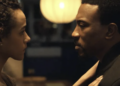
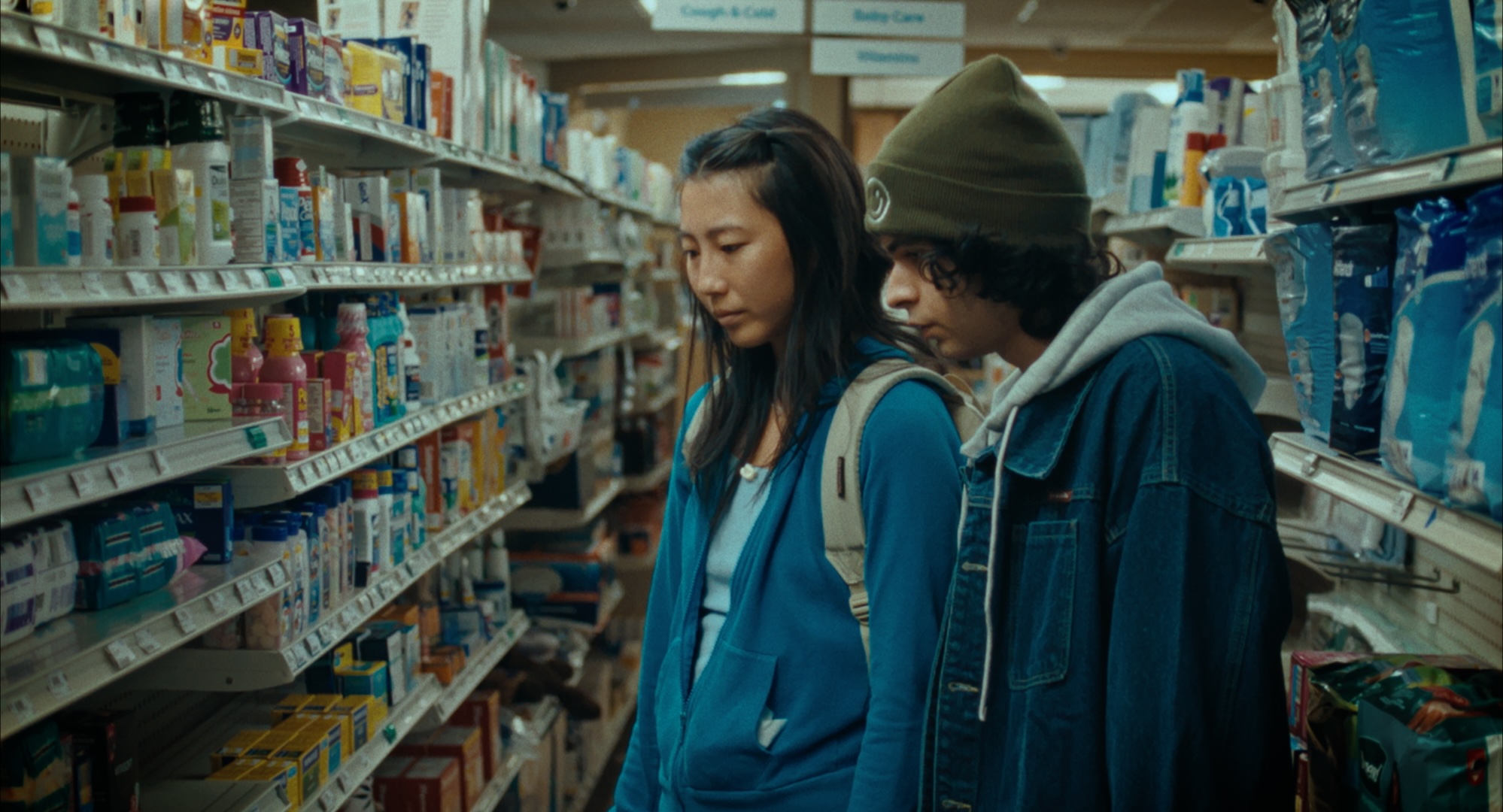
When we first meet Jo and Arash, they are enjoying a moment of blissful relaxation–the kind you might only see in movies or TV and you wonder when you’ll have them for yourself. They ask each other if their love with sustain for another twenty years, and the back and forth perfectly capture that feeling that the answers support. You can tell someone you love them if you’re still waiting to have more life experiences. The next time we see this couple together, they meet one another in a pharmacy trying to get a morning after pill.
“When I started writing it, I had this burning feeling that I wanted to say something around this experience that I had that took me a long time to find the center of it,” Rao says. “Becausre we get to such a dark, realistic place, starting in the pharmacy was really important for me to capture the place where these two young people are coming from. They are in young puppy love and for them it’s in this moment of stepping outside of that bubble of love and youth and being smacked in the face with the reality of what larger forces are at play and what they mean for an individual.
I wanted to shoot on 16 millimeter film, but the budget wouldn’t allow it. We wanted the treatment of the greens and blues in nature to feel quite nostalgic. I grew up outside of Nashville, Tennesee, and I did have this idyllic, Americana experience. I wanted to make sure that when I was bringing a story set in a small town that it wasn’t just a documentary about the realities of life now but more reminiscent of a fairy tale. Maybe like a Hansel and Gretel fairy tale gone wrong.”

Even the bikes reinforce Jo and Arash’s ages. It’s a specific detail linked to that moment in almost every teen’s life where you need to get around however you can. You know how important these bikes are whenever they have to barter one to get more cash.
“Those bikes are like lifelines for these kids,” she says. “Looking back on it helps me get into this new realist mode of what the physical reality of being there was like. I did some scouting with my cinematgrapher, Gianna Badiali, and our producer, Eliza Soros, both in Tennessee and in upstate New York, and that helped the writing process to just feeling moment by moment what it was for me, as a filmmaker, to walk into pharmacies and ask to shoot their location. They would ask what the film is about and those conversations we so loaded. They were curious about my stance and so that negotiation was very interesting.”
When Jo and her boyfriend cannot get the pill from a judgemental pharmacy, they meet an employee outside who tells them to meet him later and he will get the pill for them. I was familiar with Garrett Richmond a little from his Instagram, but the chemistry between him and Shirley Chen and Daniel Zolghadri, as Jo and Arash, is very strong. It’s almost as if this trio is working silently together on a covert operation, but no one wants the truth to come out.
“The character of the driver, Mason, was the hardest character to get right,” Rao admits. “When we were looking at different options and considering people, it’s so easy to cast a straight-up villain, and what I love about Garrett is that he made the character so layered. He came from a place of being an outcast himself in some ways, as the character, and so I think he brought a lot of vulnerability that was important to helping us believe that that person exists in that way. He was friendly enough that Jo and Arash even agreed to buy the pull from him. With Shirley and Daniel, they met for the first time the afternoon before the first day of shooting, and they had great chemistry. They shot that dreamy bedroom scene about 24 hours after they met one another.”
Rao strings the tension tightly, but it keeps changing as the scene progresses. Jo is sitting in the backseat with the pill resting on the front console. Mason seems like he wants to keep chatting or try and connect with Arash in a bro-y fashion as he makes a racist comment about Jo looking like one of his ex-girlfriends. Within the confines of a parked car, Rao had a lot to untangle.
“That was such a huge challenge in the writing, and I think it was solved in the acting,” she says. “In the writing, as soon as we are a certain age–at least for Americans–we are told by our patents to not go with strangers. It might be different in other places in the world, but we brace ourselves when there’s any kind of stranger, especially in a situation that is fraught. The big challenge was making it believable that they would get in the truck in the first place. It was a happy surprise that it started raining the day that we were filming that, and it became a great story beat. Because it started raining, they would have this conversation inside the truck. Garrett was great at working with that element and using the rain as a reason to keep them there. The actors gave us so many options every time we went through the scene, so it helped in the edit. It allowed the scene to start in a more relaxed place and build towards that climactic moment. It’s almost like they are animals trapped in a cage, and they don’t want to spook the other animals.”
I kept wondering if Arash wanted Jo to keep the child. Maybe he assumes that that young love can truly conquer anything? Is it naivete or a miscommunication? Young love meets an important test.
“With the ending beat where he walks away, I had thought of leaving that behind and staying with just Jo at the end,” Rao says. “Eliza was so, so insistent that it’s so crucial for us to see his experience as well. It really adds a lot to see that he is a witness to the system of values and lack of choice that’s imposed on us. It affects him. That’s why I ended up keeping that and also the title The Truck is signaling towards this larger system that we are all a part of and we have to cope with.”
We end the film with Jo running home. After Arash leaves, the distant shot is full of lush greens and a darkening sky. As she makes her way back home, relief rushes over her, as rain threatens to splash down on her. Right before she starts making her way back, Chen’s head is almost tilted with her eyes towards the sky. It’s almost as if we can hear her breathing as her feet hit the ground beneath her.
“I love that final shot, and we didn’t psychologize it too much,” she admits. “Shirley intuitively understood how layered that moment was, so we did it three or four times before it got too dark. For me, that moment is a few things. On a practical level, she’s running home, but, at the same time, she’s been through this experience that has left her in a state of wordless shock and catharsis. At the same time, it’s processing what’s just happened to her, so it’s kind of an escape. I wanted it to feel celebratory in a way that she has stepped into her power in some ways, at least in the realization that there are other powers at play. This kind of meeting of the world and see where your own two feet can take you. You can run into trouble and you can get yourself out at the same time. It’s a close call, and I do view it as a happy ending. She has learned something that she will bring into the next chapter of her life.”