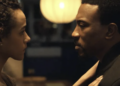
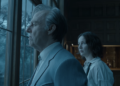
Our capabilities to create beauty and shocking atrocities weave together through Netflix’s Monster: The Ed Gein Story. Hollywood is at its most exciting and glamorous, but Plainfield, Wisconsin houses some of the most gruesome violence the country has ever seen up until that point. When that elegance collides with a curiosity for the grotesque, it makes for an unflinching combination. Costume designer Joshua Marsh brings his own questioning to all every period and to the lurid tale of Gein’s lore, and he leans into the notion of a character seeing the most emotionally authentic version of themselves for the first time
If I were Marsh, I wouldn’t know where to begin since this third entry into the Monster franchise covers such a wide swath of time, tastes, and locations. This is a season that also explores how audiences and creatives were so obsessed with Gein’s crimes that that fervor transferred into art like Psycho and The Texas Chainsaw Massacre. Rather than be daunted by the scope, Marsh was eager by the breadth of costuming he could bring to the project.
“The most rewarding thing about the first episode is that you are with Ed Gein in 1945 and then with Ilse Koch in 1941 and then Alfred Hitchcock in 1959, and all of those textures are completely different,” Marsh says. “By ’59, those textures and colors are super rich, like high-octane 1950s, and it’s about to become the swinging sixties. As we move forward, we move into Tobe Hooper and Texas Chainsaw before it comes the seventies and even the cinematic style is different. It was all bathed in this beautiful golden light. There was a lot of documentation of these places from the set of Chainsaw or Psycho and The Silence of the Lambs, and it was thrilling to be able to delve into each of those worlds of that research and really differentiate them all. In Plainfield, it wasn’t elegant and it wasn’t as polished, and, in Ilse Koch’s world, it’s this lap of luxury almost in Technicolor. These people were living the highest of lives when they were committing these unspeakable atrocities.”
Marsh dove headfirst into the research, especially when it came to the Old Hollywood sections of the story. So much of this chapter revolves around the things we aren’t supposed to observe and feel, and Marsh’s dedication to get the exact color and right details is admirable.
“We started with three scripts, and it was so inspiring just reading it,” he admits. “I had, I think, six pages of scrawled notes of things to look into, and I spent the first two weeks just going here, there, and everywhere to research and not just online. I was going to the Academy Museum to find real photos of Hitchcock in his home with Alma and real photos from his sets. I wanted to find the actual photographs of the dress from Psycho to ensure that the color was correct because it wasn’t in black-and-white. There were very particular palettes that go you specific depths of field and colors. I love the research, because I love learning. When I would sit in the concept meetings for each episode with Ryan [Murphy], he would present this depth of cultural reference and understand, so he might tell me to look into a Helmut Newton photographer or a Terrell painting or how a film from 1961 would inspire a scene.”
I haven’t seen a show where undergarments play such a vital role in the narrative. Early in the first episode, Ed’s mother, Augusta, catches her son wearing women’s underwear. When Ed ties up Addison Rae’s Evelyn Hartley, he strips her down to barely nothing, and the end of episode four a lingerie set is lit in gorgeous green coloring when it is laid across a bed. The end of the season even shows Richard Speck in prison in his own version of undergarments. Marsh is quick to point out that they are not just clothes to put on your body. They serve as an item to wear to help make the characters feel a certain type of way–even if no one else sees it. The costumes help us understand the trajectory of the characters.
“Almost one hundred percent of the lingerie was custom,” Marsh admits. “I think Anthony Perkins also wears it in the first scene where you meet him, and that was actually a vintage set that we found. One thing about all of it, though, was the feeling these people have when they wear it. That’s vital to the storytelling, and we needed to reflect that visually. When you do see Richard Speck towards the end of the story, he isn’t as desirable and it’s almost otherworldly as every time Ed or Anthony would put it on. We were seeing as they wanted themselves to see it, so it magically fits every time. When Ed puts on Adeline’s lingerie, Ed felt beautiful and embodied by it. The team that I worked with on Monster did such an excellent job regarding the construction and the fit of everything.
When speaking about some of the characters, a common visual of Ed Gein that I kept coming back to was when we see him in that red and black coat. It shields him from the cold when the snow is on the ground, or he might wear it every time he goes outdoors or to do work for his mother. It’s a startling thought, isn’t it? Ed Gein lurking outside in that red and black coat…
“Charlie [Hunnam] was so good at existing as this character. He would put the foundations on with those signature boots that were period appropriate logger boots that evoked almost like a 90s Ann Demeulemeester quality, which was a specific reference that Murphy made early on. It was almost magical. A lot of the show is about the perception of reality, and you think about a lot of these interactions that Ed was experiencing and what was real and what was imagined in his head.”

Vicky Krieps’ Ilse Koch symbolizes one of the darkest moments in the history of the world, but you feel drawn to her costuming since it’s to extravagant and lavish. We are introduced to her when her work is interrupted and she has to check in on her children as they attend a party. The sunshine yellow color of her dress betrays everything we learn from her after that introduction, and the material and silhouette look more sophisticated from the citizens of Plainfield. Her hat shields her eyes from the sun when she goes outside. We later see her working at a roller rink in a fantasy sequence where she dons a green get-up with a hat tilted to the side. It’s an odd feeling to be shocked by the saturation of the coloring of a costume, but we feel like we shouldn’t desire the clothes that Ilse wears considering the crimes she has committed.
“That 1950s diner is almost like a sexualized ’50s diner waitress in those green tones, and one of my favorite looks is one that she doesn’t wear very long in the pilot,” he says. “She wears this green recreation of [Elsa] Schiaparelli’s 1938 Skeleton Dress when she’s giving her husband a very upsetting birthday gift. Vicky Krieps was so down to be a storyteller with us, and we had a fitting on a Sunday afternoon for five or six hours just trying on throngs of vintage pieces to find the right things that spoke to the level of horrific opulence that this woman would’ve aspired to. Spending so much time in Technicolor after being in Ed’s neutral world of Plainfield really juxtaposed those two worlds. It’s almost Brechtian how uncomfortable it makes you feel when you start to appreciate something within this devastating environment.
It’s challenging to speak to Ilse’s costumes sometimes, but people like her had this access because of all of the evil that they were perpetrating. It’s hard to think about how they lived this hedonistic fantasy life as you consider what they did to get it. I wanted to push the color and the saturation even further in a lot of moments.”
When Monster transports to the world of Hollywood, the costuming feels even more glamorous because we remember the period so fondly. Much like plunging himself into the research, Marsh delighted in recreated looks from an era gone by.
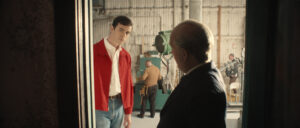
“It was really thrilling to recreate things that felt authentic to those people,” he says. “That very first ensemble that Alma wears a dinner was something that we made custom. If you look at pictures of her, she rarely smiles, but she’s always tailored very well. When it came to Tom Hollander as Alfred Hitchcock, he had very specific ideas down to the length of his neckties and where they would sit on his body. Perhaps Alma would tie them for him. Some of my favorite scenes are on the Paramount lot like with Anthony Perkins in the iconic red jacket, and we were shooting that on the backlot at Paramount. It was surreal to see, because when people talk about the love of the movies, they often refer to these iconic pieces of cinema from the ’40s, ’50s, and ’60s. I felt so privileged to do that.”

Of any of the outfits that I want to steal from Marsh’s designs, it would have to be Deputy Frank Worden’s overcoat for its weight or texture. And Anthony Perkins’ bright red sweater. Marsh could’ve snatched some from each era, if he wanted to, but he decided on a rather practical item
“I love all of the deputies’ clothes,” he says. “Frank Worden’s mother was obsessed with Thanksgiving, so he had this turkey necktie that he wore almost constantly after his mother’s untimely demise. That was one of my favorite touches even though you might not see it under a sweater or a vest. I will always love Ed’s classic Woolrich jackets. In the finale, Augusta has this incredible old Hollywood dress that was reminiscent of Amy Semple McPherson. I have to say, too, that there is a beat in episode one where a truck full of hunters passes by in incredible 1940s hunting attire outside the pharmacy. I will say that I genuinely wanted like three or five of those jackets. We were filming in Chicago in February, and I really could have used those jackets.”
Monster: The Ed Gein Story is streaming now on Netflix.