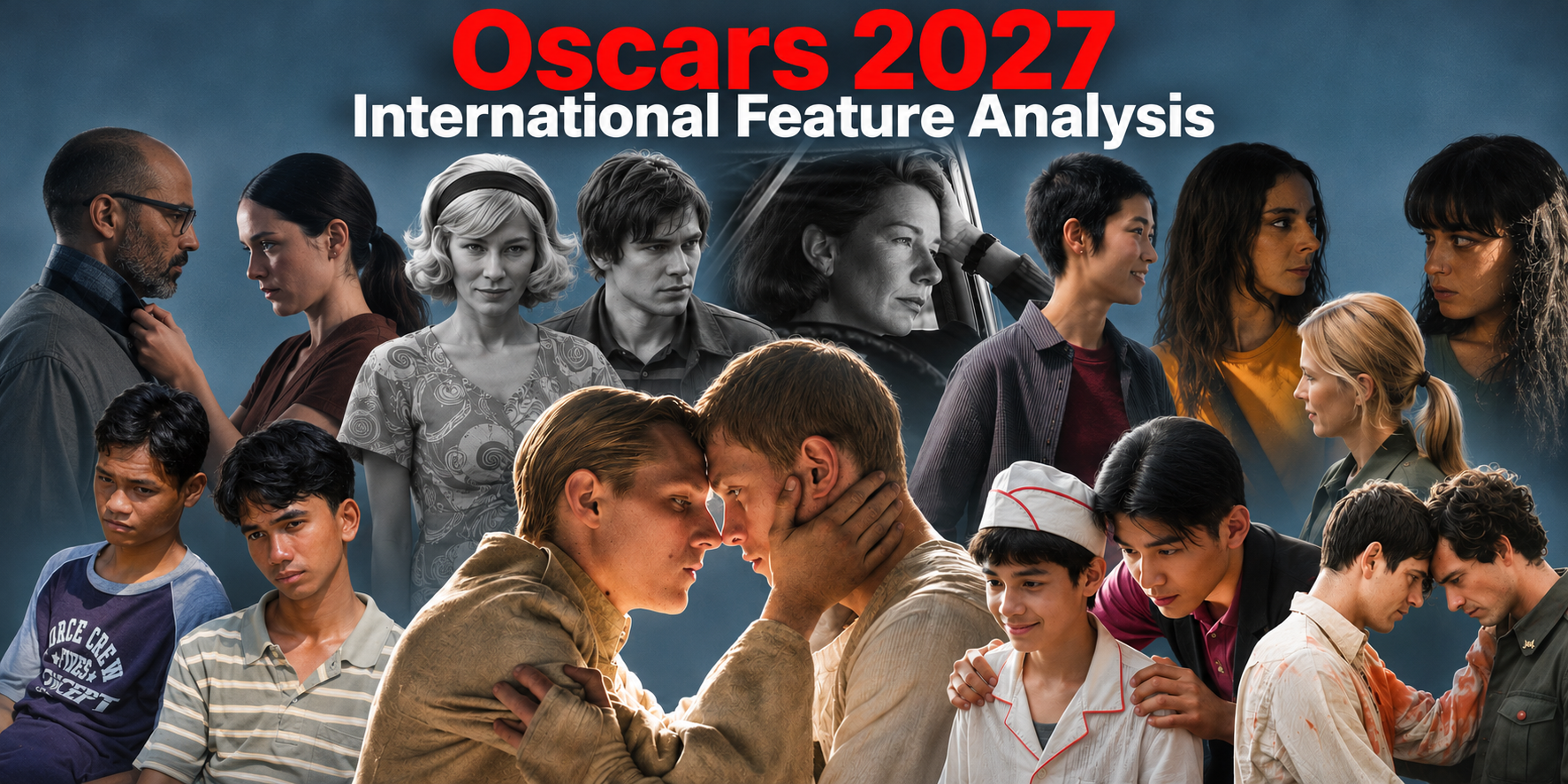
The Official List of eligible International Features for this year’s Academy Awards has been released! And it’s one for the books, with a record 104 films in competition.
This includes four Festival winners, per the new AMPAS rules allowing top winners from several Fests automatic eligibility.
After insisting I would not attempt to watch all of them, I shifted gears and ended up seeing 97 of the 104 I was allowed access to (see below), plus one not on the final list, Mārama, New Zealand’s entry. I did see it and a review appears near the end of this article.
And, as per usual, as I began to view each film, both on the big screen in theaters and on my big screen 4K HDTV, I got sucked in by so many fascinating, inventive, authentic stories, and was introduced to a cornucopia of diverse cultures. Many of these movies shed light on injustices and atrocities being committed. Some argue for understanding and connection in a world increasingly divided. Some are just really funny, well-made and tell riveting story. They ALL need champions.
The crop this year is not only the largest but the best yet.
You can read all about my pleas to the Academy for revisions to the Internation Feature category rules as well as my constant prayer/wish/beseechment that they expand the category from 5 to 10 nominees HERE.
Scroll all the way down for My Personal Top 15 as well as a list of what I consider to be the Best International Feature Performances and Directors. A huge number of fierce female performances dominated this year!
FYI: I was unable to get access to the following, despite sending out countless emails to producers, distributors and production companies. Azerbaijan: Taghiyev School, Cameroon: Mabanda, Guatemala: Mountains of Fire (Cordillera de Fuego), Mongolia: Independence: Keeper of the Decree, Palestine: Citizen Osama, Busan Film Fest Winner: Midday Meal.
And one country, Turkey, denied my request to see their film Like a Limbless Tree, via an email from Kean & Kolar Communications. When I asked for a reason, they did not reply.
This year, I am breaking my list down into six categories, and keep in mind, this is my subjective opinion.
Simply The Best
Likely to Make the Short List (Deserved and Critics Darlings)
Gems/Dark Horses That Should Be in the Conversation
Worthy of Consideration
Not Without Merit
The Rest (Not My Cup of Film Tea, But Could Be Yours)
Here we go!
Simply The Best
Belgium: Coward

Out filmmaker Lukas Dhont has made three features, Girl (2018), Close (2022) and now, Coward. All three have been submitted for the International Feature Oscar by Belgium. Close received a nomination. Here’s hoping Coward follows suit.
Dhont has fashioned his most ambitious feature yet.
Set against the backdrop of the First World War, Coward centers on Pierre (astounding newcomer Emmanuel Macchia), a shy soldier new to the front, who is both tentative and bent on proving he has what it takes. Part of his duties is going out and collecting the wounded and dead during the 15-minute cease-fires, a rather traumatizing task.
Pierre soon meets fellow soldier Francis (Valentin Campagne, a fab dynamo), an outgoing, flamboyant theater artists who puts on shows to entertain his war-torn comrades, often in drag, right on the front lines. Both young men find themselves deeply attracted to one another and a very different kind of love story emerges from the horrors of war.
The film is brilliantly directed and courageously and densely written by Dhont and Angelo Tijssens.
Both leads—especially Macchia—deliver raw, authentic, yet lyrical turns. These are two doubly doomed lads desperately trying to grab onto bits and pieces of happiness, passion, and even some glory. Ultimately, they’re just searching for a respite from the madness and a desire to live a life where they can love one another without becoming social pariahs.
Coward struck me on a visceral, intellectual and emotional level. It’s the kind of gay love story that is never told—certainly not in this way–set against the backdrop of one of the bloodiest conflicts of the last century. Most war films center on valor and focus on heroic acts, even antiwar movies concentrate on the carnage. Sure, we get soldier camaraderie, but never with the warmth and tenderness shown here. And certainly not epic yet intimate, psychologically complex sagas boasting a sweet histoire d’amour at its core.
Honestly, the film should be considered in many categories including Best Picture, Best Actor (the truly impressive Macchia), Best Director, Best Screenplay as well as for a slew of tech awards.
Dhont has previously won both the Camera d’Or and the Queer Palm at Cannes for his controversial debut feature Girl and picked up the Cannes Grand Prix for his thought-provoking sophomore effort Close.
Coward won its two leads, Macchia & Campagne, a shared best actor trophy at this year’s Cannes Film Festival.
Watch my VIDEO interview with Dhont.
Belgium’s submissions have received eight nominations but no wins. Dhont’s Close was the last to be nominated in 2022. In addition, the country was shortlisted twice.
The Dardenne Brothers have represented Belgium five times, submission-wise: Rosetta(1999), The Son (2002), The Child (2005) and Two Days, One Night (2014) and last year’s Young Mothers—none were nominated—Two Days wasn’t even shortlisted but did garner a just Best Actress Oscar nomination for Marion Cotillard.
This is the country’s 51st submission.
Coward will be released in theaters, by MUBI, Christmas Day, December 25, 2026.
Spain: La Bola Negra
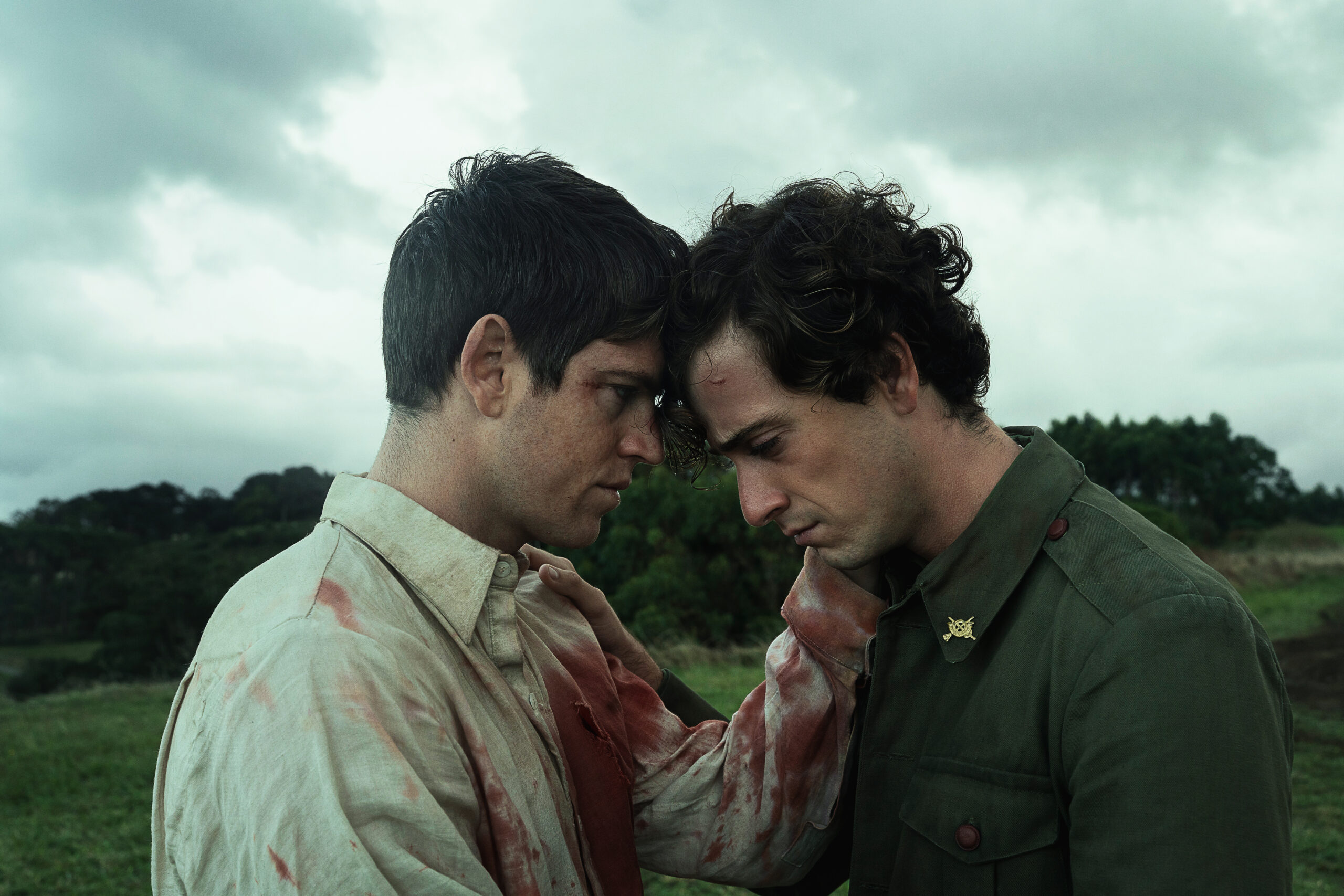
There are so many wonderful things to be said about Los Javis’ (Javier Calvo and Javier Ambrossi) sprawling historical examination of queer Spanish history, La Bola Negra(The Black Ball). It’s one of the boldest films of 2026. It’s super gay (in so many ways). It’s empowering. It takes a slew of big swings. It’s gorgeous to look at thanks to Gris Jordana stunning 35mm camerawork. It contains some of the most memorable sequences I’ve seen in a while. The film also boasts the most outstanding ensemble of the year. I could go on.
It’s one of two gay-themed, war-centric international features (along with Coward) telling vital and groundbreaking stories.
Inspired by the four surviving pages of Federico García Lorca’s unfinished 1936 titular play as well as Alberto Conejero’s play La piedra oscura (The Dark Stone), the narrative weaves together three different timelines in expert non-linear fashion.
In 1932 Granada, Carlos (impressive newcomer Milo Quifes), a well-to-do young man, is turned down to become a member of an elite club because he refuses to deny he is homosexual.
In 1937, while the Spanish Civil War rages and fascism forces a foothold in Europe, trumpet player and young Nationalist Sebastián (singer-songwriter Guitarricadelafuente, extraordinary), watches his village bombed by Mussolini’s army and is then tasked with guarding a severely wounded Republican prisoner Rafael Rodríguez Rapún (handsome Miguel Bernardeau), who happens to be Lorca’s real-life lover, before he is executed.
Finally in 2017 Madrid, student and playwright Alberto (Carlos González) discovers that his grandfather has died and left him a curious inheritance that he must show up to receive—which also leads back to Lorca.
Penélope Cruz dazzles in a small but potent turn as a cabaret star. And Glenn Close shows up to help put final plot pieces together.
Los Javis won the Best Director Prize at this year’s Cannes Film Festival and are almost guaranteed an Oscar nomination in the same category as well as a tons of others, including Best Picture. It may also beat Emilia Pérez’s 13-noms haul two years ago. It’s a far more deserving film as well.
Spain has been nominated 22 times and won 4 awards—José Luis Garci’s Begin the Beguine (1982), Fernando Trueba’s Belle Époque (1993), Pedro Almodóvar’s All About My Mother (1999) and Alejandro Amenábar’s The Sea Inside (2004).
The country’s last two nominations were in 2023 for J.A. Bayona’s stunner, Society of the Snow, and last year for Oliver Laxe’s brilliant Sirât.
Not surprising, Almodóvar is Spain’s most submitted filmmaker with seven selections. His pelicula, Volver, made the short list in 2006.
This is the country’s 69th submission.
Netflix has released La Bola Negra in unprecedented fashion, giving it a 47-day theatrical window before it begins streaming on December 2nd.
Japan: All of a Sudden
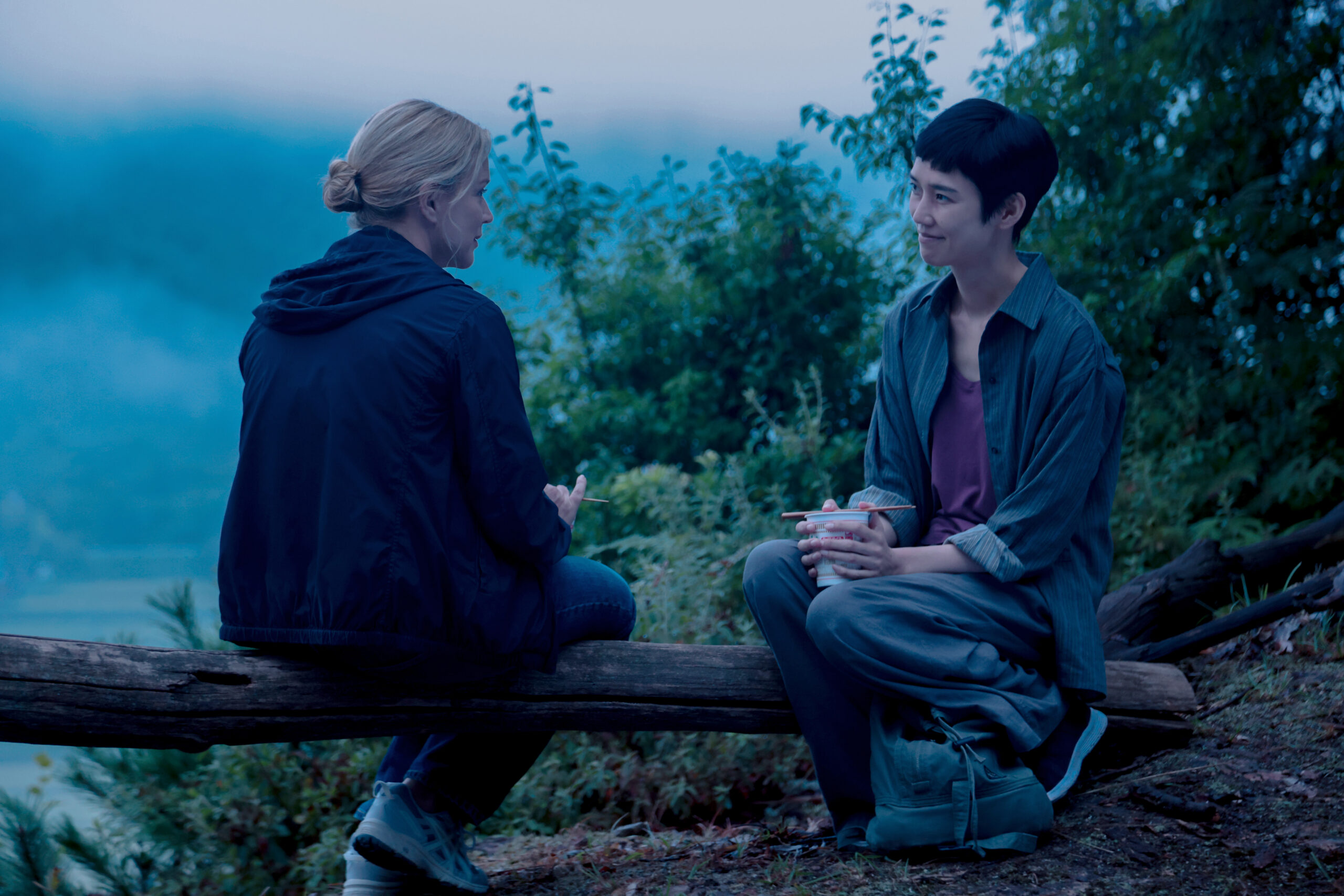
Ryûsuke Hamaguchi’s 196-minute drama, All of a Sudden, is a joyous, profound cinematic experience from beginning to end and should be in the running for multiple Oscar nominations. Trust me, it’s unlike anything you’ve seen onscreen.
Virginie Efira and Tao Okamoto tied for the Best Actress Award at this year’s Cannes Film Festival. Both deliver some of the best acting work of 2026.
I cannot rave enough about this film. For that, you can read my New York Film Festival review.
Japan has been nominated 18 times, including three years ago for Wim Wenders’ Perfect Days, and won 3 honorary awards and 2 competitive Oscars for Yōjirō Takita’s Departures in 2008 and Hamaguchi’s Drive My Car in 2021, which was the first Japanese film ever nominated for Best Picture. Can Hamaguchi do it again?
Last year, Sang-Il Lee’s beguiling epic, Kokuho, made the short list and should have received a nomination! It was recognized with a nod in the Best Achievement in Makeup and Hairstyling category.
Japan has submitted 70 times, since the inception of the category. They did not submit in 1976.
The film is being release in theaters, by NEON, on November 25, 2026.
Romania: Fjord
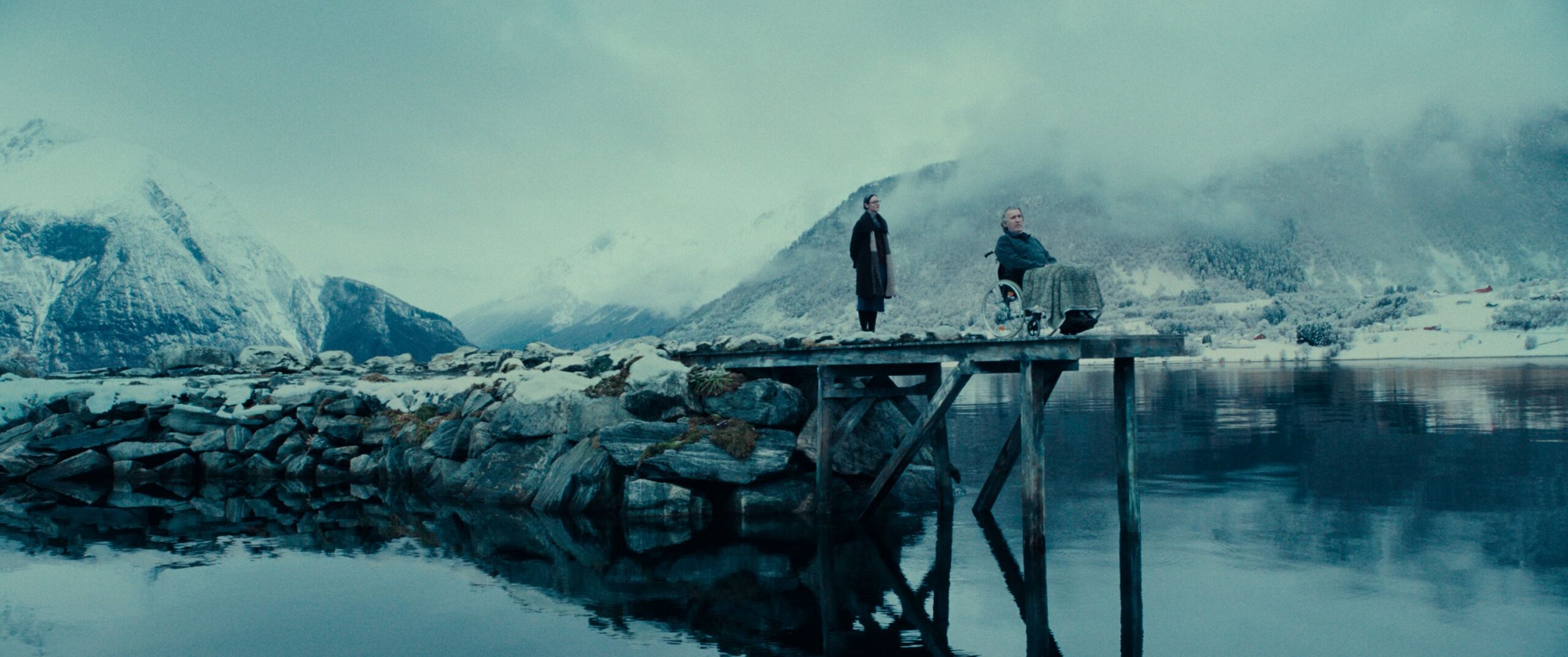
Simply one of the best and most-thought-provoking films of 2026 and winner of the Palme d’Or at this year’s Cannes Film Festival, Cristian Mungiu’s mesmerizing drama, Fjord, has been dividing outlets, social media and otherwise, on where it stands politically. Mungiu, while enjoying all the speculation, has made a film that can be interpreted in many different ways. I recently read a misguided view of the film from a prominent entertainment journalist that had me grinning since I feel he totally missed the point. But maybe the actual point is that we are all allowed our own takes on films, especially films so rich in ambiguity.
Read my New York Film Festival Review.
Watch my interview with the extraordinary lead, Renate Reinsve.
Since the film won the Palme it automatically qualified for International Feature consideration under the new rules so the Romanian selection committee could have chosen a different film. They did not.
Although it was submitted in 2007, Mungiu’s failure to get a nod for the critically acclaimed 4 Months, 3 Weeks and 2 Days led to a rethink in AMPAS’s foreign film voting process.
Romania has received one nomination, in 2020 for Alexander Nanau’s Collective and was shortlisted once for Mungiu’s Beyond the Hills in 2012.
This is the country’s 41st submission.
Neon released Fjord in theaters in the U.S. in October 2026.
Poland: Fatherland
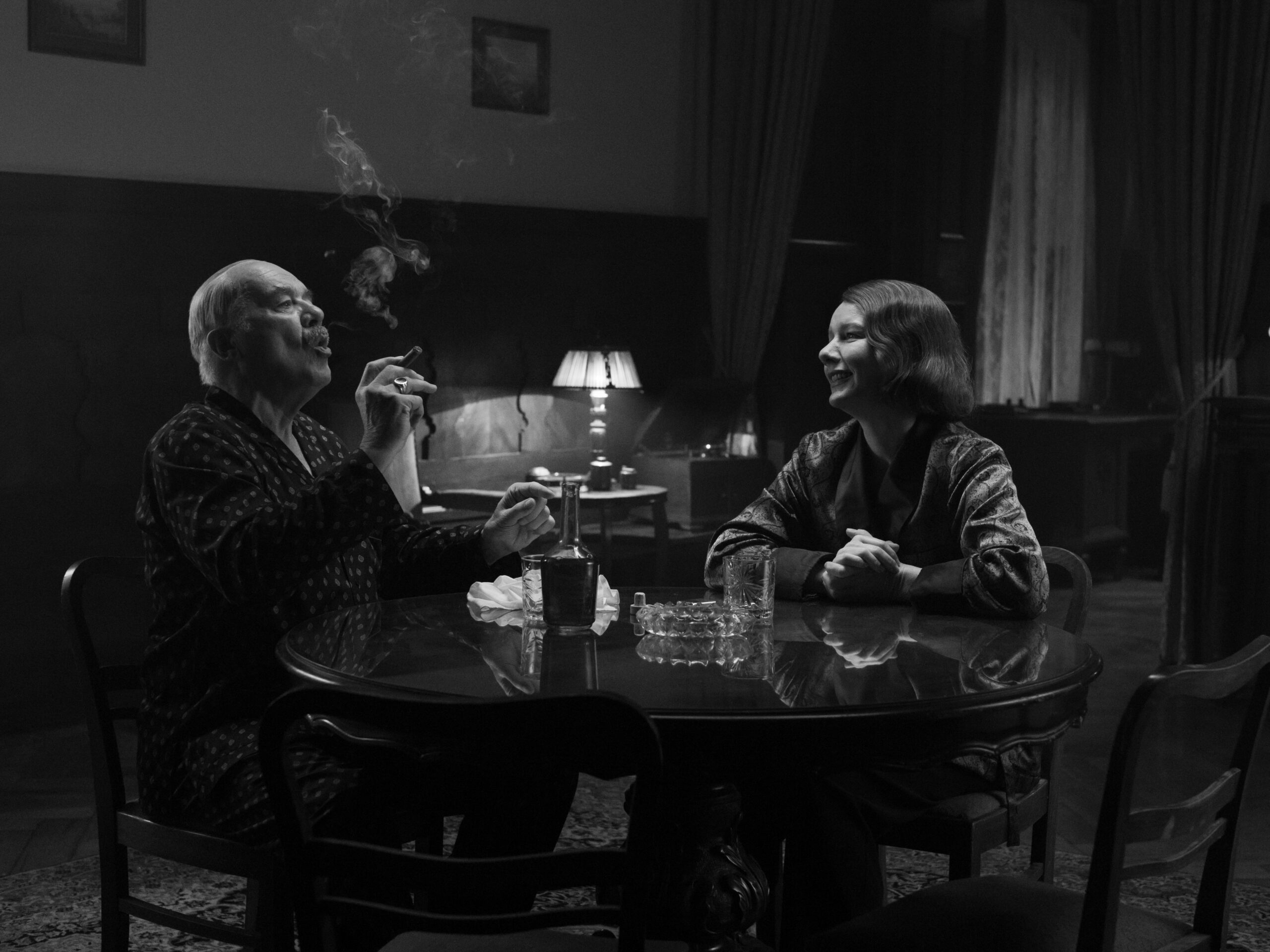
It’s CineHüllerMania!
Four grand filmic achievements and the best is Sandra Hüller’s remarkable portrait of a fictionalized version of Erica Mann (with many factual touches) in Paweł Pawlikowski’s hypnotic Fatherland, a film that deserves to be in the awards mix.
Some familiarity with the Mann family will enrich your viewing but it isn’t necessary. Although, once the film is over I dare you not to go down an internet rabbit hole learning about the Manns and then immediately see the film again!
Read my New York Film Festival review of Fatherland.
Watch my interview with the immersive Sandra Hüller.
Poland has been nominated 13 times, winning for Pawlikowski’s Ida in 2014. The film was also nominated for Cinematography (Łukasz Żal).
The country’s first nod was for Roman Polanski’s Knife in the Water in 1963 and its most recent was in 2022 for Jerzy Skolimowski’s EO.
Pawlikowski’s 2018 film, Cold War, was nominated for Best Foreign Language Film, Best Director and Best Cinematography (Żal).
AMPAS does seem to appreciate Pawlikowski’s work so that could bode well for Fatherland.
This is Poland’s 58th submission.
The film was released in theaters, by MUBI, last month.
Cyprus: Hold Onto Me
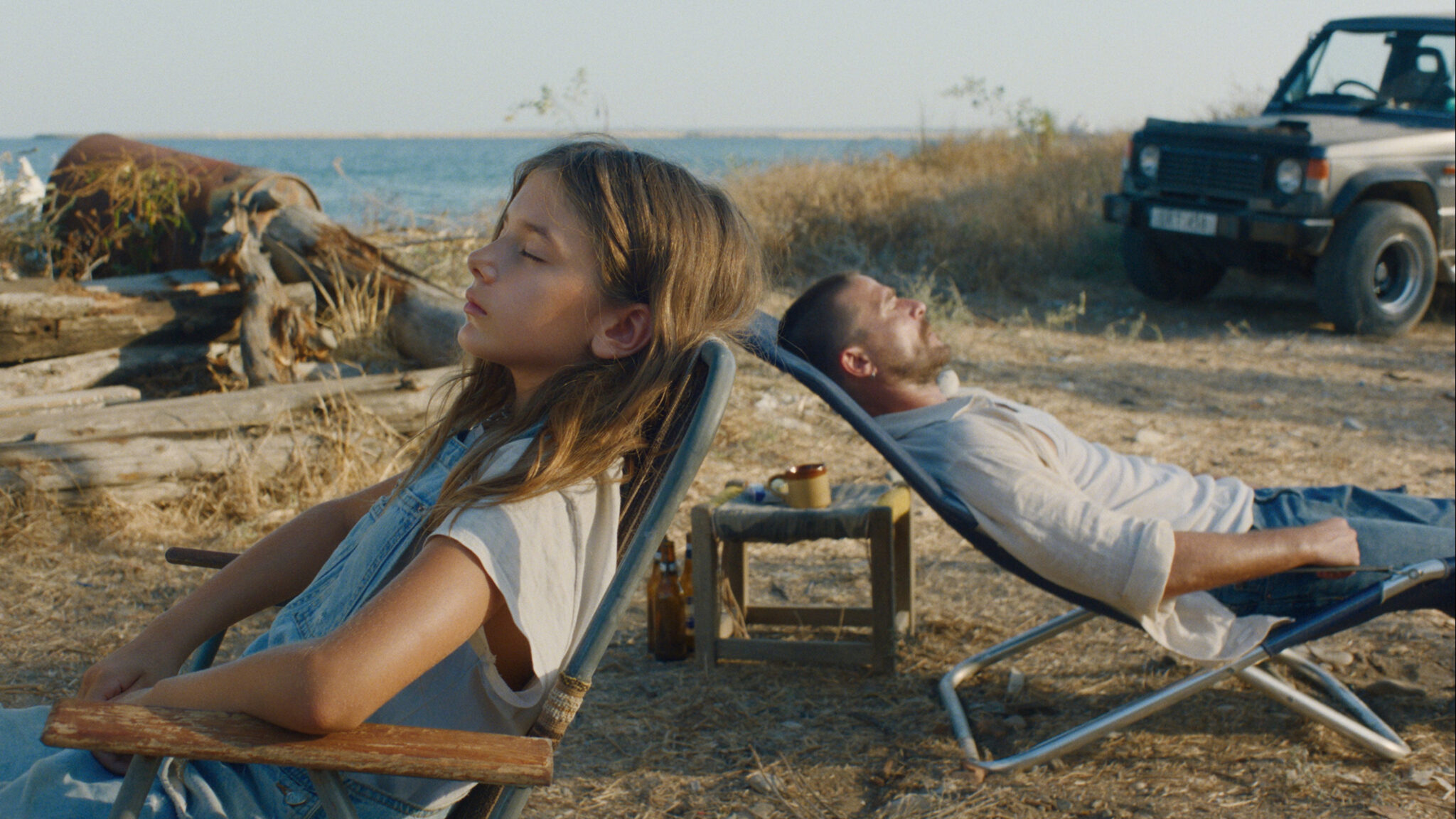
I don’t want to tout my own horn, but when I saw this at Sundance, in my review I wrote, “Hold Onto Me should be considered by Cyprus to be its inaugural International Feature Oscar submission.”
And it has been. It’s a true gem that, if seen by enough AMPAS members, could upset everyone’s assured apple cart about what will make the final five. It should definitely show up on the short list.
Hold Onto Me won the Audience Award: World Cinema Dramatic at Sundance.
Read my review HERE.
Watch my INTERVIEW with writer-director Myrsini Aristidou & lead actor Christos Passalis.
Lebanon: Furies
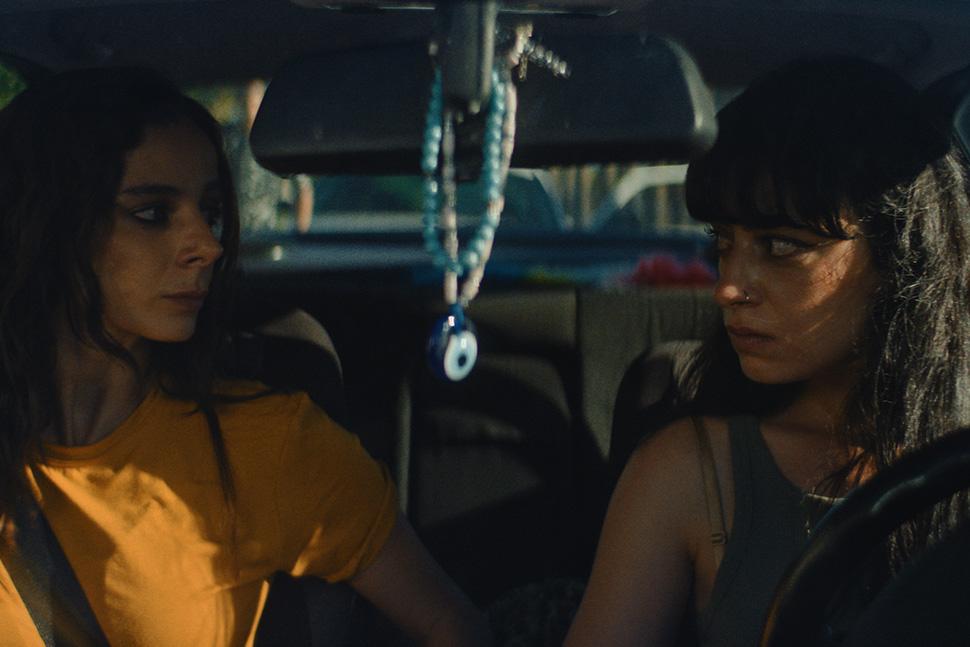
I absolutely loved this film!
First-time feature director Rami Kodeih and his co-writer Nora Mariana have fashioned a Thelma and Louise for a new generation with Furies — a thrilling, intense, sometimes hilarious, always enthralling tale of female empowerment in a world of gross misogyny.
It’s also a heist flick, a road movie, and a knockout!
The film is set in Lebanon in 2022 when the government froze everyone’s assets, not allowing anyone to withdraw their own funds from banks, even in life-threatening situations.
Maro (Rym Mroue) has a young son and barely makes ends meet as a hairdresser. Her sister Dalia (Maria Nakouzi) is dying of cancer and needs money for treatment to survive. Maro pleads with the bank manager, to no avail. Dalia even gives sex work a try to earn money but ends up almost raped and doing real testicular harm to the pig who assaulted her.
So, the sisters come up with a wacky scheme to rob the bank and take their own money, after Maro discovers an apartment that is right next to the back, after being rescued by a super sexy man (Hadi Bou Ayash) who lives there. They enlist the help of Sunshine (Issam Bou Khaled), a former Christian Militia fighter and Hamza (Hasan Akil) a loon of a loose cannon, who provides much of the film’s humor and much of the viewer frustration.
Divulging anymore plot will ruin the sheer joy of watching this film, which at 133 minutes should have felt overlong but I didn’t want it to end.
There’s a brilliant scene where Maro is trying to get the bank manager to sympathize with her and is stuck watching him eat his salad in the most disgusting manner. What she does when she’s had enough of his cow-chewing and refusal to help is priceless…and quite cathartic.
There are lots of complications and some of them are predictable. And the moronic loose cannon archetype is so overdone. But you forgive all this because of the fierce and furious filmmaking. Also, kudos to Kodeih and Mariana for a hopeful ending.
Mroue and Nakouzi are fantabulous together. A true sisterhood.
I cannot recommend this film enough as a tonic to living in a time swimming in poisonous patriarchal leadership.
George Clooney and Grant Heslov are executive producers for Smokehouse Pictures.
The film world premiered in the Official Venice Spotlight section of this year’s Venice Film Festival.
Lebanon has submitted 22 times and received two nominations for Ziad Doueiri’s The Insult (2017) and Nadine Labaki’s Capernaum (2018) but has yet to win.
Rwanda: Ben’Imana
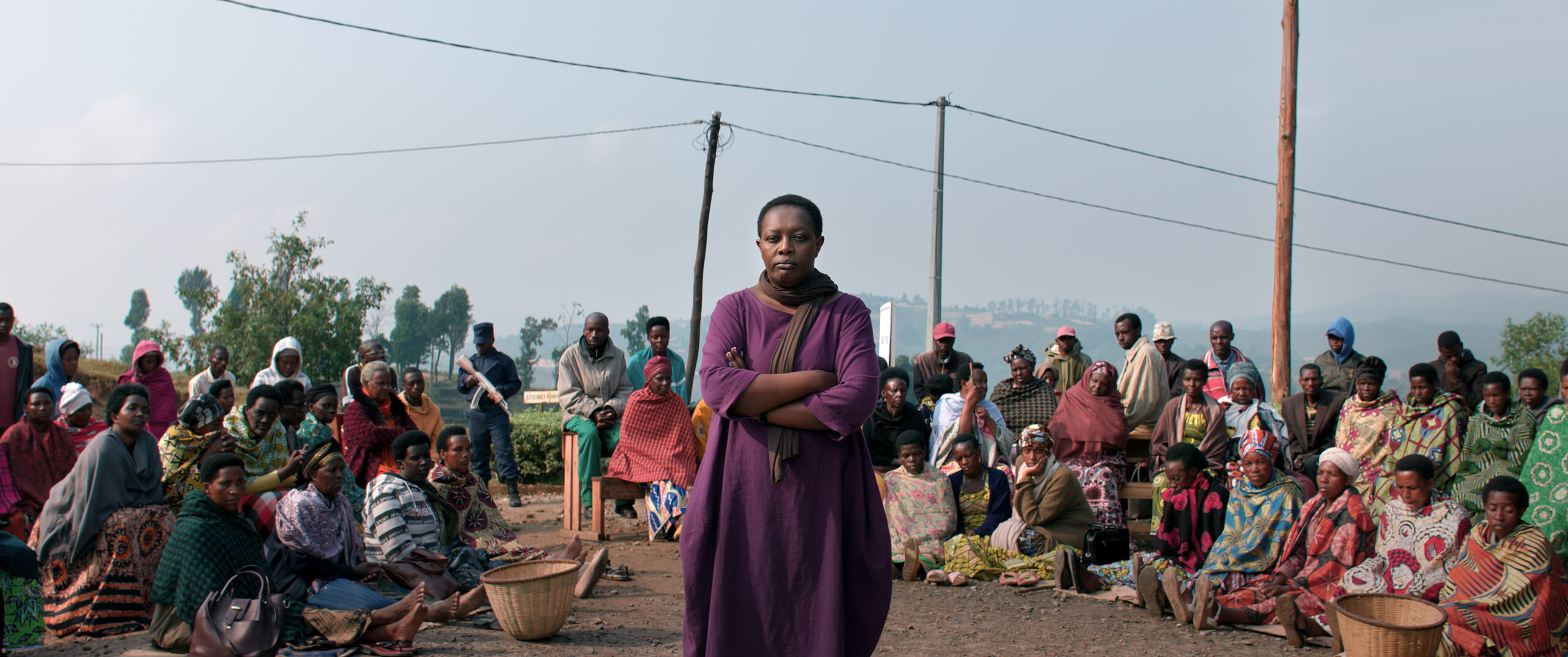
Winner of both the Camera d’Or and the Un Certain Regard: FIPRESCI Prize at this year’s Cannes Film Festival, Marie Clémentine Dusabejambo’s Ben’Imana is an extraordinary, powerful look at the women traumatized by the genocide against the Tutsi, who are incredulously expected to come together to figure out a way to move forward with their past attackers.
Set in a mountainous Rwandan village in 2012, 18 years after the inconceivable slaughters, the film centers on Vénéranda (Clémentine U. Nyirinkindi) who, in the first scene, comes before a tribunal of sorts and is requested to forgive villager Karangwa (Aime Valens Tuyisenge) for his insidious deeds, which include rape and murder. She does so, much to the ire and consternation of her dying sister Suzanne (Isabelle Kabano, the sole professional actor in the cast) for reasons that become clearer as the narrative unfolds.
Vénéranda has an intelligent college-bound teen daughter Tina (Kesia Kelly Nishimwe) whose future becomes tangled with the past and there must be some kind of reckoning.
Dusabejambo and her co-screenwriter Delphine Agut do not spare the audience the gruesome details of the travesties neighbors inflicted on one another and how easily loving friends became brutal, machete-wielding enemies.
For historical context, Hutu extremists and militias systematically killed an estimated 500,000 to over 662,000 Tutsis over the course of 100 days in 1994. The word genocide is bandied about too often without historical context nowadays. THAT was a true genocide.
The filmmakers do not present any easy answers. Instead, the audience is left to ponder what forgiveness even means and how it’s up to the women of the communities to come together—mothers of both the assassins and assassinated—women who were savagely raped, to take on the impossible but vital task.
Kabano delivers the film’s most potent and devastating turn as a woman filled with fire and fury, struck down with AIDS, who cannot fathom the forced national reconciliation program that is supposed to somehow heal the torn-to-shreds country.
Ben’Imana is Rwanda’s very first Oscar submission and it is a cinematic achievement that must be considered not just for its timely and potent political content but because it’s truly remarkable filmmaking.
Likely to Make the Short List (Deserved & Critics Darlings)
France: Minotaur
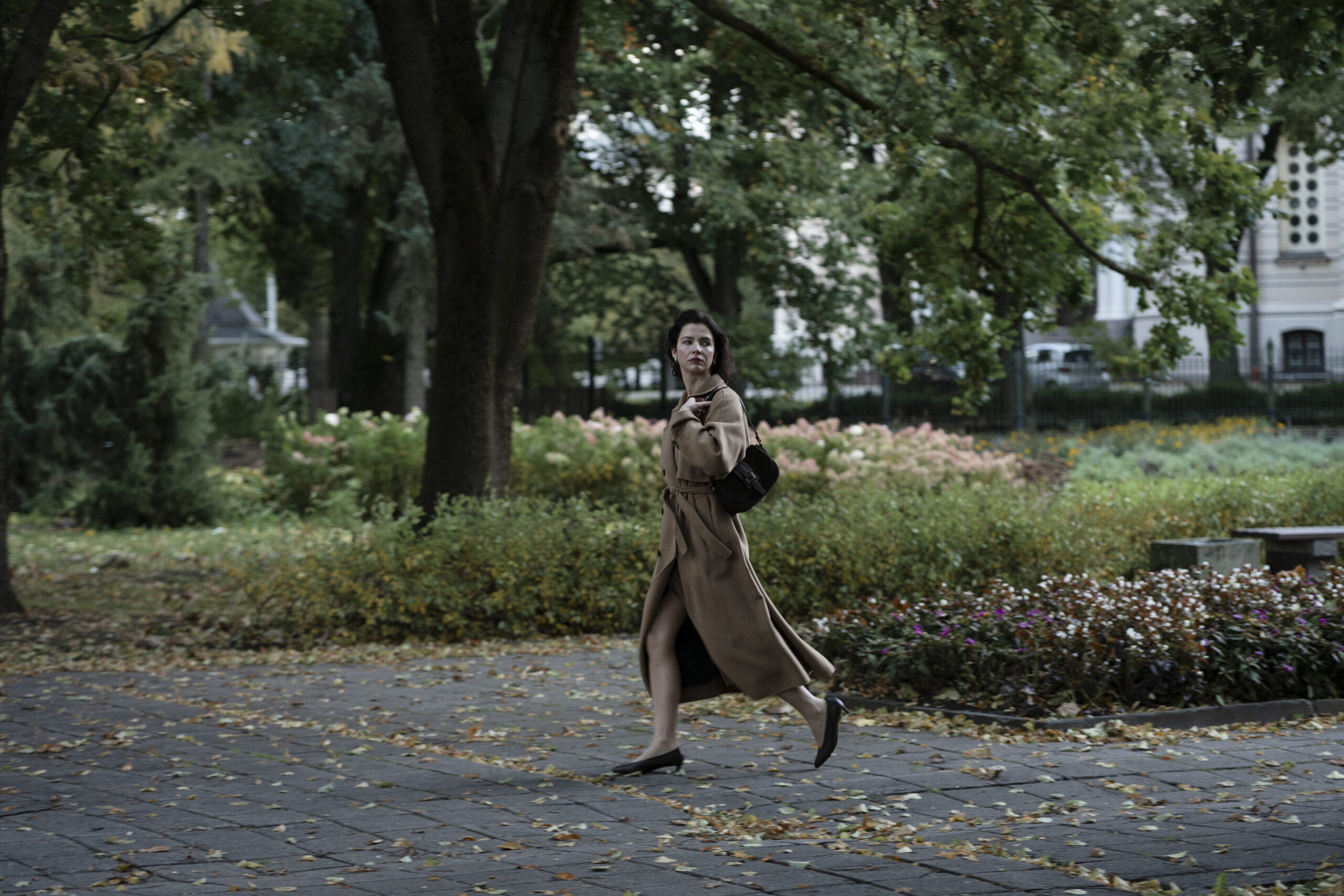
Last year France submitted a non-French language film, Jafar Panahi’s It Was Just an Accident, and it was nominated for Best International Feature, after winning the Palm d’Or at Cannes and receiving great critical praise. The film was impressive, yet there were many better films that could have been included. The Iranian director made the film in secret, risking imprisonment.
This year France has done something quite similar with Andrey Zvyagintsev’s Minotaur, a solid effort, but nothing groundbreaking. The director suffered a life-threatening, Covid-related illness and, after criticizing Russia’s invasion of Ukraine, he was forced to move to France, where he lives in exile.
France is establishing a pattern of submitting films where the respected director is a political enemy of their own country who has made films that critique said country.
Of the five films that were in contention for selection, Marine Atlan’s La Gradiva was more deserving. But that’s my minority opinion.
Minotaur is a remake of Claude Chabrol’s classic 1969 thriller, Las Femme infidèle, which was then bastardized by Adrian Lyne with his messy 2002 English-language revision Unfaithful. So, if it feels predictable and unoriginal, well, there you go.
The filmmaker makes the narrative his own by adding a dose of Greek mythology to the story. The protagonist, Gleb (Dmitriy Mazurov), is trapped in a maze, mostly of his own making. His wife, Galina (Iris Lebedeva), is having an affair but that’s because of his inattentiveness and infidelities. He’s stuck doing the dirty work of a totalitarian government that treats humans as expendable.
I do admire the critique of Russia’s unflinching and ruthless abuse of power.
What makes the film work, besides the deft direction, is Lebedeva’s superb, nuanced performance. She’s a captivating figure, a force of nature.
Yuriy Zavalnyouk makes an impression in the too-small role of photographer Boris, Galina’s lover.
As much as I admire the film and the director, the end result left me more frustrated than anything else.
Ironically, Zvyagintsev’s last two films, Leviathan (2014) and Loveless (2017) were both submitted by Russia and both received nominations. His 2003 film, The Return was also entered by Russia.
France holds the record for the most nominations with 40. Their submissions have won 12 times (including 3 honorary) but not since 1992 with Régis Wargnier’s Indochine. France was nominated the last two years in a row for Jacques Audiard’s Emilia Pérez and Panahi’s It Was Just an Accident.
France has submitted 71 times and is the only country that has consistently entered the awards competition every year since the inception of the competitive category in 1956, winning 3 honorary awards prior to that date.
Minotaur was released in theaters, by MUBI, November 20, 2026.
South Korea: Possible Love
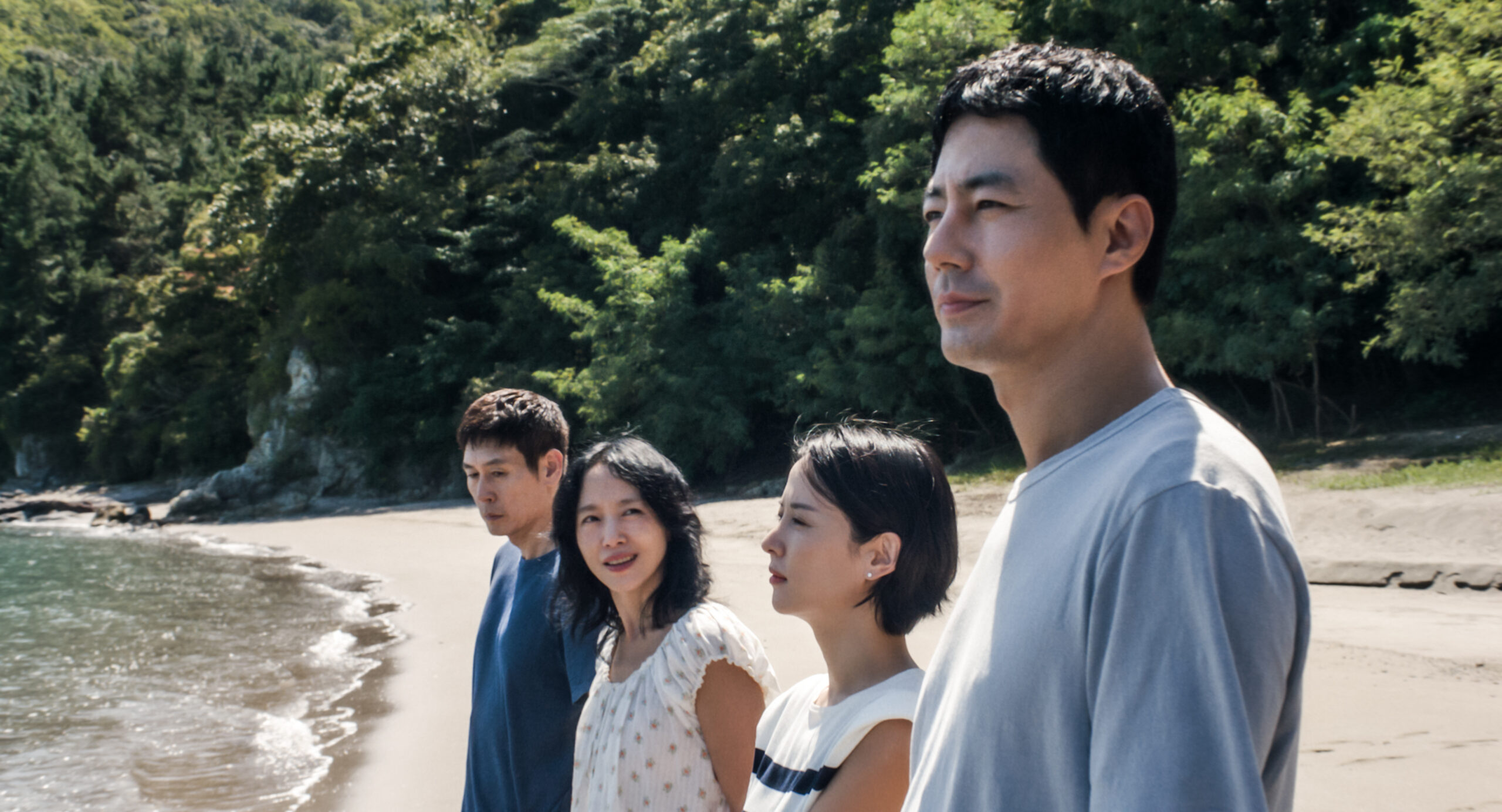
Lee Chang-dong’s Possible Love won the Silver Lion at this year’s Venice Film Festival and is a critical darling.
The story, which examines class differences, docu-journo ethics and marriage compatibility, follows two very different married couples whose lives intersect when a rich and ambitious doc filmmaker, Ye-ji (Cho Yeo-jeong) talks outspoken wife Mi-ok (Jeon Do-yeon) and her struggling husband Ho-seok (Sul Kyung-gu) into taking part in her project. Things get confusing and lines are crossed when Ye-ji and her good-looking, cocky, businessman husband, Sang-woo (Zo In-sung), invite the working-class couple and their young son to their beachfront home for a getaway.
Welder Ho-seok was recently laid off after a long strike. He was also severely beaten by the police and jailed. Ye-ji wants to get his story on camera. She sincerely befriends or slyly manipulates (depending on how you look at it) the overly congenial Ye-ji, who adores attention.
The film is an overlong (at 164 minutes) slow-burn, psychological study that peters out with no real payoff. Alas, I am in the minority in thinking it is, indeed, a very good film with a quartet of terrific performances, but it is not anything new or special—and I saw it twice.
Lee’s Burning was the first South Korean film to make the short list in 2018. A year later Bong Joon Ho’s Parasite was nominated, won and also grabbed Best Picture, Director and Original Screenplay. making it the very first International Feature to ever win the top Oscar (over 1917!!!) Park Chan-wook’s Decision to Leave, made the short list in 2022 and was also nominated for Best Picture.
Last year, another overrated South Korean film, Park’s No Other Choice, made the short list but was not nominated.
This is the country’s 39th submission.
The film is currently streaming on Netflix. It had a theatrical release in October.
Austria: Rose
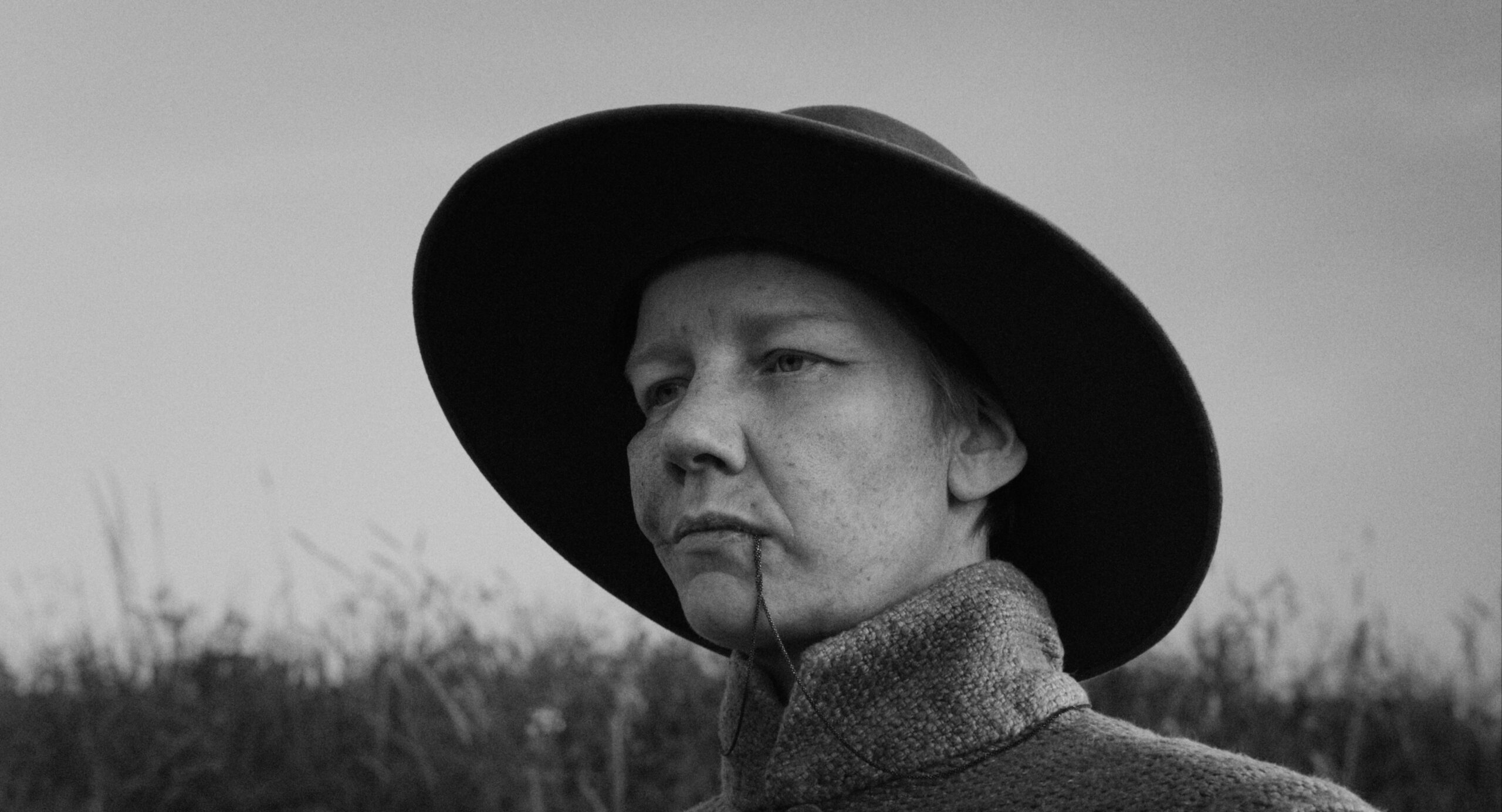
Sandra Hüller is having a most extraordinary year with great work in Fatherland, Project Hail Mary, Digger and, of course, her astonishing transformation in Markus Schleinzer’s Rose, which won her the Silver Bear for Best Leading Performance at this year’s Berlinale.
Hüller disguises herself as a male soldier and, after fighting in the Thirty Years’ War, journeys to a small village and claims to be the heir to a long-abandoned farmstead, with documents to prove it. The film is a fascinating meditation on identity.
Read my New York Film Festival review of Rose.
Watch my interview with Hüller.
Austria submissions have received four nominations and two wins, Stefan Ruzowitzky’s The Counterfeiters (2007) and Michael Haneke’s Amour (2012). Both Sebastian Meise’s Great Freedom (2021) and Marie Kreutzer’s Corsage (2022) made the short list.
Haneke’s celebrated 2005 film, Caché, was submitted by Austria, but was disqualified as French is not predominantly the language of Austria. That (idiotic) rule has significantly changed.
This is Austria’s 50th submission.
Rose is set for release in the U.S., via MUBI, on December 11, 2026.
Denmark: Woman Unknown
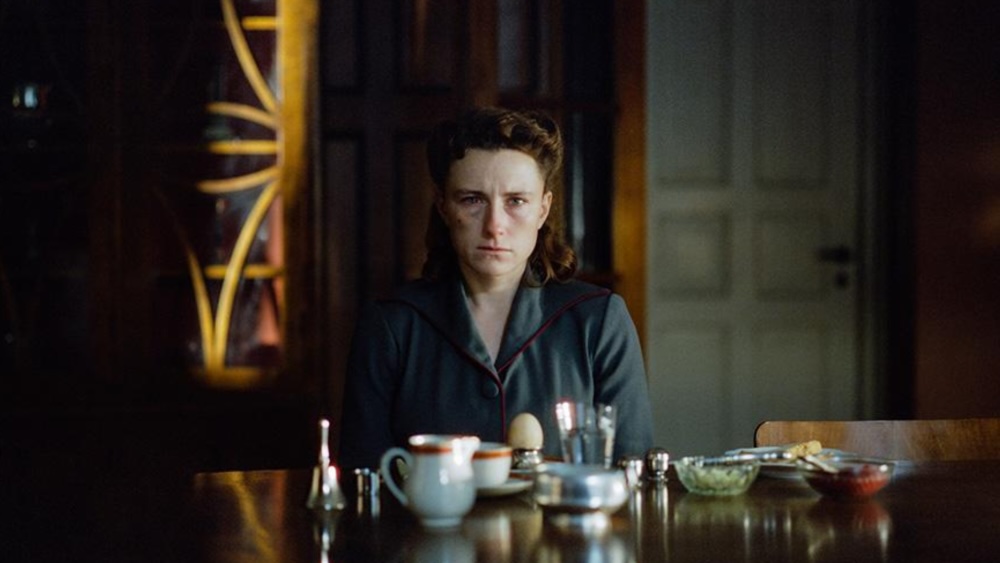
When May el-Toukhy’s compelling post-WWII drama, Woman Unknown won the Golden Lion at this year’s Venice Film Festival, some balked that head juror Maggie Gyllenhaal, and her fellow voters, selected the film to make a political statement about how el-Toukhy was the ONLY sole female director who had a project in-competition. The film also won Mathilde Arcel the Volpi Cup for Best Actress.
I had missed the press screening and could not get into any others, so I was miffed. But now, having finally seen this disturbing, well-crafted meditation on “the female body as a battlefield,” to use the director’s own words, I can honestly say that, Wild Horse Nine notwithstanding, Woman Unknown certainly deserved the top prize, regardless of politics.
As for the Volpi Cup, it was a lean year in Venice for lead female performances and Arcel, while not reinventing the craft, did a fine job. The final shot of her face alone is incredibly haunting.
Set right after the second world war, the film’s focus is on young nanny/maid Marie (Arcel) who is, oddly, about to marry cranky and controlling Christian (Carsten Bjørnlund), a rich old widower who owns a glove factory in Copenhagen. It’s more than hinted at that during the war and the Nazi occupation of Denmark, she had a relationship with a German soldier. And when she accidentally runs into old flame Karl (Thorbjørn Hedegaard), her secret could be exposed so she takes an extreme step to preserve the new life she’s carefully managed to construct.
El-Toukhy is giving us a very different perspective than we are used to with post-WWII stories, one focused on how women accused of having sexual relationships with Germans were horribly shamed in the streets while the public watched them have their heads brutally shaved, their clothes ripped from their bodies and swastikas painted on their backs and fronts. It also deflected attention from men who may have had much more sinister relationships with the Nazis.
I kept thinking about how many people had to, and did, reinvent themselves after the war in order to survive. And how much collaboration, in these situations, should be punished? “It was collaboration or annihilation,” a character states. So, how do you survive?
Marie finds a rather despicable way of making sure her secret is safe and must live with the consequences.
One of the things that goes unexplored, besides Marie’s real backstory, is why everyone seems to accept her new role in the home.
One of the more chilling aspects of Woman Unknown is how Marie never appears happy or content and is progressively less so as she gets closer to marrying Christian.
Denmark has been nominated 15 times with 4 wins (Bille August’s Pelle the Conquerorin 1986, Gabriel Axel’s Babette’s Feast in 1987, Susanne Bier’s In a Better World in 2010 and Thomas Vinterberg’s Another Round in 2020)
Magnus van Horn’s The Girl with the Needle was the last Danish film to receive a nomination in 2024.
This was another situation where this film was automatically eligible because of the Venice win, yet Denmark decided to select it anyway—a shame because Amalie Næsby Fick’s thought-provoking, What Lies Between Us, deserved consideration as well.
This is Denmark’s 64th submission.
Germany: Everytime

Austrian writer-director Sandra Wollner won the main prize in the Un Certain Regard section at Cannes for her singular cinematic achievement, Everytime, a visually striking meditation on grief and mourning. And it certainly has garnered great critical acclaim.
This mesmerizing but confounding work focuses on the aftermath of a terrible accident. Ella (Birgit Minichmayr) is the mother of a teen daughter, Jessie (Carla Hüttermann) and pre-adolescent child, Melli (Lotte Shirin Keiling). Jessie is dating handsome Lux (Tristán López). On one horrifically fateful tragedy strikes and the remaining three people must go on with their lives.
But about two thirds of the way through a fairly normal, if deeply personal, cinematic narrative the film deviates in the strangest of ways as the three survivors journey to the gorgeous coastal town of Tenerife, Spain and past, present and future take a surreal turn.
I was not moved by this film, but it has stayed with me. It’s certainly an original take on how one copes with death. And it did leave me in a state of wonder.
Wollner is a fascinating filmmaker, and I look forward to her future work.
Germany has garnered 23 nominations, with 4 wins–- Volker Schlöndorff’s The Tin Drum (1979), Caroline Link’s Nowhere in Africa (2002), Florian Henckel von Donnersmarck’s The Lives of Others (2006) and Edward Berger’s All Quiet on the Western Front (2022). This is counting the five East German submissions which sometimes competed against West Germany.
They are the third most nominated country behind France and Italy.
The country has received two consecutive nominations in the last three years, Mohammad Rasoulof’s The Seed of the Sacred Fig (2024) and Ilker Catak’s The Teacher’s Lounge in 2023 — and made the short list last year for Mascha Schilinski’s Sound of Falling. Besides nominations and wins, Germany has made the short list six times.
This is their 67th submission.
United Kingdom: Rehearsals For a Revolution
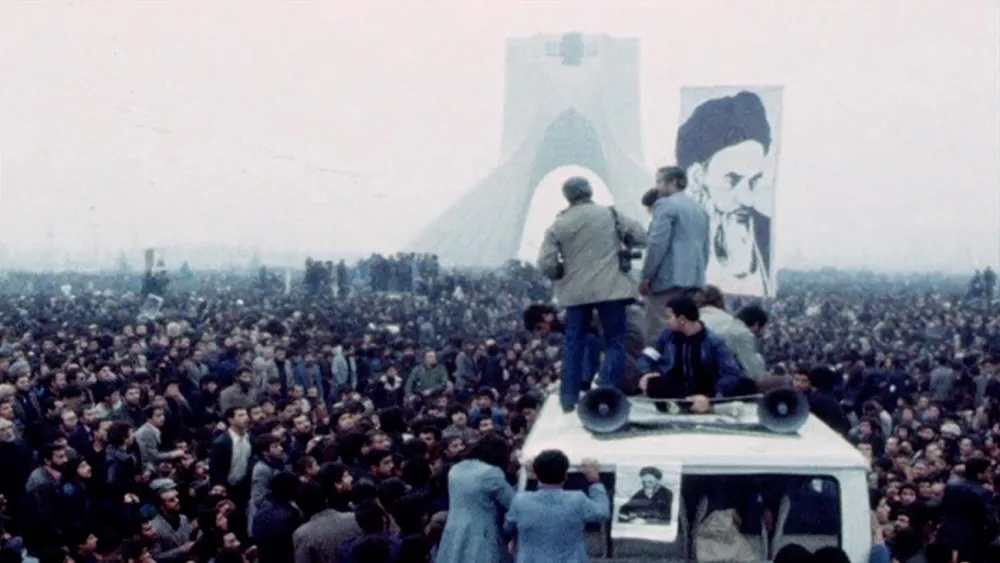
Pegah Ahangarani’s intriguing, highly personal doc Rehearsals For a Revolution takes a look at her life via portraits of relatives and mentors as she traces more than 40 years of Iranian history, using her own photos, documents, videos, protest footage and media clippings — including the closure of newspapers, arrests for political activism and violent raids on university dormitories where several students were killed and more than 1000 were arrested in July of 1999.
The Iranian actress/director was, herself, imprisoned in 2009 and, upon release, moved to the U.K.
One of the most fascinating aspects of this film is how Ahangarani is constantly questioning herself and her motivations.
Rehearsals For a Revolution premiered at Cannes and was acquired by Sony Pictures Classics.
The UK has been nominated three times, and won once, two years ago for Jonathan Glazer’s The Zone of Interest in 2023. Sandhya Suri’s Santosh was shortlisted in 2024.
This is the country’s 23rd submission.
Berlinale: Yellow Letters
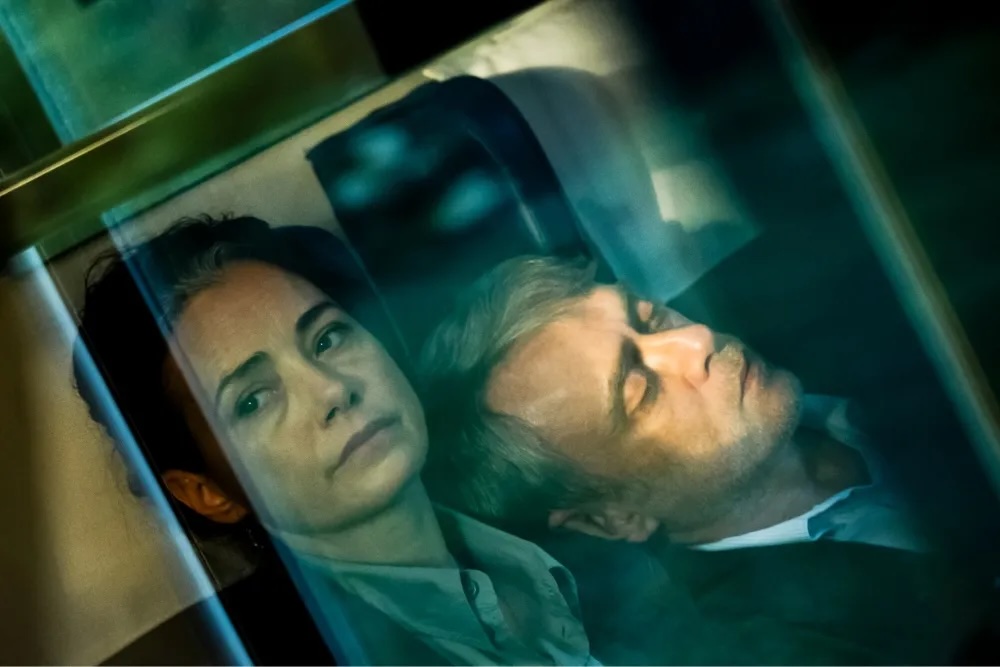
Can theater change the world?
That’s one of many timely questions asked in Ilker Çatak’s Berlinale Golden Bear-winning film, Yellow Letters. This taut and disturbing drama begins promising enough only to lose some of its potency in the movie’s second act.
Set in Turkey, well, actually “Berlin as Ankara” and then “Hamburg as Istanbul,” to be more accurate so we get the “Any location where totalitarianism is taking over” feel, the narrative follows a married couple, Derya (Özgü Namal), a stage actress, and her husband Aziz (Tansu Biçer), a uni prof and playwright, who often pens roles for her. One night, a government official attends a performance of the current play they are staging and Derya refuses to take a photo with him. This one incident has rippling effects the couple could never have imagined. The play is canceled. They lose their jobs. And Aziz is accused of insulting the president. They, along with their 13-year-old daughter, relocate to Istanbul as Aziz awaits trial and the two are faced with certain economic and relationship realities and they must weigh their convictions against necessary compromises.
German-born Çatak, whose film, The Teacher’s Lounge was Germany’s entry three years ago and was nominated for Best International Feature, is a master at creating tension as well as eliciting terrific performances from his actors.
I appreciated the film’s handling of how this kind of state-sanctioned persecution can snowball, especially in the age of social media and I applaud the interwoven theatrical element. But I felt increasingly detached from the couple’s fraught situation and, in the end, didn’t care as much as I had hoped I would.
I felt detached from the couple and situation, which may have been deliberate, but I couldn’t care as much as I wanted to. Still, it’s a vital and worthwhile piece of cinema.
Yellow Letters is automatically entered into the race this year thanks to the new rule where certain festival winners become instantly eligible.
Gems/Dark Horses That Should Be in the Conversation
Norway: Growth of the Soil
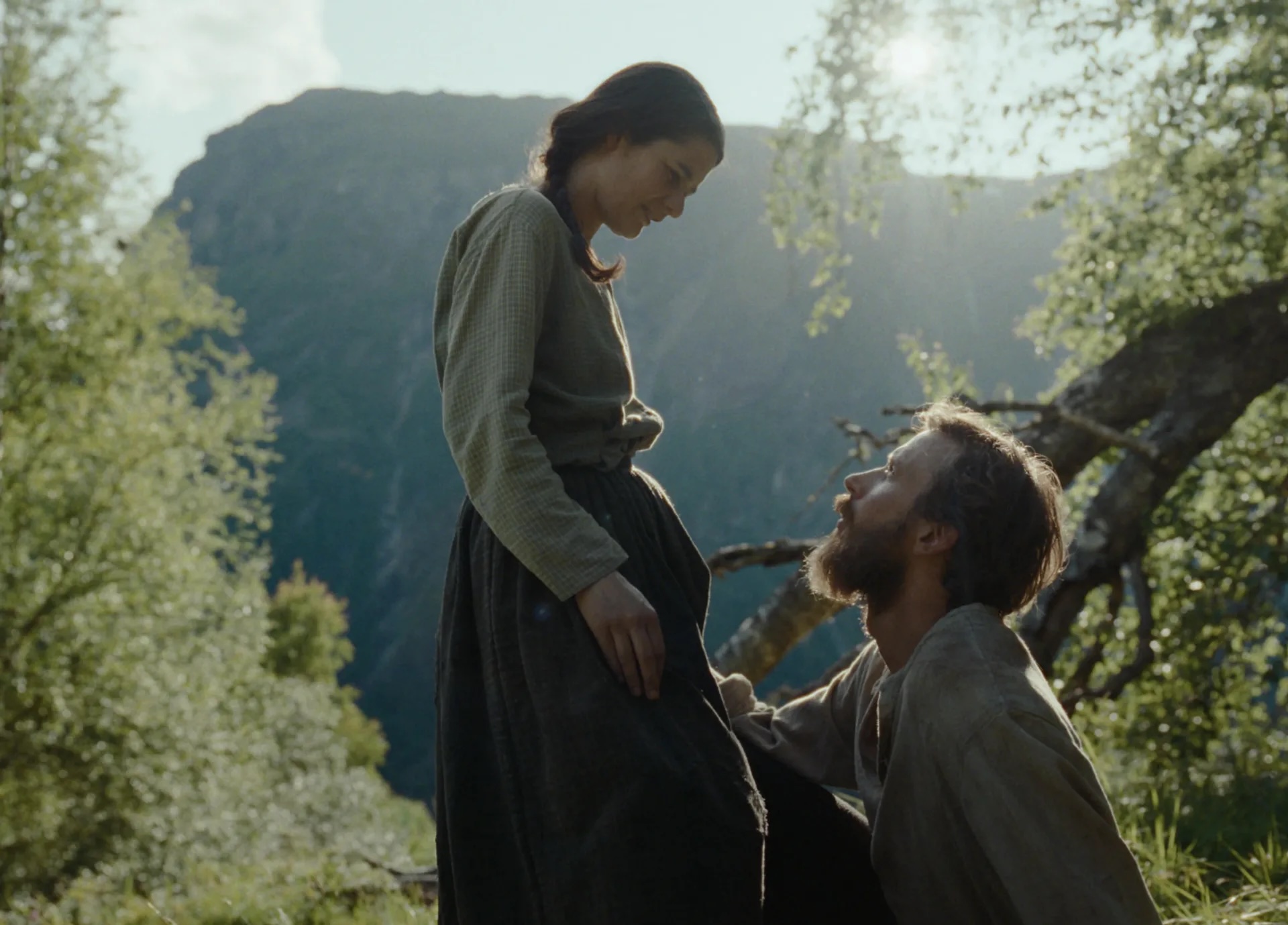
Based on the 1917 Nobel Prize-winning novel by controversial Norwegian author Knut Hamsun, Hans Petter Moland’s entrancing, epic, Growth of the Soil, is set in the early 20th century in a remote area of Northern Norway. The economic screenplay is by Moland and Gard B. Eidsvold.
Isak (Herbert Nordrum), a lumbering bearded giant of a man meets Inger (Asta Kamma August), a resilient woman with a cleft lip and the two begin a life together—ever so slowly— with sparse dialogue exchanged between them. Both are uneducated and know little of the world outside their mountainous terrain. We know nothing of their background, and they certainly don’t discuss much beyond her telling him, “You are not human towards yourself,” when he takes on too much of a workload, which is often.
The couple literally build a home and start a family. But after the birth of two beautiful boys, Inger delivers a girl who has a cleft lip and does something horrific in a moment of panic, which she will later pay dearly for, yet also strangely benefit from.
Isak withstands quite a few calamities himself including a tree landing on him and his falling through ice, but these nature-driven crises pale in comparison to when his wife returns from prison a new and modern woman, with her cleft surgically repaired, able to read and write and with a new, contemporary view on society.
All the while a new community begins to blossom around them and their own grown-up son goes off to the big city for an education. The illiterate Isak begins to feel inadequate, especially when Inger crushes on a handsome young man passing through their village.
The film thrives thanks to the tremendous chemistry between Nordrum and August but also because of Moland’s great use of jarring cuts. Kudos, also, to Kaspar Kaae’s exciting score and Oskar Dahlsbakken’s stunning cinematography.
Growth of the Soil is reminiscent of Jan Troell’s 1972 Swedish masterwork, The Emigrants, starring Liv Ullmann and Max von Sydow. It also reminded me of Mark Rydell’s underrated drama, The River, from 1984, with Sissy Spacek and Mel Gibson.
There’s a telling scene where Isak proudly brings home a clock and we watch the couple fascinated by how it chimes, although they have no clue how to tell time. It isn’t until over a decade later that their youngest, educated daughter matter-of-factly explains it. Later Isak will destroy the clock because he’s desperate to hold onto some semblance of his old life and the wife he used to know. It’s heartbreaking. And human.
This is the second Moland film selected by Norway. Out Stealing Horses was the country’s 2019 Oscar entry. Moland’s wife, Maria Sødahl’s film, Hope, was the submission in 2020 and it made the short list.
Norway has garnered six nominations, the penultimate in 2021 for Joaquim Trier’s terrific The Worst Person in the World. Halfdan Ullmann Tøndel’s daring Armand made the short list in 2024.
Last year, Norway finally and justly triumphed, winning for Trier’s sublime Sentimental Value, which received nine Academy Award nominations including Best Picture, Director, Screenplay and four acting nods (for Renate Reinsve, Stellan Skarsgård, Inga Ibsdotter Lilleaas and Elle Fanning).
This is Norway’s 48th submission.
Ireland: Aontas

In the opening scene of Belfast-based helmer Damian McCann’s absolutely riveting sophomore feature Aontas (meaning Unity or Union), three masked women enter a rural Irish Credit Union and proceed to attempt to rob it. But, as is often the case in heist stories, things go awry. And just when you think you know what’s in store for you as viewer, writer-director McCann and his co-screenwriter Sarah Gordon decide to pull a Memento and narrative backwards in time, delivering just the juiciest (and often tragic) number of details to keep you entranced. And with each new plot development, the pieces begin to fall together, and we leapfrog back to the women and the aftermath of their actions.
I don’t wish to give away much as this is such a carefully constructed, dense and compelling work, it would be a shame to reveal any of the plot intricacies. Suffice to say Carrie Crowley and Brid Brennan (both iconic Irish actresses) play estranged sisters Mairéad and Cáit respectively. The third partner in crime, Sheila (Eva-Jane Gaffney) is being abused by her scumbag husband (Seán T. Ó Meallaigh).
It’s a treat to see three female leads in a story like this (or any story, really) and all three deliver exceptional, emotionally-charged performances.
Shout out to composer Daithi O’Dronai for his superb score.
McCann is perspicacious enough to give us a truly satisfying final moment, even if he tricks us into thinking the film has ended before it actually has.
A second viewing proves an even richer experience.
Aontas is about what happens when people are pushed too far and find they have nothing left to lose—to say it’s relatable in our current world is an understatement.
Ireland has been nominated once, in 2022, for Colm Bairéad‘s The Quiet Girl. Richard Peppiatt’s Kneecap made the short list in 2024.
This is Ireland’s 12th submission.
Pakistan: Hanging by a Wire
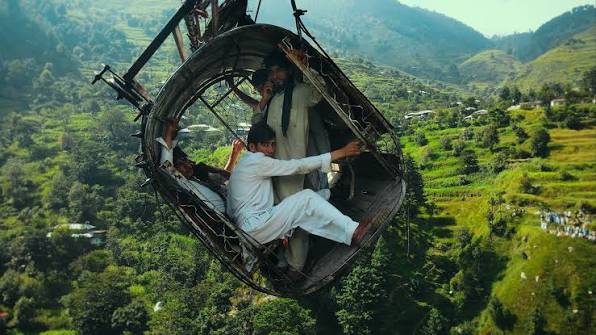
Mohammed Ali Naqvi’s Hanging by a Wire is easily the best documentary in the International Feature Oscar race. It’s the incredible, engrossing and miraculous story of the rescue of eight passengers—including six schoolboys — from a cable car in the Pakistani Himalayas. And it’s the first doc ever submitted by Pakistan.
Read my Sundance review.
Saim Sadiq’s Joyland made the short list in 2022.
Pakistan has submitted 14 times. No nominations.
The film was released in theaters in August by Abramorama and can be streamed on Paramount+.
Serbia: Wanderlust (Izlet)

Nenad Pavlović’s sophomore feature, Wanderlust (Izlet), is exactly the kind of sublime gem that deserves to be in International Feature Oscar consideration but does not have the kind of budget or producer/distributor heft behind it to be able to mount the kind of campaign necessary to compete with the majors.
Set some time in the 1950s, Serbia’s Oscar entry, written by Jovan Popovič and based on the novel by Mića Popović, is very much in keeping with the style of the celebrated Yugoslav Black Wave film style from the 1960s akin to Pavlović’s father Zivojin’s work. And there’s a familial link since Jovan is Mića’s son.
Wanderlust is a mesmerizing fever-dreamish, Joseph Conrad-light, cinematic odyssey centering on Toma (Stefan Vukić), a frustrated young artist in search of personal and artistic freedom. He lives in a suffocating totalitarian society and, when his father dies, he decides to leave his mother and sister behind and travel downriver with a gaggle of strange, social misfit companions. As the journey down the Danube gets rougher, he is more determined to go all the way, or as far as the captain will allow. He ends up stranded on a deserted island where he must figure out a way to survive.
The film wonders if removing oneself from an oppressive society to a solitary one makes for a better life or just acts as a different kind of imprisonment. “Solitude sets you free, but weighs you down,” Toma speaks in voiceover. The film also asks if an artist can thrive in any type of milieu if he’s committed to the craft as Toma begins to create work using nature.
Stunningly photographed in black and white by Bojana Andrić with a terrific score by Filip Mitrović, Wanderlust blurs the lines of reality, fantasy and nightmare.
The film is buoyed by a hypnotic central performance by Vukić. He is onscreen for most of the movie’s running time and draws us into his world filled with sorrow, despair, desire, hope and the longing to discover himself as artist and human. He’s also quite playful and sexy. The filmmaker finds new and interesting situations where the character must shed his clothes.
Pavlović keeps things enigmatic, allowing the audience to come to their own narrative conclusions—always a good thing.
Watch my Interview with Vukić.
Serbia has never been nominated but did make the short list once in 2007 for The Trap.
This is the country’s 33rd submission.
FYI: The former Yugoslavia is now 7 countries: Bosnia and Herzegovina, Croatia, Montenegro, North Macedonia, Serbia, Slovenia, and Kosovo.
Yugoslavia received 6 nominations, no wins from 1958 to 1991. Yugoslavia submitted 29 times.
Georgia: Guria
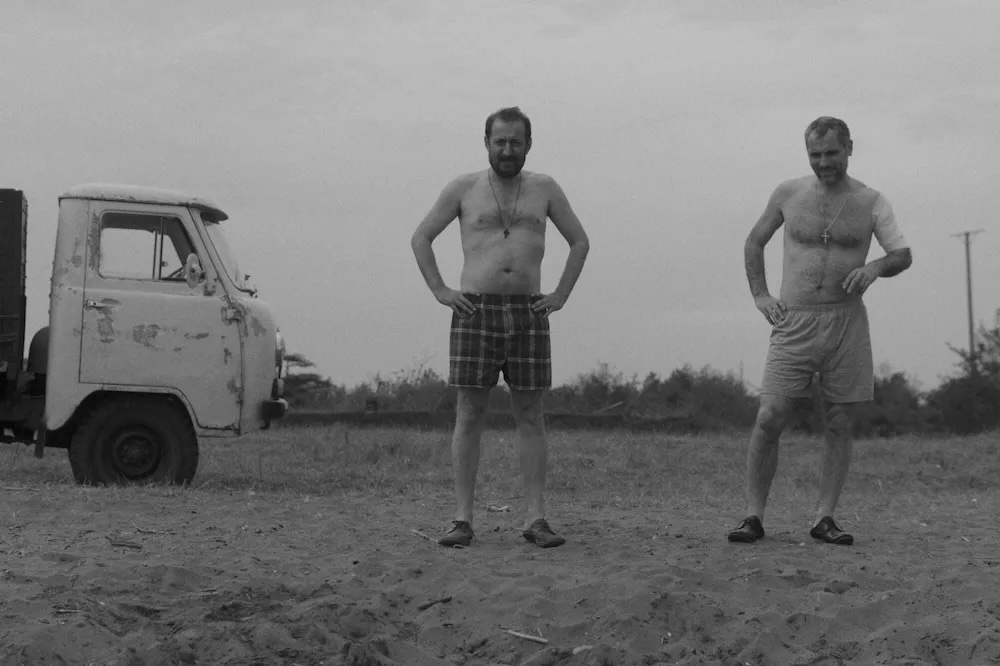
Levan Koguashvili’s delicious black comedy, Guria, is set in 1992, right after the end of Communism and the Georgian Civil War has ended—or has it, really? Guria is also the name of the rural western town the film takes place in where economic hardship and furiously angry citizens rule the day.
Zuriko (Kakhaber Tcholadze) is an indebted widower who sells hazelnuts when he can get a decent price. He’s possibly looking to remarry Irma (Eka Sharikhadze) until he leaves her alone with his annoying mother-in-law and she flees. He soon turns his fickle attention to the town’s new music teacher, Maia (Natia Nikolaishvili). Zuriko’s teen son, Achi (Sergi Kviloria) is dating classmate Eka (Anamaria Kamladze)—or is he? Since she also has eyes for the closest thing the town has to a cool kid, Beso (Davit Natsvaladze). There’s a lot more plot and tons more characters including thugs with guns who shoot at Zuriko and his bestie Gela (Vamekh Jangidze).
There’s a kidnapping—or is it? Another kidnapping—the film’s most outrageously hilarious scene in the film, a jealous husband who forbids his wife to swim, a bizarre beauty contest, grenade drills and a lot of singing. There also seem to be some kind of misogynistic code whereby if you abscond with a young girl and talk her into having sex with you, she’s automatically committed to being your wife.
Suffice to say you either enter Koguashvili’s audacious cinematic universe ready to accept the strange and sometimes surreal—or you have no sense of humor!
Guria is a bleak-but-still-hopeful, singularly kooky black-and-white time!
The film world premiered in the Spotlight section of this year’s Venice Film Festival.
Georgia has been nominated once in 1996, the very first year they submitted, for Nana Jorjadze’s A Chef in Love.
Giorgi Ovashvili’s Corn Island made the short list in 2014.
Last year, George Sikharulidze’s captivating debut feature, Panopticon, should have at least made the short list.
This is the country’s 25th submission.
Taiwan: A Foggy Tale
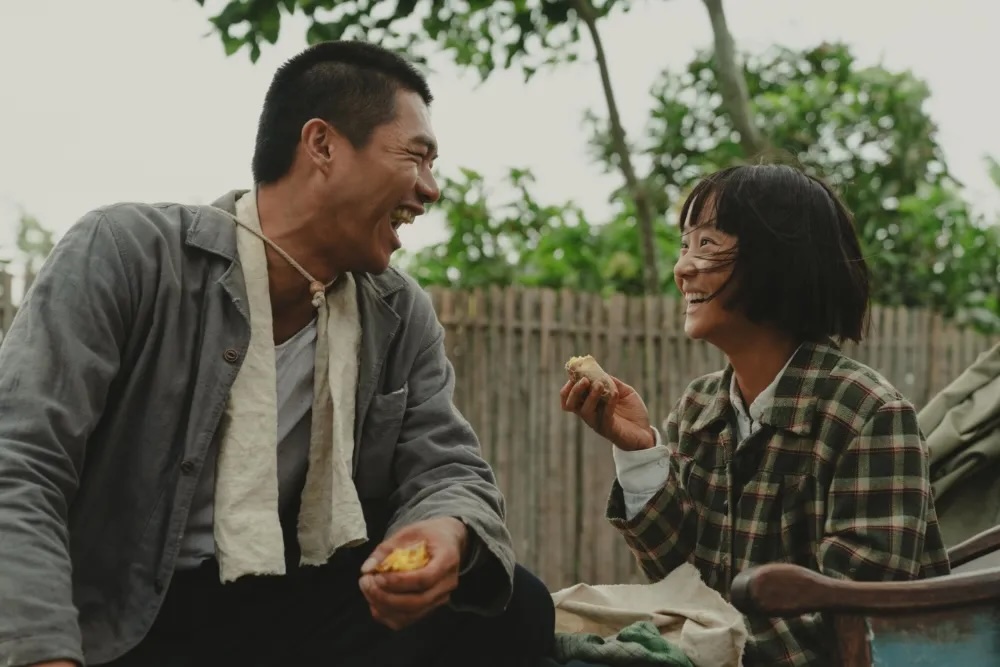
Chen Yu-hsun’s funny, deeply affecting and heartbreaking feature, A Foggy Tale, totally enchanted me.
The film opens in 1955 and centers on a 15-year-old Taiwanese girl named Yue (a winning Caitlin Fang), who takes it upon herself to travel from Chiayi to Taipei to claim the body of her older brother, Huang Yu-Yun (Tseng Jing-hua), who was murdered by the Chinese, via firing squad, for being a political dissident. Along with way she comes close to being sold into the sex trade but is rescued by Chao Kung-tao (Will Or), a gregarious, foul-mouthed carriage driver who used to be a soldier. Together, they go on a dangerous trek which includes meeting Yue’s estranged, performer sister (Joanne Tang) and quite a few nefarious characters.
Will Or delivers a knockout performance as Yue’s unlikely knight in messy armor. Always swearing, Chao Kung-tao’s one of those characters that stays with you.
And the film has a surprising coda that is quite satisfying.
Writer-director Yu-hsun has created an old-fashioned road-movie-adventure odyssey with some powerful social and political messages about ethnic and class divides, state repression and the dangers of totalitarianism.
Taiwan has been nominated three times, all Ang Lee films–The Wedding Banquet and Eat Drink Man Woman in 1993 and 1994, winning for Lee’s Crouching Tiger, Hidden Dragon in 2000.
In addition to the nominations, Taiwan made the short list three times, most recently, last year with Shih-Ching Tsou’s Left-Handed Girl.
This is the country’s 52nd submission.
Finland: The Squirrel
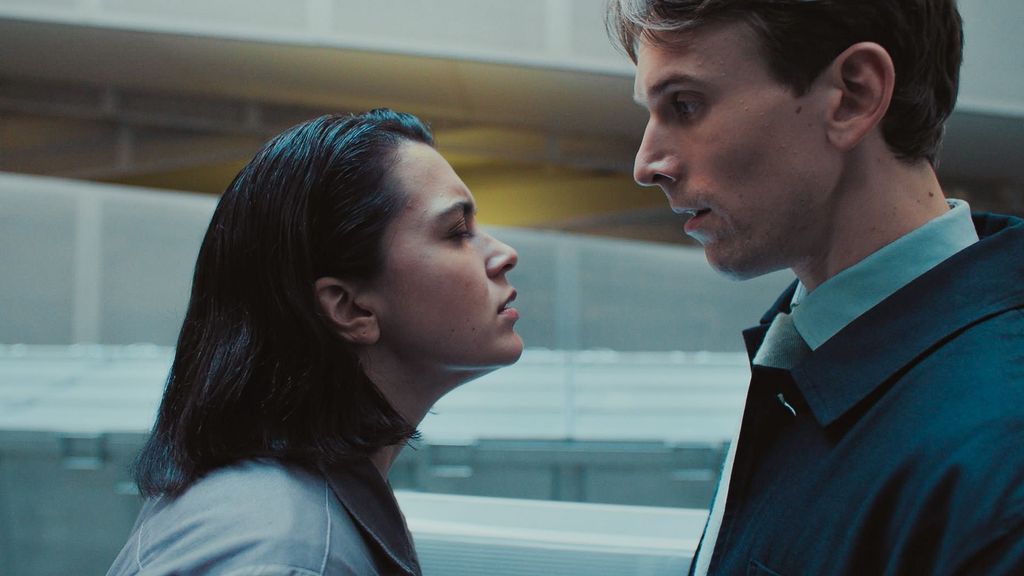
Finnish filmmaker Markus Lehmusruusu’s absurdist, sci-fi-satire, The Squirrel, is the kind of movie that is right up my alley—a delightfully bizarre comment on our present by looking towards a ridiculous, but perhaps not so far-fetched tomorrow.
Set in a future where nature and animals no longer exist and people aren’t allowed any kind of physical intimacy with one another, perpetually-nervous, robot-pet designer Pasi (a winning Miro Lopperi) is living his best, most mundane life when one day he discovers a real-life squirrel scurrying around in an alley outside his living quarters. The creature is completely foreign to him, so he looks it up on his work computer and a video tells him that, “The squirrel was an unwanted rampant, fully organic rodent, which was to be avoided at all times.’ Curious, Pasi takes the squirrel in as a pet and begins feeling a lot calmer. He also begins to crush on welfare investigator Emilia (Mimosa Willamo), who tends to vomit at the hint of intimacy with another person. But she’s also quite curious about the squirrel. And her feelings for Pasi begin to grow, despite her nausea. When the squirrel begins showing sickly signs, Pasi and Emilia must find a way to save it.
The Squirrel is dystopian, but not too depressing. It’s a biting comment on man’s disregard for nature, but it’s not polemical. It’s rom-com-ish without being cloying. And Lehmusruusu knows just where to end his gem.
All that and Lopperi’s oddly endearing performance make this a film voters should definitely see.
Finland was nominated once for Aki Kaurismäki’s The Man Without a Past in 2002. In addition, the country made the shortlist 3 other times including 2023 for Kaurismäki’s Fallen Leaves.
This is the country’s 40th submission.
Saudi Arabia: A Matter of Life and Death
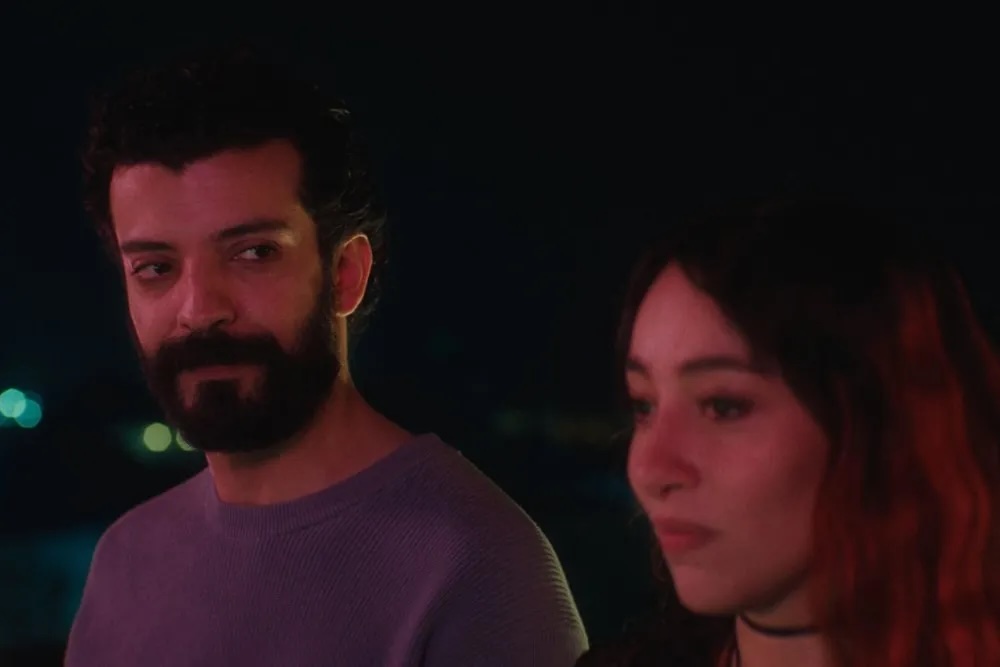
Saudi Arabia explores generational trauma and familial superstition in this winning, macabre, hilarious, super dark comedy,
Hayat (Sarah Taibah), a high-strung young woman, spends the first few minutes of Anas Ba-Tahaf’s satiric feature directorial debut, A Matter of Life and Death, attempting to off herself, only to have each incident end in her botching the job. Why is she wanting to commit suicide? Because she believes there’s a generational family curse that will kill her on her 30th birthday…and she’s awfully close to that day, so she’d rather die on her own terms.
At the hospital after her most recent unsuccessful try, she meets handsome, 37-year-old Youssef (Yaqoub Alfarhan), a brilliant, but reserved heart surgeon with an enlarged heart, who has some scary dark urges. Hayat asks him to kill her. He agrees. They marry. They argue some a lot. They begin to plan how he will murder her. And things get even wackier from there.
Taibah is an enchanting riot, and she also penned the side-splitting, clever screenplay. Alfarhan perfectly underplays Youssef, bringing a sweet poignancy to the part. Both are magic together.
Stay for the credits, all of them.
This is Saudi Arabia’s 9th submission, no nominations.
Lithuania: How to Divorce During the War
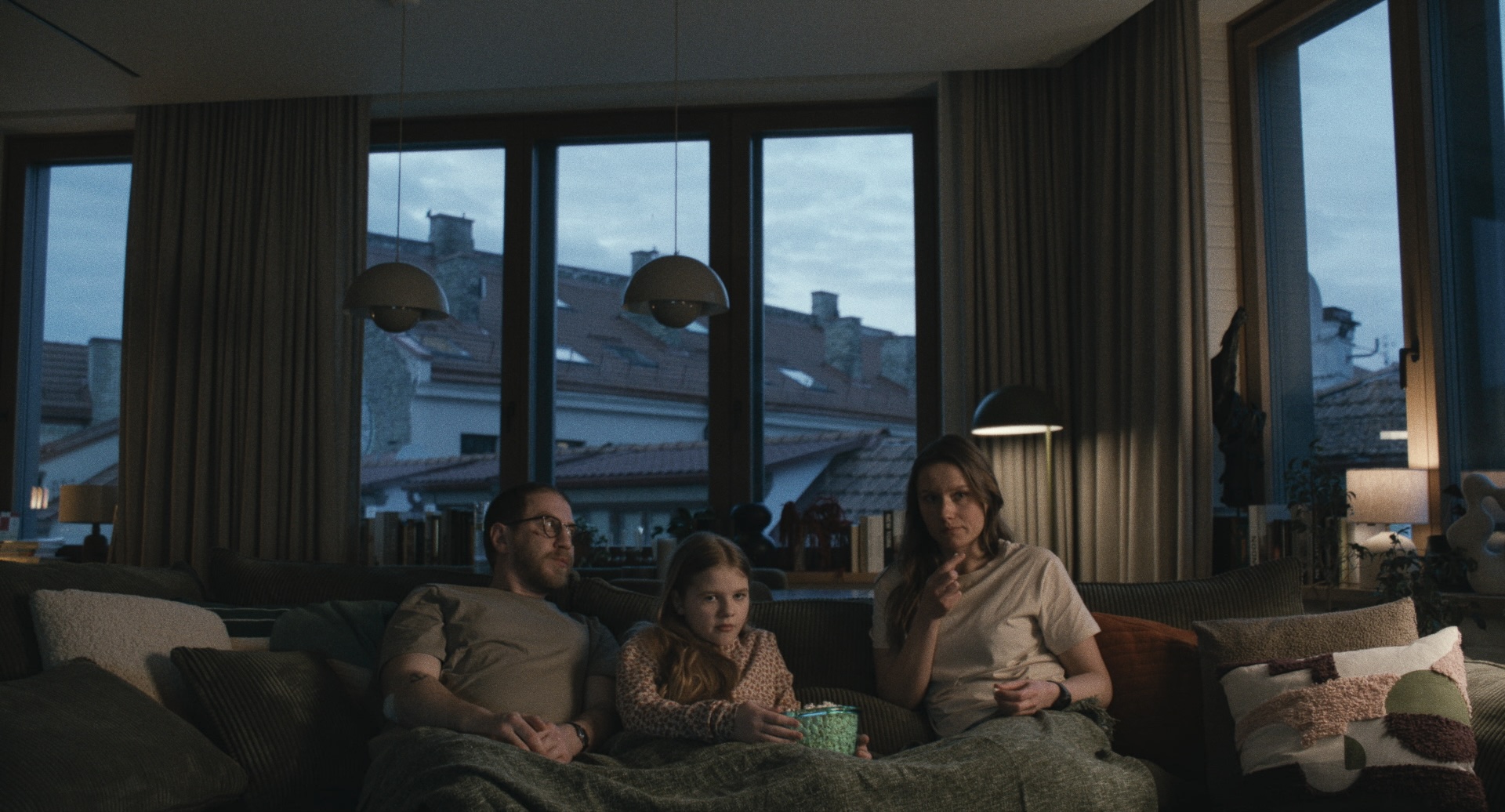
Writer-director Andrius Blazevicius forces audiences to wonder how much they might be willing to sacrifice for a good cause. Would we have enough empathy in a crisis situation? Could YOU open our home to strangers?
This often-hilarious, emotionally-charged How to Divorce During the War world premiered at Sundance and won the Directing Award in the World Cinema Dramatic Category.
Read my Sundance review.
Lithuania has never been nominated. This is their 19th submission.
The film was released over the summer by Zeitgeist Films/Kino Lorber and is currently available on VOD and DVD.
Israel: Tell Me Everything
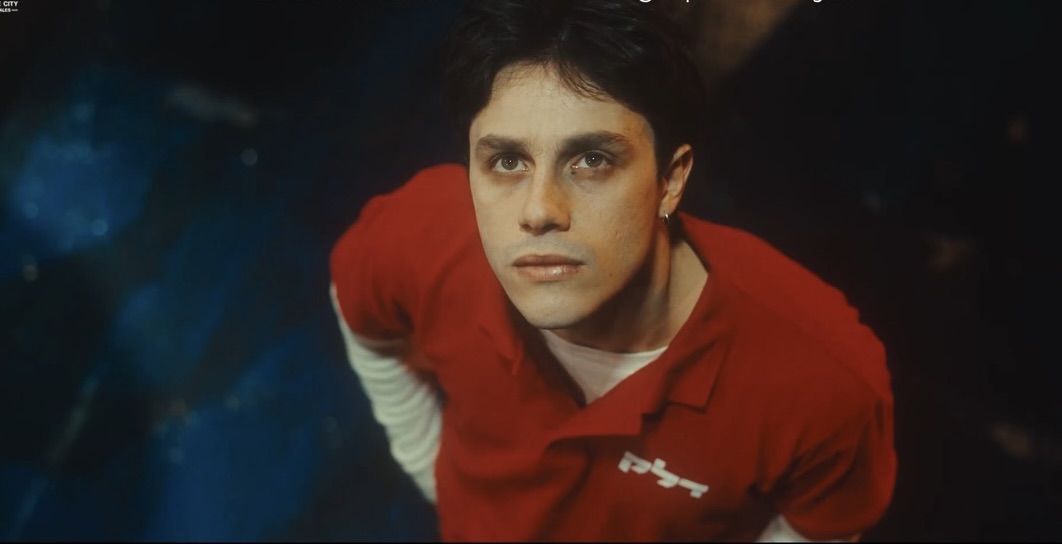
Set in the late 1980s, Moshe Rosenthal’s touching second feature, Tell Me Everythingcenters on twelve-year old Boaz (Yair Mazor) discovering his father Meir (Assi Cohen) intimate with another man. Drama ensues and the film flashes forward a decade when 22-year-old Boaz (an extraordinary Ido Tako) is dealing with his guilt, shame, anger and fear.
Read my Sundance review.
Watch my interview with director Rosenthal and actor Tako.
Tell Me Everything set a record with 16 nominations for the Ophir Awards (Israel’s Oscars), winning 10 including Best Picture, which automatically made it the country’s Oscar entry.
Israel continues to hold the record for the most nominations without a win: 10. Last nomination: Joseph Cedar’s Footnote in 2011. Samuel Maoz’s Foxtrot made the short list in 2017.
This is Israel’s 59th submission.
Czechia: If Pigeons Turned to Gold
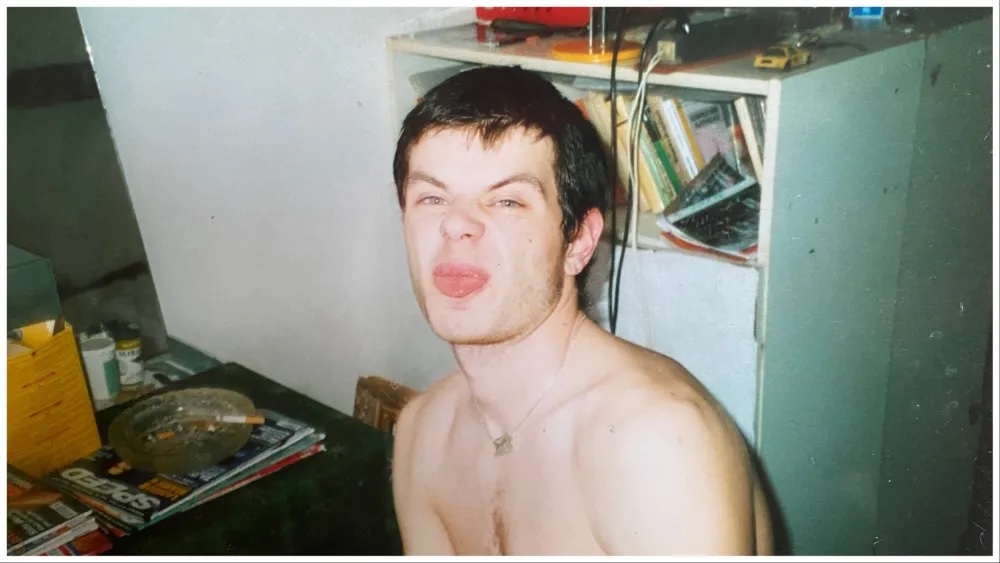
Pepa Lubojacki’s highly personal, stirring debut documentary, If Pigeons Turned to Gold, follows more than five years in the lives of four of her relatives, all struggling with addictions and homelessness. But the main focus is on her beloved brother, David.
This quite creative, intimate film works so well because Lubojacki asks many questions, including the key one, “How do I tell a story I’ve been ashamed of my whole life? And why?” But she admits to having no real answers. She struggles to be brutally honest. And make us privy to the fact that many family members suffered from addiction, including her own father, who died because of it. She is also constantly doubting her own behavior, is she exploiting her brother, enabling him, wanting him to become something he cannot become? And she questions her own ethics; can an addict really consent to the being filmed?
As someone who has lost a number of loved ones to addiction, I could really relate to her plight. And the guilt felt by those they leave behind.
The journey is maddeningly circular. She helps get him off the street and hopes he stops drinking. He ends up homeless again because of his refusal to stop. And repeat. And David is constantly saying things to her like, “It’s just the way I am. I can’t help it.”
Throughout the doc, Lubojacki incorporates really effective (although off-putting at first) AI-animated photos where the faces speak, usually in the voice of the director.
In a shattering moment late in the film, she places the camera on a table and finally lets loose on her brother.
Anyone having known and loved an addict can relate. They also might be both comforted and disturbed by this brave work.
If Pigeons Turned to Gold world premiered in the Forum section of the Berlinale, where it won both the Berlinale Documentary Film Award and the Caligari Film Prize.
Czechia/Czech Republic has been nominated three times and won once for Jan Svěrák’s Koyla in 1996. In addition, the country made the short list three times, the last, in 2024, for Jiří Mádl’s emotionally gripping, Waves, which should have been nominated.
This is the 33rd submission as Czech Republic/Czechia.
Czechoslovakia was nominated six times with two wins for Ján Kadár & Elmar Klos’s The Shop on Main Street in 1965 and Jiří Menzel’s Closely Watched Trains in 1967. The country’s last nomination was the final time they submitted in 1991 for Svěrák’s The Elementary School.
Czechoslovakia submitted 23 times.
Singapore: We Are All Strangers

Set in contemporary Singapore, Anthony Chen’s poignant, penetrating 157-minute film,We Are All Strangers, follows two parallel romantic relationships across two generations.
Boon Kiat (Andi Lim) is a shy, hardworking shop cook struggling to make ends meet and going into debt. Everything changes when a vivacious, charismatic, “beer Auntie” Bee Hwa, (a wonderful Yeo Yann Yann), enters his life.
His lazy 21-year-old son Junyang (Koh Jia Ler) can’t seem to hold onto a job and, when he gets his 19-year-old pianist girlfriend Lydia (Regene Lim) pregnant, they must marry, even though Lydia’s mother is opposed to the union.
Both couples have very different weddings, the child is born, Junyang finds and loses a lucrative job, tragedy strikes and a live-streaming sales scandal threatens to destroy what’s left of the family.
It’s fascinating how the older romance proves to be much deeper and more palpable than the younger couple’s relationship in large part thanks to Yann Yann’s fab performance.
This film is the last chapter in Chen’s “Growing Up” trilogy that follows three different Singaporean families, which also starred Lim and Ler. The other two films, 2013’s Ilo Ilo and 2020’s Wet Season, were also Oscar submissions as was Chen’s 2023 film The Breaking Ice. He is now the director with the most Oscar submissions from Singapore, which has never been nominated or short-listed.
We Are All Strangers world premiered at this year’s Berlinale.
This is the country’s 20th submission.
Canada: Nina Roza
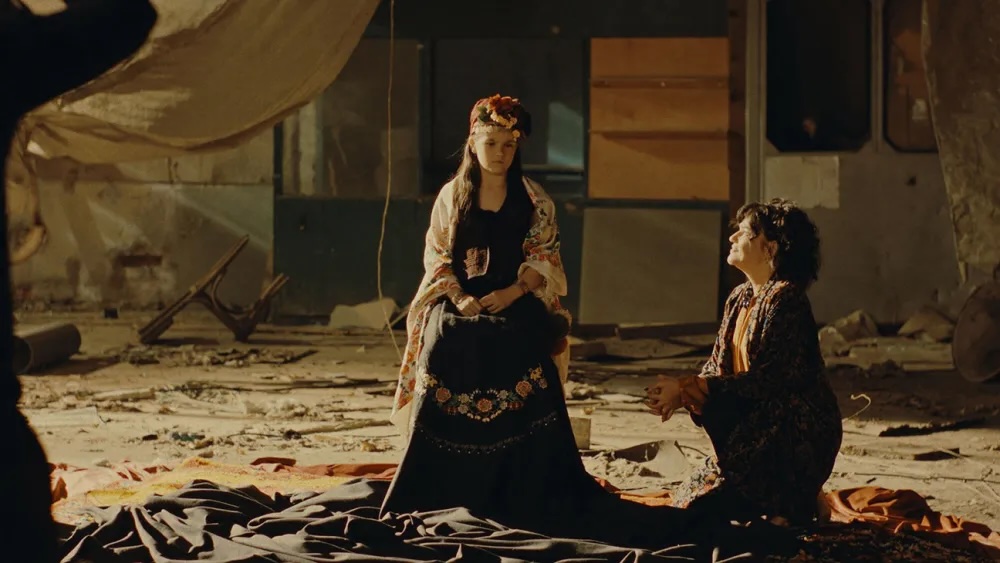
Geneviève Dulude-De Celles’s refined, tantalizing second feature, Nina Roza stars Galin Stoev as Mihail, a Bulgarian-born art curator, living in Canada, who is tasked with returning to his homeland for the first time in three decades to investigate Nina (played by identical twins Sofia and Ekaterina Stanina), an eight-year-old art prodigy and decide whether she is a charlatan or the real thing, an artistic genius. Mikhail reluctantly says yes and discovers an elusive Nina who no longer wants to paint.
Nina Roza is a gorgeous and thought-provoking feature.
The film won the screenplay award at this year’s Berlinale.
Canada has received seven nominations and won once for Denys Arcand’s The Barbarian Invasions in 2003. Four films by Arcand have been submitted, 3 receiving nominations.
In addition, the country has made the short list four times, the last time in 2024 for Matthew Rankin’s fab Persian-language entry, Universal Language.
This is the country’s 52nd submission.
Sweden: Adult Supervision (Arkipelag)
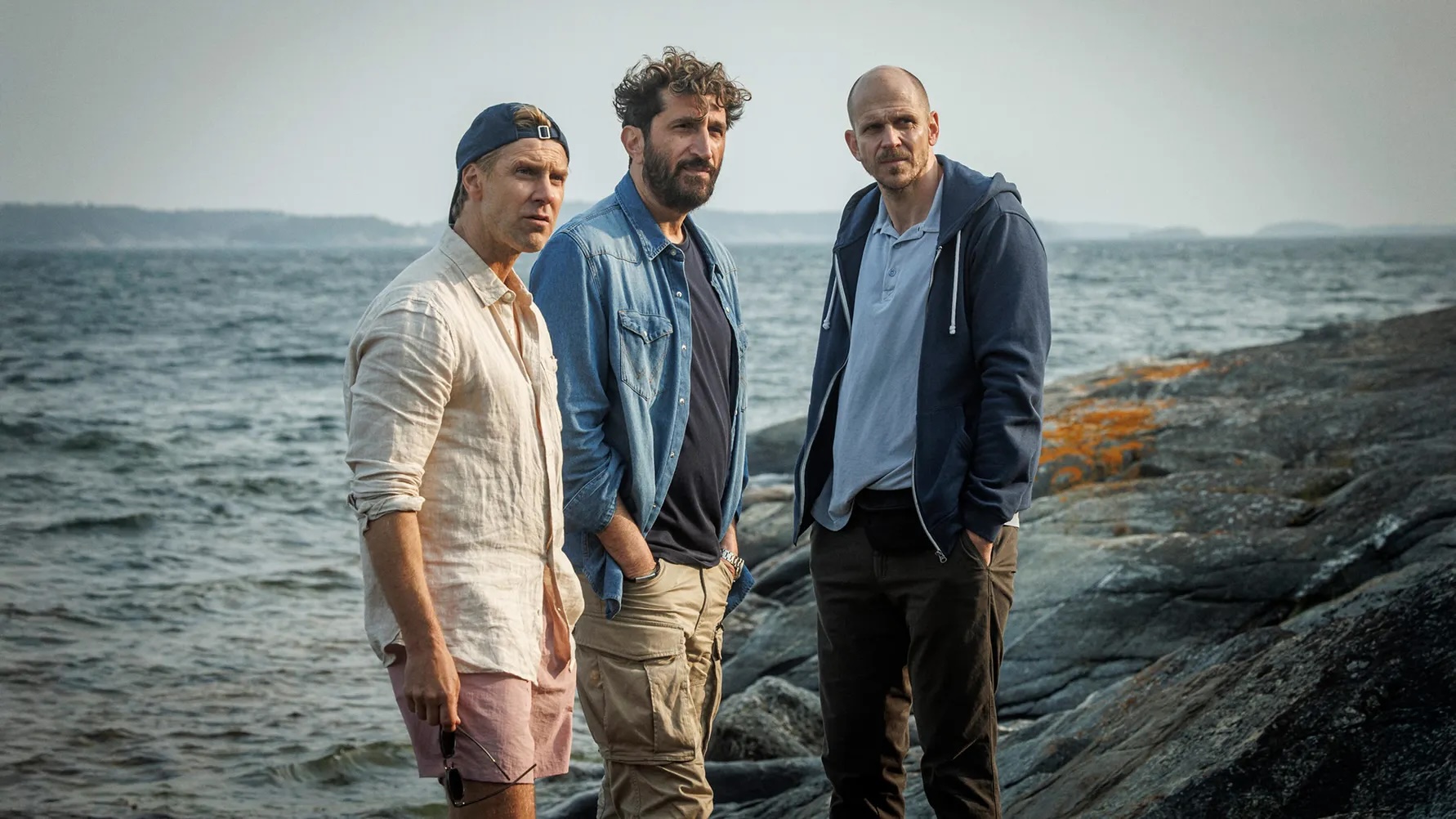
The first seven minutes of Adult Supervision begins hilariously enough with a blunder on the part of a teacher of Swedish teens that could have been the premise of a full-length film itself.
But first-time writer-director Alex Schulman has other outrageous and perspicacious ideas.
The class of lunatic students are about to take a school trip to a remote archipelago island. Three of the fathers apprehensively volunteer to be chaperones thinking they will spend some good bonding time with their respective daughters (some more than others) but once they reach their destination things escalate to ominous, darkly comedic levels of insanity.
The dads are not quite the good, the bad and the ugly—but more the toughie, the timid and (hot) lech—Bill (Gustaf Skarsgård), Bobo (Fares Fares) and Pontus (Linus Wahlgren), respectively.
Bill becomes acutely aware that three of boys are bullying an awkward classmate, Kenneth (Olof Olingdahl), and meekly steps in, having been bullied himself when he was younger. But it’s the more brutish Bobo who has the trio banished from the island. Alas, things aren’t quite what they seem and as tensions percolate, the true colors of the psychopathic students and the damaged dads (who represent different aspects of masculinity) lead to a wildly mad climax.
Anyone who has been bullied or has been the butt of a peer group’s jokes will be especially discomfited by this film.
I was so stressed watching Adult Supervision, yet it was also emotionally cathartic, and the wacky ending was strangely exhilarating.
Schuman is a singular filmmaker and has created a frightening work that is both outrageously satiric and scarily precise.
Sweden has been nominated 16 times and won three Oscars, all Ingmar Bergman Films (The Virgin Spring in 1960, Through a Glass Darkly in 1961 and Fanny and Alexander in 1983). Nine submissions were directed by Bergman. In addition, four other films were shortlisted. The country’s last nomination was in 2017 for Ruben Östlund’s The Square.
Tarik Saleh’s Boy from Heaven made the shortlist in 2022.
Sweden has submitted 66 times.
Egypt: The Stories
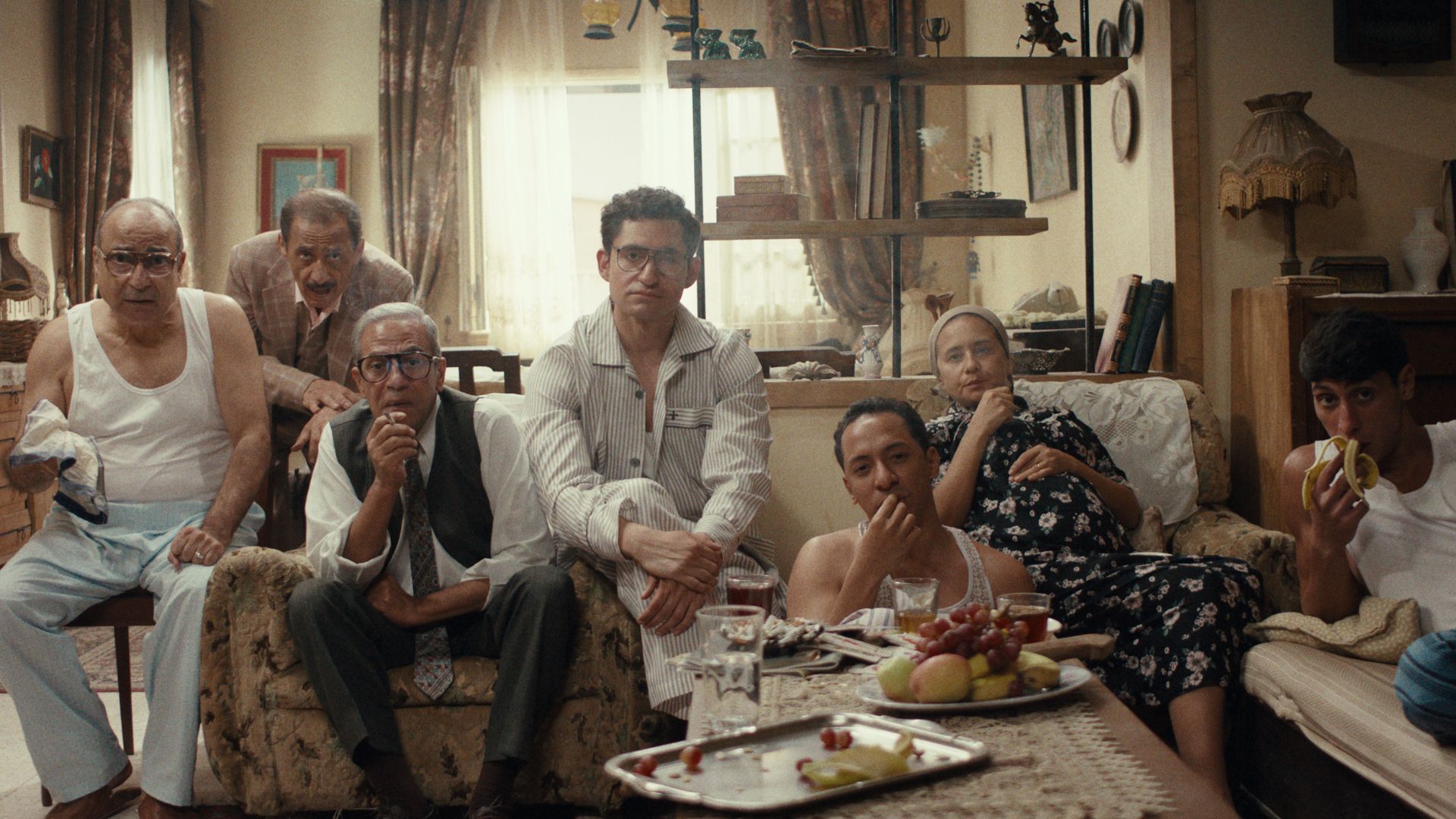
Egyptian-Austrian filmmaker Abu Bakr Shawky has woven together a loving portrait of one raucous family, via five interconnected chapters, and Inspired by the real-life romance of Shawky’s parents.
The Stories spans several decades in the lives of Egyptian Ahmed (Amir El-Masry) and his Austrian “pen pal” Elizabeth, aka “Liz” (Valerie Pachner), who begin a correspondence in 1967, that eventual becomes a courtship and marriage.
When we first meet Ahmed, he’s an aspiring concert pianist waiting for his military papers. His two brothers have both gotten theirs, including his fraternal twin Hassan (Ahmad El-Azaar, stealing all his scenes in too brief a role). Ahmed begins writing to Elizabeth and, in the ensuing years, journeys to Austria to study and finally meets her in person. The two fall in love and she moves to Cairo.
The film is set amidst the explosive and ever-changing Egyptian political landscape, which takes its toll on the family, emotionally and physically.
Nelly Karim delivers a standout performance as Fairouz, the family matriarch.
Through the kaleidoscope of brotherly bonding, constant soccer game losses, photos taken with the president, government “corruption” callouts on TV, and Uncle with a bad luck eye and Mama’s precious, cooked food (but don’t dare ask her the ingredients), the film is both hilarious and heartbreaking.
The Stories is about resilience, courage and the power of hope, in a world that offers very little reason to be hopeful.
Shawky’s film Yomeddine was submitted in 2018.
Egypt has never been nominated, despite submitting 40 times, second only to Portugal for the most submissions without a nod. FYI: the first three years, they submitted as the United Arab Republic.
Bangladesh: Roid
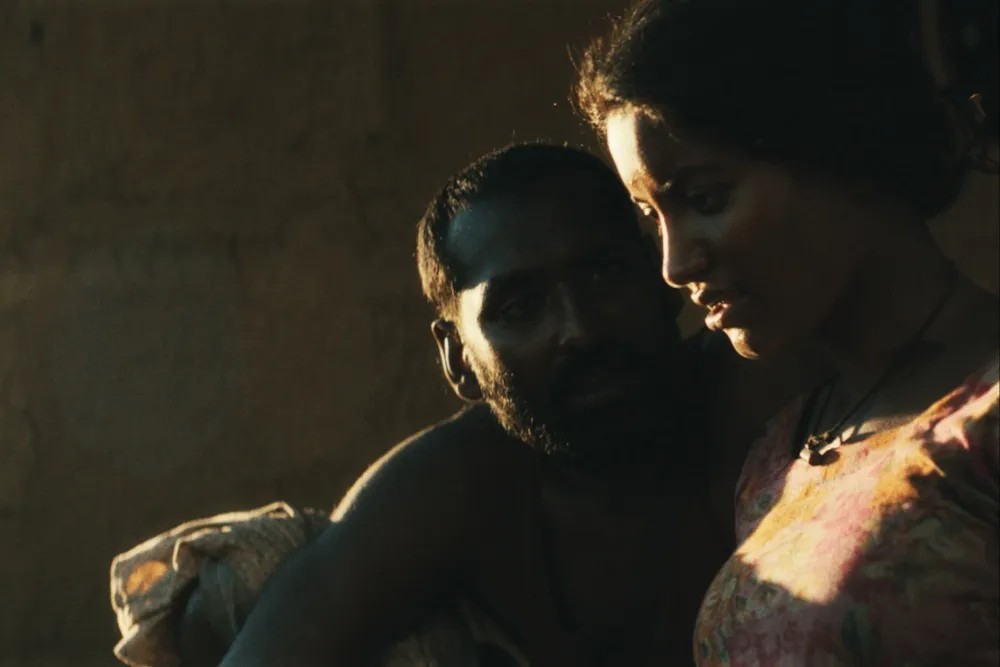
Mejbaur Rahman Sumon’s Roid (Sunshine) is an alluring, evocative and strangely moving cinematic tale, set in rural Bangladesh, about a Sadhu (Mostafizur Noor Imran), a timid farmer who has just married Sadhur Bou (Nazifa Tushi), an erratic young woman that everyone in the village insists is emotionally unstable.
Sadhu, who isn’t all that bright himself, becomes too overwhelmed with his bonkers/cuckoo for Cocoa Puffs spouse and tells her he’s taking her to the fair and, instead, abandons her in a field near a river. But she finds her way back to him and cooks for him, which he enjoys.
Sadhu ends up chaining her inside their hut, and then, after she’s blamed for a fire she did not set, he throws her out again. When goes to retrieve her, she is now pregnant. And the story continues but becomes more allegorical, even biblical.
Sadhur Bau, whose name he does not recall, nor does she, is a bit on the wild side, has a strange laugh, is a somewhat of a klutz and quite wacky but I found her invigorating thanks to Sushi’s wonderfully wacky work.
The Bengali countryside is lovingly captured by DP Kamrul Hasan Khosru.
Roid is ultimately a fabulously deranged love story.
This is Sumon’s second submission for Oscars. His film Hawa was put forth in 2022.
This is Bangladesh’s 22ds entry with no noms.
Malaysia: The Fox King
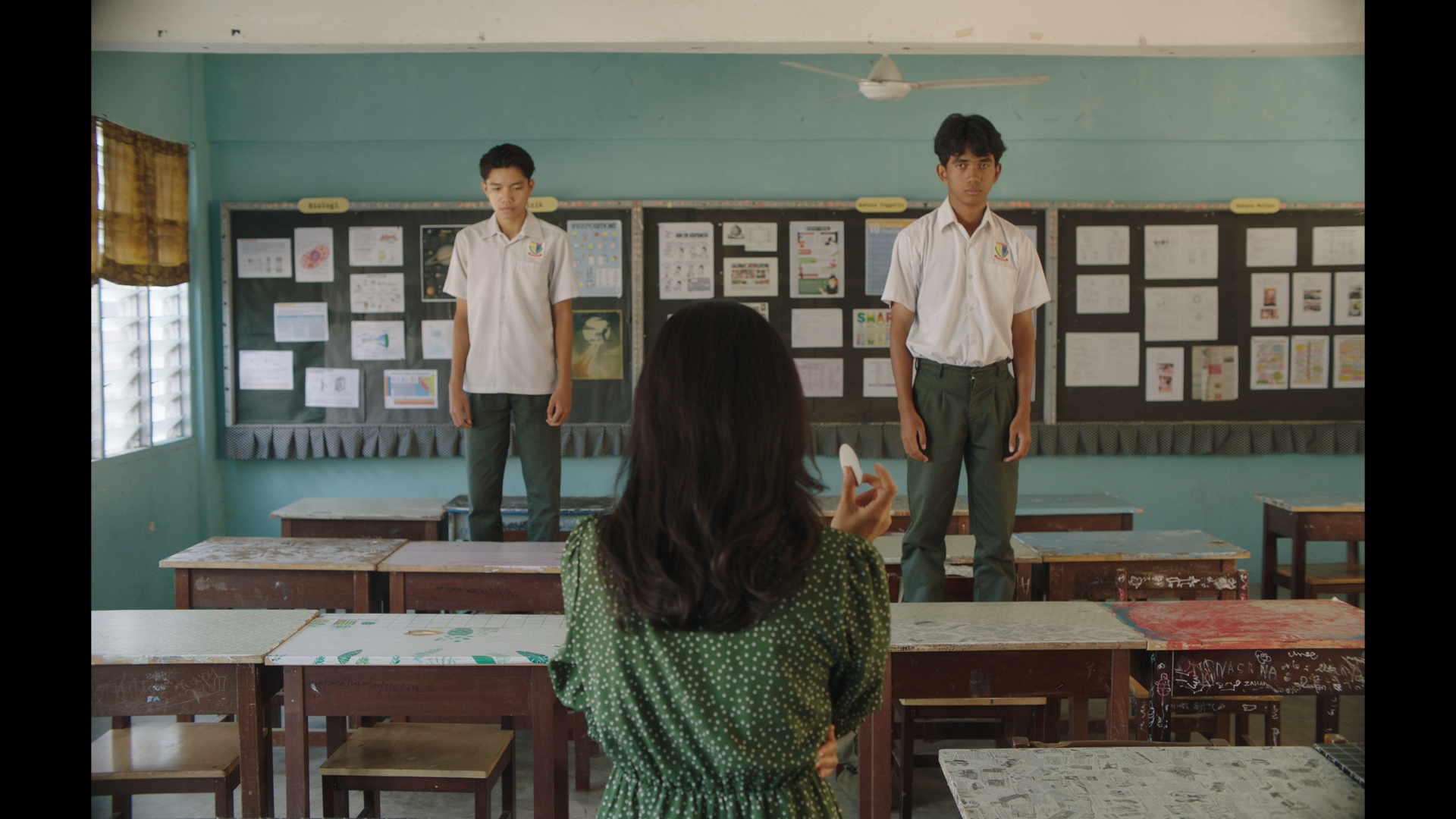
Ali (Idan Aedan) and Amir (Hadi Putra) are extremely close fraternal twins living in a coastal Malaysian fishing village, where they’re deadbeat father dumped them after he remarried, using the erroneous excuse that his new wife fears they’re cursed.
The boys lost their mother during childbirth. Amir doesn’t talk much and when he does he uses his own language to communicate. Ali refers to his brother as the smartest student in the school. Both boys suffer bullying from the other boys.
But their strong bond is tested when Lara (Dian Sastrowardoyo), the new English teacher, arrives and takes a special interest in Amir, introducing him to literature. Ali, who is smitten with Lara, allows jealousy to consume him. And when dad comes around wanting to involve the boys in a new criminal enterprise, things go awry.
Writer-director, Woo Ming Jin, a twin himself, captures the complex connection twins have quite astutely.
Both young male leads are excellent with Putra, in his film debut, a stunning revelation.
I’ve always had a fascination with twins—maybe because two of my stillborn brothers were twins, so I was especially captivated with this film.
Malaysia has not been Oscar-nominated.
This is their 11th submission.
Syria: The Other Side of the Sun
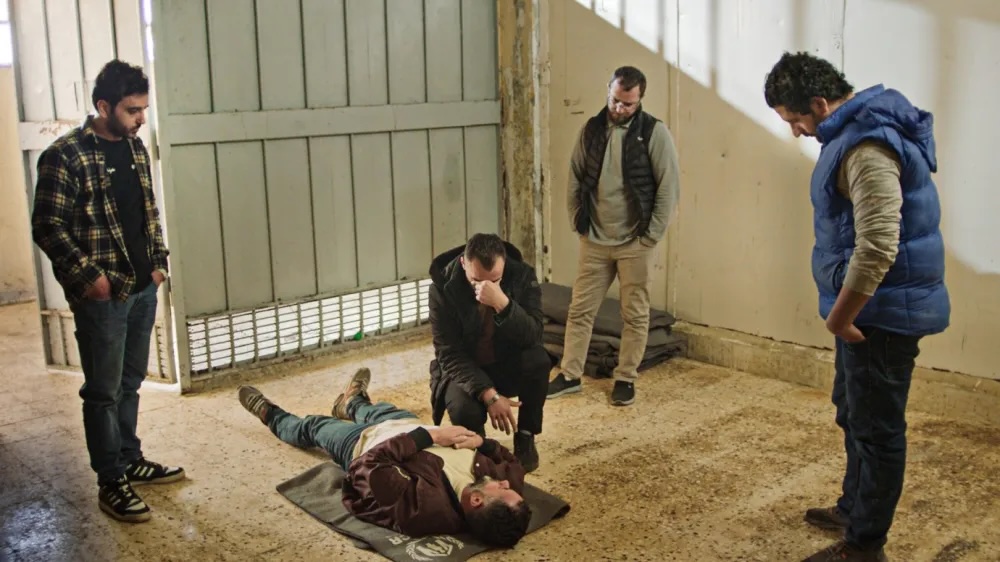
Of the countless documentaries this year, not just in the international feature race, but in general, many of them focus on trauma and atrocities committed against people who oppose totalitarian regimes or people who are bullied and hated simply because of their religion, or skin color, or class.
Of these, Tawfik Sabouni’s The Other Side of the Sun stands out because it brings together five truly courageous men who suffered the worst kinds of life-threatening atrocities during the evil reign of Bashar Al-Assad in Syria.
These gutsy men reunite at the infamous Saydnaya Prison, where the totalitarian government held them, and tell stories of their appalling mistreatment and survival. They even reenact some of the monstrous acts that were inflicted upon them. Most of the subjects were just teen boys when they were first detained. Many were arrested simply for protesting.
Assad’s regime committed war crimes and mass human rights violations. Over 177,000 people disappeared in his prisons.
Sabouni, himself, was an inmate in the prison, and he even chronicles his own experiences with the other four former inmates.
The Other Side of the Sun is a truly compelling doc about the brutality humans are capable of, but also about compassion, survival and hope.
This is only Syria’s second Oscar submission. They submitted once before in 2017.
Armenia: In the Land of Arto
Social media and news outlets (sadly, almost one and the same now) appear obsessed with conflicts in the Middle East but rarely report/post on wars happening elsewhere in the world.
In Western Asia the Nagorno-Karabakh conflict, which began in 1988, is an on-again, off again territorial and ethnic dispute between Armenia and Azerbaijan, which formally ended in 2023, with Armenia losing the ancient region of Artsakh, sending 120,000 Armenians into exile.
Tamara Stepanyan, whose personal doc, My Armenian Phantoms, was last year’s Oscar submission, returns with a powerful feature further exploring the trauma of war, but through the viewpoint of an outsider with significant ties to the country’s history.
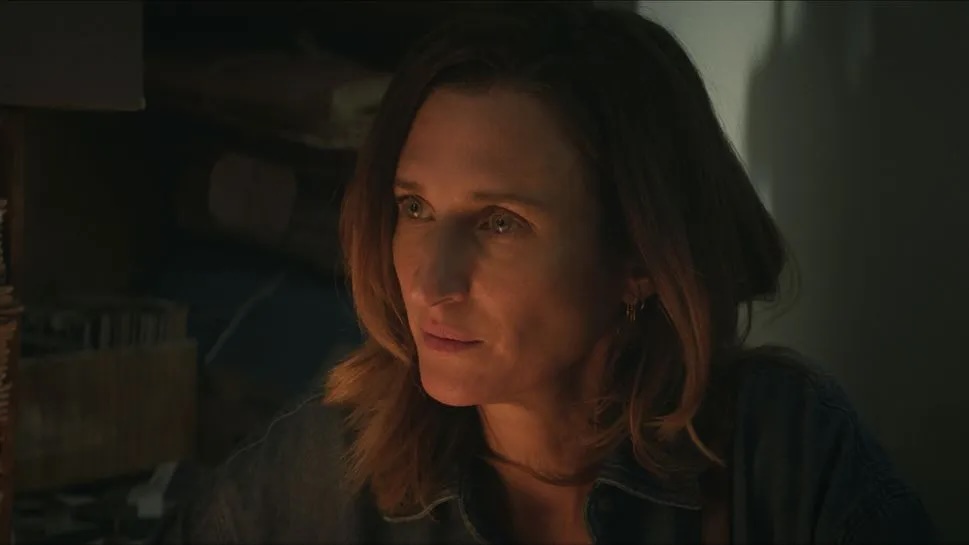
In the Land of Arto, centers on Céline (Call My Agent!’s Camille Cottin), who arrives in Armenia in June of 2021 to try and find proof that her deceased husband, Arto, was born there so her children might one day have access to Armenian citizenship. Alas, no one by his name appears to have been born in the region. But then she finds out his last name was an alias.
She asks her taxi driver to help her search for anyone who might have known her husband. These scenes are particularly fascinating and telling as we see how meaning and intent can get lost in language translation as Céline doesn’t speak any Armenian and must rely on her limited English and the taxi driver’s crappy French.
Céline is in for quite the shocker when she discovers that Arto, while fighting in the turning point battle in 1993, disobeyed his superiors’ orders and led six men to their death. He, then abandoned them, as well as his fiancé, and fled the country.
She enlists the help of a French-speaking Armenian, Arsine (Zar Amir Ebrahimi, co-star of last year’s Oscar-winning live action short, Two People Exchanging Saliva), to visit the site of the atrocities, so she can have closure for herself and her kids. Arsine has her own agenda, needing Céline to help smuggle drones into the conflict zone. “Here’s your chance to understand the war,” Arsine tells her, when she balks at the idea.
Stepanyan has crafted a rich, solemn yet emotionally impactful work featuring two terrific performances by both Cottin and Ebrahimi.
Céline is searching for some kind of truth, trying to make sense of the confounding senselessness of war.
in this work, Stepanyan meditates on memory, trauma and resistance, but also acceptance and atonement. It’s pretty powerful stuff.
Armenia made the shortlist for the very first time in 2023 with Michael A Goorjian’s Amerikatsi.
The country has submitted 16 times.
Worthy of Consideration
Luxembourg: Child
I’m super idiosyncratic when to comes to horror films. I love those that are grounded in realism with some kind of psychological element and not simply guts-n-gore-loaded fare made for the sake of the legion of splatter-happy cine-loons out there.
So, Cyrus Neshvad’s discomfiting, yet mesmerizing take on the genre truly captivated me from beginning to end. And I even jumped and gasped a few times (very atypical for me).
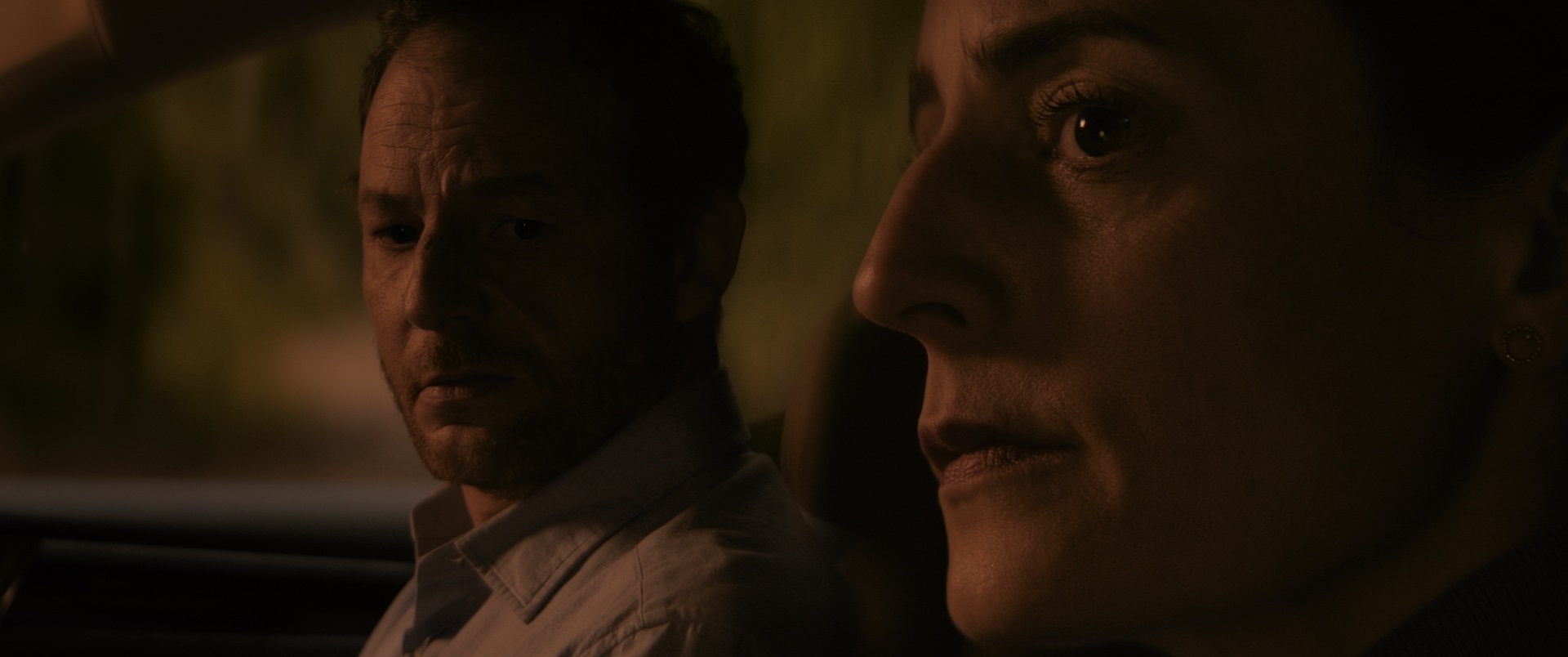
Child opens rather enigmatically with young teen boy Leo (Leo Todesco) lying comatose in a Luxembourg hospital bed, his doctor father Greg (Malik Zidi) at his side. Greg soon joins his angry wife Anne (Brigitte Urhausen) on a road trip to bribe a hospital to place the boy at the top of the organ transplant list—or so Greg thinks. They’re really headed to some unnamed eastern European country —where they’re speaking Bulgarian but it’s not Bulgaria— to illegally acquire the unspecified organ Leo needs to survive. Greg, who Anne blames for the tragedy, is aghast. And both parents are immediately in danger as they’re dealing with a group of nasty, greedy thugs.
But the real peril arrives in the form of a gun-toting angry mother (Lydia Indjova) who begins shooting the organ traffickers and also targets Greg and Anne, who flee into the forest—with the precious organ.
In a most gruesome scene, the mother discovers the remains of her daughter, after her organs have been harvested.
But there’s more! There is a horribly deformed creature lying in wait in a cabin in the woods, ready to do damage to whomever dares to come in contact with it.
Neshvad knows how to create tension, trick us and then scare us to smithereens. So much of why Child works so well is because it feels authentic, a true horror that could actually occur. The child exploitation and human trafficking are happening all over the world. And there are desperate parents out there who will do anything to save their children. But what happens when saving your child means murdering someone else’s?
Then there’s the final clever bit about who and what the creature is. And that’s Neshvad and co-writer Guillaume Levil’s final dose of disturbing reality.
They’ve also ended the film on a rather hopeful note, despite the body count.
With 21 submissions now, Luxembourg has yet to be nominated or shortlisted.
Iraq: No Paradise If You are Killed by a Woman
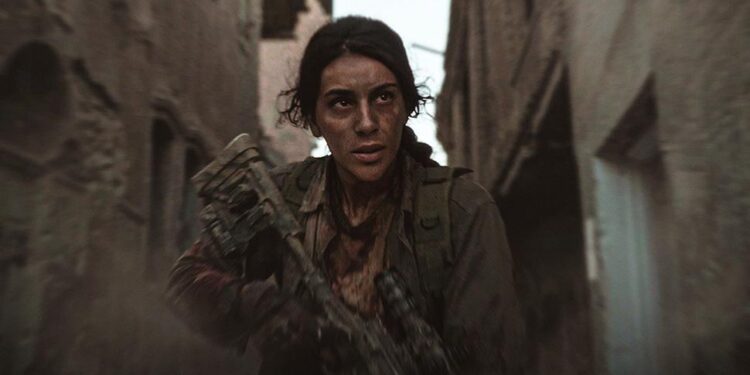
Avan Jamal sears the screen as Vyan, a crackerjack, Kurdish female sniper, dealing with past trauma, who returns to the war-torn Iraqi city of Mosul in order to find her kidnapped sister in Halkawt Mustafa’s stirring, gritty thriller, No Paradise If You are Killed by a Woman.
The story was inspired by the life of Nadia Murad, abducted by the Islamic State in 2014. She was later awarded the Nobel Peace Prize.
The film premiered at the 2026 Venice Film Festival.
Read my Venice review.
Iraq made the short list last year, for the very first time, with Hasan Hadi’s directorial debut, The President’s Cake.
The country has never been nominated.
This is their 15th submission.
Indonesia: Four Seasons in Java
Kamila Andini’s Four Seasons in Java is bold, risk-taking filmmaking.
Pertiwi (Putri Marino) returns to her remote East Java hometown after serving 20 years in prison for killing a man who tried to rape her when she was a teenager (she slashed his throat with a bottle). What she encounters upon her arrival are distrusting parents, her former bestie now married to her ex-boyfriend and the men who were complicit in her trauma now in positions of power in the town.
She creates a community with other local outcasts including a former brothel owner who sees UFOs played with aplomb by Christine Hakim.
As the narrative unfolds we learn that Pertiwi was raped several times and there were quite a few accomplices.
When a deaf-mute teenager’s horrific trauma mirrors her own, Pertiwi decides to act against the men responsible.
The movie is quite the genre blend with touches of horror folklore mixed with serious psychological drama as well as Hollywood revenge-flick tropes along with these creepy video-tape-ish flashback sequences.
Marino’s fierce and daring performance keeps the viewer mesmerized, even when the other characters feel a bit too one-dimensional.
The surreal denouement proved to be strangely cathartic.
Four Seasons in Java is another movie where bad men keep getting away with sexual crimes against women with no accountability. Only in this one, even the protagonist’s father is culpable.
The film world-premiered as the 2026 TIFF Centerpiece.
This is Andini’s second Indonesian Oscar entry, following Yuni in 2021.
Indonesia has never been nominated.
This is the country’s 28th submission.
Sri Lanka: Riverstone
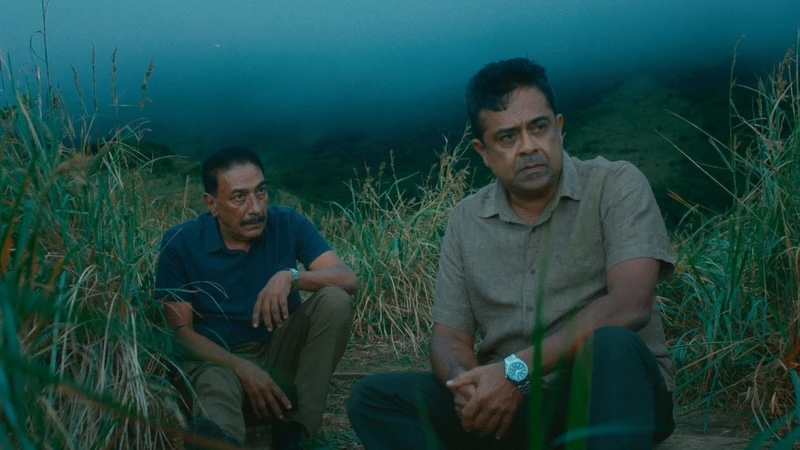
Set in Sri Lanka right after the 2009 Civil War, Lalith Rathnayake’s Riverstone is a fascinating psychological road movie of sorts that follows three police officers escorting a political prisoner, Nanditha (an excellent Randika Gunathilaka), through mountainous terrain. As the narrative unfolds, we learn that the journey is an unofficial mission to murder the captive.
The cops come off as buffoonish at first while the prisoner is sly, smart and a bit cunning.
A radio show contest proves quite telling, and nerve racking as Nanditha feeds one of the cops the answers and the officer takes all the credit. But most of the characters grow and become more nuanced as the film progresses and the three cops begin to doubt their duty and wonder whether they should carry out their task.
Beautifully shot by Prabath Roshan, this superb film thoughtfully weighs loyalty to the state against personal conscience.
This is Sri Lanka’s first Oscar submission in 17 years.
They have submitted three times.
Kosovo: Dua
It’s refreshing to see coming-of-age screen stories not only reflect burgeoning sexuality but also social and political conflicts that the youth of the world are forced to live in (and hopefully through) that shape who they become.
Blerta Basholli’s Dua is set in the late 1990s when Kosovo was the site of a horrific ethno-political war fought between Serbia President Slobodan Milošević’s Federal Republic of Yugoslavia and the Kosovo Liberation Army (KLA), an ethnic Albanian guerrilla militia trying to prevent the genocide.
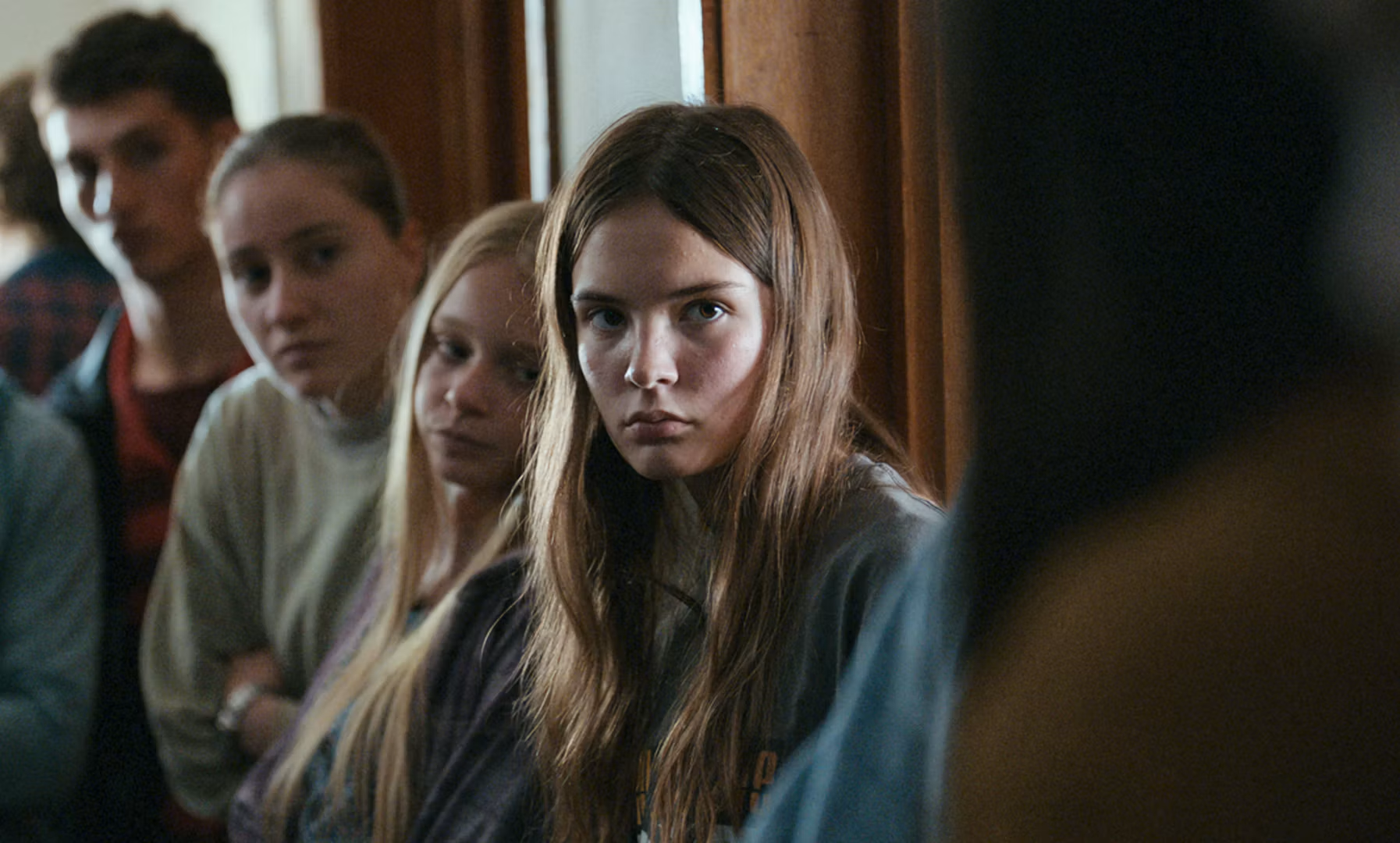
Set in Prishtina, the proceedings are seen through the lens of the titular 13-year-old girl (amazing newcomer Pinea Matoshi) who must risk her life every day just going to school. “There goes my favorite Albanian whore,” the Serbian thugs on the street shout at her.
Dua lives with her parents and her brother. She has yet to get her period and is crushing on a boy at school but is mistreated by some of the prejudiced mean girls there. Meanwhile, outside, houses are being set on fire and innocent people are being slaughtered on the streets.
But Dua is pushed to her breaking point when a fast slob of a Serbian fondles her backside, and she seeks a kind of revenge that backfires on her family.
Basholli is wise to often keep the focus on Matoshi’s pained, angry, sad and furious face.
In a particularly grueling scene, Dua’s dad is pulled over by Serbian police and severely beaten for no good reason while Dua sits in the backseat immobilized. The scene is shot so the camera stays on Dua, but we can see the atrocities being committed behind her head. Dad eventually gets back in the car, and we see blood dripping from the back of his neck. It’s a gut-wrenching moment.
This startling and deeply affecting film world premiered at Cannes and is another important story about trying to simply exist during a life-threatening conflict.
Kosovo has never been nominated and has been submitting since 2014.
Basholli’s film Hive made the short list in 2021.
This is the country’s 10th submission, the first since 2022.
Cuba: Malecón
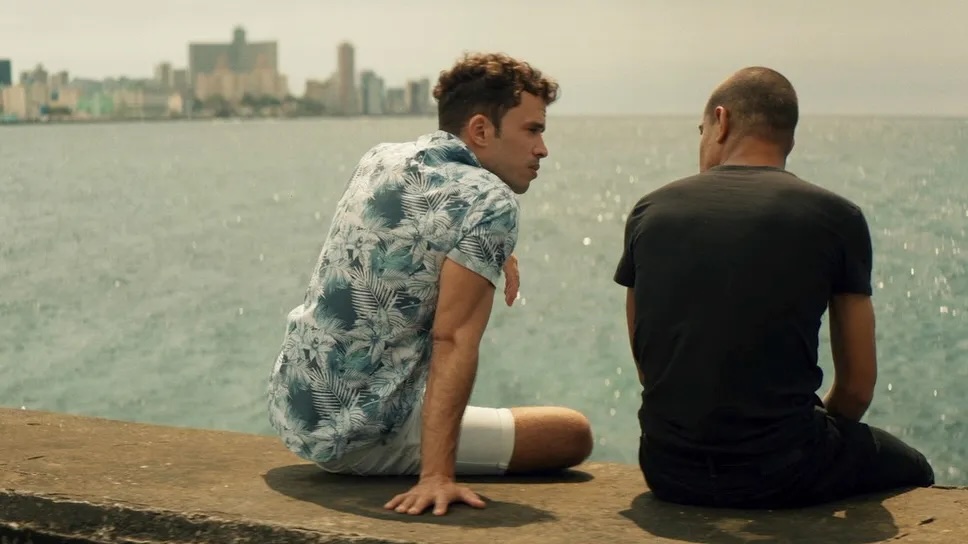
In the opening moments of Carlos Larrazabal’s moving feature debut, Malecón, a teen named Elvis tries to stop his abusive stepfather from strangling his mother to death by stabbing him. They both die and the boy goes to prison for ten years. When Elvis (a mesmerizing César Domínguez) is released from jail he finds that his girlfriend Yuli (Camila Rodhe) has married a local crime boss and pimp. Elvis reconnects with his childhood friend Martin (Omar Rolando), who helps him get a job, and he gets involved with the seedier side of Havana’s underground world. But Elvis longs to escape to America. In the end he must decide to leave alone or stay and fight for the woman he loves.
Sounds melodramatic? Yes. But Larrazabal and his co-screenwriter Fabián Suárez do their best to avoid any histrionics and place the focus on Elvis’s internal journey.
This is an assured first-feature and Larrazabal ended his film perfectly.
Cuba has a curious submission history. They first put a film forth in 1978, then not until 1987. They were nominated once for Tomás Gutiérrez Alea & Juan Carlos Tabío’s gay-themed Strawberry and Chocolate.
The country has had two recent entries either disqualified or “not on the final list.”
This is Cuba’s 24th submission.
Greece: Broken Vein
Yannis Economides’s Broken Vein has the dubious distinction of being the most profane film, short of anything Tarantino, that I’ve seen in a long while — especially when it comes to characters calling each other the worst expletives.
It’s also quite a nasty cinematic thriller.
Grumpy middle-aged businessman Thomas Alexopoulos (Vasilis Bisbikis) is having quite the rough time of things, especially financially as he owes local loan sharks a ton of money and is in danger of losing his family home—and his family if he doesn’t find some way to raise cash.
His wife Stella (Maria Kehayioglou) is not happy. He’s badgering one of his mistresses, Georgia (Betty Arvaniti), into giving him a ton of her own savings. Meanwhile he also owes his son money. So, he comes up with what he thinks is a smart plan for a cash grab, but as is often the case in these types of narratives, things take a haywire turn with twisted familial relationships and a couple of insane supporting players.
Bisbikis must get heaps of credit for playing a rather despicable person and having us still root for him. Arvaniti won the Hellenic Award (Greece’s Oscar equivalent) for Best Supporting Actress and is terrific.
Economides and his co-screenwriter Vangelis Mourikis do a swell job of tricking the viewer into thinking they’re watching a comedy and then dramatically veering into the tragedy lane. How Greek of them!
Greece has been nominated 5 times, including Michael Cacoyannis’s Electra (1962) and Iphigenia (1977), with no wins.
The country’s last nomination was in 2010 for Yorgos Lanthimos’s Dogtooth.
This is their 46th submission.
Algeria: Roqia
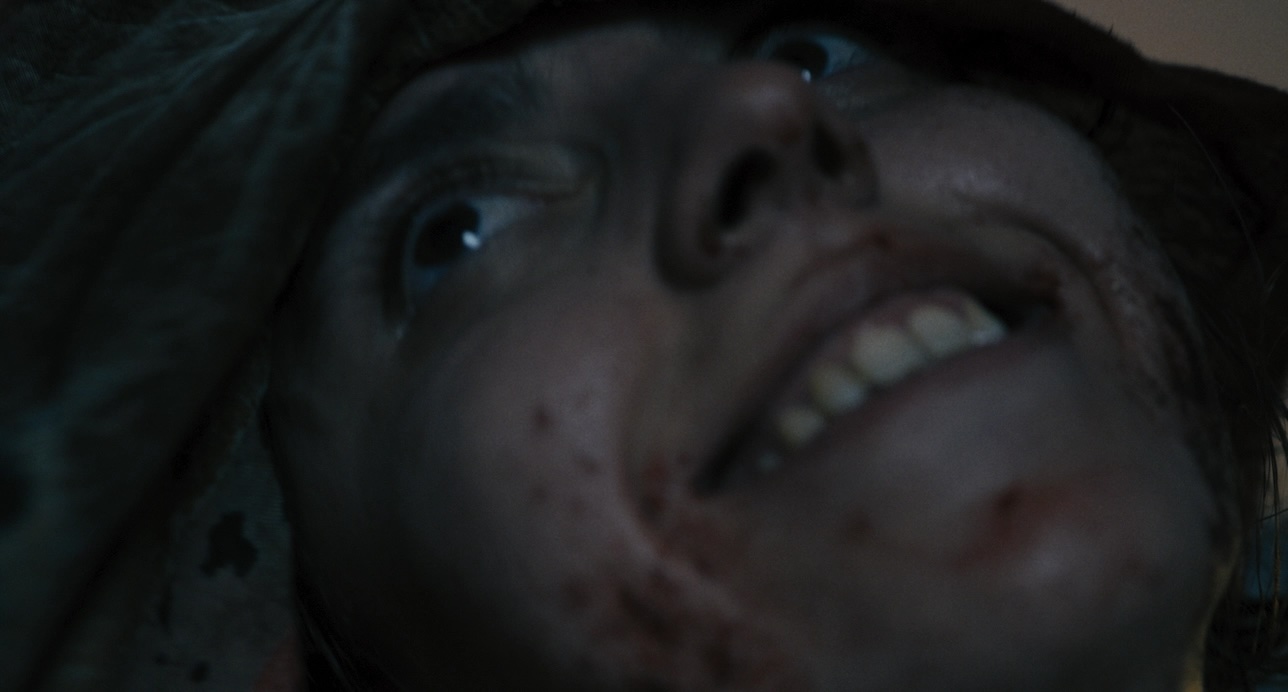
Yanis Koussim’s psychological horror-thriller, Roqia, plays like a warning about the perils of Islamic fundamentalism. It’s also an allegory for Algeria’s 1990’s civil war, blending folklore and demonic possession to investigate trauma and extremist indoctrination.
The slow-burn narrative initially focuses on a young amnesiac, in 1992, with a missing right index finger, whose possession may date back to his military service. He terrifies his family and each night he’s visited by strange visions whispering in an unknown language.
Then, modern day, an aging Raqi (exorcist), missing his right index finger, suffers from Alzheimer’s. Guess who? His disciple worries that his waning mind may release an ancient evil.
Roqia is a truly terrifying, intriguing sit.
The film world premiered in the International Critics’ Week section of last year’s Venice Film Festival.
Algeria won the Oscar once, the first time in competition, for Costa Gavras’ Z, which was also nominated for Best Picture of 1969.
The country has received four other nominations and has submitted 26 times but did not submit last year.
Malta: Żejtune

Maltese-American director Alex Camilleri’s sophomore feature, Zejtune, dives into the interesting culture of għana, which is an improvised form of songwriting/singing, similar to hip hop.
This road-trippy flick brings together a young woman and an 80-year-old man, exploring themes of loneliness, identity and belonging, all against the gorgeous island landscape backdrop in and around Malta.
The film screened at this year’s Tribeca Film Festival and I found it deeply affecting.
Read my Tribeca review.
This is Malta’s fifth submission since 2014. No noms.
Morocco: Strawberries
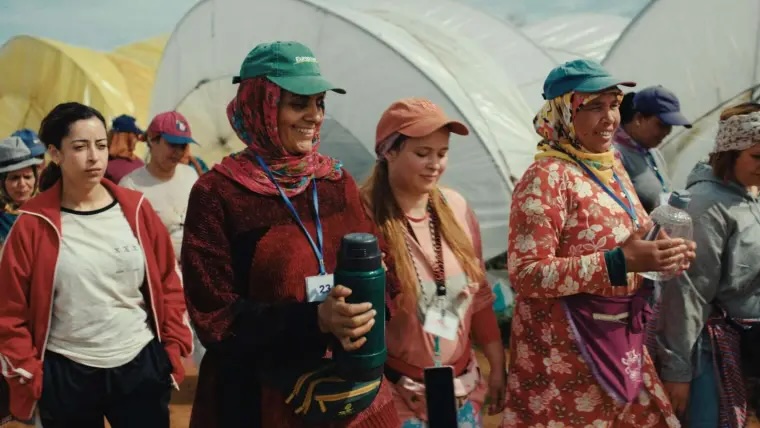
Laïla Marrakchi’s absorbing film Strawberries (La más dulce) takes on the exploitation of Moroccan women who travel to southern Spain for work.
Inspired by real reports about how these women are taken advantage of, the film centers on the easily exasperated Hasna (Nisrin Erradi from Everybody Loves Touda), who goes to Fresa del Carmen, Spain to make money so she can get her son back from her husband. We never get her full story except that she did time in prison for adultery. Her defining catch-phrase is, “Leave me alone!”
Her bunkmates at the strawberry picking camp are shy Meriem (Hajar Graigaa), silly Zineb (Hind Braik) and older and seemingly wiser Khadija (Fatima Attif).
The first signs of problems arise when the girls received their paychecks, and it is less than was promised. But there are far more sinister issues on the horizon when one of the gals is sexually exploited and almost dies.
I applaud Marrakchi for not feeling the necessity to make her main protagonist likable (hate that word) and, instead, allow for all the nasty, deeply flawed but human traits to loom large. It’s a refreshing change in a done-to-death little man (in this case, women) vs. the system narrative.
The film world premiered in the Un Certain Regard section at Cannes.
Morocco has never been nominated. This is their 22nd submission.
Slovakia: Flood
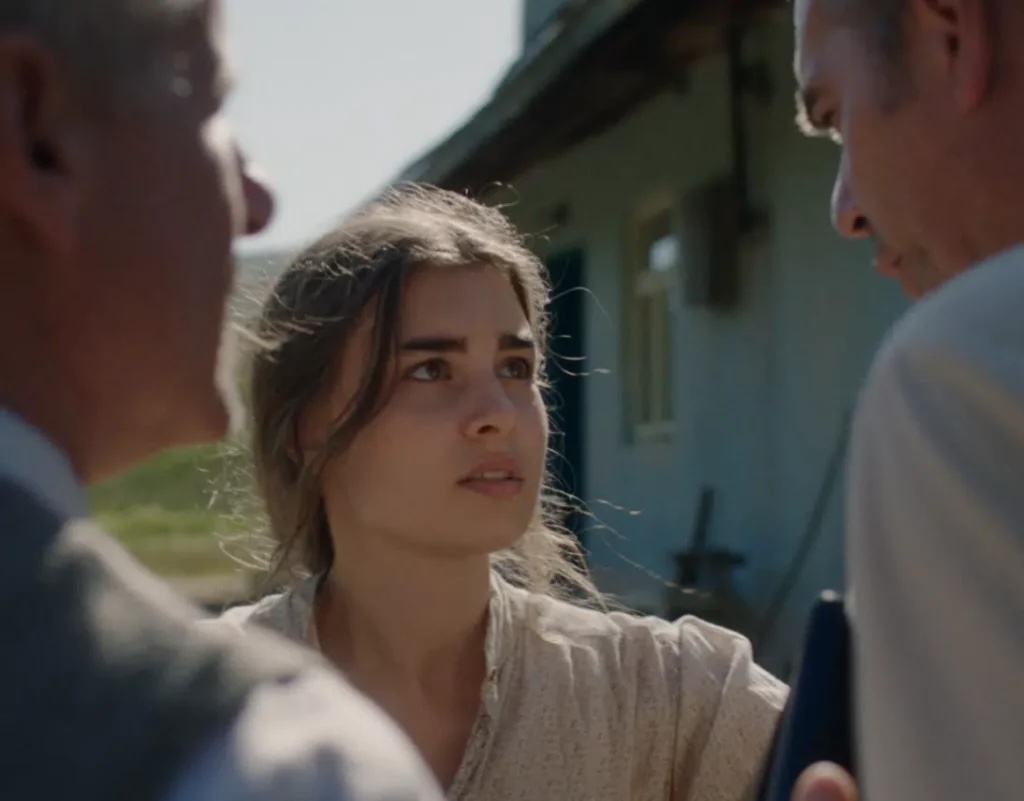
Set in 1980 in a remote village in communist Czechoslovakia, Martin Gonda’s Floodcenters on teen Mara (Sara Chripakova) who lives with her strict and conservative widowed father, Alexander (Joszef Pantlikás). The young girl dreams of leaving her stifling town and studying in the city to become a pilot, but Alexander insists she remain with him, get a job in a shoe factory and help work the land. “Life‘s not about what you want, but about how much you can take,” he bellows after calling her “stupid.” She defiantly tells him, “There are more interesting things in the world than rotting in this village.”
Mara is headstrong and when dad refuses to sign the document for her to begin pilot training, she forges his signature and attends anyway. Alexander must deal with the entire town being relocated to make way for a new water reservoir. When tragedy strikes, Mara is forced to decide between her duties to her father and her dreams and desire for freedom.
There have been quite a few films in the last several years, especially among International features, about the cross generational struggle between tradition and modernity, about uneducated parents selfishly demanding their children stay home and help out, instead of getting an education. I appreciated how Gonda and his co-screenwriters, Martin Suster and Dominika Udvorková, depict the conflict but lean towards Mara’s tremendous yearning to pursue her dream. And they wisely end on a note of hope.
Chripakova is quite the find as Mara, showing us this rebellious young woman who isn’t afraid to give it back when she needs to, but who also truly loves her dad, despite his obstinance. She anchors the film.
This is Slovakia’s 30th submission, no nominations to date.
Hungary: Silent Friend
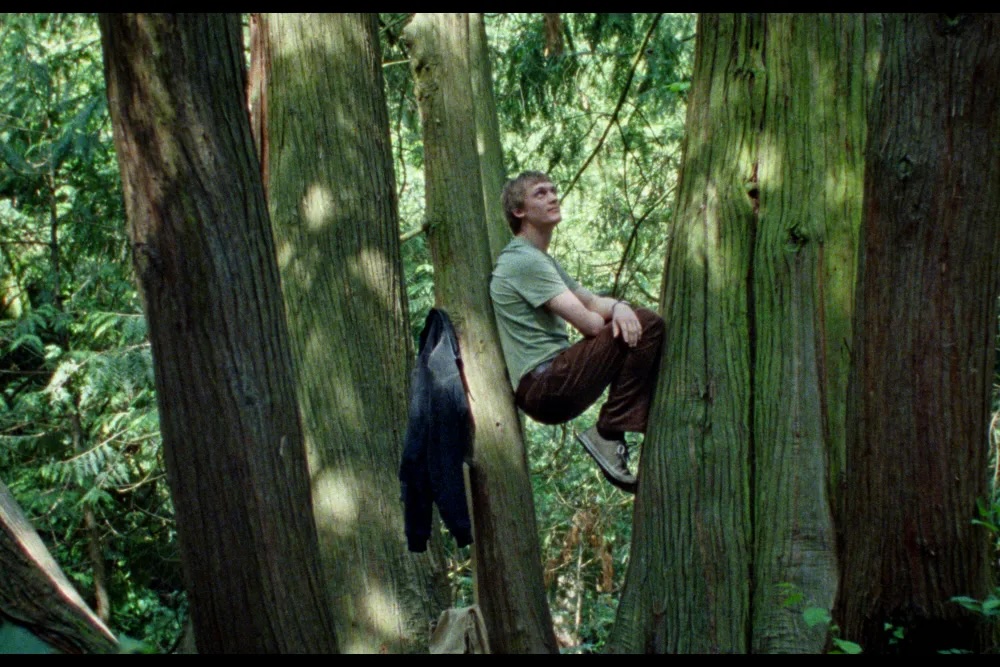
Ildikó Enyedi’s meditative, endlessly fascinating Silent Friend weaves together three different stories from three time periods, via a non-linear narrative, that have one thing in common (seemingly, anyway), they all connect at the location of a ginkgo tree. Those sagas occur in 1908, 1972 and 2020 — the most compelling is the middle tale.
The 1908 segment centers on a brilliant female botany student, Grete (Luna Wedler), who must deal with a misogynist patriarchal academic milieu.
1972 focuses on handsome student Hannes (Enzo Brumm, looking like a 1970s porn star—a compliment), whose life alters after he looks after and connects with…a geranium plant.
The more contemporary sequence is set during the COVID-19 pandemic as a Hong Kong neurosurgeon (Tony Leung Chiu-wai) begins an experiment with the ginkgo tree and enlists the help of a French botanist (Léa Seydoux) via Zoom.
The film can be a bit maddening, but it’s also gorgeous to look at thanks to DP Gergely Pálos.
Enyedi and Pálos use different types of filmmaking styles for each time period as well: Monochrome 35mm for 1908, 16mm appropriately grainy for 1972 and, of course, digital color for 2020.
Silent Friend bowed at last year’s Venice Film Festival where Luna Wedler won the Marcello Mastroianni Award for Best Young Actor and Enyedi took home the FIPRESCI Prize and the Green Drop Award.
Hungary has been nominated 10 times with two wins, István Szabó’s Mephisto in 1981 and László Nemes’ Son of Saul in 2015. Szabó has the most Hungarian Oscar submissions with five.
Enyedi has now had three films submitted, with her 2017 feature On Body and Soul, the most recent Hungarian nominee.
In addition to nominations, the country’s been shortlisted twice.
Last year László Nemes Orphan should have, at least, made the short list.
This is the country’s 62nd entry.
China: Once Upon a Time in the Middle East
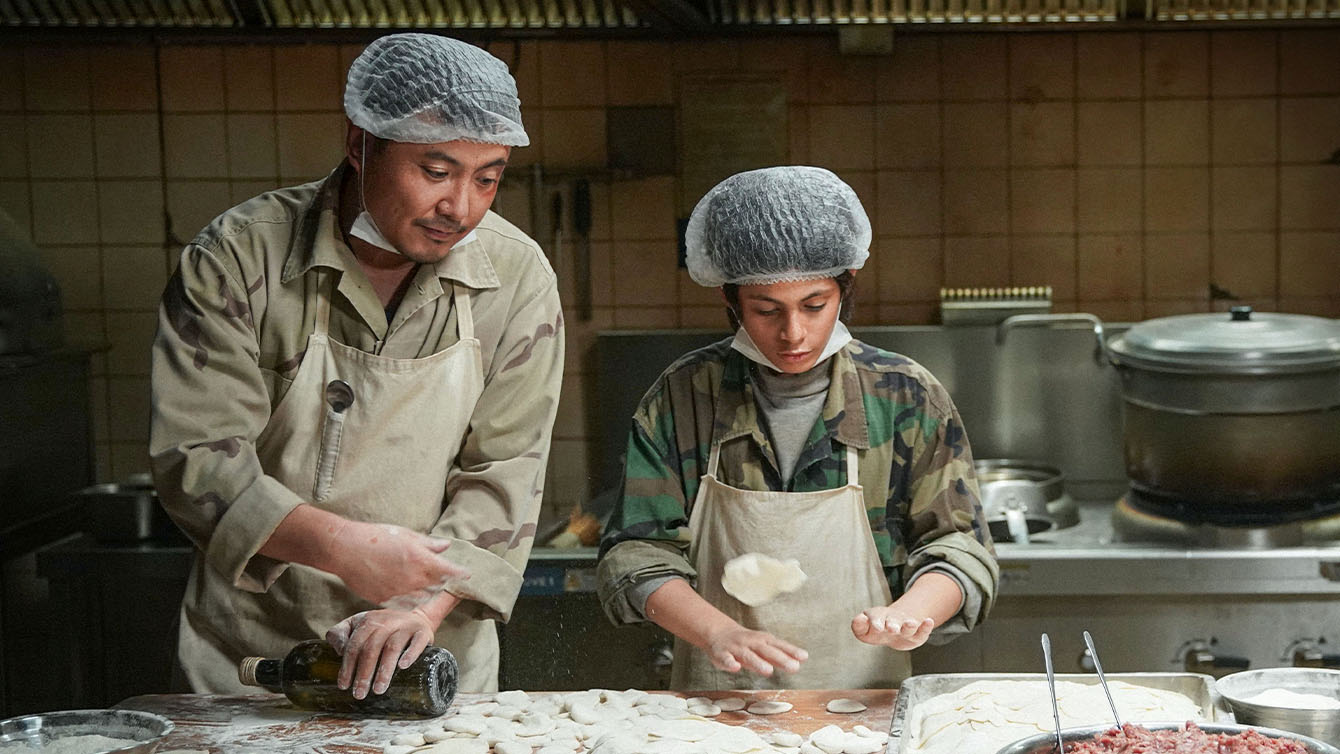
Wen Muye’s manipulative but wholly engrossing anti-war epic, Once Upon a Time in the Middle East, leans on the thriller side when it’s not super funny, during the first half, anyway.
A huge box-office hit in China, the film is set in the fictional Middle Eastern city of Bahata (basically Bagdad) during the 2003 U.S. invasion of Iraq.
Chinese chef Xu Fu (Shen Teng) lands an opportunity he cannot pass up so he can support his family and pay off his debts. He is to travel to the Middle East to run the Dragon (or Loong) Restaurant alongside manager Ma Junsheng (Jiang Quiming). The partners are quite successful in transforming the eatery, into a happening spot, along with the help of an orphan boy Seif (Omar Sherif), who becomes Xu Fu’s apprentice. But when the Americans begin bombing the city, Dragon becomes a refuge for those caught in the conflict. A while later, they’re all arrested by American military police and taken to prison where they work as kitchen assistants. There is a lot more plot, suffice to say, children are indoctrinated into carrying out suicide bombings for Islamic terrorists and Xu Fu, Ma Junsheng and Seif must do what they can to save the children.
Muye, along with screenwriters Lang Qunli and Wei Zhong, do not sugarcoat just how vicious the Americans behave or how evil the terrorists can be in exploiting the children and using God to carry out their deeds. But they do try and find some of the nuances as well. It’s terrific filmmaking regardless of how one might feel about the cultural portrayals. After all, it is China’s POV on the American (Bush Administration) response to 9/11.
The gifted young Sherif (named after another Sharif, perhaps) already has a bunch of IMDB credits. He is captivating and the beating heart of the film, making quite an impression.
Once Upon a Time in the Middle East is a potent argument against extremism and a plea to save children from the insane, deadly whims of certain world leaders.
Last year, China submitted one of the best of all the entries that should have made the short list, Shen Ao’s Dead to Rights, another depiction of the senselessness of war.
China has received two nominations for Zhang Yimou films, Ju Dou (1990, co-directed by Yang Fengliang) and Hero (2002). Yimou has the most submissions with nine. He was also nominated for Raise the Red Lantern, submitted by Hong Kong in 1991.
This is China’s 40th submission.
The film was released in theaters by Well Go USA Entertainment in October.
Brazil: Gugu’s World
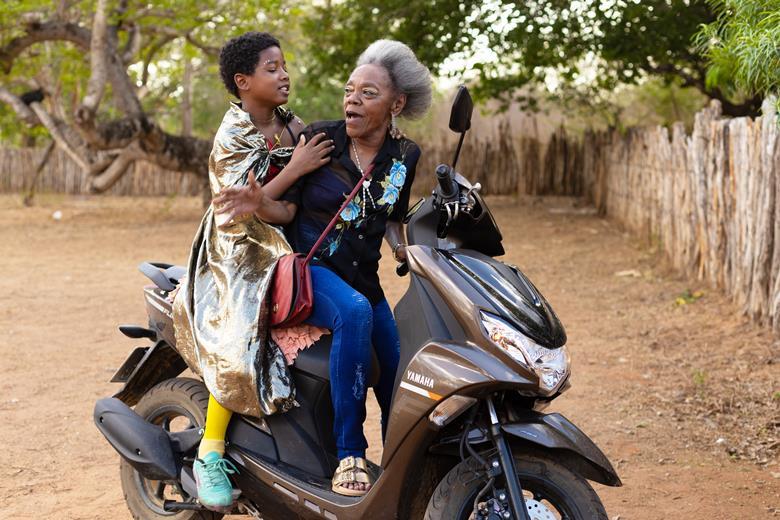
Allan Deberton’s Gugu’s World is a sensitive and touching portrait of an effeminate queer 11-year-old boy trying to navigate life in a small coastal town in northeastern Brazil.
The titular teen (Yuri Gomes) lives in a village where his flamboyant behavior comes under scrutiny by bullying schoolmates and even his own father, Batista (Lázaro Ramos), puts him down. But Gugu is a pretty defiant kid. He’s a soccer star and able to fight his own battles—usually. He lives with his beloved grandmother Dilma (Teca Pereira), who raised him since the death of his mother. But when Dilma begins showing more and more signs of dementia, Battista places her in a nursing home, separating Gugu from his only real ally.
Gugu learns that his mother was killed for speaking out for her beliefs. What remains a mystery, to me, anyway, is why his father could stay in a town that saw his wife shot 12 times, and allow his son to grow up there? And start a new family there? Something Deberton could have addressed.
Regardless, Gugu’s World is a loving and engaging look at a boy who is defiantly his own special creation.
There’s an especially hilarious scene where Gugu and his fellow students are questioned by the teacher after a lunchroom altercation. Gugu shows no remorse for strangling his main bully, Francisco, and says he’d do it again. His teacher asks if he thinks that’s right. Gugu’s response: “You think what they do to me is fair?” Good for you, Gugu!
Brazil’s submissions have been nominated six times with one win, two years ago for Walter Salles’ I’m Still Here. Last year, Kleber Mendonça Filho’s brilliant The Secret Agent scored a nomination in this category as well as for Best Picture, Lead Actor (Wagner Moura) and Casting.
Interesting to note that Hector Babenco’s celebrated 1980 feature, Pixote, was accepted as Brazil’s submission but then disqualified because it was test marketed in Brazil before the allowable date.
Gugu’s World is the country’s 56th submission.
Jordan: Sink
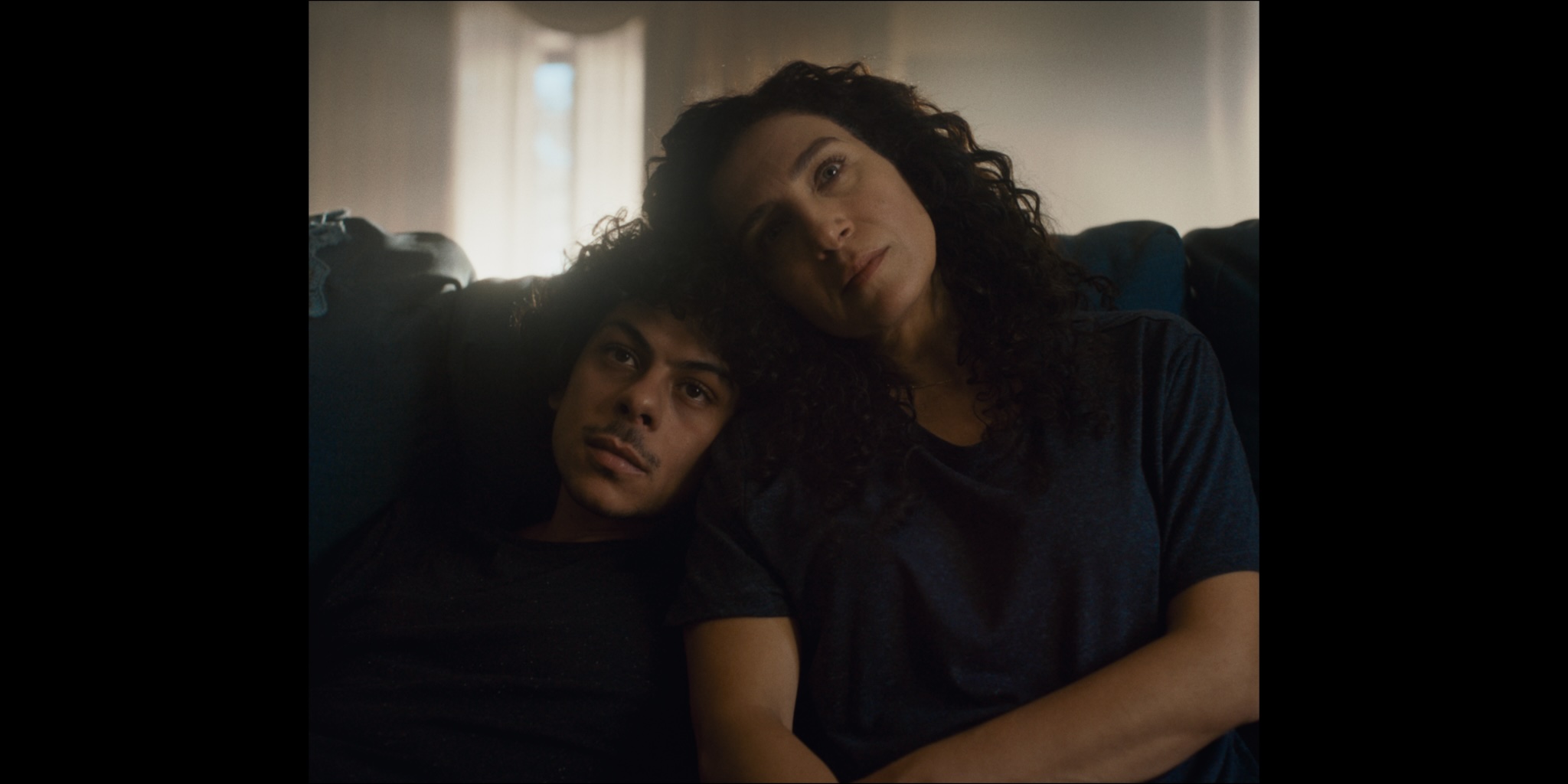
Jordaniian writer-director Zain Duraie dives into the core story of a mother’s unwavering love and support for her child, despite his growing (and undiagnosed) mental illness in the captivating drama, Sink. FYI: the Arabic title is a more apropos, Drowning.
Nadia (a heartbreaking Clara Khoury) is a fiercely protective mother to her eldest teen son Basil (Mohammed Nizar), who slowly and then quickly begins to show signs of mental deterioration. Nadia’s husband (Wissam Tobeilah) is little help and disparages the boy: “I just want him to be normal, go out on dates.” And their second son is dad’s pride and joy, which doesn’t help. They also have a young, barely-present-in-the-story daughter.
At first, Basil just seems overly playful. “You’re always yourself, you have nothing to hide,” Nadia says to him, adoringly. But when he goes down a scary rabbit hole and becomes violent, she must reckon with reality. Or must she?
The genesis of the film is rooted in experiences Duraie saw happening around her where people are taught to hide their pain for fear of being stigmatized. As someone raised Catholic, I could completely relate to the erroneous idea that emotional repression is far better than public shame.
Sink is beautifully shot by Farouk Laaridh (Kaouther Ben Hania’s Four Daughters).
What I loved so much about this film was the unbreakable bond between mother and son, the intense love and palpable devotion they have for one another. Both Khoury and Nizar are extraordinary.
The last shot of Sink is a stunner—one that made quite an impression.
Jordan has one nomination, for Naji Abu Nowar’s Theeb in 2015.
Two 2020s submissions were withdrawn for controversial reasons.
Cherien Dabis’s All That’s Left of You made the short list last year.
This is the country’s 10th entry.
Kazakhstan: Abel
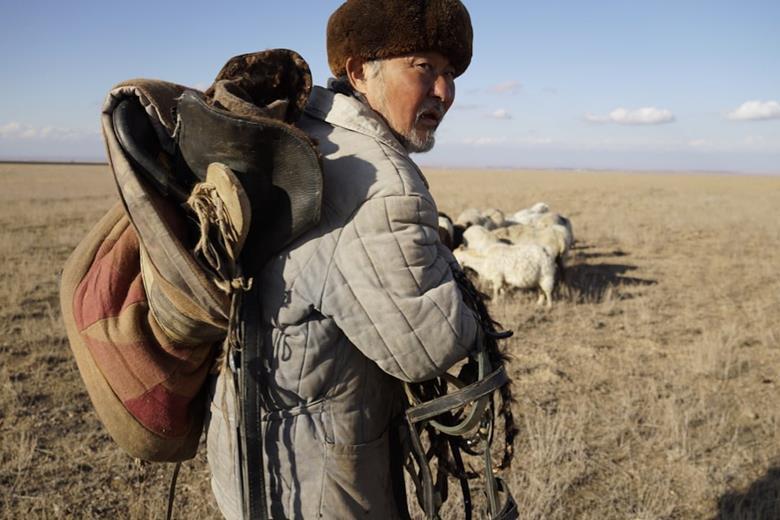
Set in the Almaty Region of Southern Kazakhstan, in 1993, following the collapse of the Soviet Union,
Elzat Eskendir’s intense, piercing film, Abel, centers on the titular aging farmer, played by Yerlan Toleutay, whose been tending to his flock of sheep for forty years but is now stripped of his livestock by corrupt local bosses who unjustly privatize and divide the land and animals for themselves. Chief among them is the soulless Bolat (Ulan Nusipali, so good at being bad), who manipulates villagers into basically signing their livelihood over to him.
“If Stalin was still around, you’d be in prison,” Abel yells at Bolat, who will later beat the crap out of Abel’s young son, for kicks.
Abel has a tenuous relationship with his eldest, rebellious son, Taken (Alikhan Lepesbaev)—they have one shouting match that’s a doozie—and Abel refused to help him, which leads to a terrible tragedy. A subplot about a local young man recently released from prison leads to a densely written banquet scene where the locals welcome him back and discuss Communism vs. Democracy, East vs. West.
I appreciated this film and what it had to say about the dangers of capitalism as well as pridefulness. The ending is pretty devastating…and unsatisfying.
The country was nominated once for Sergei Bodrov’s Mongol and made the short list 2 other times.
This is Kazakhstan’s 20th submission. Last year’s entry was not on the final list.
Colombia: Rains Over Babel

Spanish-Colombian filmmaker Gala del Sol has fashioned a bizarre but dazzling queer-positive debut feature, Rains Over Babel, which is mostly set in a dive bar that doubles for the kind of (Dante’s) purgatory where drag queens thrive, a demonic figure, La Flaca, toys with people’s lives and a yummy Grim Reaper (handsome Felipe Aguilar Rodriguez) is on the prowl! Oh, and club owner, El Boticario (Santiago Pineda), may actually also be Satan. The pic is a hypnotic, fantastical, punk visual feast where death is forever looming.
Del Sol is a filmmaker to watch.
The film world premiered at this year’s Sundance Film Festival.
Colombia was nominated once in 2015 for Ciro Guerra’s Embrace Of The Serpent and made the shortlist in 2018 for Birds Of Passage.
This is the country’s 35th entry.
Kenya: One Woman One Bra
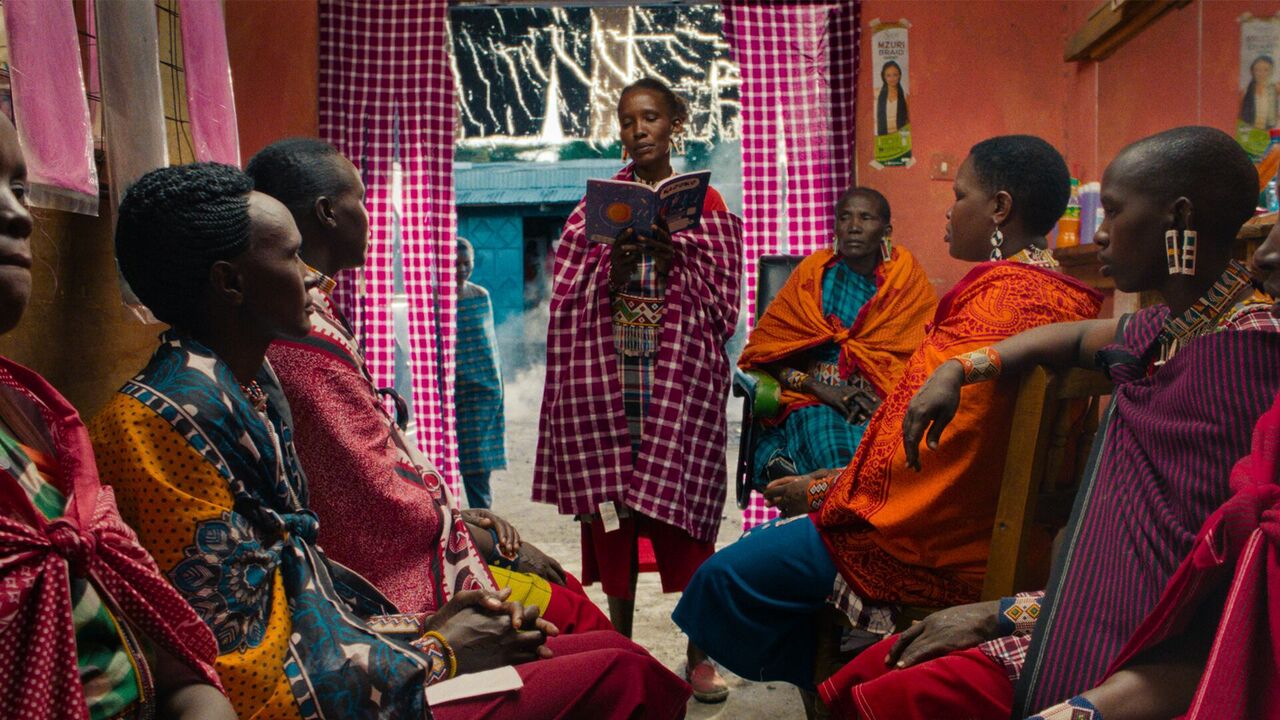
Vincho Nchogu’s tense and heartbreaking feature directorial debut, One Woman One Bra, is the story of Star (a fierce Sarah Karei), a 38-year-old unmarried and childless woman who has no idea who her parents were and must find out in order to keep her home. The townspeople mistreat her and everyone seems to have a different and ridiculous theory about how she came to the village (she was dropped from a tree, being one).
In a desperate need to find funds to buy her home, she inadvertently comes up with an idea to sell bras to the Maasai women, something the NGO (non-governmental organization) is wholly on board with. But the plan is bastardized and the women in town turn against her. Star also discovers that she is featured prominently on the cover, and inside a book, about the Maasai, taken by a white photographer when she was a child.
One Woman One Bra is a harsh critique of white saviorism as well as prejudices against people who refuse to live by traditional norms.
The film won the Audience Award at this year’s Tribeca Film Festival.
This is Kenya’s 10th submission, no noms.India: Gondhal

The first 25 or so minutes of Santosh Davakhar’s feature directorial debut, Gondhal, is one continuous take (or the illusion of such) which introduces the viewer to the main players and the intricate, chaotic narrative that gets stranger and weirder as it goes along and dives into some very dark places. It’s terrific filmmaking even if it’s too heavy on ritual.
The plot unfolds during a ‘Gondhal,’ which is a traditional night-long (seemingly never-ending) ritual performed for newlyweds. Here the pretty young Suman has married the dimwitted Ananda, against her will since she enjoys flirting with Sarjerao, the cocky son of the village Chieftain, Abasaheb, who is not a nice man to say the least. Suman is really in love with Sahebrao. Confused? Wait. Bhivaba, a respected elder, is performing part of the Gondhal. And he brings along his young grandson, Vishnu. There is bad blood between Bhivaba and Abasaheb, who are related to each other. I’ll stop there.
Performance-wise, Ishita Deshmukh stands out as the scheming bride, Suman and Nishad Bhoir makes a delightfully smarmy Sarjerao.
The film is chock full of intrigue, mayhem, subterfuge, murder and contains a really uncomfortable scene of sexual exploitation. It’s a wild ride for certain and refreshingly unpredictable cinema.
India has received three nominations, no wins, for Mehboob Khan’s Mother India in 1957, Mira Nair’s Salaam Bombay! in 1988 and Ashutosh Gowariker’s Lagaan in 2001. In 2022, Pan Nalin’s Last Film Show made the shortlist. Las year, Neeraj Ghaywan’s brilliant Homebound also made the short list —and should have been nominated!
India has been submitting on and off since the second year the category was officially established.
This is their 59th entry.
Uruguay: A Loose End (Un cabo suelto)
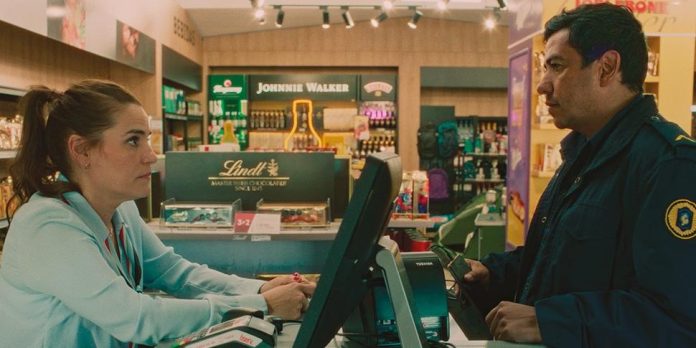
Daniel Hendler charming and endearing pic, A Loose End, follows the odyssey of Santiago (Serio Prina) an Argentinian cop who witnessed something he wasn’t supposed to and is now on the run from a couple of sinister colleagues out to silence him. He is able to escape over the Uruguayan border with the help of Rocio (Pilar Gamboa) a sweet duty-free clerk and, eventually, some sparks fly between the two. Santiago is determined to thwart his hunters and reinvent himself—as a cheese maker!
A Loose End is a sweet concoction of a comedy/suspense thriller despite the dire circumstances our hero finds himself in. Prina is winning as the oddball lead. And Gamboa is a delight.
Uruguay was nominated once, in 1992 for Adolfo Aristarain’s A Place in the World, but the film was disqualified after the nominations were announced.
This is Uruguay’s 26th submission.
Ecuador: The Ivy (Hiedra)
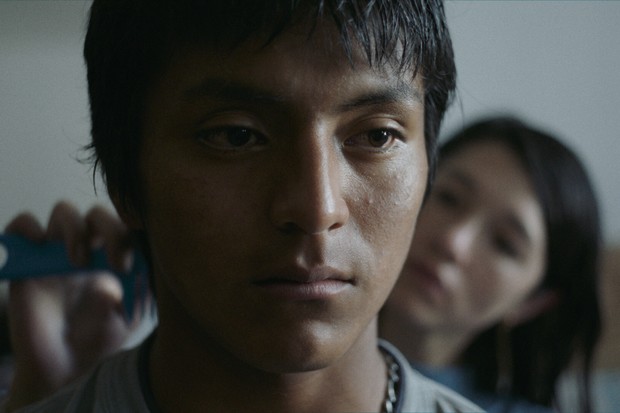
Ana Cristina Barragan’s third feature, The Ivy (Hiedra), is set in an Ecuadorian coastal town and focuses on Azucena (a beguiling Simone Bucio), a woman in her early thirties who befriends 17-year-old Julio (Francis Eddú Llumiquinga) and his gaggle of friends. As the two grow close a strange bond forms and Julio mistakes Azucena’s affection. She is really his mother.
This gritty, alluring, slow-burn drama boasts two terrific central performances, and Barragan smartly relies on their faces to tell most of the compelling story.
The film won the screenplay award in the Orizzonti section of the 2025 Venice Film Festival.
Barragan’s 2017 film, Alba, was that year’s Oscar submission.
Ecuador has submitted 14 times but has yet to make the short list.
Sundance Film Festival Winner: Shame and Money
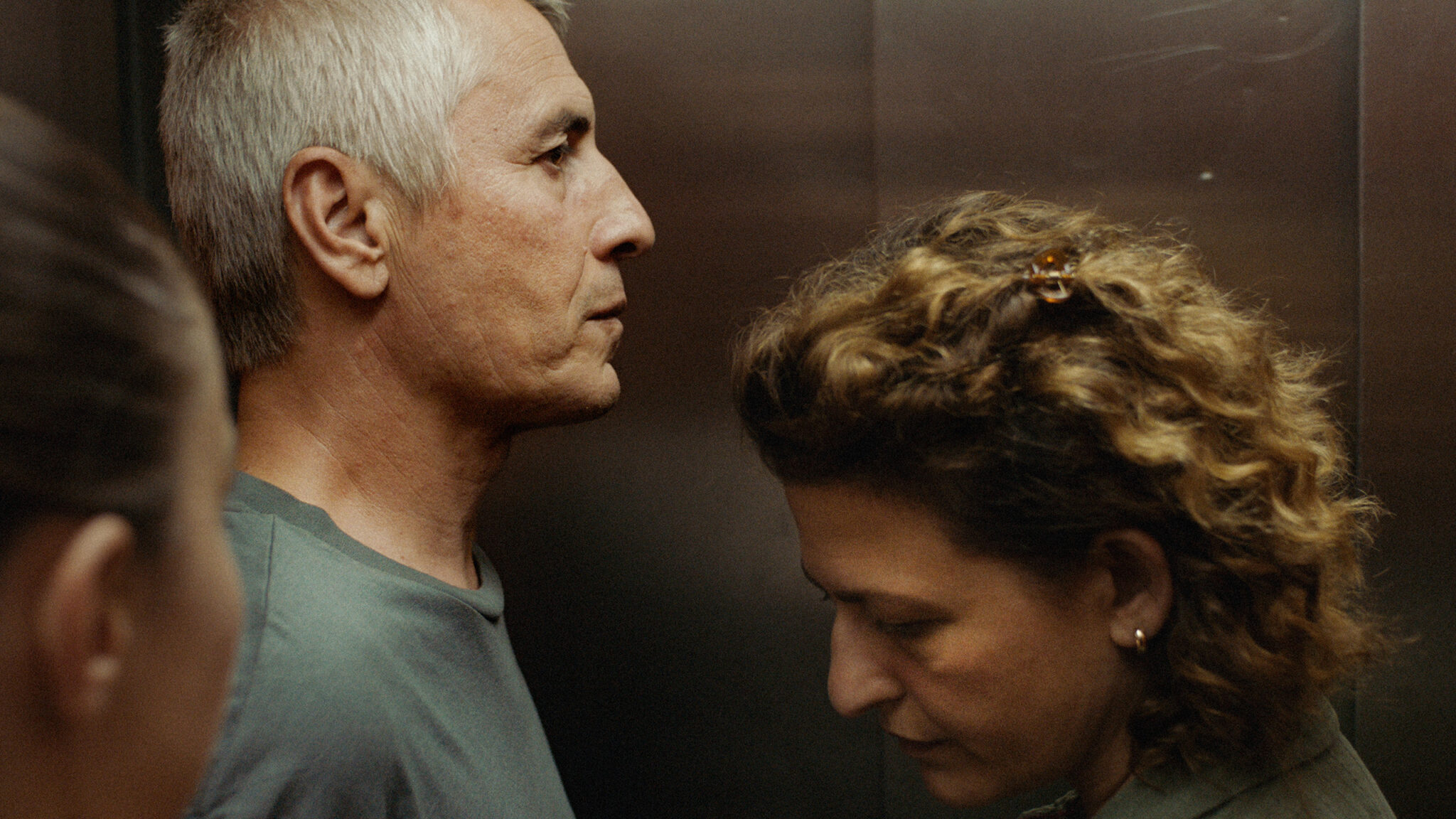
Visar Morina’s Shame and Money is one of four Festival winners that wasn’t also selected by an eligible country.
The well-crafted feature won the World Cinema Grand Jury Prize at this year’s Sundance Film Festival.
The film is mostly set in Pristina, Kosovo.
Read my Sundance review.
Cambodia: Becoming Human
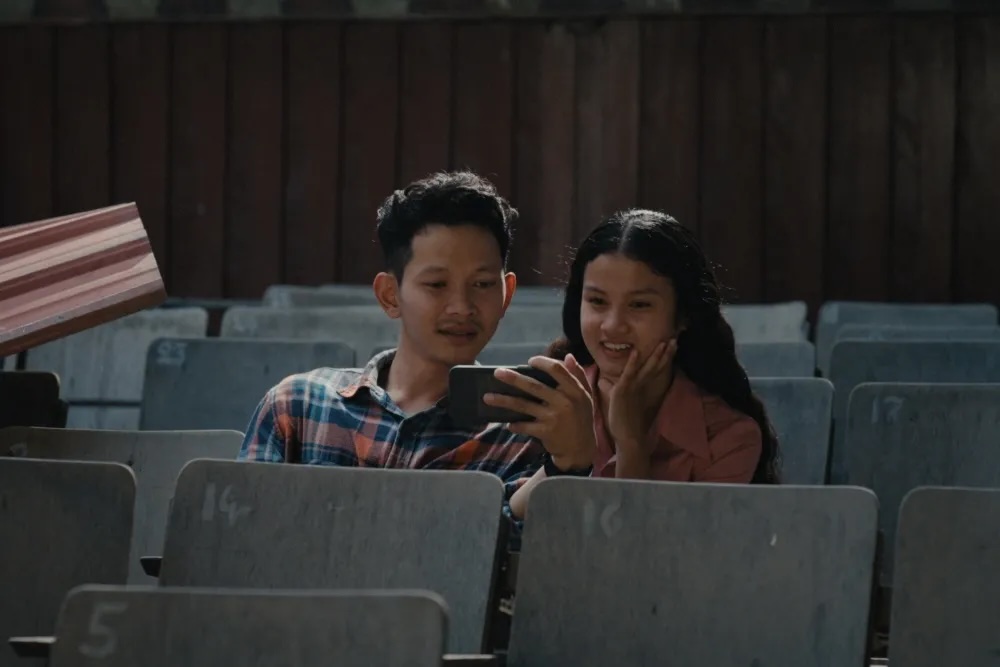
Polan Ly’s Becoming Human is the melancholy and evocative tale of a young woman named Thida (Savorn Serak) who also happens to be a ghost haunting an abandoned cinema in Battambang. Thida who died a horrible death in the Cambodian genocide in the 1970s. The dilapidated building is about to be torn down and Thida has been told that she will be reborn in five days—although she tries to negotiate for more time, since she would rather be a homeless spirit.
Young photojournalist Hal (Piseth Chhun) arrives on the site to photograph the decaying theater before it’s demolished, and he forms a bond with Thida as they both discuss their respective traumatic pasts.
With humor, grace and a true sense of history, Ly, in her feature debut, delivers an impressive, resonant two-hander.
Cambodia has received one nomination for Rithy Panh’s The Missing Picture. Panh’s films have been submitted four times.
The country made the short list in 2022 with Davy Chou’s Return to Seoul.
Last year, Inrasothythep Neth and Sokyou Chea’s Tenement, which also used the supernatural to focus on the country’s past, was submitted but did not make the final list.
This is Cambodia’s 14th entry.
Chile: The Meltdown
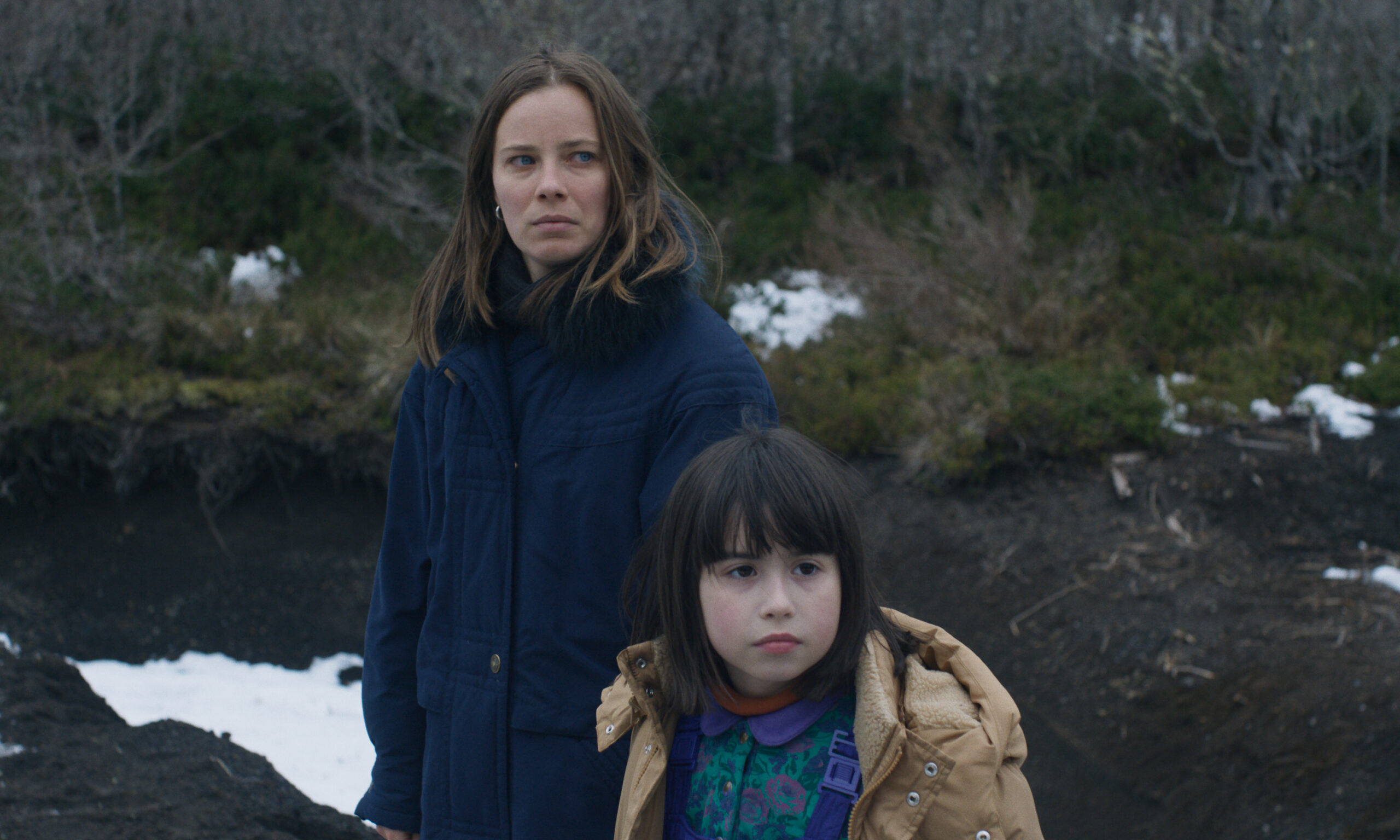
Set in a Chilean ski resort in 1992, Manuela Martelli’s sophomore feature, The Meltdown,is a psychologically complex, mesmerizing work that utterly disappoints in the final reel, but is still more than a worthwhile sit.
The time period is key as the film is loaded with symbolism and allusions to the newfound freedom for Chile after almost two decades of dictatorial rule and the resulting atrocities committed by Pinochet and his minions.
The heavy-on-allegory thriller is told mostly from the POV of nine-year-old Inés (Maya O’Rourke), who is being raised by her wealth-seeking grandmother but would rather spend time, it seems, with anyone other than her so she wanders the rooms of the hotel grandma owns and operates (stealing the keys). Enter 14-year-old Hanna (Maia Rae Domagala), a German skiing Wunderkind, who Inés befriends. But when Hanna disappears, only snoopy little Inés knows the last two people who were with her and is told to keep quiet about it, they being Hanna’s skeezy coach, Alexander (Jakub Gierszał) and Inés’s flirty cousin Sebastián (Lautaro Cantillana). Hanna’s mother Lina (an excellent Saskia Rosendahl) arrives from Germany and demands answers as a slow search begins—local law enforcement are basically idiots who don’t seem to give a damn.
As with her acclaimed debut, Chile ’76, Martelli is trying to cinematically come to terms with the consequences of trauma and I respect that. The problem is that while Inés’s decided (or undecided) silence on such a crucial matter might be fine as symbolic of a country needing to forget their past in order to move on, it makes little dramatic sense and in the end made me feel like I just wasted 110 minutes watching an uncaring, nosey and needy little brat—to put it bluntly.
Chile’s submissions have been nominated twice and won once for Sebastián Lelio’s A Fantastic Woman (2017).
This is Chile’s 31st submission.
North Macedonia: 17
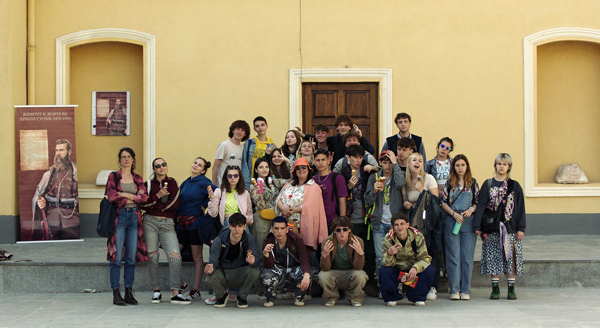
The unremittingly harrowing debut feature of Macedonian writer-director Kosara Mitic, 17, uses the camera in a deliberately alienating fashion to tell the story of 17-year-old Sara (Eva Kostic), who was raped by two fellow students, never tells anyone and has been hiding the fact that she is pregnant for the last several month. She then embarks on a bus for a school trip to Greece and, at a hotel stop, witnesses the same thing happen to her best friend, Lina (Martina Danilovska). She steps in, almost after the fact, when no one else in the room will—and the room is teeming with teens getting drunk and playing video games. It’s a frightening scene, where boys are allowed to get girls high and sexually assault them without any of their peer group seeing it as an issue, let alone rape.
Sara is on her own horrific journey as she goes into labor on the bus which leads to one of the most gut-wrenchingly disturbing sequences I’ve ever seen on film—and that’s saying a lot!
Using handheld, shaky-cam technique that rarely deviates from Sara, Mitic creates an alarming, torturous cinematic experience, one that had me squirming. And the ending almost makes up for the alienating cinematic experience. But I wondered what the takeaway is supposed to be? I appreciated the nightmarish narrative, and I understand (as much as I can since I am male) the misguided motivation of Sara keeping EVERYTHING to herself. Yes, Sara feels shame and a deep loneliness and concern about anyone finding out, but she’s also a smart girl. So how could she not tell anyone? Note, we meet her father early in the film and he’s portrayed as a loving and supportive parent, so why not tell him?
And ALL the teens in the film, male and female, are portrayed as horrible, selfish monsters, to the point of caricature. The teachers are idiots who have no control over their students. And, honestly, Sara is also quite despicable. So, is it supposed to be a satire? Or is it grounded in some type of realism, in which case someone needs to lock up the teens of Macedonia and fire all the teachers!
This brutal sit is bound to be divisive. And, again, I appreciated the unrelenting dive into the culture of misogyny and abuse. But there must be a better way to get the point across than beating up the audience for 105 minutes. Still, the film has stayed with me, so, perhaps, message received.
I desperately wanted to see the rapists pay. But that probably rarely happens. More received messages.
Interesting to note that the current lack of moral and ethical boundaries among teens is a popular subject for International filmmakers but doesn’t get much serious exploration via U.S. filmmakers, unless it’s about a school shooting. That’s quite telling.
The film premiered at this year’s Berlinale, where it was nominated for the Best First Feature award.
North Macedonia has been nominated twice for Milcho Manchevski’s Before the Rain in 1994, the very first year they began submitting, as well as for Tamara Kotevska & Ljubomir Stefanov’s doc Honeyland in 2019).
The country has never won.
This is their 22nd entry.
Ukraine: Traces
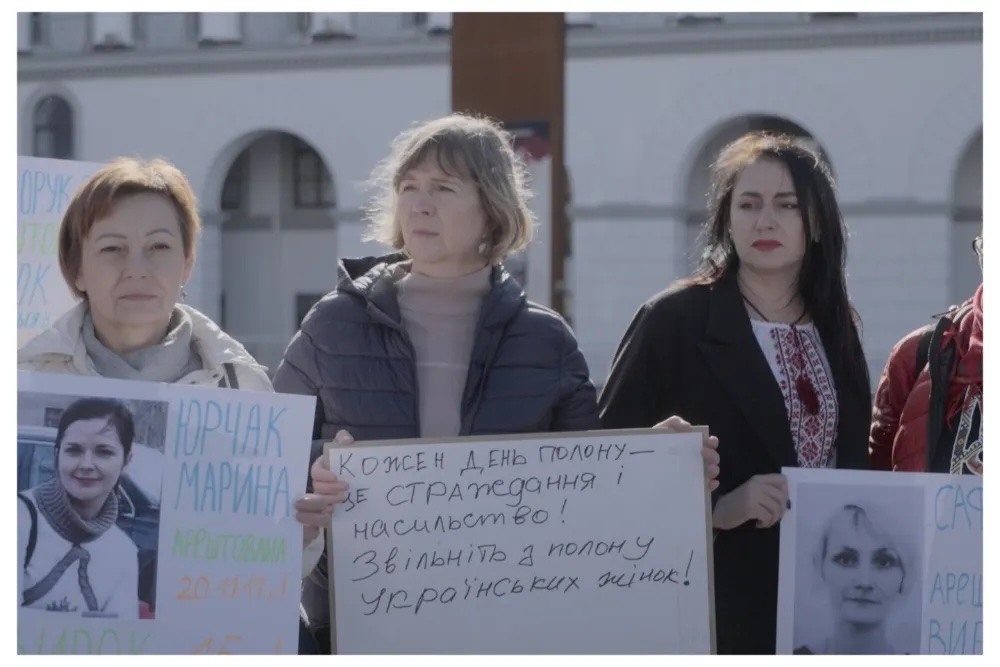
The disturbing and vital documentary Traces, directed by Alisa Kovalenko and co-directed by Marysia Nikitiuk, assembles survivors of conflict-related sexual violence committed during the invasion to tell their horrific stories. Since August of 2014, women and men have suffered physical and sexual abuse by Russian soldiers—often elderly women being raped by young men. The atrocities are obscene. The courageous women who tell face their trauma have survived captivity, violence, and torture. They are to be commended.
The doc is most powerful when we see the loss on the faces of these brave women and hear what they have to say. The seemingly endless photographing of nature (and I get it, but) takes away from some of the potency, though.
Traces bowed at this year’s Berlinale and won the Panorama Audience Award.
Since Russia’s invasion in 2022, four of the five Ukrainian Oscar entries have been about the conflict, three are docs.
In 2023, Ukraine submitted Mstyslav Chernov’s 20 Days in Mariupol, which made the short list but didn’t receive an International Feature nomination. However, it did, rightly, win the Best Feature Documentary Oscar. Last year Chernov’s 2000 Meters to Andriivka was submitted but didn’t make the short list.
Ukraine has never been nominated.
This is the country’s 19th submission.
Croatia: God Will Not Help Us
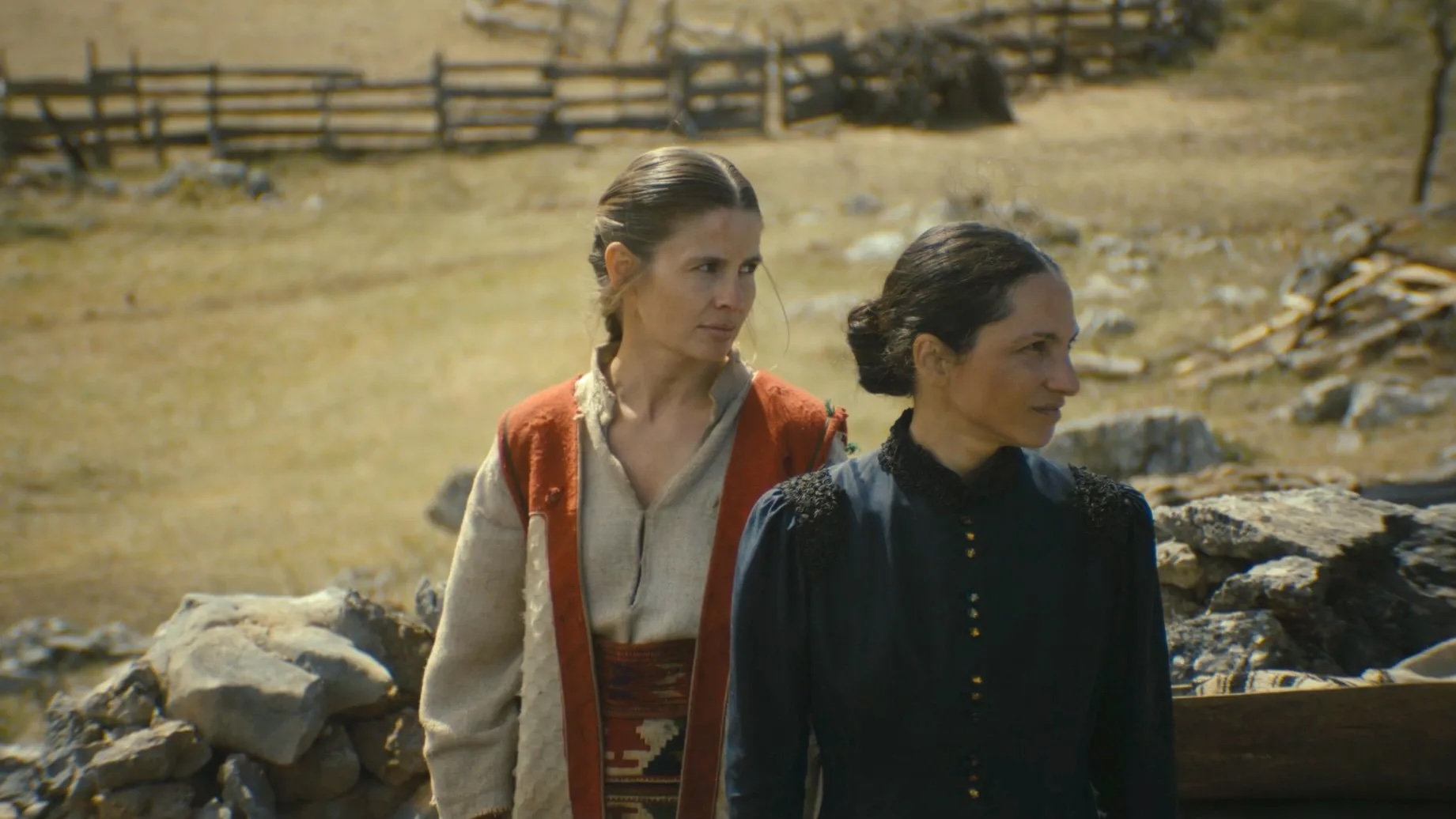
Set in the early 20th century in a western Croatian mountainside village, Hana Jušić’s horror-tinged God Will Not Help Us centers on two women who speak different languages but come to understand one another on a deeper level and also learn to communicate with each other.
A Chilean woman Teresa (Manila Martelli) arrives on the doorstep of Milena (Ana Marija Veselčić) claiming to be the widow of her brother, Marko, carrying his bones. Milena is put off at first but grows to trust Teresa. “It’s like you fell from the sky, so I wouldn’t be alone,” she tells her.
Teresa stays on to work alongside the much-abused Milena and her bullying younger brother Nikola (Mauro Ercegović Gracin), and she becomes a protector of Milena. We then meet older brother Ilija (Filip Đurić), a pious and thoughtful man who is drawn to headstrong Teresa and must deal with some of the more ignorant, superstitious villagers.
Throughout the narrative, Teresa sees visions of her bloodied, dead husband.
The film is often mesmerizing, sometimes plodding and definitely overlong at 137 minutes. Its film’s greatest strengths are Martelli’s enigmatic performance and the stunning cinematography by Jana Plećaš.
This is yet another entry dealing with rigid and suffocating patriarchy and rooted misogyny.
The final scene is empowering.
Croatia has yet to receive a nomination.
This is their 36th submission.
Paraguay: Narciso
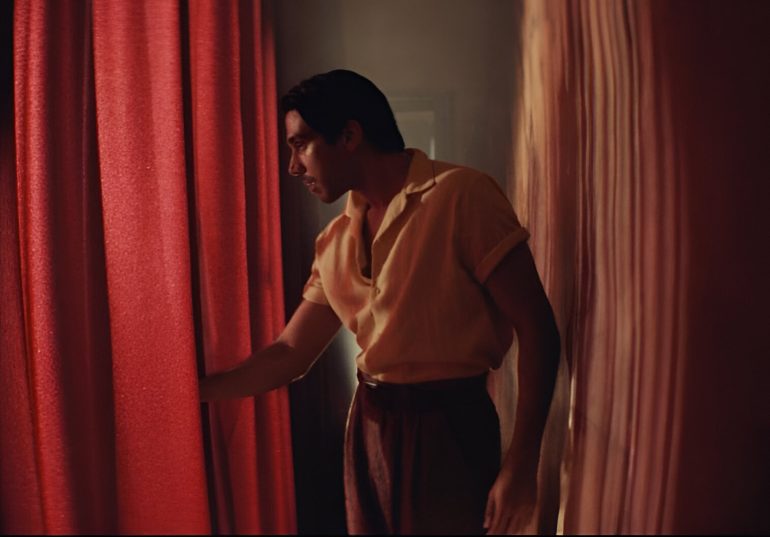
Marcelo Martinessi’s haunting feature Narciso is set in Asunción, Paraguay where the titular character, an outspoken charismatic radio superstar played by Diro Romero, defies the military dictatorship of Alfredo Stroessner (in more ways than one) and finds himself persecuted by the government.
Based on the true story of the unsolved murder of Bernardo Aranda, the often-meandering film’s atmospheric tone and late ‘50s rock-and-roll infused energy is to be commended as is the telling of an important story from a horrific regime that would have a stranglehold on the country for 35 Years. That said, I wasn’t thrilled with the careful way Narciso’s gayness is handled. A film about the horrific results of LGBTQ persecution, shouldn’t shy away from intimacy between men. Perhaps, Paraguayans are still tentative about queer subject matter. But there is power in defiance.
Martinessi helmed Paraguay’s third Oscar entry in 2018, The Heiresses.
This is the 10th submission from Paraguay, yet to be nominated.
Thailand: 9 Temples to Heaven

Sompot Chidgasornpongse’s sophomore feature, 9 Temples to Heaven, centers on a Thai family’s pilgrimage to nine different temples in order to have their dying matriarch “make merit.”
The film premiered in the Director’s Fortnight section of this year’s Cannes Film Festival.
Read my New York Film Festival review.
Thailand has never been nominated and has submitted 33 times, counting this one.
In 2024 they made the shortlist with Pat Boonnitipat’s How To Make Millions Before Grandma Dies.
Last year, Ratchapoom Boonbunchachoke’s wonderful supernatural thriller, A Useful Ghost, winner of the Critic’s Week Grand Prix at the Cannes Film Festival, was submitted but disqualified.
Montengro: To Hold a Mountain
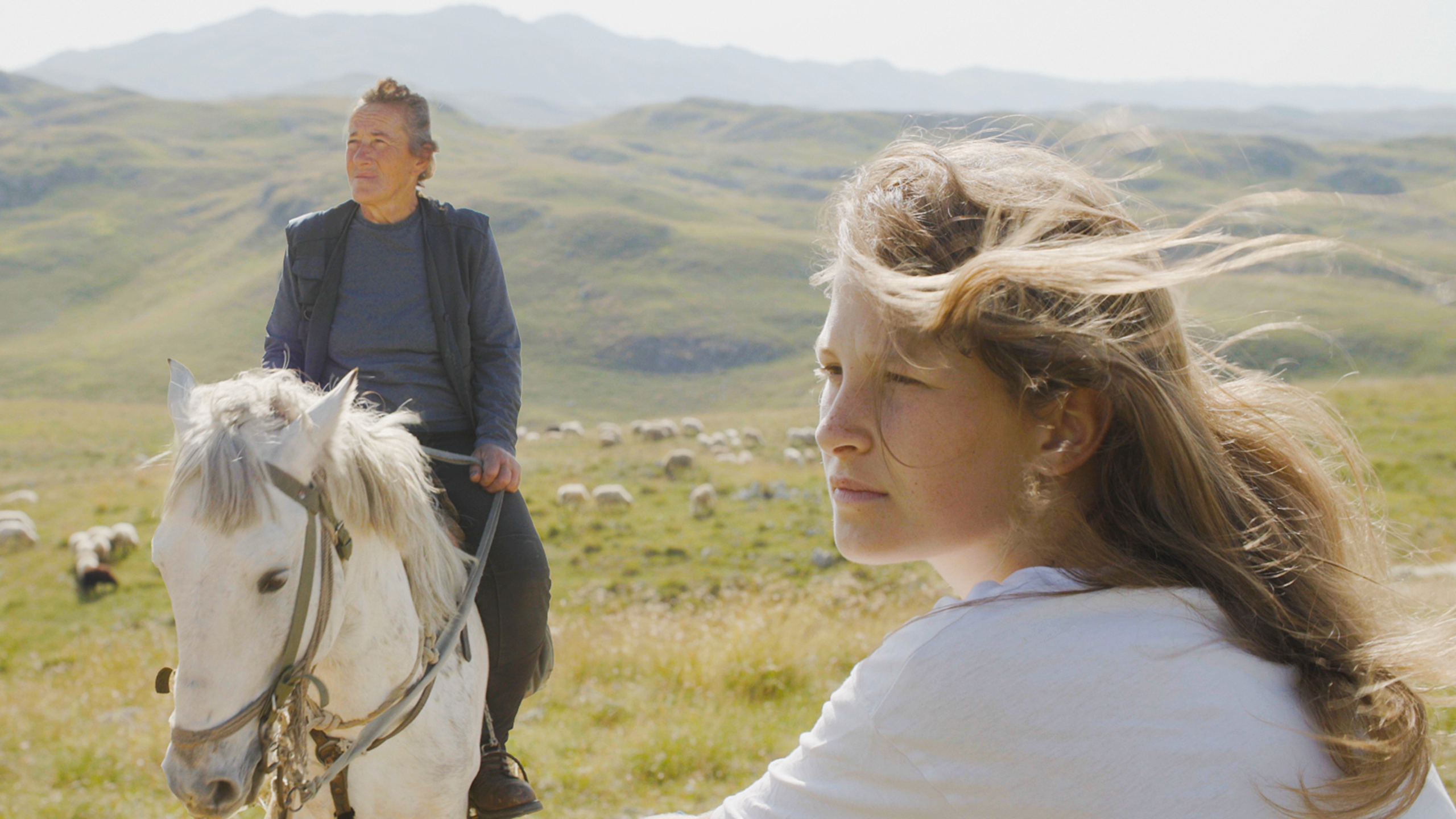
One of several doc’s in the mix, Biljana Tuturov and Petar Glomazic’s To Hold a Mountain proves to be a fascinating, if sometimes arduous sit.
Set in the remote Montenegrin highlands of the Sinjajevina plateau, the film centers on steadfast matriarch, Gara, and her teenage daughter, Nada who tend to their cows and sheep and make cheese. Gara is also heading a protest against the army using their sacred grounds as a NATO shooting range.
What is most interesting about the film is Gara’s fierce and furious love for her child and her land. When she tells the tale of her suffering mothers fear driving her to abandon her children, it’s heartbreaking but she also makes it clear she would never do such a thing.
Montenegro selected the film despite the fact that it qualified as a Sundance winner (International Doc).
Montenegro has never been nominated. This is their 13th submission.
Not Without Merit
Argentina: The Virgin of the Quarry Lake
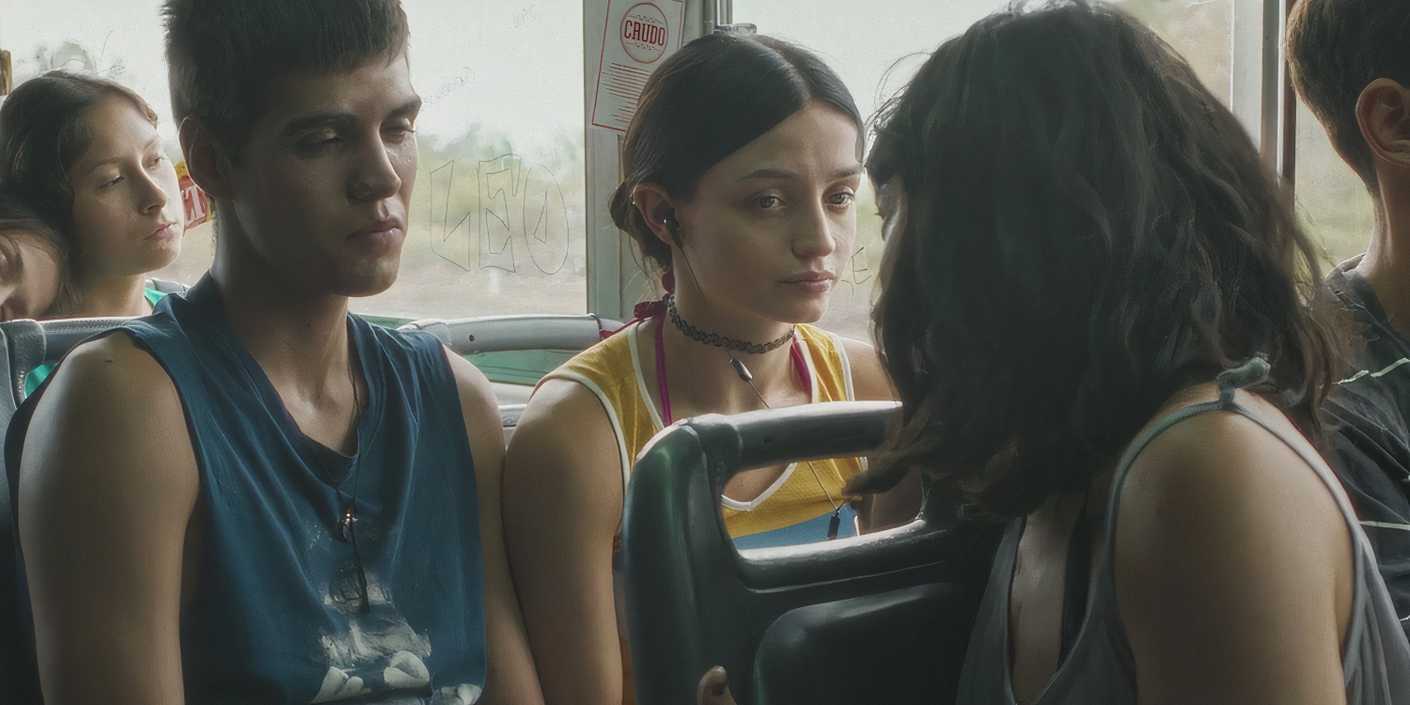
Set in 2001, Laura Casabé dark and absorbing horror film, The Virgin of the Quarry Lake is based on two Mariana Enríquez’s’s short stories, El carrito and La virgen de la tosquera and takes place on the outskirts of Buenos Aires during a particularly scorching summer.
The film follows Natalia (Dolores Oliverio) and her two close teen girlfriends, who all crush on their hottie childhood friend, Diego (Agustín Sosa). Alas, Diego is crushing on an older woman, Silvia (Fernanda Echevarría). Natalia decides to sabotage the budding relationship, with the help of her grandma, via supernatural means. Things go a bit haywire from there and Casabé takes the viewer on quite the wicked, sometimes convoluted journey.
Argentina’s submissions have received eight nominations and two wins—Luis Puenzo’s The Official Story (1985) and Juan José Campanella’s The Secret in Their Eyes (2009). The country was last nominated in 2022 for Santiago Mitre’s Argentina, 1985. Last year, Dolores Fonzi’s Belén made the short list.
This is Argentina’s 53rd submission.
Portugal: The Scent of Things Remembered (A Memória do Cheiro das Coisas)
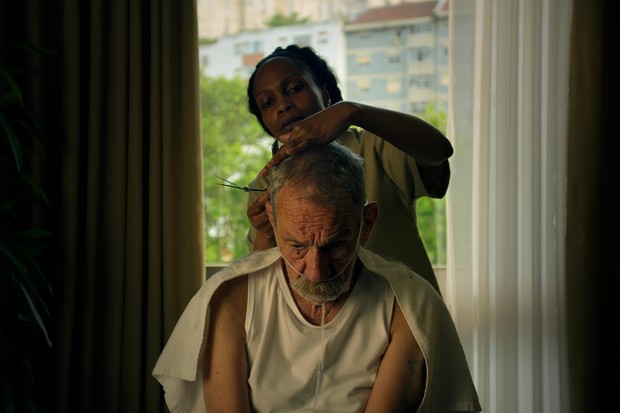
António Ferreira’s The Scent of Things Remembered, centers on Arménio (José Martins), an almost-80-year-old, haunted war vet placed into a nursing home by his son.
The head of the facility at the center of the film (Cláudia Carvalho) doesn’t really care about her patients and even tells the son that sometimes the workers have to be physical with the patients in order to get them to eat, take their medication, even when washing them.
The racist Arménio is being looked after by Herminia (Mina Andala), a Black Portuguese caregiver. When marks are discovered on his body, Arménio looks to throw Herminia under the bus, instead of copping to the truth.
But a strange and complex bond forms between patient and caregiver and two-thirds of the way into the film both share their own war stories with one another.
The Scent of Things Remembered takes a while to get going but is ultimately a compassionate work about two very different people coming together and learning to overcome their prejudices.
This is Portugal’s 43rd submission. The country has never been nominated or made the short list and currently holds the record for the most submissions without a single nomination.
Italy: The Spiral (L’Estranea)
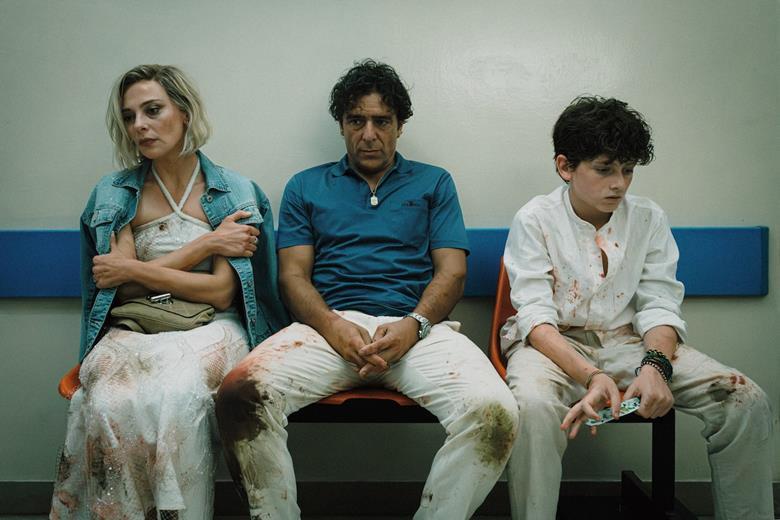
Of the whopping 21 films on Italy’s national selection short list for the Best International Feature Oscar category, they chose a film I saw at the Venice Film Festival and opted NOT to review because I had such mixed feelings walking out of it. Like I had just been Carrie’d at the prom.
Among the terrific films that were not selected that did see were Nanni Moretti’s It Will Happen Tonight (Succederà questa notte), Andrea De Sica’s The Eyes of Others (Gli occhi delgli altar), Tomorros Landucci’s The House of the Monkey ((I figli della scimmia), Roberto De Paolis Maino’s Serpenti and my personal favorite Marco Bechis’s powerful Return to Buenos Aires.
I wasn’t surprised that Italy chose Paolo Strippoli’s The Spiral (L’Estranea), since my press and industry audience went wacky for it (it’s right up horror fan’s disturbed alley), but I was disappointed.
I want to add that Edoardo De Angelis’ The Fire Within You (Il fuoco che ti porti dentro) was also worthy, although it proved divisive among critics who weren’t from an Italian family and had no sense of humor!
The Spiral, in terms of creatives, was everything I could ask for in a film. I had raved about Strippoli’s last foray into horror, his disquieting first feature, The Holy Boy (La valle dei sorrisi), which is just now being released in the U.S. (see it!!!) And I am a fervent admirer of the two female leads Jasmine Trinca and Valeria Bruni Tedeschi, serious Italian acting royalty. Rest assured they’re both fabulous in this otherwise flashy, lurid cinematic muck about a woman who makes a Faustian deal with the devil, and then continues to do so, over and over again.
Strippoli is an impressive filmmaker with a definite vision. I just didn’t quite appreciate this particularly stylish-over-substance work. But I can’t dispute the superlative acting and the spectacular look of the feature.
Perhaps I’ll like it better on a revisit.
FYI: the original Italian translated title was The Stranger.
Italy has received 30 nominations and has won 14 times (3 were honorary in 1947, 1949 and 1950), holding the record for most wins. Fellini was the first to win in competition with La Strada in 1956 and Paolo Sorrentino’s The Great Beauty was the last to win in 2013. Sorrentino’s The Hand of God (2021) and Matteo Garrone’s stirring Io capitano (2023) were the last films to be nominated.
In 2024, Maura Delpero’s ravishing Vermiglio made the short list.
Last year, Francesco Costabile’s gem, Familia, did not.
Italy has been submitting for 70 years, since the conception of the award, in competition, but curiously did not submit in 1973.
Bosnia/Herzegovina: The Widower
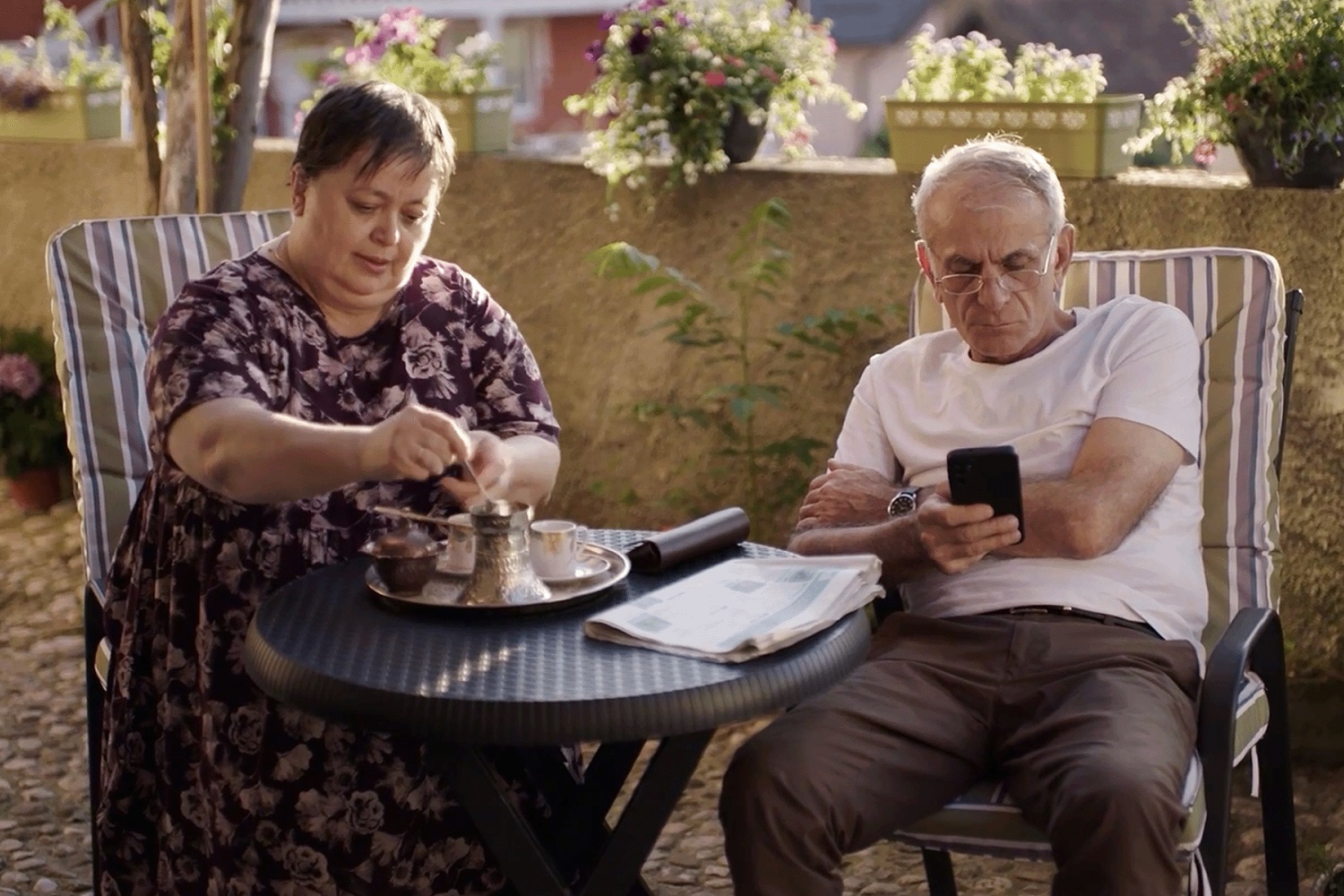
Hari Šečić’s feature debut The Widower (Udovac) is an interesting curio that centers on Mirsad (Izudin Bajrović), a cranky 62-year-old electrician who suddenly loses his wife, a woman who did everything for him. Mirsad, now a mess, must adapt to his new world where he has to do his own cooking and ironing. He also begins to see just how the women around him are being abused, especially his own daughter.
I appreciated the filmmaker wanting to show this man’s awakening to how women are subjugated by the patriarchal society and how even those women cannot see their own mistreatment.
My issue is that the film is a bit too slight. It didn’t have to be.
After his wife dies, Mirsad is surrounded by family and friends—a truly funny sequence has a slew of people showing up and not really knowing what to say. His son, Safet (Dino Bajrovic) arrives from abroad with his male “friend.” We all know what that means and the film is obvious about Mirsad realizing his son is gay, seeing him embrace his “friend” at a key moment. Had that been explored more, the film would have been more substantive for sure—especially since the family is Muslim. Alas, Safet leaves the next day, and viewers are stuck going through Mirsad’s mundane moments once again.
Missed opportunity aside, Šečić definitely shows promise as a filmmaker.
Danis Tanović’s No Man’s Land, won the Oscar in 2001 and another of his features, An Episode in the Life of an Iron Picker, was shortlisted in 2013. His films have been submitted five times.
Jasmila Žbanić’s Quo Vadis, Aida? is the only other nominations B&H has received. Her film, Grbavica, was submitted in 2006.
This is the country’s 26th submission.
Nepal: Elephants in the Fog
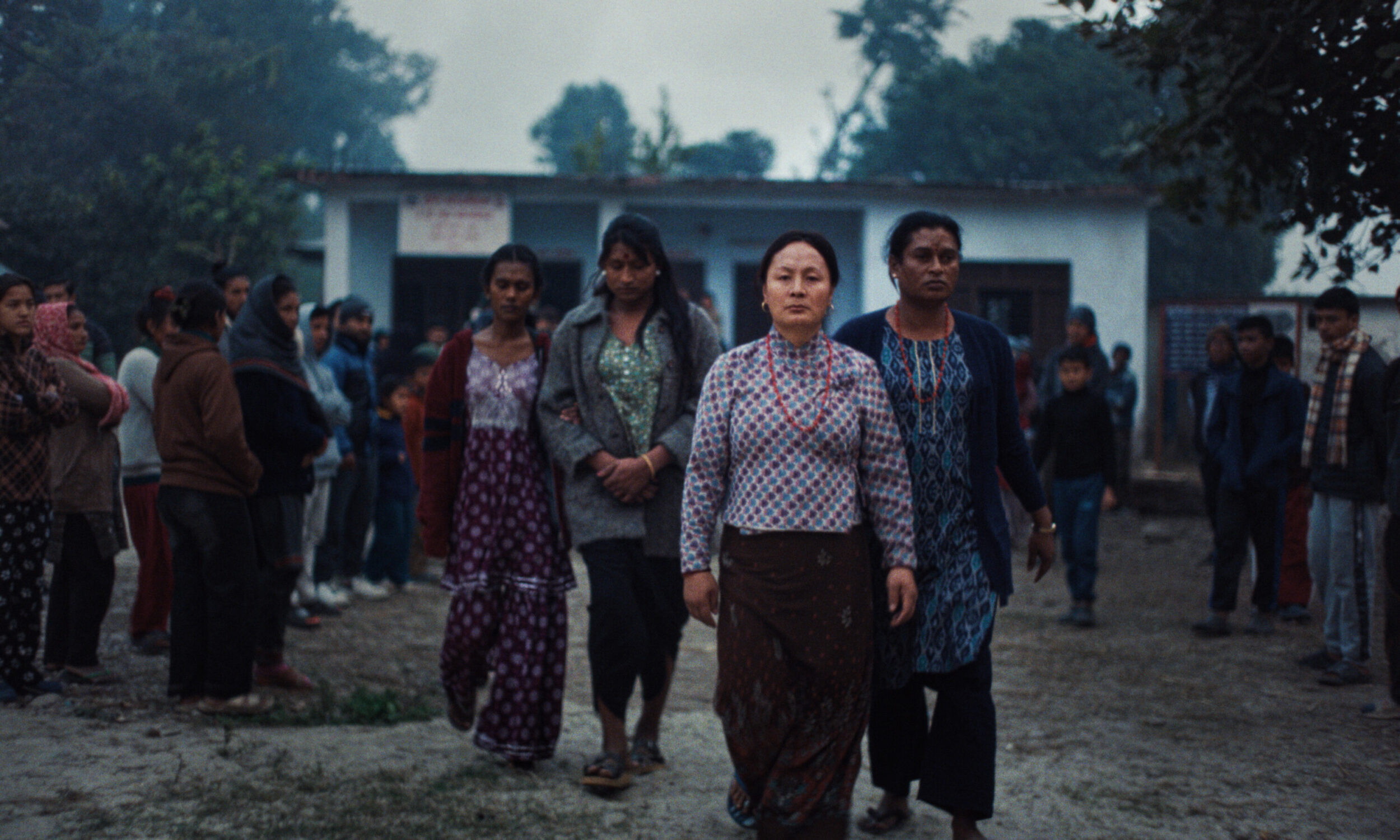
Abinash Bikram Shah stirring, tragic film, Elephants in the Fog, journeys deep into the forests of rural Nepal where wild elephants roam free and an ancient, feared third gender community known as the Kinnar women live, despite transphobic prejudices among the surrounding villagers. Led by Pirati (Pushpa Thing Lama), these trans women are said to have spiritual powers.
When young Apsara disappears, Pirati and her minions desperately search for her, which unleashes a storm of intolerance and hatred from the others in the community.
Elephants is a searing portrait of a people who are constantly being persecuted and who, like the elephants, will fight back when they and/or their loved ones are threatened.
This compelling if somewhat muddled feature won the Un Certain Regard Jury Prize at the 2026 Cannes Film Festival.
Nepal has received one Oscar nomination for its very first entry in 1999, Eric Valli’s Caravan (aka Himalaya: Caravan)
This is the country’s 16th submission.
Slovenia: Fantasy
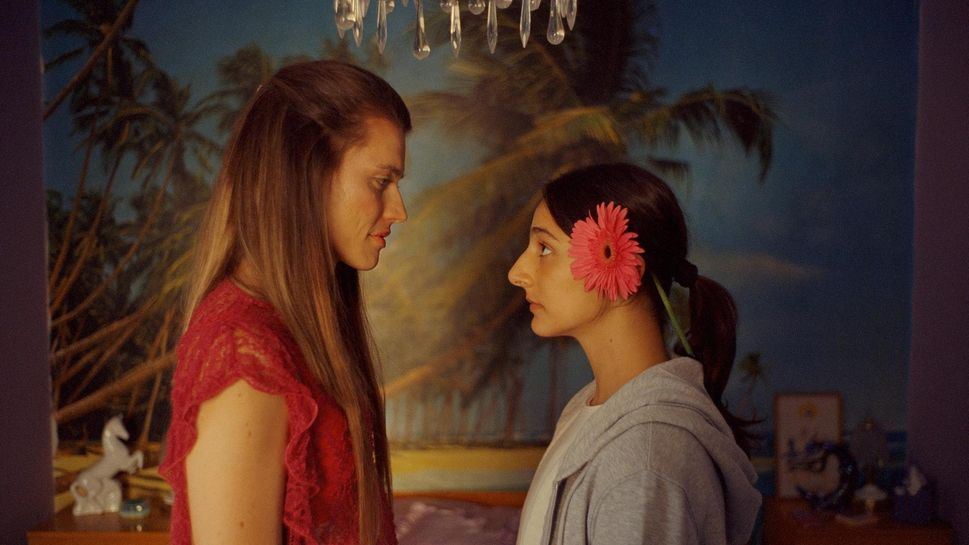
Slovenian filmmaker and musician Kukla’s feature film debut, Fantasy, is a coming-of-age tale about three friends trying to figure out their own path in a world stamped by patriarchal norms.
Sina (Mina Milovanović) is a tomboy boxer who wants to be a coach. Jasna (Mia Skrbinac) is shy dreamer and the peacekeeper of the three. Mihrije (Sarah Al Saleh) is doing her best to avoid the matchmaking attacks on her by her parents who are keen to see her married. Instead, she begins a friendship with the very cool (at least on the surface) and independent trans woman Fantasy (Alina Juhart), whose motto is, “I know who I am and what I want and deserve.”
But Mihrije soon begins to crush on Fantasy and things get quite complicated.
The film is a fascinating sit thanks to Lazar Bogdanović’s stirring cinematography.
Most of the actors are non-professionals and most are quite good. But not all of the storylines are as compelling as Mihrije’s.
The film, expanded from Kukla’s award-winning 2020 short, Sisters, explores and implodes forced expectations about masculinity, femininity and identity.
Slovenia has never been nominated.
This is the country’s 30th submission.
Dominican Republic: Melodrama
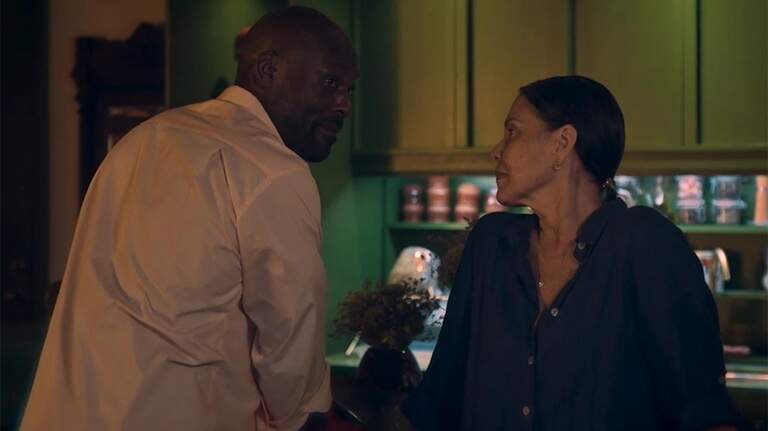
Dominican filmmaker Andrés Farías explores a kind of forbidden love that has no right being forbidden in the moving, if slightly repetitive film Melodrama.
Sonia (a wonderful Mercedes Morales) is an aging, well-to-do white widow basically bored with her life. She has the audacity to fall for Aimé (Jimmy Jean-Louis) a working-class Haitian poet and man of all trades. Sonia tries to keep her affair secret from her annoying ladies-who-lunch-and—gossip-but-don’t-do-much-else friends and, especially her selfish, judgmental daughter, Paula (Pachy Méndez)—a gigantic contrast to her free-spirit teen granddaughter, Miriam (a fab Sarah Jorge). Alas, the truth comes out. And she must make certain life decisions.
The film explores xenophobia, ageism, class, immigration and, of course, love and Farias delivers a gut-punch ending.
The Dominican Republic has submitted 19 times with no nominations.
Albania: A State Film
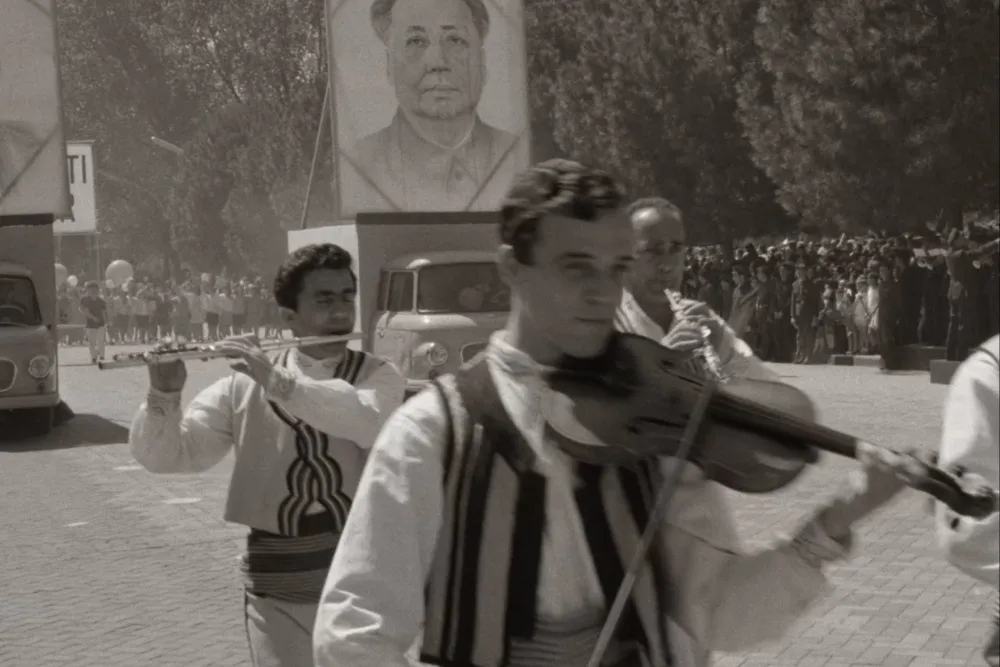
Anyone interested in, or with a familiarity with communist history or Albanian history or propaganda footage will appreciate Roland Sejko’s fascinating and frustrating documentary, A State Film, which chronicles 40 years of communist rule in Albania, under Enver Hoxha, Prime Minister from 1944 to 1985.
Sejko assembled the film using propaganda footage with no editorializing. Some title cards informing the viewer about what they’re seeing, the figures involved, and the time period would have gone a long way towards a true appreciation of the film. Still, it was an interesting watch.
Albania has yet to be nominated.
This is their 19th submission.
Estonia: Our Erika
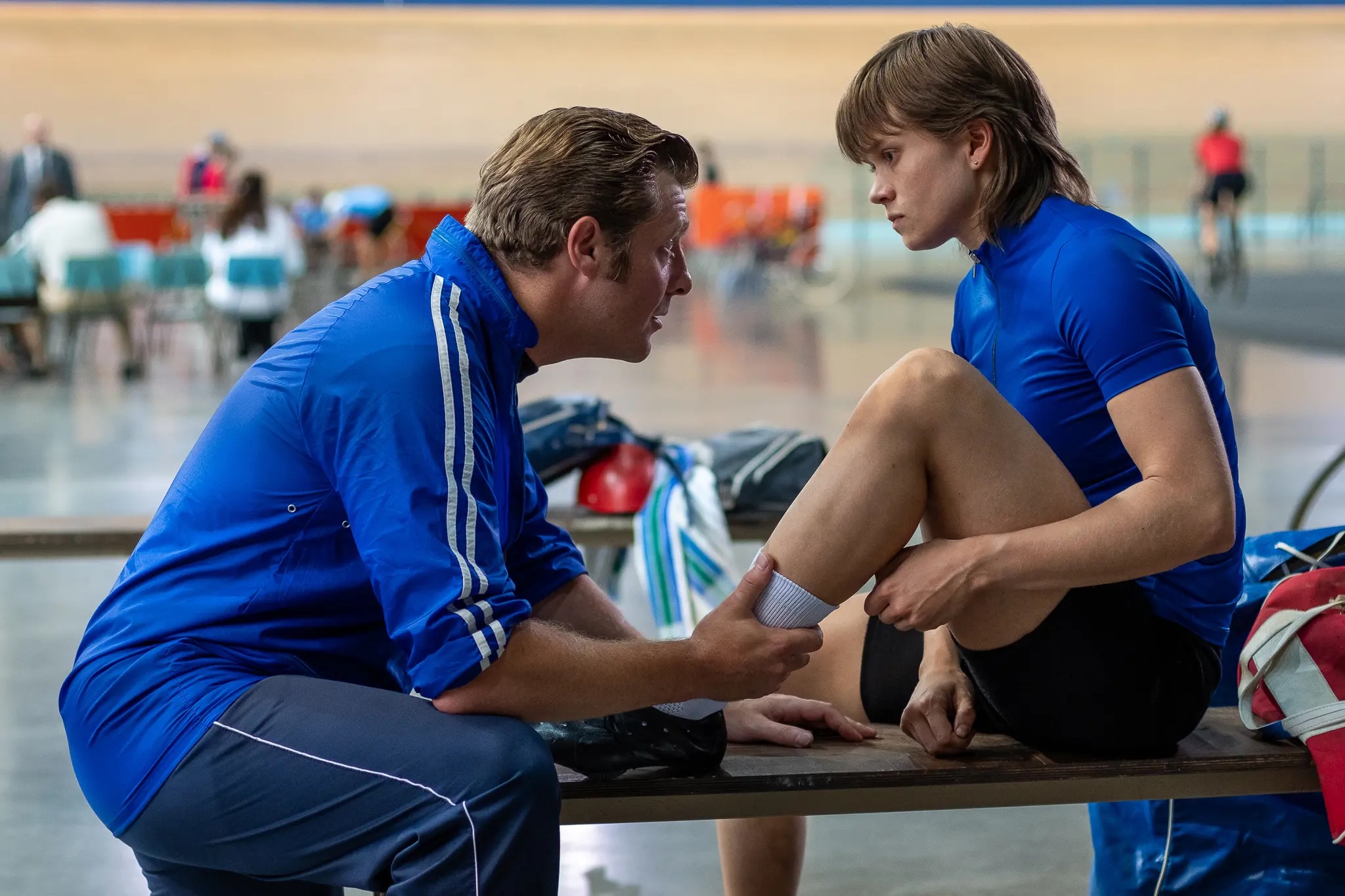
Based on real events, German Golub’s Our Erika is the kind of inspirational, formulaic film we’ve seen so many times before. This one is about an Estonian Olympic track bicycle racer, Erika Salumäe (Carolin Jürise), who overcomes a legion of obstacles including a terrible home life, selfish coaches, Soviet threats and general misogyny. And she goes on to win the Gold at the 1988 Summer Olympics, basically for the Soviets—but she did eventually win the gold for Estonia at the 1992 Olympics—not a part of this origin story.
The film is somewhat compelling, mostly thanks to the impressive central performance by Jürise. But it rarely delves deeper than the surface.
Estonia has received one nomination in 2014 for Zaza Urushadze’s Tangerines.
Tanel Toom’s Truth and Justice made the short list in 2019.
This is their 24th submission.
Bolivia: The Condor Daughter (La Hija Cóndor)
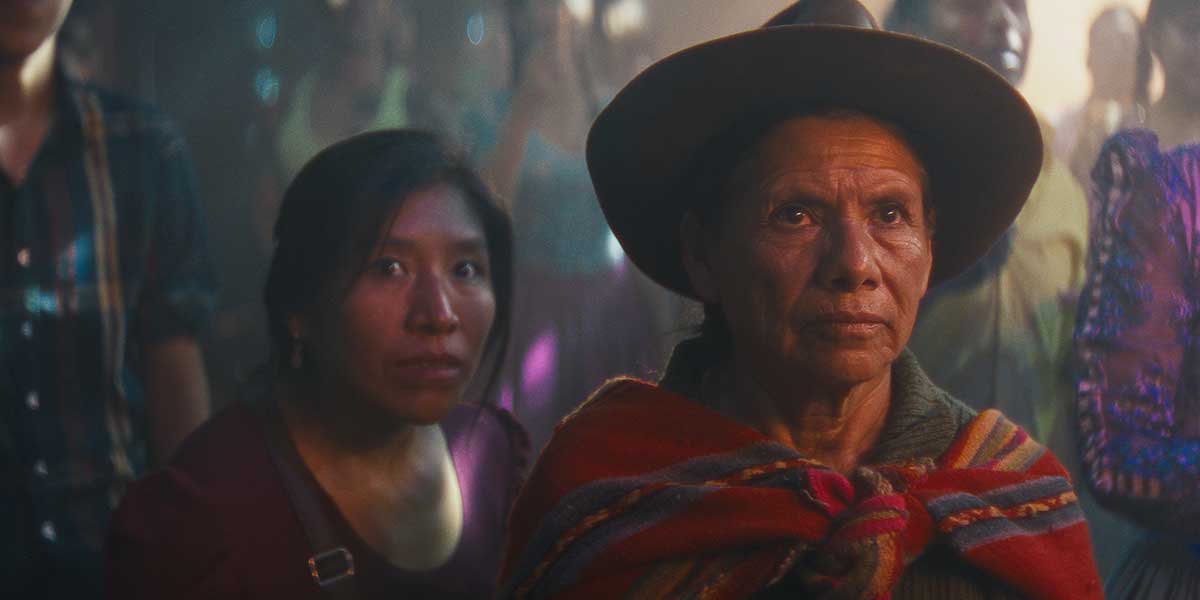
lvaro Olmos Torrico’s The Condor Daughter started out as a meditation on generational differences, appeared to be advocating for female empowerment, but then seemed to take a side against it.
Set in a small, superstitious indigenous community high in the Andes, the film focuses on Clara (Marisol Vallejos Montaño) and her adoptive midwife mother Ana Lindaura (María Magdalena Sanizo) who is training her to be the town’s next respected midwife and keep up the generational traditions. But Clara enjoys singing (which she is forbidden to do unless she’s midwifing) and hanging out with her wayward friend Flora (Alisson Jimenez).
Ana is pretty strict when it comes to what Clara can and cannot do, insisting she must respect the ways of their community despite how antiquated and misogynistic they are — women are punished for the most ridiculous things by the men who run the town. When Ana smashes Clara’s precious radio, it proves to be her breaking point, and she rebels and flees to the big city with Flora to become a folk singer. Then, bad things begin to happen in the village.
I applaud the work of the two leads, both non-professional actors. And the film kept my interest until the wholly misguided ending.
This is Bolivia’s 19th entry since 1995, with no nominations.
Kyrgyzstan: Kassandra
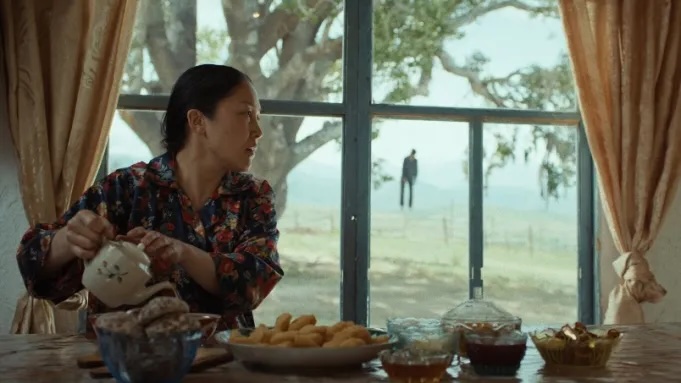
Bekzat Pirmatov has crafted a baffling supernatural horror film, Kassandra, taken from Kyrgyz folklore, and loosely inspired by the novella “The Mark of Cassandra” by writer Chingiz Aitmatov.
In the early scenes we are introduced to a woman with the power to tell pregnant women what their babies are going to be like and if they should not be born.
Later in the film the same woman, Tolgonai (Kulaiym Kanymetova), now older and shattered by life tragedies, is sought out by Aisuluu (Yenlik Aiymgazy) a young grieving woman who is experiencing nightmares and the feeling of being strangled. Tolgonai agrees to help exorcise the ancient demon she knows is inside Aisuluu as long as she remains with her in her home and follows her rules.
Kassandra is a SLOW burn that is both a strangely moving, elusive and ultimately, frustrating sit.
This is Kyrgyzstan’s 19th submission. Never nominated.
TIFF: Angh

Cultures clash in a remote jungle near the India-Burma border in Nagaland, India in Theja Rio’s debut feature, Angh.
It’s 1962 and the elderly hereditary chief of a Konyak Naga village, Anghba (Anghlong Konyak) lives there with his sick wife and young mute son Amao (Sobino Rengma). Anghba teaches his son the traditional ways of living and is opposed to any modernization.
Enter an American missionary (Douglas Henshall) setting up a church in the village and baptizing people. In addition, he has medical supplies. When Anghba’s son falls ill, the chief must make a major decision that could save his boy but also introduce him to the new ways and threaten his lineage.
I appreciated the extremist theme, so relatable today, where two pigheaded patriarchs, who insist they have the only answers, and battle it out for the soul of the boy.
This atmospheric film was sometimes impressive, but sometimes a bit clunky.
Because of the new Oscar-qualifying, film-festival-winner rules, India has two films completing. Gondahl is the other. Angh won the Platform Prize at this year’s Toronto International Film Festival.
Mexico: On the Road (En El Camino)
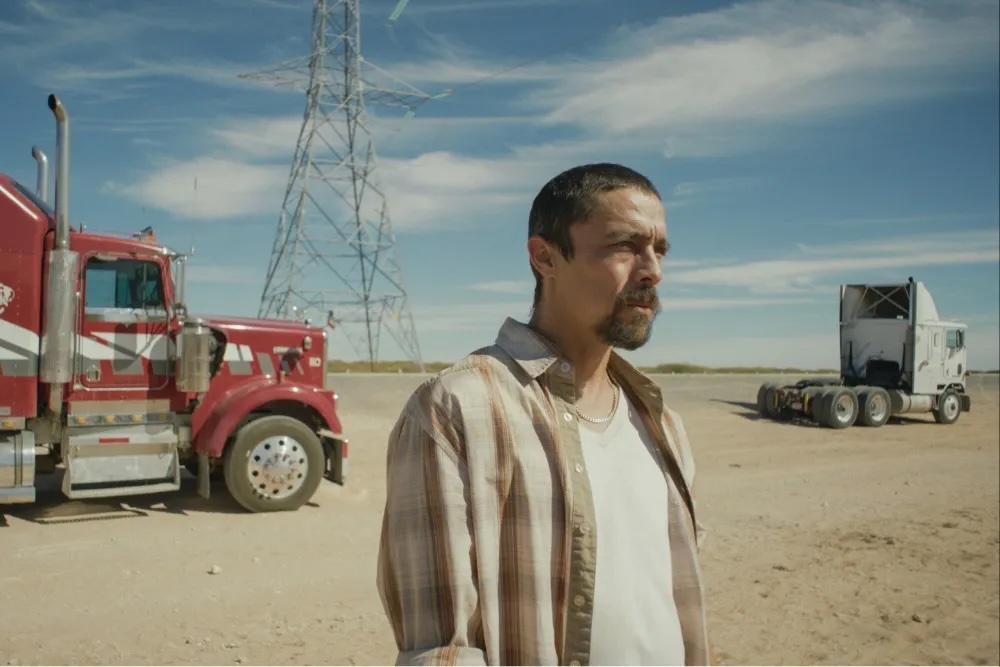
David Pablos’queer-themed On the Road offers up a gritty non-linear look at a very odd bromance/romance between two very different Mexican dudes, an uber masculine trucker and a young gay drifter. And when it focuses on their relationship, the film is quite stirring. But when the plot kicks in and horrific cartel members from the young guy’s past emerge to seek revenge, the film takes a downward and disappointing turn. The sex doesn’t make up for the violence.
The film received 13 Ariel Award nominations (Mexico’s Oscars)
Mexico has been nominated nine times, winning once for Roma, which was also nominated for Best Picture, in 2018. The nomination before that was in 2010 for Alejandro González Iñárritu’s Biutiful.
In addition to nominations, the country has made the short list five times.
This is Mexico’s 59th submission.
El Salvador: Vértices
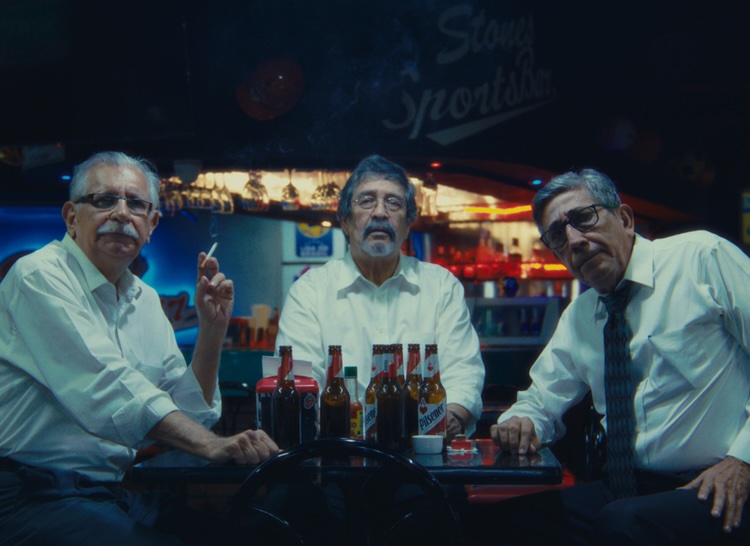
El Salvador’s very first Oscar submission is Arturo López Rodas gentle and somewhat-thought-provoking Vértices, lovingly photographed by Carlos Gabriel Siri in stark black and white. Ricardo, José and Paco are three estranged friends who have not seen each other in 28 years. They reunite after the funeral of Andres, their fourth buddy. Death hovers over their conversations which include definitions of time and changing notions of masculinity as well as the fact that no one wept at Andres’ wake. They also bully a younger guy who just wanted to bum a cigarette.
At 60 minutes, Rodaz could have easily shaved off 20 minutes and had a tight short, or he could have further developed the narrative into something a bit more substantive. But I appreciated the life reflective regret that permeated the film.
This is El Salvador’s first submission.
Chad: Soumsoum, the Night of the Stars
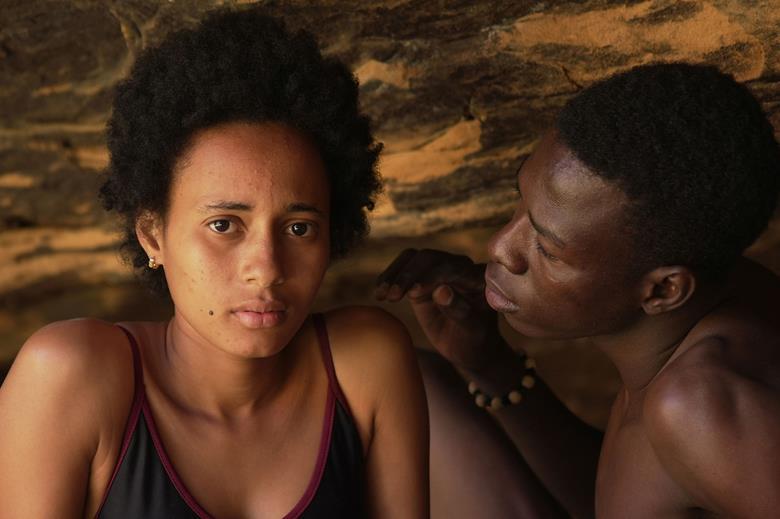
Mahamat-Saleh Haroun’s Soumsoum, the Night of the Stars takes place in the Ennedi desert mountains where 17-year-old Kellou (Maïmouna Miawama) is ostracized from, yes, the patriarchal elders, because she’s haunted by premonitional visions and is seen as a pariah because she was “born in blood,” meaning her mother died during childbirth. Kellou meets Aya (Achouackh Abakar Souleymane) another village outcast who knew her mother. The two form a bond and Aya helps Kellou realize her connection to ancestors as well as the truth about her mother and explains what it all has to do with the “night of the stars, a night of love, madness and freedom.”
It’s a slow burn for sure, and another film set in the worst kind of male-run society. But female solidarity wins the day and there’s a cave in the shape of a vagina where lady sentinels hang out!
The film world premiered at the Berlinale and won the FIPRESCI Prize.
Chad has only submitted four times to in the last 24 years—no noms. All four were directed by Haroun.
Vietnam: Spirit Guardians” The Last Secret of the First Emperor
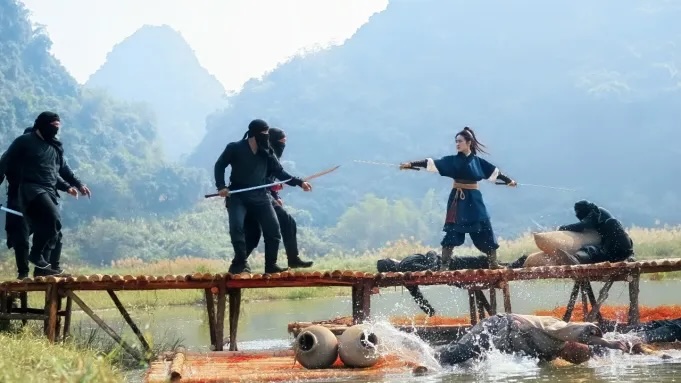
The opening of Nguyễn Phan Quang Bình sumptuous yet convoluted and confusing historical epic, Spirit Guardians” The Last Secret of the First Emperor, plunges the viewer directly into battle and for most of the 140-minute running time continues to bombard the audience with a cornucopia of characters and too much plot. I suggest doing some research before watching if you want to understand some of what is going on.
Set in the 10th-century Đinh dynasty, the film follows seven loyal warriors on a perilous mission to protect the final resting place of Vietnam’s first emperor. It’s certainly ambitious and impressively shot by DP Nguyễn K’Linh.
The most compelling aspect of the pic is the love story that develops between Nguyen Phong (Johnny Trí Nguyễn) and An Nhien (Trần Thiên Tú).
And if you like non-stop action sequences and sword fights galore, this one’s for you.
Vietnam has been nominated once in 1993 for Tran Anh Hung’s The Scent of Green Papaya.
This is the country’s 22nd submission.
Costa Rica: If We Don’t Burn, How Do We Light Up the Night
Kim Torres’s lyrical coming of age drama, If We Don’t Burn, How Do We Light Up the Night, is set in a remote rural village where 13-year-old Laura (Lara Yuja Mora) has unwillingly relocated with her mother, brother and her new “family,” mom’s boyfriend and his young daughter, Gabi (Valentina Chaves Jiménez). There isn’t a lot of plot, the film is more of a study of female friendship, rebellion and a frightening look at how folklore is used to conceal violence against women.
Torres, who based some of the script on her own experiences growing up, is definitely an impressive filmmaker but the ending is a total let-down. It’s just fizzles, when it should burn.
Costa Rica has never been nominated. This is their 15th submission.
Latvia: Ulya

Viesturs Kairišs’s pretty straightforward true-story biopic, Ulya, is interesting mostly for its lead performance by Arnolds Karlis Avots as the tall, lanky and rather manly basketball phenom, Ulyana Semjonova, who secured many medals and won championships for the Soviet Union from the late ‘60s into the ‘80s.
It’s the inspirational story of a bullied young girl who goes on to show the world she was, at heart, a champion. And I appreciated the message and many of the triumphant scenes as well as the gorgeous black-and-white cinematography by DP Wojciech Staron. But it never quite moved me or went beyond the obvious. And there are too many stock characters.
What is fascinating is that Ulya is played by a male actor who was also heavily involved in the writing and development of the feature. Also, curious, Ulya’s private life is never delved into.
Ulya world premiered in the Un Certain Regard section at Cannes.
Kairišs directed three of Latvia’s previous Oscar submissions.
Latvia received its very first International Feature Oscar nomination in 2024 for Gints Zilbalodis’ mystical, much beloved animated feature, Flow, which went on to a surprise Oscar win for Best Animated Feature.
Last year they submitted another animated feature, Lauris and Raitis Ābele’s debauched delight, Dog of God, but, alas, received no Oscar love.
This is the country’s 18th submission.
Democratic Republic of the Congo: Rumba Royale
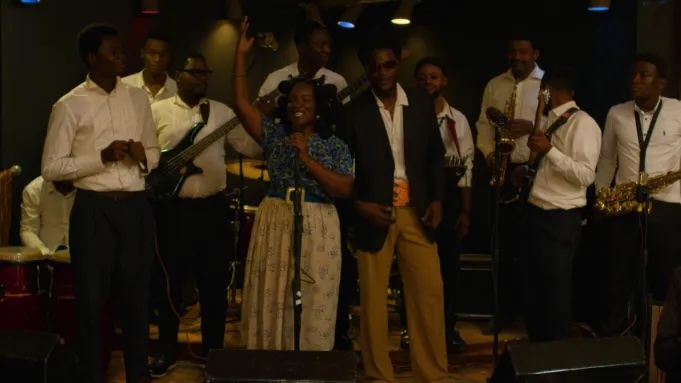
“We’re all whores in one way or another.”
Olive to Daniel
Yohane Dean Lengol and Hamed Mobasser’s atmospheric historical thriller, Rumba Royale, is set in 1959, the last year of colonial rule of the Congo by Belgium.
The saga takes place in Léopoldville (modern-day Kinshasa) and has a few different, romantic and political plots going on including a love triangle between photographer Daniel (Fally Ipupa), waitress Olive (Mélanie Bokata) and Belgian-Colonial Jean-Pierre (Olivier Loustau). When one of the characters is found dead, another is accused of murder. Secrets, lies, jealousies, hatred are exposed as well as rampant racism.
The use of period Congolese rumba music enhances the experience.
This is only DR Congo’s second submission, the first was in 1997.
Senegal: The Attachment (Liti Liti)
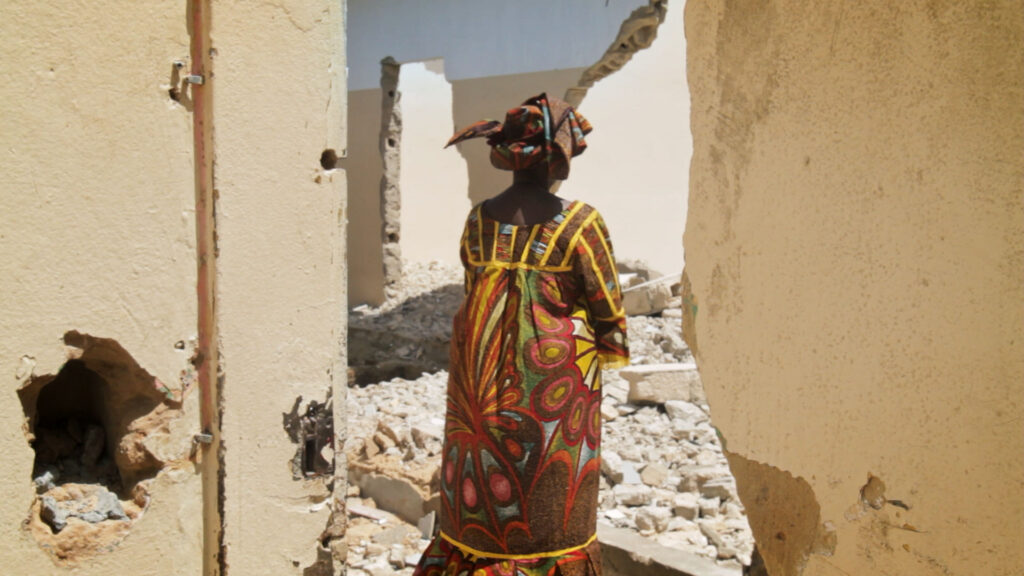
Mamadou Khouma Gueye’s super personal doc, The Attachment (Liti Liti) is a loving tribute to his brave and resilient mother, Sohkna Ndiaye, who lived in Guinaw Rails, Senegal, for 40 years but her neighborhood is being demolished to make room for a railroad, which the politicos hope will help the local economy. Ndiaye is quite a heroic figure. And there’s a shot of her standing amidst the rubble that is truly heartbreaking and speaks volumes.
Senegal has submitted eight times, since 2017, and three of those entries made the short list, the last one, Mati Diop’s celebrated doc, Dahomey.
Iceland: The Ground Beneath Our Feet
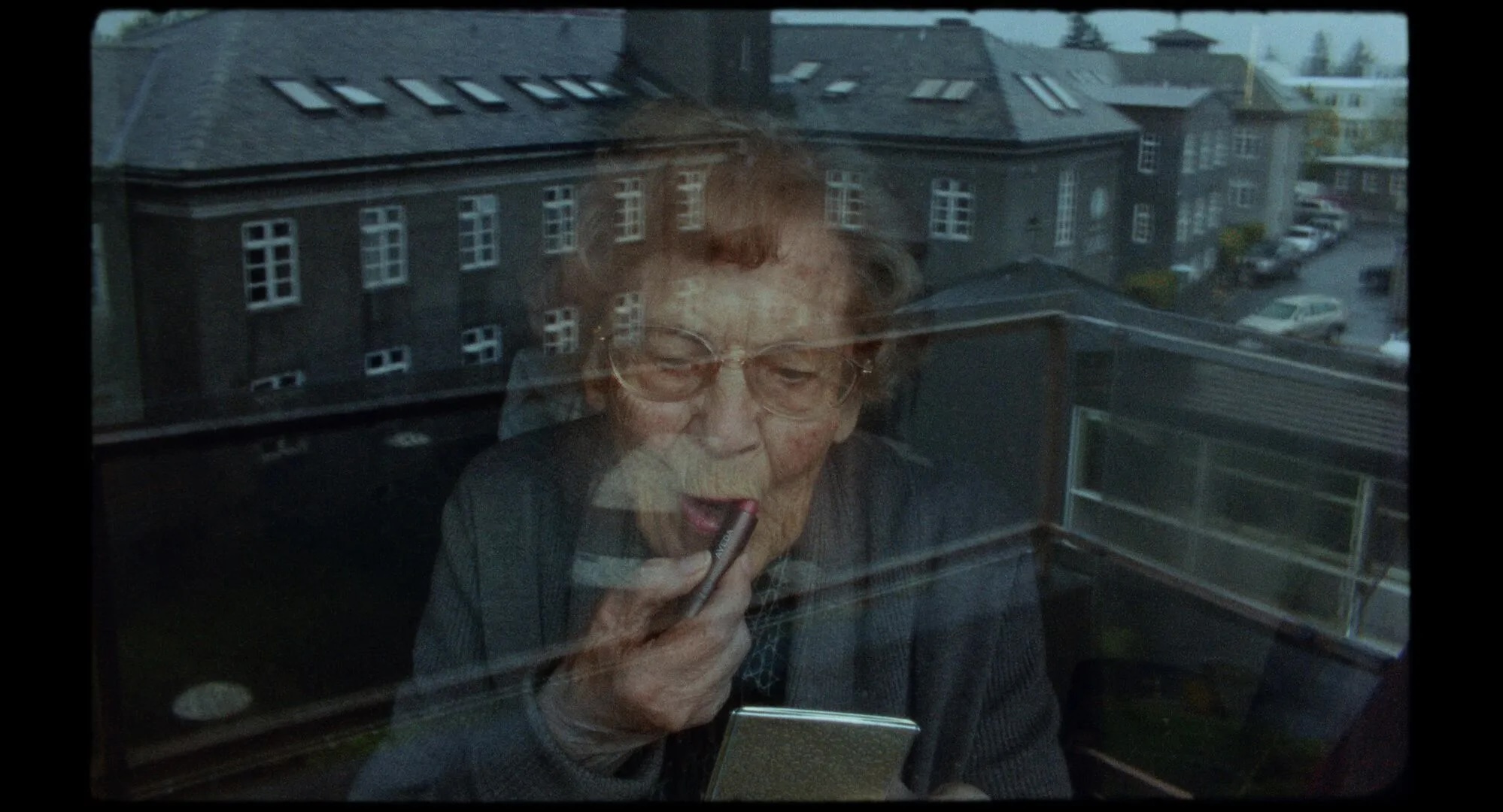
Shot on 16mm, The Ground Beneath Our Feet is an Icelandic-Polish documentary directed by Yrsa Roca Fannberg, that focuses on the elderly residents who live in a nursing home in Reykjavík, Iceland.
We get to experience the daily minutiae which is intermittently interesting. The film does capture some of the interpersonal interactions. And a nail polishing scene truly moved me.
This is Iceland’s first doc submission in the IF category.
Iceland has been nominated once in 1991 for Friðrik Þór Friðriksson’s Children of Nature.
The country was also shortlisted in 2012 for Baltasar Kormákur’s The Deep, 2021 for Valdimar Johannsson’s Lamb, in 2023 for Hlynur Pálmason’s Godland and in 2024 for Kormákur’s enchanting, Touch.
This is Iceland’s 47th submission.
Nigeria: Dear Ajayi
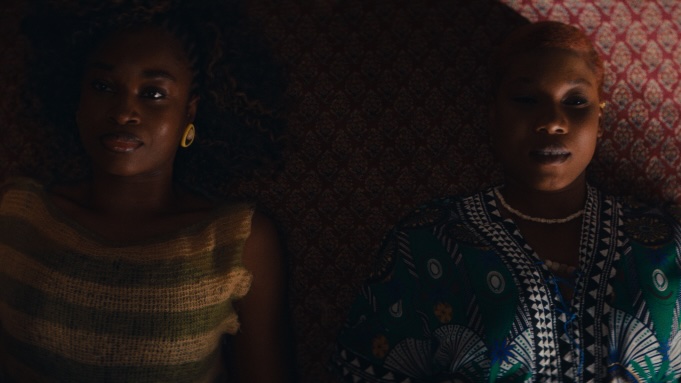
Damilola Orimogunje’s Dear Ajayi focuses on two estranged sisters, who live within close proximity, and attempt to sideline their differences and conflicting values to care for their ailing mother.
Ade (Bimbo Akintola) is the chief caregiver and devout nurse. She is also the breadwinner in her home. Her husband (William Benson) is a struggling painter, who is having a secret affair.
Titi (Tosin Adeyemi), the far more interesting character, is a free-spirit singer, doing what she must to secure a record deal—music is her dream. She tends to make lousy choices when it comes to men. Titi finds herself pregnant and marries the man, despite the fact that he beats her.
Dear Ajayi is yet another potent film about the way men mistreat women and how these women are stuck living in a misogynistic patriarchal society.
Orimogunje is an interesting filmmaker and has cast his film well, but his script meanders a bit and having the matriarch figure bedridden for the entire running time was frustrating. In addition, the ending is a disappointment.
Nigeria began submitting in 2019 but that entry, Lionheart, was disqualified for being mostly in English. Dear Ajayi is in Igbo, Yoruba and Nigerian Pidgin English—all officially classified as a non-English by the Academy.
This is Nigeria’s fifth submission, no noms.
Panama: Chichero

Aaron Bromley & Arturo Montenegro’s curious, sometimes engaging, often muddled and weirdly campy film, Chichero, follows two different characters who converge, first in Peru and then in Panama.
Josué (Júnior Béjar Roca), a young Quechua man and aspiring boxer, is forced to migrate to Panama after the 1980s armed conflict in Peru.
Jazmín (Andrea Pérez Meana) works for the Sendero Luminoso (Shining Path), a Maoist militant insurgent group that fought against the Peruvian state. She also flees to Panama with the help of a mercenary pimp (a nasty Diego De Obaldía).
Jazmin helps Josué become a chichero (seller of empanadas and chicas), but things go to hell pretty quickly.
The first 30 or so minutes of Chichero is rather convoluted with the messiest structure, but it finds its groove once the protags get to Panama, only to fall apart again in the final reel.
Most of the male characters, except for Josué and a few others, are disgusting rapists.
Tonally, I am not sure what the filmmakers were going for, but I found myself laughing at things that should not have been funny.
Panama has never been nominated. Abner Benaim’s Plaza Catedral made the short list in 2021.
This is the country’s 13th submission.
Iran: The Land of Angels
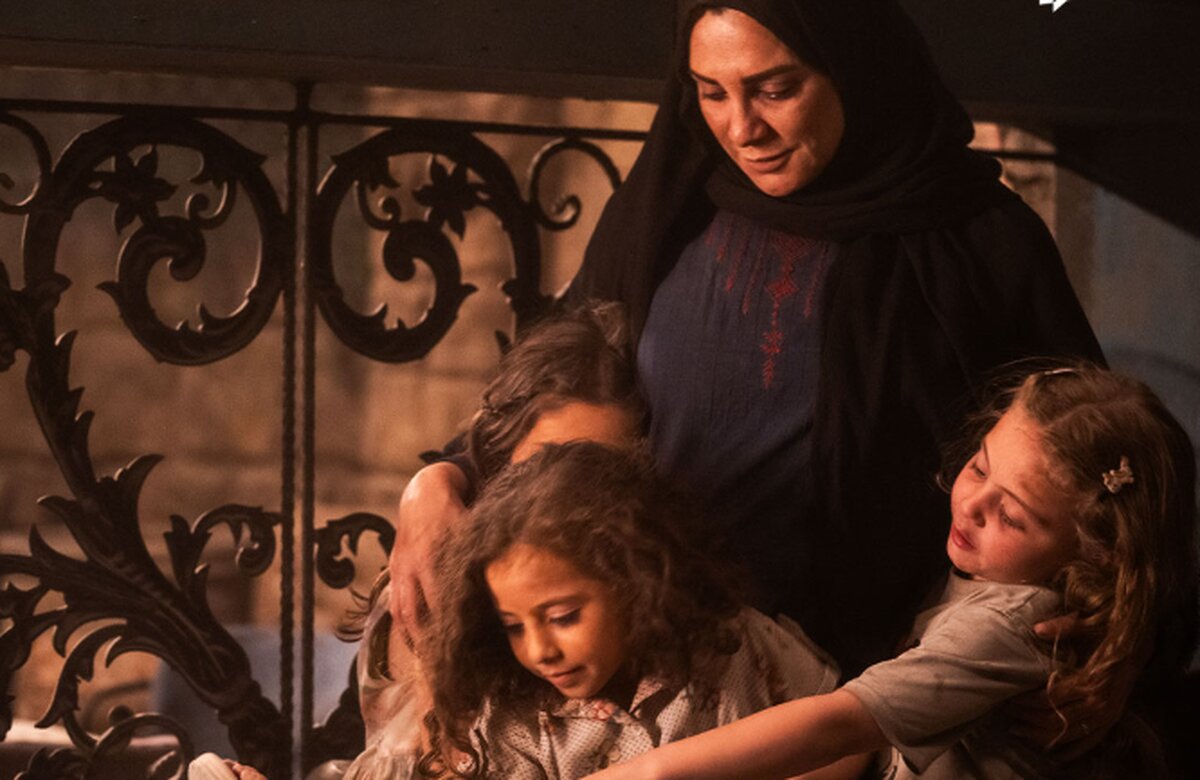
Iran’s entry, Babak Khajehpasha’s The Land of Angels, is set in Gaza and focuses on a schoolteacher (Syrian actress Sulaf Fawakherji) struggling to survive constant bombings and displacements and trying to keep a host of children alive. Together they attempt to find food and shelter. Most are prevented from getting to safety because of a ridiculous rule about needing ID cards.
There are some especially poignant moments and impressive shots, especially in the first half, but the film slides quickly into the maudlin.
Iran has won twice, both for Asghar Farhadi films—A Separation in 2011 and The Salesman in 2016) and was nominated one other time for Majid Majidi’s Children of Heaven. The country made the shortlist in 2021 and 2022 with Majidi’s Sun Children and Farhadi’s A Hero.
This is the country’s 32nd submission.
The Rest (Not My Cup of Film Tea, But Could Be Yours)
Bulgaria: The Dreamed Adventure
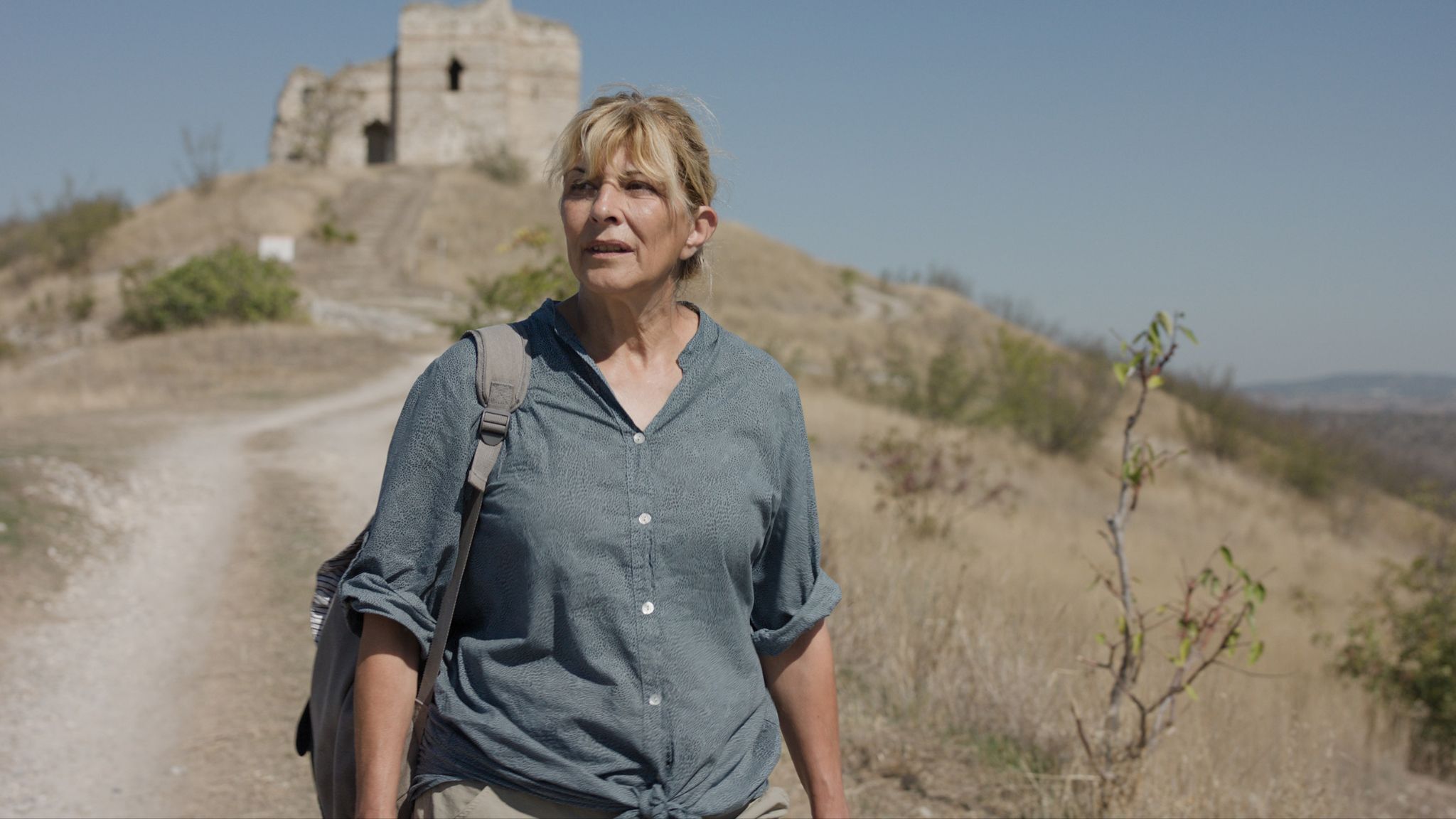
German helmer Valeska Grisebach’s intriguing but meandering drama, The Dreamed Adventure, could have made an exciting two-hour film. Instead, this look at the criminal element in a Bulgarian border town (near Greece and Turkey) is a bloated near-three-hour slog — although the cinematography by Bernhard Keller mesmerizes. It doesn’t help that the non-professional lead actors have little charisma.
The film first follows Said (Syuleyman Letifov), who has returned to the town of Svilengrad seemingly looking for diesel fuel. He looks up his old love, Veska (Yana Radeva), an archaeologist who has also come back to town. But then, Said disappears and Veska goes on an odyssey to find out what happened to him, which involves hobnobbing with local gangsters she has a traumatic past with and seemingly endless chitchat about…very little.
She has a ballsy interaction with one of the criminals near the film’s end that is almost worth the wait Almost.
This film certainly has won over many critics. And there are some remarkable moments. But they’re few and far between.
Bulgaria has never been nominated. Stephan Komandarev’s The World is Big and Salvation Lurks Around the Corner was shortlisted in 2009.
This is the country’s 37th submission.
A Janus Films release.
South Africa: Variations on a Theme
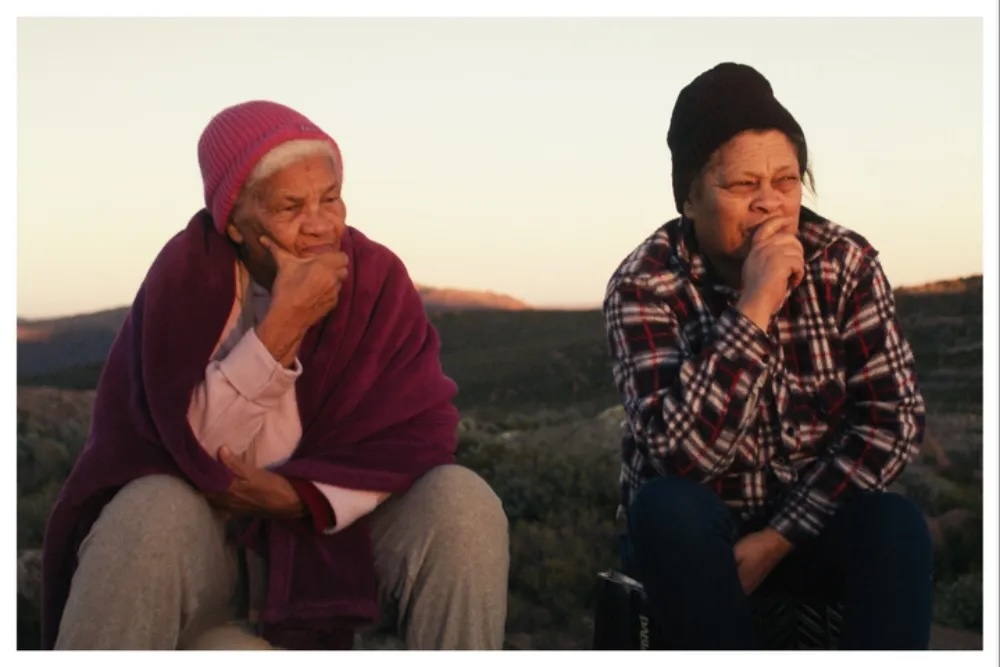
Variations on a Theme, based on true stories, is written and directed by Jason Jacobs and Devon Delmar. The 65-minute film is set in a rural mountainous village and follows a few elderly figures including 80-year-old Hettie (Hettie Farmer), a Namaqualand goat herder, who wonders what her goats think of her. She and other villagers become the victims of a scam where false World War II reparations were promised.
There is a strange, ominous voice-over narration usually providing background info on what Hettie and the others are thinking and doing.
Variations is not the most exciting, film but it’s visuals and lyrical style are impressive.
South Africa has been nominated twice, winning for Gavin Hood’s Tsotsi in 2005. In addition, the country made the short list twice, lastly with John Trengove’s The Wound in 2017.
This is their 22nd submission.
Hong Kong: Sons of the Neon Night

Juno Mak’s busy crime thriller, Sons of the Neon Night bombards the viewer with a lot of info in a scroll at the outset and proceeds to barrage the audience with a ton of action sequences (firepower, blood, bombings shoot outs) then slows down for more contemplative moments before assaulting the senses once again.
Set in a very stylized version of Hong Kong in 1994, the assassination of the godfather of an illegal drug syndicate triggers a nasty war for his successor that goes on and on….
The actors get to brood and appear stern, concerned and enraged.
The film world premiered at the Midnight Screening section of the 2025 Cannes Film Festival.
If you like playing murderous video games, this one is right up your alley.
Hong Kong has been nominated three times, Zhang Yimou’s Raise The Red Lantern in 1992, Chen Kaige’s Farewell My Concubine in 1994 and Derek Tsang’s Better Days in 2020 and was shortlisted for Won Kar-wai’s The Grandmaster in 2014.
This is their 45th submission with no wins.
Peru: Night Has Come
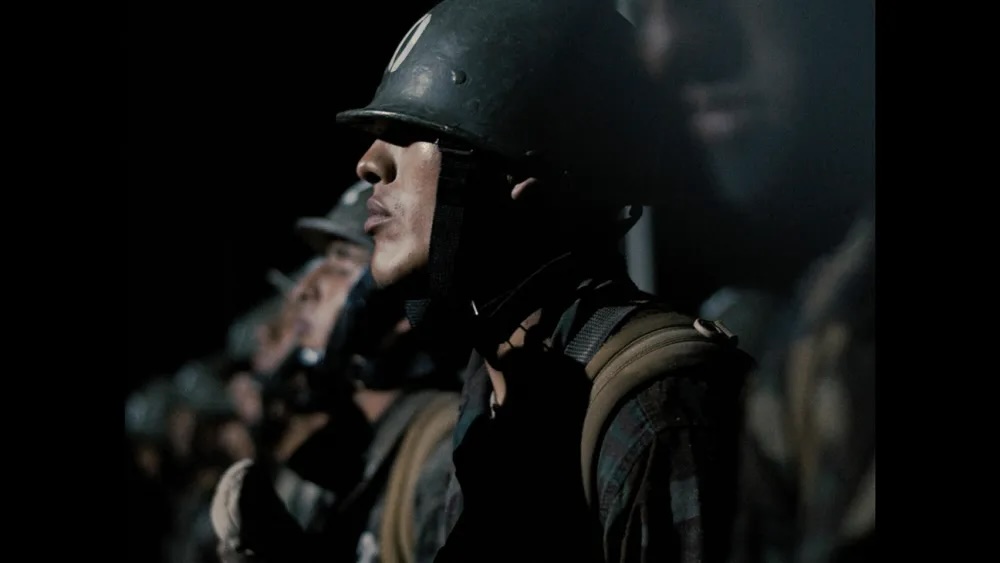
Paolo Tizón’s directorial debut, Night Has Come tosses the viewer into the intense Peruvian Armed Forces training in the VRAEM (Valley of the Apurímac, Ene, and Mantaro Rivers) region of the country, known for its drug trafficking and counterinsurgency issues. We get a documented glimpse of the lives of these young men. I didn’t find it to be the most exciting or insightful documentary…
Peru has been nominated once for The Milk of Sorrow in 2009.
This is their 33rd submission.
The Netherlands: Paikar
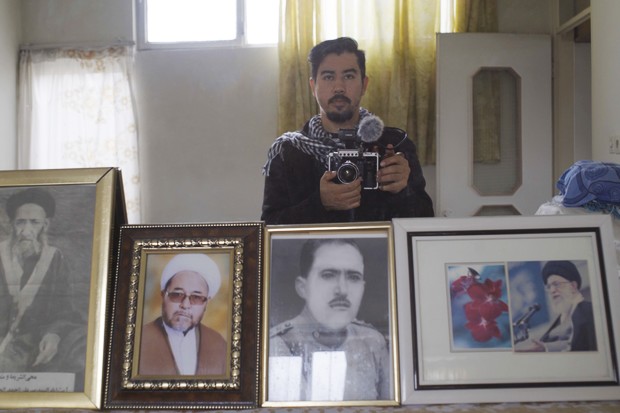
Dutch-Afghan filmmaker Dawood Hilmandi has crafted a moving doc that centers on ilmandi who goes on a personal and familial pilgrimage of sorts that includes facing his estranged father, a former ujahideen fighter turned imam, writer, and poet. The film travels from Afghanistan to Iran to the Netherlands, in a world torn apart by hate, war and a pandemic. The film takes on issues of migration, generational trauma, being exiled from one’s country and how the scars of war can linger for generations.
It is a curious choice since it isn’t the most riveting film. And there was controversy over its selection when director Mike van Diem criticized the choice of a doc over a narrative feature—including his film Our Girls—and unsuccessfully tried to have the committee revote. His film Character (1997) was the last Netherlands Oscar victory in the Best Foreign Language Film category. Van Diem also wondered why the names of the members of the selection committee were not made public.
The Netherlands has seven nominations, including the very first year they submitted, 1959, for Fons Rademakers’ The Village on the River.
They’ve won three times for Character (1997), Fons Rademakers’ The Assault (1986) and Marleen Gooris’s Antonia’s Line (1995),
Their last nomination was in 2003 for Ben Sombogaart’s Twin Sisters.
In addition to the noms, The Netherlands has short listed three times.
This is the 59th Dutch submission.
Venezuela: Death Has No Master (La muerte no tiene dueño)
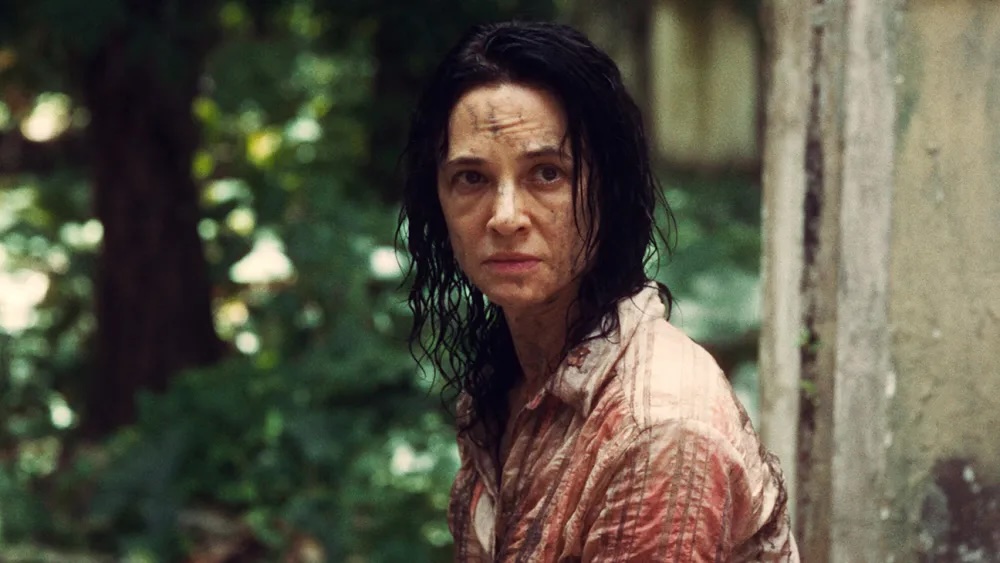
Jorge Thielen Armand’s maddening thriller Death Has No Master (La muerte no tiene dueño) has its heart in the right place—I guess, but all the characters in the film are pretty despicable and the ending is just ridiculous. The first-time feature filmmaker also peppers the work with creepy images that don’t add up to much. He does, however, have an impressive directorial style.
The always fascinating Asia Argento does her best with what she’s given, playing Cara, the heiress to a cacao plantation in Venezuela. Upon her father’s death she journeys from Italy to her inherited land and mansion only to finds her former cook Sonia (Dogreika Tovar) still living there with her young son as well as a few other people. No one wants to leave so Caro takes some drastic measure to get rid of them and it spirals out of control.
Death Has No Master premiered at the Directors’ Fortnight section at this year’s Cannes Film Festival and it’s sure to have its fans (same probably as for Italy’s The Spiral). Alas, I am not one.
In 2014, Alberto Arvelo’s The Liberator (Libertador) made the shortlist.
This Venezuela’s 36th submission, with no nominations.
Switzerland: Who is Still Alive?
Swiss director Nicolas Wadimoff’s documentary, Who is Still Alive?, which premiered at the 2025 Venice Film Festival focuses on nine Palestinian refugees, many of them artists, ages 14 to 62, speaking about their lives in Gaza before October 7, 2023…and after. It’s minimalist, mostly talking-heads, using a drawing of where their homes, studios, businesses were, before the war. And the horror that happened to their families and loved ones, after. It’s an experimental work that may not be for everyone..
Wadimoff is shining a light on the human stories, always a good thing.
The film was shot in South Africa, one of the few countries in the world which allows Palestinians in without a visa.
Switzerland has been nominated 5 times, winning twice, in 1984 for Richard Dembo’s Dangerous Moves and in 1990 for Xavier Koller’s Journey of Hope.
The country made the short list last year with Petra Volpe’s Late Shift, starring Leonie Benesch.
This is Switzerland’s 54th submission.
The Philippines: Filipiñana
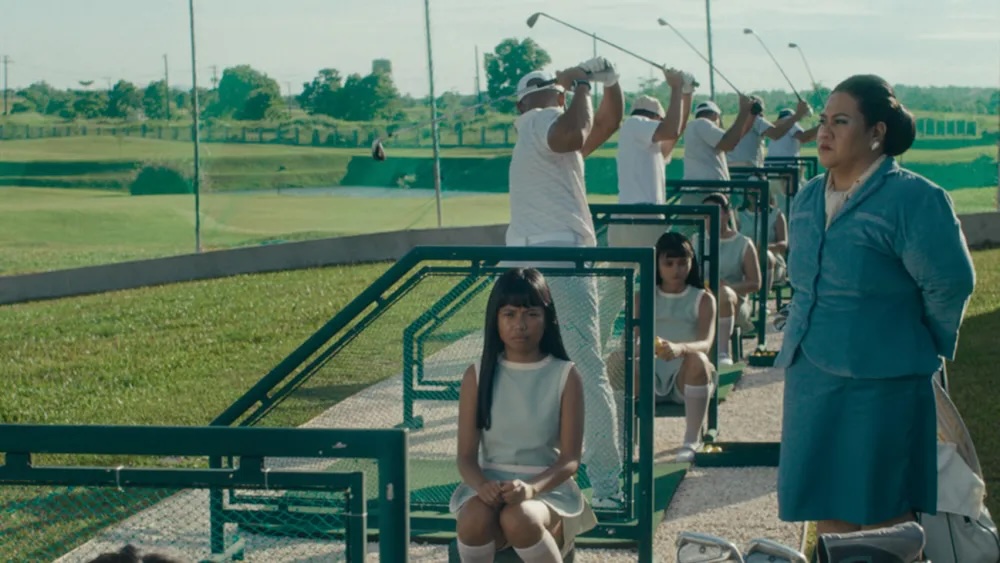
Much like last year’s submission (Lav Diaz’s Magellan), Rafael Manuel’s Filipiñanatried my patience. On the one hand it’s pretty to look at (thanks to Xenia Patricia’s fab cinematography) and has some stinging things to say about class exploitation and misogyny in The Philippines, but man, is it exceedingly dull.
The plot (what little there is) centers on Isabel (Jorrybell Agoto) who is hired to be a tee girl at a fancy country club in Manila, basically being a servant to the whims of the wealthy. She slowly—SLOWLY—becomes resentful but, also, beguiled.
This film certainly has its fans. It won a Special Jury Award for Creative Vision at Sundance. For me, it was a grueling sit.
The Philippines has never been nominated or made the short list.
This is the country’s 37th submission (third to Portugal and Egypt as the country with the most submissions with no nominations.)
Australia: First Light
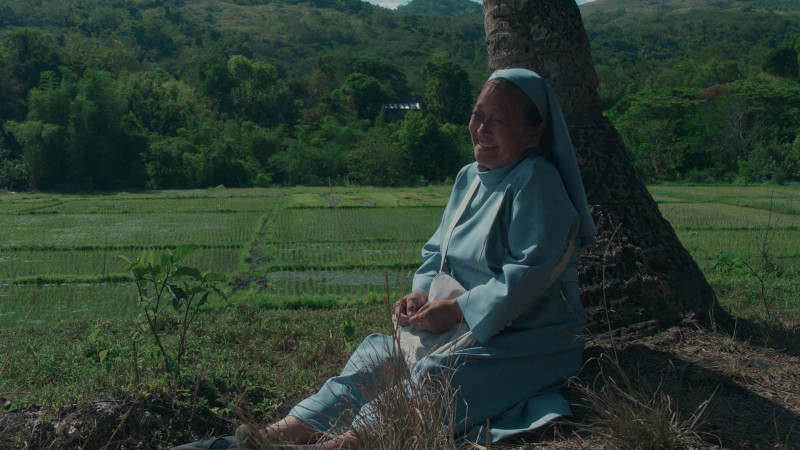
Ruby Ruiz’s graceful and compelling performance as Sister Yolanda in James J. Robinson’s debut feature, First Light, is almost enough to recommend this arduously slow-paced, overly cautious portrait of a corrupt society and church.
The ailing nun, described as “a person of God…not just a person of the Church,” holds steady to her beliefs until her eyes are opened to the cause of death of a boy working on a construction site in The Philippines. In a harrowing scene—the most powerful in the film—she is called to his side in hospital where no one is willing to help him and prays with him until he takes his last breath. Confused that no doctor or nurse is willing to help him, Sister Yolanda begins asking questions..
First Light certainly boasts a singular vision and while I applaud exposing the Catholic Church officials as greedy hypocrites and shining a light on the abuse of class privilege, the film takes far too long to make it’s points and is far too safe in the manner in which it does so.
The film is a co-production between Australia and The Philippines, which is why Australia is able to submit it.
Australia has received one nomination, Tanna in 2016. Warwick Thornton’s Samson and Delilah made the short list in 2009.
This is Australia’s 18th submission.
NOT ON THE FINAL LIST
New Zealand: Mārama
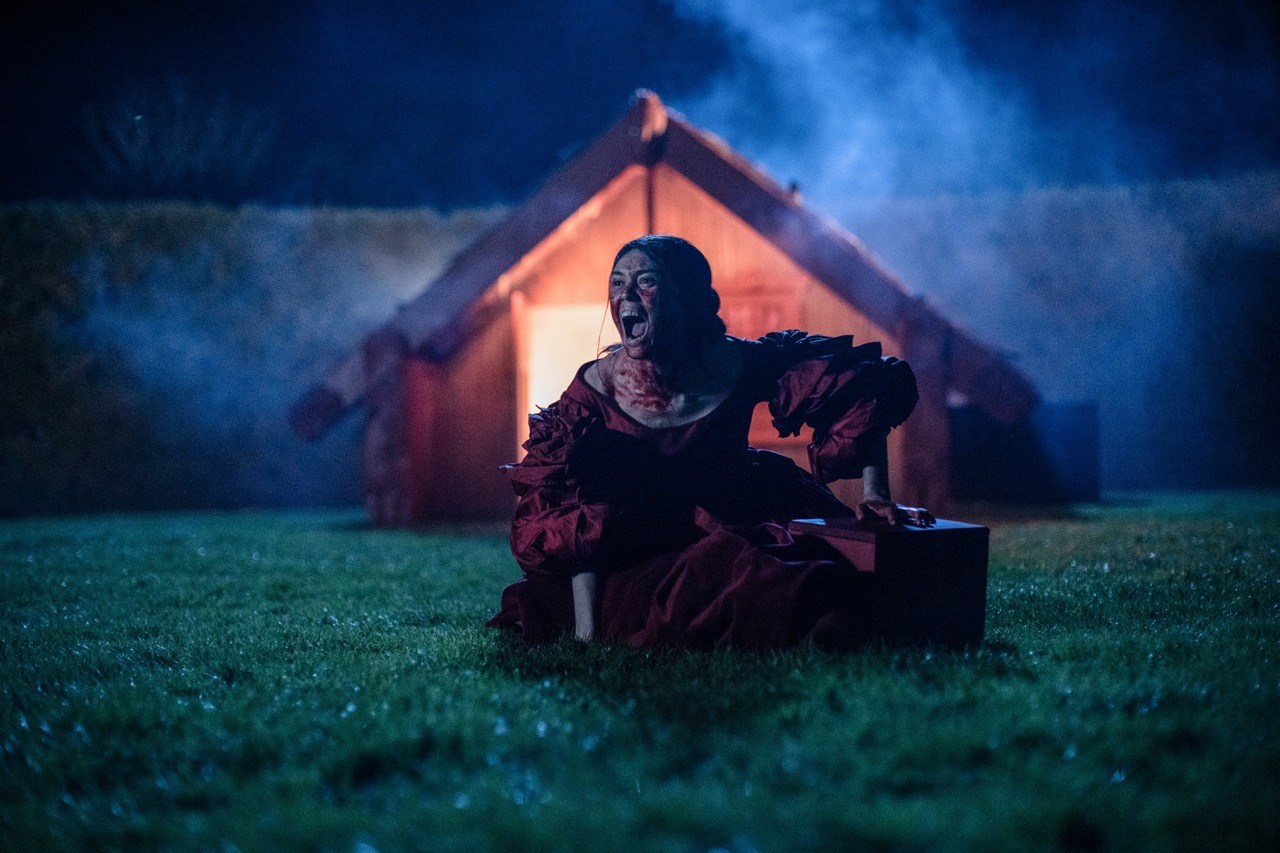
New Zealand filmmaker Taratoa Stappard’s impressive feature debut, Mārama, is a creepy Gothic horror tale grounded in the colonized history of Aotearoa New Zealand and centers on the titular character, played with a daring and deliberately modern verve by a tantalizing and fierce Ariāna Osborne.
Mārama, aka Mary Stevens, is cryptically invited to Yorkshire where a mysterious stranger claims to have important information on her late parents and her lineage. Upon her arrival she is welcomed by Nathanial Cole (Toby Stephens, Maggie Smith’s son) the oddball master of the manor. What unfolds is a terrifying tale of traumatic historical atrocities committed against the indigenous Māori people—specifically against Mārama’s family, loaded with shocking twists—that you might just see coming, but perhaps even more gruesome than you can imagine.
Rest assured it is a very disturbing, relentless but ultimately satisfying and cathartic story of necessary vengeance.
Stappard has crafted a gorgeously horrific work with glorious production design, costumes and captivating cinematography (by Gin Loane). The film is a stunner.
This is New Zealand’s eighth submission and the first since 2022, with no short list mentions to date.
My Personal Top 15 International Features (in preference order)
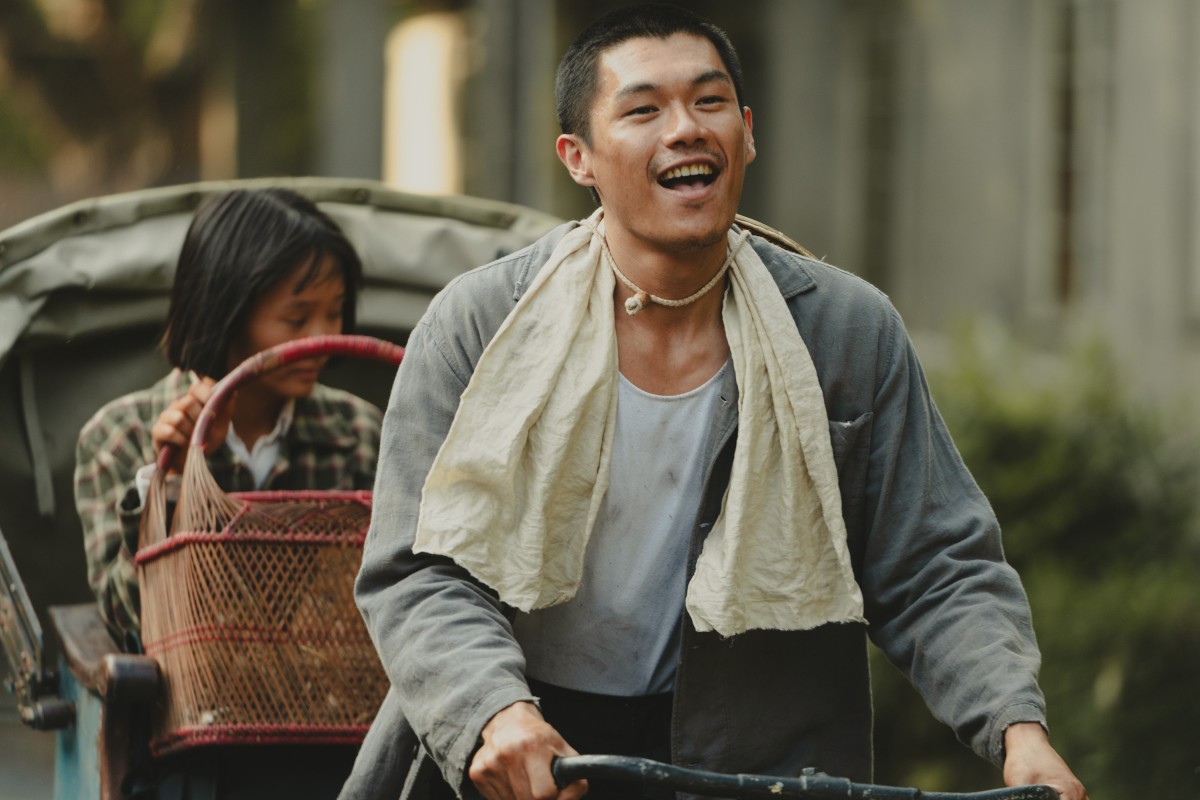
Coward, Belgium
La Bola Negra, Spain
All of a Sudden, Japan
Fjord, Romania
Fatherland, Poland
Hold Onto Me, Cyprus
Furies, Lebanon
Ben’Imana, Rwanda
Hanging by a Wire, Pakistan
Growth of the Soil, Norway
Aontas, Ireland
Wanderlust, Serbia
Guria, Georgia
A Foggy Tale, Taiwan
The Squirrel, Finland
Runners-up
A Matter of Life and Death, Saudi Arabia
How to Divorce During the War, Lithuania
Tell Me Everything, Israel
If Pigeons Turned to Gold, Czechia
We Are All Strangers, Singapore
Nina Roza, Canada
Adult Supervision, Sweden
The Stories, Egypt
Roid, Bangladesh
The Fox King, Malaysia
The Best Performances (in preference order)
A quick happy note on this year’s outstanding performances. There were far more female performances to rave about in both Lead and Supporting, than male roles. This is one for the history books.
Outstanding Lead Actress
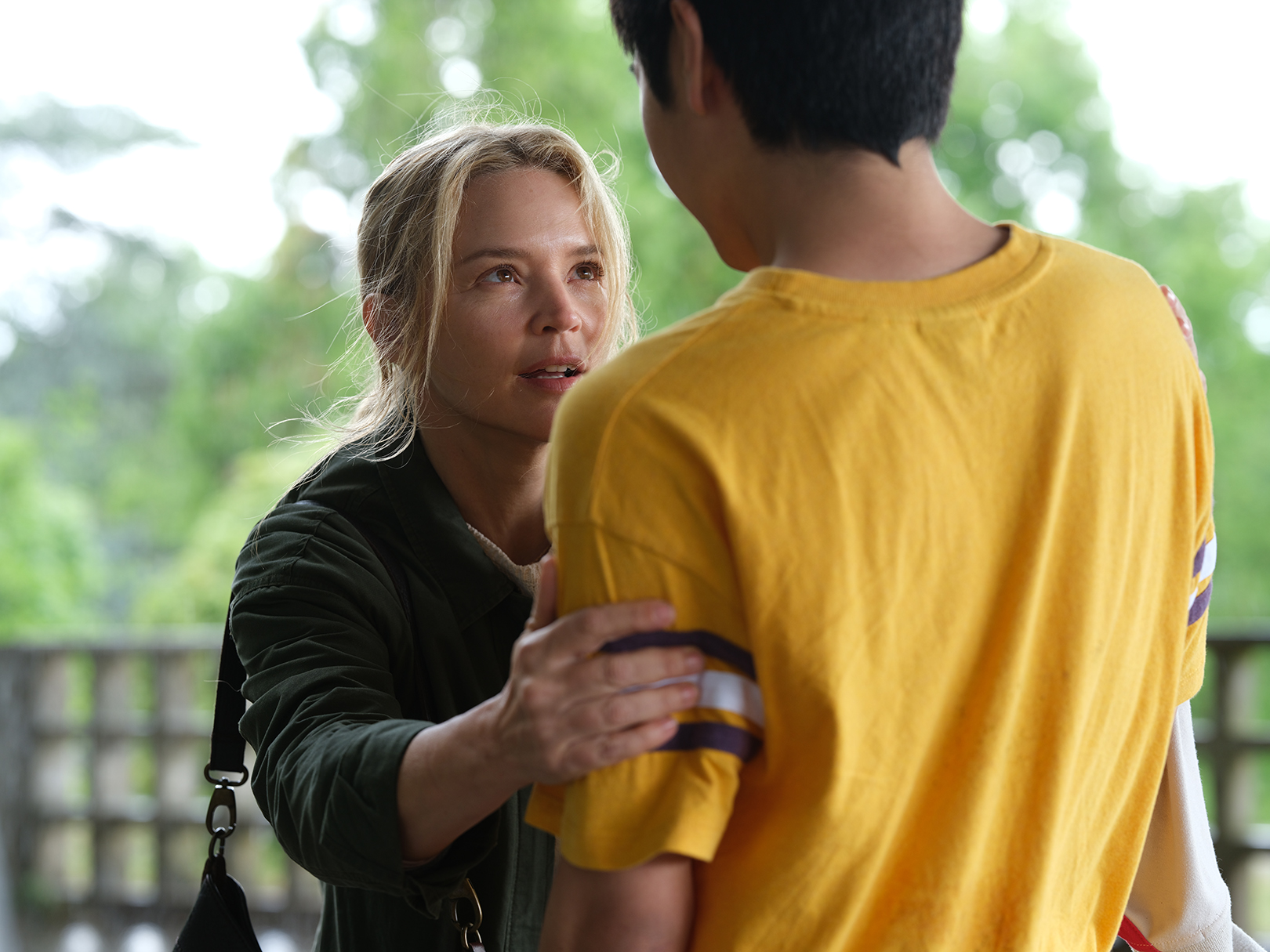
Sandra Hüller, Fatherland & Rose
Virginie Efira, All of a Sudden
Renate Reinsve, Fjord
Iris Lebedeva, Minotaur
Avan Jamal, No Paradise If You are Killed by a Woman
Putri Marino, Four Seasons in Java
Asta Kamma August, Growth of the Soil
Rym Mroue & Maria Nakouzi, Furies
Sarah Taibah, A Matter of Life and Death
Nazifa Tushi, Roid
Jeon Do-yeon, Possible Love
Jasmine Trinca, The Spiral
Mathilde Arcel, Woman Unknown
Manila Martelli, God Will Not Help Us
Ariāna Osborne, Mārama
Clara Khoury, Sink
Elena Jakštaitė, How to Divorce During the War
Camille Cottin, In the Land of Arto
Sarah Karei, One Woman One Bra
Nisrin Erradi, Strawberries
Simone Bucio, The Ivy
Mercedes Morales, Melodrama
Outstanding Lead Actor

Emmanuel Macchia, Coward
Christos Passalis, Hold Onto Me
Valentin Campagne, Coward
Sebastian Stan, Fjord
Stefan Vukić, Wanderlust
Hanns Zischler, Fatherland
Will Or, A Foggy Tale
Miro Lopperi, The Squirrel
Herbert Nordrum, Growth of the Soil
Assi Cohen, Tell Me Everything
Dmitriy Mazurov, Minotaur
Yaqoub Alfarhan, A Matter of Life and Death
Galin Stoev, Nina Roza
Gustaf Skarsgård, Adult Supervision
Sul Kyung-gu, Possible Love
Marius Repšys, How to Divorce During the War
Vasilis Bisbikis, Broken Vein
Outstanding Supporting Actress

Tao Okamoto, All of a Sudden
Penélope Cruz, La Bola Negra
Lisa Carlehed, Fjord
Isabelle Kabano, Ben’Imana
Caro Braun, Rose
Carrie Crowley & Brid Brennan, Aontas
Yeo Yann Yann, We Are All Strangers
Cho Yeo-jeong, Possible Love
Glenn Close, La Bola Negra
Zar Amir Ebrahimi, In the Land of Arto
Saskia Rosendahl, The Meltdown
Eva-Jane Gaffney, Aontas
Christine Hakim, Four Seasons in Java
Nelly Karim, The Stories
Betty Arvaniti, Broken Vein
Valeria Bruni Tedeschi, The Spiral
Lydia Indjova, Child
Pilar Gamboa, A Loose End
Ishita Deshmukh, Gondhal
Outstanding Supporting Actor
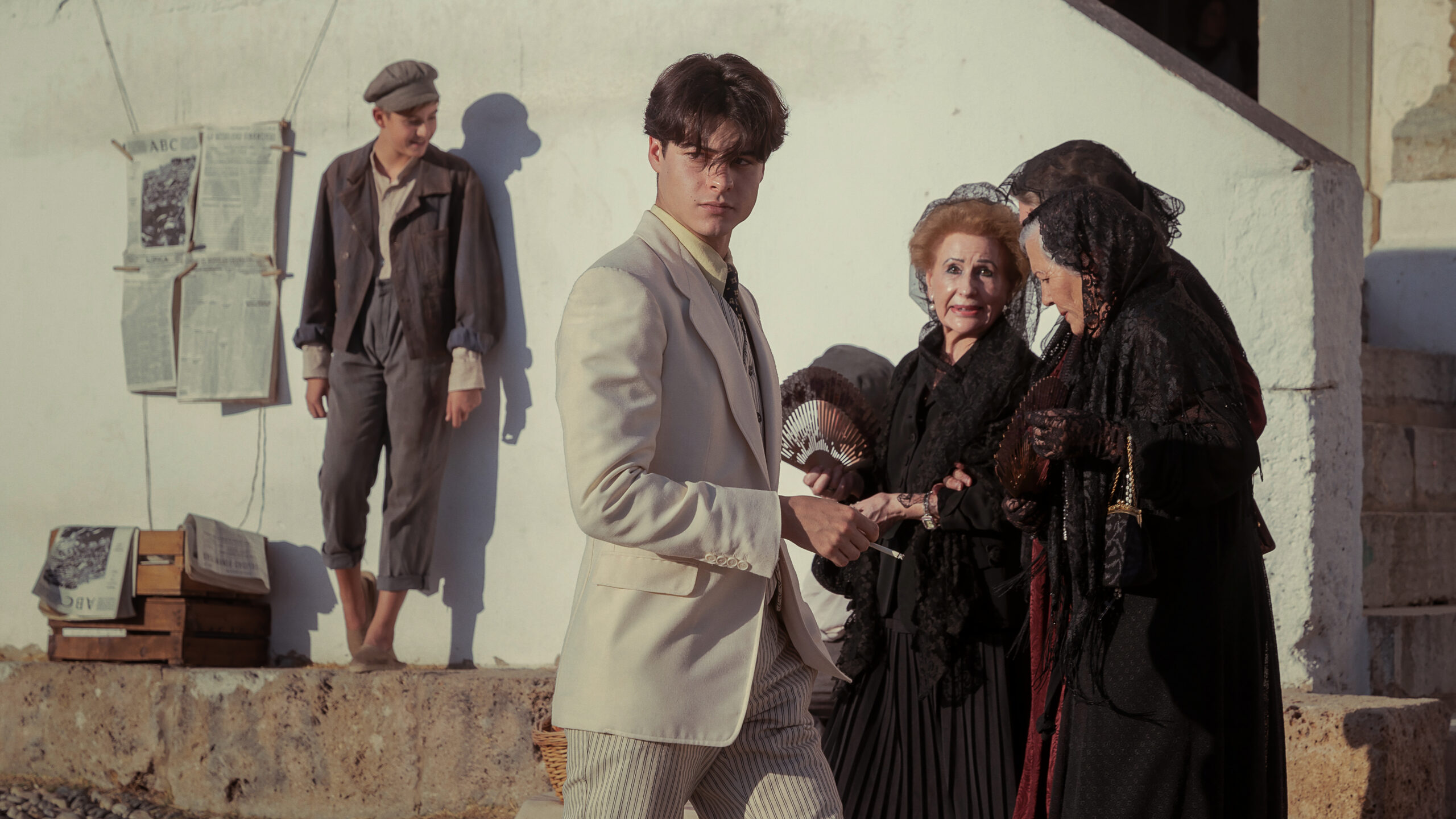
Guitarricadelafuente, La Bola Negra
Milo Quifes, La Bola Negra
Miguel Bernardeau, La Bola Negro
Ido Tako, Tell Me Everything
August Diehl, Fatherland
Lorenzo Zurzolo, La Bola Negra
Enzo Brumm, Silent Friend
Ahmad El-Azaar, The Stories
Zo In-sung, Possible Love
Fares Fares, Adult Supervision
Thorbjørn Hedegaard, Woman Unknown
Randika Gunathilaka, Riverstone
Ulan Nusipali, Abel
Toby Stephens, Mārama
Yuriy Zavalnyouk, Minotaur
Koh Jia Ler, We Are All Strangers
Nishad Bhoir, Gondhal
Jakub Gierszał, The Meltdown
Diego De Obaldía in Chichero
Outstanding Young Actor/Actress
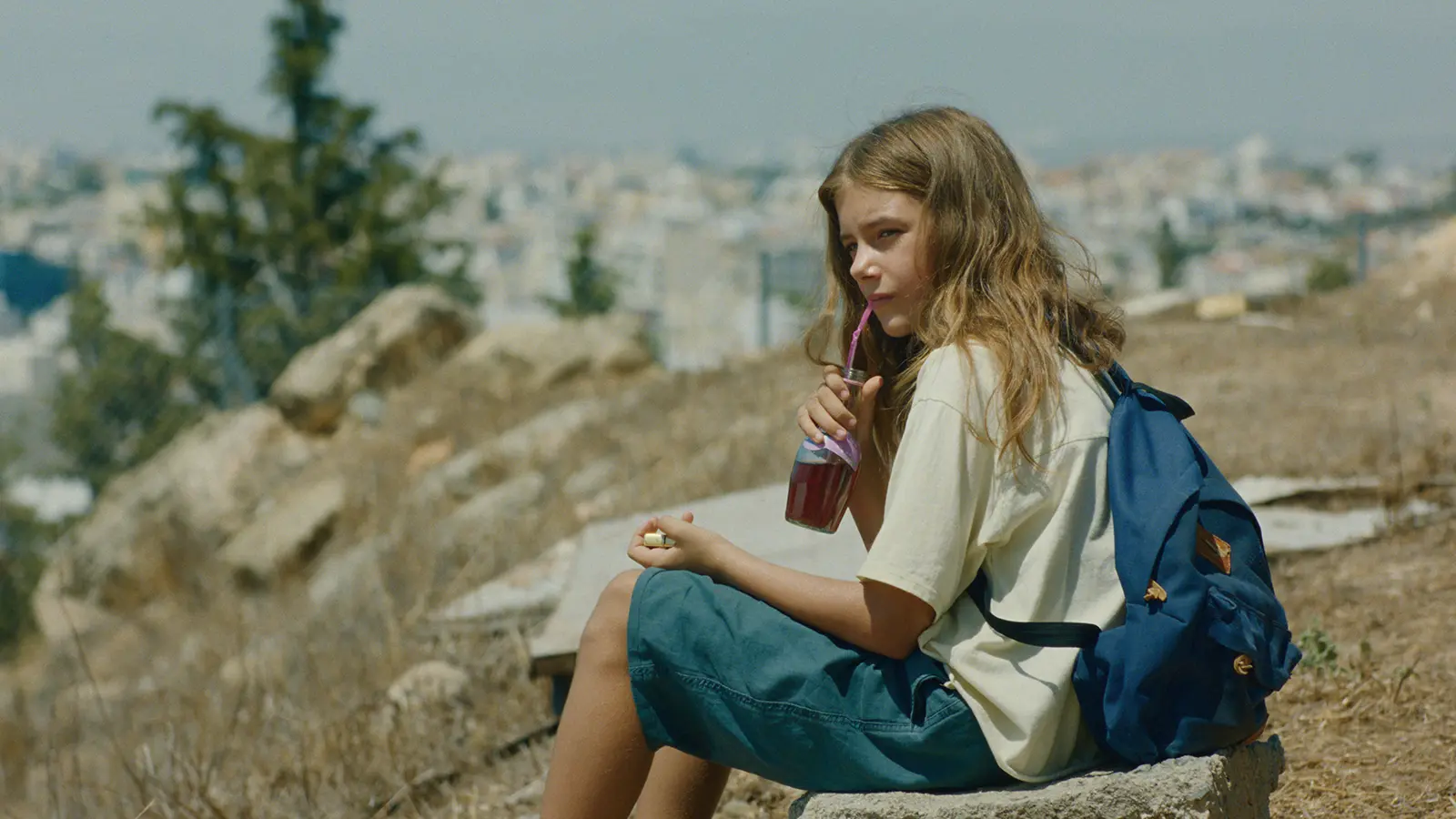
Henrikke Lund Olsen, Fjord
Maria Petrova, Hold Onto Me
Caitlin Fang, A Foggy Tale
Hadi Putra, The Fox King
Sara Chripakova, Flood
Omar Sherif, Once Upon a Time in the Middle East
Mohammed Nizar, Sink
Yuri Gomes, Gugu’s World
Sofia and Ekaterina Stanina, Nina Roza
Tristán López, Everytime
Pinea Matoshi, Dua
Davit Natsvaladze, Guria
Outstanding Directors
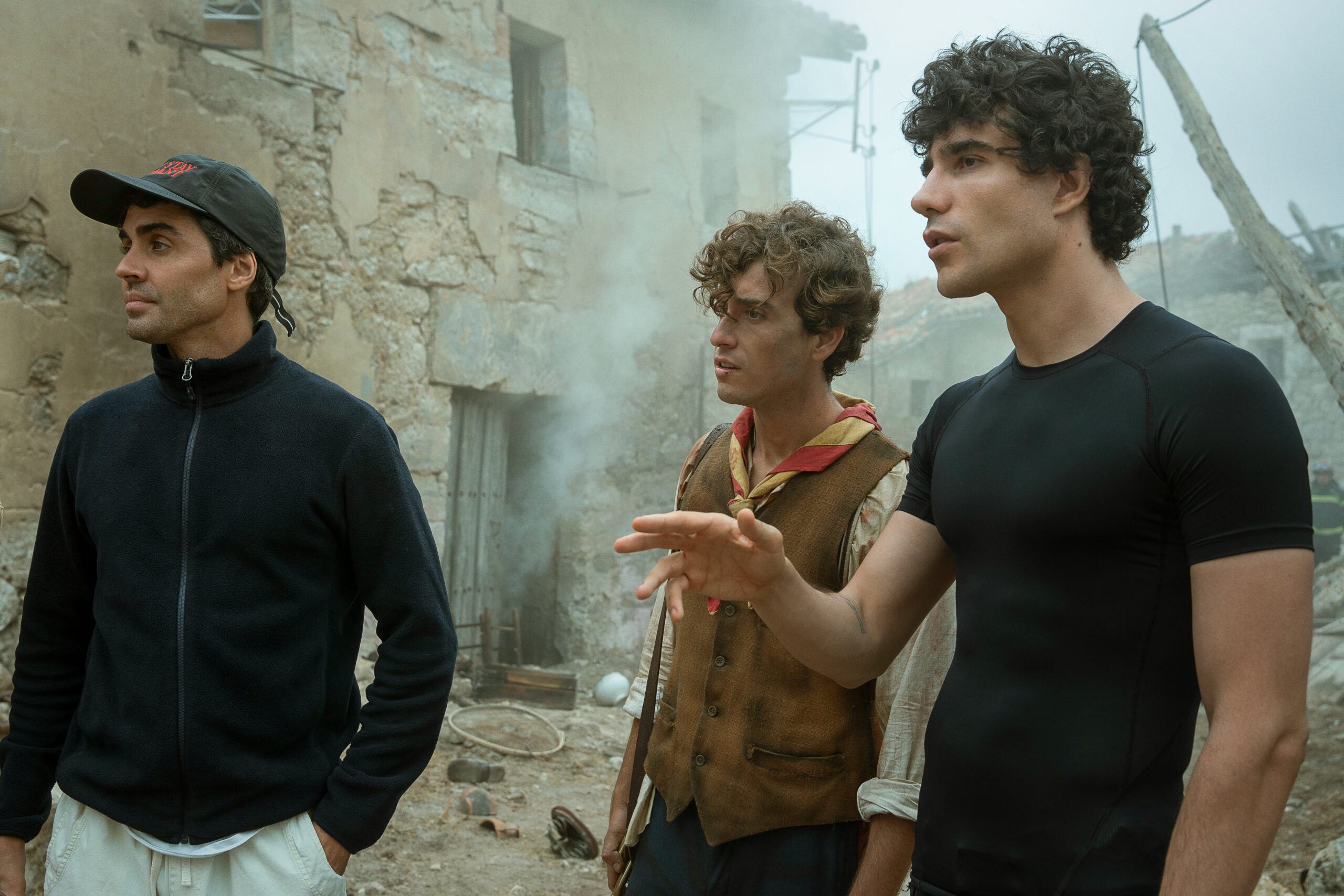
Lukas Dhont, Coward
Javier Ambrossi & Javier Calvo, La Bola Negra
Ryûsuke Hamaguchi, All of a Sudden
Paweł Pawlikowski, Fatherland
Myrsini Aristidou, Hold Onto Me
Rami Kodeih, Furies
Marie Clémentine Dusabejambo, Ben’Imana
Hans Petter Moland, Growth of the Soil
Damian McCann, Aontas
Nenad Pavlović’, Wanderlust
Andrey Zvyagintsev, Minotaur
Chen Yu-hsu, A Foggy Tale
Andrius Blaževičius, How to Divorce During the War
Moshe Rosenthal, Tell Me Everything
Markus Schleinzer, Rose
May el-Toukhy, Woman Unknown
Lee Chang-dong, Possible Love
Sandra Wollner, Everytime
Anthony Chen, We Are All Strangers
Alex Schulman, Adult Supervision
Markus Lehmusruusu, The Squirrel
Outstanding Documentary
Hanging by a Wire
If Pigeons Turned to Gold
The Other Side of the Sun
Rehearsals for a Revolution
Traces
To Hold a Mountain
FROM AMPAS
INTERNATIONAL FEATURE FILM
A record 104 films are eligible for consideration in the International Feature Film category for the 99th Academy Awards. One hundred films were submitted by countries or regions, and four qualified through the festival award pathway.
An international feature film is defined as a feature-length motion picture (more than 40 minutes) produced outside the United States with a predominantly (more than 50%) non-English dialogue track.
Academy members from all branches are invited to opt in to participate in the preliminary round of voting and must meet a minimum viewing requirement to be eligible to vote in the category. The shortlist of 15 films will be announced on Tuesday, December 15, 2026.
Preliminary voting for select categories for the 99th Academy Awards will begin on Monday, December 7, 2026, and end on Friday, December 11, 2026.
Shortlists for the 99th Academy Awards will be announced on Tuesday, December 15, 2026.
Nominations for the 99th Academy Awards will be announced on Thursday, January 21, 2027.
The 99th Oscars® will be held on Sunday, March 14, 2027, at the Dolby® Theatre at Ovation Hollywood and will be televised live on ABC, streamed live on Hulu and airs live in more than 200 territories worldwide.