The Loneliest Man In Town
Tizza Covi and Rainer Frimmel’s poignant and contemplative film, The Loneliest Man in Town, centers on Austria’s renowned American blues musician Al Cook (né Alois Koch) who plays a fictionalized version of himself.
The slow-moving narrative is set in a part of Vienna where buildings are being demolished by ruthless property developers and sees Al struggling to stay in his beloved apartment filled with memorabilia (he was a particular Elvis fanatic). The power-that-will-be turn his lights off and begin to torment him sending a fat, disgusting thug to forcibly move into his home, eat his food and sleep on his couch. Oddly, he doesn’t do much to stop all this, but refuses to capitulate, until he does and books himself a one-way ticket to Memphis, Tennessee.
Al reconnects with his old flame Bridget (Brigitte Meduna) who dumped him 50 years earlier, incredulously, because he gifted her an Elvis album and, “you can’t give a Beatles fan Elvis albums.” When he tells her about emigrating to the U.S., her rather astute reaction is, “Are you crazy? There are so many people with guns!”
Cook strikes a curious and enigmatic central figure and it’s quite endearing watching him relive a lot of his youth through old footage of himself.
The Loneliest Man in Town is another of many recent films dealing with the old-world ways vs. modernization, saying so much with so little dialogue.
9 Temples to Heaven
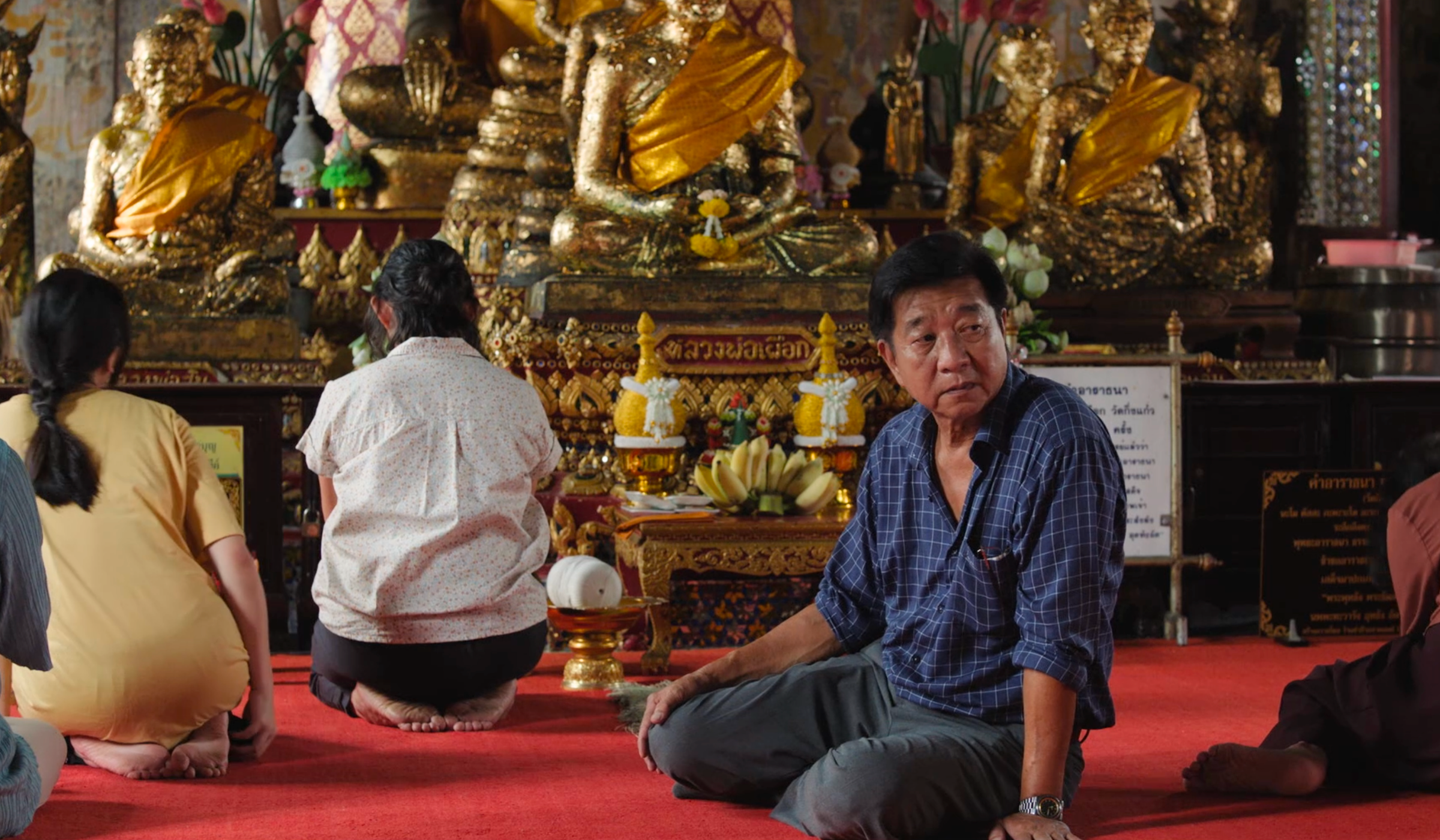
A Thai family exorcising demons and seeking spiritual guidance is at the heart of Sompot Chidgasornpongse’s sophomore feature, 9 Temples to Heaven, Thailand’s 2026 Academy Award entry for Best International Feature.
This thoughtful, spiritual cinematic odyssey centers on nine members of a Thai family accompanying their dying matriarch on a pilgrimage to nine separate Buddhist temples in one day where she will “make merit” which is supposed to bring her good karma.
What it also does is allow the temple monks to accept many cash gifts as well as other offerings.
The younger family members are more skeptical and less superstitious than their elders which leads to some conflict. Some.
The film seems more interested in presentation than delving too much into the actual spiritual ideas, although there is one fascinating sequence where a monk discusses how one can train one’s “wayward” mind to be strong and steady, using an astonishing story of a protesting man burning alive, without movement or feeling, as an example.
Both films are currently seeking U.S. distribution.