I’ll be honest, I wasn’t very excited about sitting down to a 196-minute film. I usually don’t mind long running times but it’s a super busy season and I had to wake up before the rooster the next morning for another screening. Even that fact that the director was Ryûsuke Hamaguchi, who had made the wonderful Drive My Car, which won the 2022 International Feature Oscar, wasn’t sending me…to use a throwback term.
Then All of a Sudden began and, from the very first frame where we see Marie-Lou Fontaine (Virginie Efira) lounging with an elderly care resident, both enjoying a cigarette, to the stirring coda, I was completely entranced. When I arrived home I told my husband I had just had a most profound cinematic experience, but when I attempted to describe the plot:
The director of an elder care facility is doing her best to establish an innovative type of care that’s based on respecting the dignity of the patients, despite pushback from certain staff members and a board that refuses raises. She goes to the theater one night and meets a Japanese director with terminal cancer and the two embark on a deeply moving and potent relationship, where “the impossible becomes possible.”
“So, it’s a lesbian love story” my husband asks?
“No!” I shout back. (not that there’s anything wrong with lesbian love stories!)
It’s a life-affirming, deeply intimate narrative about two people who meet at the right time in their lives and change one another in the most profound ways, simply by the desire to know each other”
“For four hours?”
“Three hours and 16 minutes.”
“It sounds interminable.”
“Far from it, I was enraptured…”
“By two women talking for seven hours?”
I storm out of the room!
Trust me, Dear Gentle Readers and Impatient Husbands, it’s a remarkable work worth your 196 minutes!
Set in Paris in June of 2025 and inspired by an exchange of 10 letters between a philosopher and an anthropologist, “exploring illness and the sudden deterioration of health,” Hamaguchi and his co-screenwriter Léa Le Dimna brilliantly develop a relationship between two strangers who seemingly have nothing in common but become so vital to one another, so essential in each other’s lives, that the idea of one without the other seems impossible.
Marie-Lou is a steadfast, trailblazing leader who is endeavoring to incorporate the pillars of Humanitude into the facility she runs—which are Gaze, Speech, Touch, and Verticality. The idea behind the relationship-oriented methodology, developed in 1979 by French healthcare professionals Yves Gineste and Rosette Marescotti, has to do with dignity, empathy and realizing dementia patients experience time different than others, as if they’re always time-jumping, but they still retain their intelligence, it just needs to be gently needled.
Of course she runs into issues, especially with the old-school, uber annoying head nurse Sophie (Marie Bunel), who threatens to quit if she doesn’t receive an apology from Marie-Lou for (rightfully) putting her in her place. Other staffers are just outright quitting.
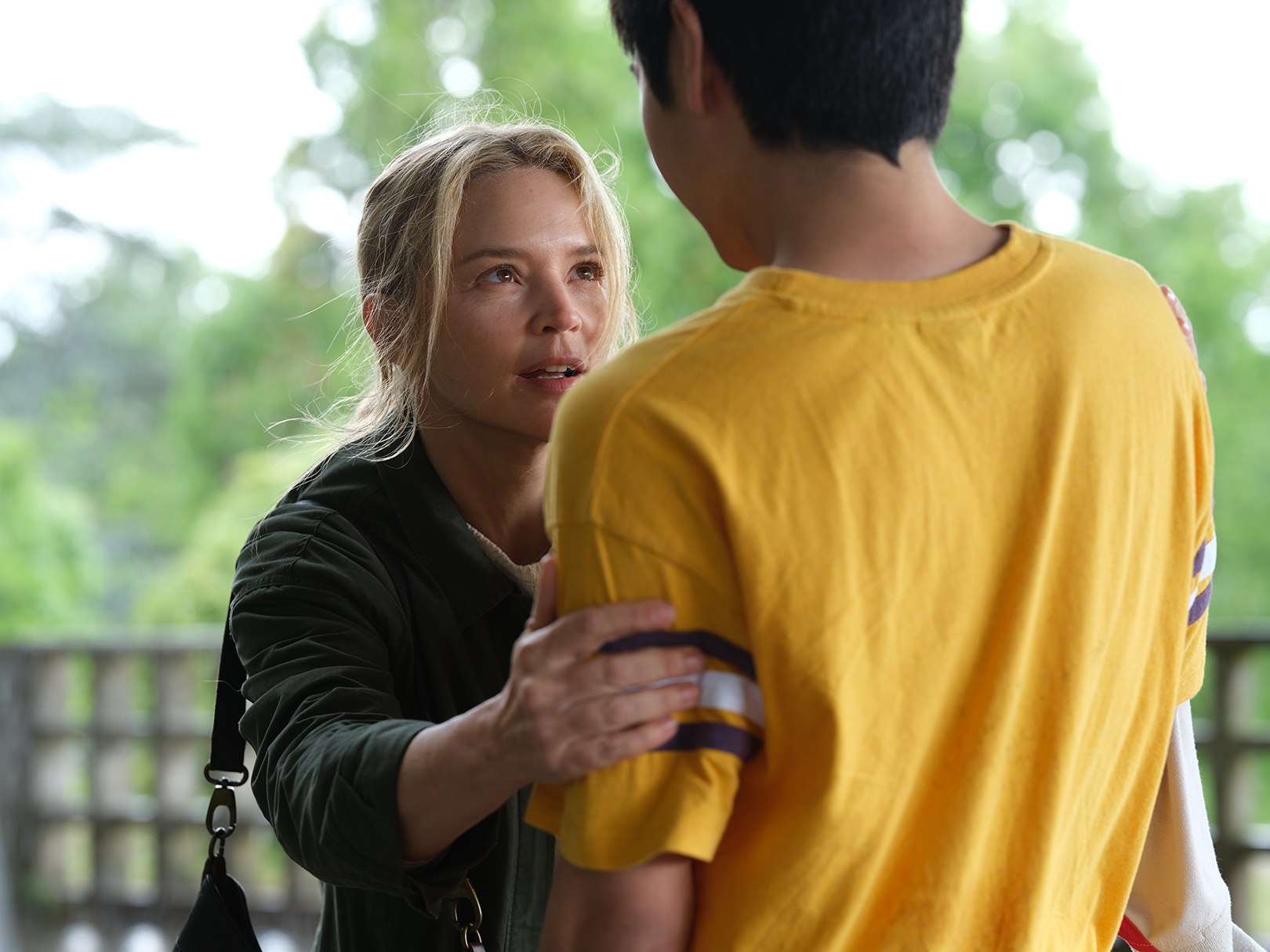
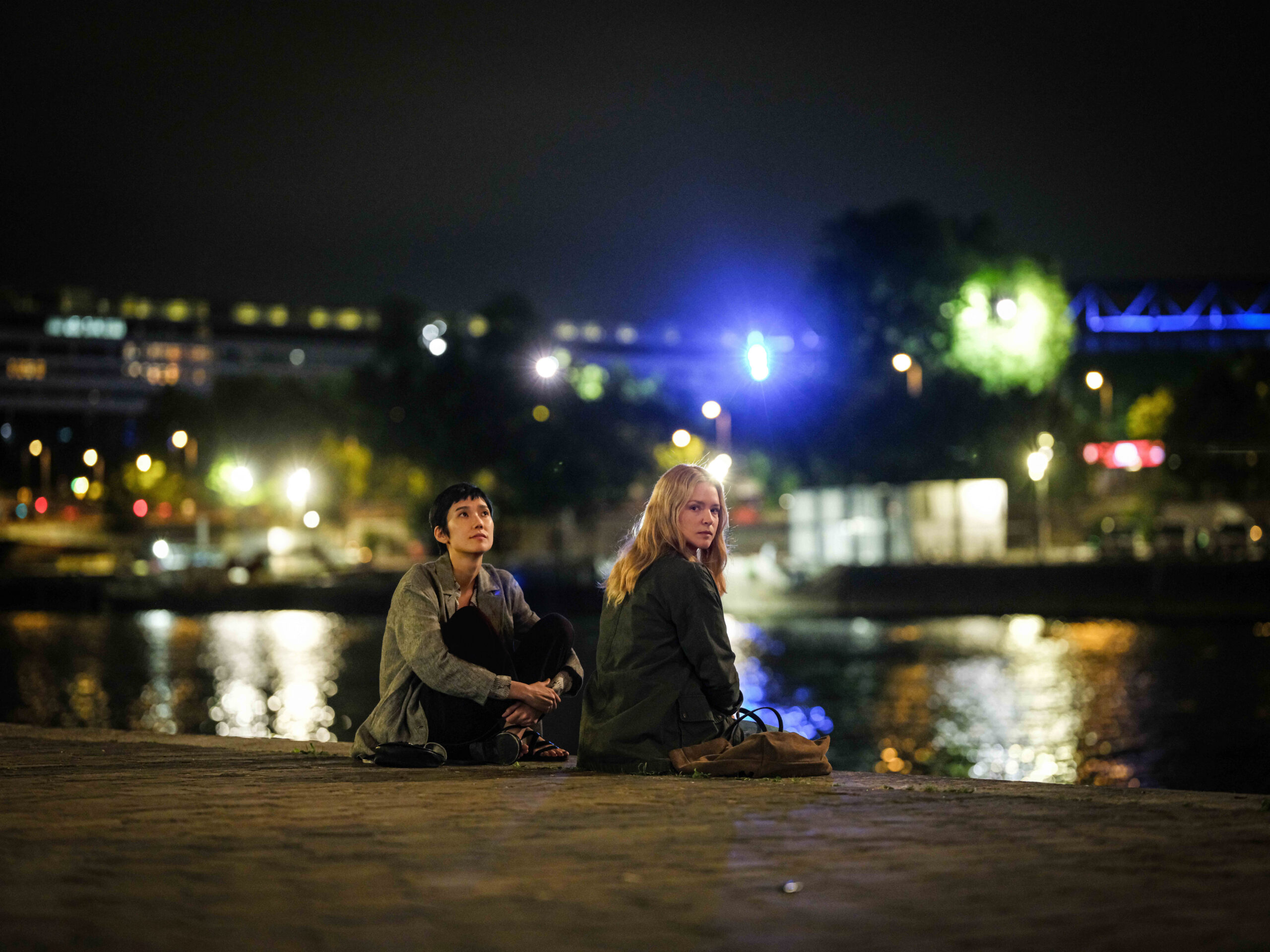
One day, while on the bus, Marie-Lou notices an autistic boy, Tomoki (Kodai Kurosaki) dangerously running along the side with the bus. She gets off and sees he is wearing a GPS tracker. She stays with the boy until his grandfather, Gorô (Kyozo Nagatsuka), arrives. That’s when she meets experimental theater director Mari (Tao Okamoto) who invites her to the one-man play in which Gorô is the star. After a lousy day at work, Marie-Lou decides to attend the play, and her life is forever altered, not just by the show—which moves her greatly. “There is madness in all of us,” Gorô’s character asserts. But Marie-Lou, post-performance, strikes up a conversation with Mari that leads to an improbable yet palpable connection over the course of the day-into-night-into-next-day sequence, and well beyond. And because Mari is dying, it adds an immediacy and gravity to the bond.
They get to know each other, slowly, and even have a long philosophical discussion about capitalism, and more intimate chats about who they are and who they hope to be. And we get to joyfully go on the journey with them.
So much of the potency of the intimacy between the two women comes from the extraordinary performances by the captivating Efira and the beatific Okamoto. Both women tied for the Best Actress Award at this year’s Cannes Film Festival and it’s easy to see why. There is a remarkable ease they have with one another that feels completely authentic, yet they also display a deep and shared curiosity about each other that usually only happens at the outset of romantic relationships. Here, the bond transcends the sexual.
To say aspects of this film hit close to home is an understatement. My dad had Alzheimer’s and mamma had dementia. And with Mamma, in particular, it was a fast decline because of the learned methods being used that weren’t adaptable to care for individual patients but were a one-idea-treats-all way of merely “dealing” with them. If she resisted, they were aggressive. So, she got worse. And there was little attempt to rehabilitate her in terms of getting her walking again, beyond their limited scope. Do I blame these health care professionals? Yes. But I also realized it’s because the U.S. system is beyond broken. So, watching Marie-Lou and her miraculous Humanitude team patiently and gently caring for their residents made me sad but also hopeful for the future.
All of a Sudden is ultimately a call for understanding…and unity, something sorely lacking in the world today. And despite an unnecessary coda (and I understand why it’s there), a wholly transcendent cinematic experience.
This gem is Japan’s International Feature Oscar submission.
In French and Japanese, with English subtitles.
All of a Sudden is screening at the New York Film Festival. Tickets/More Info: NYFF.
The film is being release in theaters, by NEON, on November 25, 2026.