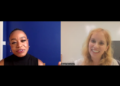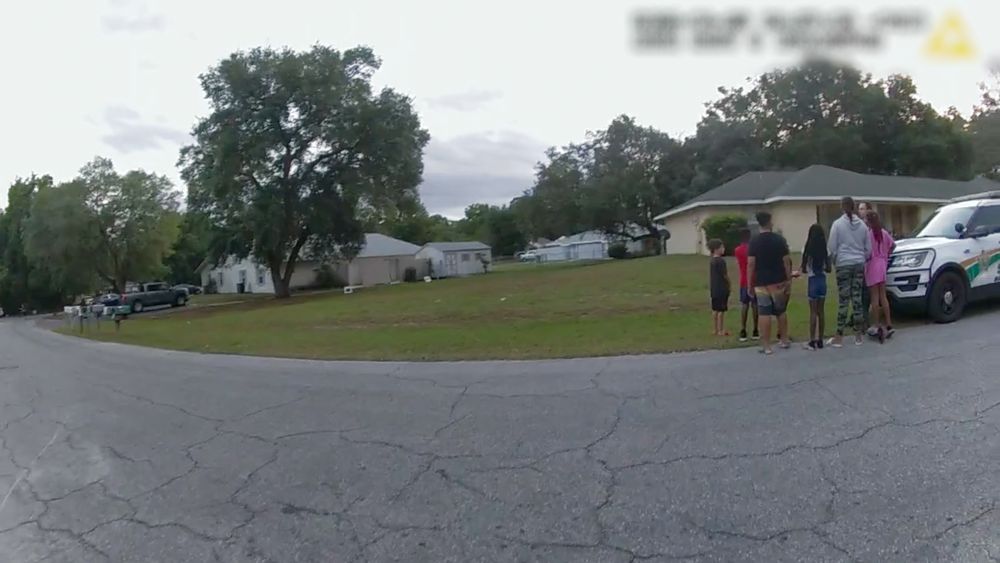
Director Geeta Gandbhir and editor Viridiana Lieberman discuss collaborating on The Perfect Neighbor documentary on Netflix and how the cops responded.
One of the first notes director Geeta Gandbhir gave editor Viridiana Lieberman on the documentary The Perfect Neighbor was that she wanted the film to feel rooted in the community and the neighborhood.
“So the first pass was through that personal and emotional lens,” said Lieberman. “And then once I figured out the flow of the narrative and made the tension, the contracting and expanding of time, the pulse, everything of that heart — the genre play of a horror film came in there, clearly on the night, for sure.”
The Perfect Neighbor certainly simmers to a boil. Set on a neighborhood street in Ocala, Fla., Susan Lorincz repeatedly calls the cops on her neighbors, specifically the kids who play in the yard next to her (that’s not hers). However, on the night of June 2, 2023, she commits a deadly mistake.
Lieberman and Gandbhir went through 30 hours of footage — including body cam footage, dash cams, and more — to put together their award-winning documentary.
“I’m used to a decade’s worth of footage,” said Lieberman. “Of course, this footage is very different, because it’s so raw and so specific, and not controlled, right? We had to commit to the approach and submit to what this footage is and what it’s doing, which opened all new opportunities.”
Confusing “Politeness as Competence”
One of the great debates that comes from the documentary is, did the cops do the right thing? Was this preventable? Director Gandbhir says sometimes our bar for cops is so low that we perceive politeness as competence.
“The truth is, they were called to the scene multiple times,” said Gandbhir. “And they brought their own biases with them. They never saw Susan as a threat, right? And she was a threat. She had access to guns. She was using hate speech towards children. She was throwing things at children. She was calling names, you know, and they did not see the community as people who needed protecting. And this is within a multiracial community.”
But did the cops know Susan had guns? Gandbhir said she can’t speculate whether they knew.
“I think the truth is guns are so common and so accessible in Florida that they never really ask her about it,” she said. “Because her right to own a gun is undisputed no matter what. She can buy a gun the way you can buy a toaster oven or a microwave. So, it’s not a question of, do you have a gun? It didn’t come up. And that’s also something that should be flagged.”
The Biggest Challenge of The Perfect Neighbor
There are no talking head interviews in The Perfect Neighbor. Everything you see is based on the footage. Gandbhir said that presented one of the biggest challenges.
“I used to be an editor,” said Gandbhir, “so I tried to string it out for Viridiana before she came. I was also the assistant editor, figuring out the chronology of certain things, like the phone calls; the audio is not great. Just understanding the layers of the cops because they functioned unintentionally as multi-cam. One would be on the scene, and then suddenly the other would show up and turn their body camera on. So there was trying to figure out where one camera began and the others followed.”
Lieberman said she became drawn to other aspects of the cops during the editing process.
“I became very obsessed with human behavior,” said Lieberman, “Where people were standing, how they framed. There are some frames in this film that I think no cinematographer on planet Earth would think to frame. Once you lend yourself and surrender to committing to this approach, it becomes very freeing to try things and find their way.”
The Perfect Neighbor is streaming on Netflix.