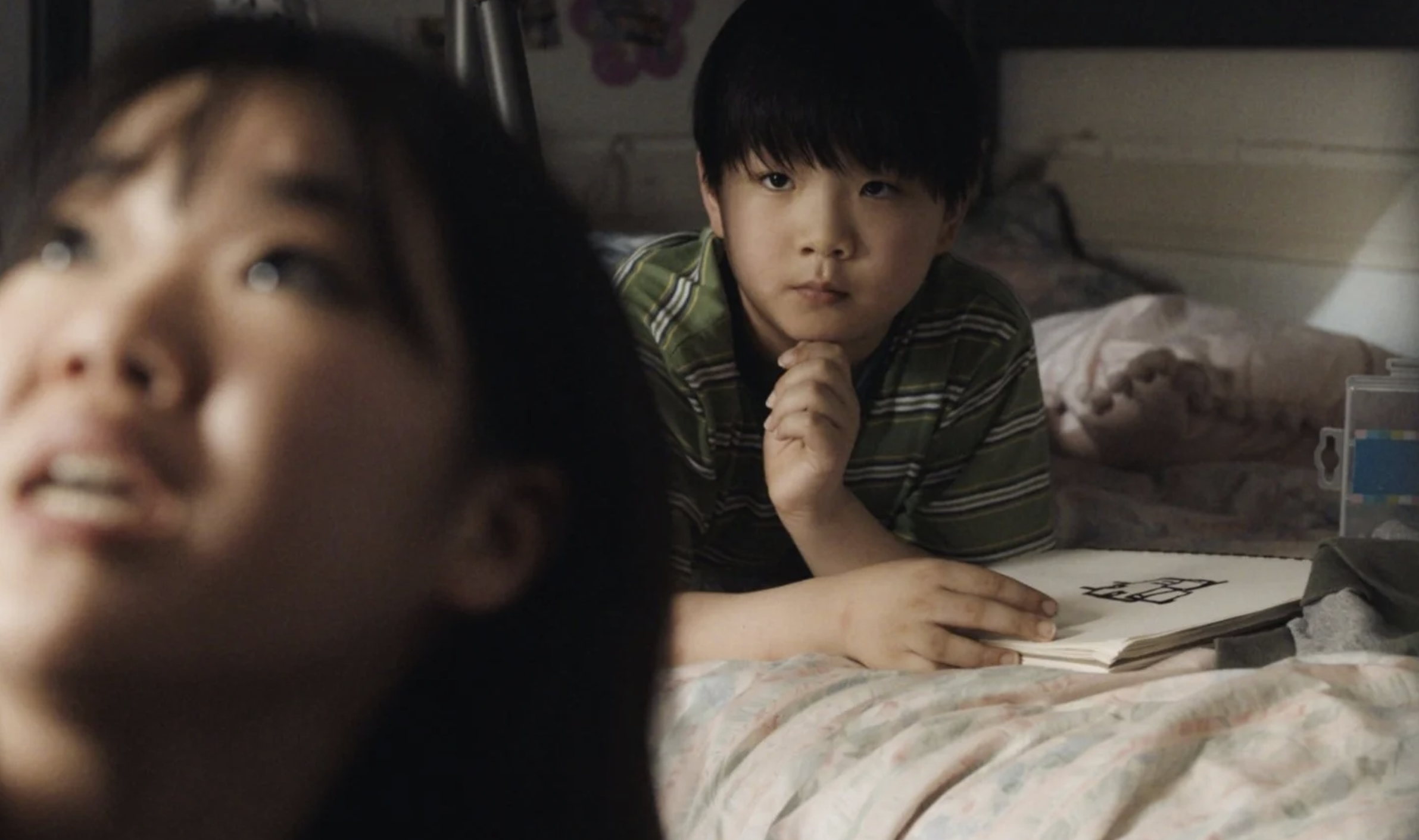
There are a lot of things left unsaid hurtling towards the surface in Omer Ben-Shachar’s remarkably delicate film, Single Residence Occupancy. As a parent, you want to give your child every luxury you can afford, and every child wants to make it through adolesence without having their perspective of their parents damaged or altered. What constitutes a home? It’s a question that many audiences will ask as they acquaint themselves with the family facing conflict in Ben-Schachar’s film. It tackles shame, responsibility, and resiliency with a very specific viewpoint.
There is a sense of anticipation around the family at the heart of Ben-Shachar’s film. Weiling, a Chinese immigrant, lives with her two children, teenage Mina and young Benny, in afforadable housing known as single residence occupany until they can move to a larger apartment. At the beginning of the film, Weiling receives a letter that her application for better housing is denied, and she has to figure out how to tell her children who have been dreaming about more independence.
When Ben-Shachar read the script, he was immediately taken by the emotionality of the script’s words, but he brings such a thorough, intelligent curiosity to this family’s relationships that you are immediately drawn into the tension of the story.
“Belinda Huijuan Tang and wrote the script, and we did it through Film Independent’s Project Involve program,” Ben-Shachar says. “I pitched on the story and ended up directing it from her script, and it was based on an article about families living in SRO apartments. There were photos of these families’ SRO apartments, but I noticed how full of life they looked. I could feel the layers of this person’s life, and I wanted to try and recreate that. In the film, it’s like their whole life is on display in a way that also helps explain Weiling and what she might be going through. There’s this forced vulnerability in this space where you can see someone’s entire life or their entire story all at once. They don’t have room to hide things that they wouldn’t want you to see. Weiling doesn’t want Mina, her daughter, to take photos in their place because of this reason. It’s so revealing, but we, as viewers, get access to this space.”
In another director’s hands, Single could’ve wallowed on dire details of Weiling’s frustrations, but Ben-Shachar chose a more positive approach.
“When I think about a new project for film, I think about the soul of it,” he explains. “What do I want you to feel? For Single, how do we take you on Weiling’s journey that is about her life and on her terms. She wonders if she is doing well as a mother, so I wanted to approach the film in a really delicate way to honor this character’s perspective. I really wanted to express the heart of Belinda’s script.”
The film opens with the camera showing a few items in this single room space before we meet Weiling as she finishes some chores. Her face takes up almost the entire frame as she hangs laundry on a line strung wall-to-wall. Without any dialogue, we understand how small this space is, and maybe this mother is strategically trying to hang the clothes around the space to give Mina, an aspiring photographer, privacy from her younger brother. Every inch of Single is packed with character. It’s the kind of short that you wish you could step into to feel the circumstances of the characters.
“At the beginning, the space should feel restricting and overbearing, reflecting Weiling’s feelings at the start of the film that she didn’t do enough as a mother,” Ben-Shachar says. “That tightness is why she feels all of this shame. By the end, though, it needs to feel almost like a glove that’s perfectly molded for them. Everyone has a place, and they have figured out how to make this a home. In the beginning, Weiling thinks it’s the home that makes the family. In the end, she learns it’s the family that makes the home”
That’s also how I approach directing actors. How do these characters overcome their circumstance? That’s really when you feel the heart of the character. With this really restrictive space, how do they make it work for them? That’s like with Benny’s drawings on the walls–there’s so much creativity in the way that they use their space. Even the way that they hang the laundry in the beginning is so revealing in terms of intentions. That was something that really drew me to the project, too, was how to tell this family’s story through space. When I saw the photos, I wanted to shoot in a smaller space to make it feel the most authentic, and that’s one thing that you’re told not to do in film school. If you shoot in a tight space, the camera starts directing the movie for you, because you’re so limited. I think my favorite shot, actually, is the last shot, which is the wide. We are able to experience the whole short without actually seeing the whole space. We saved it for the end to have impact and show Weiling’s transformation.”
The way that Lauren Mei, as Mina, chooses to speak to her mother is very rooted in that restlessness that comes with our teenage years. One would assume that these actors would have had a lot of rehearsal time to get to know one another, but Ben-Shachar reveals that that wasn’t the case.
“We cast them a week before the shoot, and we had one rehearsal before the shot,” he says. “I was wondering how we were going to make these characters marinate and feel alive in these photos, but everyone was so ready to dive in. Knowing we only had one rehearsal, we did some improvs to figure out the relationshup and build history–we didn’t touch the script at all. One of the things that I had them do is draw their dream house on these big notepads, and they all drew their big version of the house they wanted. And then we talked about it. It connected them so much to each other through their dreams as these characters and what they all think would be a great house for them.”
A key moment comes when Mina’s friend, Sabrina, visits the apartment without Weiling’s knowledge or permission. Rather than have an antagonistic moment between these friends, the direction steers towards a more empathetic notes. Audiences may think of characters like Weiling, Mina, and Benny as they see concerns over accessible housing, but Ben-Shachar insists on focusing on the humanistic elements of this story.
“We wanted to show someone from the outside coming in, and how Mina responds to that,” he says. “It’s seeing it versus hearing about it. You can see Mina’s shame, but you can see how she’s trying to overcome it at the same time. It’s such a human experience. That moment is about inviting someone outside to be a part of this intimate, vulnerable thing. It was another way to explore the space, and it’s a turning point in our story.”