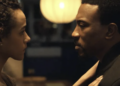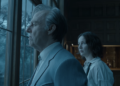

Writer/creator Brad Ingelsby took on a tall order when he decided to follow up Mare of Easttown with its spiritual sequel, Task. While his new series doesn’t include any characters from Mare of Easttown, it does take place in Delaware County, Pennsylvania, shares a visual palette with its predecessor, and explores similar themes of grief and guilt. Task stars Mark Ruffalo as Tom, a former priest turned FBI agent investigating a series of robberies by Robbie (Tom Pelphrey) from a local motorcycle gang. Both men have experienced great losses in their families. Tom is grieving his wife and the incarceration of his mentally ill son, while Robbie is stealing stashed drug money from the biker gang as a form of vengeance for killing his brother. As Task unfolds, we come to learn how far both men are willing to go to try and make themselves whole. We also learn that there is plenty of story to be mined from Delaware County. Task can stand eye-to-eye with Mare of Easttown.
In our conversation, Brad and I discuss returning to the world of Mare, how his own personal experiences impacted the show’s direction, and the importance of casting Task.
The Contending: Was there any concern about returning to the world of Mare of Easttown because that series was received so well?
Brad Ingelsby: It scared me to death every day on set. Especially because you’re embracing Delaware County again, you’re going back to the place where Mare was set. Which I think adds another level of pressure there, but I just felt convinced that, and maybe it was just selfish, I had such a good time writing about these people that I knew that I wanted to do it again. I felt like I still had stories left to tell, and the character of Tom is one that’s close to me. Because my uncle was a priest, and he left the priesthood. I was really interested in that idea; it did scare me, but I almost felt like I had to keep writing stories about these people because maybe it’s the best version of me as a writer. If I’m thinking about a project that I’d go for. I’d rather go at that than try to do something else just because people might say it’s close to Mare. If people compare it to Mare, understood. I know that’s a high bar. People love that character so much, but I felt like, Why not give it a shot?
The Contending: If the show wasn’t set in Delaware County and you didn’t mention that we’re connecting it to the world of Mare, it would stand perfectly well on its own. Did you do anything in particular to avoid overt comparison?
Brad Ingelsby: You know what? We didn’t do anything to combat it. I don’t think we ever said to HBO, Hey guys, let’s make sure that visually we’re going in the opposite direction. We shot in some of the same areas, so people would’ve made the connection. The architecture’s quite similar. The streets are similar. So, we were up against it, that even when they turned on the TV, people would know that this had the whiff of Mare in it anyway. We never made a concerted effort to say, ‘ It’s not Mare. ‘ I think we just let the audience in. In fact, what we said was that it may help us to establish the visual style (of Task)—to have little connective pieces in the first episode. There’s a few shots where we’re on the same sloped streets where Mare’s office and the police station were located. We thought it might help the audience to feel like, I know this world. It’s not Mare, but I know the world and these people. It’s a story that’s in the same universe, but it’s not connected in a way that Mare’s gonna pop up in Task. It is a story that hopefully an audience can feel like I’ve been to this place before. Let me sink into the characters’ lives in the same way I did in Mare.
The Contending: There are thematic aspects that are similar. In particular, familial grief while working in law enforcement. Was that something that you intended to carry over, or did it just happen naturally?
 Brad Ingelsby: I always start with the characters, and what crime does is it allows you to tell, in the case of Mare and Task, what I consider to be a character-based story. What I like about working in the crime genre is that I can do the character work that I really like to do. Mare for me was a story about a woman who refused to confront the death of her son, and instead threw herself into these investigations to avoid facing it. Then, at the end of the show, she needed to confront the thing that she’d been avoiding. For Tom, it’s a bit of a similar story, right? He can’t forgive his son. There’s so much anger there. It’s only through the gauntlet of this case and his interactions with Robbie, and Robbie’s sacrifice, that he’s able to let go of some of that anger. I always go for the character story. The family’s in crisis, trying to navigate the unimaginable.
I love that stuff. The crime genre, I don’t want to use the word ‘excuse,’ but it gives you an engine. We’re slipping in a great character piece into the crime genre. I was well aware of what I was doing with Task because that’s what Mare was too. Mare was a whodunit, but really it was about a woman who had to confront the death of her son. What the crime element in Mare gave you was the clickability, the ‘let’s go to the next episode’ aspect. While they’re getting wrapped up in the whodunit and guessing who did it, you’re slipping in this hopefully emotional story of motherhood and trauma and ultimately, the embrace between Mare and Lori.
The Contending: Another parallel is the lead characters Tom and Mare, both salve their pain with alcohol. You also explored alcoholism in your screenplay for the terrific film, The Way Back. You also have sons with mental illness in both shows. You’re highlighting two significant factors in our society right now, as seen in both shows. Is that personal for you?
Brad Ingelsby: It is personal. When my son was quite young, he was experiencing some ticks and things. We went to the doctor, and we had to chase it down like parents do when these things come up, and see a neurologist. He ended up being okay. But during that time, you go down the process of researching, and you’re going down rabbit holes, and you’re reading accounts from other parents who are dealing with the same concerns. I was so moved by the process, being a caregiver, and the impact it had on these parents, and reading their testimonials. I know some people think the show is grim, and I understand that. But what moved me so much when going through that was that it’s happening every day around us, and we just don’t know it because it’s too painful sometimes to acknowledge. There are parents who are dealing with this every day. It’s a battle every single day.
There is such courage and sadness in that. Getting up every day and approaching the situation and leading with compassion, and still feeling incredibly burdened. It’s just like Sisyphus, I’m just gonna push the boulder up the hill again and again. I don’t think we explore it enough, or we aren’t able to face how hard it is. That’s what Task is; it’s the end of Tom’s speech, when he says I changed my name on parents’ night because I didn’t want people to know I was your father. I read that somewhere. That was from a parent who didn’t want people to know they were that child’s dad. The shame that you carry. Yet, like Tom says, there was so much joy, too. I’ve always admired people who can do it every day. There’s so much heroism in dealing with that. I wanted to explore what it means to be in a situation like this, how incredibly hard it is. And the alcoholism, yes. That’s my father, his father–there was a lot of alcoholism there. I was just talking to Ruffalo about it yesterday. Either you are one or you love one, he said.
The Contending: Both Mare and Task demonstrate that decisions made by parents, however well-intentioned they may be, have a profound impact on their children. There’s really no calculus for getting it right.
Brad Ingelsby: That’s another thing I wanted to explore. I was saying this to Mark yesterday, as a parent, there’s so many things I want to do differently, that I want to do better, and yet I fail in different ways. I also wanted to give the kids a voice, too. Because we often don’t give kids a voice, that’s why I really wanted Emily to have those moments to say, ‘It sucks. I’m supposed to feel lucky all this time, but this is terrible. I wanted Robbie’s kids and Maeve (Emilia Jones) to have a voice on the show. You’re impacting your kids in ways you don’t even know. They’re taking everything in. They’re seeing everything. You said there’s no calculus. That’s the thing. I can fix some things that I can do better as a parent, but then I do other things a lot worse. How does that impact my kids? It’s really hard being a mom, a dad, and you’re right. You don’t know the math on these things. Some things you do really well, and other things you fail at. It’s just a constant effort trying to lead with kindness and love, and hope that wins the day.
The Contending: Casting a character-driven show like this is key, under any circumstances, but especially on Task, because you had Kate on Mare. I mean, good god, how do you follow Kate? (Laughs). On Task, you come out strong with Ruffalo as Tom and Pelphrey as Robbie, but you also have Silvia Dionicio as Tom’s adopted daughter, and Emilia Jones as Robbie’s niece. I don’t know what anyone’s gonna think about Emilia Jones, if they know her from Coda. I didn’t even recognize her. Tell me about nailing down your casting choices.

Brad Ingelsby: I love them all. Emilia is just unbelievable. She was just 21 when we shot the show. It’s remarkable how fierce she is, but she also has a great sense of humor. We started to look at Tom as a character: an ex-priest from the Northeast, someone from seminary, who becomes a cop. It’s a tricky character, and what actor can pull off those things and be a father? Mark was at the top of the list, and I went to New York with Jeremiah (Zagar), our director, and we sat down with him. He had read two episodes, and we talked him through the rest of the show. We said, ‘Listen, we think this is where it’s going to go.’ We want you to be a part of the creative process. He said yes in the room, and he’s just wonderful.
And Pelphrey, the same thing. He actually put himself on tape. We got about half a minute into his audition, and I just thought, This is the guy. Also, what I love about Tom is that there is a childlike quality to him. His eyes light up, and you believe him as Robbie, this kind of dreamer, who still believes that he can get out of these situations when it doesn’t make any sense to the rest of us. Casting Silvia (as Emily) was a long casting process. We saw so many girls for Emily. We had local casting and grassroots casting, and we saw hundreds of people, but at the very end, we saw Silvia, and she’s just incredible. It was just so important to cast it right. It makes my life so much easier. If I cast it right, they will make all the dialogue sound good, and they bring so much heart and emotion to the piece. That was the big win, the casting of Task, these incredible actors.
Episodes 1-4 of Task are available to stream now on HBOMAX, with the final three episodes dropping each Sunday through October 19