

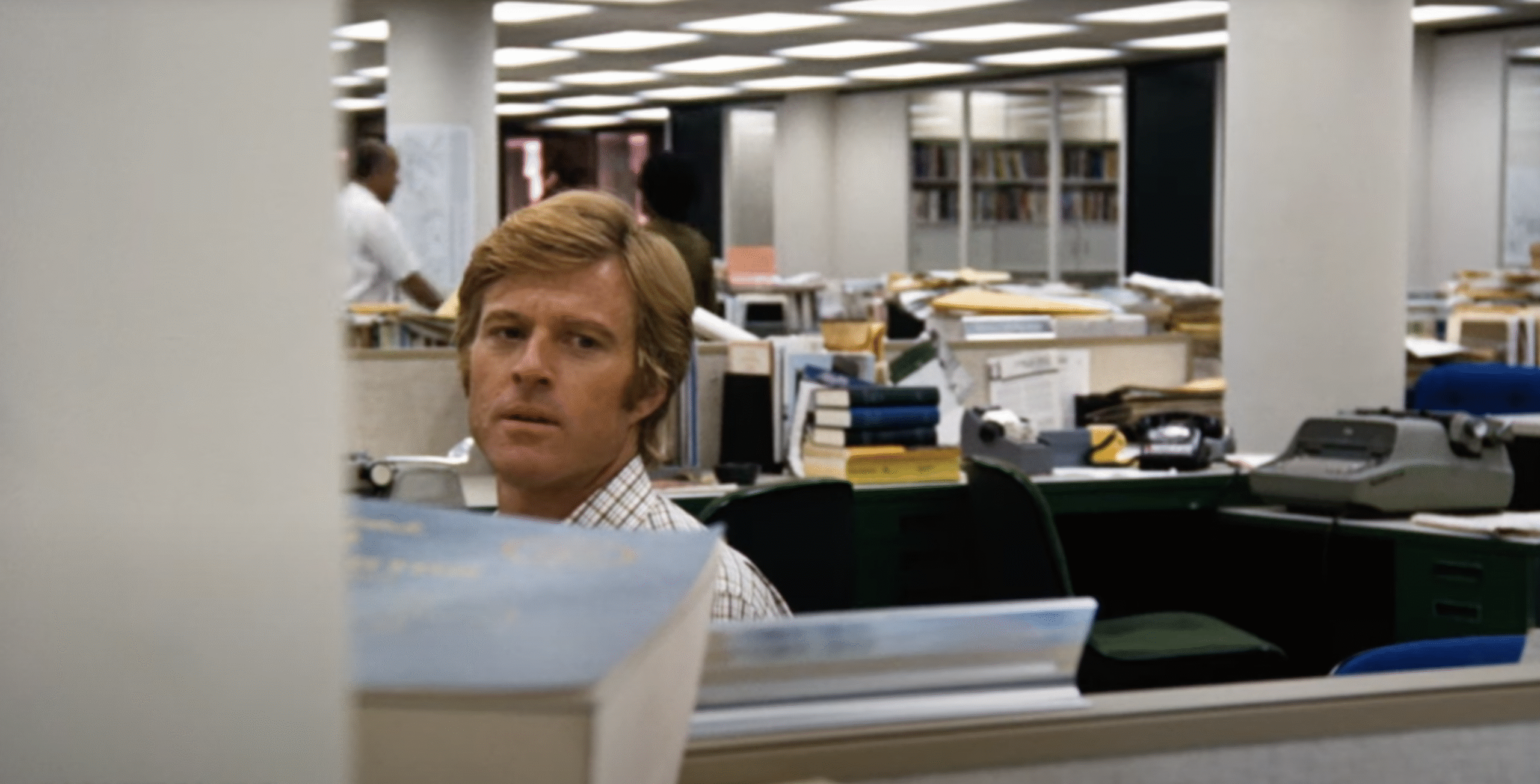
Robert Redford made it look easy. Blessed with extraordinary good looks that were coupled with rigor and genuine seriousness for his vocation, he was the quintessential movie star. Being so handsome and seemingly at ease on camera led to Redford being more than a bit underrated as an actor. While no one would argue he couldn’t carry his weight on screen, it’s notable that he only received one Oscar nomination for his work in front of the camera: a best actor nod for The Sting.
It’s hard to imagine there ever being a time when a young Redford struggled, but that is very much the case in his early years in film and television. From 1960 to 1967, Redford appeared regularly on film and TV, but nothing quite connected. In 1965-66, Redford had three starring roles in movies with major directors: Inside Daisy Clover, directed by Robert Mulligan and co-starring Natalie Wood, The Chase with Arthur Penn at the helm and Marlon Brando and Jane Fonda co-headlining, and This Property is Condemned with Sydney Pollack in the director’s chair and Natalie Wood once again as Redford’s co-star.
Despite the pedigree in front of and behind the camera, none of those three films burnished Redford’s star, and at the end of 1966, he was a thirty-year-old actor who had chances, but no hits. Acting again across from Fonda, who was his most frequent co-star (in five films), Redford got his first taste of success in the Neil Simon-scribed comedy Barefoot in the Park. A light but frothy trifle, Barefoot was Redford’s first box office hit, and put him in the discussion to play opposite Paul Newman in Butch Cassidy and the Sundance Kid, directed by George Roy Hill.
Newman was a well-established star by then, and the studio backing the movie lacked faith that Redford could hold up his half of the bargain. The two men struck up a fast friendship, and when 20th Century Fox was balking at Redford playing Sundance, Newman stepped in and effectively said, It’s both of us or neither of us. The film was a massive success, and Redford became a full-fledged movie star at the age of thirty-three. Redford never forgot about Newman backing him for the role, and their friendship endured until Newman died in 2008.
Redford said the following about Newman in Time Magazine after Newman’s death:
“If you’re in a position of being viewed iconically, you’d better have a mechanism to take yourself down to keep the balance. I think we did that for each other.”
Aside from speaking to the depth of their friendship, Redford’s statement also showcases a capacity for self-awareness, as he and Newman were indeed icons who understood the pitfalls of being so highly regarded.
Make no mistake about it, from 1967 to 1985, Redford had one of the more remarkable runs of any actor in film history.
After Barefoot in the Park and Butch Cassidy came a succession of memorable films: Downhill Racer, Tell Them Willie Boy is Here, Jeremiah Johnson, The Candidate, The Way We Were, The Sting, Three Days of the Condor, All The President’s Men, his Oscar-winning directorial debut Ordinary People, The Natural, and finally the best-picture-winning Out of Africa.
What’s fascinating about this series of films is how well Redford’s persona fits into each role, and how much these movies say about his personal values. Redford’s Santa Monica glow, coupled with a hint of ruggedness, left him looking California and feeling a little Marlboro. He was beautiful and vulnerable, yet masculine as well. He also seemed to know himself. With rare exception, it’s hard to think of a time when Redford was miscast.
He knew his lane, but it’s also fair to say that his guardrails were wider than they might appear. His characters in Downhill Racer and The Candidate were compromised men who used their physical gifts to their advantage at the possible expense of the greater good. I’ll never forget the ending of The Candidate, when Redford’s character, Bill McKay, surprises and wins his senate race. Then, sitting in a hotel room, he looks at his campaign adviser (played by Peter Boyle) and says, “What do we do now?” and receives no answer. It’s one of the great movie endings, showcasing the limits of ambition and good intentions.
Tell Them Willie Boy Was Here and Jeremiah Johnson are Westerns that intertwine the concept of the American individualist with the plight of the Native-American. Both are complex films with an unusual level of empathy and understanding for those who were in America first, but were treated as if they were last. Of the two, Jeremiah Johnson is a particularly excellent film that proved Redford could convincingly portray a “mountain man.”
The Way We Were with Barbra Streisand, The Natural, and Out of Africa with Meryl Streep, reveled in Redford’s romantic appeal. In the first, Redford plays a politically indifferent writer mismatched with Streisand’s radical lefty in a doomed romance. Redford, a liberal democrat himself, was more than convincing as a man who couldn’t live up to his lover’s expectations, and the film was another massive success. Out of Africa was the last film of Redford’s tip-top of the food chain era. I have my issues with the film on a personal level, but I can’t deny that whenever Redford’s big game hunter turns up the charm against the backdrop of the wild, well, there’s a reason why he’s Robert Redford.
For many sports fans, Barry Levinson’s The Natural is one of the most iconic baseball films about the game and one known to make grown men’s eyes misty. On paper, casting Redford as “Wonderboy” Roy Hobbs should have been foolhardy. Redford was forty-eight at the time, playing a character in his mid-thirties. As well, the film changed the ending of the Bernard Malamud novel it is based upon from a note of defeat to one of romantic cinematic grandeur. It shouldn’t work at all, but this handsomely mounted fable somehow overcomes what should be far too great an ask to accept its leading man and the denial of the source material, creating one of the most inspiring moments in sports film history. Hobbs comes to the plate, with only one more at bat left in him, bleeding from an old wound in his abdomen, he breaks his mythic bat on a foul ball. Hobbs then takes a new bat and hits the ball beyond the seats and into the lights, which go off like fireworks set to Randy Newman’s swelling score. It may be a load of hooey, but I’ll be damned if I don’t get goosebumps just thinking about it.
Redford teamed with Newman and George Roy Hill again in the terrific caper film, The Sting. Another massive hit for the duo, The Sting earned Redford that sole acting Oscar nomination in the lead category. Newman and Redford never made another film together, although the studios often tempted them to do so. Neither man wanted to co-star in another film just for the sake of it, and so their on-screen history together remained unblemished, while their off-screen friendship continued to grow.
The ‘70s were the era of the paranoid thriller (see Klute, The Parallax View, and Night Moves as other examples), and Redford starred in two of the best. In Three Days of the Condor, Redford is outstanding as a CIA researcher who comes to his office one day to find all of his co-workers dead. From there, Redford’s “Condor” must try to stay alive while uncovering the “why” that has placed his life in danger. It’s a cracking good thriller, but it would be Redford’s next film, All The President’s Men, that would set the bar for paranoid thrillers and films about journalism.
In telling the real-life story of the Washington Post reporters Woodward (Redford) and Bernstein (Dustin Hoffman), who uncovered Richard Nixon’s Watergate scandal, which brought down a presidency, the two stars, along with director Alan J. Pakula, pull off an extraordinary accomplishment: they avoid propaganda, and you almost forget that you are watching a movie. Years ago, when I was taking journalism classes in college, our professor showed us All the President’s Men in class. The focus on the shoe-leather that the reporters had to put in to stay on top of the story, and the witnesses they needed to draw out to get it right, to get it “fit to print,” was something I’ll never forget. I don’t remember much about my classes from back then, but I certainly do remember that movie, and have returned to it often.
In 1980, Redford made his directorial debut with Ordinary People. Often, and unfairly, derided as the film that shouldn’t have won Best Picture over Raging Bull, Ordinary People is a classically told story of a breakdown in an upper-class family after the mother’s favored son dies. Coaxing personal best performances from Timothy Hutton as the surviving son, Donald Sutherland as the beleaguered father trying to hold the family together, and especially Mary Tyler Moore as a mother whose heart has no more room for love, Ordinary People is a wrenching study of grief and the facade that can’t hold. Redford directs the film with an invisible hand, trusting his actors implicitly. Few breakup scenes could ever match Donald Sutherland tearfully telling Mary Tyler Moore that he doesn’t know if he loves her anymore. It is an elegant punch to the chest that feels as real as life. Redford won his only Oscar as the film’s director.
After the success of Ordinary People, Redford’s on-screen output began to slow. His commitment to directing took more time than acting, and his creation of the Sundance Institute in Utah also became a priority. It says something about Redford that a man whose nearly entire career was spent within the corporate system chose to give back to his industry in a way that focused on the independent artist. Now, the Sundance Institute, channel, and film festival are so well regarded in the world of film that they have even transcended their founder. No one has to know that Sundance was Redford’s creation to understand what Sundance is.
While Redford never quite duplicated the success of Ordinary People, The Milagro Beanfield War, A River Runs Through It, The Horse Whisperer, and especially Quiz Show are all commendable. Much like the roles Redford gravitated to, the films he chose to direct also revealed the man. His love of nature (Redford was a true environmentalist) can be seen and felt in Milagro, River, and The Horse Whisperer. As well, all of his films as a director are about a search for decency, and often justice, in a world often bereft of both. There was true dignity in Redford’s choices.
As an actor over the remaining forty years of his career, Redford’s success rate and volume didn’t match his heyday, but then, how could it? Even so, he found commercial success with Indecent Proposal, Sneakers, The Horse Whisperer, Spy Game, Pete’s Dragon, and in a rare villain role in both Captain America: Winter Soldier and Avengers: Endgame.
Of greater interest to me were his performances as Dan Rather in the gobsmackingly overlooked Truth, the late-in-life tenuous romance of Our Souls at Night (with Jane Fonda), the near classic The Old Man and the Gun as a genial career criminal, and especially JC Chandor’s All is Lost. Playing a man soloing on a small sailboat, which comes under the attack of the sea itself when the weather turns treacherous, All is Lost is an almost wordless film about a sailor using all his experience and ingenuity to try to stay alive. With no one else aboard and a dead radio, there is no one for Redford’s sailor to communicate with. That is, except for the audience. In All is Lost, Redford takes us into his eyes and reveals fear, courage, and acceptance, all without seeming to make an effort to emote at all. It’s a masterful performance, and quite possibly his very best. When reduced to almost nothing to do but be, Redford showed us nearly everything in his estimable acting arsenal, and does so with no pomp and circumstance.
That’s what I’m thinking about this early afternoon. How this incredibly famous and accomplished man in an industry made up of tinsel, glam, and artifice was the opposite of all of that, while plainly living within it at its highest levels. Redford was a true legend, and the rarest of the form: the generous and unassuming kind. He was truly the biggest star in the world for an extended length of time, but if he had a massive ego, I know of no reports of it. He was an icon, a brand, a humanitarian, a founder, and an artist. There’s no way it could have been as effortless as he made it appear. But then, he was The Natural, wasn’t he?
Robert Redford died on September 16, 2025. He was 89 years old.







Great writeup. The performances in Butch and Sundance were so great and wound up being so influential, it's absurd that neither of them was nominated.
With The Natural, they didn't just change the ending, they changed the entire meaning of the story. I've always been conflicted about that one; in and of itself it's a fine film, but it's also the kind of story that the original novel was critiquing.
Beautifully written tribute.
Thank you, Frank