Now, in its 25th year, Open Roads: New Italian Cinema, presented by Film at Lincoln Center and Cinecittà, will be showcasing 15 features from emerging and established Italian directors.
The Fest runs May 28 to June 4, 2026, and boasts nine North American premieres.
“It’s always a pleasure to bring the most exciting new films in Italian cinema to our audience here in New York, and this year’s edition of Open Roads should prove especially stimulating, spotlighting some of Italy’s greatest up-and-coming talent, but also paying tribute to Roberto Rossellini, an absolutely pivotal, paradigm-shifting figure in the history of world cinema,” said Film at Lincoln Center Programmer Dan Sullivan.
“For 25 years, Open Roads has championed Italian cinema as a vibrant, contemporary cultural force, presented in a dynamic hub such as New York,” said Manuela Cacciamani, CEO of Cinecittà. “For Cinecittà, this is a wonderful milestone: a mark of success, but above all an opportunity to look ahead. Perhaps in light of this anniversary, the selection of Italian films heading to Film at Lincoln Center feels especially dazzling—young, experimental, and full of new energy. And there is a towering masterpiece: Paisà by Roberto Rossellini… this year’s Open Roads films offer a moving snapshot of a vital and evolving Italian cinema, one that gives us real reason to be hopeful for the road ahead.”
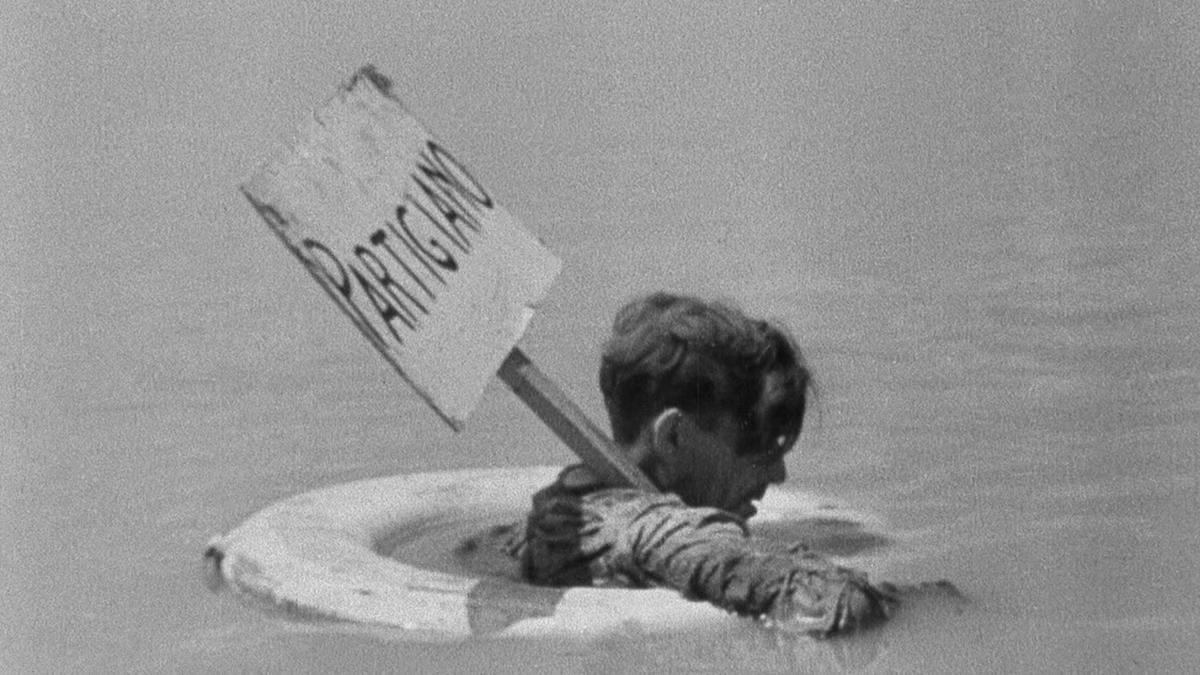
Note: Rossellini’s Paisà is one of the greatest Neo-realist films ever made, and one I revisit over and over again.
The Contending was able to see two thirds of the offerings and here are some that are highly recommended beginning with Andrea Di Stefano’s delightful Il maestro (My Tennis Master), which I saw at last year’s Venice Film Festival. Here is a link to my REVIEW.
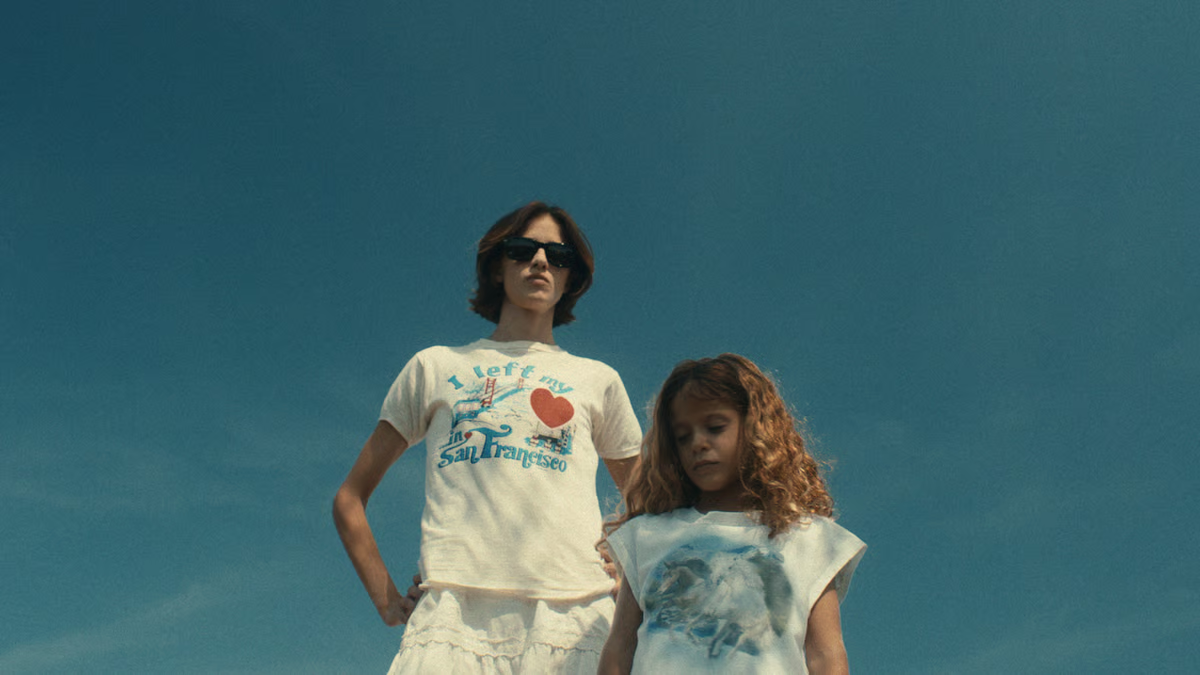
Carolina Cavalli’s intriguing, truly bizarre second feature, The Kidnapping of Arabella,also debuted at the Venice Film Festival last year and picked up the Best Actress Award in the Horizons section for lead Benedetta Porcaroli.
Porcaroli is Holly, a slightly mad 28-year-old woman who, while eating a taco in her van, strikes up a conversation with the titular 8-year-old (Lucrezia Guglielmino) and convinces herself that the girl is actually her as a pre-teen, so she immediately absconds with Arabella in some strange desire to fix her own messed up life. The bratty child is trying to escape from her weird, egotistical novelist father (a terrific Chris Pine, speaking Italian) so she goes along with the idea, even feeds it.
The film goes slightly haywire (I guess in a good way, certainly in an absorbing manner) from there on as Holly searches for an old dance teacher who once believed in her. Holly is desperate to be liked, while Arabella couldn’t care less about being liked. The narrative peculiarities don’t always add up, and the ending is a let-down, but The Kidnapping of Arabella is worth seeing for Porcaroli, who looks a bit like a young Debra Winger and is always fascinating to watch.
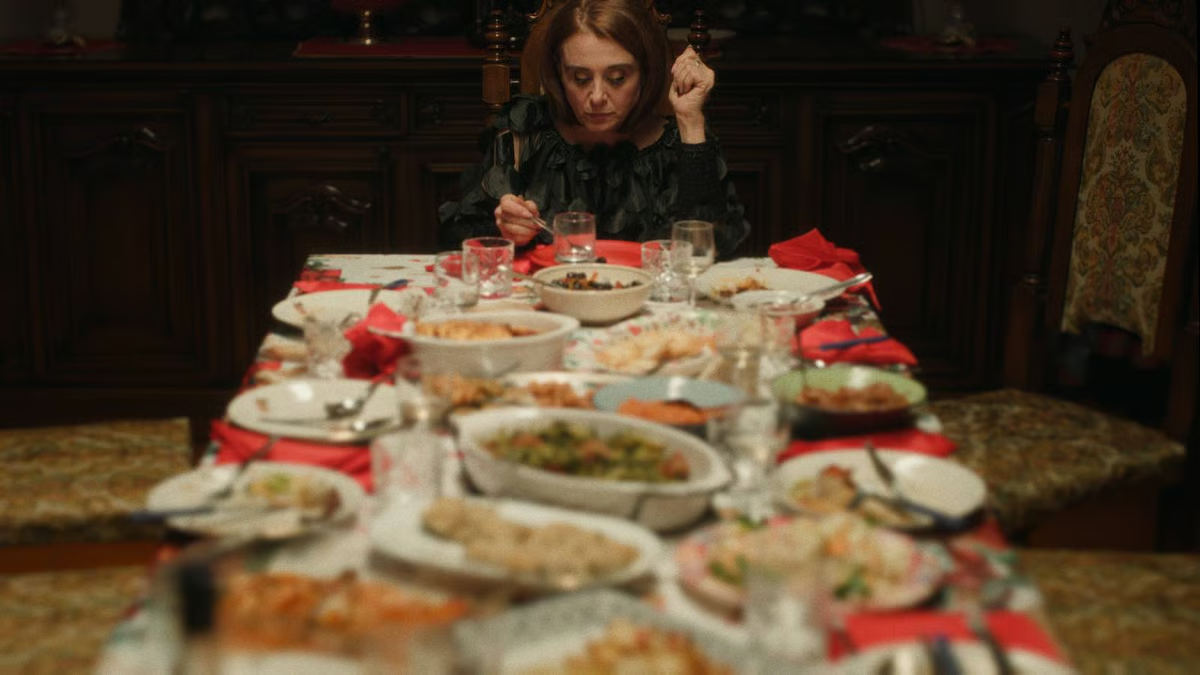
Gianluca Matarrese’s frenzied, lunatic, utterly absorbing tale of two feuding Calabrian sisters-in-law, I Want Her Dead (Il quieto vivere) is scarily, though unsurprisingly, based in truth — on his own family — according to the Biennale notes (another film that world premiered at the 2025 Venice Film Festival.) And, until the wholly unsatisfying ending, the stress-inducing film grips you by the throat and never lets go.
As both a Calabrian and a Sicilian, I could totally relate to the behavior, mannerisms and nasty verbal abuse being bandied about as well as the petty jealousies that started an all-out war between two households. They literally live one on top of another in the same building! I’ve been there and witnessed that first-hand in my mother’s hometown in Sicily!
The film’s intense, dialogue-heavy, docu-style approach is key to trying to understand all the obvious and more subtle things going on in this satiric tragedy. Matarrese wrote the script with Nico Morabito. And a group of Aunts and friends play like a Greek—well really, Calabrese— chorus.
The women at the center of the familial war are Maria Luisa Magno and her sister-in-law, Imma Capalbo, two powerhouse performers. And they are always performing. Magno is the hot head who may be a bit too paranoid. She may also be slightly insane. Capalbo is the more giving one, or so she wants people to believe. I’m not sure if the two are actual real-life relations of the director or not. Both women have no other IMDB credits, but they’re both naturals onscreen.
Clearly, there’s a lot of fucked up strife — secrets, lies and greed — that permeates this feud where one wonders who is going to kill who…alas, the film does not live up to its title.
You can’t keep raising the stakes and then deliver a non-ending. Even with a true story, a strong ending to a film like this is vital, and yet it’s as if the final reel (to use old movie speak) was stolen (which woman did it?). I get the idea behind not going to an extreme, but I found it wholly unsatisfying.
But that shouldn’t stop you from experiencing this gem. Just add your own ending. I know I did and it involved a satellite TV dish (an oft mentioned prop) falling on one of the main characters. Wait, did it fall or did someone drop it?
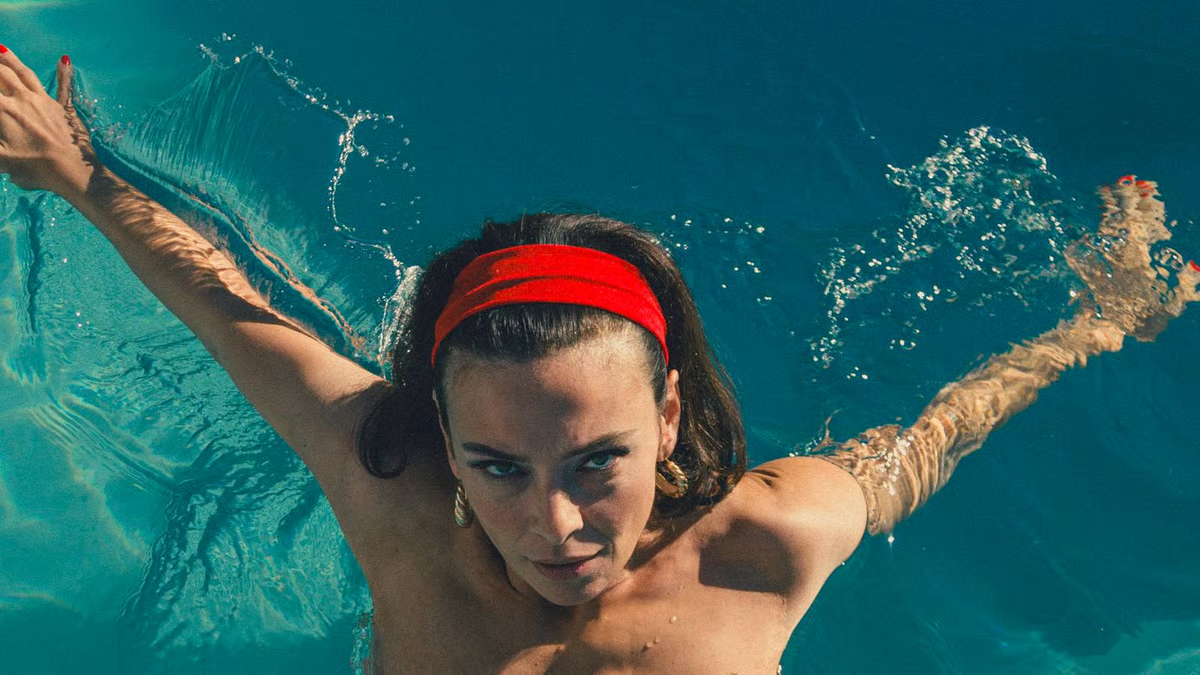
Andrea De Sica takes a lot of risks with his latest feature, The Eyes of Others (Gli occhi degli altri) and they mostly pay off. The director is the grandson of the iconic Italian Neorealist auteur, Vittorio De Sica, and in Eyes, he delivers a moody, tantalizing satire about the excesses of the uber-wealthy and their deviant sexual behavior — in particular a rich Marquis (Filippo Timi) who leaves his wife for the stunning Elena (Jasmine Trinca). They embark on a passionate, psycho-sexual affair. We are simply voyeurs in De Sica’s cinematic world. This bold, stylized pic has touches of both Paolo Sorrentino and Paul Schrader. And I appreciated that the story, written by De Sica, Gianni Romoli and Silvana Tamma, kept raising the stakes, right up until the shocking end.
The formidable international actress, Valeria Golino appears in four Open Roads entries this year, which may be a record. And she delivers four very different, compelling performances. My VIDEO chat with Golino can be found HERE.
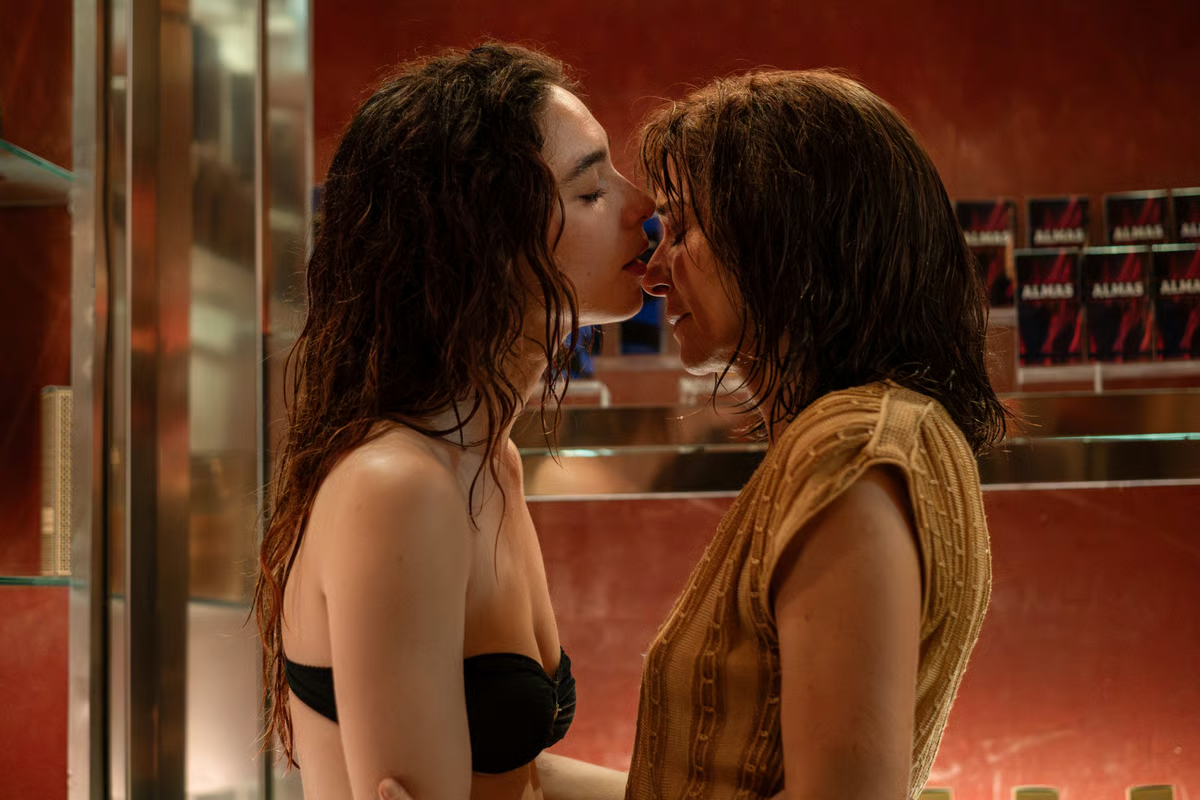
Golino shares the screen with a wonderfully spunky Matilda De Angelis in Mario Martone’s Fuori (translation: Outside) as the Italian writer Goliarda Sapienza in a muddled depiction of Sapienza’s life in and out of prison. But the two women make the film worthwhile.
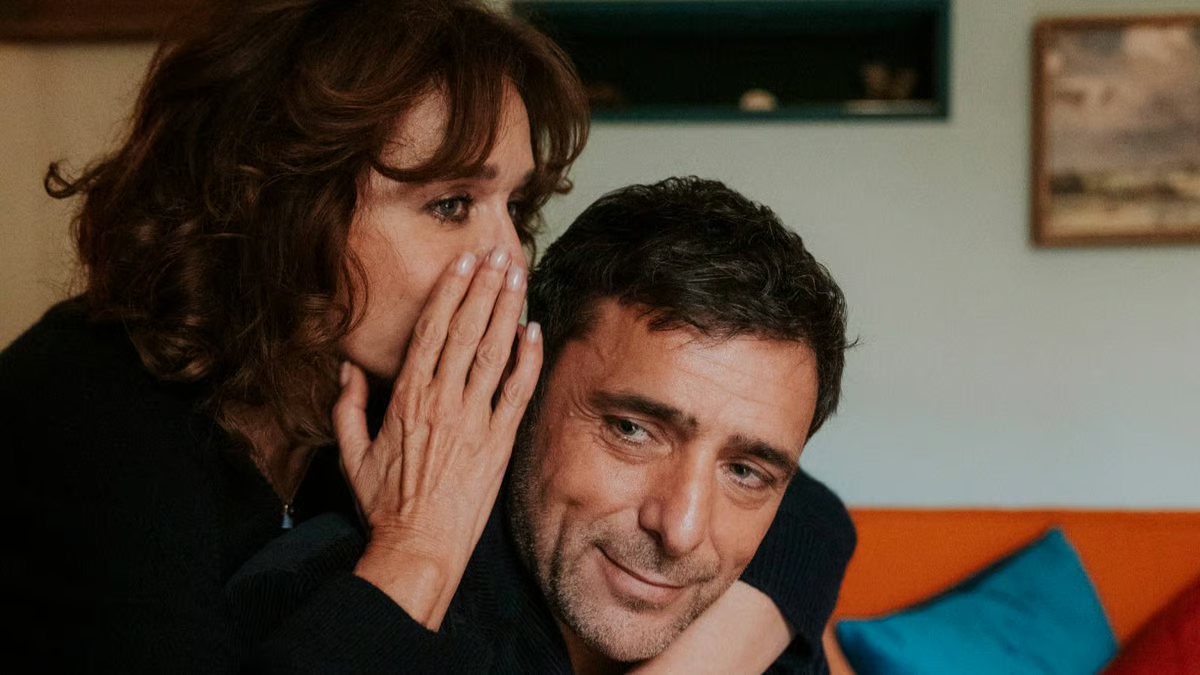
Ludovica Rampoldi’s feature debut, A Brief Affair (Breve storia d’amore), is a sly and clever pic involving two couples and how their lives intertwine, both accidentally and deliberately.
Lea (Pilar Fogliati) meets Rocco (Adriano Giannini), and they embark on an affair, despite the fact that they are both in committed relationships. The very jealous Lea is with Andrea (Andrea Carpenzano) but is certain he is having an affair. Meanwhile she stalks and then seeks out Rocco’s commanding therapist wife, Cecilia (Golino), knowing who she is. But what looks like a deliciously old-fashioned comedy takes a dramatic turn and the revenge seeking mastermind becomes masterminded.
All four actors are fantastic, with Donatello nominee Golino doing fierce and compelling work and displaying just the right drops of vulnerability and a lot of grit.
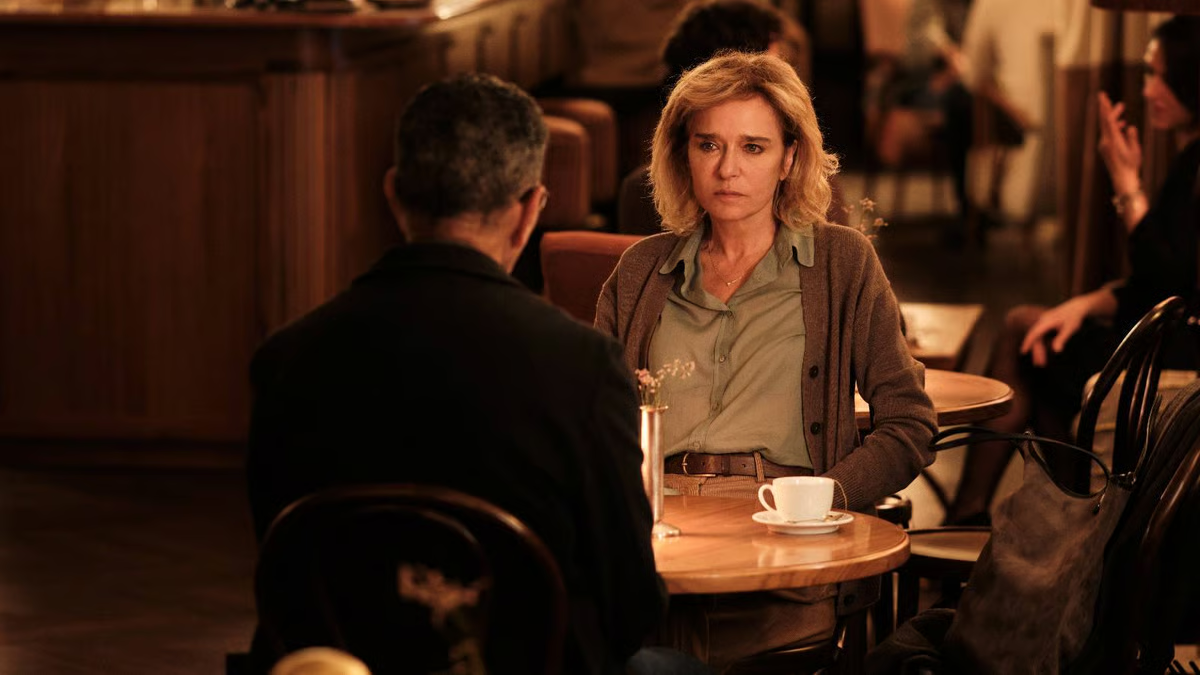
Golino puts in a brief but potent appearance in Leonardo Di Costanzo’s unsettling look at pathology, memory and madness, Elisa, yet another film that premiered at last year’s Venice Film Festival.
Barbara Ronchi plays the titular prisoner, who was convicted of murdering her sister in the most heinous of ways—immolation—and then attempted to do the same to her mother. But she claims to not remember doing the deed, which is where a criminologist (Roschdy Zem) steps in to force her to confront what she did.
Golino breathes a needed dose of anger and incredulity into the film playing a grieving mother who lost her son and refuses the professor’s insistence on empathy for perpetrators of crimes.
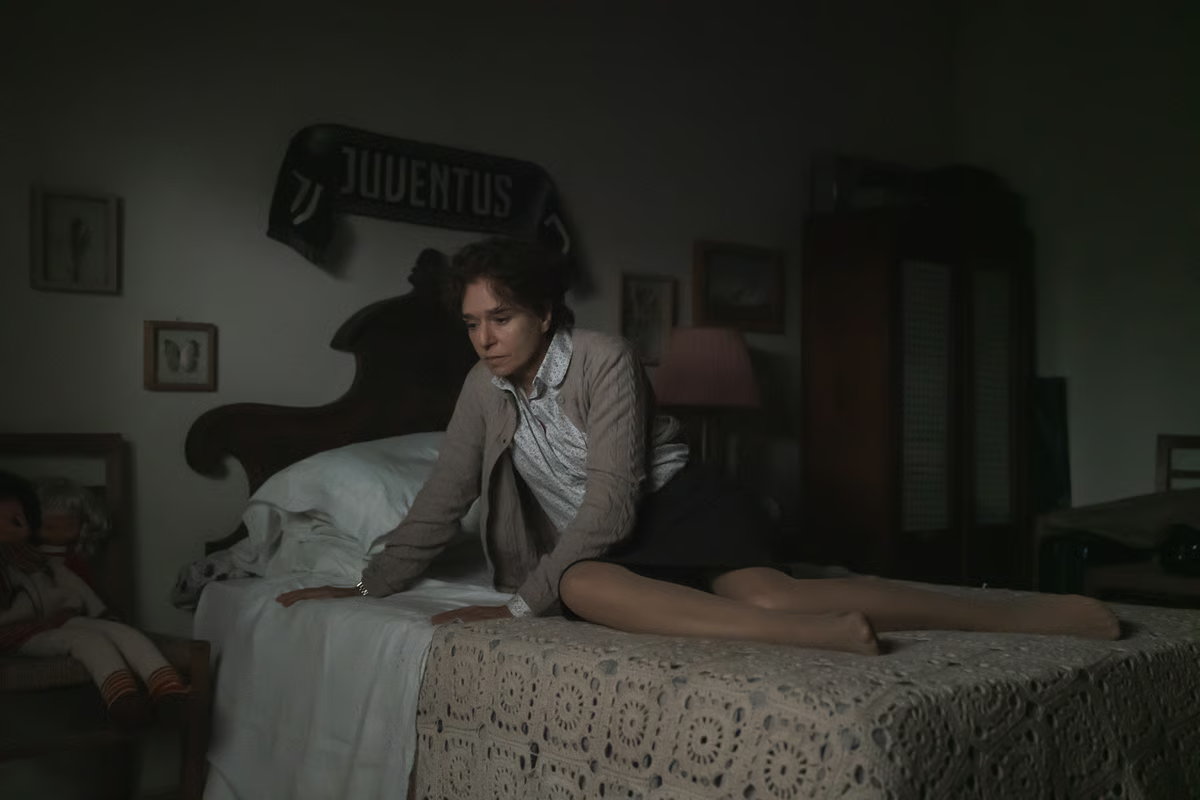
Finally, the best of the four Golino films, Nicolangelo Gelormini’s La Gioia, centers on the titular spinster high school teacher. Golino dowdies as far down as possible to create a repressed, sheltered bookworm who finds her entire world upended when she begins crushing on one of her students, Alessio (a truly impressive Saul Nanni) — and he appears to return the feelings. It’s like Harold and Maude, if Maude was younger and dull and Harold was Nicholas Galitzine.
What Gioia doesn’t know is that Alessio is living a dangerous double life: when he’s not moonlighting as a male prostitute, he’s being sexually abused by Cosimo (Francesco Colella), a surrogate father figure and friend of his social climbing mother, Carla (Jasmine Trinca, in another outstanding role). The alienated and jaded Alessio shares her desire to socially better himself and when Gioia expresses a desire to invest in his business venture, well, things take a disturbing turn.
Nanni is a star waiting to be born and his scenes with Golino are priceless in their playfulness and genuine warmth.
Based on a true story yet given a darkly comedic edge, La Gioia tackles many themes from greed to loneliness to despair to amorality. But what stayed with me is how too often some people just cannot escape the damage done by their parents and parental figures. Both characters suffer great trauma because of how they were raised.
La Gioia also world premiered at the 2025 Venice Film Festival.
For more info and/or tickets visit Open Roads.
![Emmys 2026: Lena Hall On Ali’s Journey On ‘Your Friends & Neighbors,’ How She Would Direct the Musical ‘Chess’ [VIDEO]](https://thecontending.com/wp-content/uploads/2026/05/Your_Friends_And_Neighbors_Photo_020409-75x75.jpg)