Maria McIndoo’s A Love Letter to M is both universal and specific. Based on the personal account from producer Sara McFarlane (who collaborated on the story with writer Tom Wilton), this film is about a marriage proposal, but it delves into the secret insecurities we must confront when family members don’t condone or appreciate the love we have with our partner. A Love Letter to M is thoughtfully crafted, directed with respect, but, most importantly, it’s a recognition of how love should be celebrated.
There is a delicacy swirling around McIndoo’s film. Perhaps it’s because the story comes from McFarlane’s real life (the collaborators are good friends) and maybe it’s because we have been trained to assume that weddings should be synonymous with dreaminess and romance. I would argue that entering a marriage is one of the most serious things you can do, especially if you are brave enough to declare that love in front of your family, friends, and those who want to recognize your commitment. That delicacy is also present in how immediate and worrisome these characters feel.
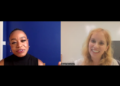
McFarlane explains, in a conversation with myself and McIndoo at this year’s Indy Shorts International Film Festival, how she wanted to celebrate her own experience.
“Initially, this started out as a love letter to my husband,” McFarlane says. “I wanted to tell a story that sort of said it was us against the world, and that love can exist despite differences. Everyone is carrying their own stuff, right? When you’re getting married, you’re kind of tied to another family–some people don’t anticipate that.”
McIndoo is actually married to Wilton, and she brings her own experience of their marriage into the collaboration on the film. We have heard countless times that people do not want to have kids right now to “bring them into the world,” so can those concerns be transferred into the feeling of a union? Having someone accept your proposal and letting that love story radiate outward is one of the most powerful antidotes in our arsenal to any kind of indifference that come our way.
“To be able to bring Sara’s story to light and honor it was very exciting to me,” McIndoo admits. “There is a lot of trust there, and I really love the way that the story was told. It is a modern love story with a happy ending, but it was more human that we recognize that we are holding something with us, just like Sara said. When you go into a marriage, it’s warts and all, and I think that felt really honest to me where sometimes we want to shave off those edges. I think from Sara’s story to Tom’s script, it really held all of those elements that I found interesting to explore.”
View this post on Instagram
(Wilton, McIndoo, and McFarlane at this year’s Indy Shorts International Film Festival)
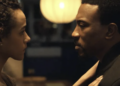
When André Holland’s Max proposes to Phoebe Tonkin’s Sasha in their kitchen, there is nothing artificial about it. There is something about them being in their own space, alone, in the morning at the breakfast table that felt refreshing. Max carries the ringbox in the pocket of his nylon basketball shorts, and we feel the weight of it when we see it on screen.
“We had a really nice time working with the actors to figure out what brought this up,” McIndoo says. “Maybe they had a really nice night before and they went to their favorite place–everything felt right. Maybe that carried into the morning and that’s what made him put the ring in his pocket, and maybe he debated doing it and then not doing it. André does a great job of showing us how Max finds the right moment.”
The chemistry between Holland and Tonkin is very lived-in and natural–you feel the history behind them. There was something paramount to McFarlane when it came to finding the right couple at the center of this story.
“Because it was such a personal piece and I wanted to do something that was important to me and my husband, we really just wanted to find good people,” McFarlane says. “People that wanted to be there, and that extended to the casting as well. André and I have worked together on other films and we’re friends, so I wanted to have a friend of mine with me. Phoebe is an Australian icon and it was important for her to be Austalian. Casting is tricky. There are only a handful of Australian actresses that kind of fit the age range and the type, and she is dream casting.”
When Max and Sasha stand before each other, there is a moment when a pair of people make a gesture that reinforces the commitment between these two people. I won’t spoil what it is, but it carries enormous weight in how it suggests acceptance, familial love, and emotional reinforcement. I admitted that this moment has choked me up every time I have seen the film.
“It resonates with a wider audience,” McFarlane says. “It doesn’t matter your background or your culture. At this particular time in America where everything is so defined and it feels like we are going backwards, I can’t help but think that our differences make us better.”
“I felt it on set,” McIndoo admits. “We were also shooting it the weekend of Pride, so there was an incredible spirit in the city while we were there. We were shooting right on 14th Street, and it felt like an extra sprinkle of what make everything on that weekend so special. If you look closely, I think you can see things in the background on the street since people were walking away from Pride festivities. The energy on the street was there.”
Wilson Pickett’s “Land of a 1000 Dances” is used to great effect once the festivities can break out. There are so many songs that feel naturally aligned with letting loose as you jump around at a wedding reception, and McFarlane reveals that they didn’t think they were going to get the rights before we closed our chat with what could be considered great reception anthems.
“That summer, the NBA was using that song as their theme,” McFarlane says. “I didn’t think we were going to get it or I thought it was going to be a million dollars. Our music supervisor, Season Kent, was amazing and sorted it all out. That song doesn’t hold a personal significance other than, to me, it’s what I consider to be the happiest song that has ever existed in the world.”
“My mind went to “Shout,” because you always have a good time when you hear that,” McIndoo says. “When it gets quiet, even grandma can get into it. Everyone has a fun time with “Shout.”
Check out the trailer to the film below but also the Unofficial Love Letter to M – Vibe Check on Spotify.