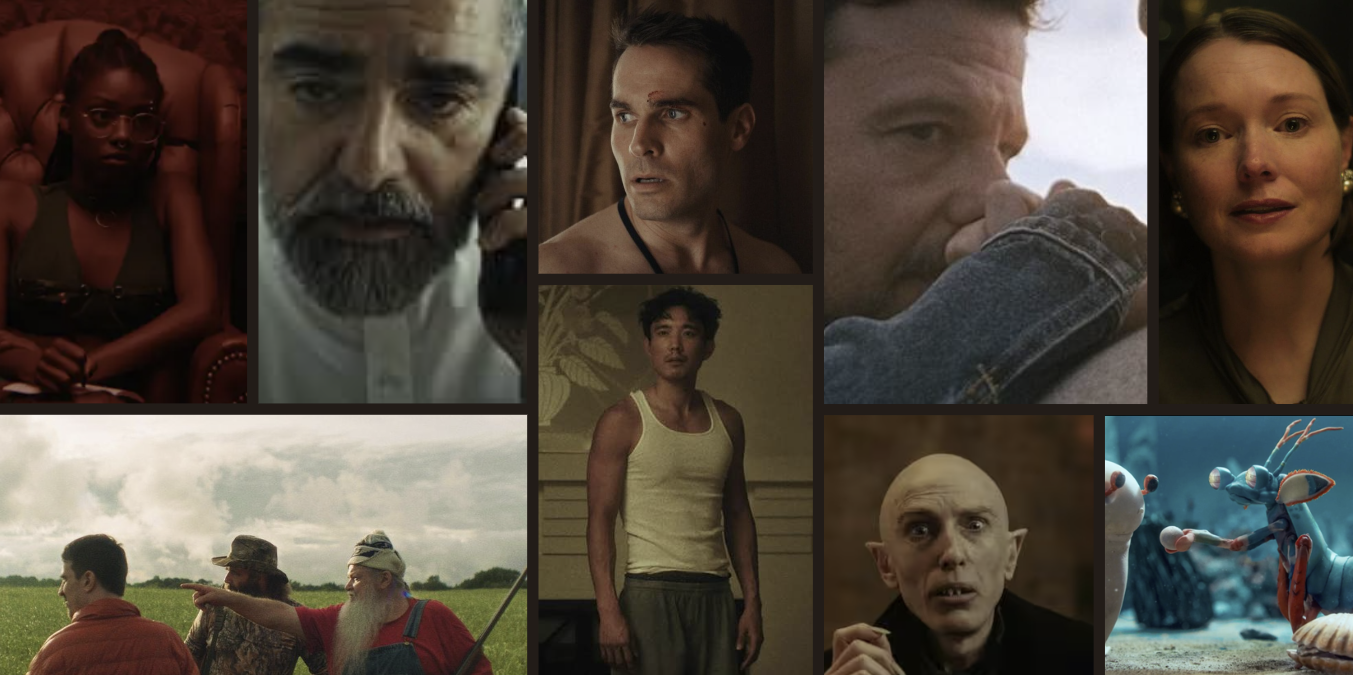
This was my second year attending Indy Shorts, now in its ninth year! What I love about this festival is really what I love about covering short films all year here at The Contending. Everyone I spoke to at this year’s festival was excited to chat about each other’s work, and they wanted to share experiences with what it was like on set. Last year, I saw 122 films, and I assumed that I saw more this year. That was not the case when I crunched the numbers, and my total came to 106 films.
I will admit that I need to catch up on some nonfiction shorts such as Ben Proudfoot’s The Baddest Speechwriter of All, Dana White & Chris Knoblock’s Magan’s Fare, and Makenna Mays’ The B&B on East Eighth Street. I am due for a rewatch of Pawel Chorzepa’s The Tuners, which I think we will be hearing about all season long. There are some narrative shorts, like Caroline Friend’s Poisoned Skies, Nick Delgado’s The One-Minute Problem, Emily Alpren & Marchelle Bradanini’s Floored that I also need to sit down with.
Without further ado…
Honorable Mentions!
- Calabash…for how Omar S. Kamara dances the camera around a wedding that I want to go to
- Candy Bar…for showing that some kids are equally conniving and snotty
- Rock, Paper, Destiny…for being the silliest sports comedy since Dodgeball and including “broccoli cheddar soup injury” trauma
- Ladylike…for trapping Jackie Hoffman as Sarah Bernhardt in an elevator and for that dance number
- Scratch…for the best cringe comedy and a bitchin’ jacket wardrobe
- Balloon Animals…for reminding us that sometimes a dead end job can have life-making moments
- Heirlooms…for making me glad that I have a walk-in closet
- Undelivered…for giving Ann Dowd a worthy hunt for words
51. Tanguy Pichon’s Plaster
A grieving mother brings her son, Marco, into a doctor’s office, but the physician is confused when she places a pristine, white urn on his desk. We can read his concern, but Marco’s mother assures the doc that she has never seen him in this kind of state before. Never second-guess a mother’s determination, right? While another film would condemn a character’s actions, Pichon’s film is more sympathetic and gentle than that.
50. Ian Corbin & Sonny DeSanto’s Sucks to Suck
“Life’s worth living when you’re making a living!” exclaims Tim Bensch’s The Suit when speaking to his new employees in his corporate office. It would sound like harmless cubicle-speak if another employee–one who was hoping for The Suit’s coveted new job–didn’t just unexpectedly die at the hands (or the wheels?) of an opinionated, roaming, vengeful vacuum. Anything that skewers the ridiculousness of the strict rules of the business world is something that will always be welcome in my book, but Corbin and DeSanto manage to comment on climbing the ladder while mingling in humorous horror with a quietly raging, sentient robot vac. You will never look at your Roomba the same way again…
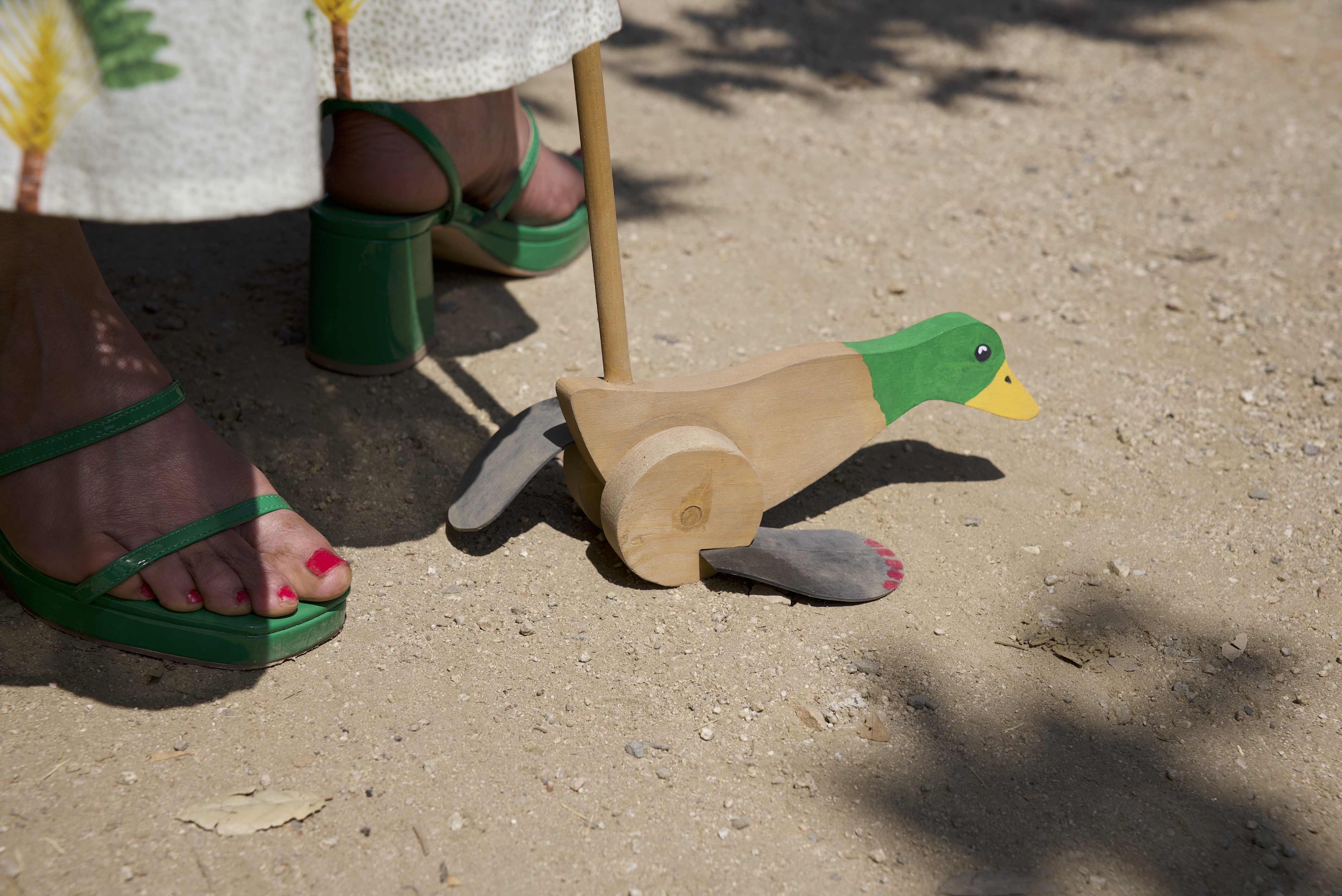
49. Nikki Braendlin’s Debbie Walks Her Duck
Remember when COVID was at its height, and you could tell people were lost in their own little worlds? You might recognize that quality in Debbie even though we never see her face, and she just gabs gabs gabs on the phone to whoever will pick up. There is something dark and dangerous happening all around Debbie, but that won’t stop her from walking her beloved Ducky or worrying over what nail tech might pick an icky color (don’t mention marigold to her…). Braendlin’s film is a great example of how you don’t need to overexplain and let the visuals and the comedy to do the heavy lifting. Prepare to become obsessed with Ducky!
48. Kelly McCormack’s How Brief
McCormack’s film looks and feels like nothing I have ever seen before. Inspired by the music of Connie Converse (who disappeared in 1974), it asks why someone would choose to vanish rather than live the life that we are expected to live. Tess Degenstein, who also wrote the script, stars as a young woman who, in 1962, returns to her childhood home where her brother and his pregnant wife currently live. I’m obsessed with how the film looks like it’s playing out like a play on stage (I am suddenly reaching for my worn copy of A Streetcar Named Desire…), and the bright colors (the reds, yellows, and pinks) slap you across the face. What is family? What is obligation? How do you set yourself free?
47. Ariel Heller’s Useless
Have you ever felt like you didn’t know what direction your life needed to go in? You get through your daily chores or things you need to do, but it feels like your life feels stagnant. Sam is afraid that his partner, Emma, has more direction than he does even though he’s a supportive participant in their lives together, and he relies on an AI therapist to be there for him. The more he uses it, though, the deeper and more personal his questions become like if they should have kids or if Emma might be better off with a different partner. Towards the end of the film, Sam asks the chat to roast him in front of Emma and their pal Avi to surprising results. I love how Heller’s film asks us to acknowledge that our perceptions of ourselves can always be terrifying to confront. We should perhaps always seek guidance from those who know us best. But ask yourself this: would you rather have an argument with someone you love or just get easy answers from a bot who is trained to tell you what you want to hear?
46. Rebecca Eskreis’ Governors Island
I don’t remember the last time I saw a breakup turn into something so promising.
When Sadie Friedman’s Simone meets up with Will Pigott’s Andrew for coffee, we assume that a separation is inevitable. He feels neglected by her crazy work schedule and she feels like he didn’t take the time to understand her ambitions. Friedman and Pigott have a snappy chemistry with one another as their meet up spills out into Governors Island where they run into Catherine Curtin’s Carla and Sam Friedman’s Robin, a couple who make sure they spend quality time for their marriage. There is something so comfortingly familiar with how Eskreis structures her dialogue and lets her actors play. These two couples–one young, one older & and one established, one just starting out–can learn from just being around each other. After all, in order to settle down, maybe we should slow down?
45. Chloe Culpin’s The Pigeon
When we are grieving, we will believe anything. There’s nothing wrong with that–our emotions are at a fever-pitch, and we reach for anything if it feels good even when it doesn’t really make sense. Culpin’s film is one of loss but it also carries an absurdity that we can all observe and tap into. In the wake of the death of her sister, Frances begins to believe that the pigeon that has infiltrated her apartment might actually carry the essence of her departed sis. Is a pigeon flying through your window every New Yorker’s worst nightmare? Culpin’s film doesn’t try to pin too much down–there’s a fluidity in the emotionality that is quite lovely. You can read the full review of Culpin’s film here.
44. Franie-Éléonore Bernier’s Three Words
Do you remember how you felt when someone you really cared about told you that they loved you? Bernier’s animated poem is short in length but mighty in emotions as one man rockets through the skies and into the heavens when his beloved admits her feelings. It pierces through your whole body in the best ways.

43. Joe Lycett’s Dating Mark Silcox
There is something bold about trying to figure out how you can make someone fall in love with you, and that’s exactly what Mark Silcox sets out to do. When he discovers that women like a man who is funny, Mark does the work…and absorbs as much humor and comedy that he can in order to try it out on his first date with Lindsey. He tries sight gags, funny clothes, and even recites jokes that he heard in popular stand-up routines. Lycett’s film knows how to push the sweet but also how to ravage you with the funny. You will not see that ending coming…
42. Oscar Jacobson’s The Undying Pain of Existence
There is something freeing and beautiful when you catch someone having a fully human reaction to something, and Jacobson’s animated short is bursting with life. A nude male model stands before a stuffy art class before a mosquito lands…well, you know where…before the model is bitten on his thigh. A red, itchy mound immediately forms, and you can see the model’s eyes about to burst. I don’t care if you are taking the most pretentious, heralded art class in all of Europe…you will want to scratch if this happened to you…Jacobson’s film is one of the most relatable shorts I have ever seen. It definitely scratches a satisfying itch…
41. Daniel Kreizberg’s anyone lived in a pretty how town
When your film has the late Jane Goodall speaking the words of E. E. Cummings, that’s a lot of pressure right off the bat. You wouldn’t know that from the tenderness coming from Kreizberg’s film, which investigates the vastness of life while keeping its narrative so personal. I have seen anyone lived numerous times now, and there is something new and rewarding with each viewing. The blues and the greens really evolve and change depending on when and where you see this. Its imagery vibrates with the truest of life. You can read our full review of Kreizberg’s film here.
40. Abigail Zealey Bess’ The Lion
So much of Bess’ visual language in this strangely beautiful, textured film has stuck in my brain since I saw it at this festival, and there is something so playfully alive. Featuring an incredible turn by Judith Roberts, she holds our attention in a true story about a woman who wins a Make-A-Wish style contest and selects a trip to the zoo to pet a real lion. Roberts speaks to us as if we are the only person in the room, but her presence on screen makes us want to call all of our friends so she can tell them the same story. And so we can watch their reaction. Bess directs her film with such vibrancy and verve.
39. Asher Grodman & Samantha Massell’s Stop to Stop
No, I do not want to receive text messages from every Democratic senator, representative or Speaker of the House even though I have every intention of voting the same way in the midterms and beyond. You ever get those texts and think to yourself, “You got me…we are on the same page…stoooop” but you don’t take the two seconds to remove yourself from that kind of correspondence? This romance is about a breaking point when Massell’s Carolyn throws back the presumptive robot on the other end of the chain…before she realizes that it’s a real person. When she runs into him (and he doesn’t know that she’s in on it), Grodman and Massell’s film becomes even more conscious and fun. Who knew talking back could yield such delightful and romantic results? You can read the full review of this short here.
38. James Lewis’ Good Game
Who doesn’t love a good cat-and-mouse thriller? Right before Halloween, Mark tells his mate, David, that he’s going to hunt him for the masked holiday, and David doesn’t believe him at first. It’s such an odd, specific statement that it starts to get to him, even though he purposely avoids Mark…just in case. Lewis’ film is punchy and quick, and it mingles the comedy and thriller aspects well, especially when we don’t know if we can even trust our closest friends…who happen to be the sorest of losers.
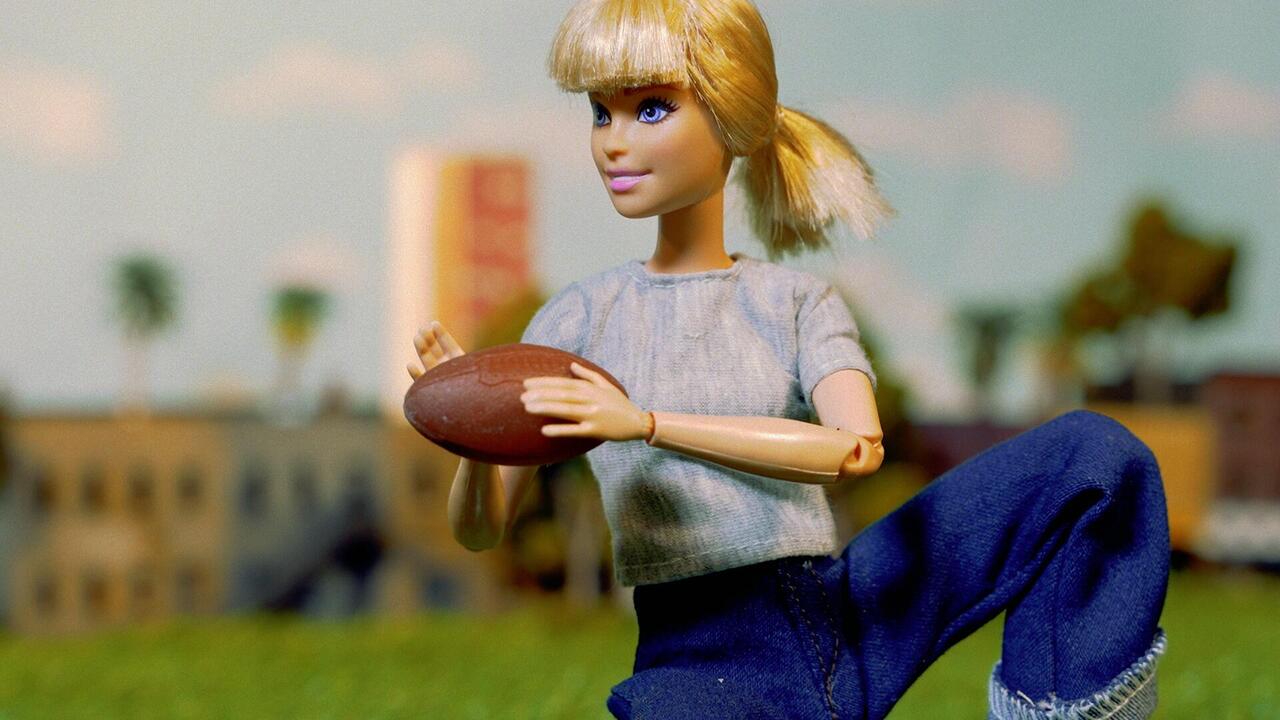 37. Ashley Brandon’s Panther Pat
Pat Palinkas made a splash playing for the Orlando Panthers, and some people might wonder why this person joining a professional football team would be so shocking. Pat is short for Patricia, and many men had some feelings about her playing as a holder for her husband, Steve, who was a punter for the same team. Wally Florence did not mince words and tried to break Pat’s neck on her first play for “making folly with a man’s game.” Brandon allows Pat, who passed away in 2025, to speak directly do us as if she is revealing a secret that you may not have heard. Rather than relying entirely on archival footage, Brandon uses blonde Barbie dolls as stand-ins for some of the Palinkas domestic action. A lot of football fans back then (and unfortunately now) would assume that young girls and women are only fit to play with dolls or to play house, but this Barbie looks damn good with a football helmet.
36. Rafaël Beauchamp’s The Taste of Your Scales
I kept thinking about how parents comfort their children when they are scared of monsters or creatures hiding under the bed. In an early scene, Jasmin goes fishing with his father, René, but he doesn’t know what to do with a fish when he catches one. René steps in, his voice steady and calm, and he describes to his son how he should put the fish out of its misery by hitting it in its head. “It’s the most humane way–it won’t feel a thing,” he says before he is called into work to help with an emergency, and Jasmin wants to come along. He has never seen his father in his element, and we get a sense that he doesn’t even know what he does. Jasmin slowly discovers, though, that his father might be responsible for monstrous actions of his own. I love how the film is bathed in a green-blue hue that makes is feel like we are drowning in the widest of waters. You feel helpless.
35. Josephine Lohoar Self’s Daddy’s Girl
Catherine doesn’t hide her disdain for her new stepfather. Disdain might be too nice of a word considering that we see Catherine plotting to let Phil get chopped by a lawnmower blade or hand him a Christmas ornament with a lit firecracker attached. When Catherine’s mother has to go out of town for two days, she spends a lot of time in her shed continuing to build the model ships she made with her dad before he passed away from pancreatic cancer. It would be an entirely different film is Self wrote Phil as an asshole, and we never don’t side with Catherine’s point of view as the comedy continues to become the blackest of black while it brims with exuberant edges.
34. Pranav Bhasin’s We Were Here
“They warned us that one day robots will take all our jobs, so we said, NO!” is the first line in Bhasin’s film about combating the rise of AI. Even just saying that makes me shudder, and I’m sure I am not the only one. What does one do if you fear that your job as a driver or a delivery person is going to be taken over by a sentient cyborg? You get creative, and you find the jobs that AI doesn’t want. Like a microwave or a reverse camera. There are so many starkly funny images of weary men, their faces painted metallic silver, as they stand in the sun as a satellite dish. Bhasin’s film shows the resilience of the human race…I sure hope it works!
33. Joe Anderson & Nadine Vincent’s Missing Socks
The mystery of how we lose one sock has always been a humorous, quizzical plot for generations, but this dark flick can hit something spooky in all of us. After all, we joke about how we misplace one, but learning the lore might actually be a heck of a lot moodier and creepier. When Louise Pasciuto’s Christine is approached by Nancy McLoughlin’s Nell on a dark and stormy night in a lonely landromat, the truth is offered but uncovering that truth might lead to something more dangerous and sinister. I love how the film opens and closes from inside this piece of machinery as if we should all be wary of that square hunk of metal…that could be a portal to a dark world. It’s like watching a legend come to life.
32. Simone Stadler’s The Spanish Lesson
The mechanics of learning a new language is at the forefront of Stadler’s film about connection, loss, and communication. I was really taken with how this is a short about not just how we talk to each other but the intention behind it. Marisol is teaching a Spanish lesson to young Cameron when an angry Daniel storms into the coffeeshop and demands to know how long she has been banging his wife, Simone. When she reveals that she was merely giving her lessons so Simone could speak to Daniel’s family, he reveals something about his marriage that no one–not even us–expect. There is passion here but also some deeply felt sadness. Finding the right words can feel impossible even when you know how to articulate…be bold enough to take a leap and extend that dialogue to help yourself heal.

31. Pola Maneli’s APART
Set in South Africa in 1989, Maneli’s film centers on s a friendship between two boys, Themba and Joel, and taps into that innocent mentality of youth. Young kids don’t care what color your skin is or how much money another family has–they care about playing in the street or making sure a friendship lasts. When Joel sudden needs an emergency procedure, Themba steps up, much to the ire of Joel’s father, a racist cop whose gun always feels menacingly present. “He’s not from our culture,” he says to his wife. We want to reach into the screen and shake this man or protect Joel and his mother from his behavior. Menali’s film is vibrant and devastating.
30. Jonny Durgan’s G.S.W.
The line of duty gets blurred in Durgan’s short film about two paramedics whose day takes an alarming, dramatic turn. Genevieve O’Reilly’s Beth is overseeing the training of Kya Brame’s Jo as a unconscious man is sprawled out on the table between them. Jo seems tentative but eager, and Beth has had enough of these kinds of days where she can perform her job with her eyes closed. When news of a shooting at a primary school comes over the radio, the man they are tasked with saving matches the description of the perpetrator. What would you do? Durgan’s film immediately confronts the audience while the beeping from the ambulance becomes our heartbeat and a thrilling metronome to the claustrophobic action.
29. Iva Tokmakchieva’s Balconada
The various shades of blue throughout this animated short carry you like the open sea even though the entire film takes place on the different balconies of one building. One muscled man works out, another tends to his bushy flowers while a woman sunbathes topless. The wind blows the sweltering air as the wind picks up and the sky grows dark. Tokmakchieva’s film shows the intimate connection with neighborly distance. Oh, and there’s a romantic flute solo. Let the wind take you where it wants to take you.
28. Jean-François Leblanc’s A Breach Within
My sense of smell was bombarded all throughout Leblanc’s film about a pair of detectives who are continuing a long investigation before they think a turn is about to happen in the case. Caroline and Frédérick are making another stop to re-interview a witness in a string of heinous disappearances. She is about to head out on leave to have a baby, and she wants to tie off every loose end she can before another person has to brought in to finish the work. There is nowhere to run from the oppressive heat, and Caroline finds herself wandering around the witness’ home and her curiosity gets the better of her. Each time that I’ve seen Leblanc’s film, I realized that I was fanning myself as much as I was clutching the armrest. If you are a fan of true crime or investigative procedurals, A Breach Within will scratch an overheated itch.
27. Ora Dekornfeld & Bianca Giaever’s Stalin Boys
I think hearing the name Stalin is enough to get a knee-jerk reaction out of any audience. It’s a kind of name that automatically conjures up other dictators that we learned about in history books, but this charming, thoughtful documentary highlights how we should be encouraging all young people to find their own passions. A quartet of middle school boys in Texas are preparing to participate in a history fair where they will perform a short, original play about the former Soviet Union revolutionary. Their leader, Malachi, is so fascinated with Stalin that he could even tell you what the man’s favorite colors were, but it appears that some adults share a hesitancy about these boys performing a piece about Stalin. Their leader, Crawford Hunt, never speaks down to them, and Dekornfeld and Giaever’s film shows how knowledge and curiosity inquisitiveness should be nurtured.
26. Bardia Samia’s A Passage of Silence
A father stares at a computer screen for the majority of Samia’s film, but it is one of the most enthralling shorts I have seen recently. Set to the backdrop of the 2022 Mahsa Amini protests in Iran, the camera locks in on Kourosh Parsapour’s face for the majority of the action as his patriarch tries to find his son a way out of the chaos before being apprehended by the same violent regime that employs him. The Father’s daily routine consists of switching between hundreds of cameras in order to capture those who oppose the ones in charge, but Samia’s arresting film, which uses real CCTV footage, shows how this man might not know how to find safety for someone he loves because he didn’t allow safety for countless others. Passage strings remarkable tension and refuses to let you go.
25. Edward Olmos’ A Night In
You know that feeling of relief you feel when you make it to an Airbnb or a hotel and you just want to relax? The last thing you need or want is a stranger inside your space who refuses to leave. Olmos’ deeply fun comedy is not a Barbarian retread, but his Sal is confronted with the amiable presence of Connor Tyler Gray’s Brady, a suave sweet talker who’s genial attitude would make anyone relax. Sal offers to check hotel availability for Brady, but they end up sharing some red wine and we get to bask in silly glow of such an uncomfortable situation. Does Brady have ulterior motive, or does his charm work on you too? I was so disarmed and swept off my feet by the entire affair, and it’s proof that the most unexpected endings can lead to the most memorable experiences.
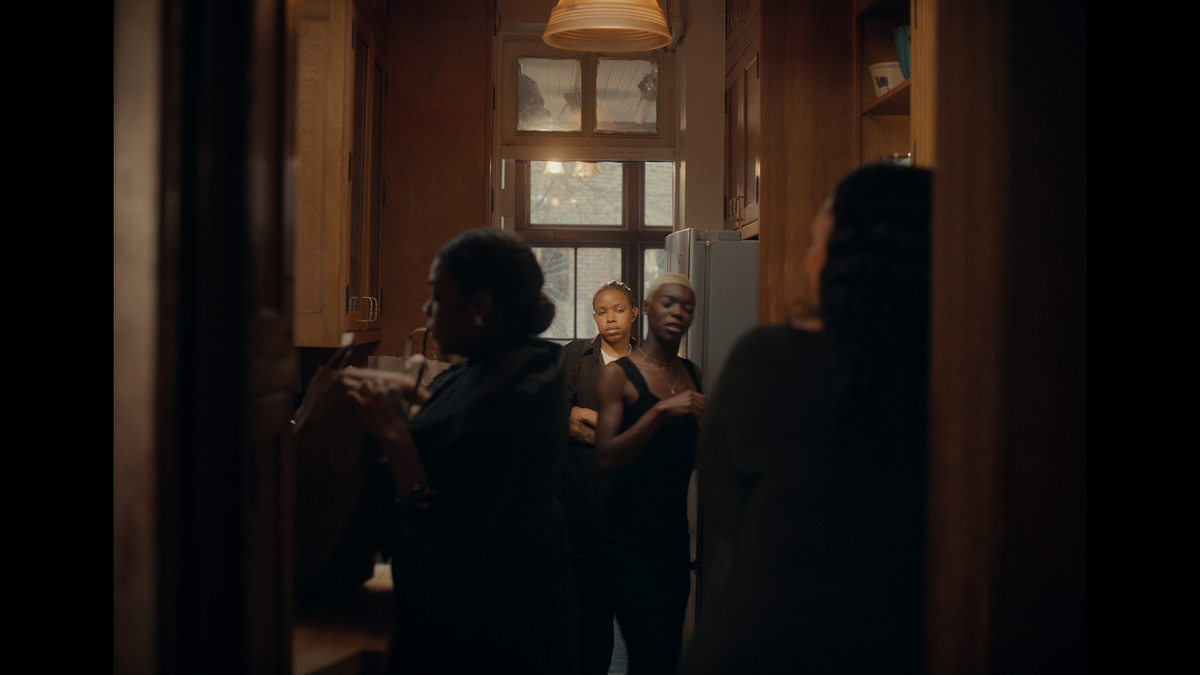
24. Mekhai Lee’s Them That’s Not
Angel Theory’s Drea doesn’t have to say much for us to be locked into their plight. Their family is big but they don’t necessarily feel like they belong, and when Drea’s grandmother dies, the house is full of people to pay their respects.. They are studying poetry with only one year left in school, so they are looking towards the next step in their life. You can tell how this big house, with all its wood detailing, must’ve felt warm and inviting with Drea’s grandmother around. What Drea might not expect, though, is the connection they will make again as the rest of the funeral noisily goes on downstairs. I was so drawn to Carrie Compere as Drea’s Aunt Carol. Lee’s film is tale of what it feels like when you don’t need to say anything to someone you love because they know the words already dancing around in your head.
23. Lewis Baillie’s Community Theater
There is a lot of pride permeating through Baillie’s film about a working-class town in Scotland. The community theater seems to always have an excited audience, but rather than perform a classic Gilbert and Sullivan or high-brow Pinter production, this town tells stories of its people. Real life looks so different from the on-stage depictions–but the honesty remains.
Broken up into three acts, Baillie shows us the young kids who will be portraying people in the town before we spend some time with them. Carl Smart is “properly a fisherman,” and he invites us on his boat before we see Dexter and Harry on stage in a Wes Anderson like scenario. Caroline Duncan is a taxi driver and her on-stage persona, performed by Poppy, has wigs, mustaches, and big sunglasses to spare. Connor has recently turned 18, and he reflects on how he wanted to join the Army like his father and he longs to be his own person when he gets older.
Life can imitate art even if that life plays out right before your eyes. Baillie’s film proves that you can truly make new, real art and celebrate people in your own backyard.
22. Cami Kwan’s Paper Daughter
A young Chinese woman is terrified that someone will find out her real identity when she makes it to Angel Island in 1926. Joy is assuming the identity of a deceased Chinese American woman, and Kwan physically shows how immigrants put this on by a literal mask being worn when trying to deceive. Whenever Joy is uneasy about her story or she begins to forget details, the mask begins to literally unravel. This is one of the most beautiful and the most emotionally ambitious animated shorts that I have seen in a number of years.
 21. Winslow Crane-Murdoch’s Oh Whale
Who know that blowing up a whale would be such a historic event…
“Paul will always be known as the whale guy,” jokes a reporter when talking about Paul Linnman, a journalist and news anchor from Portland, who is most known for being on the scene when a 45-foot, 8-ton whale was blown up on the beach in Florence, Oregon in 1970. Linnman admits that belonging to this story used to nag at him since strangers would bring it up to him several times a day (sometimes before morning coffee), but Crane-Murdoch’s film shows how you aren’t in charge of your own legacy. We should all be so lucky to have a story attached to us that so many people love…even when your story includes the phrase, ‘you could see the explosion and huge chunks of whale going into the stratosphere.’
20. Sarah Shutzki’s When You Will Be Big
I cannot help but think of the hug between Miriam Silverman’s Sophie and her daughter when she drops her off at school. I can feel the squeeze as Sophie tells her how much she loves her. We leave the busy streets of New York City and follow Sophie upstate where she finds herself alone in a cabin: opening its windows and removing the sheets that cover the furniture. I love how this film shows the clear distinction between solitude and loneliness. How you can recharge if you are fortunate enough to only focus on yourself. Silverman doesn’t have to have dialogue to be captivating, and she holds us in the palm of her hand.
19. D.M. Harring’s Silver Anniversary
Samantha Sloyan’s exquisite face is held so closely throughout Harring’s film about the dangers of violent marriage, but this horror short isn’t just soaked in spilled blood (don’t worry, there’s plenty of it).
Sloyan’s Marnie, on the surface, seems like a satisfied, dutiful housewife who cooks at her husband’s instruction for the guests he brings home. Jay Huguley’s Don, though, has an insatiable and specific appetite, so you might want to decline an invitation if one is extended. We can trace Marnie’s unhappiness as she prepares meal after meal, and, without using a lot of dialogue, Sloyan holds us in the palm of her hand. She reminded me so much of Julianne Moore in The Hours. With a lot more carnage, of course.
18. Adam Elliott’s A Pocket Guide to Pigeon Watching
“I’ll be honest: I like when I’m riding on my scooter in the city, and I see that a pigeon was run over…that makes my day,” says one New Yorker in Elliott’s film. This short did the impossible: it made me look at pigeons in a majestic way. Much of the narration at the start feels almost romantic as someone explains that they think these birds have distinct personalities before they remind us that they are closely related to doves. We are all full of contradictions, aren’t we?–why can’t we extend the same consideration towards the bird that is so closely related to the legion of people that live in New York City? People that live outside of Manhattan arrogant say that the island is overcrowded, but, hey–at least pigeons take to the sky and give you some room! Elliott captures something magnificently noble about these bird that I never took into account before–consider my viewpoint changed.
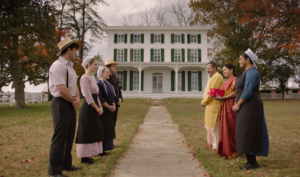
17. Jasmine Rao’s Amish Ammayi
Esha, a young Indian woman, is living her best life on an Amish farm. She might be the only person who makes hanging laundry look like a joy, but that excitement is zapped away when her parents arrive to meet the family of Jonas, the boy Esha is crushing on and whose family she is staying with. When their families meet in the front yard, there is a literal line drawn between them in the form of the walkway to the house. Rao’s film is not about culture clashes between families necessarily (they joke and get along rather well), and Rao’s visual style is rather striking. Esha’s mother, Padmini, is curious as to when her daughter will come home and become serious about her life (god, mom, those rolls in the hay are worth it!), and maybe this determined young woman is sacrificing her ambitions in an effort to avoid being hurt by the real world. We should all dive into something entirely new because our hearts want to give it a try, and Rao’s film has a comedically direct point of view that some feature films could take a lesson from.
16. Ryan Noufer’s Mary the Widow
I found myself very defensive of Mary, played by Julia Ariola, in Noufer’s touching, absorbing drama about a woman set up to participate in a round of speed dating with some other seniors. After being dropped off at her daughter’s encouragement, Mary tries to keep an open mind, but some of her potential suitors seem a bit out of practice, and some say some outlandish things to her. Noufer keeps things percolating and light but there is a tinge of sadness threatening to roll in like a sea of dark clouds. When she connects with Stephen Tobolowsky’s Ed, the energy shifts in a major way. It’s easy for Mary to flirt and dance around with her words. It hits us, too, like a cool breeze. When the film glides into darker territory, Noufer doesn’t leave Mary hanging, though. There is careful, caring guidance as if we can sense the filmmaker holding the hand of his leading lady. Watch our interview with Noufer here.
15. Jake Borelli’s IGNIS
When you are dating someone that you are head over heels with, there comes a time when you realize that you have to compromise and there are times that you know you have to confront. Do you have a hard line when it comes to your morals or can you look beyond a problem even though it shakes you to your core? When Simone discovers that her perfect beau, Jason, has been taking medication to enhance his love for her, it sends her into a tailspin. What is real? Can affection be made in a lab? Borelli makes a thoughtful directorial debut by giving his characters equal footing at all times, and we find ourselves siding with one person and then the other as the dialogue, by Julie Cohn, carries just enough bite. You can read our full review of Borelli’s film here.

14. Dave Schuman and Emily Schuman’s The Baker’s Hotline
I am not going to make this all about me, but I like to bake once a week for my friends–usually something sweet that can be served as an escape from something. I consider baking to be a form of therapy, because I can put my headphones in and follow a recipe to calm my overly chaotic brain. Sometimes when I get into a bind, though, I really only have the Google to turn to. There are so many different kinds of bakers out there in the world, and everyone is at a different level. I never imagined that there would be a place to turn to, but it makes total sense. The Baker’s Hotline is a service described as “triaging baking questions,” and there are Baking Specialists on standby to help you, whether you’re a first-time baker making Muddy Buddies or an organic chemist who is experimenting with different types of bread.
Dave Schuman and Emily Schuman’s film is a balm that we need–a film that shows how we long for connection, love, and a life made sweeter by the treats we make along the way. I am absolutely in love with this doc.
13. Bára Anna Stejskalová’s 9 Million Colors
Who knew an animated short about a predatory mantis shrimp falling for another fish would inspire so many feelings? From the very first frame of Stejskalová’s film, I was entranced. The ocean floor is serene for just a few moments as the blue water flows and dances about before we meet a crew of dancing crabs and then Fran, whose pointy pincers slice and dice and unlock new colors for Milva, a blind fish. There is something so otherworldly passionate, and innocent at play here. Fran only wants Milva to see the brilliant world the way that she can–what’s more romantic than that? Stejskalová’s film utilized puppetry and stop-motion animation that is vibrant, playful and audacious. I guarantee that you have never seen a film like this before.
12. Maggie Brown & Tyler Brown’s One Night
Do you remember the feeling of sitting in a diner booth and talking about movies with someone you think you like? The food might be greasy and the booth might not be comfortable, but none of that matters when you connect over a playful debate about finding love at Columbia University and what is the greatest animated flick of all time. He sweetly asks her over, and we recognize that feeling of not wanting the date to end. It crackles–there’s possibility. It’s not very often that a film lets us in so easily. We see ourselves in Jackson Kelly and Rain Spencer’s characters before these directors help us understand that we are more fragile than we even realize.
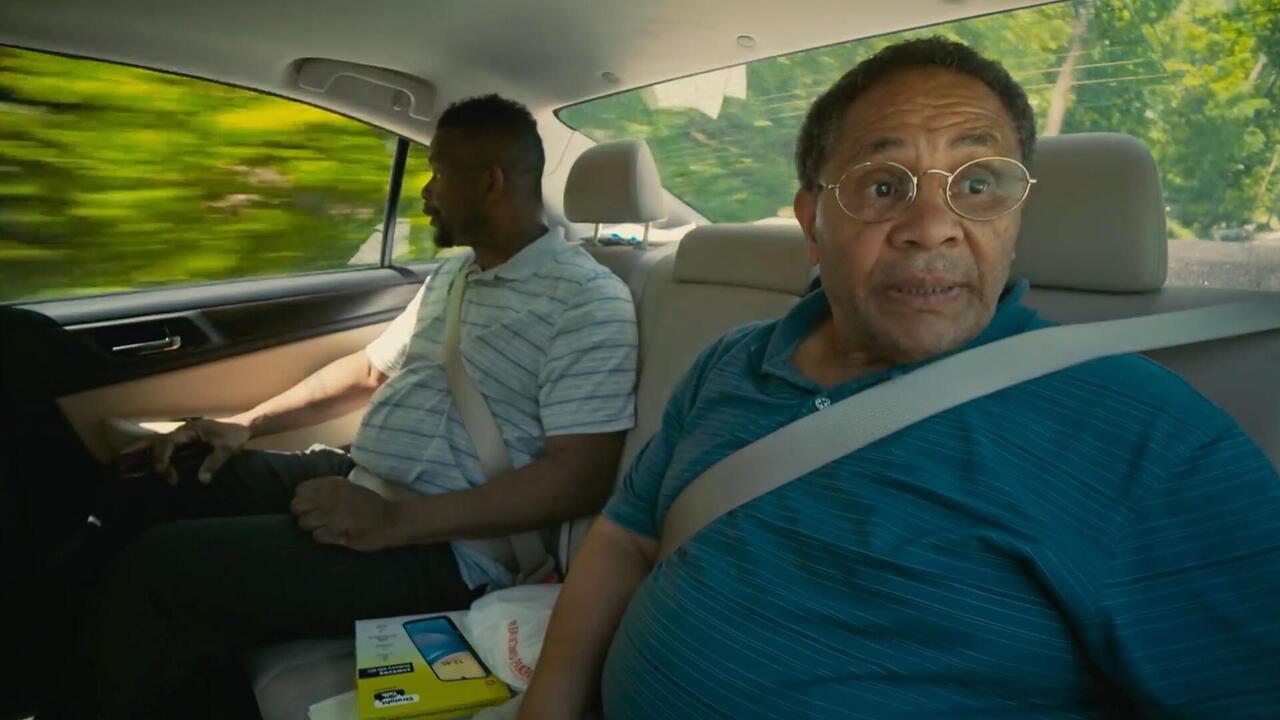 11. Dana Nachman’s The Second Life of Freddie Nole
Nachman’s film begins with Freddie Nole and his wife, Susan, going to buy clothes for a man they haven’t met before on the day that he gets out of prison. They have to call home in order to find his sizes before they meet him, and Nachman’s film carries this inherent kindness that you feel from the first minute you meet Freddie. What would you do if you got out of prison, but you didn’t know where to go? Nole’s Meeting At the Door program allows those a stepping stone when they are free from incarceration by providing a ride to the surrounding Philadelphia area, a meal, and a prepaid phone. When Edward, Freddie’s 62nd pickup, sits at a diner thinking about what he will do next, he says, “The biggest part of the work is deciding what’s down the road,” and Nachman’s film doesn’t spend time dwelling on past events or the reason someone landed behind bars. We do learn more about Freddie and his circumstances, but I liked how it is shown towards the latter half of Second Life. Freddie, Susan, and their entire organization are focused on looking forward and not in the rearview.
10. Zoe Whittaker’s Uncle Artoo
Something that made me giggle all throughout Whittaker’s film is thinking about the parents who adopt the kids out of Nosferatu’s care. Oh, did I not mention that the famed bloodsucker has now opened a foster home for children? We see the vampire’s hands before we see his face as he sits down to be interviewed by a documentary filmmaker about why (oh whyyyy) did he make the decision to turn over a new leaf. Early on, he is asked how he came to be in charge of his first child, he swiftly replies, “I ate his parents. It was a different time.”
Nosferatu makes lunches, plays with his young wards, and even tries his hardest go to outside–just as long as he wears a kind of spacesuit to protect him from the sun. “I want to teach them that they can fight their demons and win,” he says later on during his interview. Whittaker’s film is simple in plot and setup but bloody hilarious. Your move, Dracula.
9. Dan Lesser’s One Twenty-Six
Eat your heart out, Dominic Toretto…
When you are in high school, it feels like there is a hierarchy between one grade to the other–weren’t the seniors cool to everyone? Evan and Cole run into Reid and Nico at a fast food joint before one set invites the other to a party. Rather than take an Uber, Evan, played by Ethan Highsmith, offers to take everyone in his car. “Is that a Mini Cooper,” one of them asks. “Like Mr. Bean?” Evan assures them that it moves more like a BMW, and brags that the car can make it over one hundred-fifteen. There are two kinds of taut storytelling going on simultaneously. The editing, by Lesser and Hayley Stablow, is a beast, as if every cut was sliced on a hairpin turn. The emotional storytelling, though, will also make your heart race as you know there is a moment when you pull away from your closest friends in order to make yourself look cooler. There is a heart-racing climb on a speedometer, yes, but Lesser knows that pulling away from your best friend can feel as equally dangerous.
 8. Hansel Rodrigues & Lizzie Atherton’s Homing
There is a stunning shot in the opening moments of Homing where we see a man in the distance in the backyard of a family as their hectic morning comes to a screeching halt. This man, played by Nima Taleghani, is soaking wet and slowly walking towards the back door. What does he want, and how did he even get here? A radio broadcast is heard reporting statistics that the number of people in boats crossing the English Channel has increased, but the family members haven’t really heard this. The father wants to keep his distance and call the police, but his wife thinks they need to offer help. This man’s phone is dead, so they put it in rice, but the closer this man is to the family, the higher the tension mounts. Their son keeps trying to enter the kitchen to sneak a peek, but his father keeps yelling at him to go upstairs.
Where do you draw the line between protecting yourself and extending a hand to someone in need? How do you teach your child what is right in the moment? Homing does not offer easy answers, but it expects you to make your case.
7. Michael Borrelli’s The Last Day of Byron Bray
There are two moments of pure, crystal clear black-and-white in Borrelli’s film about enduring friendship and the promises we never knew we had to keep. Two young, beautiful men sit so close to one another that their lips and bodies cannot help but touch. That one feels like a fantasy–an idealized, poetic moment between two young men who were allowed to love and lust as if the world had no choice but to accept and love them. The other comes in the visual form of a dream being told by Byron Bray himself. He wonders if his visions of death and missed chances are really a premonition–a look back at the life he could’ve had or was denied.
Borrelli’s film, based on his own experience of friendship after he became sober, showcases how we never have enough time. As his character tries to figure out how to begin his life in a meaningful way, he has to witness a dear friend, at the age of 92, accept his own demise. We sometimes think that our dearest friendships exist on the same track–that we will arrive and depart at the same time. There is so much heartache mixed with a pensive joy. I have no idea how Borrelli managed to make a film with such immediate tenderness and see it from the outside, but this film is so steeped in every kind of love that you cannot help but be lulled by it. William Sadler is nothing short of brilliant.
6. LeAndre Thomas’ This Is Private
Thomas’ film has one of the most entrancing shots I’ve seen all year when Birgundi Baker’s Royce, a stripper, escorts a client to the back of the club. It’s not noteworthy because we are in a setting where we know something is going to go down, but it spoke to me in terms of how Royce decides to take control of her life. She is sleeping in her car and Christmas is coming up, but instead of dancing for this man, she offers advice and comfort when he admits that he’s “always expecting the worst.” Royce is working at this club to pay the bills to put herself through psychology courses, and once she realizes that men will open up in the privacy of a back room, she repeats the process with men who need to talk more than they need to make it rain. Bathed in stunning reds, blues, and purples, Thomas’ film proves that everyone needs to be listened to without judgement. Don’t worry, guys, it’ll be okay.
5. Matthew Puccini’s Callback
What kind of parts do we give ourselves in a relationship? Are we comfortable with what people expect from us, or do we fall in line with a role we are assigned? Puccini’s dark comedy pits two boyfriends against each other when they dissect dissatisfaction inside their roles in their relationship. One has more money and the privilege of pursuing his acting career more freely while the other feels weighed down by bussing tables and his obligations and is less successful landing acting gigs. Maybe some of us don’t know we are even competing with the one we love, but Puccini puts it all out there. A wicked little treat. You can read our full review of Puccini’s film here.

4. Gregory J.M. Kasunich’s Meeting Your Maker
Even puppets get the blues, did you not know? Kasunich’s meditation on depression, grief, and mental health reaches the fuzziest in all of us in the form of Otis, a puppet who is tired of his everyday routine of starring in Yappy Hour, a Sesame Street-like children’s show. As the program hurtles towards its 300th episode, Otis ponders his self-worth and wishes that his auditions to join the ranks of The Muppets would’ve panned out differently. I love how Otis’ design highlights the dark circles under his eyes and Kasunich embraces what makes a puppet a puppet. Featuring an incredible voice performance by Jonathan Kite, Meeting Your Maker is a film that highlights our collective spirit–no matter if we are made of flesh or felt.
3. Christoph Deram’s La barrière
Géraldine, a young stage manager, stands on an open, deserted road near Calais, France with nothing but a walkie talkie and a cumbersome steel barrier. On this windy, bitter cold day, her bright red jacket stands out amongst the green hills like a human stop sign before Amar, a Syrian refugee, walks up the path and strikes up a conversation. He observes that her job, to block traffic while an unseen crew films a movie over the hill, could seem strange, especially when he learns that the movie is about migrants. Amar’s wife and 10 year-old son are in the UK, and he is desperate to get back to them. “There, Géraldine, my family’s there,” he says, pointing into the distance. These two people–who no one seems to want to listen to–find an unexpected connection in this intimate moment. I couldn’t help but think about the real-life plight of someone like Amar as a fictitious story is being shot just out of our sight. Deram avoids melodrama and hones on the connection of two strangers who have nothing in common. Will Amar ever see the film that Géraldine is working on?
2. Kurt Andrew Schneider & Sam Davis’ He’s Out There
There is a reason why so many people believe in Bigfoot, but no one is more serious about hunting the legend more than Devin, a man with special needs who considers his quest his job. In the opening moments of Schneider and Davis’ doc, Devin takes us into the woods, and he finds a bloody tooth and scratch marks on a nearby tree. He doesn’t see his father dressing in a full Bigfoot costume so Devin can see him from a distance and chase him down. There is something magical about this film’s generosity, as Devin meets and spends time with his heroes in the hosts of Mountain Monsters, Jeff “Jeffro” Headlee and Willy McQuillian. The more time we spend in the great outdoors, the more we learn that connection and sharing passion can change your life. He’s Out There shows how believing in something is communal, powerful, and necessary, and you can step inside your favorite legendary folklore.
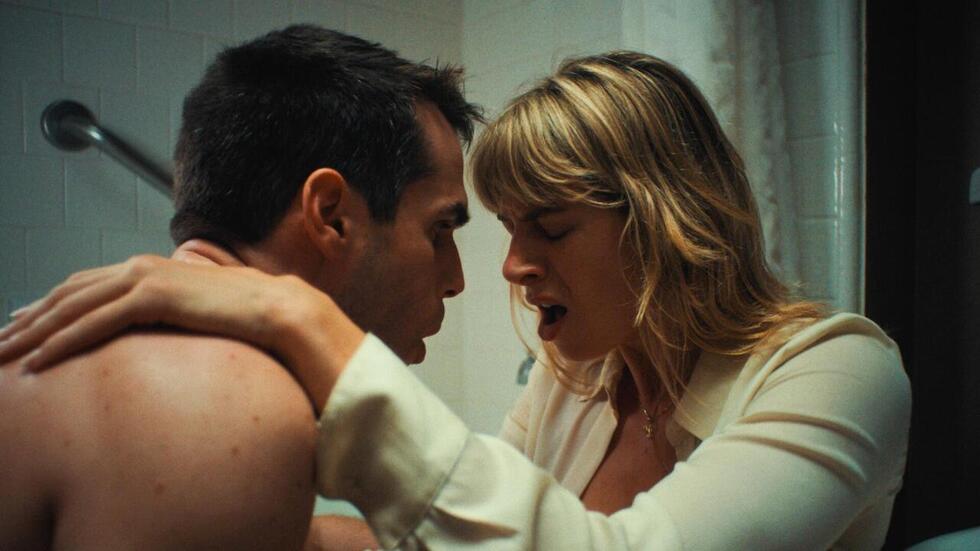
1. Blake Winston Rice’s DISC
If Rice wants to make films about awkward encounters and how we shove ourselves through them for the rest of his life…that would be fine by me. He follows up his sweetly stressful short, Tea, with a more adult affair starring Jim Cummings and Victoria Ratermanis as a pair of new lovers who shared a drunken night before this sobering morning. If the gloom of a hangover isn’t pressing enough, Alex’s menstrual disc is stuck, and she asks Carey to help her remove it before she headlines a talk for that morning’s presentation. I love how the setting is a completely nondescript kind of motel, where the workers smoke in a depressing way out back as this singularly absurd event unfolds in one of the rooms. Cummings gives Carey a go-getter attitude all the while asking the most ridiculously dumb and innocent questions: “Do you want me to call the front desk,” Carey asks Alex when she explains the situation before she guides him in the most corporately diplomatically way possible. It’s a crazy fucking ride.
There you have it! Which of these films piqued your interest the most? Will you be looking for any of these at other festivals or even in this year’s Oscar race? Sound off below!