Alex Woo, Co-Writer / Co-Director

Alex Woo, the co-director and co-writer for Netflix’s In Your Dreams, talks about the personal nature of the story, from Stevie’s character to the overall journey of the film. Plus, he reveals how the creative team found the appropriate balance of character and whimsical dream world. Plus, he admits to the slight fun of violence in an animated film.
The Contending: Is Stevie based on anyone in particular?
Alex Woo: Me. We showed an early version of the film to Guillermo del Toro and I had a private session with him afterwards, and after about two minutes of talking with him he was like, oh, you are Stevie. I was, like, how did you know? I feel so naked! I am the older sibling of my family, I’m the type A perfectionist, very serious. My brother is very much more like Elliot, very carefree, always cracking jokes, and the charmer of the family. A lot of the characters are based off of people in my life.
The Contending: Was there a reason you decided to make her a woman?
Alex Woo: Stevie’s goal is to keep her family together and it felt to me that a female character who had that kind of mission was more believable. It really just had to do with what the main character’s goal was.
The Contending: This is your first feature film as a director. What was that like?
Alex Woo: It was amazing and so much work. I’ve worked on a lot of features for my whole career but being in the director’s seat was a whole other ball game. It is so much fun because you get to shape the vision of the film, but it’s so much work because you are shaping it. Everyone is asking you questions constantly, and a lot of times you just don’t have the answers or it’s hard to articulate the answers. So that has been a big learning curve for me, learning that being a director is about trying to communicate a vision to people in any way that you can. Whether it’s through drawing, painting, or even giving someone a song and saying this is the feeling I am going for. We had almost a thousand people working on this movie so leading a team that big is a lot of pressure and a lot of work. But no pun intended, it was a dream come true.
The Contending: Nicola mentioned that your niece’s movements were incorporated into Stevie. What was that process like?
Alex Woo: It wasn’t my niece. I grew up half of my life in Hong Kong, and I had a lot of friends that were mixed race and I was always so jealous of them because they got the best of both cultures. They also were so attractive. (laughing) A lot of the look and design of Stevie is based off of a lot of my friends. We asked for childhood photos and we sent those all to the Art Department and that really informed her design.
The Contending: The humor was a part of the film I was enjoying, especially seeing Stevie getting hit. She falls over in real life and then in the dream world she is constantly getting hit by houses while she is flying. I feel like you don’t usually see the human characters go through that as much anymore. What was behind the choice to do that?
Alex Woo: One of the big lessons I learned when I was at Pixar working with John Lasseter on Cars 2 (which isn’t the best movie) but he drilled into us that pain is funny. So that was a big lesson I learned from him. I also grew up watching a lot of Looney Tunes, which always had physical-based gags. I think that’s probably where it came from. I do not know why other people’s pain and misfortune is funny to us. It is kind of awful but it is just the way life is. (laughing)
The Contending: The film moves fast yet we are never lost. We get insight into the children’s world and there’s not a rush to the dream world. But when we get there we are given time to kind of bask in it. As the director, what was it like trying to find that balance?
Alex Woo: I think it was really tough to find that balance because there was a real pressure to get into the dream world quickly because you’re selling this movie’s premise as a world about dreams. So the instinct is to get to the dreams very quickly. But I think if we did that too early we would not have enough of the grounded emotional through line that we needed to carry the audience through the entire film to the emotional payoff that we were looking for. I really wanted to make sure that everything that was happening in the real world allowed us to establish Stevie’s story and her world with her family and how much she cared about them. So the audience would want the same thing that she wanted, to keep her family together. The opening is kind of long because you introduce her, then Elliot, then Dad, and then Mom, and then you introduce them as a family at the table. Sometimes in earlier screenings we wondered if we needed all those introductions, but I realized we did because we needed to see what her relationship was like with each of these members of the family and why it was so important to her. So I’m glad you noticed that because it was very deliberate.
The Contending: In a lot of the stories where there is the possibility that the parents are going to break up, the kids want them to stay together but we see that they’re probably better off breaking up. In this case we can tell the parents have problems but they do not seem insurmountable. How did you go about crafting their problems?
Alex Woo: A lot of it came from my own personal life where my parents did eventually figure things out. I think if we had set up the parents where their problems were too insurmountable and you felt like you didn’t want them to stay together, then as an audience member you wouldn’t root for what Stevie was going after. So it was a fine line, where you had to sell that they had some real issues but they weren’t so catastrophic that you wouldn’t want them to stay together. The audience has to be rooting for what the main character wants.
The Contending: Final thoughts?
Alex Woo: I made the movie because I wanted to answer the question, what do you do when your dreams don’t come true? Because I grew up on movies that told me if you want it badly enough and work hard enough, you can make your dreams come true. Sometimes that is true but sometimes it is not. So I wanted to make a movie about where that doesn’t come true and how do you maintain hope? That was the core theme of the story, so hopefully the audience gets inspired by that.
Erik Benson, Co-Writer / Co-Director
 Erik Benson is the co-writer and co-director for Netflix’s In Your Dreams. Here, he details why his partnership with writer-director Alex Woo has worked so well based on their mutual strengths. Plus, he reveals the excitement of releasing their first full feature film!
The Contending: This is your first feature film. What was that like for you?
Erik Benson: Scary and exciting! When we left Pixar to start Cuckoo Studios, the dream was to start telling our own stories. The first series Go! Go! Cory Carson was a huge opportunity. But I think where we came from with the Pixar pedigree and our own personal obsession and love for feature films made this a huge honor, responsibility, and challenge. But it was incredibly rewarding, we all grew a lot, had a lot of fun, and are really proud about what we accomplished.
The Contending: You have worked with Alexander Woo on everything, according to your IMDb profile. What about that relationship works so well for you guys?
Erik Benson: I think we balance each other out and support each other well. He has such a strong focus on the core of the story and guiding things. It is really important for him to maintain a primacy of focus. We work well together because I support him by taking aspects of the production of the film off of his plate so we can maintain that focus on the story. Also we have similar tastes, we work well together, and we just like each other!
The Contending: What is it about animation in general that has been so appealing to you?
Erik Benson: I grew up loving cartoons! That era of Disney films — Little Mermaid, Beauty and the Beast, The Lion King — those were very formative for me. I think animation gives you creative freedom and a good place for imagination. It still feels like a really special place in the cinema where you can reach the whole family. If you’ve done your job right you can reach the very young and the very old.
The Contending: As I was watching the first 30 minutes of the film that you showed us, we are going through the story very fast but do not rush into the dream world. We are spending time with these characters and I really loved the detail given to Stevie. She’s very easy to like. We can see that she’s annoyed with her little brother but obviously loves him. In creating that pacing of story and character, what were the challenges?
Erik Benson: Thank you for saying that! We definitely poured a lot of our work and attention into managing that, trying to create the right balance. Animation is a highly iterative process and you are building these screenings with the story reels and then watching them, breaking them down and giving notes, and then doing it over and over again. So I think the answer to your question is really good old-fashioned hard work of the iteration of screening after screening and getting the notes from the creative executives that we worked with at Netflix, our own teams, and the previous screenings we did along the way with the general public weighing in. We were always trying to find that balance, there wasn’t a frame that wasn’t scrutinized to try to get precisely that. Not too fast, not too slow.
The Contending: In terms of the personality of Baloney Tony and what he added to the story, why did you guys decide you needed a dream character to always be with the kids?
Erik Benson: When you explore a new imaginative magical space it really helps to have a guide. Someone who understands the rules of that space but who has an important connection to the main characters. For us, having him be Elliott’s favorite stuffed animal come to life created that easy connection between them. But then he’s also been trapped there for a while because of what Stevie did. Which you’ll get to see more further in the film. He also acted as a great kind of foil to Stevie trying to advance because he’s trying to dissuade her and warning her about Nightmara. I think that’s a great tension to also have.
The Contending: We were able to see a bit of Nightmara, not her full form but her being in the clouds, and some of the technical people mentioned how much storms were major inspiration for her. What was behind that decision to make storms be a big physical element for her as a character?
Erik Benson: I think there is something sort of inherently scary and nightmarish about storms. I think also thematically it’s born of moisture, water vapor, and clouds, which felt like a dichotomy to the Sandman and what he represented. Also Sandman had a gold-colored palette to him, and then the dark blue and gray from Nightmara’s palette also had that nice dichotomy.
The Contending: On a story level something I found interesting is while Stevie is worried about her parents breaking up, when we see them they’re not sniping at each other, they are in an uncomfortable place but there’s obviously still some affection there. Were you guys trying to create a sense that they are not destined for divorce but that it could happen?
Erik Benson: It was another delicate balance where we did not want the film to become purely about the parental conflict. In a way, that parental conflict and that fear of the family splitting up serves as a metaphor for just problems in your life that you feel like I should go and solve them. But maybe that’s not your responsibility and maybe you can’t. I would say that a big component to how we played the challenges the parents are facing was to make sure that it was present enough. It’s like you were saying about not going too fast but not going too slow, so it was present enough that you understand Stevie’s drive but not overly present so that everyone is fixating on that and not Stevie’s journey to find the Sandman.
The Contending: More basic question, but why did you choose French toast as the bonding moment for the family?
Erik Benson: I think we just kind of fell in love with this idea of a ritual that the family grew up with that you can allude to, with it being dad’s specialty dish. It’s less about individual breakfast dishes and more just this ritual of a routine family breakfast that was a big part of their childhood.
The Contending: Final thoughts?
Erik Benson: I hope people watch the film with their whole family and have a lot of fun with it but also enjoy the emotion of it.
Nicola Lavender, VFX Supervisor
 Nicola Lavender serves as the VFX Supervisor for In Your Dreams. In this interview with The Contending, she describes the process of evolving the creative dream sequences of the film, including breakfast town and a ball pit river. She also talks about the character designs, keeping the humans realistic while giving life to all sorts of other creatures. Finally, she details how working on animation is different from live action.
The Contending: In your presentation you did a lot about breakfast town and all the different characters in their movements. Was there another sequence that had that same level of difficulty, or were the others just different kinds of challenges?
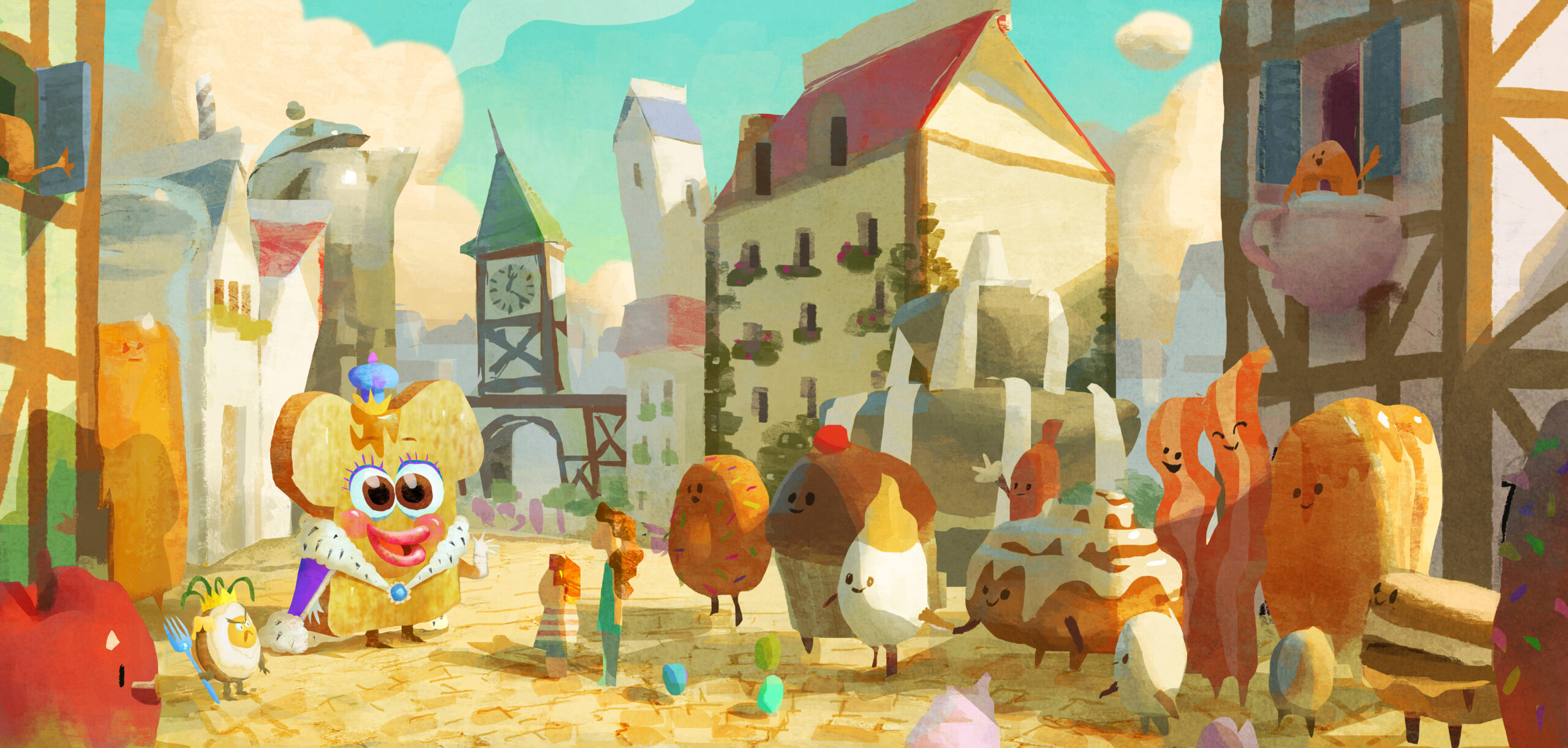
Nicola Lavender: The ball pit river was difficult not on the animation side but more on the technical side. Figuring out how to put things into that river and how they would react to that environment. It was also a fun set to work on because the colors were crazy and it had all these lighting transitions and storms coming in so that would have been one of the most interesting ones.
The Contending: You talked about earlier about how every animator had their own little character to design. Did you have your own character?
Nicola Lavender: No [Laughs], but they did have some fun experimenting with those characters and bringing them to life. One of the big ones though we brought to life was Baloney Tony. In his evolution there were so many tests done moving puppets and cuddly toys around and seeing how they would move so we could try to get that feeling into the animation of Baloney Tony. That way you are always respecting the real world version of what he is and where he comes from.
The Contending: I was thinking along those lines with the human characters. They have a more distinct movement compared to the dream characters. What was it like trying to make certain that they didn’t appear more dream-like?
Nicola Lavender: We definitely went for a more realistic approach to them. So it was a lot more like the real world in their animated movements. A lot of time and effort was put into the faces and the expressions, It was really small tweaks but it really adds to the performances but it definitely helps to ground them, and makes for a good comparison when they enter the dream world. I remember when Alex (Woo) first started with us he said to Sacha (Kapijimpanga), head of character animation, that he wanted Oscar-worthy performances. They did a great job with a lot of work that went into that.
The Contending: Speaking of facial work, what I really loved was Stevie’s smile. Was there anything specific about that animation or was it just that hard work you mentioned?
Nicola Lavender: It is that hard work and it’s just really looking at the details of where the folds are and how everything shifts, what it does to the eye shape, and how she gets those little dimples. Alex and Steve (Blakey) will do drawings of expressions that they think are key to a specific character. Then the animation team will hit those poses and move through the different versions of that pose and help refine it. That’s also done because some of the changes have to go back into the model because animation can’t always hit everything.
The Contending: One other character I found fascinating was the bed. First of course it’s just a bed and then it becomes this mode of transportation that flies through the air, and then it becomes almost like a dog or a horse or both. How did you guys go about giving it a personality?
Nicola Lavender: That was funny, both dog and horse were references for it. We had the horse reference at the beginning in the dream when she’s flying but then there’s the puppy-like qualities with the silly little movements she does, especially in breakfast town. We got a lot of references for horses and definitely puppies just to help inform the animators of different things to try. Bed was especially complicated for the VFX team with all those levels of sheets and duvets and pillows, especially when the sheet becomes the tongue. But yes, it’s still a fun character.
The Contending: That first flying sequence with Bed is taken very seriously. She is hitting things, and with its speed and the way characters react to it, even though you know it’s a dream that it could be very dangerous. Was that the plan to try to give us that sense of danger?
Nicola Lavender: I think from Stevie’s perspective yes, there is that fear. It is their first time in a dream and so it adds to the audience wondering if this really is a dream. I mean the beds flying so it obviously is a dream but then all of those reactions from the characters still makes you question.
The Contending: You have talked about a lot of the sequences. Was there something that particularly stood out to you as difficult or fun?
Nicola Lavender:I say all of it is fun because we live for these challenges in doing these types of movies. For me, it’s the storms and the sand, because those were effects heavy-driven, in terms of sequences. But really the crafting of some of the characters were the biggest challenges, because they required a lot of development time and back and forth with Alex and Steve to lock down the look and how they move. We start by getting concept art from the directors and the art team but they are not moving; they are static. So a lot of questions will come up when you start moving it, so you have to get into those moving tests very quickly to start answering those questions.
The Contending: Speaking of the storms, Nightmara, who we see forming in the storms, and she has these tendrils, and you guys mentioned you couldn’t reveal too much about her. Is there anything you can say about her motion or her design work that you found interesting?
Nicola Lavender: It is really just her relationship to storms. We have the Sandman so Nightmara formed the yin and yang with him. Even in the color palettes there’s the warmth of the sand and then the coolness of the storm. A lot of Nightmara’s design comes from storms and rain, so everything about her is dynamic and moving, nothing is really static. That was one of the big challenges for her and you will see her soon!
The Contending: Are any of the human characters based on anyone in particular, or did you just have some general ideas of what you wanted the characters to look like?
Nicola Lavender: Alex and Steve did those designs and I think there was some reference to Alex’s niece. There was some reference to her hair when we started working on Stevie. Steve and Alex really handled most of that so there was nothing major on our end.
The Contending: You do live action special effects as well, so what is the difference for you in terms of the project and the challenges?
Nicola Lavender: They are both amazing, but the joy for me with the animated world is the possibilities. You can do that in the live action world but you are always matching to a plate and putting it back in whereas you don’t have any boundaries in the animation world. So we can go crazy. Of course we are getting the artwork of where to go but we can really define the look and try different ideas. For me the joy as an artist is on the feature animation side.
In Your Dreams will have a limited theatrical release November 7th and then will stream exclusively on Netflix November 14th.