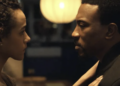

Netflix’s newest crime drama, Black Rabbit, positions Jude Law and Jason Bateman as two brothers with a complicated, even toxic, relationship that plays out against a New York City backdrop. As Jake (Law) and Vince (Bateman), the two actors create a powerful chemistry that helps you understand how they can’t resist helping each other, even when they can barely tolerate one another. The show takes its title from the restaurant the two used to run, which Jake eventually pushed Vince out of and now runs on his own. When we meet Vince, he is far down on his luck thanks to his gambling addiction. Over the course of eight episodes, Black Rabbit continually asks the question, “How much is blood worth?”
Key to the series’ success is the work of Emmy-winning Editor Vikash Patel. Having worked with Bateman on Ozark, the two men leveraged their rapport to create a cohesive vision for the show. Patel edited episodes one and two (which Bateman directed), as well as episodes seven and eight. In post-production, Patel was given the task of overseeing the editing of the entire show (including episodes four through six), as well as working with Bateman, the composers, and the music supervisor to make certain Black Rabbit was consistent in editing, tone, and aesthetic.
In our conversation, Patel and I discuss his unique duties on the show, as well as the great fortune of working with actors Law, Bateman, and a stunning Troy Kotsur, who plays a crime boss named Mancuso.
The Contending: You’ve had a long-running relationship with Jason Bateman since Ozark. I assume that played a role in you joining Black Rabbit.
Vikash Patel: I was supposed to do Outsider, but there was a conflict with my schedule because I already signed for The Morning Show season one launch. But Jason and I get along like a house on fire, so it was immediate for him, and he asked me to do the first two episodes of Black Rabbit.
The Contending: Black Rabbit is very different from Ozark in multiple ways, but also in terms of editing. Jason also directed the first two episodes. How did you two collaborate to establish the editing style?
Vikash Patel: We didn’t really talk initially about the editing style beforehand. About four months before the project, we had a lengthy conversation. We talked about tone and the visual aesthetic. Jason suggested I watch You Were Never Really Here and Uncut Gems. He said, I don’t want it to be that, but I want that feeling. We talked a lot about the score and music, specifically needle drops and late ‘90s rock. We also spoke about the temp score, in terms of offering a feeling before the composers got a hold of it. We knew Danny (Bensi) and Saunder (Jurrians) were going to be our composers–the same composers from Ozark. I asked Jason, Do you want me to track the episode with their stuff, or shall I just go rogue and do my own thing? He said, Let’s just do something completely different–I want it to feel internal, noisy, abstract. I went off and curated a library of these weird soundscape pieces from Europe, which were deliberately not iconic and familiar. There’s nothing that takes me more out of a show or a movie when watching the first cut, and knowing that melody, the theme. That’s from Social Network, and that’s from whatever movie, so I deliberately curated stuff nobody’s heard of–soundscape artists from Europe.
To be able to layer that together was fascinating. That’s on top of the visual aesthetic — the sound aesthetic. We started to work from there. But when it comes to the editing style, I don’t go into any project with a preconceived notion of how I’m going to put it together. I look at all the material. Jason doesn’t give me any direction.. Never. He trusts me and my aesthetic. We have the same taste and sensibilities, and there’s a lot of comfort that comes from that. I just do my thing, and I react to the material. We just want it to be riddled with tension or want it to be hostile or uneasy like the robbery in the heist in the pilot, you see the masked man outside the Black Rabbit, and you know it’s going to go wrong. From the moment you see those guys, that’s when the tension starts, and then the plates start spinning, and we’re spinning all the way to this crescendo, which is the gun being held at Jake’s head. Jason and I started overlapping the dialogue. So even when they’re running up the stairwell into the VIP room, Jake’s speech is still going. These two worlds are going to collide.
The moment they break through the door, Jason said, ‘Just keep notching it up, just ratchet it up.’ That’s when I was thinking more about Uncut Gems. You don’t get a breath with Uncut Gems. Dialogue, people screaming, everything’s happening at the same time. That was my idea for how to cut that scene, messy, frenetic, in your face. When we were on the mixing stage, I said to the mixers, “Let’s not protect the dialogue. Let’s just drive the music and the dialogue so heavily that they fight and compete with each other.” In the pilot, that’s the loudest scene. We sustain that for a minute and a half, and then we simmer it down. The editing style is very free-flowing. The first ten minutes give you a sense of where we can go and what we are doing, how measured it can be, and how documentary verité it can be, too. No rules. Jason was fine with jump cuts, breaking the line, et cetera. Hopefully, this was additive to the storytelling.
The Contending: You say tension, and that’s not wrong, but I thought of it as anxiety. Especially considering all of the factors that Jake is juggling in his head. The editing seems to reflect the internal balancing act Jake is managing.
Vikash Patel: I understand what you’re saying. He is juggling all the time. Jude is so good and you can see him thinking. Jason’s very good at that also. If you go back to Ozark in particular, his character is trying to think his way out of these tight spots. Jude’s doing some of the same thing–constantly making moves in his head. When you look at those two characters (Jake and Vince) and you separate them, of course, blood is the thing that connects them as brothers, but they are different. Clearly, Jason’s character is unhinged, and he is more street smart in many ways. When you know the backstory with him, you can understand why he’s like that, you can understand why he’s a fuckup. Jake is more measured, as you said; you can see the wheel spinning. He’s very calculated, reminiscent of Marty Byrde from Ozark. If you think about it, Jake is that character this time around. It’s interesting how you came to that. It is a good observation.
The Contending: You can see Jake trying to maintain that he’s a good person, even though he often lies, makes ethically and morally challenging choices, and negotiates with himself in his head about how far he is willing to go. It must have been great to edit an actor who can give you all of that without saying a word.
Vikash Patel: Fantastic. The moment you see his face in the first frame in the pilot and then the last frame of the picture, it’s all him. That was very deliberate by Jason. Let’s go out on his face. But yes, you’re right. Jude is so sophisticated, so tasteful with everything that’s going on with his face, his eyes. Both of them (Jude and Jason) together, there were significant amounts of ad-libbing where they would just feed off each other. The dialogue was fantastic, but then they would also add their own ad-libs, really making it feel like a sibling rivalry. The banter was great to cut, and we just went for it. If the ad lib made me laugh, then why not keep it? Because, as you said earlier, the show is riddled with anxiety. To sustain that for so long, you need moments that make you laugh. There’s multiple times where you’re laughing in the pilot and throughout the series, which gives you a breather in many ways, because otherwise, it’s pretty intense.
The Contending: There’s something I love about Jason’s acting, and it has mostly to do with his voice and the way he delivers his lines. When Jason talks, a sense of sarcasm is always present, and he can bring it out by modulating his voice ever so slightly. I always marvel at how he possesses this quality and can play such a diverse range of roles.

Vikash Patel: You’re completely on point. That’s just Jason as a person, too. He’s so sharp. He will make a joke, and it’ll take you three or four seconds to catch up, and you’re like, Oh my God, that was hilarious. He embodied that with Marty Byrde on
Ozark–he was very similar. You’ve got a really dark scene, heavy scene, and he’ll make a quick one-liner. It makes you laugh, even if the scene is rooted in tension. He’s not doing it for a joke in terms of the scene. It’s just deadpan dry humor, and it’s really effective. His comic timing, I think, is just genius at times. A good example is the apartment scene between Jake and Vince when he’s had his finger chopped off. Or even the elevator scene, right? When he says, “Let’s fire up that mop, I’ll see you on one, my friend.” Then, in the apartment with his brother, he calls him “giggles,” which is not scripted; that’s just him saying it. He also calls him “Uncle Jake,” also not scripted.
The Contending: Jason seems to be drawn to dark or satirical material. As a director, do you find his sensibilities line up well with his personality? Is that why we get this darkness mixed with humor?
Vikash Patel: He’s a very confident, fun, endearing person. He’ll make the time of day for you. It’s interesting that he gravitates towards the darker material. He’s a family man. He has two kids. Yeah. He likes that line between dark humor and tension living in one space. Ozark was a great example of that. Black Rabbit is a great example of that, too. He loves pushing the medium. I think you’ll see that what we’ve done on Black Rabbit is different. It has touches of Ozark, but it’s different. Collectively, we feel good about it. He’s becoming a more assured filmmaker, which I love.
The Contending: The show has a very active camera. Does that create any more of a challenge for you as an editor?
Vikash Patel: Yes and no. Less so in the first two episodes. There’s an arc to that filmmaking, and when we get to episode seven, it’s off the rails. (Director) Justin Kurzel shot, I would say, between four and five hours of dailies a day–all handheld. All verité. Two to three cameras. And the way Justin directs no takes are the same. Every take starts on a different character, and the camera moves differently, picking up little pieces. So the challenge when it comes to editing is, first and foremost, you’ve gotta tell the story, right? My take on cutting a scene is that I also want to offer a strong point of view. You don’t want to just be on camera picking up dialogue from every single person. I want to live with a person, and that’s the challenge when the camera’s roving everywhere, but I want to stay on a specific character. With Justin, there were multiple times I would get painted into a corner, because I’m using all the bests. These are the little tasteful treats that I want to use. Once I’ve mined all the material, I have to get a scene out of this.
Like the fixer (Morgan Spector) in the Chinese restaurant, you’ve got these two guys in the restaurant talking. You’re seeing Jake unraveling. His world is spinning out of control. You’ve got this guy saying to him, ‘You’ve got to get to your brother.’ Who’s it gonna be, Mancuso or you? You see the camera just moving handheld from left to right and then behind them. I really wanted to make sure that the scene landed all the information with Jake, less with the fixer and more with Jake as he processes this information and decides what he’s going to do if Mancuso catches Vince first. It was a fascinating challenge because I had to jump from one side of the camera to the other, and now I need to return to another position because I want to be over here. The great thing is that I’d always have that reverse wide shot, just to pull back out and reset myself. I think as an editor, you want it to always be pretty. That wasn’t an option here. But it challenged me to just be creative and jump cut my way out or do something interesting. There were really no rules. Jason and I, when we talked about it, our approach was to let’s just make it messy, which was a little bit different than our approach on Ozark.
The Contending: Morgan Spector, as Campbell, the fixer, is so still mentally and physically, and Jake’s spinning. It’s a fantastic dynamic.
Vikash Patel: He controls that scene, and you are just watching Jake, who feels like everything’s falling to pieces here. What am I gonna do? What’s my next move? He’s spinning in the scene with the detective when she’s questioning him at the hospital. It’s a testament to Jude. Fantastic actor.
The Contending: Kurzel is a very talented filmmaker. His version of Macbeth, starring Michael Fassbender, is excellent.
Vikash Patel: He is a wonderful filmmaker. Really visionary. You probably got a sense that we escalate in episodes seven and eight. Then we’re in a whole different universe, what Justin captured on top of what we were already doing – feeding into the aesthetic style throughout the whole series – by using the B-roll shots of New York and establishing a sense of place and our characters in that space in New York, running and gunning on the streets. Through Chinatown, et cetera. All over the bridges, driving all of that. Justin just grabbed it all.
The Contending: In the heist scene and other sequences in the show, a balance of chaos and control is necessary to keep the audience oriented while also keeping them off guard. Is it challenging to manage chaos and control?
Vikash Patel: I think if you’ve done your homework before the scene, before the chaos, and you’ve grounded the audience there, then, for example, the robbery, right? We ground the audience by building tension and anxiety from the moment the masked men are introduced, as we said earlier. We see the world, we see where our characters are living. Jason deliberately introduces the world as the characters kitchen, the stairwell, the VIP room, and his office. We have a sense of place. Then we have the liberty to go nuts with it, which I did in the robbery. A good example is in episodes seven and eight. Specifically in episode eight. We’ve established in terms of geography, the Plank, which is the bar.
Vince comes in to find Matt and get the keys to his car, and disappear. When Mancuso and Babbitt (Chris Coy) come in, things change very quickly, but we know our space there. And then we start doing the intercutting with Jake coming to try to save his brother. It’s getting frenetic, and the tension is ratcheting up to a boiling point. When Vince runs, you see how the cutting pattern changes. Really aggressive up until they get to Coney Island, and then it all simmers again. Those are very deliberate choices. It’s almost like a rollercoaster. You’re going up and down, and you settle for a beat and live with the characters in that moment. When I’m in those moments, I don’t like to do too much cutting. Because when we settle, as an editor, if I’m cutting too much, then I’m robbing the audience of living in that moment. I would rather stay on a shot for longer and let the two or three characters talk in that singular shot, because it feels more real.
The Contending: By placing the robbery upfront and then revisiting it later, revelations occur that change the meaning of what was seen in the pilot. How did you manage the amount of information you shared in those different versions of the heist so that the reveal doesn’t feel like a cheat to the audience?

Vikash Patel: That’s a really good question because the robbery is really shared between episode one and episode six, first and foremost. The misdirect is in episode one. We just know it’s a robbery, but we don’t immediately know who is wearing the masks. We hear Junior’s (Mancuso’s son) voice, and as we reveal him, we know he’s one of the robbers, but the other person doesn’t talk in the pilot. That was a deliberate choice for that moment because we withheld information, which is revealed in episode six. My conversation with Cedric (Nairn-Smith), who was the editor on five and six, was that we need to remind the audience of what they’ve witnessed in the pilot. I hate to say this, but you’ve got to make it the same, yet you also have to make it different. You have to ground me first as a viewer, because it’s been six episodes – it’s been a long time. There is no recap.
But if you just hold the audience’s hand briefly and pick us back up to that moment, and then you get to go your own way and showcase different points of view and see additional information — that’s the trick and that’s the goal. There are also iconic needle drops and specific dialogue that will help orient you. You’ve got the Walkman track at the opening, and the song in the VIP room. We deliberately played them as clues and breadcrumbs. You’ve got the dialogue outside of the Black Rabbit with the two men. As you come into the kitchen and see Tony, and you’re like, wait, why are we hanging there for a second and a half? But then, the next time you see it from a different point of view, you start understanding and begin putting all these pieces together. There are little pieces everywhere connecting those two scenes deliberately.
The Contending: A couple of years ago, I interviewed Chris Messina for Air, which Jason was also on. Almost his entire performance in Air is on the telephone. He told me that he went back and watched Dog Day Afternoon to see how Al Pacino acted with a telephone. There are numerous telephone scenes featuring intense conversations, with the camera cutting back and forth between characters on either end of the line. How do you cut to maintain that tension when your characters are using such a basic device to communicate?
Vikash Patel: I don’t know if there’s a trick, but you’ve got to start the conversation somewhere on one side. The tendency could be to overcut it and keep bouncing back and forth. That’s not the way I approach telephone scenes. At the end of seven and picking back up in eight, Jake has been held by Mancuso and Babbitt in the car, and they basically want to get intel on where Vince is. That conversation, with Vince coming down the subway, they’re in the car, and they’ve got Gen (Vince’s daughter) in the car over there. I think all of that is so tense. You’re seeing all of our characters in a place of drama.
There’s an uneasiness going on between them all. They’ve all got their own agendas. Vince is just trying to get out of town. Jake’s got to save Gen, but he also has to save his brother at the same time. I’ve got to give Mancus and Babbitt the information about where Vince is, but also, Jake has to make a plan to save Vince as well. You make that tense with the drama that’s feeding into the scene from before. I’m just living in the drama with the characters and feeding off the strong point of view, not cutting away and staying with the character. I deliberately stay with either Jake or Vince, rather than cutting back and forth for each line, because I don’t think that’s additive.
The Contending: One thing that I picked up on as I was watching the show, and I don’t know how intentional it was, but it seems very interested in showing people listening and thinking, watching their faces as they’re doing nothing other than that, and just listening and thinking.
Vikash Patel: That’s exactly my sensibility. And that’s exactly Jason’s sensibility. It’s being still and listening because it’s so much more interesting to see what the characters are doing whilst they’re listening. A great example is the scene between Mancuso and Vince at the Plank in episode eight, and I’m focusing on Jason’s character as he processes all the information. Babbitt’s signing, Mancuso is signing, but Babbitt’s also doing the interpretation for Vince. You see everything on Jason’s face, and we can do that because we have a fantastic actor who can play that. The challenge is when you don’t have that story coming across, that’s when you would cut away. But we never had to cut to anything. I think it’s just there. I would say that listening is our number one sensibility, and it’s our favorite type of filmmaking, both Jason and I.
The Contending: I would be remiss if we didn’t discuss Troy Kotsur as Mancuso, because anyone who has seen Coda is not going to be ready for this. He is so formidable.

Vikash Patel: He’s magnetic. He’s just a force. That’s a testament to Troy and to Jason. Jason said to him, and I remember vividly, You don’t need to do anything. I don’t want you to do anything. I just want you to be still. So, when we were working and I was cutting the scenes, I was just keeping it so measured. The fact that he is still speaks volumes. How intense is he? You get a glimpse of that in episode two, when Jake comes in to start paying back some of Vince’s debt. He’s so warm and charming. Do you want a cup of coffee? Yeah, sure. And then that scene takes a turn, and he throws the coffee mug. You see that close-up of his face, which we saved deliberately. You see it on his face. I’m calling the shots from here. He’s amazing. I didn’t need the sign language for me as an editor to understand what he was doing because his face sets it off.
The Contending: I actually found that, after a certain point, I didn’t need Babbitt to interpret Mancuso’s sign language verbally because I could see it on Kotsur’s face.
Vikash Patel: In episode seven, Jake is unraveling. He runs to his ex-wife, Val’s, house to tell his son and Val to get out of town. Then I make an evocative transition where I drop all the dialogue, and we start living in this world and strong point of view with Jake, as he’s basically having a panic attack. Then I carried that through to Mancuso, learning about a significant death. There was dialogue in all of that. But Jason and I were working on it, and we decided we didn’t need any of the dialogue. Kotsur’s doing everything. When he learns the news, we see it on his face. We get it all. Troy did everything for us. It was fantastic. Your heart breaks for him in that moment. It’s pretty powerful to heighten the scene by making the choice of removing the dialogue..
The Contending: We’ve discussed the frenetic and intense scenes at length, but my favorite cut is in episode two, where, in a flashback, Vince introduces Jake to the location that will become the Black Rabbit restaurant. We go up to the roof, and Vince is saving that moment to really sell Jake on the location. The camera cuts to a skyscraper, which is eye-catching enough. However, we then cut to a wide shot, which shows not only the building but also the bridge, highlighting just how remarkable this particular spot would be for a restaurant due to the extraordinary view.
Vikash Patel: That was the reveal. It’s a delayed reveal. It’s very deliberate on my part to cut it that way, and Jason never gave me a note on it, so I assumed he liked it. You got exactly what I was going for, and it’s amazing what a location that is. The VFX on the show was so small. It’s all practical. That bridge, that location is right there. There’s a breadcrumb there; if you think about it, we reveal that bridge in episode two. Then we mirror it in episode eight. I’m glad you picked up on that. It can sometimes frustrate the audience. But it’s really interesting to see how far you can push it, which is the delayed reveal.
The Contending: Along with being a cracking good New York City crime drama, the show also serves as a bit of a love letter to the city.
Vikash Patel: It’s the song at the end, right? Manhattan, the Dinah Washington’s track. It is a love note to the city. You got it completely right. A love note to his brother, but it’s also to New York.
The Contending: Your work bookends the series, but you were also very involved in post-production, managing the tone and cohesion of the show. Is that unusual for an editor working on a show with multiple editors?
Vikash Patel: Jason obviously was in touch with me the previous year, in the fall of 2023. I was just wrapping up The Sympathizer at that moment, and I was going to be done by the time Black Rabbit would start. So it was great in terms of timing. His intent was always for me to edit the first two, which he was going to direct. It worked out that I was able to do the last two as well. We had two other editors to do the middle four. Then Jason and Michael Costigan, who’s Jason’s partner, said they were interested in me doing this kind of a different, larger role–observing the whole series from 30,000 feet. I was there to help the over two editors in terms of taste, aesthetic, continuity, so there’s a uniform voice.
As we approached the end of last year, with only a couple of weeks left, Jason asked me to sit and watch all eight episodes, and if there were adjustments to be made, we would make them. That was really additive because, standing at the top and going all the way to the end, I was able to set the aesthetic visual style, tone, music, and all of it. I was able to filter that through and make sure everything was cohesive through all eight episodes, never repeating a b-roll shots, making sure we’re tracking music correctly, replacing needle drops, if we can improve on them, sitting with Gabe Hilfer, our music supervisor, going through each episode, and asking, Can we make that better? Jason made it work, and Cedric and Kyle were brilliant. They are wonderful, talented editors. There really wasn’t much that needed to be augmented, other than making sure all the episodes felt a part of the same piece.
Black Rabbit is streaming now on Netflix