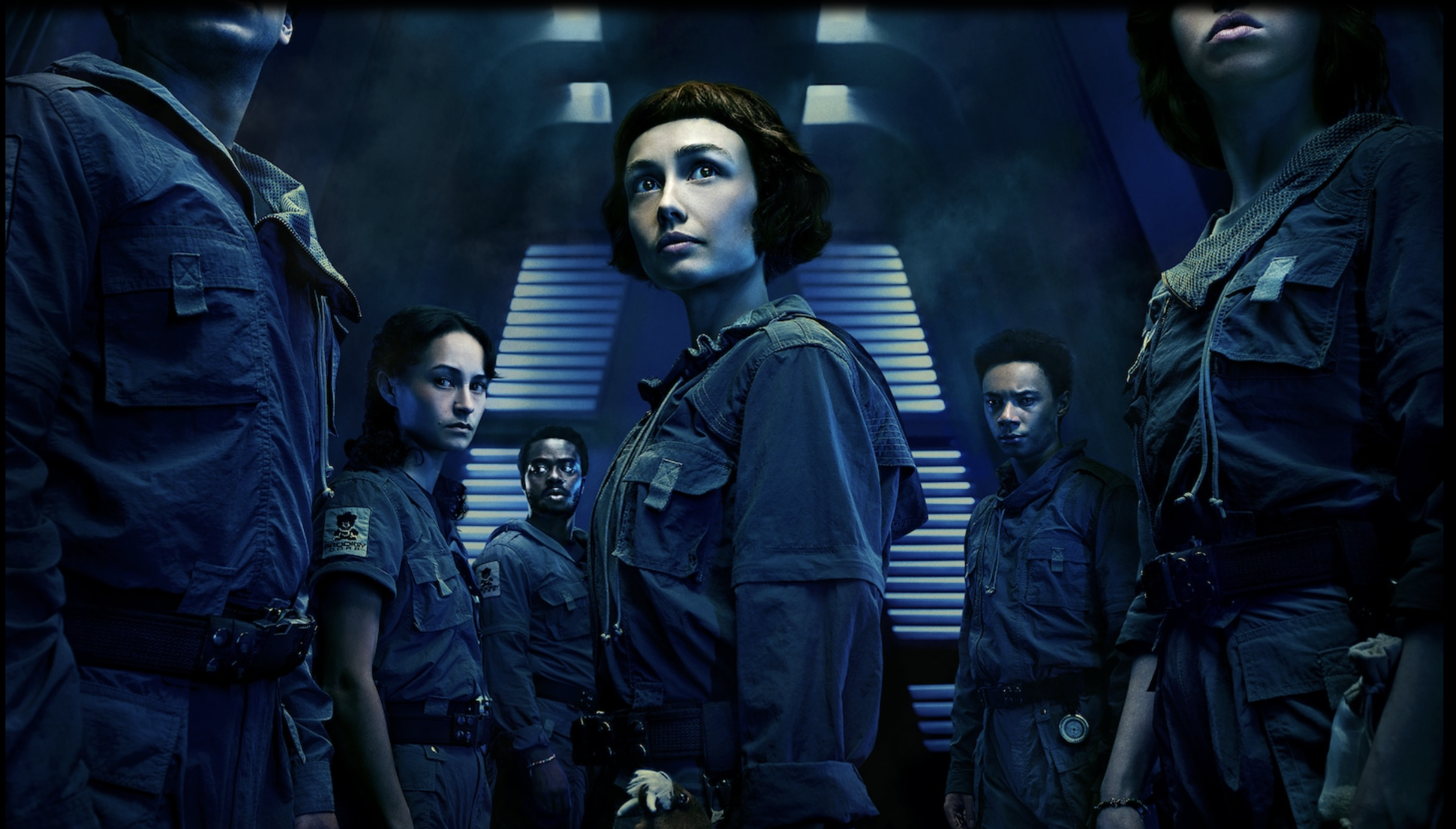
While Maggie Phillips, the Emmy-nominated Music Supervisor for Fargo, had worked with that show’s creator, Noah Hawley, multiple times before (Fargo, Lucy in the Sky, Legion), she was keenly aware that taking on Alien: Earth, the latest installment in that storied franchise’s history, would be a heavy lift. After Aliens, James Cameron’s wildly successful 1986 sequel to Ridley Scott’s Alien, subsequent productions have not met with the same level of acclaim from critics or viewers. Any new Alien-based production was sure to be met with skepticism from fans and writers. Another challenge is that the now 47-year-old legacy product has seldom used songs across its iterations. Alien: Earth, which functions as a prequel to the first film, needed to be more than a faithful homage; it needed to offer something new and exciting to, well, justify its existence.
Not only did Alien: Earth earn the right to exist in the fabled history of face-huggers, but it quickly became hailed as one of the finest entries in the Alien universe. The use of songs in the series is one of the many ways the show sets itself apart from previous installments. As Phillips read through the scripts, she found herself connecting deeply to the resurrected synthetic children in the series. In selecting and clearing songs for the show, Phillips wanted to create a catharsis for these new beings, these lost children who live, but are not granted agency from their creators, and who are experiencing all the emotions that young people have, but do not know how to express them, and aren’t necessarily allowed to do so in the first place.
In our conversation, Maggie Phillips and I discuss the nature of song selection, the challenges of procurement, and the broad enthusiasm felt by Pearl Jam and Eddie Vedder for taking part in this superior entry into Alien lore.
The Contending: In most Alien projects, there haven’t been many needle drops. I assume the song choices here had to be very intentional.
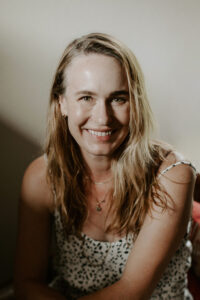
Maggie Phillips: Intentional and also instinctual. I knew Noah was working on Alien: Earth before we even knew it would be called Alien: Earth. Jeff Russo (the show’s composer) talked about what the music was going to be like. I wasn’t sure there would even be songs. Am I going to have a role in this? The entire franchise has maybe two songs total. We both had questions about how we would approach such a huge franchise with such an incredible fan base and how we would serve this project. But I did know, because it’s a Noah Hawley project, there would be songs. I just knew it. There were no songs in the scripts, which is unusual for the way Noah writes. Even if he doesn’t write specifically with a song in mind, as with Fargo and Legion, he sometimes leaves a space for a song to be used, and we know we’re going to be talking about it later. In this instance, there were no scripted song moments; I couldn’t even see moments for songs. I just didn’t know. It was such a long shooting process; it took four years from script to completion. Then we got into the editing room and started testing songs out for the pilot. By the second episode, the song question started answering itself as we tried things out. When I say we, it was me, Noah, and Regis Kimble, who’s the consulting producer and head editor. He’s the main editor for all of Noah’s projects, and we’ve been working together for twelve years. It became very clear that the end titles were the place where we could use songs and do something different than the movies. TV shows are different; you don’t have the audience for two hours at a time. You don’t have their attention for the entire time. You’re not in a quiet theater. So it’s a way to punctuate the episodes and give you some emotional release after all the tension and dread of what you just watched. It’s a big show with big emotions, and you’re dealing with teenagers, kids, so it was a way to have some catharsis, but then also propel us into the next episode and get people excited. We’re trying to punctuate, but then also lead us into the next episode. The other thing I would say is it’s Alien: Earth. It’s on Earth. There are songs on Earth.
The Contending: I’ve read that the song choices for the end credits weren’t necessarily chosen for their subject matter, but they do share one thing: they are aggressive rock-based songs. I think that probably speaks to the catharsis that you mentioned. How did you land on that decision?
Maggie Phillips: These rock/metal songs have the feel of the time period when Alien first came out. Noah was very careful with the set design, production design, and costume design to nod to the original franchise. So I think the songs are of that world, but still feel contemporary and modern, and also nostalgic. I think these songs speak to the teenage aspect of it, the kids having all these big emotions and not knowing really how to process them. They essentially have died and are now reborn and are going through what you would go through as a teenager, your body’s changing so quickly, and you have a lot of big emotions that you don’t know how to manage. It’s a release. There’s aggression, there’s anger, and emotions are going on inside them that they can’t let out or don’t know how to, and I feel like we’re giving them a little bit of that and giving it to the audience, too. You feel attached to Sydney’s character, Wendy. You feel attached to the other children. You want to protect them. Especially episode four, where we placed Jane’s Addiction, “Ocean Size.” Lily Newmark’s Nibs realized that she’s not going to be able to have children, and she imagines herself pregnant. It was her way of dealing with the fact that she’s not going to grow up and have children. I felt very attached to these children and what they were going through, and it was an emotional release for me at the end.
The Contending: I think it’s true of most people that the music that hits them when they are young is the music that hits them hardest. You have hormones bursting all over the place. You’re figuring out what you believe in. All these raw emotions play into it. I hadn’t thought about the idea that the songs might reflect an emotional explosion that the younger characters can’t actually express on their own.
Maggie Phillips: They have all this internal aggression and rage and emotion going on, and then they also have to deal with the external, what’s coming at them in the world. They’re expected to be heroes and expected to kill. There’s so much that they’re trying to navigate. We’re not giving them much song-wise throughout the episodes because we’re trying to build tension and not pull you out of the story. We want the audience along for the ride, but we also want to provide that release at the end.
The Contending: Last year, I flew 2000 miles to see TV on the Radio in concert. They are one of my favorite bands. The use of “Killer Crane” during Wendy’s rebirth. How did that choice come about?
Maggie Phillips: I was one of those people who saw them early on in Brooklyn. I used to live in Williamsburg. I saw them when they were in small clubs. “Killer Crane” works so well because the song is a tribute and an homage to Gerard Smith, their bass player, who died from lung cancer at 36. It’s a song that’s both life-affirming and haunting. It’s just perfect for Wendy to be reborn into her new identity with that song as the backdrop. It’s a really beautiful moment of peace and her rediscovering her body. The sequence was cut beautifully, and after doing some research into how it was written, I was just like, oh my God, I thought it was perfect.
The Contending: Sydney Chandler’s character development is aided not only by the use of “Killer Crane,” but also later on by her humming “Accentuate the Positive.” It’s clever, funny, and also revealing of how her mind is working.
Maggie Phillips: It’s definitely character-driven, these choices. That’s how Noah writes. Now that you’ve mentioned it, “Accentuate the Positive” was the only scripted song. And that’s a song that Noah has used previously. He used it in Fargo. It’s a song he loves. It’s buried, but in the (Alien: Earth) pilot, you hear it. Noah’s playing the dad, on screen. It becomes a through line for the family: the dad, Hermit, and Wendy. That’s why she’s singing at the end.
The Contending: Season Four of Fargo had this strong connection to The Wizard of Oz. Season one of Alien: Earth is very connected to Peter Pan. Did that have any impact on song choices?
Maggie Phillips: It didn’t directly play into any of the song choices, but the pilot’s called “Neverland” and it’s Wendy and the Lost Children. It was a recurring theme throughout the series and those scripts. That was very purposeful from Noah, and maybe, now I’m saying it out loud, maybe why I got so attached to the children, the lost children, and felt so maternal to them. I connected with them like my past self as a teenager. But then I also connected with them in a sort of maternal way, wanting to give them some protection while also giving them some release, and really caring about all the emotions they were feeling. What Sydney does so well is navigate that child-like, wide-eyed feeling. She’s sort of the mother of these lost children, the hero, but she’s also lost like them. She has so many different things to get across, and she does an amazing job with it.
The Contending: There is a sense of empathy and detachment that Sydney is balancing as Wendy. She brings in the children who follow her and the audience simultaneously, yet still maintains this distance because the very nature of her existence is so unnatural.
Maggie Phillips: It’s not really explicit, but she’s being called upon to save the world and to save her brother. She has to be a warrior, which requires a degree of detachment. But she is also a little girl in a woman’s body. It’s pretty profound. I know people watch Alien for different reasons. For me, following the characters and their story arcs is what brought me into the story. I always kept the characters in mind. Jeff had to answer to the pre-existing score of the original film. I had the gift of not having to think about that too much, because songs were seldom used throughout the franchise. I was able to just think about my emotional reaction to the story Noah’s trying to tell. What was scary was understanding the fan base and knowing they would have strong reactions to the song choices, but it was also a gift to have a clean slate. To not have to think of any iconic songs that are attached to the franchise, because there weren’t any.
The Contending: I can imagine that it’s easy for those outside the industry to look at the basic responsibilities of a Music Supervisor and think, “What a wonderful job. You just show up, and you pick the songs that you like, and they get put in the movie or series.” Having interviewed other Music Supervisors like Jen Malone (for Atlanta) and Thomas Golubcic (for Better Call Saul), I know it’s so much more complicated to get clearances and negotiate with whoever owns the rights to the songs. There’s also the cost of using the songs, especially recordings by well-known artists. It’s so much more than curating or creating a mixtape.
Maggie Phillips: I try to be the duck above water, where I present a calm facade, and then underneath I’m just paddling. It is very stressful. And only other music supervisors understand the stress of clearing songs, because there’s no guidebook. Every song is different. Every approval party’s different. The budget is always a factor. This one was hard. Some songs were really challenging to clear. The way I work is that the only time I will take “no” as an answer is if it’s a creative “no,” because I respect that this is their song. This is their art. If they don’t want their art associated with ours, that is their choice. I never want to push back on that unless I think that the artist doesn’t understand what we’re trying to do. Like, perhaps you would reconsider if you could see the context. But I don’t like to accept no for any other reason, because I’m trying to get the filmmaker what they want, and that requires a lot of polite stalking. (Laughs). The bigger songs are actually easier because there’s a paper trail. And not all of these songs have been licensed. There were a few that we got a denial on, and there was some pushback. And then we had one that I think was too expensive, and it was like how do we talk it down? But for the most part, this was one that more people, like the bigger artists, were excited to be a part of. Pearl Jam was thrilled about it.
The Contending: “Animal” is my favorite Pearl Jam song ever. From that opening rush, you cannot help but surge internally when you hear the opening of it, and the way that it just goes all the way through, it never lets up. Eddie Vedder and the band are known to be very thoughtful about how they allow their songs to be used. But in this case, they were eager to have their music used?
Maggie Phillips: I don’t think I’ve ever licensed Pearl Jam before, or if I have, it’s been quite some time. That song still gives me goosebumps thinking about it. I just think lyrically, musically, it’s perfection. It makes me laugh. I love that song so much. That clearance came pretty quickly. And then their manager actually reached out to me. I had never met him before, and he called to say how excited they were. He reached out again after they had heard it in the episode. Because of that, he and I have started talking about whether we can get them back for Season Two. Would they do something else? Ten came out when I was in high school, and I remember having that CD; I know every lyric. I knew this song, but it wasn’t like the back of my hand because it wasn’t off of Ten, an album I burned out on my jambox. For me, having Pearl Jam’s manager contact me and tell me that the band and Eddie Vedder were excited about this use are the moments high school music geek Maggie likes to hear: someone liking what you put in a TV show. It’s so gratifying. It doesn’t happen very often. So when it happens, I try to really treasure those moments.
The Contending: To your point, I remember when I was talking to Thomas Golubcic about Better Call Saul, so this is years into the Breaking Bad universe. I naively assumed that artists would want to be a part of this great show and maybe drop their asking price. He said that rarely happens. He said the only time it ever happened in his Breaking Bad work was when Steve Perry let him use “Oh Sherrie” because his wife was dying in the hospital and they were binging Breaking Bad, while she was suffering from cancer. That’s why “Oh Sherrie” was used to illustrate Jesse Plemons’ character’s love of soft rock music.
Maggie Phillips: That’s such a great story. I love Thomas. I love his heart so much. A lot of my favorite stories are from artists who benefited in a time of need from our use of their music. Like your placement of our song paid for health bills. One of the first times this happened was Fargo, my first TV show was actually Fargo Season Two. And we put in a song from this artist in Africa, and I knew the label. He called me to tell me that the family was able to purchase some farming land because of this placement, and it changed their family’s trajectory, just this one little placement. This job can get brutal and stressful, but it’s moments like that when I’m like, “Oh, I actually get to do something kind of beautiful.” There’s a song right now in another show I’m working on where we have an artist who’s a bigger name; I can’t say who, or I will break NDA. But you would recognize her name; she’s older, and she’s having some health issues, and they said, ” Do whatever you can to keep the song in, because we know this money’s really going to help her.” You hear things like that, and you’re just like, “Wow, I am doing something.” Sometimes when you’re in Hollywood and doing TV, you wonder whether you are doing any good.
The Contending: As a long-time fan of Alien and Aliens, I’ve often felt frustrated by the offerings that came after the second film. Not that I haven’t enjoyed some of them, but it’s never felt quite the same. This show is different. The fifth episode plays almost like a stand-alone Alien movie. It was jaw-dropping. I imagine for you, being a part of the legacy that has brought a lot of mixed feelings from the fan base, and having this show received with both critical acclaim and affection from viewers has to be very satisfying.
Maggie Phillips: It’s a lot. I’m in a vacuum. I’m in my own house, just working, and I don’t visit the set, and I didn’t feel the magnitude of it until I went to the premiere and I sat in the theater with the audience. I knew the people who I worked with on Fargo, but it was a whole new cast. The premiere was held in London, and Jeff Russo and I went, and Noah and his family were there. And I have been working with Noah now for twelve years, and just being in the room with everyone and watching it with the sound design and the score and the mix, I was in tears. I thought it was beautiful, and I felt responsible for a big moment in film and TV history. I know that sounds so braggy.
The Contending: Brag away because at the end of episode five, I raised my fist and yelled, and my wife wondered what happened in the house. Obviously, this is a widely-viewed show, audiences responded, critics responded. There was the viewership, and now, Season Two. I know you can’t tell me too much, but where are you at in terms of the procurement stage?
Maggie Phillips: I just got scripts. Just started reading. They’re shooting in London this Season. They start shooting in June. I really want to go to London, visit the set, get inspired early on, and have that play into the Season Two selections. I now understand the magnitude more. When I first started, I understood the weight in a different way. And also, I don’t know if you know, there was a lot of discussion about the songs. Some people hated them.
The Contending: There is. And those people are wrong, but that’s fine. (Laughs). Are you treating Season Two as a blank slate, or are you thinking of some songs already?
Maggie Phillips: Oh, I have a running list of songs and bands that didn’t make it into Season One that I’d love to see in Season Two. But I have yet to talk to Noah about it. So we haven’t even started those. I want to read all the scripts, because we get all of them. Noah’s great about writing everything beforehand, and I want to see the arc, the characters, everything that’s going on, and then we’ll talk.
All episodes of Alien Earth are available to stream now on Disney, Hulu, and FX. Season Two is expected to premiere in 2027.