
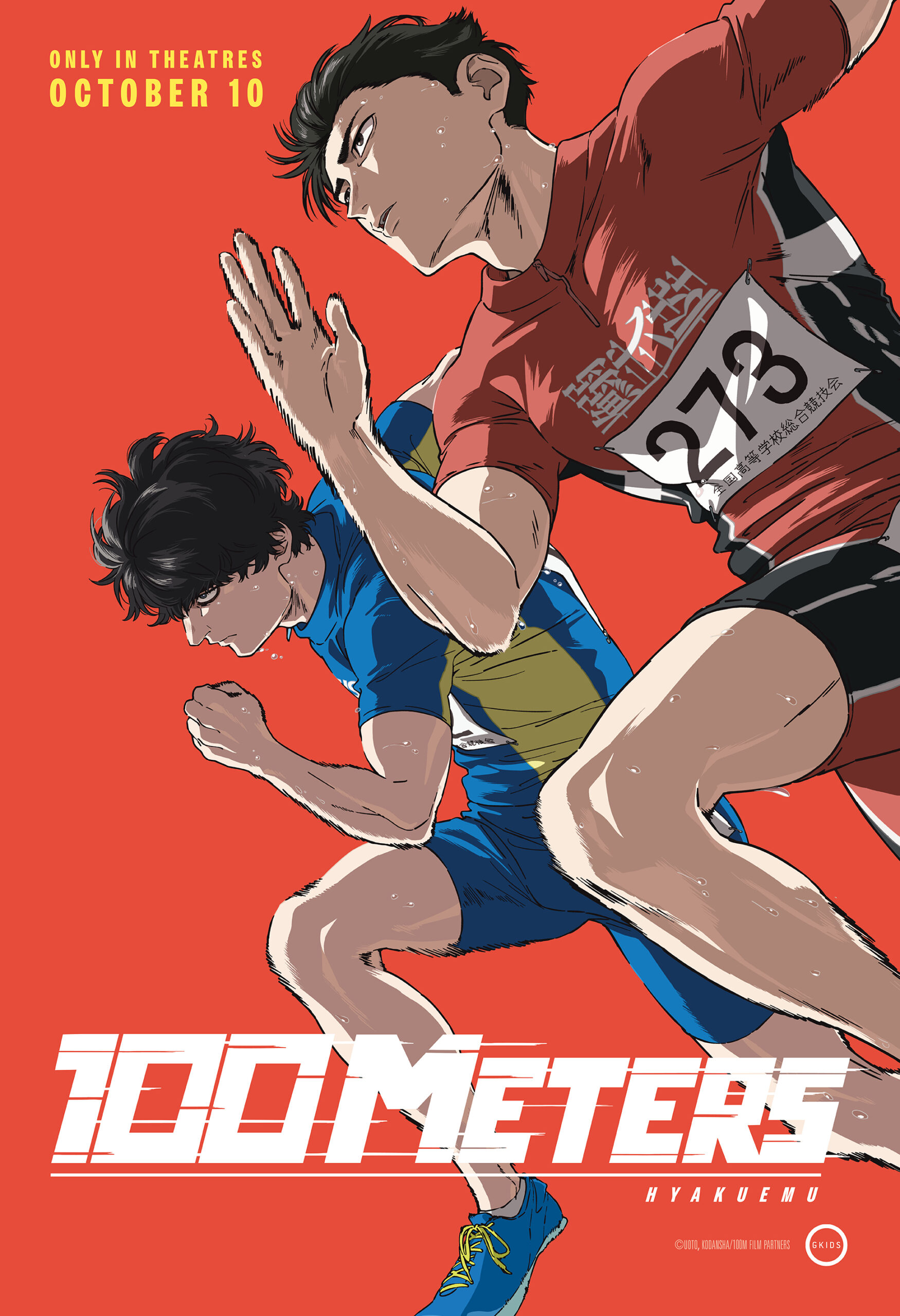
Director Kenji Iwaisawa’s unique blend of rotoscope animation and a deeper look into the world of competitive track running creates a unique journey in GKIDS 100 Meters. Here, in an interview with The Contending, he reveals how he wanted to capture all that goes into being a runner as well as the complex emotions that racing brings out in people. Plus, he explores how those emotions and the overall runner experience changes over time. He hopes viewers will be open to seeing animation in a different way and experience something new from it.
The Contending: What attracted you to this manga to want to make it into a film?
Kenji Iwaisawa: The original manga artist, Uoto-sensei, he’s really well known for his other work, Orb. So I was reading that, and then once I read it, I really got interested in the artist and his other work, so then I went searching for what else he had worked on, and then I found that his debut manga series was 100 Meters. And I really liked it as well. But it was a coincidence, because it’s not like I took the manga and went out to pitch it. It was a coincidence that two weeks later I got an offer to work on this anime film.
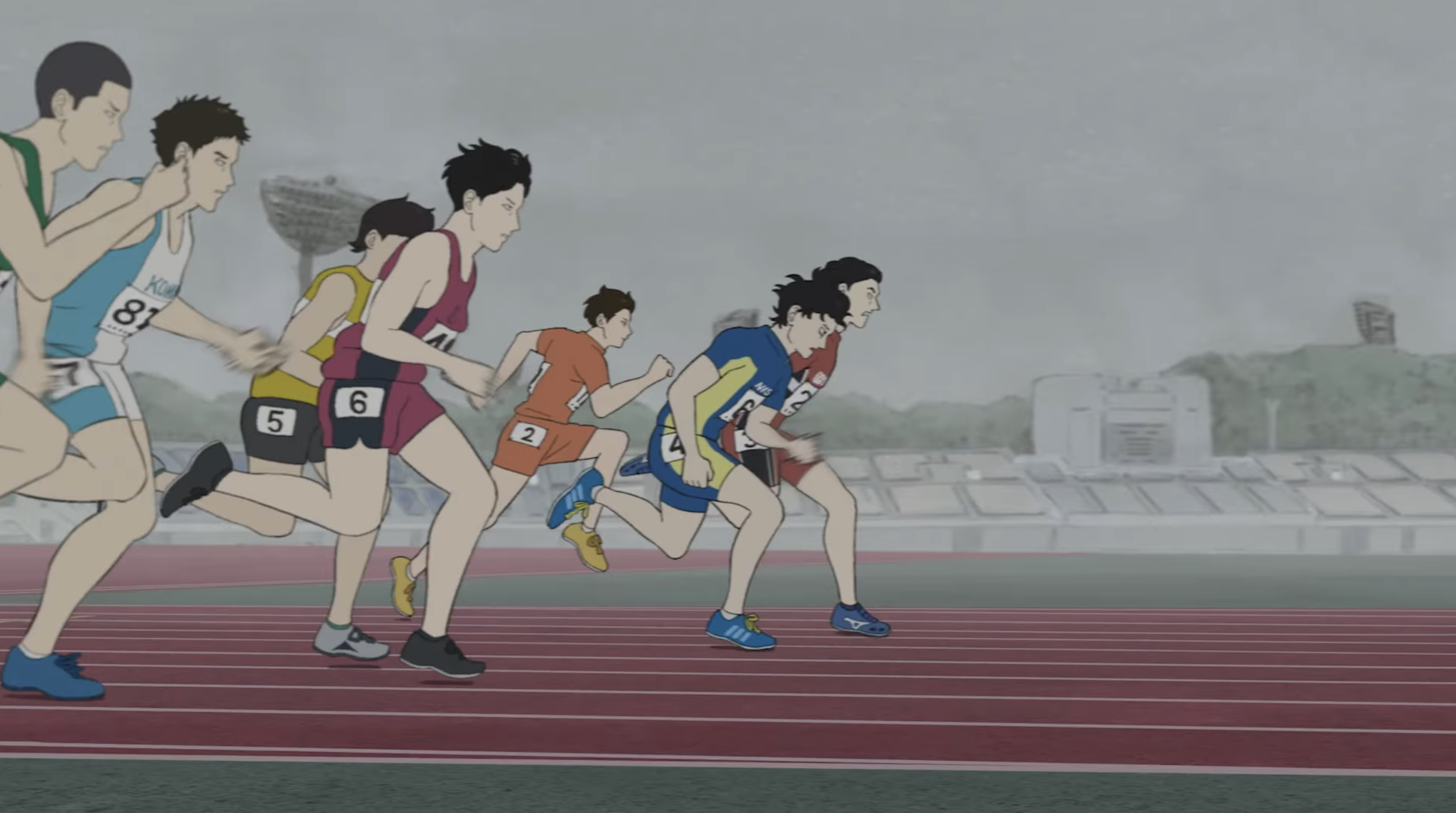
The Contending: One sequence that really stood out to me, is the first re-race between Tagashi and Komiya, where we lose color as we have the rain coming down. Where did the idea for that sequence come from?
Kenji Iwaisawa: After I got the offer to work on this movie, I went personally to go watch a track and field meet, and that was my first time seeing everything that happens. The athletes don’t just start off on their marks to run. They enter the stadium, they do their warm-ups and set up their stuff. There’s so much more behind the actual race, outside of the 100 meters. That was when I came up with that one-shot sequence. I really wanted to take that whole sequence that I saw on the field and put it in the film. When a sequence like that happens in the manga, and even though it happens to come in the middle of the story, I felt it was a good moment to highlight everything that goes into the race.
The Contending: This is only your second feature film. Was there any major difference for you between them?
Kenji Iwaisawa: I think the biggest difference was the budget. My first film was independent and I mostly worked on it myself. With this film just with the additional budget, I was able to get more people and had a production team underneath me working on this film.
The Contending: Within the film, we jump in time several times. I was curious if that made it difficult to keep track of where everyone was? Also I don’t know if it was a part of the manga, or just a creative choice on your end, and also within those same jumps, we see Komiya changing his opinion a lot about running. How was that reflected in your creative process, trying to connect those?
Kenji Iwaisawa: Yeah, so the time jumps are the same as in the manga. In fact it is a signature style of Uoto’s manga. But regarding Komiya, it was really interesting because he starts off not good at running and he only does it to escape reality. But then eventually he gets really caught up in running and his opinion and goals change to wanting to set records in track. I really think it’s an interesting evolution of Komiya and how his ideology changes. It’s a really important part of the story.
The Contending: You are known for your use of rotoscope animation. What is it about that style of animation that you like so much, and do you plan to keep using it in the future, or do you think you will try something different later?
Kenji Iwaisawa: I really think rotoscope animation is a method that brings out my individual creativity, because it’s different from other animators. To me, I think animation as a whole is part of rotoscoping animation. So I think as long as I continue to animate, I will continue to use rotoscope animation.
The Contending: I may be showing my ignorance of the way the manga looks, or of rotoscope animation, but one I visually found very interesting was the shading on the characters’ necks and noses. I’m curious what was behind that choice.
Kenji Iwaisawa: Yeah, I think that is a characteristic of the manga artist, and so the character designer. Mr. Kojima picked up on that, and incorporated it in his design.
The Contending: So our other lead character Togashi goes through even more changes in terms of what he thinks about with running. Turning against it, not taking it seriously, and by the end has sort of reached an almost meditative sense about it. What was it like getting into the mindset of that character throughout this whole film?
Kenji Iwaisawa: Togashi was born with a gift and when he was a kid, he was literally the fastest in Japan. I think he always had that pressure that he needed to stay at the top, you know? Like, even as a kid, he felt that pressure, and I think he only knew how to win, or he only knew the feeling of winning. Eventually, that pressure turned into fear. And then when he loses a race he also loses his self-belief and he thinks that he has reached his limit. Yet there’s something that he couldn’t give up about running. I really think even though Togashi was born with a gift, he has the normal anxieties and worries of a young adult. I think it makes him relatable and that is how I see him.
The Contending: Final thoughts?
Kenji Iwaisawa: This film has a very different kind of animation, a little bit closer to what you would see in a live-action film. But even if you don’t usually watch anime, or if you do watch anime, if you could come in with an open mind and experience this unique sense of what I came up with with animation, that’d be great.