“I just like to be desired, to seduce. That’s me.”
Gerta Taro to Robert Capa in The Girl with the Leica
Many people, certainly historians and history buffs know the name Robert Capa. He was one of the most famous photojournalists in the last century, covering five wars including the Spanish Civil War and WW2 and dying in Vietnam in 1954 when he stepped on a landmine.
What is much less known is that a lot of his credited groundbreaking work covering the Spanish Civil War was actually created by Gerta Taro, an essential figure long lost to history. Italian filmmaker Alina Marazzi manages to give Taro her due with a highly ambitious film, The Girl With the Leica (La ragazza con la Leica), that pays this extraordinary woman the tribute she so richly deserves.
A Leica is the German brand camera that Taro used as a tool for resistance and freedom, in a growing Europe that was turning its back on both those things.
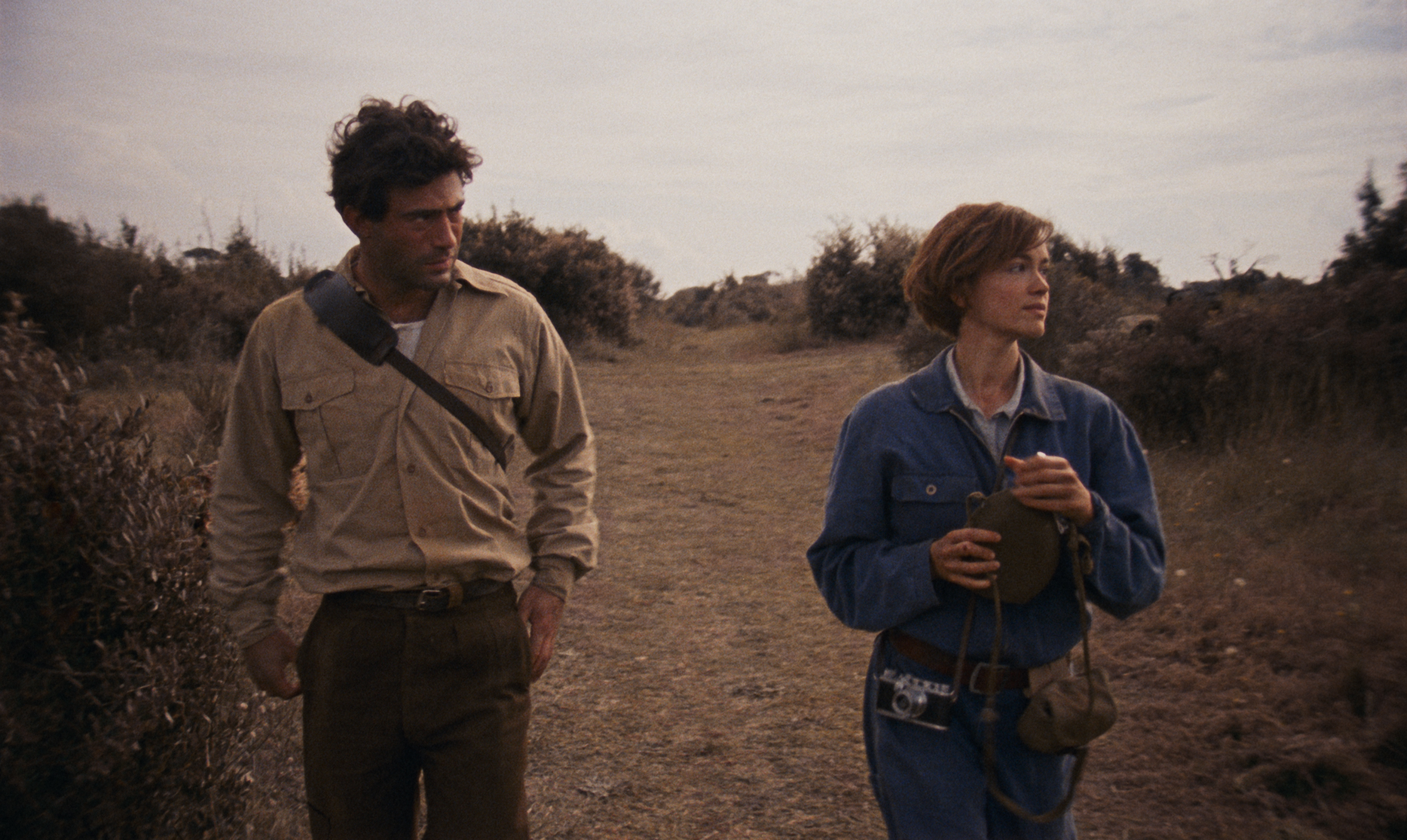
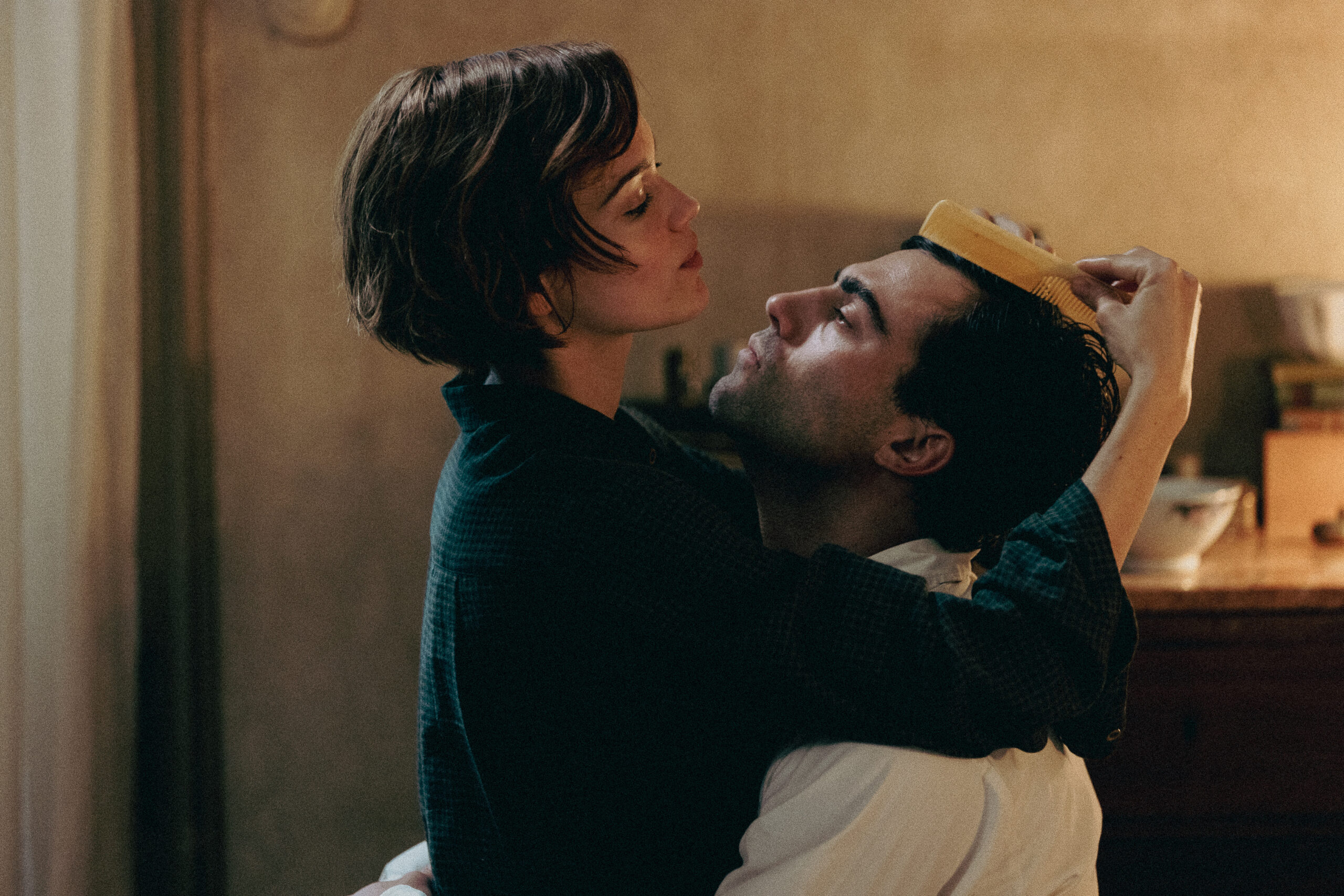
This mesmerizing, non-linear work begins in Paris in July of 1937 with Taro (Emilia Schüle) dead set on journeying to Brunette, the Spanish front to photograph the war. She is discouraged to go by her partner and lover Capa (Aaron Altaras).
Taro and Capa, along with other close friends, escaped Nazi Germany together. Both changed their names and identities in order to hide the fact that they were Jewish and to be more alluring to American newspapers and magazines.
The film, keenly adapted from Helena Janeczek’s prize-winning novel by Marazzi and Valia Santella, bounces from Paris in 1937 to a more carefree Leipzig in 1932 to the war in Spain in 1936, as Taro becomes more driven and tenacious in her fight against fascism. She also discovers herself as a true photojournalist. Along the way she romances four men, who remain devoted to her. But her most intense affair is with Capa.
Marazzi makes great use of real photos of Taro and taken by Taro as well as film footage from the period and scenes from movies made during the 1930s—all interspersed throughout.
The Girl With the Leica is a triumphant cinematic mosaic that blends documentary, drama, comic moments and the music that defined the time. It’s also scarily timely as we are living in a modern world of rising fascism—with deranged and egomaniacal despots brainwashing the populous.
The film is anchored by a rich, dazzling and daring performance by Schüle, who was so good in Trial of Hein. Her Taro is sexy, fierce, independent, headstrong and vulnerable. It’s glorious work that deserves awards attention.
Besides Schüle and a captivating Altaras, the wonderfully talented cast includes Lucas Englander, Luna Wedler, Thomas Schubert, Jeremy Mockridge, Idan Weiss and Joel Basman, who has a short but potent scene as Bertolt Brecht.
Taro, the first female photojournalist to die on the battlefield (she was 26!) disappeared from the history books as did her work—quite literally rediscovered in a Mexican basement in 1997. Her story can now be told and is done so magnificently in Marazzi’s truly inspired work.
The film is part of the Horizons (Orizzonti) section of the Venice Film Festival.
In German, French and English, with English subtitles.