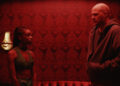
Since James Gray’s terrific directorial debut, Little Odessa, in 1994, I, like many others, have watched him closely. To one degree or another, I’ve admired every film he’s made since. They’ve all fallen somewhere between good (The Yards, We Own the Night) and very good (Ad Astra, The Immigrant). But none of them quite struck me as great. What’s been so maddening about this relative shortfall is how obvious it is that Gray has the goods. He’s an articulate writer, a strong director, and his films always have a command of time and place. It’s not easy to make nine good films in a row, but it’s also strange to do so without one cresting the peak of greatness.
I’m not alone in this opinion. Gray’s films have met with positive responses from critics, but not unanimous raves. He’s never been nominated for an Oscar, and none of his films have been box-office hits, despite often having major stars in their casts (Joaquin Phoenix, Charlize Theron, Mark Wahlberg, Anne Hathaway, and Brad Pitt, to name just a few). I don’t know if Paper Tiger will change Gray’s luck at the box office or with the Academy, but I do know this much:
Paper Tiger is a great film.
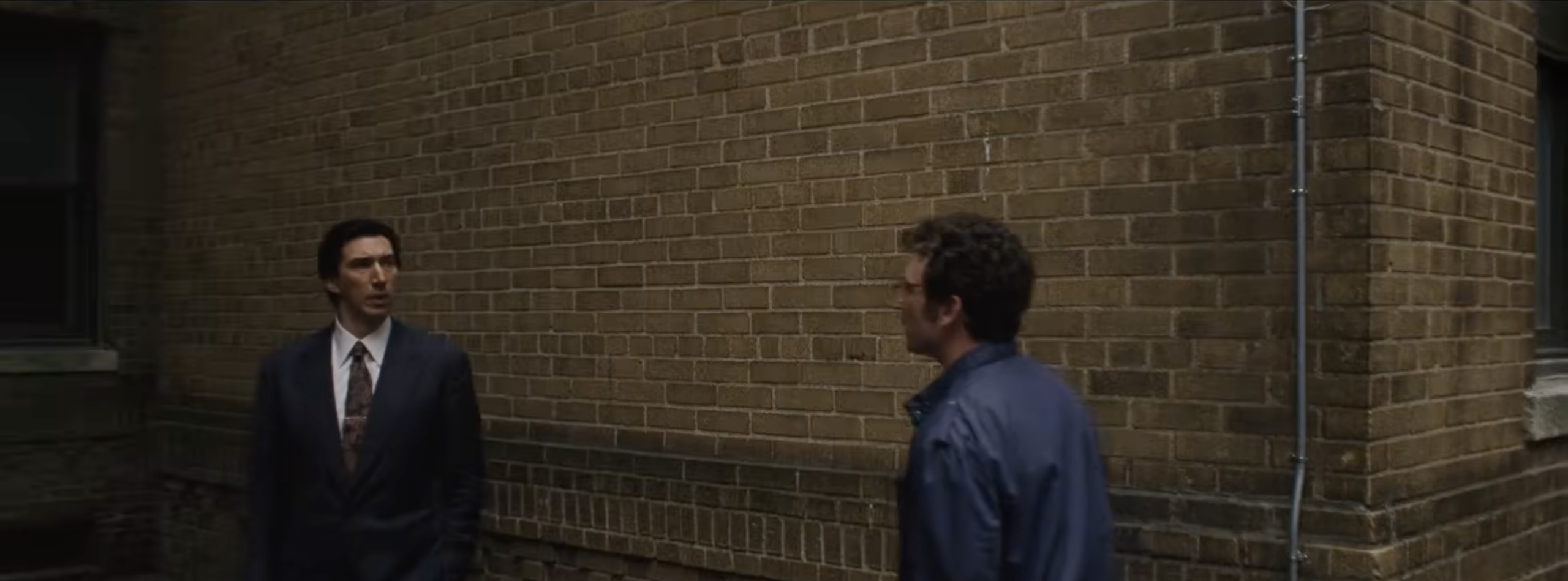
Like many of Gray’s movies, his main characters are Jews of Russian descent living in New York City. Gray himself is of Russian and Jewish heritage, and he was born and raised in New York City—predominantly Queens. Gray’s familiarity with the city and his characters’ ethnicity have always lent his films an air of authenticity. The way he shoots middle-class neighborhoods and homes makes you almost feel the rough red brick so often captured through his camera lens.
Gray’s latest film is a crime/family drama in the vein of Gray’s Little Odessa, The Yards, and We Own the Night. Miles Teller and Adam Driver play brothers who inconveniently parlay a potentially lucrative business opportunity into a dangerous entanglement with the Russian mob. Set in the early to mid-eighties, Gray gets the look, feel, and sound of the era down to a fine point. That’s not unusual for Gray. Nor is it an outlier for the families in his films to end up on the wrong side of the law.
Adam Driver plays the eldest sibling, Gary, a former police officer turned entrepreneur who immediately comes across as a man whose ambition threatens to get away from him. He’s never seen without a jacket and a tie. He has multiple cars. He’s in the process of buying a new condominium. He’s also getting divorced. Gary gives off the scent of a man living beyond his means and willing to make expedient decisions when financial gain is at stake.
Gary reels younger brother Irwin (Miles Teller) into a scheme working with Russian immigrants on a cleanup project along the Gowanus Canal in Brooklyn. Trouble is, those immigrants are mobbed up, and when Irwin, who is an engineer, shows up at the worksite in an unexpected fashion with his two sons in tow, those mobsters get nervous, then they get threatening.
Soon, the brothers realize they are in over their heads. Gary’s history as a police officer gives him a clearer sense of just how much trouble they are in. Once Irwin experiences a harrowing home invasion, he and his wife Hester (Scarlett Johansson) realize their lives are at risk, and the mob isn’t likely to spare their teen sons, either. Adam Driver may be the bigger star, and he’s certainly electric here as a man whose reach dangerously exceeds his grasp, but if there’s a first among equals among the two actors playing brothers, it’s Teller.
Back in 2013, Teller got his big break in the excellent teen drama The Spectacular Now. He quickly built on that breakthrough with the critical success of the Oscar-winning Whiplash and the box-office bounce of Divergent. Teller was an actor on the rise, but a series of underperforming films and reports of bad behavior on set stalled his momentum, despite strong work in movies like War Dogs and Bleed For This. Starting in 2022 with Top Gun: Maverick, Teller has reversed his fortune in recent years, appearing in the sleeper hit Eternity and in a prime supporting role in the massive hit biopic, Michael. As Irwin, the more stable and grounded brother, Teller gives one of his best performances as a dad racked with guilt over what he’s gotten his family into, while still wanting to remain loyal to the brother who led him into hazardous circumstances.
Hester could have been a “wife” role, but Gray’s screenplay is too smart for that. While Hester may be a supporting character, she’s a fulsome one. Johansson is terrific at managing Hester’s inner turmoil over the Russian wolves on her doorstep, as well as an unexpected life-threatening family health diagnosis. In less graceful hands, Hester could have been a one-note character, but Johansson and Gray bring her to life as the beleaguered ballast of the film–fighting against the unhealthy loyalty of brotherhood.
Good intentions lead to tragic consequences in Paper Tiger. All involved will pay a price. The film reaches a crescendo in a masterfully staged standoff in a cornfield. Gray stretches the sequence out with nerve-fraying intent. The sound of planes overhead, while a cat-and-mouse game plays out in a desolate plot of land, brings to mind the final scene of Michael Mann’s HEAT, where Pacino’s cop and DeNiro’s criminal reach their requiem.
The film that most came to mind as Paper Tiger reached its artfully powerful conclusion was J.C. Chandor’s remarkable family/crime drama A Most Violent Year (2014). Both films echo the work of the great Sidney Lumet. A Most Violent Year was akin to Lumet’s police corruption drama Prince of the City (1980). In contrast, Paper Tiger leans toward Lumet’s final film, Before the Devil Knows You’re Dead (2007)—a movie where two brothers attempt to shortcut their way to a better life, only to find themselves head high in the long grass, with no easy way out.
The Artistic Director of the Virginia Film Festival called the Paper Tiger a “modern masterpiece” in his opening remarks. That’s a heady term to use before a packed crowd of one thousand astute moviegoers and industry members. It’s also one hell of an expectation to place on a film just moments before it screens. As it turns out, his description was not misplaced.
Paper Tiger screened at the Virginia Film Festival on October 22, 2026.