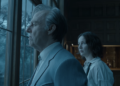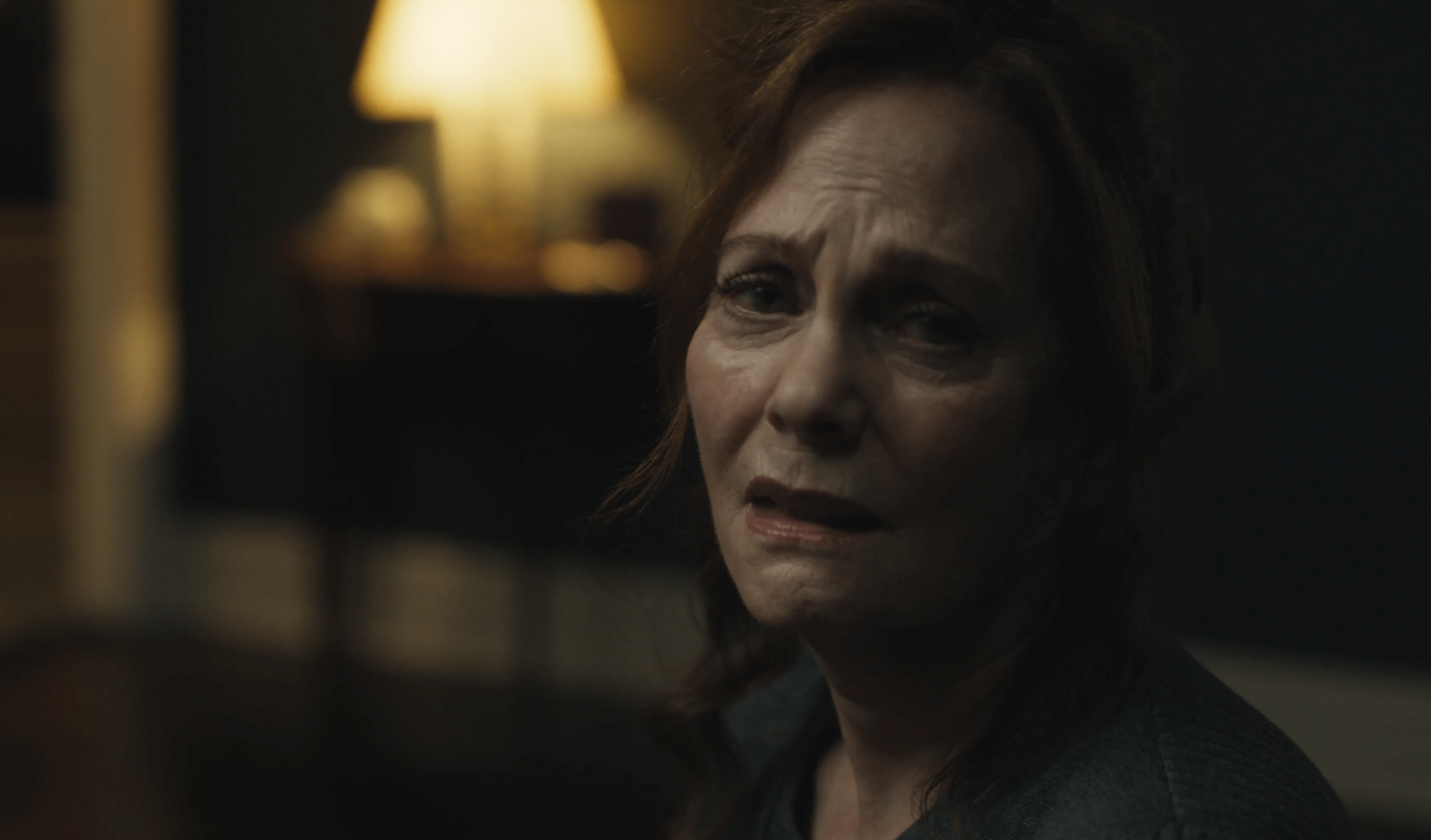
As we get older, do we remember our memories the same way, or do they alter with time? If we are fortunate enough to reach an older age, ailments can affect our perception of those memories and confuse us in troubling and worrisome ways. In the short film, Olive, director Tom Koch shows how Alzheimer’s threatens the foundation of one marriage as a couple uses love and touch from their arsenal to combat it back. Featuring a gut punch of a performance from Lesley Ann Warren, Koch’s film proves once and for all that love can conquer anything.
**You can view Olive via Beyond the Short here. Please consider watching Koch’s film before continuing with our interview.
With stories about sickness, whether it be Alzheimer’s, dementia, or cancer, there is a tendency to focus solely on the one succumbing to their disease. A caregiver is usually present, but the way Olive is structured plays with our perception as much as it plays with the drama between its two lead characters. Koch creates extraordinary balance as we push and pull ourselves through time.
“I was doing research on dementia, and I saw that some people go back to a childhood state but they are very present,” Koch says. “They want to touch you or be with you, and I don’t think they see the world slowly. I took liberty in the way I represented the disease through the filmmaking process. It came from living with a person who had dementia in my family and the desire to study a relationship of a grandmother and grandson, because I loved my grandmother. She passed away when I was 14, and I really wanted to see that strong passion and love that sometimes is stronger than that from a mother. Yet they are a couple. So in studying two people, using dementia as a tool, I could grandmother, grandson, young couple, old couple–it was all about love. Sam sees her young, he sees her old, he believes she’s this and he believes she’s that. I wanted to talk about time, love, loss, memory, and how it changes through aging.”
Warren reacted immediately to Koch’s script, and she saw a cinematic sensibility on the page that she adores in some of the French films that have affected her.
“I am a huge fan of French cinema and a lot of international cinema, and going to a French film on a quiet day and seeing something so compelling is moving to me,” Warren says. “I remember seeing Cleo from 5 to 7, by Agnes Varda, and it’s really just about this woman’s life from five to seven. By the end, you’re just devastated by what she has to go through. When I read Olive, I had the same visceral reaction like when I watch films like that. I felt immediately drawn to the quiet, daily struggles that this woman [experiences]. It’s romantic to me in a very unusual way that you don’t see very often in American cinema. I loved how it revealed itself to me.”
 Warren is one of my favorite actresses fo rmany reasons, but she always infuses vulnerability into her performances. It doesn’t matter if she is embodying a mob boss’ girlfriend, a ditzy mom to a dedicated daughter or a femme fatale, she shows us that lightness through an exterior being held up to protect herself. In Olive, though, she is mixes together a necessary level head with her fear and ache. It’s truly one of her greatest performances of her career. Koch is very open about their working relationship.
“I’ve had the chance to have a great relationship since we shot the film, and we talk often,” he says. “Lesley, as a person, is very honest, and she brings that very much into every part she plays. She is very protective over her art and over what she loves to do in terms of filmmaking. The text is very important to her, and she layers all her authenticity and understanding that she has over the complexity of the characters. I knew that she was going to be able to look at me, as Tom playing Sam, and see her husband, who is maybe 65 and is suffering. The one thing that we discussed was the depth of her emotions. Her character has a well of frustration and anger all mixed with that love, but I never had to direct her.”
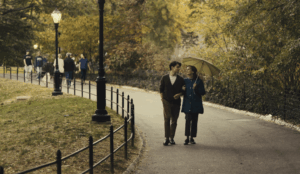
There is a curious sense of touch and intimacy through Koch’s film that helps with showing the level of love between these people. In an early scene, Warren’s character comes downstairs and takes the arm of Koch’s younger man as they walk to a museum. The caress of a cheek in one moment towards the end of the film is enough to knock you out. Warren admits that that sense of touch never needed to be discussed–it was naturally there.
“When we dance together, music brings up memories for her, and he knows that,” Warren says. “When we started, it was so delicate and so tender, and I felt so present in that love that they shared and continue to share. It’s both beautiful and sad to me. She touches his face in that way that says, ‘where are you?’ We didn’t talk about those things, which I think is the greatest gift. To be honest, when I first heard the music, I thought it was going to be hard to dance to, or I thought it might be awkward. Tom told me to trust him, and he was so right.”
The structure of Olive transports us into the minds of these characters in a way that a larger film would buckle under the weight of. Every gentle turn in Koch’s direction feels like a mental revelation for the characters, and since we are so invested in their livelihood, it devastates us too. When one person realizes one thing, it ripples throughout the entire house
“I wasn’t trying to make people believe that Lesley’s character was sick but rather that Sam believes that he is taking care of her,” Koch says. “The kiss is on page six–right in the middle of the script. Act one leads up to it, and act two comes down to the reality of what happens. So the kiss had to happen in the middle of the film where Sam’s brain changes and something happens. That is left to the audience. Maybe something else happened between those two people, and then he sees her young and falls in love with her all over again. That’s the only time since that he sees himself, and then the spiral just goes down and down and down. At what point is it too dangerous? At what point is he going to leave tomorrow and never come back? So when she tells him that she is done with him and she asks him to look at his papers, he realizes that’s going on. His medication is there, the ID shows his age. The whole film is through Sam’s eyes, but then the POV shifts. Everything is more natural, everything is very warm, and everything is very olive toned. Even the sound of the clocks change–they’re more modern. Before that, everything sounds old, because he’s young.”
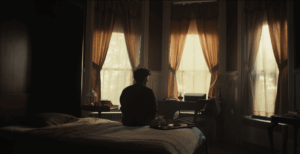 “She loses it in the kitchen, for a moment, when she’s frustrated, but she doesn’t want to show it,” Warren admits. “She says, ‘I’ll do it, I’ll do it,’ and it happens again in the bedroom where we follow one another when I start to cry. I express how tired I am, and those feelings overwhelm people sometimes, and they don’t want to fault anyone. It’s playing a few things at one time, which I think that’s what human beings are actually like. We are always trying to do right by each other while we feel what we feel. I felt so free to express that.”
I couldn’t help but wonder how silence hangs in that home. Silence should never be mistaken as something bad, and, in Olive‘s case, it highlights comfort and history. Warren sitting at the table towards the end reminded me of an image of my mother when I was growing up that has stuck with me. That one place where you can find peace with your day before you might have to deal with the trappings of your life.
“Silence is my favorite thing,” Koch admits. “I believe that in this film, that quietness is a character, and I never wanted the house to feel unsafe. I wanted it to feel warm, but the danger is loneliness. It’s not the house. It’s the fact that they’re always by themselves in the house, so I wanted to craft it with some warm tones. Some olive texture. It needed to be a space that felt like love was always present, and when he sees young Marie, we swapped out the colorful things that look a little bit like the ’70s and ’80s. Suddenly everything is more colorful–her dress is yellow, whereas grandma is always in grey. The house was the character of their relationship, but the loneliness was the “danger.””
“International films allow silence,” Warren adds. “One of the moments that I love is when they are sitting at the table, and she realizes that she didn’t put something out–maybe the sugar or something. It’s just so quiet and she gets up after she notices that it’s not there, and it reminded me of moments that I have with my husband. We’ve been married for over 36 years, so that small moment felt so true. Silence doesn’t mean that you’re not engaged with each other. I thought that Tom had such courage to put that on film. What a beautiful thing.”
View this post on Instagram