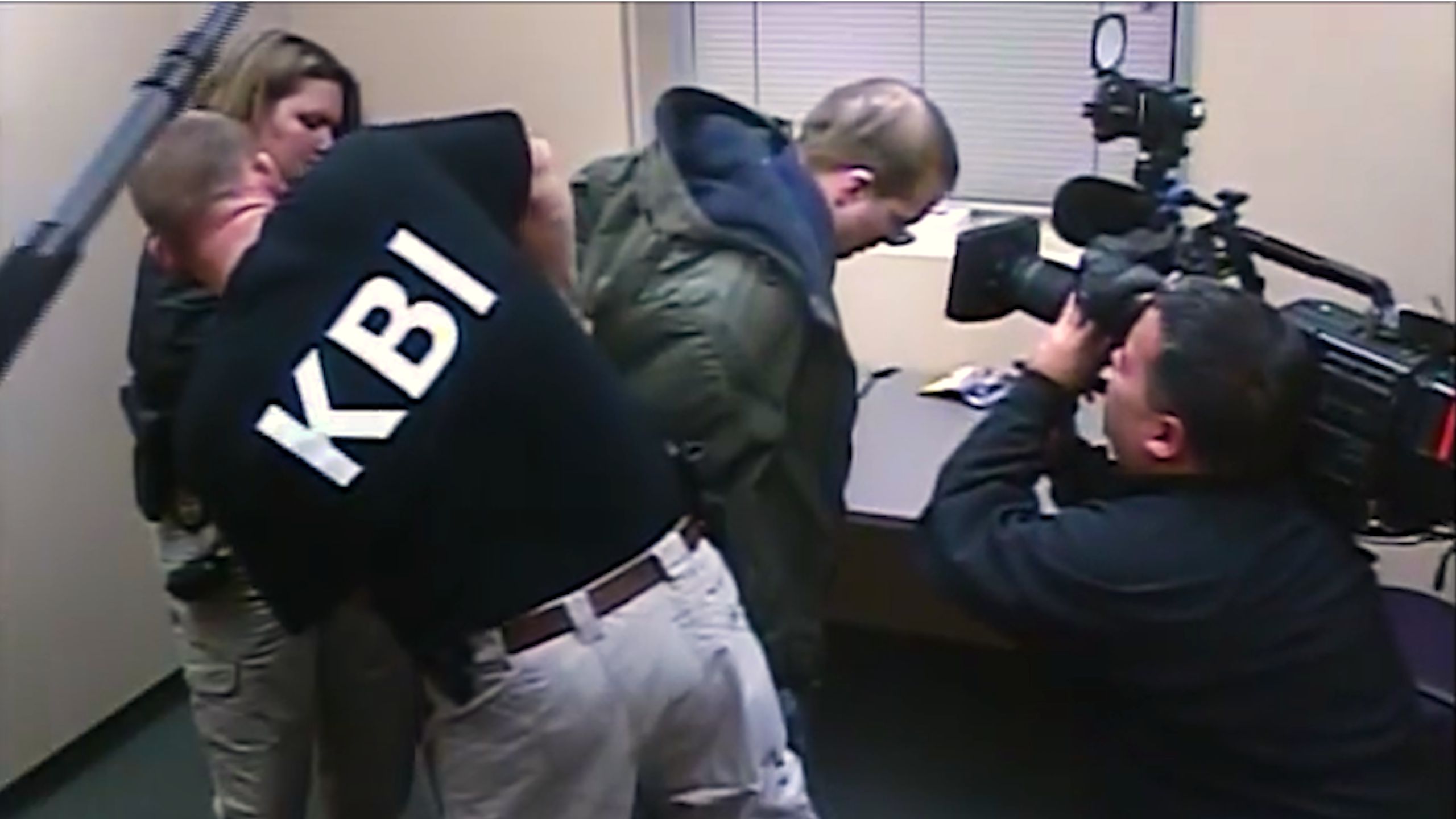
David Osit’s To Catch a Predator documentary Predators deconstructs the impact of one of the most controversial TV shows to fly under the disguise of heroism.
People are sick. That was the biggest takeaway from NBC’s To Catch a Predator when it aired from 2004 to 2007. The Dateline offshoot entered the pop culture Zeitgeist as a point-and-laugh kind of schadenfreude, a time capsule show that could have only existed during this period (think: Britney shaving her head).
Now, more than 20 years later, director Davis Osit’s documentary Predators examines TCAP’s “investigative journalism,” its impact on social media, and how Chris Hansen has leveraged the format into a career. As an abuse survivor himself, Osit shows empathy for the series’s targets, who often ask for help when the cameras aren’t rolling.
“Help Me Understand”
If you aren’t familiar with To Catch a Predator, the premise includes an adult male (always male) who unknowingly connects with an NBC-hired decoy pretending to be a teenager. The male and the “teen” make plans to meet up, and when the male shows up at the decoy house, host Chris Hansen appears out of nowhere to catch them, usually starting with the phrase, “Help me understand.”
“Help me understand” is the phrase that haunts director Osit because, as a one-time fan of the show, it’s something he wanted to understand. Why do these men prey upon these would-be teens? And yet what the documentary uncovers is that the series never had its sights set on helping comprehend predatory urges or even pushing these individuals to receive help: It was always just about the sensationalism, which has bled well into modern social media. The same way predators get off on seeking attention from teenagers is the same feeling Chris Hansen and copycats have when they come off as heroes in these situations. Predators is thought-provoking and upsetting in all the ways you don’t expect it to be.

Osit actually sits down with Chris Hansen and eviscerates him with just a stare and a question. Now on TruBlu with the show Takedown (basically the same format as TCAP), Hansen “catches” an 18-year-old going over to a 15-year-old’s house and effectively ruins his life (even if technically what the 18-year-old was doing isn’t illegal). Osit asks Hansen about the show’s goals and outcomes, and Hansen can’t come up with a good response, even if he believes what he does is for a greater purpose compared to copycat YouTubers who do it for “clicks.”
Surprisingly, the documentary never goes into Hansen’s background and how he himself was arrested for larceny, but unlike To Catch a Predator, Osit doesn’t punch down.
To Catch a Predator Suicide and Subsequent Lawsuit
In 2006, a TCAP decoy was in contact with a prominent Texas prosecutor with plans to meet up, but the prosecutor never arrived.
Dateline, Chris Hansen, and law enforcement ended up showing up at the prosecutor’s house to confront him, which prompted the prosecutor to shoot himself. Insanely enough, To Catch a Predator aired an episode on the death (the prosecutor’s sister sued NBC).
It’s crazy to think how this incident was swept under the rug of our collective memory of the show. As much as this documentary asks who the real predators are, it also scrutinizes our human ability to throw stones in glass (non-decoy) houses. Like a public tar and feather, we all watched To Catch a Predator effectively ruin the lives of these men, some of which pleaded for help and psychiatric attention (scenes cut from the broadcast). And yet, the men had no say in keeping the worst, lowest moments of their life private because of the “police” element of the show. Can something that’s supposed to be a public service also be entertaining? Yes. But should it be?
Predators is now in select theaters.