Emmy winner Cristina Onori sits down with The Contending to discuss the themes behind her Emmy-nominated The White Lotus production design.
Production designer Cristina Onori received two Emmy Awards for her elaborate set decoration on HBO’s Rome. She’s back in the Emmy race this year with a nomination for her Thailand-inspired The White Lotus production design. After receiving a nomination for the Sicily-set second season, Onori needed to completely reset her expectations for the exotic and less familiar Thai culture.
“Everything began, as always, with long conversations with [writer-director] Mike White about the atmosphere and emotional tone he wanted to explore. He spoke about Thailand not only as a backdrop, but as a place with deep spiritual and visual richness, somewhere that could heighten the story’s tension, beauty, and complexity,” Onori recalled. “From those early discussions, it was clear that this season would require a different kind of approach.”
The White Lotus: Thailand introduced audiences to a wide array of wealthy travelers descending on the fictional White Lotus resort. As with each season, each group holds their own stories, their own desires, and their own faults. Most of the guests intersect with other guests, often in dangerous ways. To establish this luxurious environment, Onori leveraged the natural splendor of Thailand in her designs. She wanted to explore the tension that results from the collision of the beautiful with the uncomfortable.
Here, in an interview with The Contending, Onori details her process in understanding White’s vision for his third season. She reveals what locations within Thailand were leveraged to create The White Lotus resort. She also talks about her process in incorporating elements of the Thai culture into her designs, including the austere monastery sets. Finally, she explains how character psychology influenced her design elements from color palettes to artwork to furniture.
The Contending: You previously worked with Mike White on The White Lotus: Sicily. When he approached you for Thailand, what conversations did you have in terms of his vision for the locale?
Cristina Onori: Coming from season two in Italy, a place that felt instinctively familiar and rooted in my own cultural memory, transitioning to Thailand meant stepping into a world I deeply admired but didn’t yet know intimately. It was important to engage with the culture in a way that felt respectful and intentional. I began with immersive travel across the country, allowing myself to absorb its rhythm and landscape. That was followed by a more analytical phase, reading, studying, and working closely with Thai collaborators to build a shared design language.
That collaboration helped shape a visual identity that feels both specific to Thailand and true to the world of The White Lotus. Once the first scripts arrived, and the characters started to take form, we could begin connecting those larger cultural elements with more personal, emotional environments, always tying the design back to the story.
The Contending: Tell me about location scouting. I understand not everything was filmed at the Four Seasons.
Cristina Onori: Scouting lasted about two months and took us across several stunning regions in Thailand, including Samui, Phuket, Krabi, and Bangkok. Early on, it became clear that the goal wasn’t just to find visually striking locations, but to let the landscape play an active role in the story. The settings needed to reflect the privilege and isolation of the guests while also revealing the layered, sometimes disquieting beauty of their surroundings. Nature was treated almost as a character, present in every frame, at times overwhelming, at times serene, shaping the mood and emotional tone of the scenes.
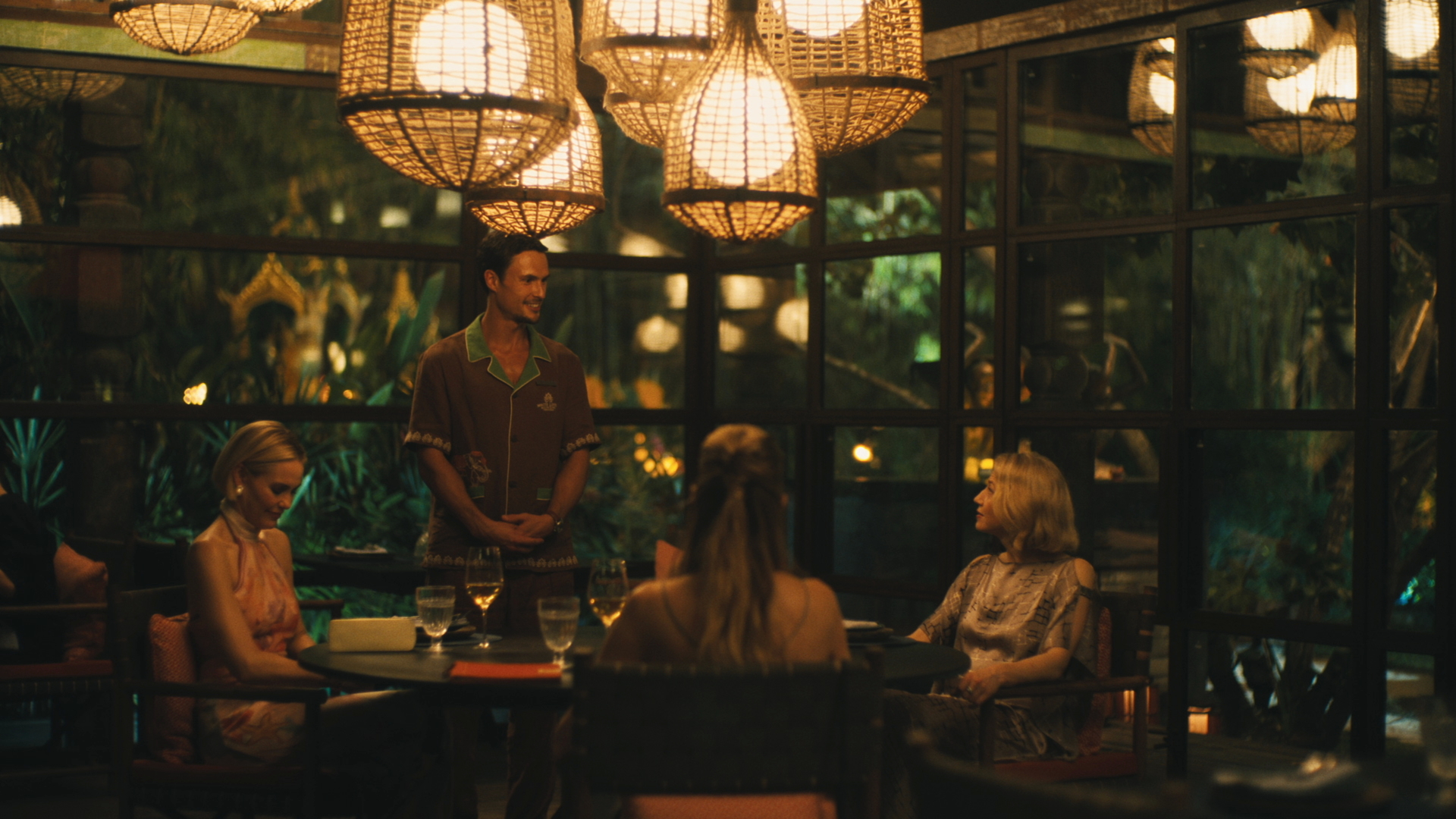
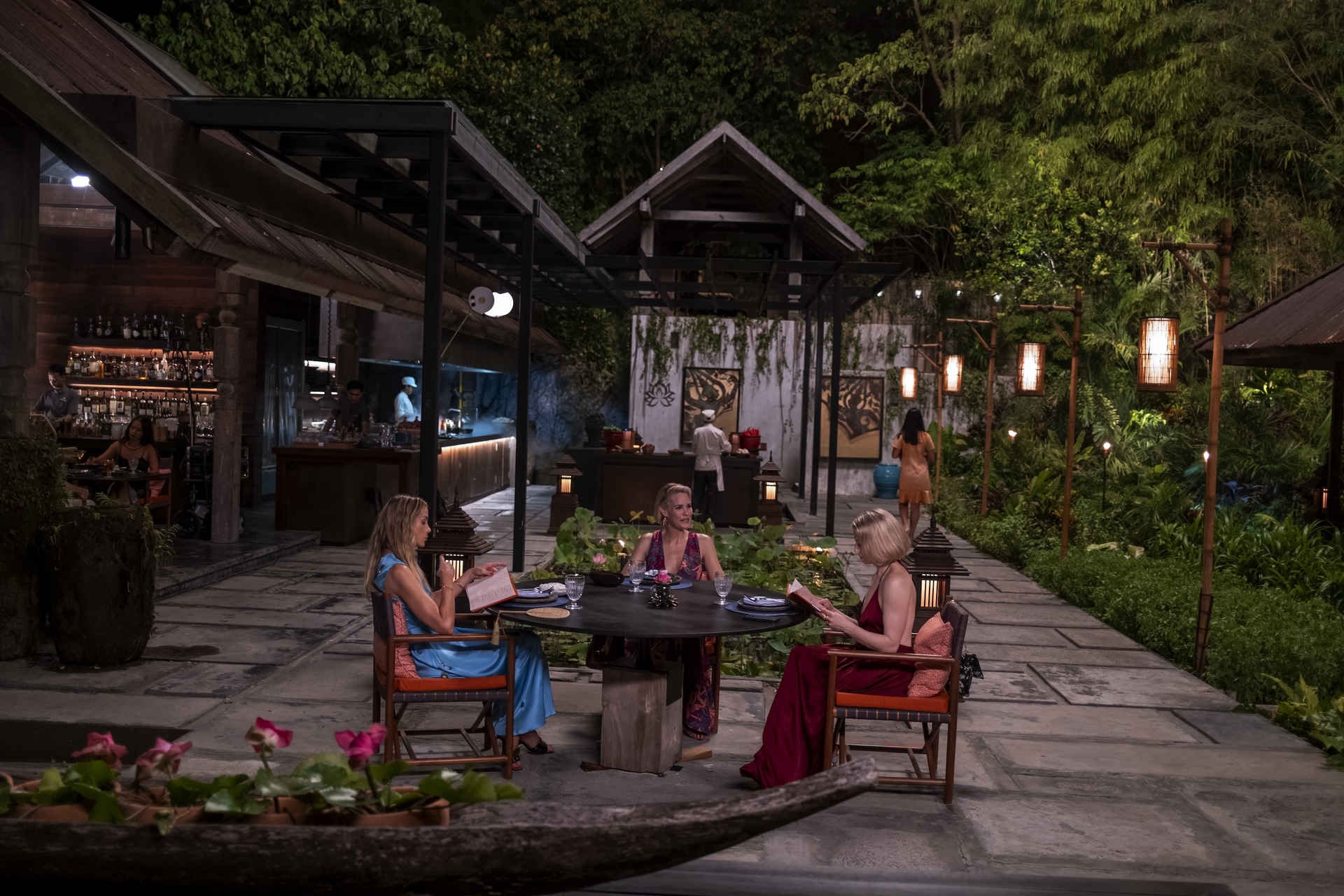
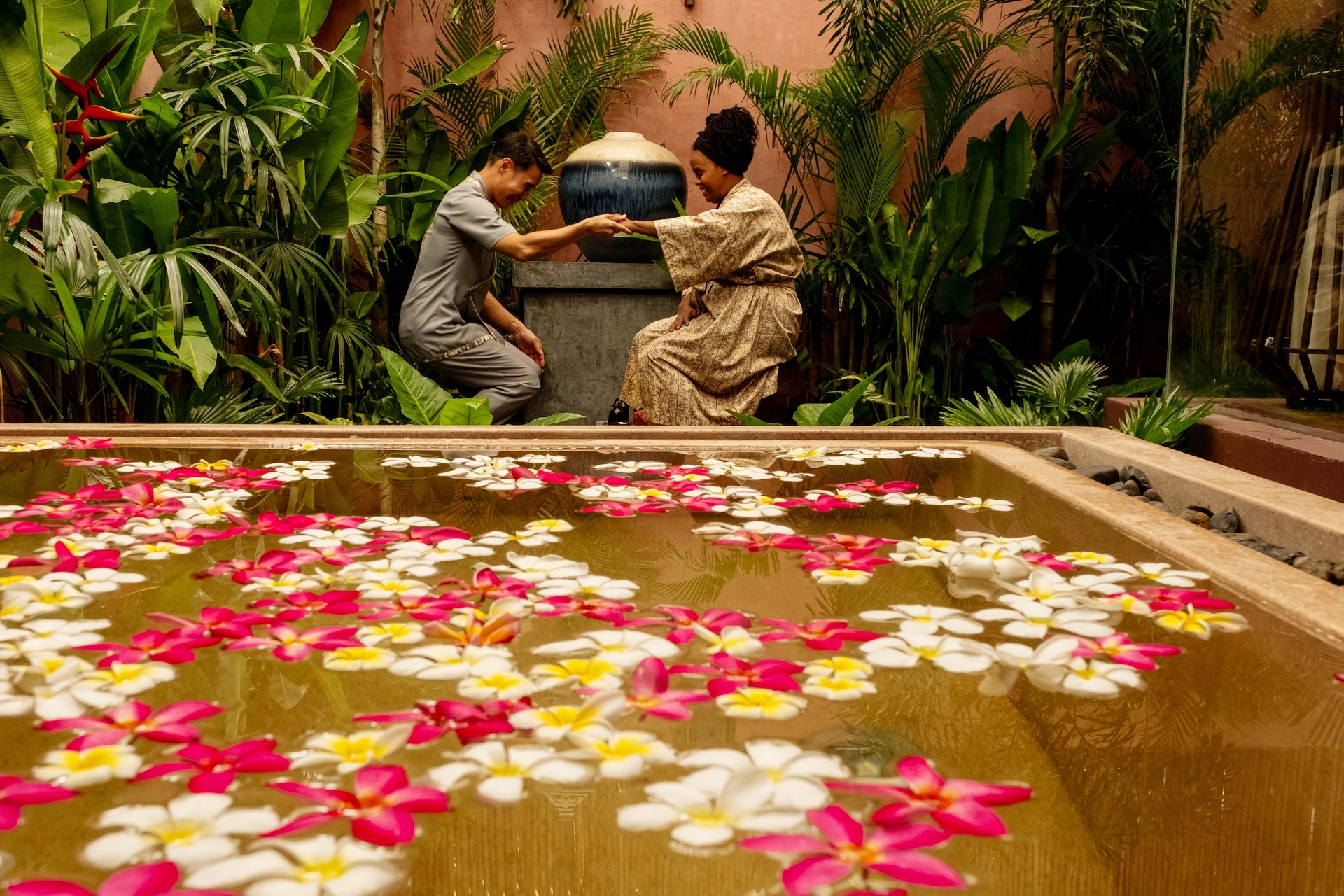
While the Four Seasons Koh Samui became the central resort, additional locations were integrated to expand the world of The White Lotus. Anantara Bo Phut was used for the exterior and reception, Anantara Mai Khao was utilized for the spa, and Rosewood Phuket is where we filmed the dinner restaurant. Each site was carefully adapted and unified through consistent aesthetic choices in color, materials, and spatial layout. All the bedroom interiors were rebuilt on a soundstage in Bangkok, allowing for greater creative flexibility while maintaining continuity with the on-location material.
The Contending: One thing I noticed about Thailand that Maui and Sicily definitely did not offer is this encroaching sense of nature. Nature is everywhere within the design, almost as if it’s pushing in on the characters. How did that impact your designs?
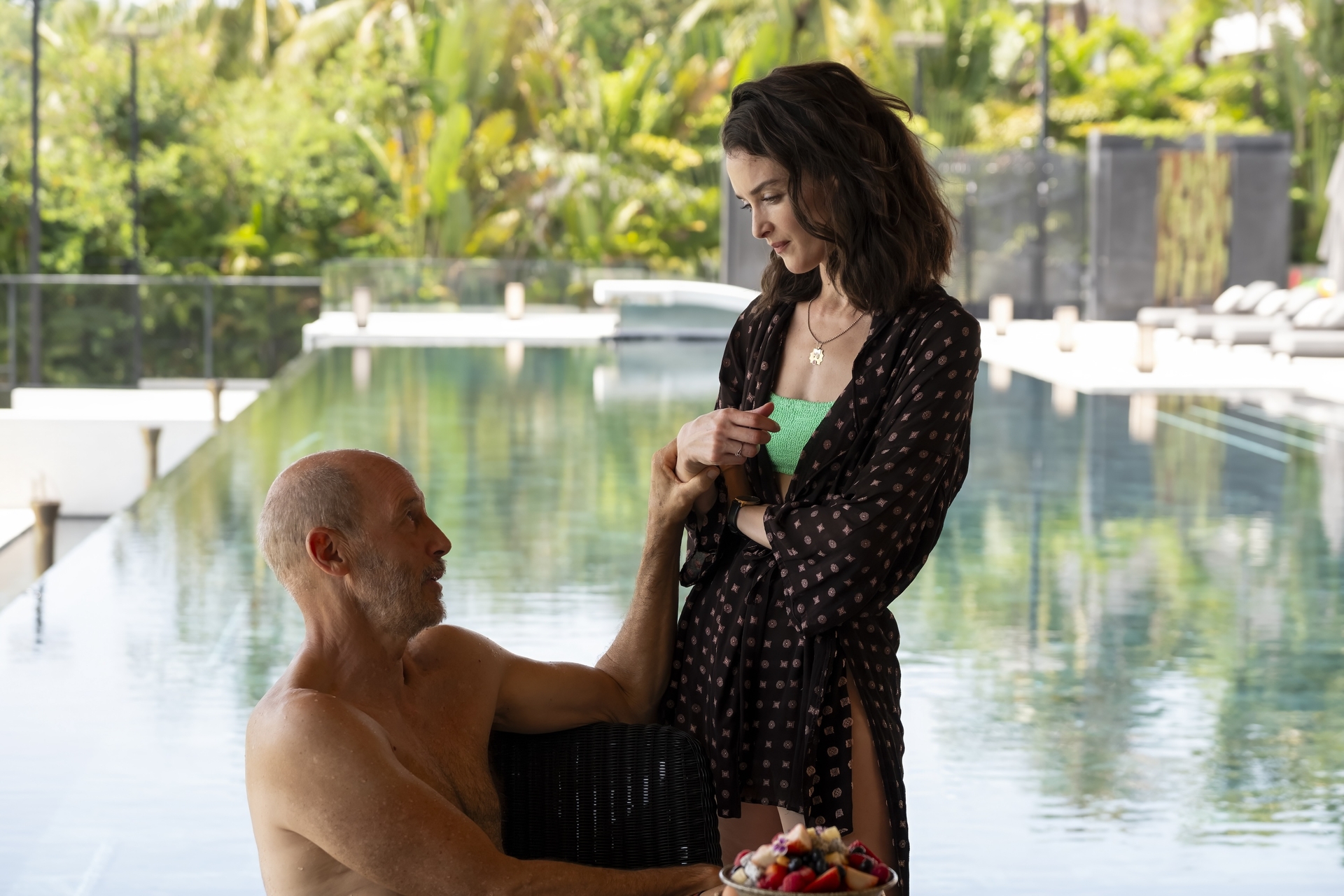
Cristina Onori: Nature in Thailand played a major role in shaping the season’s visual identity. There was a strong interest in exploring the tension between beauty and discomfort. Working closely with the greenery department, we made deliberate choices to ensure that tropical vegetation surrounded and entered every space. Nature is visible from every window, every path, and sometimes even spills indoors, blurring the line between interior and exterior.
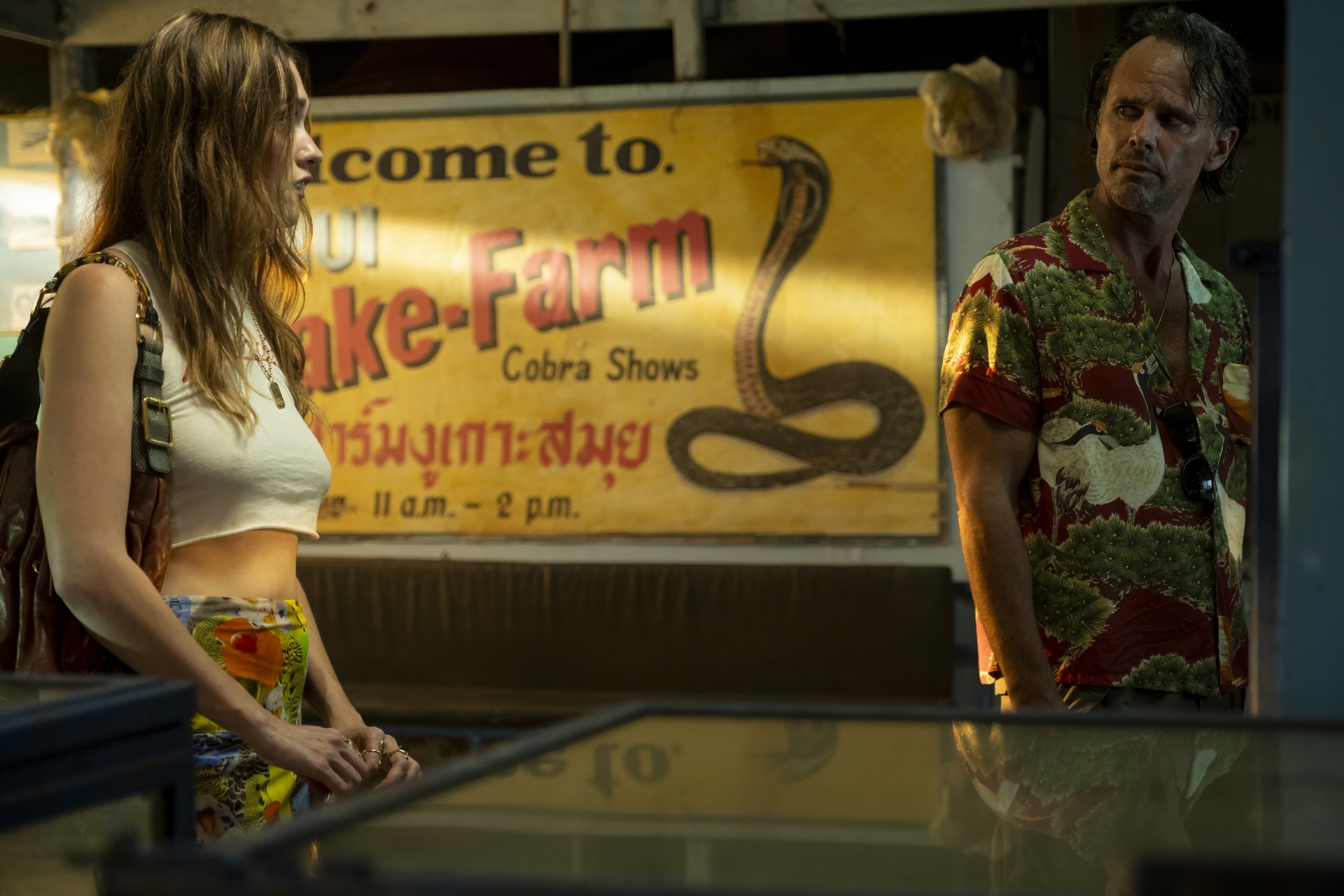
Being part of the natural world, animals also became key components of the design. Monkeys, reptiles, and birds appear throughout the series, not just as decorative elements but as emotional triggers tied to each character. Their presence was carefully considered and symbolically layered. Monkeys in particular became a recurring visual motif, playful, unpredictable, and at times unsettling; they mirrored the instability and chaos beneath the surface of the guests’ seemingly controlled lives.
This is all inextricable from the reality of Thailand, the wonder of nature there, and the ways in which the natural world finds its way into our souls.
The Contending: How did indigenous Thai culture find its way into your sets?
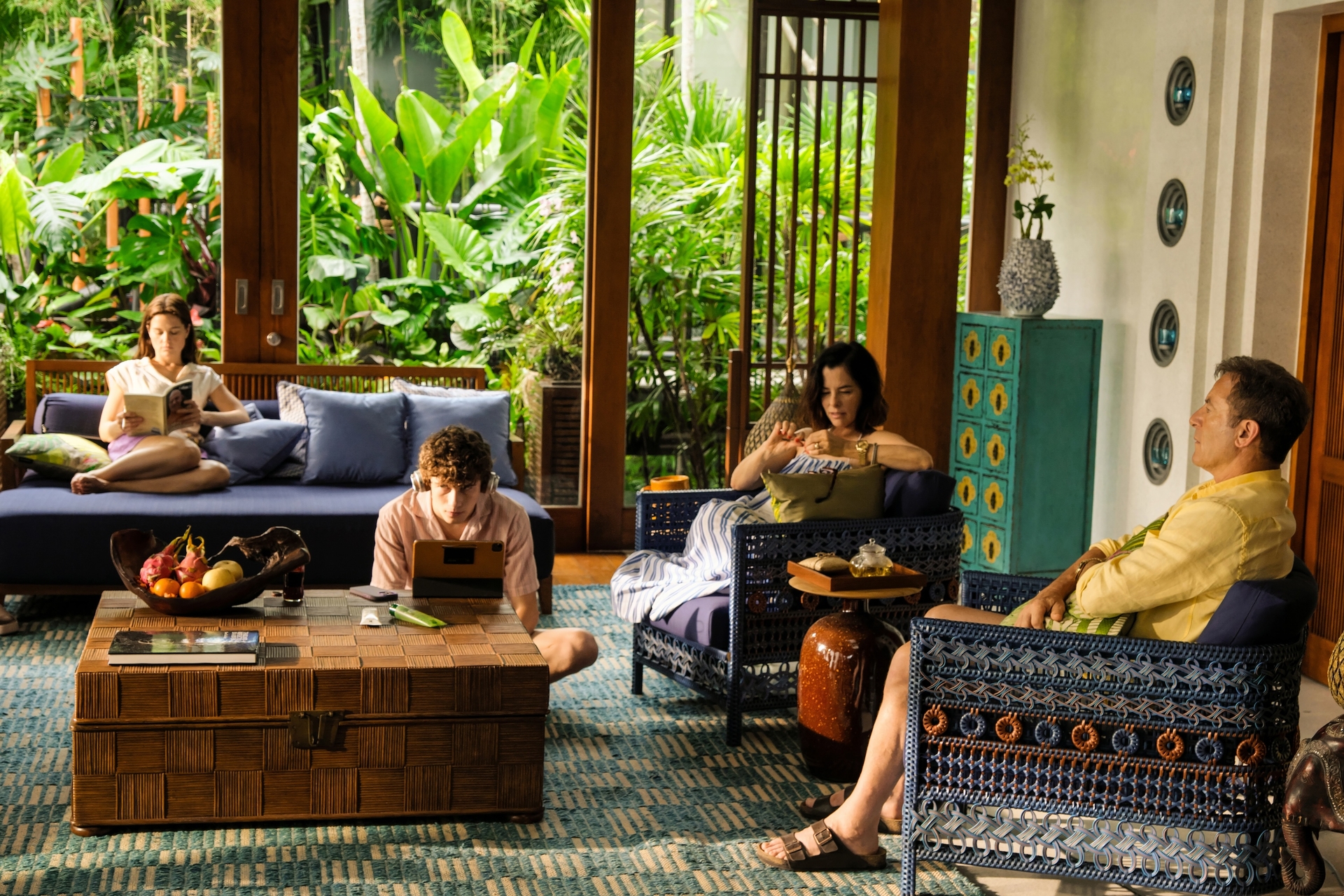
Cristina Onori: The sets were designed with Thai culture at their core, drawing from spiritual traditions, local craftsmanship, and symbolic choices. Natural materials such as teak, mango wood, and rosewood were used throughout to ground the design in texture and authenticity. Many pieces were reimagined using traditional Thai craftsmanship interpreted in a contemporary way by new artists, with much of the furniture specifically designed and built for this project in collaboration with Set Decorator Letizia Santucci. One key example is the inclusion of carved wooden panels installed throughout the hotel, inspired by northern Thai architecture.
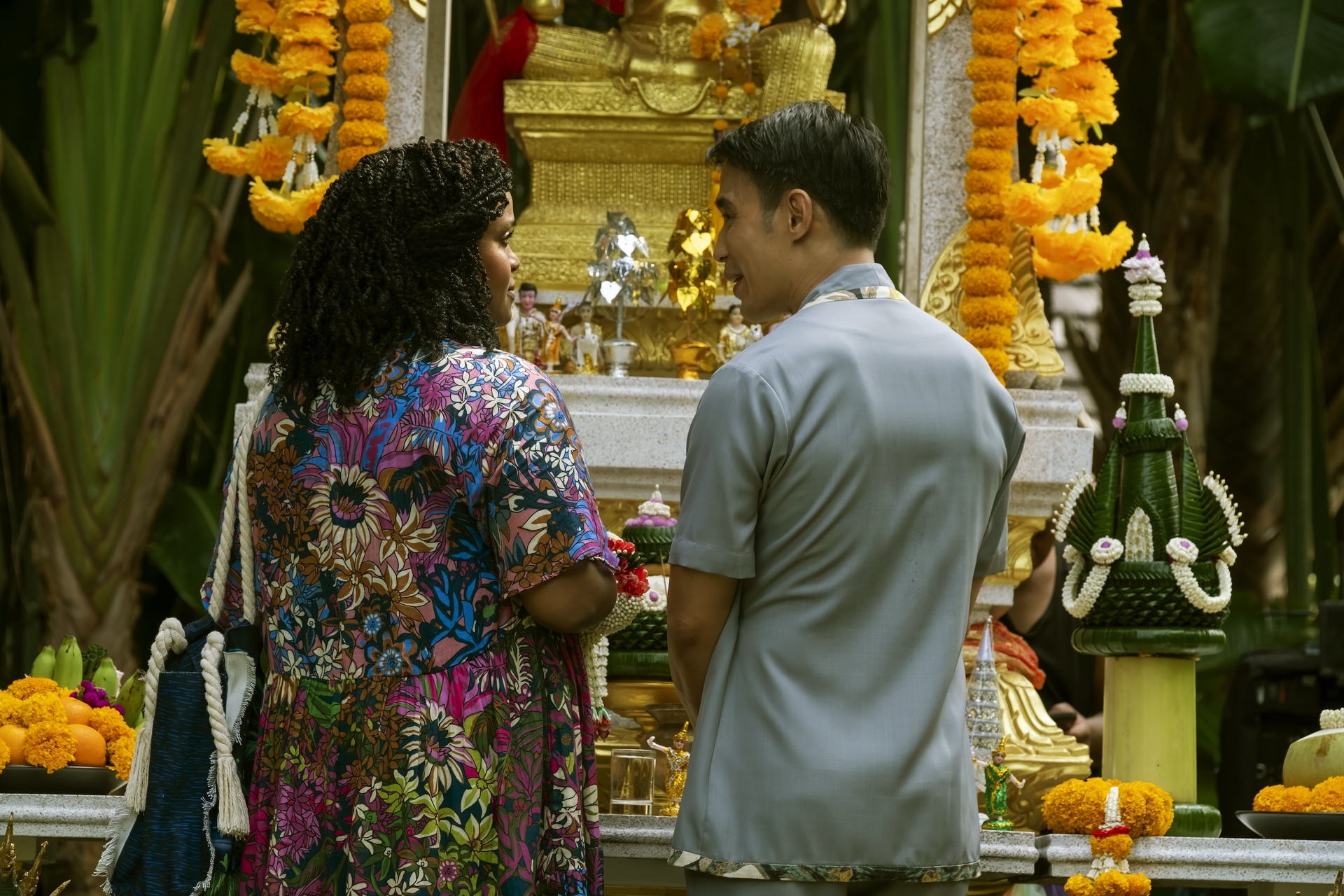
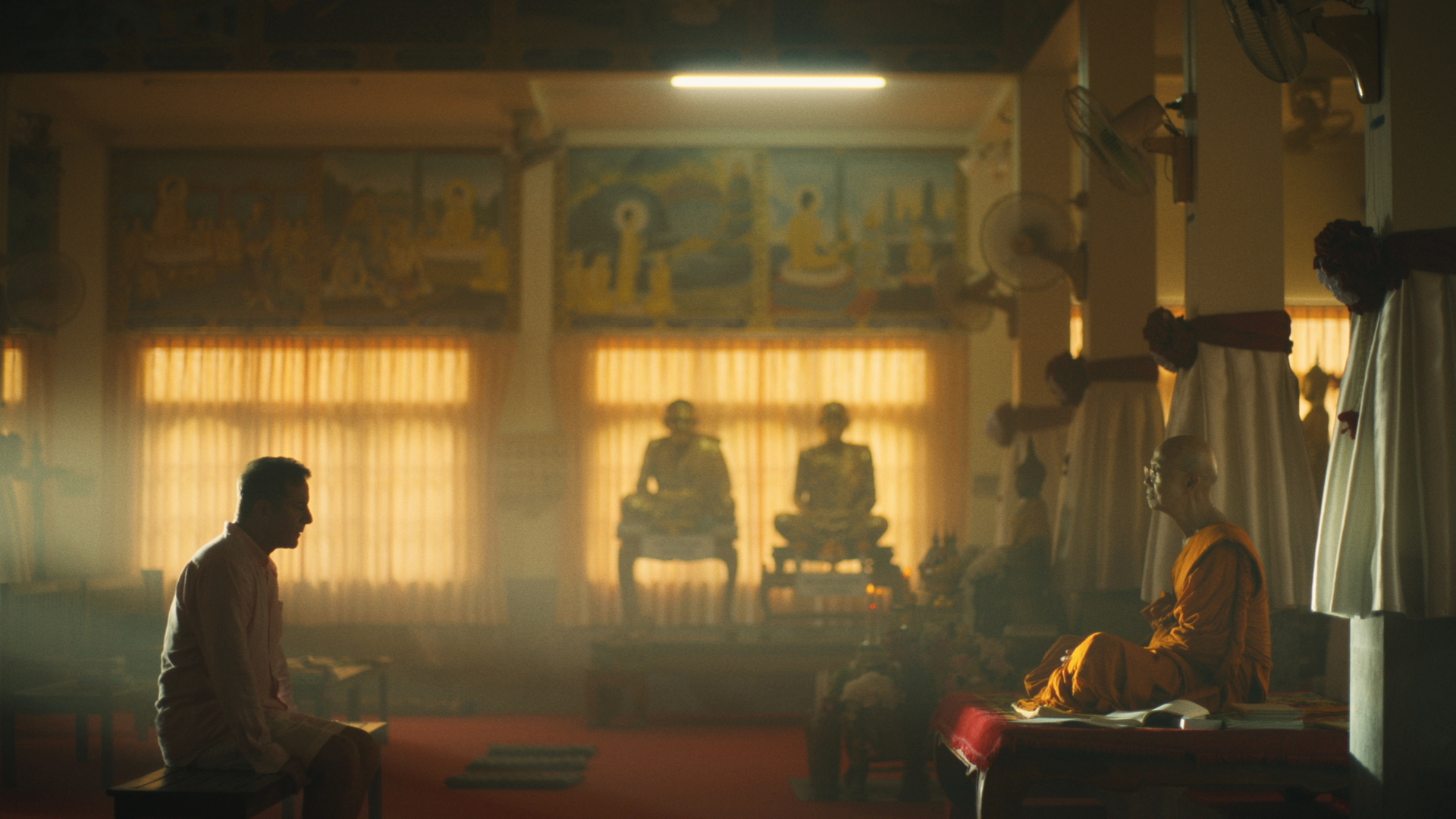
A guiding color across the season was burnt orange, drawn from the robes of Thai monks in their varied tonalities. This spiritual reference extended into elements like the San Phra Phum, small spirit houses placed in each villa to acknowledge the local belief in protective spirits tied to the natural world. Murals and Thai artwork were also woven through the interiors, adding depth and a sense of cultural continuity.
The Contending: Speaking of Thai culture, I always wonder with The White Lotus if elements of the production design find their way into the main title designs. How did Mike reflect your production design in the main titles created by Katrina Crawford and Mark Bashore?
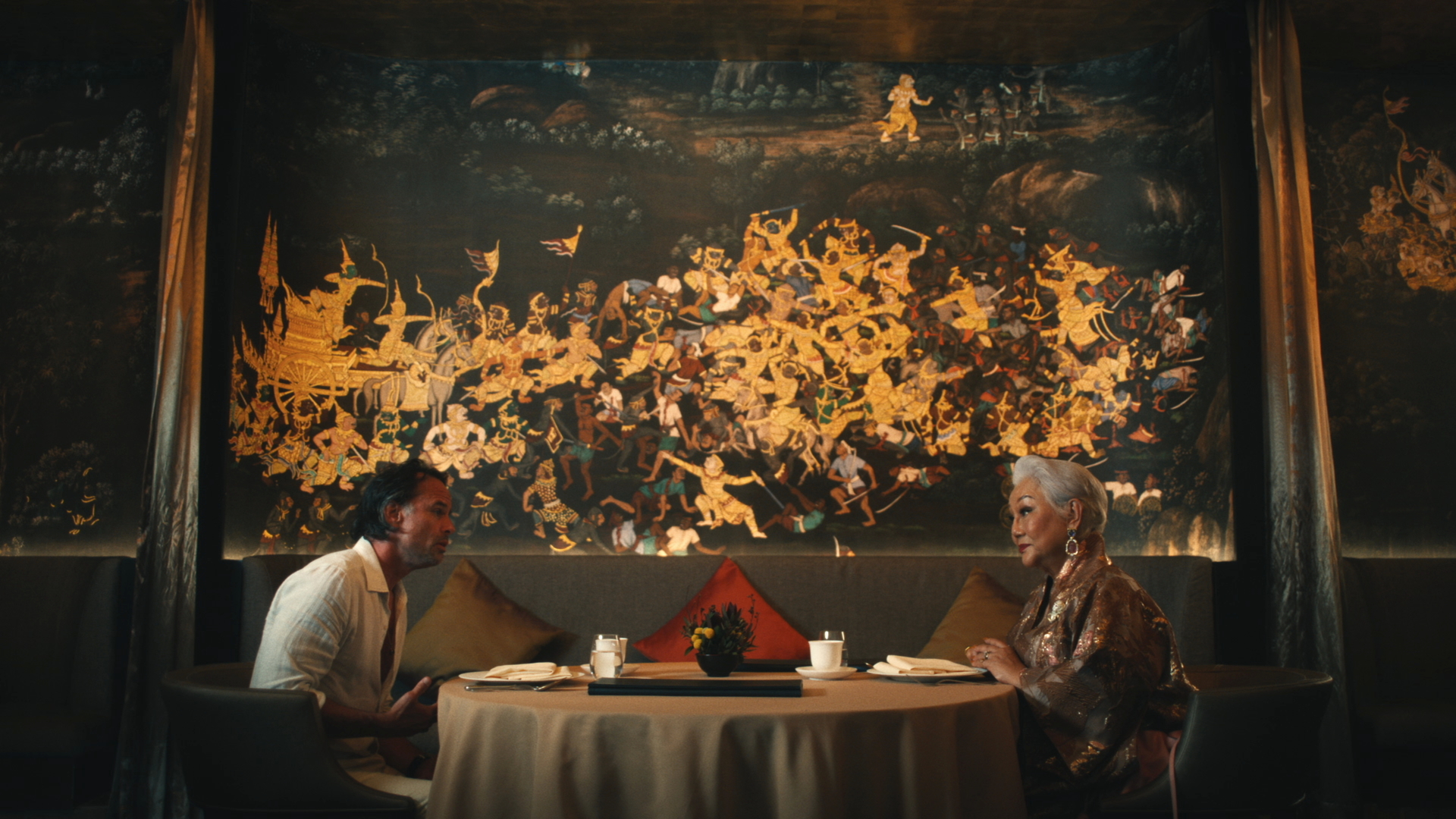
Cristina Onori: During our scouting in one of the ancient and amazing temples in Bangkok, Mike and I came across a series of ancient murals and were instantly captivated by them. We learned that they tell the story of the life of Buddha, filled with rich symbolism and human archetypes. We decided to lean into these narratives and associate them with the characters in the show. You can see this influence both in the title sequence and throughout the series, as fragments of the same murals appear as artworks within the hotel rooms and other spaces. This created a visual thread that connects the characters to a deeper cultural and spiritual context.
The Contending: Aside from the size of each family or guest, how did you settle on the bungalows for each cast? Are there items within the decor or overall design that are influenced by the various guests staying within them?
The villas were selected based on the size and dynamics of each group, and each one was carefully designed to reflect the personalities and emotional state of its guests. While the exteriors and common spaces remained largely intact, with some modifications and extensions, the bedrooms were entirely rebuilt on soundstages in Bangkok to allow for greater control over the space. Choices in color palette, layout, artwork, and furniture were all made in dialogue with the characters’ inner worlds and story arcs. Design elements were developed to mirror their desires, flaws, and relationships. Specific animals were also associated with different character groups and woven into the decor as symbolic totems.
For example, the Ratliffs are connected to elephants, representing themes of family and heritage, Rick and Chelsea are linked to a snake, symbolizing seduction, tension, and hidden danger, while the three women are represented by monkeys, playful, clever, and unpredictable. These choices allowed the villas to function as narrative spaces, offering insight into the psychological and emotional lives of the guests who inhabit them.
The Contending: The Ratliff family visits the local Buddhist retreat. Tell me about finding that location and creating those sets — something wildly different than the luxury of The White Lotus.
Cristina Onori: The retreat required a completely different visual approach. The goal was to create an environment that felt spiritual, restrained, and in stark contrast to the luxury of the main resort. The design was inspired by real temples visited during scouting and offered a narrative pause, providing characters with a moment of stillness and confrontation away from their curated surroundings.
The Contending: What design element presented the most challenge within this Thailand edition?
Cristina Onori: One of the main challenges was integrating five distinct hotels into a single, seamless resort experience. Each site came with its own identity, so creating consistency across architecture, decor, and layout required careful work. A key part of this process was the personalization of each resort through the integration of strong local character. Building sets within operational hotels added logistical complexity, while the reconstructed sets on the soundstage had to align precisely with what was filmed on location.
The floating Buddha installation presented technical obstacles as well, but it ultimately became one of the most meaningful visual statements of the season. The process required constant balancing between authenticity, storytelling, and production practicality, and it resulted in a world that felt both cohesive and culturally grounded.
All three seasons of The White Lotus stream exclusively on HBO MAX.