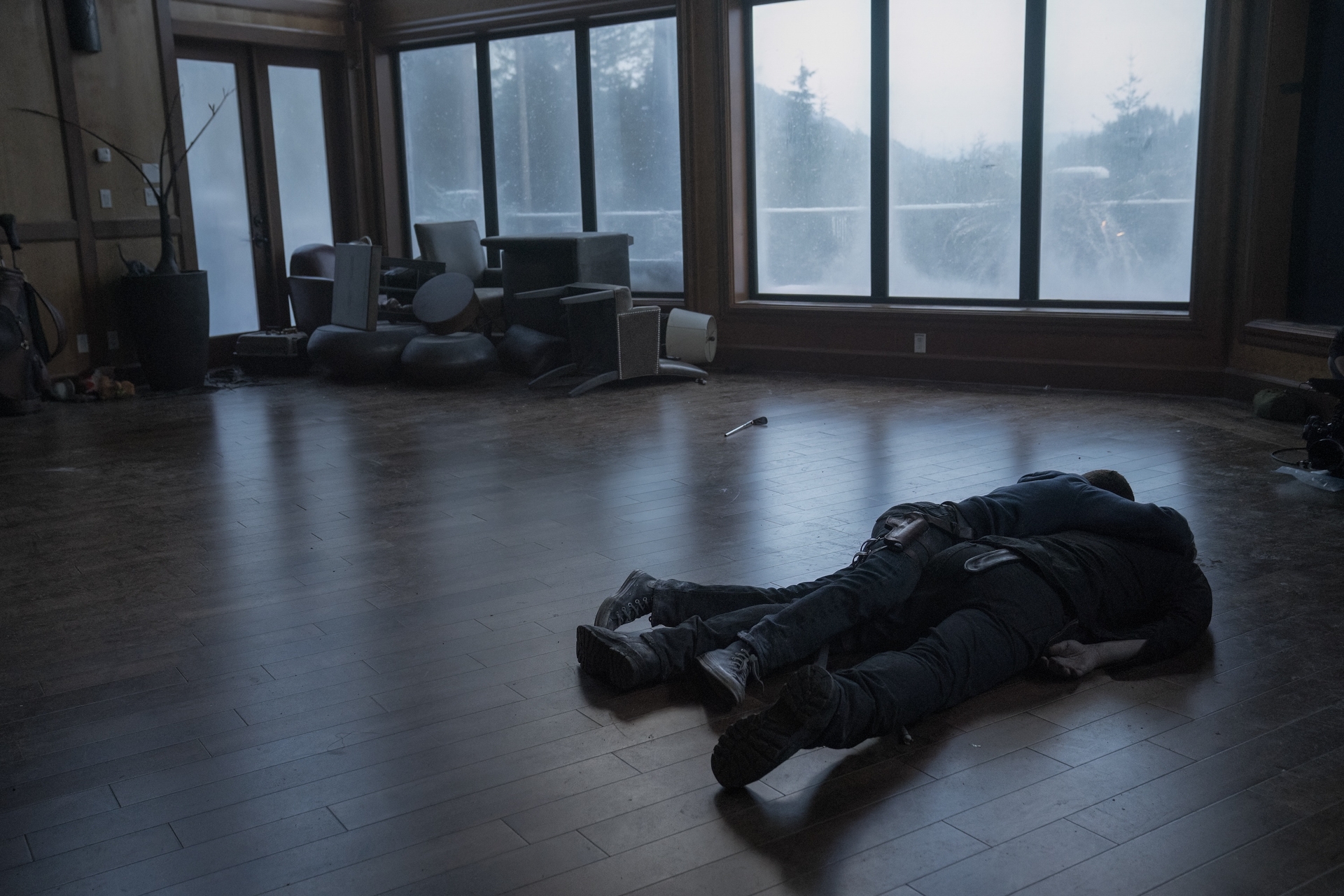
Saying goodbye is never easy. Particularly for fans of The Last of Us who remained agnostic of the preceding video game’s character arc for Pablo Pascal’s Joel. When “Through the Valley” aired last April, social media was deluged with the outcries and shocks of those who didn’t know. By the episode’s end, Kaitlyn Dever’s Abby bludgeons Joel to death in an act of revenge for killing her father. Even for those who knew it was coming, the moment shocked for its brutality and emotional impact.
Fortunately, the moment came to us courtesy of Emmy-winning director Mark Mylod (Succession, Game of Thrones) and Emmy-winning editor Timothy A. Good. Good, whose Emmy came from The Last of Us season one episode “Endure and Survive,” evolved that sequence after several conversations and agreements to eliminate distracting side plots.
He even worked to restructure the entire episode to allow for the appropriate focus on the emotionally devastating sequence.
“The really interesting part about [the battle of Jackson] was that this entire episode used to be intercut between the battle and the lodge. Once we put that up on its feet, we realized that you cannot leave Joel once Joel is in jeopardy,” Good revealed. “So, the battle sequence used to be going all across the episode, and then we realized that it had to be its own thing. In a weird way, what happened is, by intercutting the battle with Joel and Abby up at the lodge, it made the battle feel a little bit less important.”
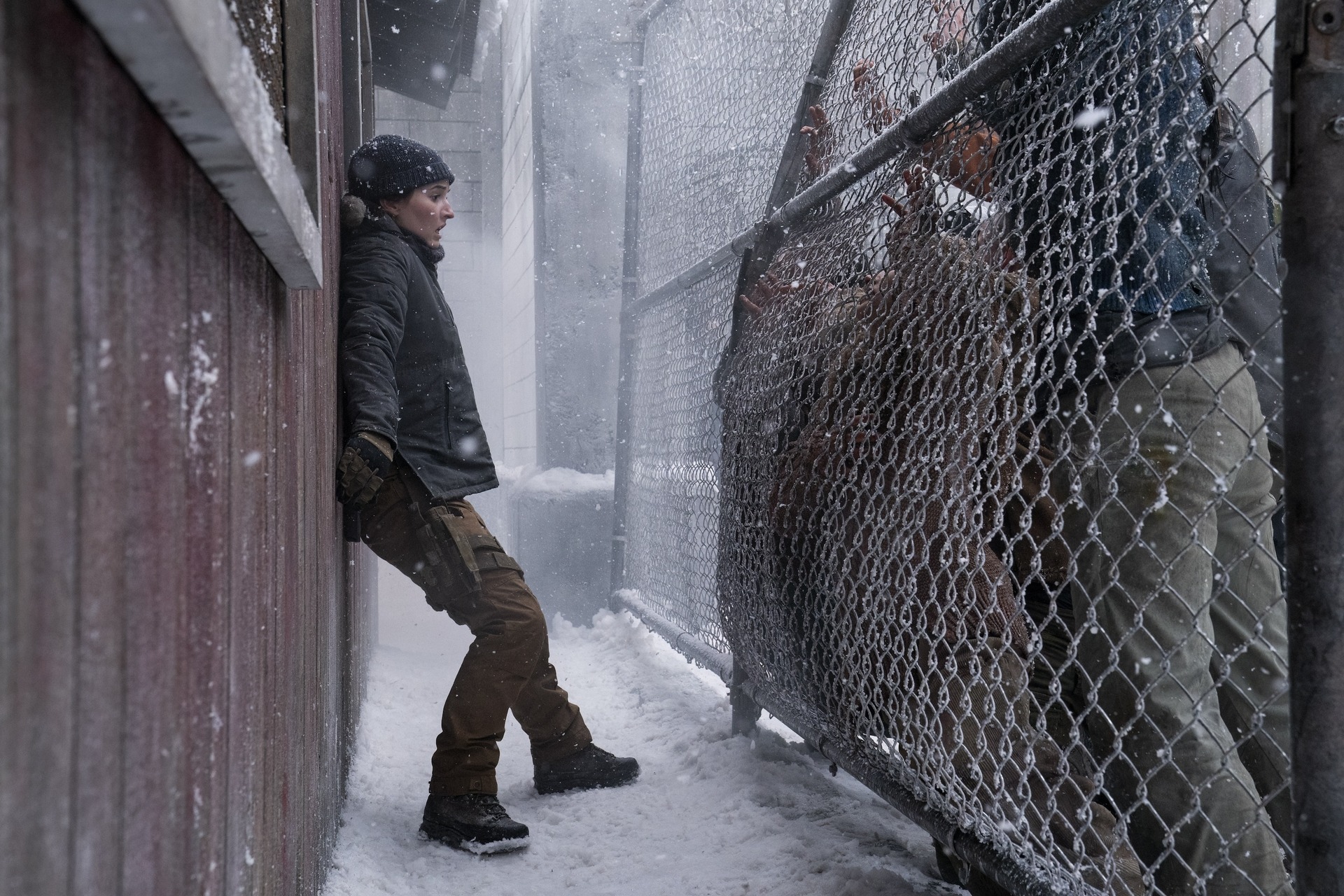
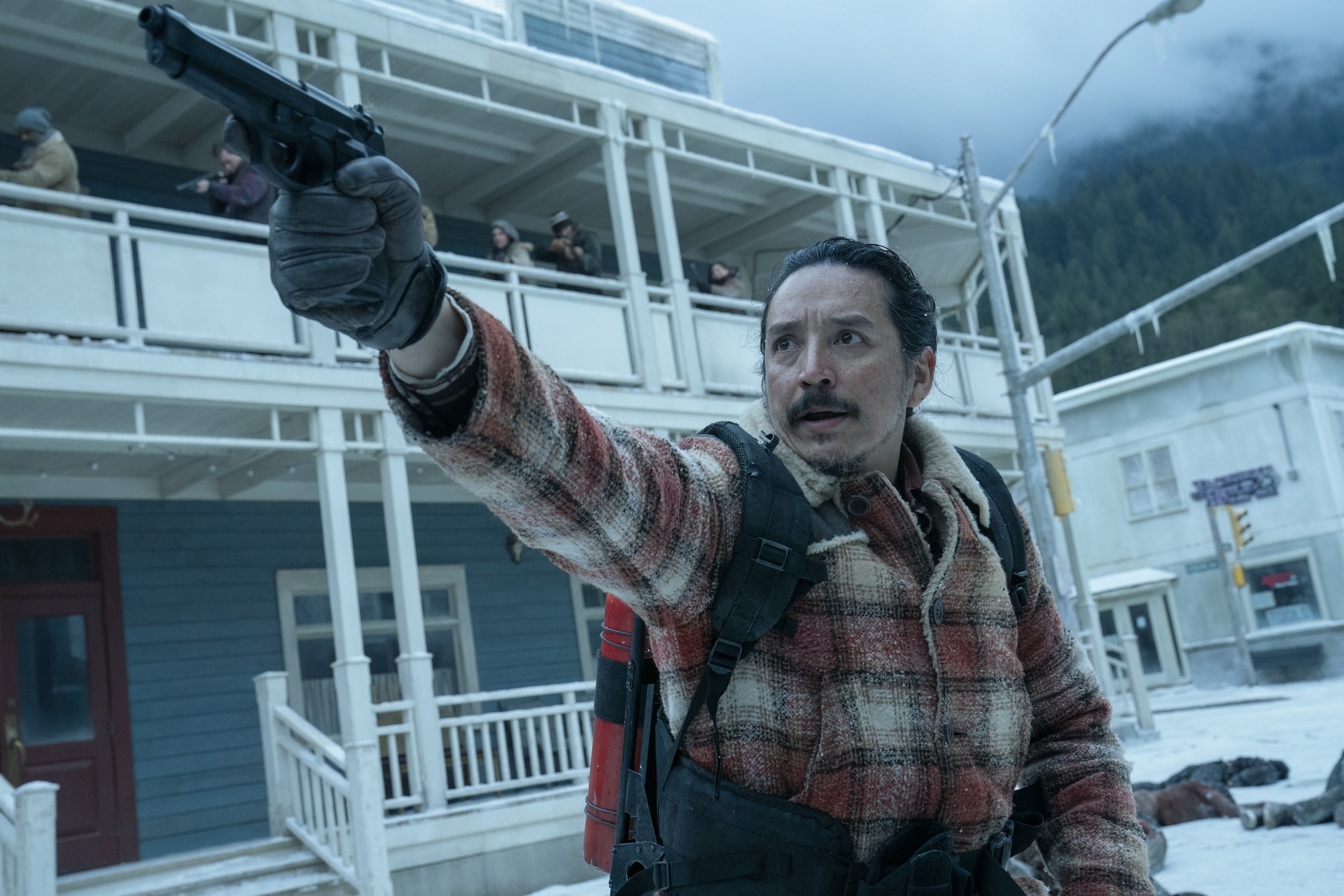
The battle of Jackson happens as Pascal’s Joel rescues Dever’s Abby who is fleeing a horde of infected buried in the snow (another fantastically edited sequence of quiet terror). With the infected awakened and enraged, they descend on Jackson, and a battle royale ensues. That sequence, brilliantly assembled by Good, features a stunning mixture of intense build-up, shock-cut infected attacks, and true stakes represented through the perspective of Gabriel Luna’s Tommy.
When shaping the episode with Mylod and showrunner Craig Mazin, Good needed to whittle down the abundance of excellent material provided by Mylod and his team. During this process, they underscored the overall intent of the action sequence: how is the action functioning for characters and how is it important to the characters. Initially, the sequence emerges from the vantage point of Luna’s Tommy, desperately trying to lead the community to victory against the infected initially and then later trying to deflect the attention of a massive bloater from wife Maria (Rutina Wesley).
“What was fun to build when the infected are coming towards the fence, they had filmed a lot of the townsfolk moving to get ready, and it turns out they were always moving left to right. I was able to call the second unit director and say if you can film everyone right to left, that’s going to be really great,” Good laughed. “We’re going to actually create, I can’t believe I get to say this, an Eisensteinian dialectical montage here. We can actually do this thing where there’s this conflict of direction at each point. Craig and I were very specific about following this main spine of threat to character and threat to town.”
As the battle eventually winds down with many casualties, that freed Good and team up to return to Abby’s lodge and prepare the audience for Joel’s eventual fate. Through the collaborative process, Good focused the scene on Abby and Joel’s conversation and the following events. A subplot of Joel’s companion Dina (Isabela Merced) waking after being drugged by Abby’s group and attempting to stop the Abby’s attack on Joel was cut.
And the team limited the number of hits Abby takes against Joel to three — the rule of thumb that identified how much the audience could actually handle. As Good describes, the first hit represents the shock, the second represents the reprisal, and the third represents the escalation.
However, Good underscores the brutal attack through an expertly constructed sequence in which Bella Ramsey’s Ellie enters the lodge through a lower level. As she quietly navigates the space, she hears the thuds of Abby beating Joel but doesn’t know what that sound represents. The audience, however, absolutely knows what they mean, and it heightens our sense of dread.
“It’s a character experiencing the mystery of it, even though the audience knows exactly what’s happening there. We just are desperate for Ellie to get there,” Good said. “We actually trimmed that sequence significantly to its bare bones to make it as propulsive as possible.”
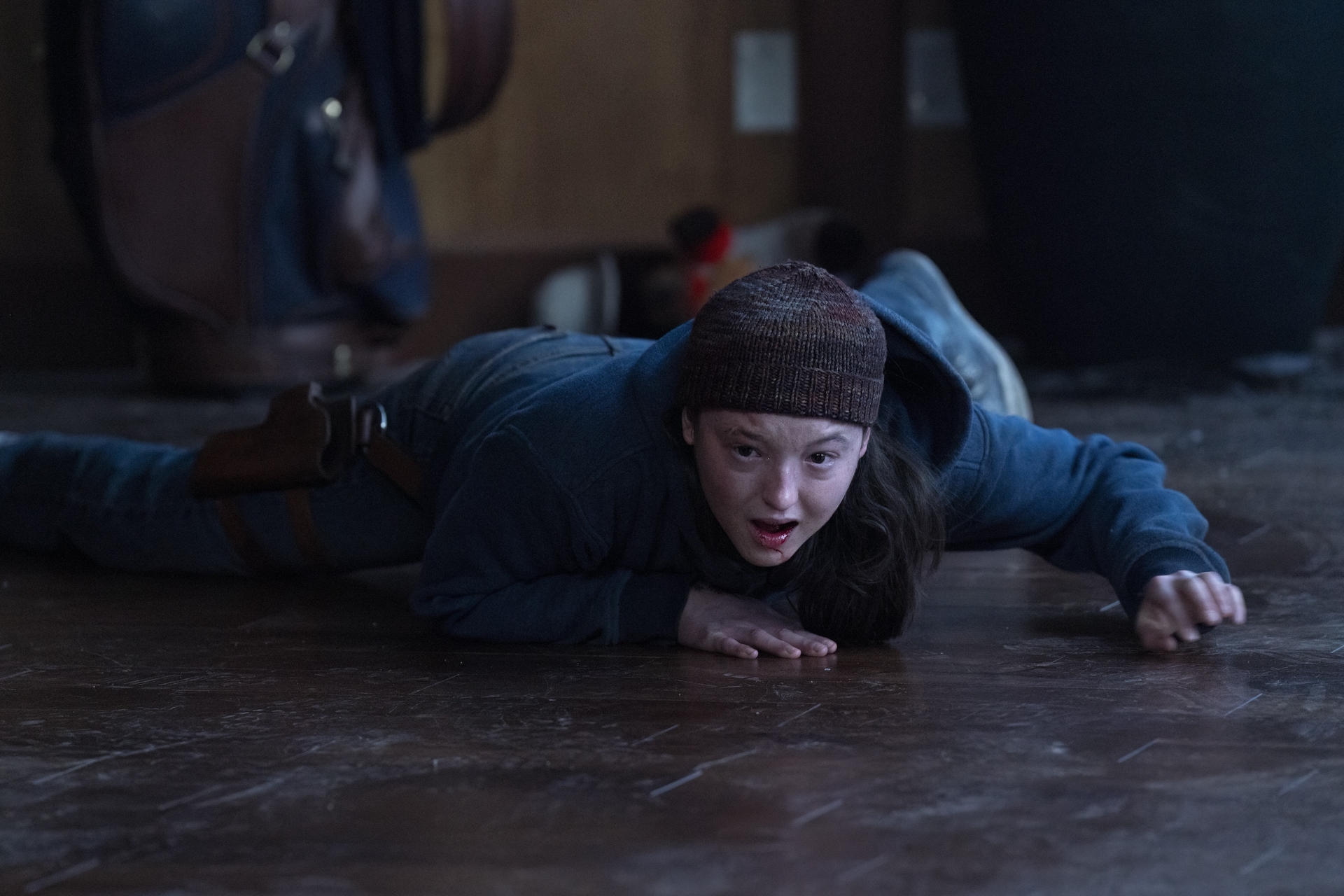
When Ellie opens the door and sees Joel dying on the floor, she’s immediately subdued by Abby’s gang. From that moment on, the scene takes Ellie’s perspective as this is her loss, her tragedy, and the audience experiences it through her eyes. One of Good’s favorite shots of the episode happens as Ellie crawls across the floor to grieve on Joel’s dead body.
There was an earlier cut of the episode where the scene ends as Ellie grabs Joel’s hand. To Good, that didn’t feel impactful enough. He wanted more time with the characters, representing the fact that Ellie felt perfectly fine to die there on top of Joel.
“For whatever reason, I kept feeling like I wanted more. I felt like we needed to sit in the silence of these two people and feel the life force gone, even though she’s sitting on top of him. Craig had said it almost feels like she wants to die with him.”
The Last of Us streams exclusively on HBO MAX.