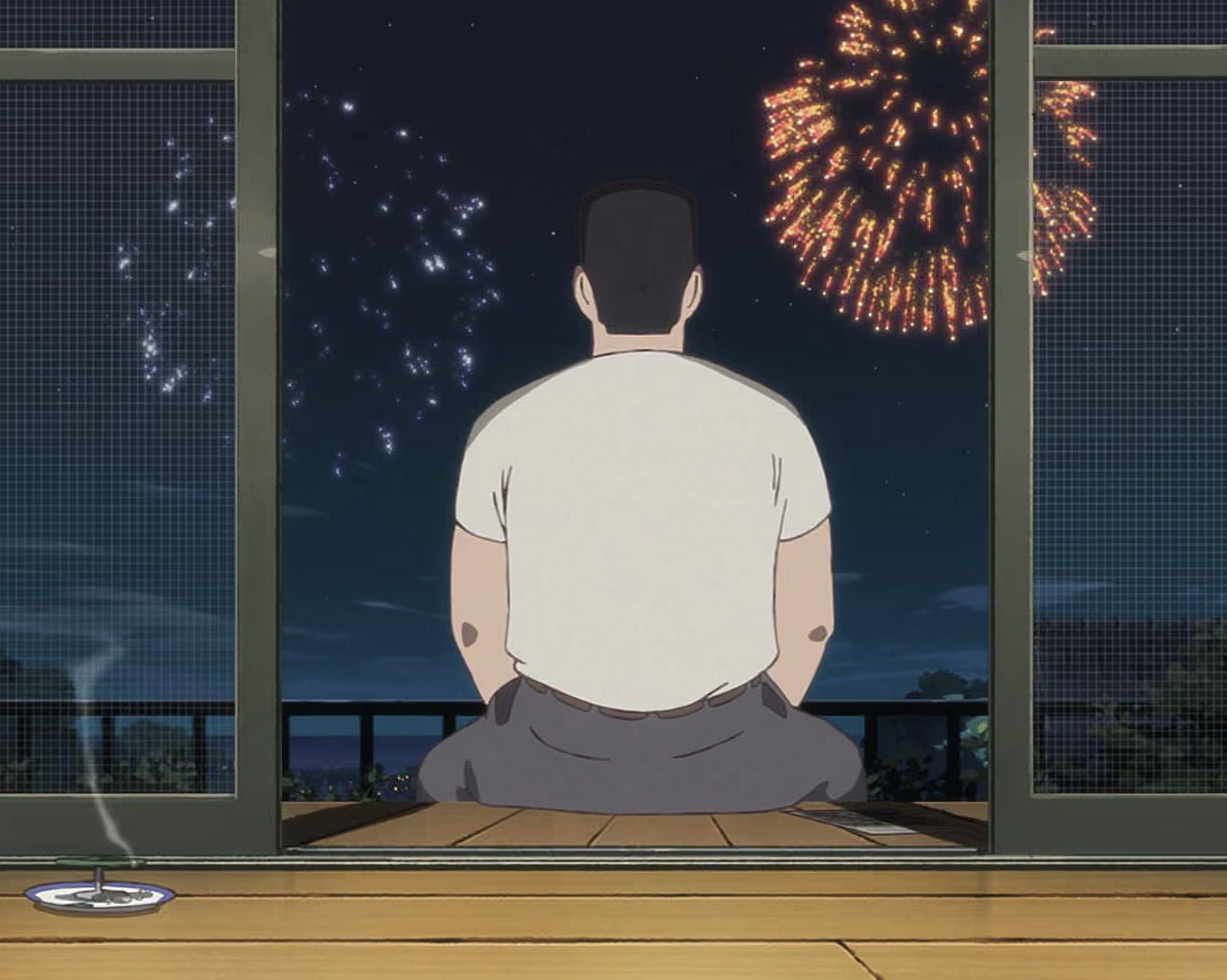
For a man known for the multi-character work of the critically acclaimed anime Odd Taxi, Baku Kinoshita’s work on Gkids’ The Last Blossom was a very different task. Here the focus settles on basically one man, dealing with one man and the woman that meant everything to him. Seeing the small moments that lead up to meaning everything. From fireworks to making a song out of household objects to a talking sarcastic flower. The creativity and intimacy he has created is a beautiful slow burn to a satisfying end.
The Contending: This is your first project outside of Odd Taxi. What was it that appealed to you about this story that made you want to take it on?
Baku Kinoshita: My previous TV series Odd Taxi had about twenty characters. And because of that, the time spent with each character was really split up and short. But with this movie, I really wanted to focus on a smaller cast and, even more so, one person’s life. By going really deep into that life I really thought I could convey the beauty of life in that way.
The Contending: Speaking of that lead character Akutsu, his backstory is kept vague. But we set little hints of what brought him into the Yakuza. Like when he talks to the young gangsters and talks about not having the skills to really do much. And we don’t even see when he meets Nana, but we just see them after they’re already living together, and we get a sense of why he loves her. What was behind those creative choices to let us see that instead of giving us a full backstory?
Baku Kinoshita: I wasn’t really focused on how he got into the Yakuza. I was more interested in the love story between the two of them. If I had included their past, or how they met, how Akutsu came to be Yakuza, even what he was like as a little boy, I really thought then the audience wouldn’t be able to focus on the love between those two, so I think that’s why I made that creative choice. 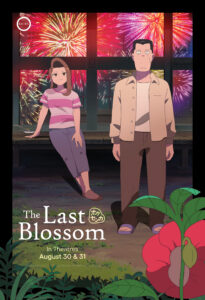 The Contending: You’ve worked with Kazuya Konomoto on every project. What is your guys’ process?
Baku Kinoshita: With Mr. Konomoto, we usually brainstorm ideas and talk it through, and then once we have, characters, setting, a concept of what we want to work on. And a sense of where it’s gonna be headed, then Mr. Konomoto will start writing the script. While he is writing I don’t bother him at all. I don’t have any say or input. Then once he’s finished he gives it to me, I’ll read it and then we’ll discuss it. Sometimes we’ll fix things, sometimes it’s great and we don’t change anything. Then I will go into storyboarding and the directional process. And then, similar to how when he’s scriptwriting I don’t say anything, when I’m storyboarding or giving directional input to the staff, he doesn’t say anything. So I really think we have a lot of faith in each other in our respective roles in a project, and that’s how we work.
The Contending: The ending with what Nana finds was, I felt, the perfect way to show Akutsu’s true feeling and the best way he could express it to her. How did you go about crafting that finale?
Baku Kinoshita: Yeah, I really think the whole structure of how everything leads up to the ending was really Mr. Konomoto’s script. There’s little bits and pieces from the beginning of the film where you see Akutsu preparing to leave stuff for Nana. So I think there’s a catharsis that happens at the end, from that build-up. I really think that is the brilliance of Mr. Konomoto’s script.
The Contending: One of my favorite visuals in the film is when the balsam flower in the cell releases its seeds. What went into crafting that?
Baku Kinoshita: So the bursting of something was a key motif of this whole film. There were fireworks, balloons, and even the son’s heart was about to burst, right? So of course the blossom seeds bursting is one of them. That was incorporated in the final because as the flower seed bursts, that is when Akutsu’s life ends. When the seeds burst in real life it happens so fast and is fleeting, which connects with Akutsu’s death happening at the time. While I also made it so, the soundtrack sounds dreamy and out of this world to really play into that feeling. With the flower seed burst and his death you realize everything ends. But you also realize that Akutsu’s goal was met, and he had that turnaround he kept talking about. So that all just came together in that one thing.
The Contending: One other motif I noticed is the song “Stand By You” throughout the film, and the way the characters use the microwave ding and the ripping of paper and tape to kind of create that music to it. What was that like to direct, and why was that the kind of song picked?
Baku Kinoshita: Regarding the directing of the scene, I tried to get the melody line animated by matching it to the removing of the masking tape and, timing-wise, it was really hard, but I think in the end it came out really well. In terms of why that song, when the script was done Mr. Konomoto said why don’t we include Stand By Me in the story? I thought that was good because the lyrics really match what Akutsu and Nana are going through and their loyalties are really strong. But also another reason why I wanted to include it is because it’s such a popular song. And then this film is such a niche film. I wanted to have that balance of that popular song in a niche film to maybe get more attention from the audience.
The Contending: I’m certain this was part of the writing process, but what was behind the Balsamah being alive for those moments? How was that chosen as the way of our narrative structure? And why was it so sarcastic? It worked beautifully, but I’m just curious about the decision.
Baku Kinoshita: So regarding the Blossom, we made it so that he’s lived over 100 years so he has seen what the humans go through. So he’s basically smarter than the humans. And that’s why he talks like that, because he’s worldly wise, but also philosophical. So that’s why.
The Contending: Final thoughts?
Baku Kinoshita: The movie flows in a slow gentle way. And also it depicts the beauty of human life and the importance of the small happinesses that you have. So once you finish watching the movie I hope you’ll leave feeling good. And I hope many people get to see the movie.
The Last Blossom is in theaters now.