If you were trying to create a movie I didn’t want to see, The Testament of Ann Lee would, on paper, appear to be that film. I’m not a big fan of musicals (with notable exceptions). I’m not the least bit religious either. So, the idea of a musical about Ann Lee, the founder of the Shakers, a radical Christian sect that believed, among other things, that celibacy was necessary to be genuinely close to God, is not a film I would ever ask for. But films only start on paper, and in their journey to the screen, wondrous things can happen. The Testament of Ann Lee is one of the best films of the year, boasting an astonishing lead performance by Amanda Seydried as the title character and top-shelf direction by Mona Fastvold. The script, written by Fastvold and Brady Corbet (they co-wrote The Brutalist together), is remarkably fierce and challenging. The film matches the page.
Sofia Subercaseaux had the challenging yet rewarding task of editing the film. I shared my initial misgivings about the film with Sofia, and she laughed in an understanding way. This most unusual project is the kind of picture you can genuinely say, after you’ve watched it, “Well, I’ve never seen that before,” without speaking in hyperbole. In our conversation, Sofia and I discuss the film’s complex nature, Amanda Seyfried’s courage, and how she cut this extraordinary film.
The Contending: You’ve gone from El Conde to Maria to The Testament of Ann Lee. Three very different films were edited in different styles. Do you have a particular methodology you apply when you edit a film, or are you focused on each individual picture?
Sofia Subercaseaux: I’m not very rigid in my ways. It has to do more with my relationship with the director. That dictates how you approach the footage. Of course, I have my ways of organizing and marking, and how I approach a scene. But it’s dictated by my relationship with the director. I’m very lucky. I’ve mostly worked with people I know and that I’m friends with, and have a personal relationship with, besides just work. I get involved early on. Usually, I read the scripts before I start, and then begin assembling as soon as they’re shooting. I’m getting the footage with a day or two of delay, and then I’m working as they’re shooting. We have a dialogue once I get the footage. I can flag things, and we can have conversations that dictate what they’re doing and what I’m doing. I’m a project-to-project person.
The Contending: Maria is almost stately in its editing, and while El Conde approaches horror, there’s a lot of restraint. The Testament of Ann Lee has an almost physical, muscular quality to the way it’s shot and edited that is decidedly different from those two movies. How was your mission different working with Mona?
Sofia Subercaseaux: My mission is always just to help the director. Make their vision closer to what they want. I’ve never considered the potential of being a director. I don’t like being on set. I feel very comfortable in my place and in my job. I love reading a script, understanding and trusting my instincts about where things are not working well, and being able to have that conversation. But then I’m always so amazed when I get the footage back, and I’m like, oh, that’s what you are thinking? It’s just impossible to do it until you see it. With this movie in particular, the script was beautifully written. It was interesting to read because it’s so visual and has a rhythm.
It’s so cinematic. But then there were all these pauses, and then there’s a big dance sequence, and they break into song. But you can’t feel the weight of how it’s going to affect the story on the page. Then, when you hear the music Daniel composed, see the dances Celia choreographed, and see how they shot it, you begin to understand Mona’s vision and the effect it has on the script. It is just so much bigger than a simple scene. It was fun to start getting those scenes back from the edit and be like, okay, now I get it. I’m not on set. I don’t know what they’re doing. And then you get it, and it’s wow. This particular movie was really a passion project for everyone. Everyone went above and beyond for the film. Then I’m handed the torch at the end, and I need to make sure that it all comes together. The footage surprised me more than any other movie I’ve done because of its scope and the musical and dance elements.
The Contending: You were talking about reading the script. This is a hard film to give an elevator pitch about. When you try to nutshell this movie for someone, it’s challenging. When you were reading the script, did you think, We’re really going to get to make this movie?
Sofia Subercaseaux: I read it out of context and didn’t know what Brady and Mona were capable of, how they work, and how they operate. I remember reading it, thinking, “What is this?” It’s so confusing. Not confusing, not being able to understand the story, but more just being, like, I was talking to Mona, how the fuck do you come up with this? (Laughs). It’s also very particular about language and accents. Mona would come into the edit and help us with the accents because there are the Norwegian and Chilean accents, as well as 18th-century accents. We were laughing.
The Contending: Mona’s previous film, The World to Come, is terrific, but much smaller in scope. It’s a very intimate story. Ann Lee is intimate too, but it’s a much bigger canvas. How did you two connect for this film?
Sofia Subercaseaux: I love The World to Come. Mona and I have been good friends for many years, so I’ve been aware of her process and her projects. We haven’t been able to work together before because when she was doing The Work to Come, I was doing my husband’s movie. We couldn’t figure it out—this time we did. I’ve been a huge fan of her both as a filmmaker and as a person for a long time.
The Contending: It’s one thing to be close friends and be friendly, but it’s another to have that working relationship. What kind of notes did Mona give you as you were performing your Edit?
Sofia Subercaseaux: When I was assembling, and she was shooting, we were constantly just talking. She would flag things like “take 5” in the big dance sequence. It’s a very fluid conversation over text or phone. Sometimes she’d say, “I’m a little worried about this scene. Can you just put it together?” But no particular notes about style or how to do it. I think that is both given by our mutual trust and understanding of what she wants, and her understanding and trusting of my approach. We also spent a lot of time working together in the same room.
The Contending: Was it different when you were working in the same room? How did you interact?
Sofia Subercaseaux: I worked on the computer in the front, and she’s on a couch in the back with a big TV (looking at footage). We were also writing narration as we were editing. The narration was very fluid. It varied a lot. In certain scenes that were more challenging or required more full-on concentration in the process, we’d both be looking at and reviewing footage sitting next to each other. Last year, while we were cutting the film, she was in full Brutalist release. Doing lots of interviews, and she would sometimes take them in the back, and I’d continue working for a little bit, and then I’d present something.
The Contending: Editing for performance is key to how the actor comes across. Amanda Seyfried is extraordinary as Ann Lee. It’s just a staggering performance. How did you approach her work to make sure her performance was effectively captured?
Sofia Subercaseaux: She made my job very easy. There are times when you need to give the actors some extra love or work around things, but she was so in it that I don’t think she had one false moment. It was an impeccable performance. Her performance was not an issue. We were, of course, trying so hard just to make sure that she came across, but it was very clear that she did. The truth is, it wasn’t a challenge.
The Contending: The film has chapters, and each is presented by a title card. Was there a different approach for each chapter while maintaining a throughline?
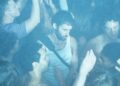
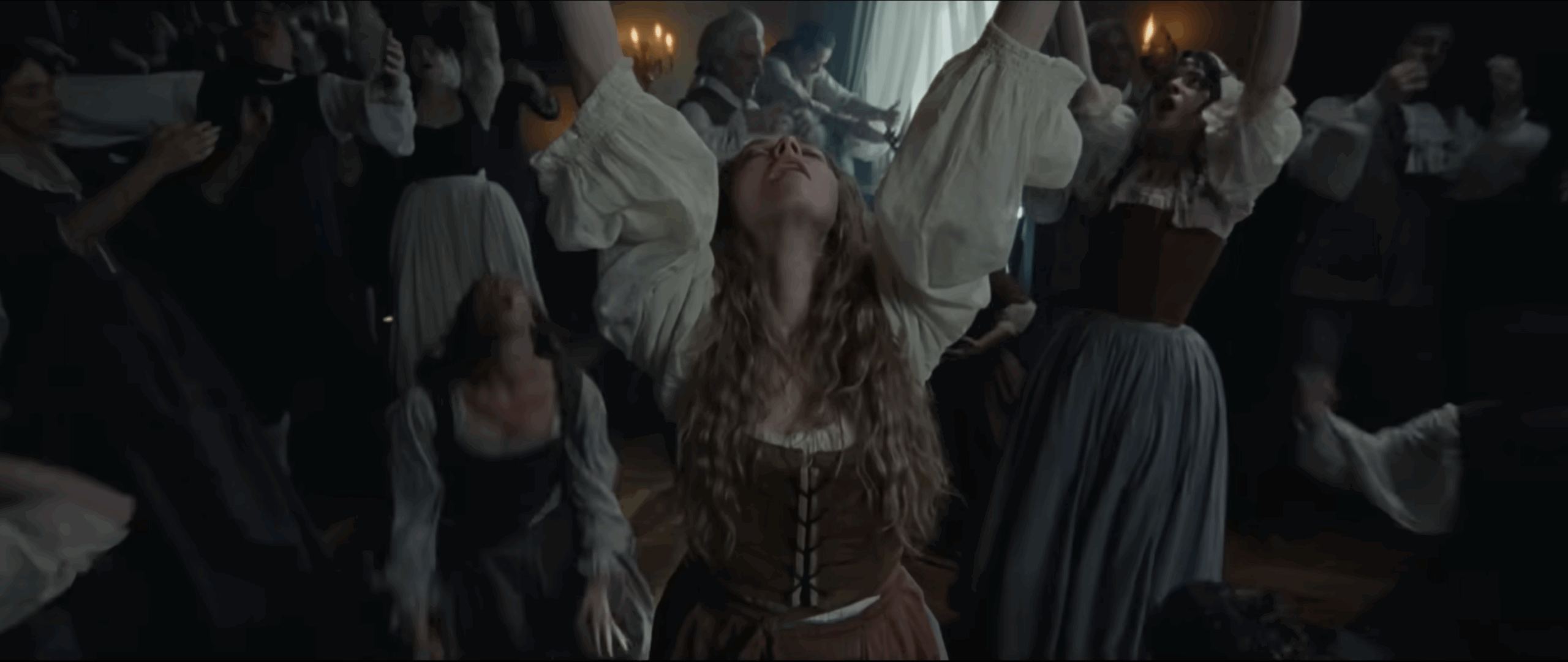
Sofia Subercaseaux: There’s a progression that’s dictated by her internal world and the way she moves and connects to the music and dance. The dance sequences progress from the very first one, which is completely wild, rupturing and turning around, with people literally climbing the walls. Then you see the last one, which is a funeral, which is super restrained. Very small movements, very contained and very emotional, too, but it channels a different emotion. In between those two sequences, there’s a progression. No dance is crazier than the first dance, and no dance is more contained than the last one. There’s an arc. I think it is like a reflection. It’s in the way Mona and choreographer Celia Rowlson-Hall map the movement that reflects an inner arc for the character, too.
This is not something that I invented. It’s something that was discussed with Mona and everyone on the team. The funeral is shot in a very different way. The funeral is super symmetrical and head-on. I also love the sequence where they become the Shakers with all of the Shaker furniture. It’s also way more symmetrical, although not as much as the funeral, and more from a distance, so the editing was affected by that. The editing on the final funeral scene is very restrained and very kind. There’s no fast cutting. You’re following the rhythm in a very organized way as opposed to, for example, the beautiful treasure sequence, where she loses all her children, which is l much more internally emotional and free. The cutting shows that too.
The Contending: Have you ever edited a musical before?
Sofia Subercaseaux: No, I haven’t.
The Contending: Even for a musical, this is a very different animal. That first sequence announces itself with so much authority. It lays down a marker that if you thought this was going to be a conventional musical, you’re just wrong. This is something different. The importance of that scene, I can’t imagine it was lost on you.
Sofia Subercaseaux: No. And that was one of the first scenes that I got. They shot that very early on. When I got it, my jaw literally dropped. What I saw is what you saw. It really didn’t change much, except for sound design and the music. It’s more polished, with some color correction, but it truly looked and sounded and felt very much like it does in a movie. That’s what I love about my job. I’m on my computer, in my pajamas, at home, just watching dailies, and then this scene drops. And I was like, okay. (Laughs) I can’t take any responsibility or credit for that scene. It was pretty much a oner. There were no stitches in that. It was a very simple edit. Whatever we put together the first time I got it, it’s what’s in the movie. There was no making it shorter. Sometimes you do little tricks, stealing a frame here and there, to make that movement feel a little more powerful. But there, that sequence is what they shot. And then I think when we truly discovered more of the film’s language was in the beautiful treasure sequence.
I think there were four different versions of it. Amanda’s alone, then Amanda’s with more people. And then it’s shot from a distant handheld, to show different stages of her grief. Then we started playing with how to combine them. In that exploration, I’m identifying what’s the truest or the best moment of it, and then build around it. When you need to make decisions about what goes and what stays, you first identify what has to stay, and then you can build around that. So we laid out all the tracks of the best version of each shot on different tracks, then we watched each one and marked which moments were truly special and needed to stay. There were slow delays in some shots, where they arrived at a movement a second late and then repeated, just because of the nature of shooting choreography. We discovered that there was something in that repetition that was very satisfying and emotional. We started playing with that and leaning into that, which is something that you also see on the boat. The weather changes, and then they repeat a movement. It was just pure discovery. We did not have a set idea of how the film would turn out. We just found it in the edit. We knew very well what we wanted it to be, but the little details of finding the rhythm and the repetition were discoveries.
The Contending: You referenced the voyage-to-America scene on the ship, which is so cinematic. Talk to me more about your mission in editing that sequence.
Sofia Subercaseaux: That sequence was actually one of the more challenging ones for different reasons. Not challenging in a bad way, but we wrestled with it more because we didn’t have a clear sense of what the ship at sea would look like until later on. We didn’t have all the elements. When we got those shots, it was so much easier to understand how to use them and what the storm could look like. It’s a scene that requires so much sound work for you to really feel it. It’s like an action scene, almost. You really can’t feel it until you get the right effects in, the right color, and the sound. The dance part was fun and seamless to cut. But when you think the ship might sink, that just kept getting better and better. It was just hard to understand until we had all the pieces fully.
The Contending: The attack on the Shakers after they reach the United States is one of the most harrowing scenes I’ve seen all year. I don’t know how long it was in terms of minutes, but it felt long, probably because it is so upsetting. That sequence is shot in a way that it does not flinch from the awfulness that occurs. What was necessary to make that scene so powerful and painful?
Sofia Subercaseaux: I was never worried because the footage was amazing. But it’s hard because it’s a scene that’s very hard to stomach, and that happens in real time. There are no lapses in time from the moment they are attacked. It’s continuous. There are no ellipses. They burned the house, and it could only be burned once. So it was a controlled burn, and it was shot in multiple stages with multiple cameras. There were certain moments where all the truth of the scene was, and we just needed to land on those. So we end with that visceral scream from Amanda. Then you ask, What does that mean for continuity and where the other characters are. It just becomes a big puzzle, and you need to move all the pieces so it can end there. It’s tricky because you don’t want it to feel boring or excessively long. But you also want it to feel long enough that you understand how painful it is, right? It’s not supposed to be an easy watch. It’s supposed to make you feel bad. Part of that is sitting with the uncomfortable moment of them just being brutalized. Sometimes the instinct is okay, move it along. But if you move it along, then it doesn’t land. Doesn’t make you feel the way you need to feel.
The Contending: I want to bring it back to Amanda in relation to that scene, and so many others in the film. I can only imagine, in your role, that you have this thought of what you want to accomplish with the scene. But you’re also witnessing this Amanda’s actorly courage. How raw she is, how exposed she is, how vulnerable she is. As you are editing, do you ever get caught up for a moment and think, good god, look at what she’s giving to the film.
Sofia Subercaseaux: For sure. And she was upfront about it. She and Mona are close. She was all in. We’re going to show birth. We’re going to show the goriness of it. I want my breast out. I want it to feel raw and real. She was really not holding back. I think part of that is that she trusted Mona so fully because I don’t think she would’ve done it otherwise. It’s a very vulnerable position to put yourself in to do all that. If someone doesn’t do it with good taste, it could go wrong. I think it paid off. We were looking at it from a female/mother perspective. I’ve given birth twice, and my kids are fine, but it’s pretty insane. I remember thinking, “How is this not the thing we’re constantly talking about?” It’s an insane thing to go through.
Going back to what you were saying at the beginning, I’m not religious. I have zero connection to any religious belief. I’m very skeptical of it. I can be judgy about people who are religious. So, how do we put ourselves in a position to do this right? We need to be very empathetic. We can’t be making fun of them, which is easy. We also can’t be too preachy because we’re not trying to tell people to be Shakers, you know what I mean? (Laughs). I think part of it is just connecting with the character and seeing her from a human point of view, and being very empathetic about where all her trauma was coming from. We needed to be rooted in understanding her pain, which, if you look at it from a very concrete point of view, is insane. I don’t think anyone but Mona could’ve done it. It’s such a specific, modern movie, which is so cool.