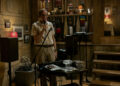

Editor Olivier Bugge Coutté and filmmaker Joachim Trier have worked together for years on films, and in talking with Olivier, it is easy to see why. They share a great sensibility on how to make films and get across the strong emotion they put into the work. With their new film Sentimental Value, the editing challenges were very different from some of their previous work thanks to the large cast of characters and making certain each person is given enough time. Here, Coutté breaks down some of the most important scenes and how the editing enhanced the work. Also, he shares why he and Trier really like montages.
The Contending: You have worked with Joachim Trier since his first short film and have been the editor on several of his other projects. What is it about working with him that you find so enjoyable?
Olivier Bugge Coutté: We are friends on a personal level. We met in film school and did our second year and graduation films together. We did a couple of short films together, and now this is the sixth feature film we’ve done. So besides being friends and having been in each other’s lives for the last 30 years, we share the same taste in film and music and art in general. We both have a desire to play with the narrative ways of telling a film. We are not afraid of using a voiceover that changes from time to time. Sometimes it is a voiceover that knows everything, sometimes it doesn’t know everything and makes mistakes as it is telling the story. We also like doing funny montages, doing things in chapters, or using dream sequences. We like playing around with many different formats and that’s what we really share. We live in two different countries thousands of kilometers apart but we often text each other. “Hey, did you see this little bit?” “Did you hear this piece of music?” “Did you see how they went from that scene to this scene?” “That’s a clever way of doing it.”
The Contending: Talking about those different styles, what I found very interesting about this film compared to what I remember of your guys’ previous work is that it felt like a collection of vignettes of these people’s lives just slowly building until we were given as much of a picture of them as we can. As an editor, did that style present you with any particular challenges?
Olivier Bugge Coutté: Yes, absolutely! I would say this is a multi-character film and the challenge of a multi-character film is always to balance each character in the overall structure. I can give you an example. In the first cut of the sequence where Gustav goes to France it was originally 26 minutes. We may not have trimmed it to the bone but we did still cut the scene fairly tight, because looking at it and seeing that it was 26 minutes we knew intuitively that it had to go down, and it had to go down to about 10 minutes roughly plus or minus. Because we could not stay away from Nora for that long because then it would feel like a different film.
That really was the challenge, finding that balance, especially when there’s three strong women and one strong man in the middle. It was all about seeing how much you could be involved in the psychology of that person and how deep you can go into their past conflicts and motivations for changing their lives before you have to let go and go on to another character. That was the particular challenge for Sentimental Value. It was easier in the previous film because we only had one character that we had to follow through the whole film, and other people came into her life but she was the main thread. She was in almost every scene!
The Contending: So much of what this film does to get emotion across is how we’re focused on a character’s face. With us getting just a little bit more insight into what they’re going through. Was it difficult to decide how long to stay on those characters’ faces?
Olivier Bugge Coutté: It was. It is difficult to say exactly what I did because for me it’s a feeling of how the scene is and where we are in the structure. If the scene moves from another place in the structure of the film I might need more of an emotional lift, or to go in the opposite direction. It very much depends on how the overall film evolves. What we were conscious about, and what I have been thinking a lot about since I started working on another film, is that I have a tendency when scenes are very emotional I tend to cut them dry. Otherwise it will become too much and, let’s be honest, there’s a lot of people crying in this film. If you just let the crying go with a lot of music every time, you’ll become exhausted at some point.
I try to enter the scene at a moment where you ask yourself a lot of questions, so that you are deep inside the scene already. Then try to get out at a peak moment. So you’re left with the emotions when you leave the scene, or questions if it’s something that has to do about driving the story forward. I do this instead of letting the scenes of crying and kissing run and run. I wait till the end. You have to wait for that until 5 minutes before the end credits, then you can let go of everything.
The Contending: You talking about that reminds me of probably my favorite large sequence in the film. When Rachel comes to tell Gustav that she can’t do the film, and they have their conversation where they are both hurt but they both understand why. Then we cut to Gustav walking through the house and going outside, and then flipping off the house in that final moment. Is there just anything you can tell us about editing that moment?
Olivier Bugge Coutté: I know that there were a lot of steps that had been taken out. The overall thread is the same but there are small moments of her dwelling in the doorway after she has revealed to him that she wants to leave the project and she gets her jacket and leaves. That was originally a much longer conversation and that had to be trimmed down because the peak of the scene is over and they just need to say goodbye, because now we want to be with Gustav.
After that as well there were long moments of him going upstairs to his ex-wife’s room, lying on the bed, and it became too much and the focus disappeared. If there is too much pain, then the pain becomes very general and, as an editor, you want to concentrate the narrative. You want to focus where the pain is directed. So what it became was him starting to drink, and then him looking into that “damn” room where his mother committed suicide and where he had presented to Rachel the idea of the film, which was the whole middle point of the film. So that was enough. We didn’t need him to fall around drunk and lie on a bed and scream. Just him looking into that damn room and then saying, “I can’t make this film; it’s impossible.” And then he goes out and looks at the house in despair saying, okay, I give up.
The Contending: You mentioned earlier getting that emotional catharsis at the end of the film. That scene there is not a lot of editing at first. We get the one of Nora doing the scene and then going to close the door, and we’re just waiting there. Then we cut to her behind the door just waiting. Then cut over to Gustav. Watching it was incredibly cathartic. Everything isn’t perfect, but it feels like we’re in the right place. Anything about that final moment you want to talk about?
Olivier Bugge Coutté: It’s funny because whenever I see that last scene, I get very emotional and sad for what’s happening even though there’s so many metatextual levels at it now. I see that it’s his daughter and her nephew so we know this must be a scene setting. She turns around, there’s a blue screen outside, and of course the blue screen registers, but I’m completely in the emotion of Gustav’s world. One interesting thing is on the audio side of the original soundtrack you would hear Gustav give instructions. You would hear him say, now you turn, now you stop, now you look out of the window. Like he was directing on the set, and that made it feel too much like a set. But when we cut it, it felt like we saw the film within the film. When I see her going down the corridor, knowing that she’s an actress and that she’s just in a scene, I’m still like, no, no, don’t go down there! Then when we cut to the other side of the door I felt relieved knowing okay, she didn’t kill herself, it was really just a film.
The Contending: You talked about how you and Trier like doing the voiceovers and montages, and that is used to great effect showing the past history of the house. It felt like those sequences went faster and just had a different style than the rest of the film. Did that present a different editing challenge?
Olivier Bugge Coutté: I mean these voiceover-driven montages have always become a signature for Trier’s films. This is one of the fun devices we like using when we do a film because they are full of humor and seriousness at the same time. There’s a lot of comedy elements written into the script like Gustav giving his 10-year-old grandson Michael Haneke and Gaspar Noé films for his birthday. So there are small comedy elements all the time. Because if you want to make a film about people in a psychologically entangled situation with loss, death, and pain, you also have to drip in moments of levity. Otherwise people will become numbed to the pain. Montages are very much that. They’re full of music and fun. There’s fast cuts. It’s like a small ride on its own and then you come back to the main track again. You’re still being told thematically and psychologically a lot of things, but you’ve been in a small side trip that gives you the power to continue into the rest of the pain.
Sentimental Value is now playing nationwide.