
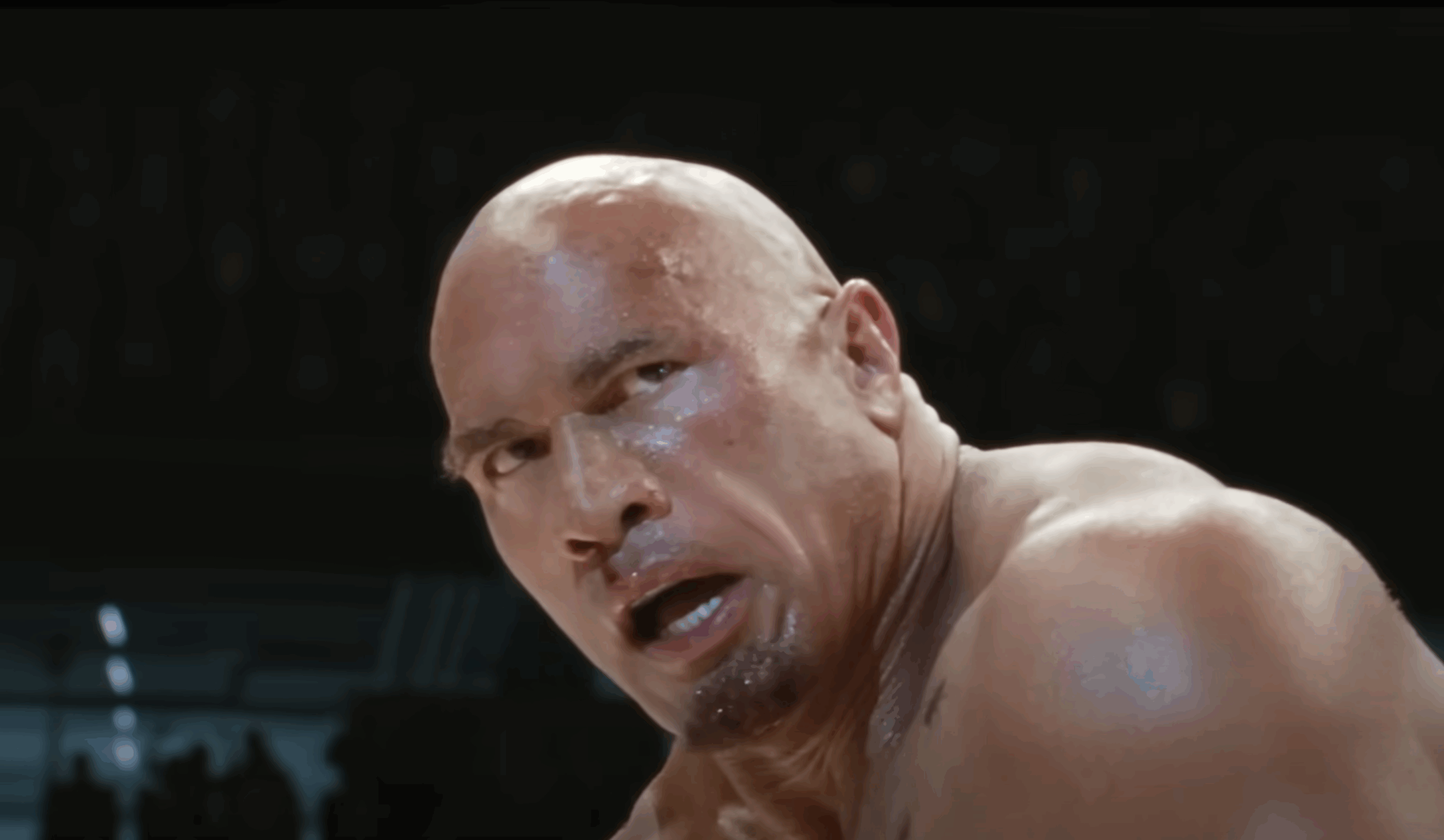
The early brief on the Best Actor category was that Dwayne “The Rock” Johnson’s foray into the field of “serious acting” (The Smashing Machine) was a shoo-in for nomination. Benny Safdie’s first film as a director, without his brother Josh, unveiled itself at Venice and received a rousing 15-minute standing ovation after its screening. Safdie even received this year’s Best Director prize. All the pieces seemed to be in place.
Yet, the first sign of trouble appeared when the reviews started rolling in. While there were some raves, the overall perception of the film from critics landed in the mixed/positive range. Not bad, but a long way from the rapturous reception on the Lido. “Respectful” was not the critical assessment A24, Safdie, Johnson, and crew were hoping for.
The Box Office
Still, if the film were to open well, a solid box office showing would have made up for a lot. Early expectations for The Smashing Machine were fairly bullish for Johnson’s prestige picture debut. Box Office Pro calculated that the film would open in the $15-17 million range. Then, just before the movie’s wide release on October 3, Box Office Pro’s hard tracking data led the site to adjust its prediction to an $8 million opening weekend. When the weekend closed, The Smashing Machine performed under even that heavily reduced prediction, making just under $6 million for the weekend.
The first question for many was a simple one: “What happened?” Johnson has had the occasional box office disappointment before, but most of his movies have scored at least a respectable opening. As a major box office star playing the lead in a sports-based movie that appeared to offer a soft entry into the world of Oscar-worthy films, The Smashing Machine had the kind of synopsis that one might think would lead to a face-saving debut. One would be wrong. While I do believe the softer-than-expected reviews hurt, the film’s relentlessly downbeat nature (to be fair, the story of Mark Kerr, the real-life subject of the film, is not an inspirational one) made The Smashing Machine difficult to promote, not that A24 didn’t try.
The Budget
The much-heralded indie studio began pushing into higher budget territory last year with Alex Garland’s Civil War and reaped box office rewards for their efforts. A24 poured $50 million into the making of Garland’s dystopian opus, and scored a worldwide return of $127 million—a solid return on investment before ancillaries.
The Smashing Machine also had a budget of $50 million, which, having seen it, left me somewhat incredulous. Johnson cut his usual $20 million fee to $4 million, which left The Smashing Machine with another $46 million to spare for the remaining cast, crew, and shoot. Considering the much smaller scope of The Smashing Machine vs. Civil War, it’s hard for me not to wonder where all that money went. Add A24’s tens of millions spent on marketing, and a movie with a minimum cost of $70 million will be lucky to make back a third of that cost at the box office, home and abroad.
The Narrative
A film flopping at the turnstiles isn’t always a killer for the Oscar chances of its lead. In 2021, Spencer, starring Kirsten Stewart as Princess Diana, underperformed with critics and audiences, making just $26 million worldwide. Even so, Stewart was still in the final five when the Best Actress nominees were named. There is a key difference, though: Stewart, despite being a part of the Twilight phenomenon, is not considered a high-powered draw; “The Rock” is. The expectations game may not be fair, but the current narrative is that “Johnson’s film bombed.” That’s a problem for Johnson. With nearly three months to go before the Academy begins voting on nominees (voting opens on January 12, 2026), the story of The Smashing Machine’s commercial disappointment threatens to overwhelm the quality of Johnson’s performance.
Let me state clearly, The Smashing Machine’s box office woes are not because Johnson isn’t good in the film. He’s quite good, in fact. But failure has no friends, and it may not have enough voters, either.
Some Oscar prognosticators (including Variety’s Clayton Davis) still have Johnson in their top five. Still, it would seem likely that Johnson’s hold on that position will become more tenuous throughout the season.
If Johnson drops from the list, who might benefit?
As of now, the two most certain nominees appear to be Leonardo DiCaprio for One Battle After Another and, somewhat ironically, Timothée Chalamet for Marty Supreme (directed by Josh Safdie, the brother of The Smashing Machine‘s director, Benny). Both Wagner Moura (The Secret Agent) and Ethan Hawke (Blue Moon) have picked up steam recently. If we accept DiCaprio, Chalamet, Moura, and Hawke as 4/5 of the eventual Best Actor nominees, Johnson’s absence would augur well for Michael B. Jordan (Sinners), or Jeremy Allen White (Springsteen: Deliver Me From Nowhere), and improve the chances for two revered actors in films also receiving modest reviews, George Clooney (Jay Kelly), and Daniel Day-Lewis (Anemone).
By no means do I think that Johnson has no chance to earn an Oscar nod. “There’s many a slip betwixt a cup and a lip,” (yes, I just quoted Emilio Estevez in Young Guns), and we still have a long way to go before the nominees are announced on January 26, 2026. What I will say is that we are now in hand-wringing territory for a nomination that once looked like a sure thing.