
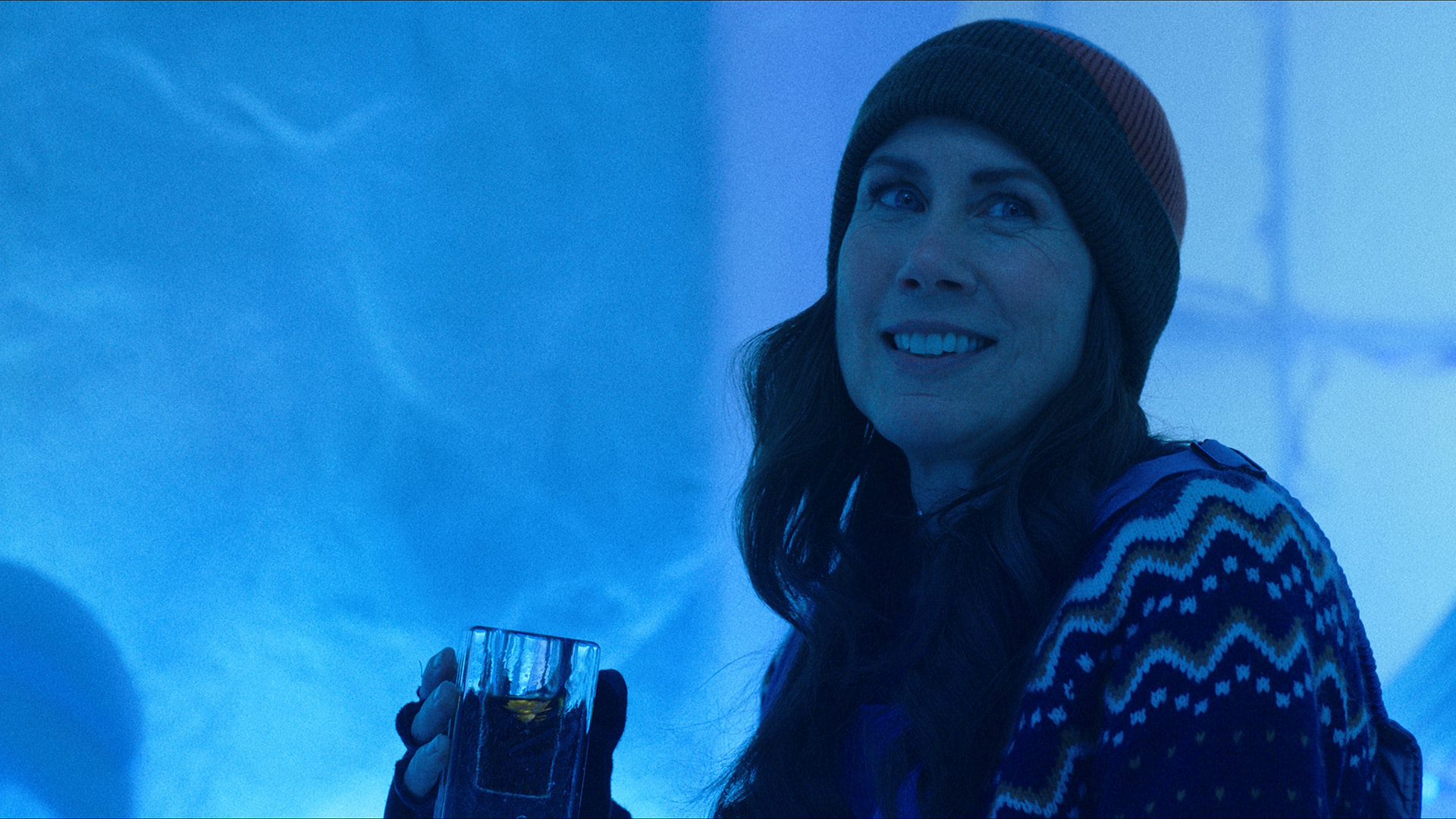
Miriam Shor from Apple TV’s Pluribus feels very lucky. This is the kind of TV show she has dreamed of watching. So to get to be in it was beyond exciting. The chemistry between her and Rhea Seehorn was built out of them genuinely getting to know each other, and Rhea being just the absolute best. Miriam felt the intensity of their feelings and what made them work, and why her death lingers so much for Carol. It was as tragic to watch as it was to play.
The Contending: How did you and Rhea Seehorn prepare to feel like a long time couple?
Miriam Shor: Well, Rhea is an incredibly generous person and actress. You hear that word generous and you’re, like, what does that mean? But what it means for Rhea is that she would go and say, why don’t we go through these scenes together? Talk about and dissect them together, then practice, rehearse, and then just spend time together. We were really lucky in many ways because from the very first moment I spoke with Rhea, I felt like this was an old friend even though we’d just met. There was a connection there that was very organic, that we couldn’t fake, and we just instantly liked each other. So it was both her generosity and just luck that we dug each other immediately. It’s not that hard to pretend you’re in love with Rhea Seehorn.
The Contending: I’ve talked to other actors from the show and generous is the term that seems to be universally used to describe her.
Miriam Shor: Rhea comes from theater and she has been doing this a while. This is not about her ego, this is about us trying to get together and make this show work, and make this relationship believable or make the scene work. She’s just all in and so kind and genuine.
The Contending: Were you given any backstory to their relationship, or did you come up with one, or did you just let the scenes do it themselves?
Miriam Shor: Well, the writing is great. And the writing gives you all kinds of hints of who these people are. And that’s some of the stuff that Rhea and I would talk about. For instance, the scene where she’s going to try to drive the car and the breathalyzer is in there and Helen gives her a look about driving. So we have a whole bunch of history that’s right there, just these little moments where there’s unspoken agreement or understanding between them that’s written in there.
Then there is the wonderful dialogue that is so human and gets you to understand what they think, without spelling it. There’s a lot that is unsaid and that’s written in there as well. There are so many clues to who these people are to each other and who they are in the world. Then there’s the stuff you bring to it where you feel like this is how the character would be, and that’s part of creating it together with the rest of the crew. But you have to do it fast because TV-making is fast. So that’s the thrill and the risk and all the good stuff.
The Contending: One of those scenes that I thought said a lot about their relationship is in the airport when Carol signals to Helen to switch the books so her book is on the top shelf. You can tell this is something Helen has done for her several times. What did you guys think about that scene in terms of their dynamic?
Miriam Shor: Well, it’s that unspoken thing with them. They don’t talk about it after either. Helen just does it and then they chew a stick of gum. It establishes pretty quickly that Helen is someone who takes care of Carol and not much needs to be said for her to do it. They just get each other and instantly, you understand these people have known each other forever.
Just from that, and that’s where the writing is great. And then on a side note we were shooting at the Albuquerque Airport for the day, and Rhea is very funny and I’m a total dorky ham. And so we just had so much fun that we sort of inevitably built this backstory for ourselves, just goofing off and enjoying each other’s sense of humor. And how that is very much Helen and Carol. You get a sense that Carol and Helen’s wit is important in their relationship, their sense of fun, and the way they sort of play with each other. Underlining what’s really important to them.
The Contending: Getting into a very different kind of acting, the physicality of when the joining happens, and that freezing up motion you had to do was so horrifying to watch. What went into creating that?
Miriam Shor: I actually had a lot of work with movement people who were hired to work on it, because it was a full-body experience and workout where I just feel and look traumatic and deeply upsetting. I am seizing while it’s happening, and then a sort of stillness when you’ve joined. And for Helen, it happens a split second before she dies. I think there’s a lot of physicality and a lot of information that needs to be shown in those moments, and you just really want to get it right. But you’re also shaking your entire body for 15 hours in the freezing cold evenings of Albuquerque in the back of a truck. So I am, like, how do I want to convey this? I want to tell this story, and I want to get it right. I was glad for the coaching and the prepping. It was almost like a dance rehearsal, a weird kind of a dance, sweeping the nation. (laughing) But you did wanna have a commonality to it. So it looked like the same thing was happening to everyone all over the world and it’s deeply upsetting to watch.
The Contending: We find out some things about Helen after her death: what she really did think about Carol’s writing, and what was especially brutal were her thoughts on Carol’s more serious novel. Was that information you had beforehand? Did you incorporate that into your performance at all? Or is it just new information that Carol gets?
Miriam Shor: I did have some of that information with Vince clueing me into that. When I heard that, I thought it was radical because Carol is not supposed to know that. That is a privacy that Helen would have always kept to herself and would have never exposed to her. It’s too hurtful. and it’s not important to their relationship. And that it’s exposed shows how devastating the loss of individuality is.
I am someone who really values privacy, and I think we live in a world that doesn’t right now, to put it mildly. I thought that was a beautifully written example of how painful the loss of privacy can be. Even within a very intimate relationship, it was just a devastating piece of the story that was telling of the loss, and the harm that that loss has done to Carol. The harm that the others are doing, even though they don’t want to. They don’t want to be doing harm, and Jeff Hiller is beautiful in that scene stating the truth because he has to but really doesn’t want to. It’s a really devastating moment because Helen is the person for Carol who holds her up, and that’s such a wound.

The Contending: On the complete opposite end of their relationship, is seen in the Ice Hotel where she is trying to get Carol to enjoy herself. That this is something they’d wanted to do, and never letting Carol’s bad mood get her down. It’s part of that protection you mentioned. She knows Carol needs to enjoy this because she’ll regret it if she doesn’t.
Miriam Shor: I love the fact that Helen finds it kind of funny, as opposed to annoying or getting angry. Helen finds humor in the curmudgeon side of Carol. That’s the roles they play for each other. But Helen’s role is also to say, look at the beauty around you. Just be here. And just see it. Your BS is not gonna fly because I know you really need to see this. And you need to see it with me.
Carol loves and appreciates that, even though she’s grumbling the whole time. I just think it was a beautiful scene to get to play. That Helen both protects Carol and takes her out of her comfort zone. It was just nice to have that scene then, because then it makes the loss so much harder to bear. Now there’s no one to do that for Carol. There’s no one and, Jesus Christ, what a loss, you know? In the face of the worst possible thing happening. It was beautifully written and so fun to get to play.
The Contending: Do you think there will be other flashbacks with Helen?
Miriam Shor: I don’t know. It’s above my pay grade, but I hope so. I do think when you get flashbacks, and we’ve seen in other Vince Gilligan shows, that flashbacks are so illuminating. They can add such a beautiful piece to the puzzle and can inform another scene, or another thing that happens much later. I think there’s a lot of power flashbacks. I appreciate them as a viewer and as a fan of the show. I want to know some things about their relationship, and some more things about Carol and Helen. So yeah, I’m hoping, but what I got to do and the fact that I’m a part of this show and got nominated for an Emmy it’s all so golden. I can’t really ask for more, but of course I would love to.
The Contending: Anything else you want to leave our readers with, or are you good where we’re at?
Miriam Shor: I have done a lot of wonderful things that I’m so proud to be a part of, but it’s so interesting that this show came at a time when this was the exact show I was wanting to watch. That I get to be a part of it is a really special thing. And I’m giddy that people are responding to it. I think it gets to something we need to talk about: how do we stay true to ourselves and how do we retain our individuality while living together as a community? Because that’s the question we need to grapple with forever.
Pluribus is streaming now on Apple TV.