Editors Lam T. Nguyen and Austin Keeling’s work on the Amazon Prime film Mercy was more involved than most editing projects. They were deeply involved in creating the visual language of the film, making certain that the major screens and different kinds of camera looks were available for us to follow this very visual story. That was on top of the more traditional editing skills to help create the sense of tension and drama needed to propel the film forward. It may have been extra work, but you can tell they enjoyed the challenge and appreciated all the collaboration with the visual effects team.
The Contending: I was looking over your filmography and you both are also directors. Was that something that helped you working together or with editing in general?
Lam T. Nguyen: I think so. With this type of movie specifically involving so much teamwork with Timur (Bekmambetov) and making his vision come to life, and me and Austin having such great synergy, we were able to create scenes through what we thought looked good that matched Timur’s vision. As editors we work so closely with the director in creating the story so it does help.
Austin Keeling: I’ve directed shorts and one feature and, while it’s not on my IMDb page, I run an immersive theatre company where I direct theatre projects. I do find overseeing a project from beginning to end really helps with editing, especially in a project that’s as technically complicated as this one was. Lam and I really took the reins to create the visual language from day one, and it was really helpful to have that experience and confidence in every aspect of the project.
The Contending: You had to design and animate a lot of it on the screen in the edit. Can you explain how that worked?
Lam T. Nguyen: It was interesting. Timur was like, here’s the script, create the whole movie. He had a storyboard artist prepare these storyboards and we got stock footage that amazing assistant editors helped us find. Then what we initially did for the first preview was do it in the screenlife format like the films Searching and Missing. Timur wanted us to get the story laid out that way. Then we tested Vision Pro to make the space look three-dimensional, and then in Adobe Premiere to animate these layers and move all the images as one for the camera. We were basically animating and replicating what Vision Pro does but doing it with our own take of the film world’s operating system.
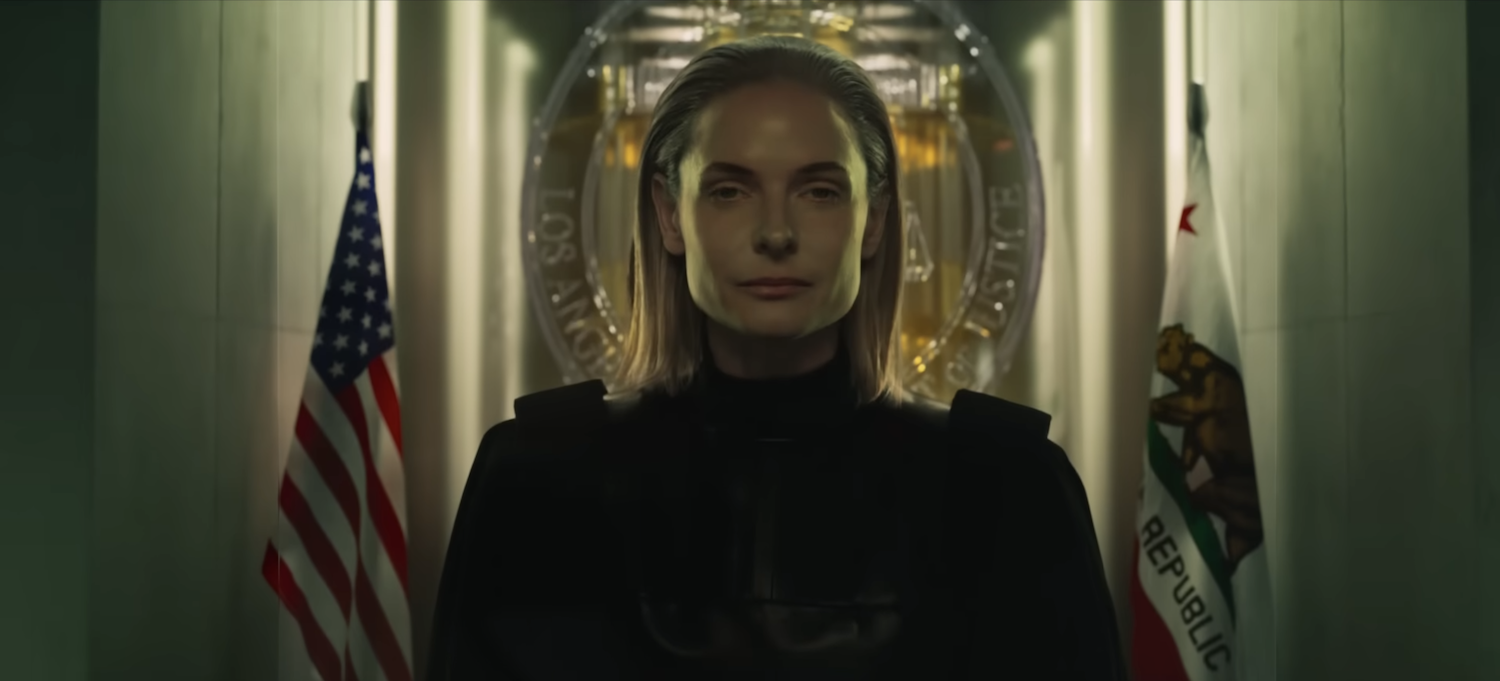
Austin Keeling: Timur very much just wanted to be able to visualize things as we went along. So, instead of waiting till the end to see how this would look, we were trying as much as possible to create as final a look as we could for each scene. We were taking the footage that was being played on all these screens that are floating in front of Chris Pratt’s face and we were placing those screens into a digital space and animating where they went, how they sized, entered and exited, and played as an overlay in front of Rebecca Ferguson, then in front of Chris. We were also manually creating how the camera looked at those things. So we are animating those camera movements as well as the screen movements and then we were also manually creating the rack, focusing between elements because obviously none of that happened in camera. Because it wasn’t shot normally, we were creating that in post-production. We were doing a lot of minute, very detailed animating of keyframes and elements to make it look as much as possible as a finished version in the editing room before we even passed it over to the visual effects.
Lam T. Nguyen: Timur is very visual. He has to see it. He can imagine it, of course, but to see it come to life in the edit was something that was really helpful for him, and I’m glad we could provide that for him.
The Contending: When it comes to look on the camera we have the traditional movie camera look but then we also have video phone, a drone video, doorbell cam. Does switching back and forth between those different kinds of camera shots provide any difficulty for you in editing?
Austin Keeling: I think the biggest challenge was just the quantity of extra cameras that we were dealing with, because for any given scene there were up to 20 or more cameras shooting at the same time. For a scene with five police officers each of them would have a body cam, there would be dash cams on the cars, security cameras, plus then our main footage on Chris and Rebecca. By combining all those into the timeline sometimes we had 25 to 30 video tracks in Premier going. It was less about combining these multiple camera angles and more about juggling the huge quantity and parsing through and deciding which of these multiple angles was going to tell the story in the most effective way without us having to use all 20 takes every single time.
Lam T. Nguyen: I think the main thing we did was keep the found footage part looking raw and real. We didn’t worry about what the combination of both worlds would look like between the traditional film and the found footage, but just focused on the story first and laying that down. Then in the post-production we fine-tuned the rest.
The Contending: Within this film there are a lot of quick edits. We have Chris looking at Rebecca in their back-and-forth, building up the tension of what’s going on, but you’re also trying to let us know what the mystery and story is unfolding. What was it like creating that balance of tension but letting us understand who these characters are and what they are going through?
Lam T. Nguyen: First we just focused on Chris and Rebecca and their dialogue to build that story intention. The camera movements were just the cherry on top to add more dimension to it. Timur was adamant to edit without the visuals, just focus on hearing the dialogue and make that land, then enhance it with the visuals.
Austin Keeling: Because so much of the movie is this two-hander between Chris and Rebecca and the conversation they are having it was very important to get the rhythm and intensity of their back-and-forth locked in first. It was a lot of small iterations that we would lay down, then start introducing all the other elements, then realize we put in too many other elements (laughing), and lose track of things and then we had to whittle it back. So it was an iterative process to find that balance between the dialogue that’s happening between the characters and then all of this excess material that is being thrown at the audience.
Lam T. Nguyen: It’s always about problem solving. We get the dialogue down, and then once we have visuals we have to retime and repaste and adjust the pacing. So we are always redoing and reanimating things constantly as we do the edits.
Austin Keeling: As you can imagine, anytime we had to redo something with 20 or 30 video tracks it was a painstaking process. It was like taking apart a jigsaw puzzle and putting it all back together just to make one small change. So it was fun. (laughing)
The Contending: Within that chamber you have a huge blue screen and, without getting into spoilers, you have an intense sequence with a truck. What was it like trying to create this look in a chamber but opening it up to the world with the blue screen?
Austin Keeling: Rebecca Ferguson’s footage was shot against a blue screen but Chris Pratt’s was shot on a volume stage, and we had taken the previews we had made at the beginning of production and put it up on the volume. So there was a rough visualization of the chamber and the screens in front of him of any moving elements. Which was really helpful in terms of lighting because it would cast shadows and light onto Chris’s face, and it was also helpful for him to react to things because it was happening in front of him. But yeah, for the moments like the truck and the fire we were trying to see how Maddox as an AI would extrapolate the material that was going on around them and maybe hallucinate some sort of immersive version of what was going on, breaking out of the screens in front of Chris and surrounding him fully.
That was a challenge because there were many more of those instances that we experimented with from the beginning of production, and they shot a lot more options where we could break away and see this large scale room with things happening in it around Chris. That was another one of those instances where we tried them all. Any idea that anyone had Timur was game to just go for it. We tried a lot of those moments, and through the many months of editing we pulled it back so they were just a few so they would hit harder. Because we found that some of them were just becoming cool for the sake of cool.
The Contending: Is there anything else in particular that I haven’t touched on that you think our readers would be interested in?
Lam T. Nguyen: Besides all the technical challenges, I think once we got a rhythm of creating all the layers of the shots of Maddox and the screens, our goal is to make that look like a camera shot. Then to be able to edit it as a traditional editor, to edit the scene to help create drama or suspension tension. Timur was very adamant about keeping things realistic, so the first few cuts we had were very fast and action-packed, and it was too much to digest for the viewer. So we pulled that back, and in the end it’s still a good bullet train ride, but we found moments to pause and linger on shots and let the film breathe for a little bit. That was a challenge because so much is happening, so it was hard to find those moments.
Austin Keeling: I think it’s hard as a normal audience member to maybe appreciate all the work that went into this story. Especially with so many visual effects in movies, a lot of times they are separate from the editorial process. But this was a rare case where we were really in charge of creating all of the stuff that you see, and pacing it out, animating it, and just being owners of that on the creative side. The VFX obviously did an amazing job and took what we did and finalized it. But we were tweaking frames of a rack focus up until right before picture locks. We were very involved in the final visual look of this movie, and the visual effects team really used what we gave them as a guide.
Lam T. Nguyen: It was amazing to work with the VFX folks like Axel Bonami and Bryony Duncan and their teams. We had to work head-to-head with them through the whole editing process, not just towards the end. Even in pre-production we were very involved with the visual effects, so it was all about balancing and running with each other all the way to the last frame and second of the film; it was intense. They obviously enhanced their own take on it, which was awesome because they have their own storytelling abilities to make these screens and camera effects more realistic and more dynamic. Usually with VFX we do the editing and they handle their own part, but with this film we both had to approve each shot.
The Contending: Final thoughts?
Lam T. Nguyen: We just wanted to give a shout out to Dody Dorn, who jumped on this project late with us, and she was amazing in guiding it to the finish line. She came in with a lot of encouragement, and we wanted to make sure we gave a shout-out to her. Also thank you to Team One Producers for this opportunity.
Mercy is now streaming on Amazon Prime.