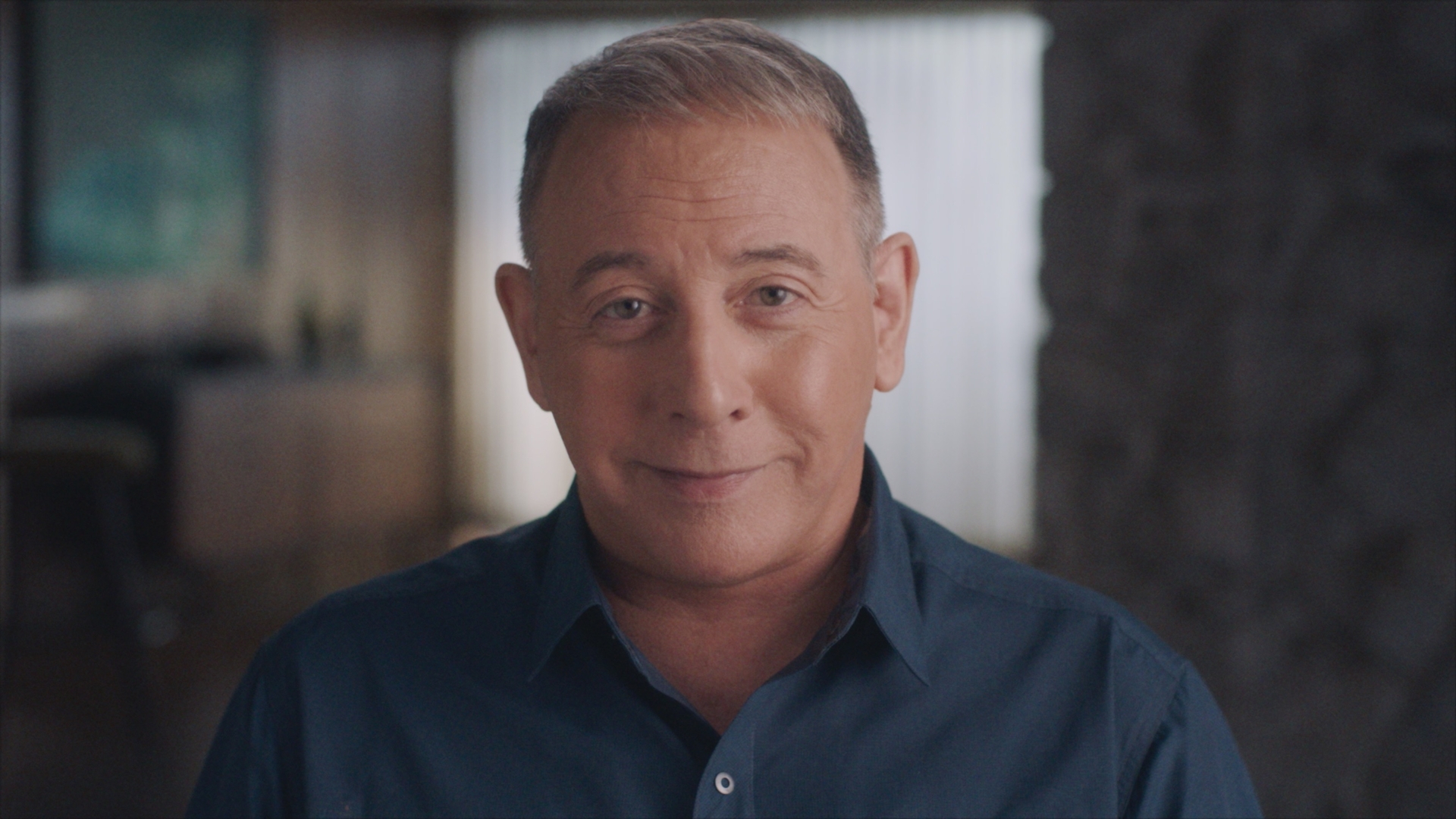
I will admit that it took me a long time to feel comfortable enough to watch HBO’s Pee-wee as HImself. The critically-lauded, two-part documentary was a smash as the Sundance Film Festival in January, but, for some reason, I was scared to tune into it. Like many gay men my age, Pee-wee’s Playhouse was more formative and influential than I knew at the time. That program feels baked into my bones in a way that I cannot explain, and I am sure that I am not the only person that feels that way. Director Matt Wolf doesn’t explain Paul Reubens’ life in the way that we are accustomed to hearing about a famous person going back and recounting their experiences. He takes our bouncing, jaunty, colorful memories of our Saturday morning excitement and expands them to introduce us to the artist behind the gleeful laugh and the grey suit.
described Paul as a “dream subject”; what’s it like to come face-to-face with him? Having him in the room?
There are many discussions through Pee-wee as Himself about the intersection of trust and control, but Wolf doesn’t make that the focus of his film. Sometimes we see Reubens speak directly to Wolf (who is behind the camera) about how he doesn’t know if he should answer his questions before we see a twinkle in his eye or the ends of his mouth curling up in the start of a grin. I’m not sure that I would have the wherewithal to even speak to one of my idols, let alone try to get him to open himself up.
“I’m someone who’s pretty good at separating the artist from the work,” Wolf admits. “You kind of forget about the Pee-wee of it all, and I never asked him to do the voice for me. He was just a person that was very different from what he created. When I first met him over Zoom, it was peak pandemic, and I was sort of starstruck for a second. It went away, though, and it didn’t really come back. I really didn’t want this to feel like a celebrity documentary, and, in a lot of ways, I forgot that Paul was a celebrity. He was just dealing with life in a complex and very involved way. Only when Paul died did I really remember and confront how beloved and famous he was. When I say that Paul is a dream subject, it’s not because I idolized him or even Pee-wee. Paul was a sort of icon hidden in plain sight. His history was a hidden history, and it was an opportunity to make a portrait of an artist who begged for reappraisal. I’ve made a lot of films that deal with queer history, so I learned quickly that Paul was somebody who had chosen to go back into the closet for his careet at a young age. I felt that I could support him in a unique way. In so many ways, this felt like the culmination of everything that I had ever done.”
I wouldn’t classify Wolf’s film as a “coming out story” per se, but Reubens’ detail of going back into the closet is something we rarely see anymore. The footage of Reubens in college or trying out drag in his twenties is some of my favorite things in the film since we see him not just living openly but growing as a curious artist. In order for us to empathize with more and more people in our communities, we need to hear stories from every viewpoint to expand out tolerance.

“My point of view on that is that it’s not about coming out but understanding generational experience of gay people,” he says. “Paul came of age in the 1950s. Coming out or even contemplate being out as an entertainer, let alone a children’s entertainer, is so different from the world we live in today. It’s just essential that we continue to understand and know where queer people come from and to recognize continuity across generations to appreciate progress but to recognize that it could roll backwards. It’s more about capturing stories of people’s experiences from the past before it’s too late.”
I admitted to Wolf that I rewatched one of his short documentaries, The Face of AIDS, before I rewatched Pee-wee As Himself, and I expressed how different the viewing experience was now that I am in my forties. Much as been reported on how Reubens and Wolf went back and forth when it comes to that aforementioned control and trust, but, much like seeing a film again for the first time in years, your perspective might be different. Seeing Reubens’ speak about his own life doesn’t change my perception of his work at all, but it gives me a deeper appreciation for it.
“Looking at queer generational experiences…that was part of both the tension and the bond between Paul and I,” Wolf says. “We were of different generations, and I think he was concerned that I would see him primarily through a queer lens, whereas that wasn’t how he defined himself or how he wanted to be seen. That bonded us, though. As much as Paul and I had conflict, which is on display in the film, we had a connection, and that wasn’t the only point of connecting even though it was part of it. As a younger person, I felt that I could help Paul to go on a different type of path of self-acceptance, not only related to his sexuality but related to the public scrutiny he endured that overshadowed some of his accomplisments in his artistry. I wanted to rectify that, and he wanted that.”
Later in the film, we see how heinous accusations tainted Reubens’ reputation. Once you accuse someone of being a sex offender, that lives with that person forever. Wolf wanted to help clear Reubens’ name in any way that he could.
“It’s the ultimate, homophobic trope,” he says. “It’s the most damaging accusation that can be made, and that trope is one that endures. Paul was targeted and defamed by this, and it was unjust. While it’s not hugely and widely known that that perception followed him and I would sometimes say it didn’t before being reminded that it did. It was very poignant to know that Paul carried that with him and that he was concerned with setting that record straight really until he died. I felt very determined to do that for him, because it was clearly a homophobic witch hunt.”

When Reubens tells the camera about how the studio only gave Pee-wee’s Playhouse a handful of notes during its entire run, you are reminded of how singular and different this show truly was. No one had ever seen anything like it, so no one could catch all of the adult humor or double entendres hidden within it. Reubens was a huge admirer of the films of Andy Warhol, and we see an homage to his style in a clip of Pee-wee feeding a dog. The camera doesn’t cut as we hear all the noises a dog makes as it chows down on a bowl of wet food, and I appreciated how Wolf shows an extended clip of it in his doc. It’s like he is paying homage to an homage, but he’s also heralding how much Pee-wee’s Playhouse and Reubens refused to conform.
“Paul is one of the greatest artists who used television as a medium that I can think of,” Wolf says. “He was really using it as a way to do conceptual things, and I think the dog eating food out of the bowl, inspired by Andy Warhol’s filmmaking, is a perfect example of that. That lawlessness is not just the kind of Rocky and Bullwinkle winks to adults who are watching alongide their kids, but it’s really the fact that there were no rules, artistically, and he made a world that had its own logic and values of that world.
We’re so steeped in nonconformity, and there are so many things that kind of pressure young people to conform. I think what Paul did was create a unique island of acceptance, and one that was fulled with creativity and imagination. So many adult artists that I know were fundamentally changed by watching that show, but we wouldn’t necessarily be able to put words to it. Part of that emotional response to the film is that people will go back and look closely at the artistry and the intention by Pee-wee’s Playhouse and recognize how deeply formative it was for them in ways that have only been accessible, intuitively, in the past.”
One of the faces that I was thrilled to see speaking about Reubens’ life was Debi Mazar. She speaks so tenderly about their relationship, and her candor is something that Wolf appreciated from all of the guests in his film.
“I was so grategul that she did,” he says. “So many of Paul’s friends knew that he was so private and would never feel comfortable speaking about him publicly, but he gave people carte blanche. I think that was weird for them, because they were so accustomes to not sharing anything about Paul, but Debi took the assignment from Paul seriously. I am so grateful that she was part of this.”
Pee-wee As Himself is streaming now on HBO Max.