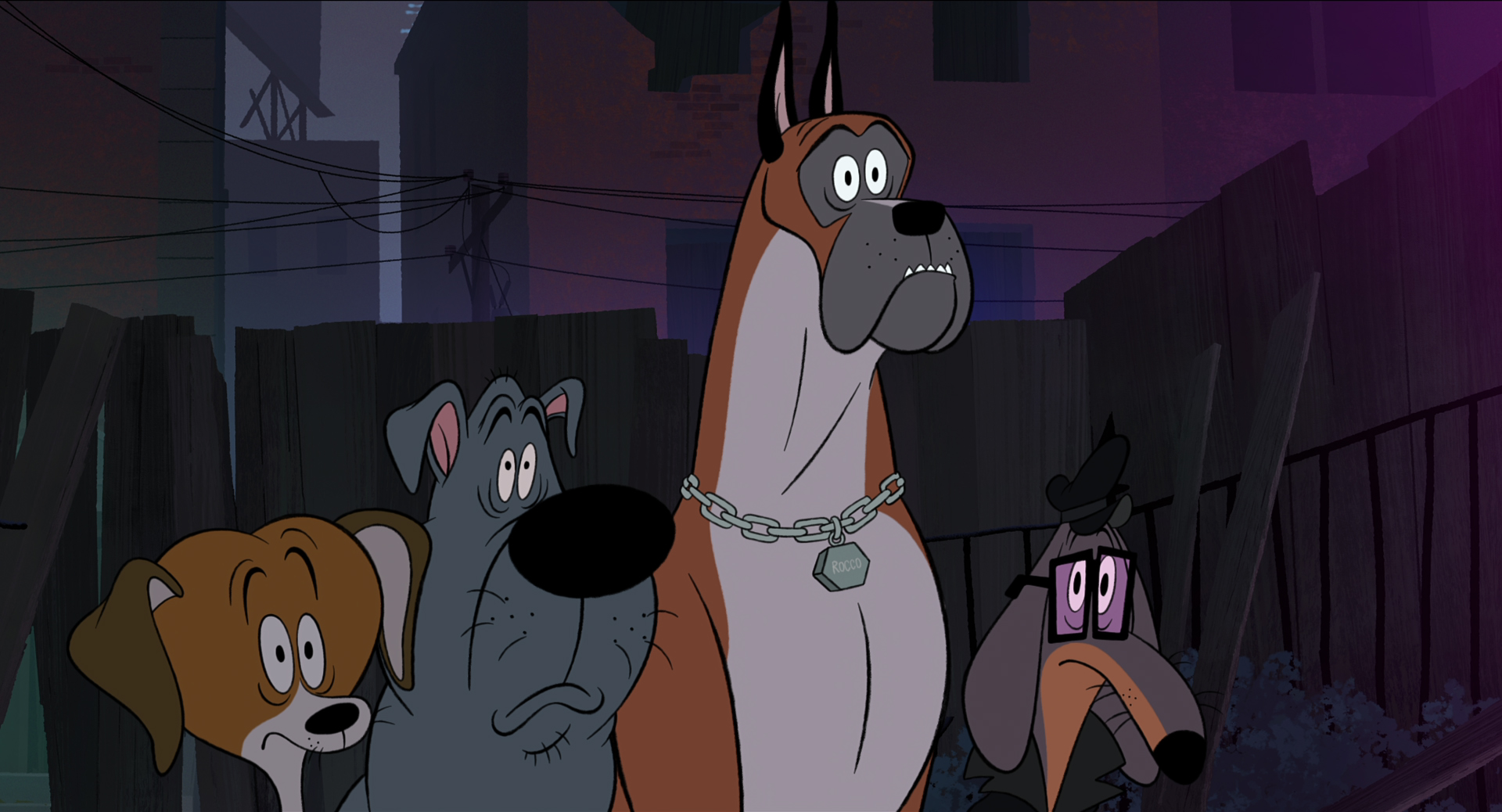
It took a long time, but animation legend Genndy Tarakovsky (Hotel Transylvania, Star Wars: Clone Wars) brought the R-rated comedy Fixed to Netflix this week. Featuring the voices of Adam DeVine, Idris Elba, Kathryn Hahn, Fred Armisen, and more, the animated film follows a dog, Bull (DeVine), who finds out he’s about to be neutered. Here, in an interview with The Contending, Tarakovsky details many of the inspirations for the themes of the film including hierarchy, friendship, and why both men and women can be just as raunchy. Plus, he reveals why 2D is better than CGI for creating dog balls.
The Contending: This has been a project that you have been working on since 2009, so what has kept you interested in it for all that time?
Genndy Tarakovsky: It was one of those things where I sold it right away to the first place that I went to, which was Sony. Then, after a year of development and writing a script, the executive that approved it leaves and the new executives that come in say we’re not doing this. Then I start the journey of selling it and reselling it. It’s probably the only time in my life where I’ve had an elevator pitch. It’s about a dog that finds out it’s going to get neutered in the morning and that was it. Everybody laughs and smiles because it’s very gettable, and I knew what I wanted to do with the movie and had a great first attempt at the script so there was something there, and so I just believed it and kept pushing it and pushing it. Then after 17 years it’s finally coming out.
The Contending: I read at one point you thought about going to CG animation for this but went back to 2D because “balls look better in 2D than in CG.” Was there any other creative reason or was that the main selling point for 2D?
Genndy Tarakovsky: I love 2D! For me it’s my sensibility, my taste level, and what I love. So I thought it would look better in 2D. But I was selling a rated R animated movie, which doesn’t really exist much in the world. Then I’m also selling it in 2D, which nobody wanted to buy at that time. So I’ve got everything going against me, so it was like why am I torturing myself? So I thought maybe I’ll change the process and make it in CG and people will see it differently. Then we did a CG Bull and we started to model the balls seeing how many pairs can we put on the balls and how much discoloration we could put on them? Then I was like that’s it, it’s way grosser than we wanted it to be, and also doing the film on a small budget because it’s a riskier film we couldn’t afford Pixar level quality so the CG looks cheap so the whole thing fell apart for me. So that just solidified the fact that it had to be hand-drawn.
The Contending: I found Lucky and Frankie’s relationship was one of the more interesting parts of the film with Frankie being intersex. I’m just curious where did that idea come from?
Genndy Tarakovsky: I don’t know, it just kind of came to us. We wanted to represent all different types of humor and Lucky was a very particular character. We also wanted to be very adult and at the time it was more of the PC days when everything’s under the microscope and it inspired me to think, why can’t we do something if we’re not hating it or judging it? Why can’t there be a very interesting point of view about a relationship? A discovery for both characters in a way. Everybody was scared but we did it and when River (Gallo) came on they understood everything and were laughing at it so that ended up being great. The reaction to it was the most shocking, because we had a screening in Annecy with a thousand people and when those two got back together there was applause! It was so fantastic, there was just something about it that worked.
The Contending: A major theme in the film is the idea of hierarchy. Bull himself believes he’s somewhat superior because he still has his balls. Then there’s also the show dogs who believe they’re above every other dog. What was it about that concept that you like playing with so much?
Genndy Tarakovsky: I really did like the show dogs and the normal dog mentality. Because my father-in-law used to show dogs and breed them so I got to go to a few dog shows. Where I saw there was this whole world of hierarchy with the dog handlers being above the breeders. With all these dogs looking stuck up even though they all look the same was very funny to me. There has not been a lot of animation about superior dog breeds versus the mutts, which also goes into the balls versus no balls situation. Then also with Bull’s romance with the dog next door having her be a show dog made her feel that much more unattainable for him. So it all felt like it was clicking together.
The Contending: Scott Wills was your art director on this film and he has worked with you on Samurai Jack and Primal. What makes that working relationship continue through so many different projects?
Genndy Tarakovsky: Scott is one of the best artists I’ve ever worked with and he does all the color and paintings creating the general feel for the project. When he first started on Samurai Jack he had this incredible portfolio that had cartoony stuff and real stuff. Obviously I’ve worked with a lot of artists but in his paintings when he painted light you actually felt it. It was the craziest thing that I’ve ever experienced before. You could look at a Michelangelo or a Rembrandt and you can feel the light on the form of the character, and then Scott was painting a Samurai Jack forest and there are shafts of sunlight coming in and you felt that light because he’s the master of controlling value and color. I was looking at the painting and I felt the light in it. It wasn’t just the graphic representation, I felt it. That changed everything for me, so I slowed down all the timing so the audience could really rest on this beautiful painting and feel it the way I did. When you have someone like that, and as well as the fact that our minds are in sync with what we want to do in animation. So when you run across somebody so like-minded and at the same time challenge each other as well you hang on to that person.
The Contending: I read you were inspired by Judd Apatow movies when it came to the friendship of the dogs. When did that idea come about?
Genndy Tarakovsky: The initial idea for the whole film came from my group of high school friends. They can make me laugh like no other people can, so I always thought about how I could translate that dynamic, exaggerate it, and put that into an animated movie. That was the initial concept for Fixed, which at the time was going to be called Buds. Then when I started to do it I realized while watching Judd Apatow films that is what he was doing. It might not be his high school friends but Steve Carell, Jonah Hill, Paul Rudd, and all of those guys work together so well that they become an extension of your friends. I really loved that, and I love those films, and they had a great mixture of character comedy, raunchiness, and some great heart. He found the balance in those first few movies, so that was a great guide for making Fixed because we needed all of those elements to work for us.
The Contending: Is there a thing about the film that I haven’t touched on that you wish people knew more about? Or something that stood out in the process?
Genndy Tarakovsky: I hope that someone outside of the industry can watch the film and can recognize a different feeling to the animation. Because in the weeds of the industry perspective it’s incredibly special to have this quality of animation that really nobody does anymore. It’s nostalgic from the Warner Brothers Chuck Jones Tex Avery days, but done in this contemporary light. So I hope even a normal person who is not a fan of animation can recognize that there’s a special energy to it.
The Contending: I am very curious where the idea for the ending came from? With where female dogs end up and in an almost inverse, look at where we had gone before. I know you don’t want to get too specific, but can you mention kind of where it came from?
Genndy Tarakovsky: It was a later addition and with the idea that you had to leave them with a big laugh. So the question was, how can I structure that because I’ve done enough of those types of jokes but then you want to do it to be equal. Girls can be just as raunchy as guys and so that seems like the perfect vehicle and just to push it one more level out there. That was where it came from. I didn’t know how else to top it.
The Contending: Speaking of the female characters, that’s actually a big thing about the character of Honey. Where she is in a way trying to convince Bull that she is as raunchy as he is, but he just won’t accept that. How’d you go about crafting her?
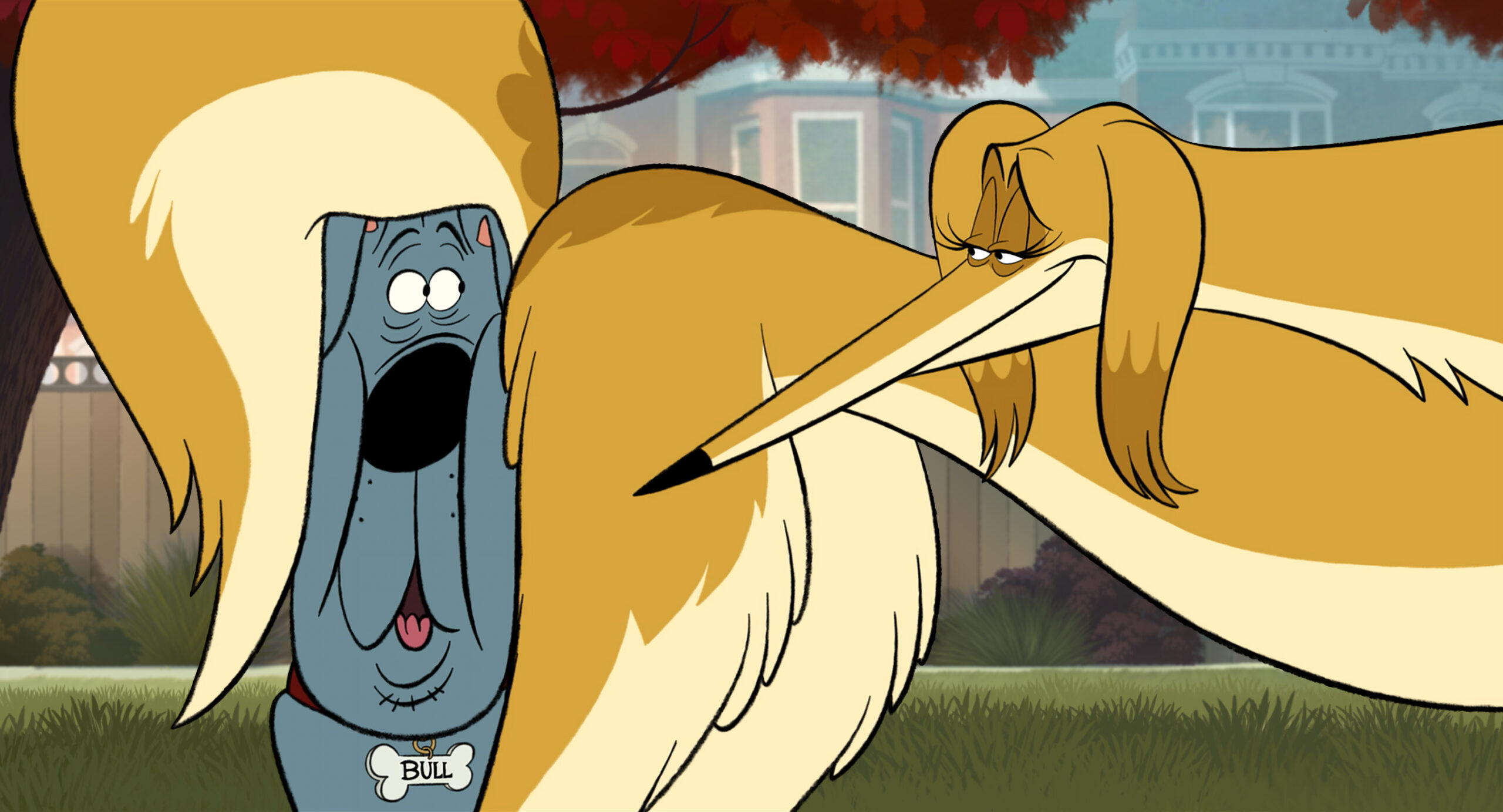
Genndy Tarakovsky: It was interesting because we wanted her to be the girl next door but also one of the guys. She can banter with the best of them; she was not subdued or a wallflower. We wanted her to feel like a real buddy to Bull. We wrote her that way originally but we held back because it was weird to have her be equally as raunchy initially. But then I worked with Kathryn Hahn on Hotel Transylvania 3 and we sent her the script for this and she called me and said, look I love it, I want to do it, but I will only do it if you make me as raunchy as the boys. I want to say crazy things like they do. When she gave me that permission or inspiration I was just like yes! Then we wrote her full out and she owned it and was so good and so funny. Her speech about how she rides Grandma’s knees because they’re so bony was so amazing. She made that character really come alive and made her an equal to the guys.
The Contending: This is your first feature length film you’ve directed outside of the Hotel Transylvania series. Was there anything particularly different or interesting that you noticed doing this project over those?
Genndy Tarakovsky: Luckily I had those three films behind me so there was a level of trust that I know what I’m doing. Secretly nobody knows what they’re doing, but I’ve made enough mistakes that I kind of know what I’m doing. Especially with a movie like this, there is so much fear and doubt about if it’s going to work. What makes animation a difficult process is that it’s in rough form for so long you have to really believe in it until you finally see it animated in color with music and sound and you can really see it. It’s also from executives that are used to doing family films, so now you’re jumping fully into the water of this raunchy R-rated film so everything is very shocking. But also having the experience of trying to be funny in those Hotel Transylvania movies helped. I remember sitting in some of those test audiences and some jokes died and you’re just like oh, my God, it’s so bad. But then you start to rework the joke and you believe in the joke and you just figure out what elements you need to make it funny. So that kind of joke analysis taught me a lot coming into this movie, because knowing how to tell a joke is really hard. Not just verbally, but timing, and also visually getting the right expressions in the animation. We do not have a Will Ferrell that we trust to deliver a funny line; we have to figure it out ourselves.
The Contending: Final thoughts?
Genndy Tarakovsky: The film is a bit shocking at first but just sit back and relax and everything will be okay.