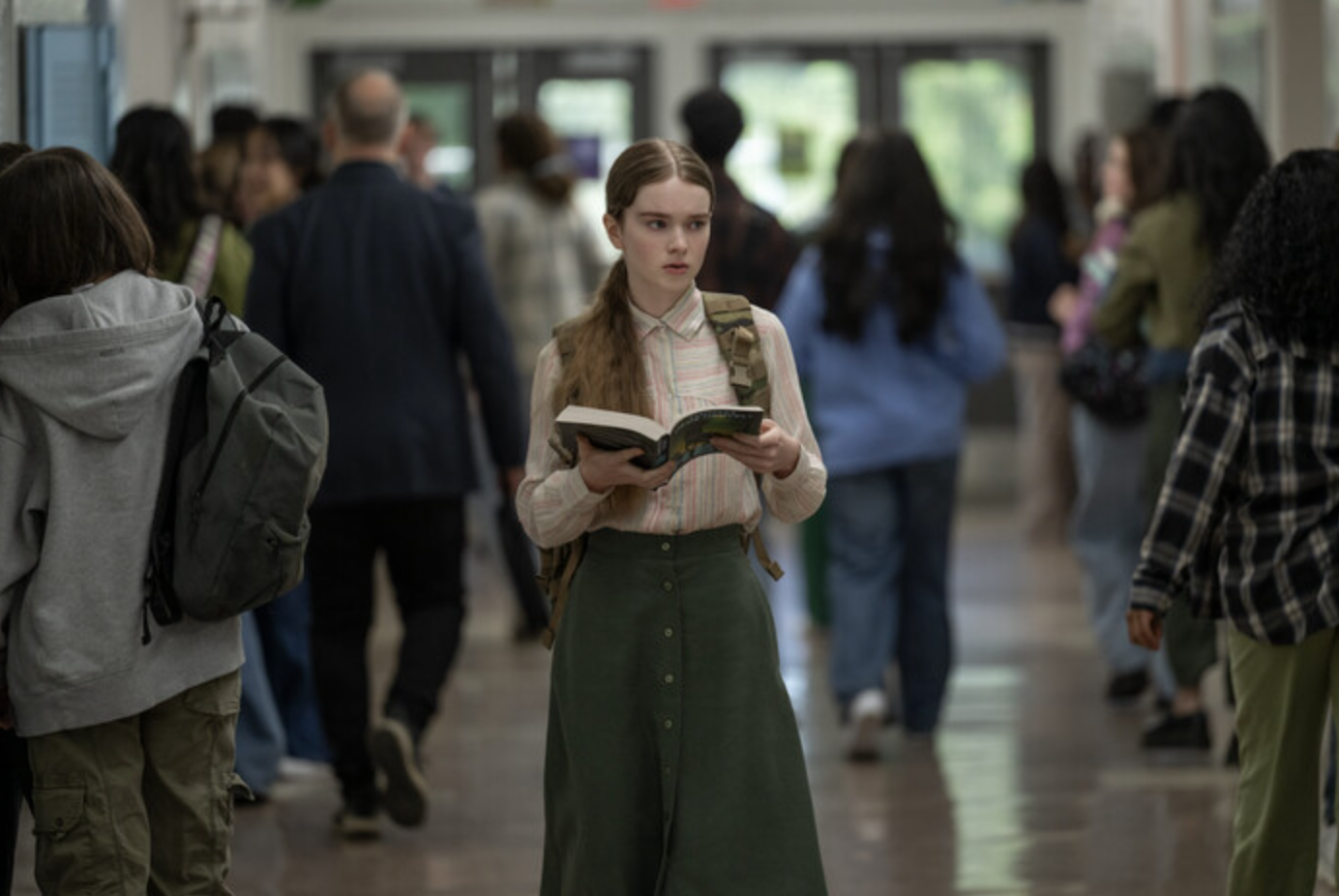
Cinematographer Maria Rusche’s work on Amazon Prime’s Carrie was her first time working with Mike Flanagan, and it seems to have been a very positive experience. She appreciated how the parameters were set up but at the same time gave her the freedom to get across the visuals in a way that worked with her. Be it capturing a huge mob, building tension in small spaces, or literally creating different levels of darkness, and paying homage to The Matrix in a very unexpected way.
The Contending: This is your first time working with Mike Flanagan. What was that like?
Maria Rusche: It was amazing. He’s kind of a wunderkind; he writes, directs, and edits. It was really helpful, because on a series I often think there’s not a cohesive voice behind the show, and he really provided that. But at the same time he gave a lot of flexibility to the people he brought onto the project. At the beginning of each episode, we would have a meeting with him so we all understood the tone and what he was trying to get across in certain beats. But within that there was a lot of flexibility in terms of how we wanted to present the information. How it would fit aesthetically in the sequence of the show. I just felt a lot of freedom, while knowing he was keeping a cohesive story going.
The Contending: In episode four there is the scene at the construction site where Carrie is high and in that dark pit, and it feels like she’s being surrounded. What was that like to try to capture?
Maria Rusche: That scene was written to describe Carrie having this experience of falling into the trench and feeling kind of overwhelmed by what was going on around her. The director of that episode, Axelle Carolyn, and I both saw it as what we came to call the nightmare trench. Which to get that idea across, or get that emotion across, we needed to experience it from Carrie’s perspective, having it feel like the whole trench was coming down around her. When we kind of pitched that to Mike, he was super supportive, saying that’s the exact emotion we’re trying to portray. It was fun, but a very tricky sequence, since it was such a vast expanse of basically darkness. A lot of shooting in darkness is figuring out what you actually want to see. Also, we had to be particular about what we wanted people to see and not see.
The Contending: This was a much smaller moment, but in that same episode, I love when Carrie returns home and her mother is about ready to chastise her, and then sees how messy and distraught Carrie is. It’s a genuine moment of her really going out there to comfort Carrie. And considering all the tension that’s been between those two, I was curious if anything specific kind of went to that shot to help get that across.
Maria Rusche: We wanted to design it so that Carrie kind of comes out of the darkness, and for Margaret, it’s revealed that Carrie’s covered in mud so that she has a second to stick to her old ways of chastising her, but then you get to see this genuine moment of care. Margaret’s one of my favorite characters in this adaptation, because she has so much depth. I do really understand everything she does but I do believe that she cares for her daughter. She just shows it in a way most people would not. This was a special moment to really show something genuine between them. We really wanted Carrie in the mud to be visually reminiscent of the bloody dress. Here she is covered in this gross stuff, and then having her mom really embrace her with no qualms about it. It expressed Margaret’s willingness to get her hands dirty (no pun intended) for her daughter.
The Contending: You also did episode six, which is where tension is building throughout the entire episode. A lot of it is captured with just a few characters in a room. What goes into crafting a scene like that?
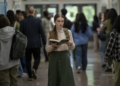
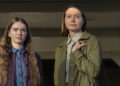
Maria Rusche: That was a tricky undertaking, since the priority was to connect each of these characters and make sure that they are all able to have a moment together. It is the first time Carrie and Chris are able to look at each other and, like many teenage girls, they say a lot with just a look. We spent a lot of time at the school placing our stand-ins and stunt doubles to work out the choreography. We had set up this visual language of just more stillness but able to build to an out of control feeling, which was really satisfying.
The Contending: When the riot happens, how do you go about capturing that sense of chaos that’s going on outside, and yet still make it feel contained that it is just within this area around the school?
Maria Rusche: I’ve done a lot of work with large groups and I approach it with a bit of specificity, rather than just letting the chaos unfold. I want to get in there with them, so we’re finding moments to isolate, and then filling in the chaos around that. It’s a tricky dance to make sure there’s enough room for the camera operator to be in there to actually capture what you were trying to capture. But I think that the team was able to pull it off in a way that hopefully feels like you’re there instead of just watching from a remote location.
The Contending: You also had two other cinematographers on this show, and you’re keeping a similar cinematic language. Was there much discussion between you guys about how you wanted to try to make this look across the whole series?
Maria Rusche: Yeah, so Michael Fimognari is Mike Flanagan’s typical DP and they’ve spent a lot of time together, which is so valuable since Michael had so much insight into Mike’s visual world and language and the kind of the rules that they had established. So, similarly, Michael was very helpful in providing a visual aesthetic base for how they were planning on showing the school, or again, like we talked about with showing the darkness. They had a specific tone and within that, he really was encouraging me to take that and run with it.
I think there is something satisfying about a good show or a good movie, planting something visually in the first half and seeing it pay off. So I wanted to honor the visual choices they were making towards the beginning of the show. I got to see a cut of the pilot when I was prepping episode 4, and it was so helpful to see how they chose to do longer takes instead of doing a lot of coverage. That encouraged me and my two directors to commit to how we wanted to show the information instead of just doing close-ups of each character.
The Contending: Speaking of a setup and then delivering it, at the end of episode 6, Carrie uses her powers to force her mother into the prayer closet as opposed to all the time Margrent forced her in there. What went into that shot?
Maria Rusche: Getting to see what they had already shot in the house and how they had photographed the house was so helpful because, not only have we seen Margaret put Carrie in the prayer closet a number of times, but we’ve seen how they sit at their dining table, and they have a very kind of specific arrangement where they sit. Then, with Margaret taking over the father’s spot to do her live broadcast, it was a useful visual tool that we could use to help describe the power shift that was happening. That was a really satisfying scene to shoot.
The Contending: Are there any other shots in particular that kind of jumped out at you, or that were interesting to you, that you’d like our readers to know about?
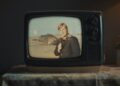
Maria Rusche: I did personally enjoy the cold open for episode 6 with Mark Hamill, and setting up the psychic story. It was one of the sets that we got to design, since most of the sets were already established by the time we got there. It was also nice to get to expand the world beyond Ewen High School in that scene. Also I’m a big Matrix fan, so I was pulling references from when they go meet Morpheus, like with it pouring rain out, which was fun. So we were able to create something that felt still connected to the show, but a little bit of an expansion of the world.
Spread the Word!