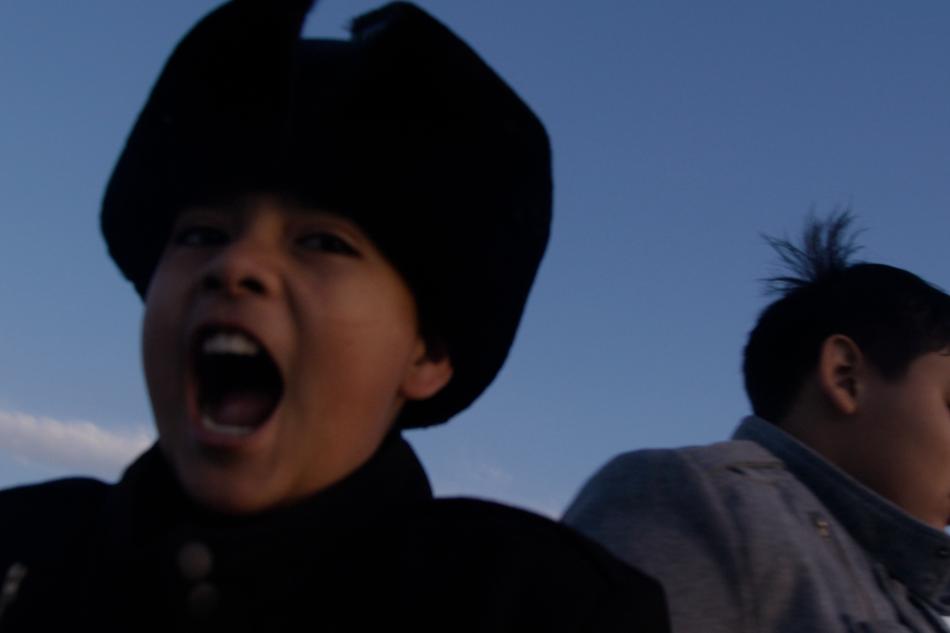
“I’ve had dreams that depict me in actual Stalin’s body. I’ve had dreams where I was signing the non-aggression pact between Nazi Germany and the Soviet Union. I had another dream where I could see Stalin as a kid. He had so many friends. He looked like he would have a brighter future.”
Those are the words spoken by Malachi, one of the young men we meet in Bianca Giaever & Ora DeKornfeld’s Oscar-qualified documentary short, Stalin Boys. At first you might hear those words and it makes you ask yourself a dozen or so questions. But look at the final part of that quote. Malachi ponders about friends.
The name Joseph Stalin garners a reaction. It happens mostly amongst people over a certain age, but it is a name that is synonymous with dusty history books and dark corners of history. Once you hear that name, other notorious names are conjured and the context speaks for itself. We would probably like to think that it seems far off or in the distant past, but that past comes roaring back in the thoughtful, engaging, and stupendous documentary from Giaever DeKornfeld. This is a film that proves that a kernel of interest can flourish into an obsessive pursuit of truth. In the times we are living in, what is more important than exploration of thought and an engagement of ideas?
Malachi, along with his three friends Lyric, Jurem, and Cayden, live in a tiny Texas border town, and they just so happen to have an interest in Stalin and his life. Since the dictator’s legacy precedes him, people might assume that Stalin Boys would tackle incels in the making or how young people are affected by events that they feel too separated from. DeKornfeld and Giaever’s film, though, primarily focuses on youthful curiosity and the quest for knowledge. When was the last time that you saw a film that so earnestly allowed young people to figure things out for themselves?
With the gentle guidance of their teacher, Crawford Hunt, Malachi and his friends write a play about Stalin’s life in preparation to compete in a history fair where students perform about a subject they are passionate about. Because of our preconceived notions of Stalin’s life other adults might balk at the subject matter, but Ms. Hunt doesn’t do that. This is not a film about fanaticism but the enthusiasm of education. I kept wondering if we don’t speak objectively enough about the darkest moments of world history when we should be exposing our minds to more expansive conversations about what troubles with us.
Stalin Boys is thought-provoking and crucial filmmaking. It captures the exuberance of youth while opening the door for conversation and possibility.