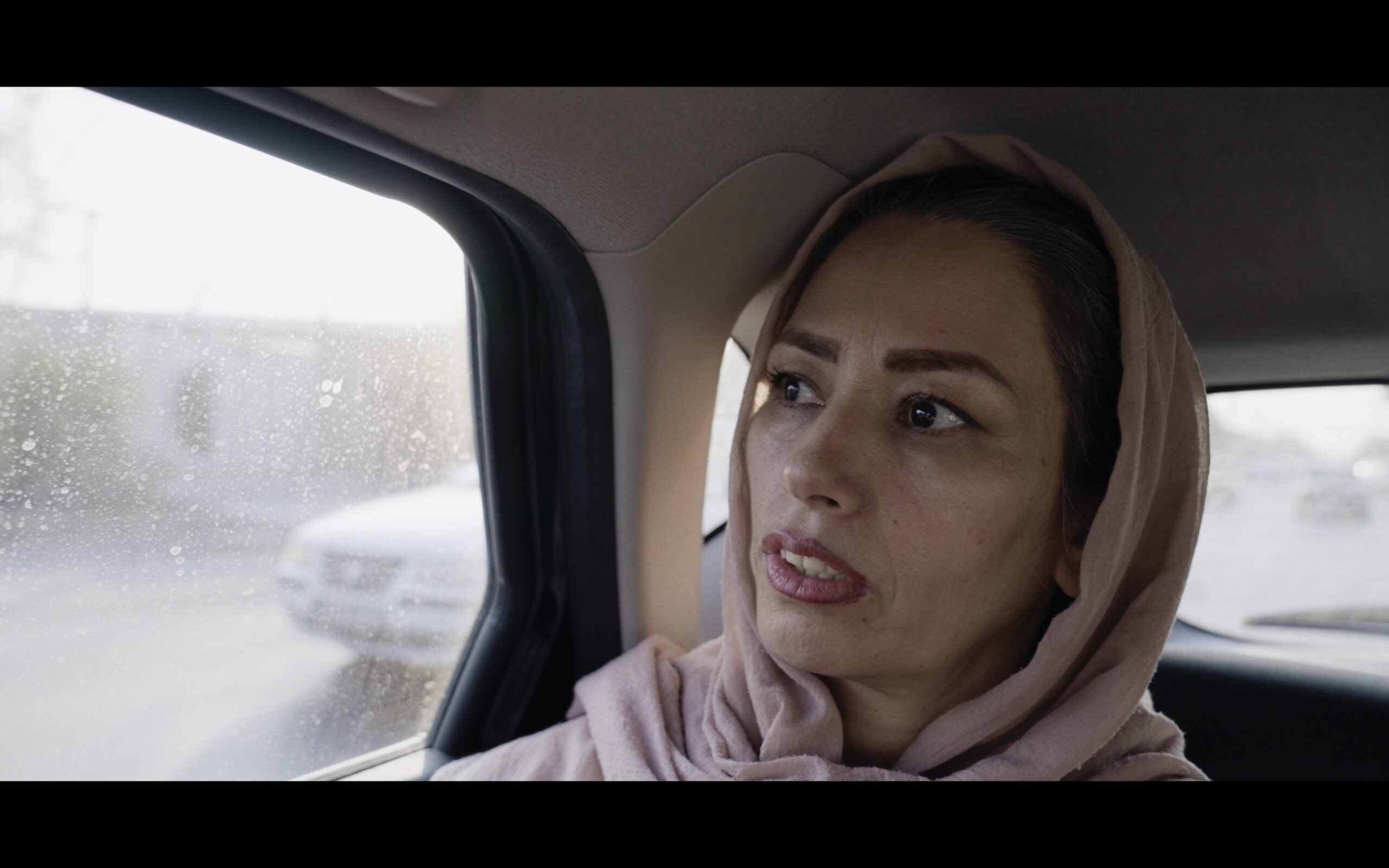
A landlord finds a dead body under a carpet. So begins the twisty, captivating documentary An Eye For An Eye, from director Tanaz Eshaghian.
An Eye For An Eye is a gripping documentary that at times feels like it could be a narrative film.
“Fiction,” says director Tanaz Eshaghian, taking the words right out of my mouth. “Yes.”
After an Iranian woman serves 14 years in prison for murdering her abusive husband, the husband’s family now decides whether she has to pay blood money or face execution.
Working remotely in New York with co-director Farzad Jafari on location in Iran, Eshaghian says securing access to both families piqued her interest in pursuing this project.
“Normally, you’re going to have access to the woman on death row who wants to tell her story in the hopes that it will trigger attention and potentially help her raise funds,” says Eshaghian. “And she in a way has nothing to lose. But the fact that we were able to get the family that was demanding the blood money, the family that was saying, ‘If you don’t give us $40,000, we may choose to execute you with the backing of the state,’ which is the whole wild part of this, is why this is such an interesting story.”
Pay Blood Money or Face Execution
How often does the party of the victim get to decide the fate of the perpetrator?
“The anti-execution activist [in the film] says it happens in quite a few cases,” says Eshaghian. “That was wild to me. But you have to understand: The whole idea that the murdered family can decide the fate of the murderer is only the case in what you would call private situations.”
If there was a situation where the guilty party was a drug dealer or had done something the government felt was against the state, there’s no negotiating, she says. The guilty party can’t buy their way out. They’re either imprisoned or executed.
“But in this case, it’s not political.”
And yet it is political at the same time in terms of gender politics. The murder was a culmination of many attempts to get away from her abusive husband. The woman in question, Tehereh, asked for a divorce, but wasn’t granted it by her husband or the government because she’s a woman.
Even 14 years after killing the father of her children, Tehereh has a quiet defiance about her. She doesn’t regret her actions. She’s happy he’s gone.
“That was one of the parts that really attracted me to this: her defiance and her complete ease with saying, ‘Yeah, I did it. He deserved it.’ The fact that she’s comfortable; this woman breaks so many Western stereotypes of what a Middle Eastern woman is. And I, being from that area, I was like, this is great because the stereotypes are really just not true.”
‘The Stereotypes are Really Just Not True’
Would her ex husband’s family be more sympathetic to Tehereh if she did regret murdering her husband?
“You raise an interesting question,” says Eshaghian. “I think so a bit because a few times they do mention, like, she’s even proud of it. ‘Have you noticed she hasn’t even said sorry to my mother?'”
Even the director herself was fascinated by her subject’s response to her actions.
“With any good character, whether it’s fiction or nonfiction, you’re constantly wondering, how did this happen?” says Eshaghian. “Is she just that damaged? Was she born like this? Does she maybe have no feelings? There were moments where I was like, is she just a cold-blooded killer? Or is this what happens when you’ve tried every route to get out of this terrible situation? She gets to a place where the only independence she had was this.”
An Eye For An Eye opens in select theaters beginning August 12 and will be available on jolt.film starting August 14.
![Reed Arnold On Wearing 4 Hats For Clever Rom-Com ‘Do Us Part’ [VIDEO]](https://thecontending.com/wp-content/uploads/2026/08/Still-2025-03-06-175214_1.1.2-75x75.jpg)