“Papa doesn’t look like Papa,” says young Yaya when she sees her father, Lu, for the first time since arriving in New York City. Lu’s wife tells him that he is too skinny, as if he is not eating enough, but perhaps the stress of the last few hours is making his cheeks look more sunken in. Lloyd Lee Choi’s feature debut, Lucky Lu, is a quiet, reflective study of how one immigrant father needs to get to the next minute to the next hour to the next day before he and his family are reunited. Sometimes we all need a little mercy and generosity.
Chang Chen’s Lu is finalizing plans for his family before they arrive in the United States, and it’s the first time that he’s seen them in some time. He has just secured a suitable apartment, and he is efficient as his job as a bike delivery driver–when his boss divvies up his tips, he even tells Lu what a good job he’s doing. All of that anticipation comes to a screeching halt when Lu’s bike is stolen while he is waiting for a slow order to be ready. He looks up and down the street, as if he may have misremembered where he parked it since he was waiting for so long. When he sees the cut bike lock on the ground, it settles in, and this is only the start to Lu’s bad luck.
Not only does Lu now not have a way to work, he discovers that the money he paid for his new apartment never reached the correct person. The super of the building almost throws him out when he is discovered in the apartment, and Lu has to find a way to secure money before time runs out without telling his wife or daughter what is going on as they inch closer and closer to New York. When he tried to pawn his father’s watch, he learns that it’s fake. Lu tries to borrow money from the small pool of friends that he has left.
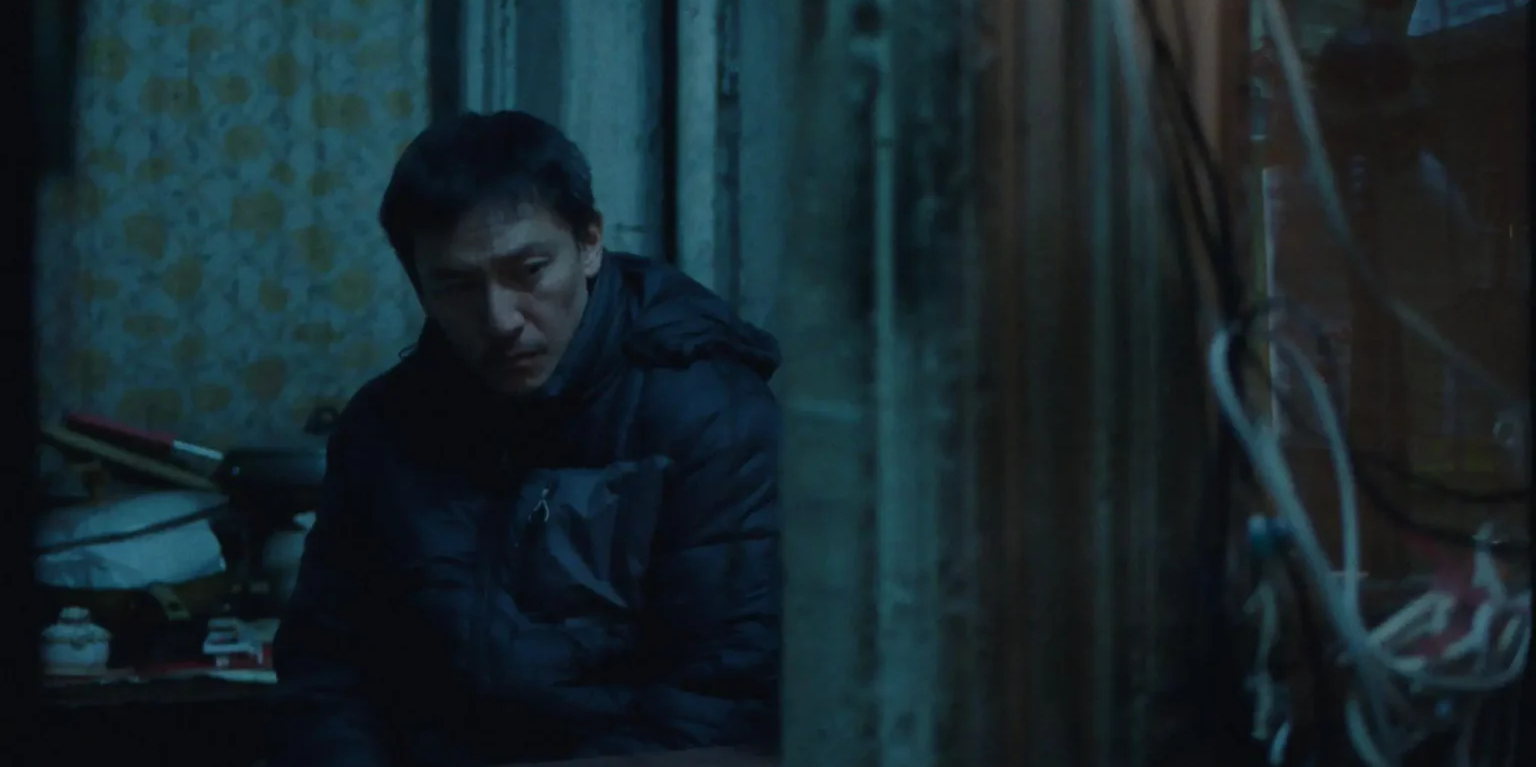
I couldn’t help but think about the difference in how Lu rides his bike versus when he is walks down the streets of the city. When he is working, he speeds along the busy city streets, a cigarette dangling from his lips, as he runs into restaurants and back onto his bike. His energy matches the busybody-ness of the city he wants to be a part of, but that it’s drained out of him without that mode of trasnportation. You can hear his footsteps on the pavement, the slower shuffle of a man who is used to whipping around the city’s crowded blocks. Choi paints his film in greys and blues to match Lu’s guarded anxiety. With Lucky and his Oscar-qualifying short, Closing Dynasty, Choi has established himself as a director who tells stories of the people who make up a larger metroplis. If he wanted to make one movie for every citizen of New York City, it would be worth the wait.
When Lu’s wife and daughter arrive, we can see the fire in him to do right by them. Chen’s performance is very special. He never plays the obvious beats, as if we are witnessing an actor read between the lines of the script to dig deeper into Lu’s pride, shame and resilience. His character might be far from lucky for this two-day duration, but he never gives up because he can’t give up. Sometimes the every day struggles can play extraordinarily well.
Choi gifts us a film about generosity and the fleeting moments we have with strangers as we move through our everyday lives. It’s measured, but its emotions are never small.



![James Cusati-Moyer On the World Premiere of ‘Sacred Creatures’ at Edinburgh International Film Festival [VIDEO]](https://thecontending.com/wp-content/uploads/2026/08/SC_MicRay_10_Courtesy-Nicolas-Villegas-H-120x86.jpg)