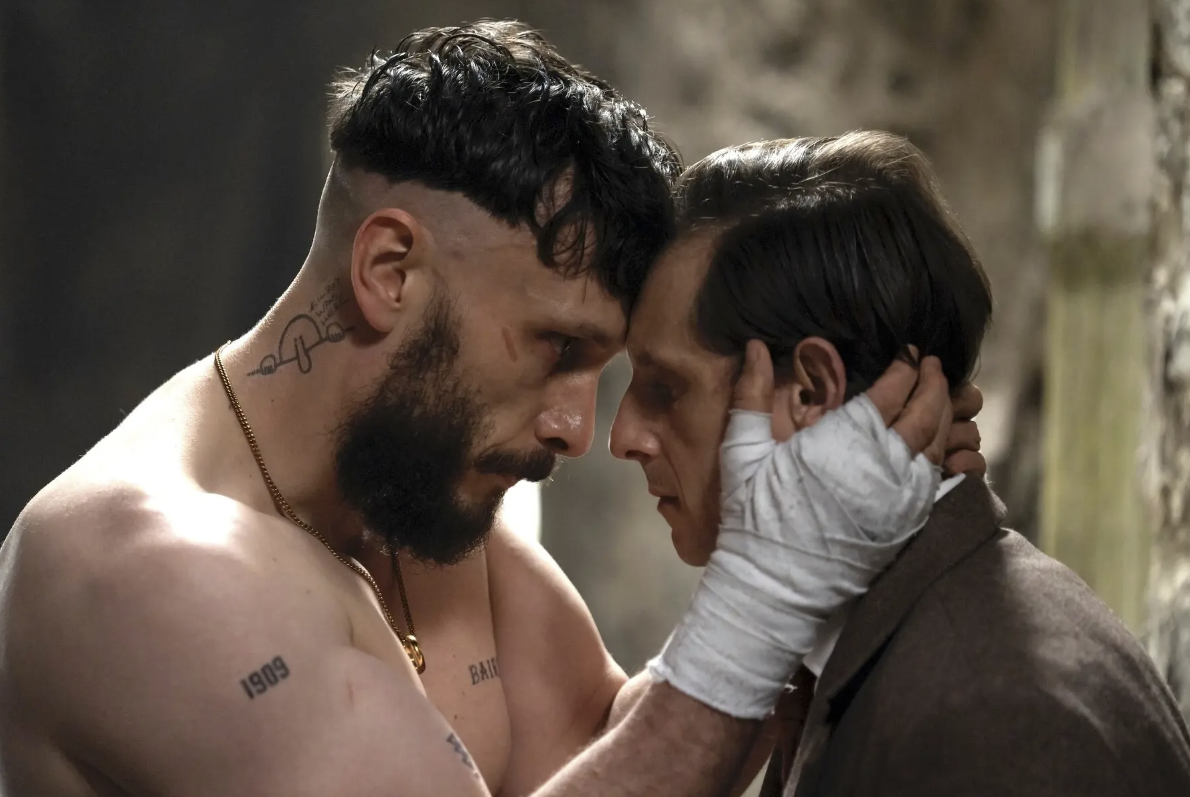
“We may not flow through each other’s veins, but we flow through each other’s brains,” says Ruben to Niall in Richard Gadd’s brutal exploration of family, masculinity and violence for HBO’s Half Man. Even if these two men are not related by blood, an element of rage is shared between them in different moments of their lives. Can brotherly love evolve and mature where fear is fundamental in its foundation? Gadd’s new limited series is addictive for how these two men continue to look over their shoulders in fear that they will discover their counterpart present. When one basks in light, the other is relegated to shadow, and Gadd and Jamie Bell deliver career-defining performances.
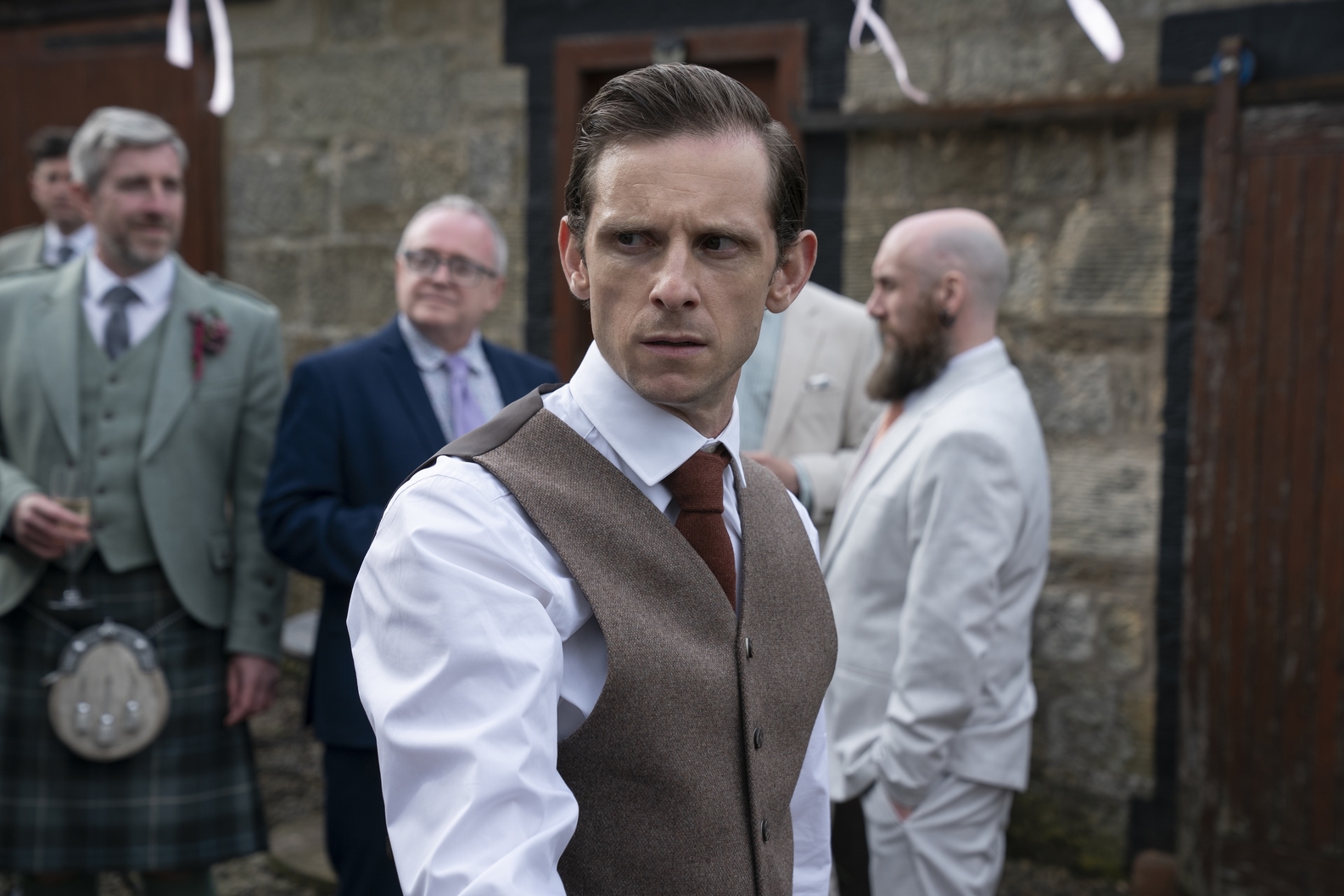
When young Niall learns that his mother, Lori, has allowed Ruben and his mother, Maura, to move into their home, he repeatedly calls Ruben a psycho and reminds Lori that Ruben bit someone’s nose so hard that his victim is still disfigured. When we first meet the teenage version of Ruben, we see him from behind through Niall’s cracked bedroom door before he tears what he doesn’t like off of Niall’s bedroom walls and orders Niall to put up items that he likes instead. We briefly meet the adult versions of these boys at Niall’s wedding moments before Ruben socks him in the jaw and the narrative dizzies back to sometimes in the 80s.
As a teenager, Ruben has swagger, and it’s easy to see how Niall gets yanked into his faux-bro’s orbit. Shy and guarded Niall needs help with bullies who relish calling him a fag or snatching his things before class begins. At Maura’s urging, Niall helps Ruben cheat on his exams so he can stay on some form of educational path. ‘My brother from another lover,’ the pair says to one another throughout their entire lives. In a strange way, Niall and Ruben are each other’s soul mates. They acknowledge that their mothers are in a secret relationship hidden from the rest of the town, so, in a lot of ways, these young men have only the other to fully understand and witness what the other goes through. With a devilish smile, Stuart Campbell gives young Ruben a forceful but puckish charm. What unfolds over the following episodes, though, might confront audiences with how they would fare if they found themselves in Niall’s shoes. We witness Ruben’s angst transform into rage and unbridled fury.

When Niall is away from home at school, Lori doesn’t understand why her son would want Ruben around, and rather than try to adjust to his youthful independence with his flatmates Celeste, Joanna, and Alby, Niall invites his brother to the city where that trademark recklessness gives way to violence and serious damage. How do you escape a fretful past when that past can literally come knocking and rip everything to shreds. Niall feels adrift but determined to make a name for himself as a writer where his late father didn’t succeed. Ruben blames everyone else for his anger–everyone fails him, so he has nowhere to turn but to his own blind rage. The structure of the season teases us by bringing us back to Niall’s wedding at the beginning and end of the first three episodes, before we transition to their strained adulthood
It’s more than curious as to why Gadd is interested in exploring the monstrous sides of our human nature. His Emmy-winning turn in Netflix’s phenomenon Baby Reindeer allowed audiences to look agape as Donny Dunn cracked himself open by the obsession from Jessica Gunning’s relentless Martha. Here, Gadd is unrecognizable as a hulking, balled-up fist of unpredictable fury. If Ruben enters a room where he is not in control, he will take control of it in some way, and Gadd brings an uncanny physical heft to the role by inserting his literal presence into a lot of situations. Ruben will touch his forehead to Niall’s in moments of affection or supposed concentration. Gadd lowers his vocal register so deeply that his breathing (one of the first things you hear in the premiere episode) makes him sound like a feral, beastly animal. He grunts and laughs deeply, but he also has moments of terrifying stillness. I don’t remember the last time a character had such an uneasy effect on me, as if Gadd was changing the chemistry of every room he walked into. He is unbelievably magnetic.
Bell is simply magnificent as someone who does not see his own recklessness right in front of him. Unable to come to terms with his own sexuality, Niall disappoints many people in his life. The younger version of Niall (played with guarded apprehension by Mitchell Robertsobn) tells Alby that he and Ruben are virtually the same person, and his new flatmate responds with disbelief by saying, ‘You’re the same person if Jekyll and Hyde are the same person.’ Bell shows how not accepting the truest form of yourself disconnects you not just on a spiritual level but on a physical one: he doesn’t understand how his cruising or grasping at straws feels on his skin because he is so numb. Bell’s eyes dart around like he’s hunting for the next emotional fix that will satiate his hunder and need. It’s a delicately ferocious performance.
There is something more dangerous at play here, because of how Ruben and Niall sink themselves into one another. At the end of episode one, Ruben offers up his girlfriend, Mona, right in front of him in order for Niall to experience pleasure for the first time. ‘Trot, don’t gallop,’ Ruben encourages as he tries to get Niall to match his rhythms and breathing. In a later episode, they have a confrontation so rooted in the kind of hatred that you reserve for a spurned sibling that there is no other way to get it out other than fighting. ‘How’s it been in my absence, eh,’ Ruben spits out at Niall. ‘Did you find out the hard way by walking in my boots? They’re always going to slip off at the heel.’
Do we all have an other half? A simpatico? Ruben often refers to his brother as Bambi–perhaps a knowing nod to Martha’s affectionate-turned-sour nickname for Gadd’s Donny in his last limited series. I might offer that it’s a acknowledgement to how some of us are not willing to change or turn our backs on those who we truly need. Gadd’s newest entry is about a lot of things, especially how we excuse and grant permission to the ugliness of powerful anger. In Half Man‘s case, one man spews his rage outward while the other allows it to fester within his own psyche. Is one better than the other? Or will that emotion never allow us to be wholly ourselves?
Half Man debuts on HBO on April 23 with episodes debuting on HBO Max the following day.