
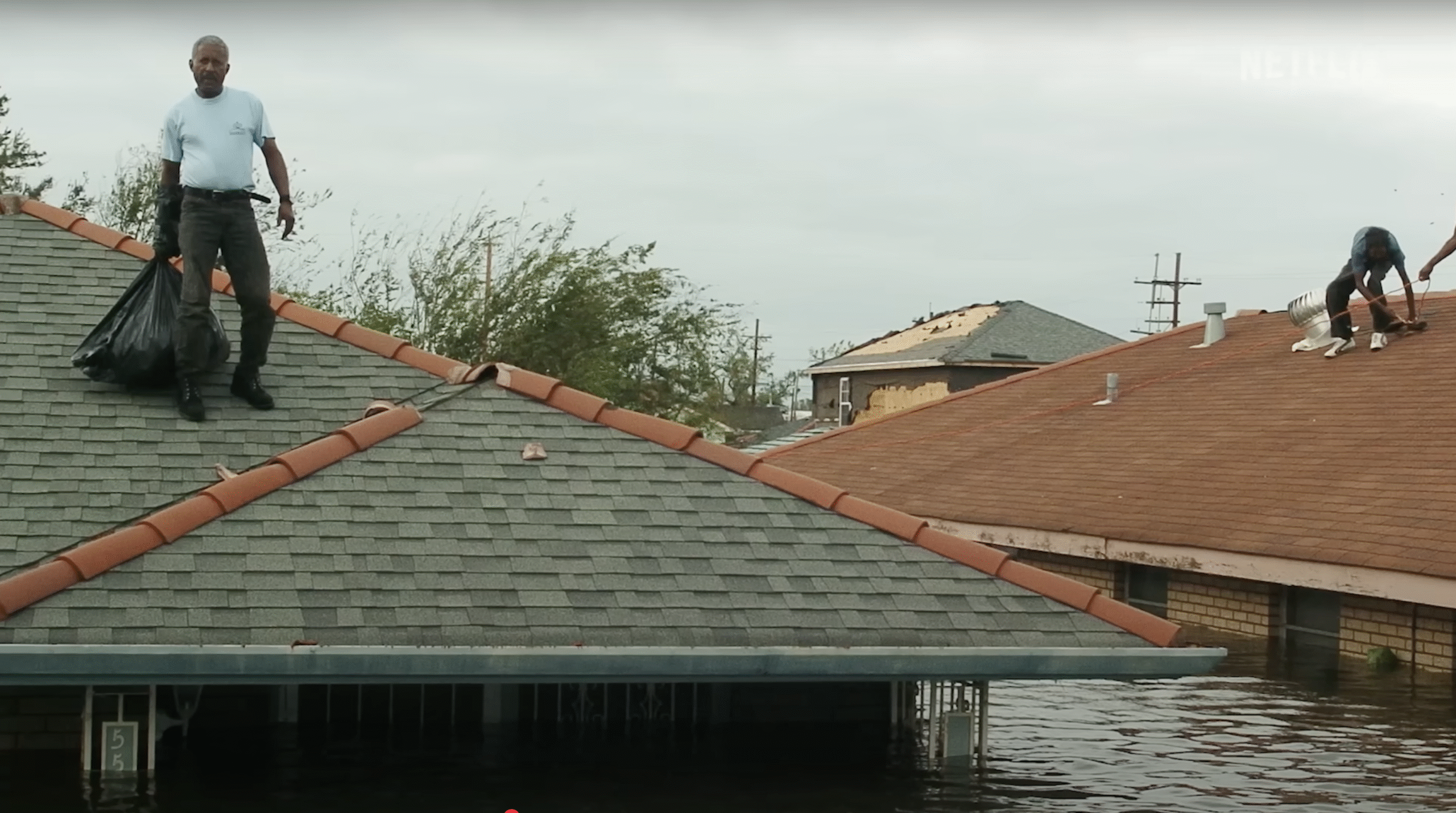
At the time Hurricane Katrina made landfall in New Orleans in 2005, I was the assistant manager of a retail store that sold music, movies, and books. I paid close attention to the horrors that visited my TV screen, I donated meals, and I hoped for the best. The best did not come. Three years later, I watched Spike Lee’s powerful two-part docuseries If God Is Willing and da Creek Don’t Rise, which covered Katrina and the impact it made on the people of New Orleans.
When I saw that Netflix had released a new docuseries on the subject of Katrina (marking the twentieth anniversary), I was intrigued, but I also wondered what it might add. As I soon learned, the answer is “plenty.”
Had Katrina: Come Hell and High Water served as merely a reminder of what occurred twenty years ago (which it certainly does), that might have been enough. Beyond being a look back, the series uses the benefit of reflection, an update to the state of New Orleans in the present day, and a look toward future perils to create something greater, something wholly necessary.
The first two episodes focus primarily on the days surrounding the disaster and the immediate aftermath. While I was well aware of the incompetence of the local, state, and federal government response to the storm, Come Hell and High Water puts an even finer point on it. From the lack of an organized evacuation effort, the porous response, and petty behaviors of New Orleans Mayor Ray Nagin, Louisiana Governor Kathleen Blanco, and United States President George W. Bush, there is plenty of blame to spread around, and this series is an equal opportunity spreader.
The details shared are stunning. Mayor Nagin is shown to be decidedly in over his head. Slow to respond, unable to make decisions, and generally at sea. Blanco appears on camera talking about “pray(ing) it (the storm) down,” as if that were a strategy. Then there is the President, who stayed on vacation for two days (the most critical days after a natural disaster) while the city of New Orleans drowned. Former CNN Anchor Soledad O’Brien tells us that the three officials didn’t like each other and didn’t mind watching each other fail, while not realizing that the failure of any one of them meant the failure of all of them. Unsurprisingly, Nagin, Blanco, and Bush did not sit for the series.
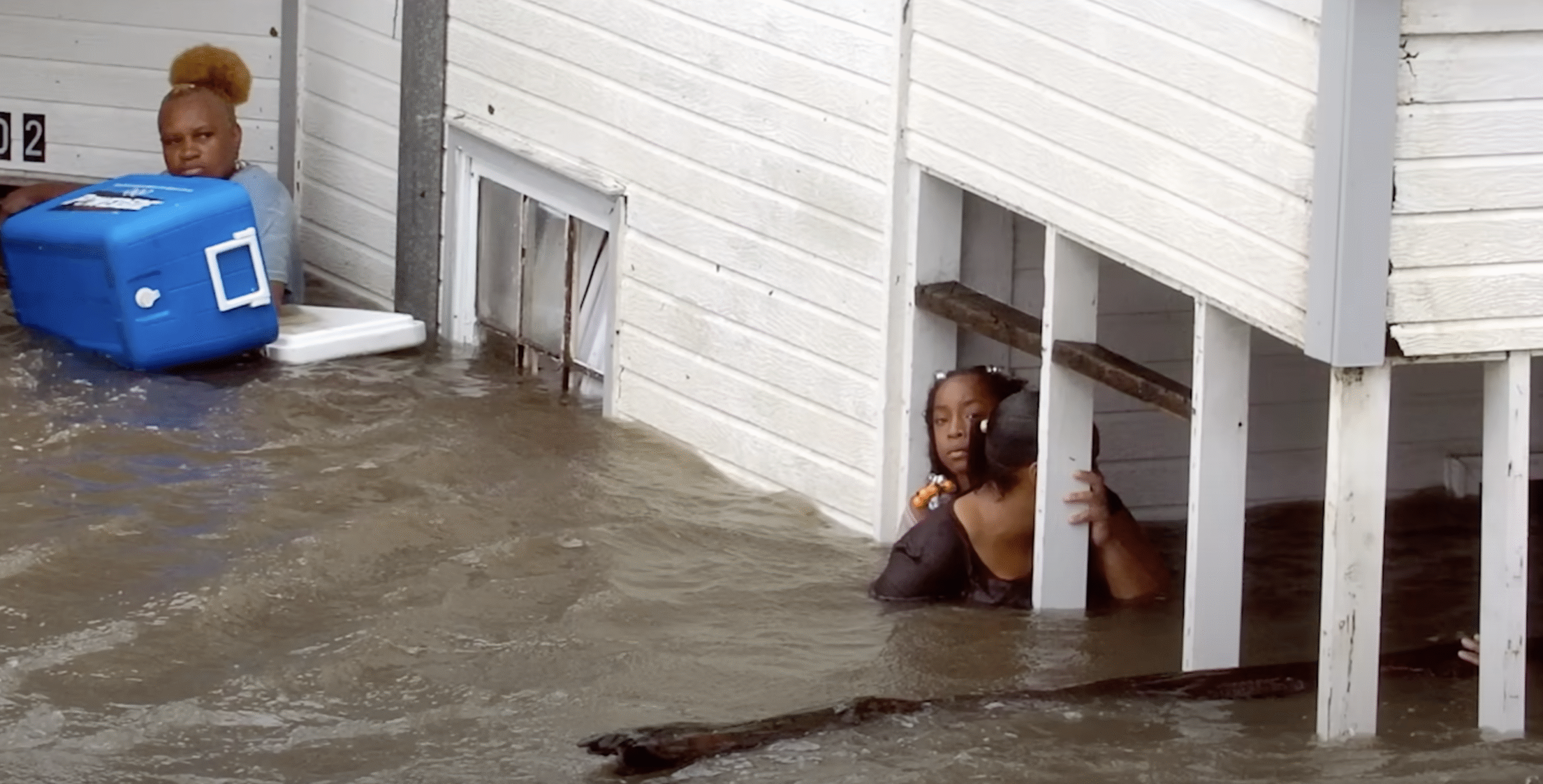
What happened in New Orleans after a Category 3 hurricane hit the city was predictable. Despite that knowledge, the plans for evacuation and recovery were desultory. With much of New Orleans being below sea level, a breach or topping of the protective levees would result in disaster. When the levees broke, that’s precisely what happened. Water poured into the city, decimating the low-lying areas (particularly the Ninth Ward). The failure of the levees (built by the Army Corps of Engineers in 1965 after Hurricane Betsy) and the slow response that followed exposed that what happened in New Orleans on August 29, 2005, was a natural disaster compounded by a man-made disaster.
Aside from the fact that climate change has been increasing the power and volatility of storms worldwide, adaptation to the changing environment has not kept pace. In episode 3, levees in Europe are presented, and they look positively space-age compared to the ugly walls that have been built to protect New Orleans. As one New Orleans resident puts it, “We survived Katrina. When the levees broke, that’s what fucking did us in.”
As New Orleans began to flood when the levees were breached, the city’s residents were left to fend for themselves for days. The question of why people “didn’t leave” is addressed simply and accurately in the series. Aside from the lack of organization, the eleventh-hour call for a mandatory evacuation, which created complete gridlock on the interstate, far too many lacked the financial means or a place to “leave” to. Situations like these are precisely why we pay local, state, and federal taxes, but once Katrina hit, those forced to “ride it out” found that their leaders were nowhere to be found. They were left to fend for themselves. They were “neighbors saving neighbors.”
Post-storm, the stark racial and economic divides in the city (and the country) were laid bare. Much of the initial news coverage focused on the affluent areas and the business districts. Most of these areas were above water. O’Brien recounts how little the major news organizations knew about the Lower Ninth Ward and the other regions that were filling up with water. As a nation, our priorities were obvious: money over humanity.
When the mandatory evacuation was called, Mayor Nagin told those who could not leave that the New Orleans Superdome would serve as “the shelter of last resort.” The Superdome may have been above water, but it presented as a hell of its own. The footage of people piling into the arena (after wading through sewage and snake-filled waters) by the thousands is something to behold. It’s made clear that there was no way that city police and the National Guard could be prepared for that level of influx.
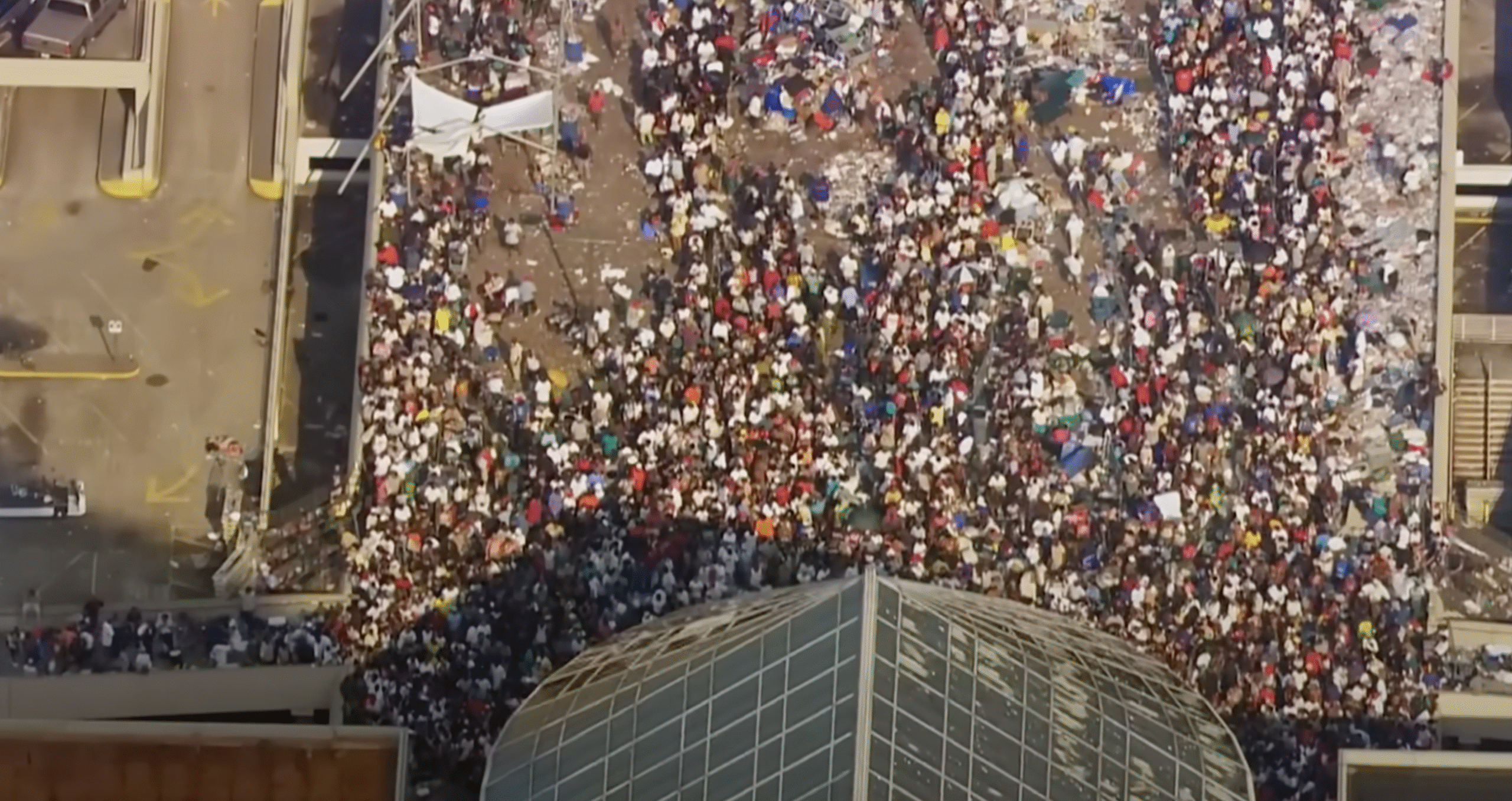
Once inside the Superdome, conditions deteriorated rapidly. The combination of heat, lack of electricity, flowing water, and a dearth of food and drinkable water created desperate circumstances for all in the building. It was dark, hot, and full of stench. People were wilting in the heat, some dying of exposure. There were 20,000 people in the Superdome. They weren’t allowed to leave for days despite the lack of resources and necessities because the National Guard had deemed it unsafe for those inside to venture out. One resident compared the Superdome to a slave ship, “the way they stacked us up.”
One need look no further than the term many media outlets used to refer to those displaced by the storm: “refugees,” they were called. A galling definition for residents of an American city. As New Orleans Police Chief Eddie Compass replied to a reporter using the term, “First of all, they’re not refugees. They’re citizens of the city of New Orleans.” One is left to wonder, if these citizens hadn’t been poor and black, would they have been referred to as refugees or treated this way? Actually, one doesn’t have to wonder at all. We see it on the screen, in front of our faces.
As the feds finally piled in, they proved no more adept than the local and state governments. The director of FEMA, Michael Brown, a former deposed Commissioner of the Arabian Horse Association, deflected blame toward the city, state, and even the residents/victims. For this, he was infamously told he was “doing a heckuva job” by President Bush, on camera.
We also see the director of Homeland Security, Michael Chertoff, saying he is “pleased” with the response, despite the immoral level of suffering that was on display. Doubling down, Chertoff criticized the city for being built below sea level. Or as Jon Stewart put it, “New Orleans is to blame for existing.” Another resident points out that no one ever asked this question about Hollywood after wildfires, San Francisco after earthquakes, or coastal Florida after hurricanes. After all, those are places of affluence and whiteness.
It wasn’t until Army Lieutenant General Russell Honore arrived on the scene that progress began to happen. As Honore, himself a Louisiana native, states, This is about logistics. Politicians don’t know anything about that. “That’s why you need assholes like me.”
Under such dire circumstances, those trapped in New Orleans began to forage for food, water, diapers, and other necessities. Federal and state officials were all too eager to describe such behavior as “looting,” and quickly began to focus on the plight of New Orleans as a security issue as opposed to an evacuation issue. The police and the National Guard began to patrol the streets, guns drawn. It doesn’t go without notice that the same thing is happening today, as directed by the Trump Administration, once again, under the guise of security.
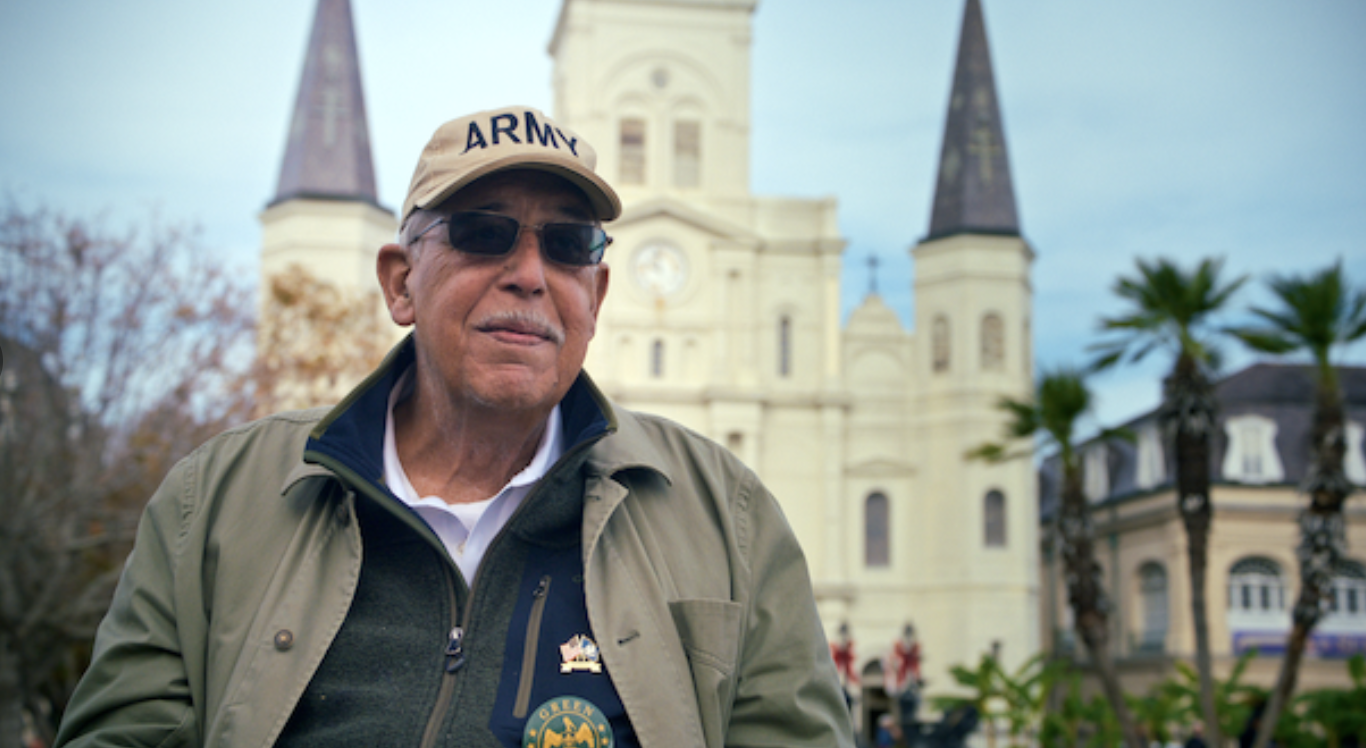
Into this miserable breach stepped Honore, who can be seen telling police and members of the Guard to “sling” their weapons. Honore also convinced Governor Blanco to close schools and commandeer the buses for the purpose of evacuation. When asked by a reporter about why the dead bodies aren’t being dealt with in a timely fashion, Honore gravely replies that he can do that or “Move the living.” He can’t do both. If any person at a government level comes away from this docuseries with their reputation elevated, it is Honore. A no-nonsense man who knew how to meet the moment. When he arrived in New Orleans, FEMA Director Brown offered Honore a desk beside his own. According to Honore, he told Brown, “The problem is in the city. You can keep that fucking desk, I’m going.”
When the buses finally arrived to evacuate people from the Superdome, one resident likened it to liberating a concentration camp. There were still thousands of people stranded in the Superdome and throughout the city six days after the levees broke.
The first two episodes are brilliantly directed in a top-shelf documentary fashion by Geeta Gandbhir and Samantha M. Knowles. Episode 3 sees the return of Spike Lee (also an Executive Producer on the series) behind the camera. Well-steeped in the history of New Orleans and Hurricane Katrina, Lee brings his stylistic flourishes (the bold use of text on screen, a more prominent use of Terence Blanchard’s mournful score, and the sound of his own voice) to the project. He also takes a closer look at New Orleans now and what the future may hold.
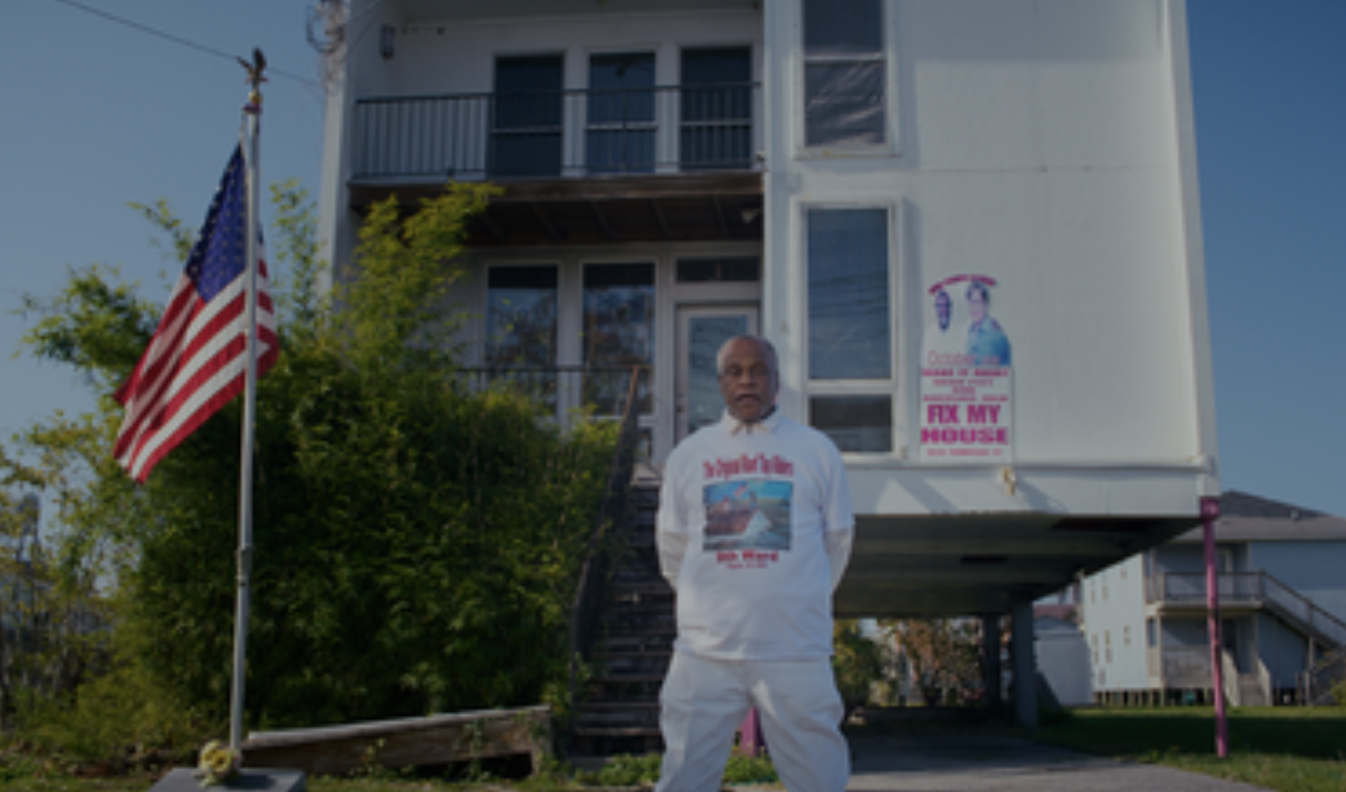 The reverberations of Katrina still impact the city today. Housing prices and rent have more than tripled since the hurricane hit New Orleans. Many affordable public housing facilities were torn down and not replaced. Wealthier areas got more money to rebuild by a nearly two-to-one ratio. Citizens have been displaced by grief, lack of opportunity, and being pushed out by developers. Even good intentions are shown to have backfired. Brad Pitt’s Make It Right foundation entered New Orleans, raising millions of dollars to rebuild homes at an affordable cost with favorable loan terms for buyers. Unfortunately, the houses were poorly built, using an eco-friendly composite that couldn’t withstand water. Most of those 120 houses are now unlivable or in disrepair, resulting in an ongoing lawsuit against Make It Right.
Education was also a casualty of the storm and government response. Local teachers were removed in favor of Teach For America instructors. Instructors who didn’t know the children, their culture, and whose commitment to the area was temporary. Now, the schools suffer from a lack of funding that has left K12 institutions in New Orleans worse off than they were before. Former New Orleans Mayor Mark Morial’s profound statement that “No society in the history of mankind ever failed because they invested too much in their kids,” feels like a doomed truth.
Services in the city have been impacted as well. Before Katrina, New Orleans had a count of 1300 police. Today, fewer than 900 officers are patrolling the city. Episode 3 makes note of the perils of being a blue dot in a red state. New Orleans has long been an underfunded city. Post-disaster, the state legislature shot down a measure that would allow New Orleans to collect more fees from the hotels operating in their city. Approximately 20% of Louisiana’s income is derived from New Orleans and its surrounding areas. Despite that flow of cash into the state coffers, the very conservative legislature resent the city for its politics and its racial makeup.
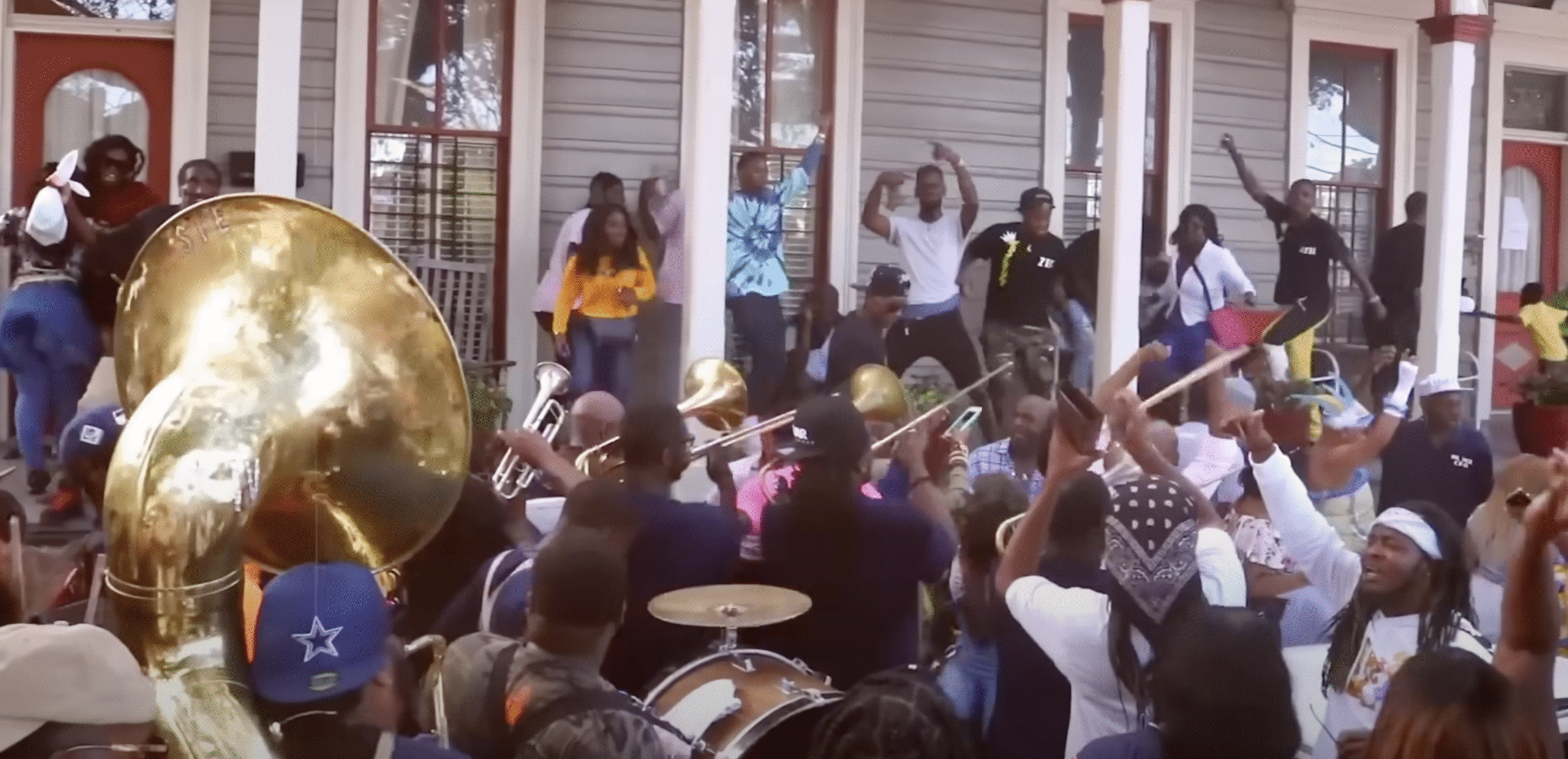
The demographics of New Orleans have undergone significant changes over the last twenty years as well. There is no other city like New Orleans in the United States, and quite possibly, the world. It’s a place with a distinct culture, rich traditions, vibrant music, and diverse cuisine. Called the northernmost Caribbean city by Honore and others, New Orleans was once a city with a black population of nearly 75%. Today, that percentage has dropped by roughly 20% due to displacement and gentrification. The total population of the city has fallen from 440,000 to 380,000.
Actor and native New Orleanian Wendell Pierce says it best when he states that those who remain have learned “How to survive in a world that doesn’t have our best interests at heart.”
We have not (re)built back better in New Orleans. The people may not be living through a natural disaster right now, but they are still living through a slow-moving man-made one. Once again, they are on their own, and it’s criminal.
Katrina: Come Hell and High Water is a trenchant reminder and update of what happened in New Orleans in 2005, but just as importantly, what continues to happen in this most extraordinary American city. What is most disturbing is considering how little things have changed and how vulnerable the New Orleans remains.
On August 30 of this year, I read an article in POLITICO about the need for $1 billion worth of levee upgrades in New Orleans. Considering the current occupant of the White House is preparing to wind down FEMA after this hurricane season, it’s difficult to imagine how funding for the levees will be approved anytime soon, which makes it very likely that all of this will happen again. Katrina: Come Hell and High Water isn’t just about the past and present; it’s a dark crystal ball that looks into the future.
The shame (if this country is still capable of such a thing) of that highly probable outcome will belong to all of us.