I’ve got many rivers to cross
But I can’t seem to find my way over
It’s a tough gig, being arguably the second-greatest reggae musician in history. For many people, there’s Bob Marley and then a fifty-foot drop. I’m not sure “arguably” should apply to Jimmy Cliff at all, but such is the distance between Bob Marley and everyone else.
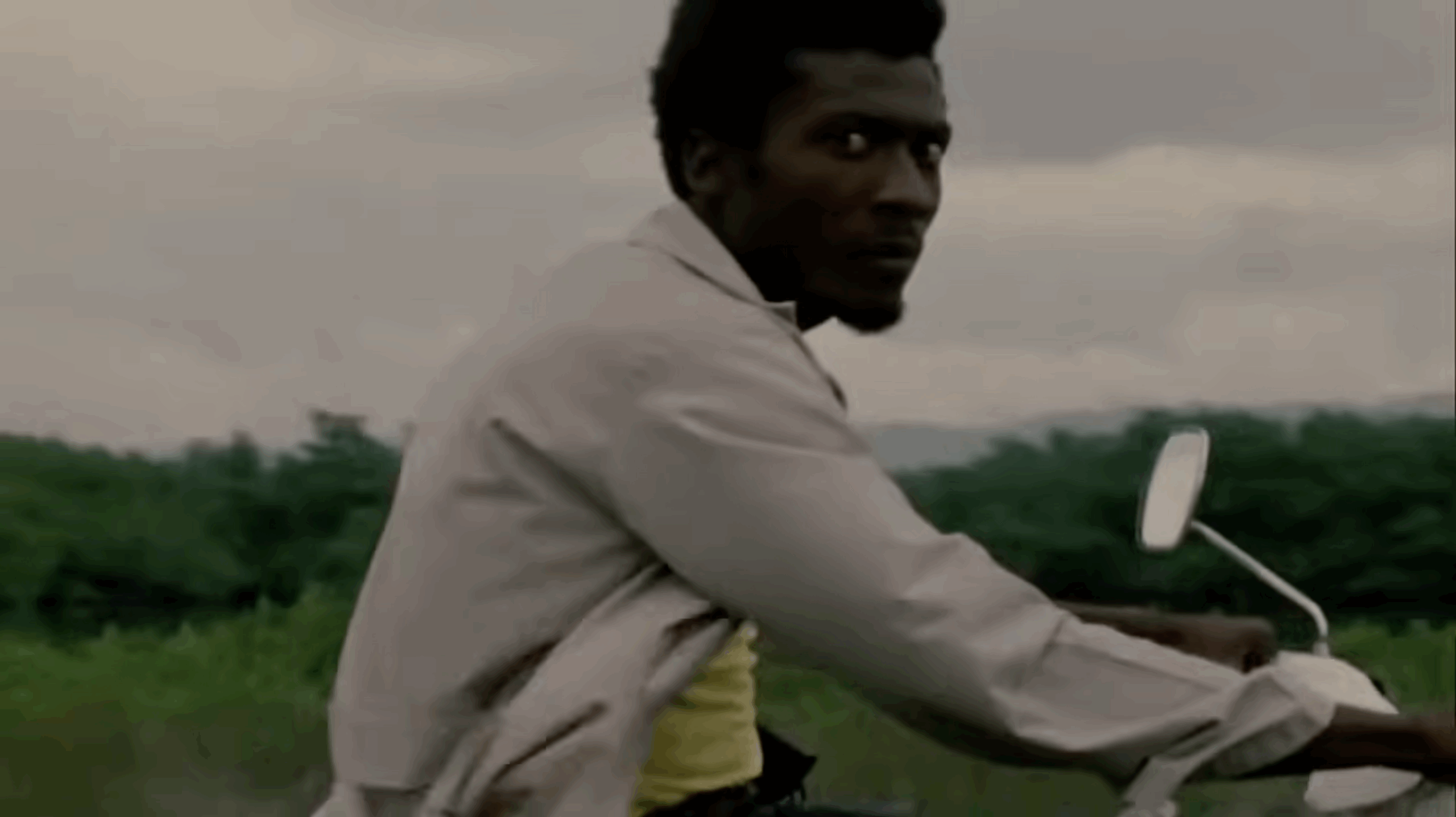
One place where Marley couldn’t (and didn’t try to) compete with Jimmy Cliff is at the cinema. Cliff only made three movies. The last was Rude Boy: The Jamaican Don (2003), a lightly regarded crime drama. The middle film is the beloved 1986 guilty pleasure (at least for me): Club Paradise, starring Robin Williams. Then there is his first film, the game-changing micro-budgeted The Harder They Come (1972).
Outside of John Cassavetes, there wasn’t much of an independent presence in American cinema, and even less so in Jamaica, where The Harder They Come was set and filmed. Cliff plays the lead character, Ivan, a talented reggae musician who runs afoul of a corrupt record producer and brutal policemen. The film was a sensation in Cliff’s island home and received a rare (at the time) American release. While The Harder They Come didn’t make an immediate financial splash outside Jamaica, it did receive strong reviews and has since become a cult film of true notoriety.
Even more significant is the success of the film’s soundtrack. Credited with bringing reggae to an international audience (Bob Marley’s first charting album in the U.S., Catch a Fire, wouldn’t be released until the following year), The Harder They Come contains twelve tracks, four written and recorded by Cliff—all of them masterpieces.
The defiant title track, the meditative Sitting in Limbo, the reggae-pop of You Can Get It If You Really Want, and the extraordinary gospel-island-soul of Many Rivers To Cross bumped up against classics like The Maytals’ Pressure Drop and the Slickers’ Johnny Too Bad. It is no grand statement to call The Harder They Come one of the greatest soundtrack compilations ever to be recorded, because the grandness is earned.
The soundtrack went on to sell millions of copies internationally and opened up reggae to the world. As a precursor to Bob Marley and the Wailers, it served as the entry point for this socially conscious, rhythmic, and melodic form of music. While Marley may have eclipsed Cliff in popularity and regard, Cliff could claim many triumphs of his own outside of The Harder They Come.
He scored one of the first Top 40 reggae hits in the United States with Wonderful World, Beautiful People in 1969. He wrote and recorded the remarkable single Trapped in 1972, which would later become a radio hit for Bruce Springsteen. He leapt into the Billboard top twenty in the U.S. with his cover of Johnny Nash’s I Can See Clearly Now, recorded for the soundtrack of the hit film Cool Runnings. He and Elvis Costello combined for the joyous Seven Day Weekend on the Club Paradise soundtrack. Cliff sold millions of records over a career spanning more than 50 years, was nominated for 7 Grammys, and won 2. Finally, Cliff was honored in 2010 by becoming the second reggae artist (after Marley) to be inducted into the Rock and Roll Hall of Fame.
Jimmy Cliff is a legendary figure who has made his mark in film, music, and popular culture. He was a great representative of his island nation. He possessed one of the most beautiful voices ever laid to wax: a happy warrior, a joyful revolutionary, and a far too under-appreciated songwriter.
Jimmy Cliff found his way over on November 24, 2025. He was 81 years old.