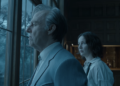

I first heard of Director Lee Tamahori through Siskel & Ebert circa 1994. The film they reviewed is called Once Were Warriors, which charts the course of several weeks in the lives of a volatile New Zealand family descended from Māori tribespeople. The volatility stems almost entirely from the family’s patriarch, Jake (Temeura Morrison). Jake loves his family, but he drinks too much, and when he does, his wife Beth (Rena Owen) takes the brunt of his violence. Jake’s anger stems from generational poverty and the loss of stature as his country has marginalized the indigenous. While Beth may get the worst of it, his daughter and two sons are not immune to the impact of Jake’s rage. They live in fear.
Roger and Gene raved about the film on their syndicated show, At the Movies, and when Roger and Gene matched in their effusiveness, I didn’t just make a note; finding the film became an obsession. Being an indie film with no stars, I knew, in the small town in which I resided, Once Were Warriors was unlikely to make its way to a theater near me, and I was correct. I was running a record/video rental store while putting myself through college. One of the perks of managing a video store was that I was responsible for ordering our new VHS titles for rental. About a year after the film’s limited theatrical run, it appeared on the list of the latest movies available for wholesale purchase for rental. While I knew Once Were Warriors wasn’t a title likely to turn over at the cash register very often, Gene and Rog told me to see it, and I took advantage of my privilege.
The day the film arrived, it didn’t make it onto the shelf. I was the first person to take it home. From their reviews on Siskel & Ebert, I knew that Once Were Warriors was the kind of film that one has to steel themselves before seeing. I had no idea how right I would be. Tamahori’s first film is brutal, painful, heartbreaking, but also extraordinary. Maybe it was the fact that none of the actors were familiar to me. I’m sure that impacted my viewing. More than that, the performances of Owen and Morrison, and Tamahori’s (himself of Maori descent) unyielding direction created an immersive experience that took you to a place outside of film or entertainment. Once Were Warriors rattled the nerves and punched the heart. It is unforgettable.
Hollywood took note of the skill with which Tamahori delivered his debut feature, and he was suddenly in demand in a place far from his home at the bottom of the world. Tamahori’s first film in the States would be 1996’s Mulholland Falls, a period noir policier starring Nick Nolte, Melanie Griffith, Chazz Palminteri, and Jennifer Connelly, among others. Mulholland Falls brims with style and Tamahori’s muscular direction, which is almost enough to make you forget that the screenplay is a mess. Mulholland Falls did not connect with critics or audiences, but no one held the film’s disappointing results against Tamahori.
The Kiwi director would bounce back quickly just a year later with the second-best film of his career, the David Mamet-scribed wilderness thriller, The Edge. Starring Anthony Hopkins and Alec Baldwin, The Edge told the story of two men lost in the Alaskan wild after their small plane crashes in the woods. Hopkins plays a resourceful billionaire who finds ingenious ways to collect food, build a fire, and even create a compass. Baldwin plays a photographer who just might be having an affair with the rich man’s much younger wife (Elle Macpherson). Despite the enmity between the two men, with their survival depending on the other, they forge an uneasy bond to find their way to civilization.
The Edge is an ingenious thriller with many a pulse-pounding moment (often supplied by a brown bear with a taste for human blood), but what sets it apart is its intelligence. Tamahori expertly blends Mamet’s staccato dialogue with riveting pacing, while capturing the unforgiving nature of, well, nature. The Edge received solid reviews and achieved modest box office at the time, but has grown in esteem ever since. I’ve yet to meet a person who has seen it that didn’t admire it.
After The Edge, Tamahori became a go-to director for formulaic would-be blockbusters. However generic they may have been, Tamahori’s brio behind the camera made hits of the second Alex Cross mystery, Along Came a Spider (starring Morgan Freeman), and the Pierce Brosnan-led Bond flick, Die Another Day.
Unfortunately, his next two big-budget films, XXX: State of the Union and Next (with Nicolas Cage and Julianne Moore headlining), were both major flops. Tamahori responded by helming the compelling mid-budget horror/thriller The Devil’s Double, starring Dominic Cooper as the body double for Uday Hussein. The Devil’s Double is a wild film that speaks to the notion of a filmmaker unburdened by the constraints of box office expectations. While the film received mixed reviews, it has more than a few champions in telling the fictionalized story of a man being the stand-in for Saddam Hussein’s son. I would be one of those champions. With the shackles of commercial expectations removed, Tamahori’s go-for-broke fearlessness in The Devil’s Double may not be for all tastes, but there can be no missing the power and technique on display.
After The Devil’s Double’s modest response from critics and moviegoers, Tamahori returned to New Zealand for his subsequent two films, The Patriarch and The Convert. Both pictures have Māori themes within their storylines. For The Patriarch, Tamahori’s male lead from Once Were Warriors, Temuera Morrison, reconnects with the director who put him on the map for a story about family rivalry set in rural New Zealand during the 1960s. Guy Pearce leads the Convert as a British preacher with a questionable past caught between warring Māori tribes in 1830s New Zealand.
Neither film received a significant release outside of New Zealand, but both garnered a number of strong reviews. Tamahori’s final film, Emperor, is an as-yet-unreleased historical epic set in 16th-century Rome, with Adrien Brody, Paz Vega, Oliver Platt, and Bill Skarsgard among the cast.
The cinematic career of Lee Tamahori has a not-atypical arc for a director who makes a critical splash in an indie film. The industry took note of his talent and placed him in well-paid, large-budget films that were largely impersonal and could be described as “product.” For the most part, Tamahori made the most of those productions, but he shone brightest when given the keys to the vehicle and allowed to make the film he wanted to make.
Once Were Warriors may not be the best-known film on Tamahori’s resume, but it is, by far, the best. I would argue that it is so remarkable that, were it on most any other director’s CV, that fact would not change. It is a towering achievement that still comes back to my mind in ways so specific, it’s as if it has been running on a loop in my head for three decades now.
Only a filmmaker of massive gifts could make such a film. Lee Tamahori was such a filmmaker.
Lee Tamahori died on November 7, 2025. He was 75 years old.