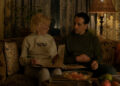
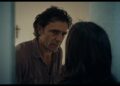
Sound of Falling is one of the most uniquely told stories of ths year. Director Mascha Schilinski weaves a tale of family, independence and self-preservation told through the distinct perspective of four women in different eras set in the same region of Altmark Germany. Does our past influence our present? Can a place be so haunted that it affects our lives and connects us in ways that we don’t understand. Editer Evelyn Rack understands that our histories can influence one another, and she capitalizes on the film’s shattered structure to highlight how our past never fully leaves us.
The Contending: This is such a uniquely told story. What kind of conversations did you have with Mascha about structure or how she wanted to tell this story?
Evelyn Rack: I always begin editing with one clear intention: to translate the script’s emotional core as faithfully as possible. For me, a film works through emotional logic more than narrative logic – editing shouldn’t show an emotion, it should let you experience it. Sound of Falling was conceived from the start as an immersive emotional experience. The script already set a strong vision, and a quote from Bresson on its first page guided us: “I’d rather people feel a film before understanding it.” Before shooting, Mascha and I were already in conversation about discovering the film’s structure anew in editing, because how something feels, which layers it opens, cannot be written or predicted.
We first explored each scene on its own, discovering rhythm, hidden tensions, and life. Some revealed themselves quickly, others took longer, and we would set them aside until we could truly understand them. Only then could we see how they might connect, how the pieces of the story could fit together.
Placing them in the order of the script on a timeline was our first attempt at mapping the larger structure, but it quickly became clear that the emotional pull was missing. It wasn’t even clear that everything happened in one place, unfolding across different times.
This is when we began treating the structure almost like a documentary puzzle. We used a stack of colored index cards – one color per timeline – writing a card for each scene. The challenge: the possible combinations of the 90 scenes amounted to 90 to the power of 90, which is a number with 90 digits. But unlike in a documentary, where the pool of scenes is usually much larger and can be shaped more freely into a familiar narrative structure, here every scene had to fit precisely with the others, each one affecting the whole.
A complex puzzle like Sound of Falling, with its many timelines, storylines, main and secondary characters, told without a clear plot or linear chronology, demanded courage, trust, and openness. We had no models, no existing templates. All we had was our instinct. There was excitement in realizing that we didn’t have to follow any rules, not even pretend to. It tingled in our fingers, and we plunged into the process. We moved our cards from A to B, experimented, played, and slowly began to see patterns emerge.
From the start, the process was collaborative. Sound Designer and Junior Editor Billie Mind contributed insights and ideas that became integral to the edit. Editing, directing, and material ideally form a triangle: a space of shared possibilities. With trust and understanding, it develops its own language, and a living organism emerges: a film. We didn’t argue or convince each other. We went together on a journey into the unknown, holding hands along the way.

TC: Do all of the sections of time have the same energy with their editing? Do any of the time period influence how particular periods of time are edited?
ER: All sections of time followed the same editing approach – deeply empathetic with the characters, radically open to the material. It is curious, exploring the world, desires, and disturbances with the characters.
To me, every film functions like a small universe with its own rules and laws. Recognizing and applying these helps solve such a puzzle. It had to feel as if the characters were watching themselves from a million years away, remembering collectively what happened. That was our key: how do we remember? What comes first to mind? What hides and refuses to surface? Remembering is not associative; it has a certain inevitability. Memories take shape and evolve. That evolution is formed and guided through editing.
In the finished film, we begin grounded in realism: Erika limping down a hallway, Alma at a family meal, Angelika running across a freshly cut field. Early in the film, small disturbances appear – snippets of lifeless feet dragged, still limbs underwater, an eel biting a hand. To fully immerse ourselves in the characters’ perspectives, we discovered we needed to start with one character at a time. After a brief beginning with Erika, we stay with Alma from the 1910s for more than 20 minutes, moving through the house with her and experiencing her fascination and disturbance with the idea of being dead. Only then can the first perceptible time jump happen – Nelly from the 2020s wakes up from a nightmare. This was the boldest decision in editing: to stay with just one character for so long, seemingly counter-intuitive, but instinctually right.
It’s not that the sections of time carry conceptually different energies in their editing. Rather, the editing itself shifts over the course of the film, equally across all time layers, becoming increasingly immersive and subjective.
TC: There are so many moments where we are looking through a keyhole to discover something. Tell me how the editing helps our perception of what’s going on.
We wanted the film to feel as if the characters are almost peeking through a crack into their own memories. Repeatedly, they look through door slits, keyholes, and cracks, moments shaped by Fabian Gamper’s outstanding camerawork and Cosima Vellenzer’s meticulous production design, discovering what lies hidden. The editing always makes that gaze tangible, showing directly what they see.
We witness together with Alma, through her own eyes, what happens to her older brother Fritz in the barn. Or when Alma looks through a keyhole, and we eavesdrop with her on a conversation between her father and the neighboring farmer, to whom her sister Lia is supposed to go after the solstice to work as a maid, because much of the harvest was lost to rain. When Alma runs to her sister Hedda and tells her by the campfire, the situation is observed from Fritz’s window. Ultimately, we are the ones observing all the characters, not only watching each other, but also, in a sense, themselves – like watching themselves from an unknown space and time.
But it’s not just the characters’ gazes; it’s also the gaze of their surroundings. Rainer and Uncle Uwe secretly watching Angelika, while she secretly watches them watching her. And then there is her mother, looking away, pretending not to notice when her uncle places his hand on her lap.
We orchestrated all these gazes and events precisely. And all the holes, fragments, blacks, tonal distortions, absolute silences, and outer-space sounds in Billie Mind’s sound design support this perception. Crickets chirp louder, flies buzz – the same across generations – wind, water, the elements.
TC: The film has an effective haunted quality to it. How difficult was that to balance, especially towards the back half of the film?
ER: It was difficult and very challenging to arrange all the storylines, characters, and secondary figures. Every small change affected the whole. Every editor knows the Kuleshov effect – the principle where the order of two shots gives the viewer a new meaning independent of the individual shots. Here, it wasn’t just shots within a scene influencing each other but all scenes in the film influencing one another.
Recognizing that memory works more like unfolding, penetrating deeper and deeper into the invisible, was an image that helped us. In the finished film, remembering begins in the “simpler,” more accessible moments: the moment of putting a finger in the uncle’s belly button, playing a prank with the maid’s sisters.
From the singular stories at the start, memories become increasingly inaccessible. Images rush past, the editing becomes more fragmentary, there are black holes, increasing voice-over. The girls’ experiences intertwine more and more, thematically woven together from the moment Angelika lies crying in bed and later discovers the deer in the field. The personal becomes collective. The more collective the experiences, the shorter we stay with each character, and the more thematically organized they become.
As the film progresses, the energy shifts. The scenes become increasingly interior. For example, when Alma from the 1910s reflects on her great-grandmother’s death in something like a fever dream, she struggles to remember her face no matter how hard she tries. We aimed to make that sensation tangible through editing: the image turns black, we hear a distant prayer, fragmented blurred images of her great-grandmother appear, looking into the camera, waving, as if trying to reach Alma, but the image slips away. Or when Angelika from the 1980s lies on a swing, observing a family fest. Her mother rushes to set the garden table, welcomes guests, and the image sways up and down. A voice-over begins. Angelika wishes she could simply command her heart to stop beating, but it refuses. It just won’t stop. We experience the scene through her eyes, as if these moments and thoughts are pouring across her inner vision. There are black holes, the image flips upside down, fragments of moments forming a memory. And when Lenka from the 2020s, also at a garden party, notices the gaze of a family friend – a moment that will change her forever. She’s wearing only swim trunks, shirtless, playing with the younger children in the garden. She pretends she didn’t notice his look, because reacting would have drawn attention. But now she shares a secret with him she never wanted to share. She quietly turns her back to him and slips into a paddling pool, notices a dead fly drifting on the surface, then lifts her gaze. As if looking herself in the eyes.
The goal was always for these moments to feel organic, despite all their formal playfulness.

TC: I also wanted to ask about some specific moments that I was very struck by. Tell me about when the crowd picks up the blue car on one character’s birthday we cut back to the images of feels; I felt the claustrophobia and unease in that moment.
ER: I really love the sequence with Irm on her birthday. She’s Angelika’s mother in the 1980s and Erika’s sister from the 1940s, who took her own life in the river. It was a challenge to make Irm’s trauma over her sister’s death tangible, especially because we don’t enter her perspective directly like we do with the main characters. But for the film and for her as a character, it felt essential to let us feel her inner life.
In editing, we found a solution by creating recurring fragments of memory: brief, haunting images that keep popping up in her mind and that she can’t shake. They appear three times in the film. One of that is on her birthday. The villagers play a prank: they parked her blue Trabant is wedged between two trees. Irm discovers it and climbs in, puzzled. In voice-over, Angelika recalls that “Dad always tried to make her laugh, but it never worked.” The villagers appear, they sing, open bottles of champagne, it splashes against the window. And Irm just sits in the car, frozen, overwhelmed.
Angelika notices it. The sound slowly fades and a subtle crackling begins. The background sounds blur. Irm stares, unable to move. Cut. An eel swims through murky water. Cut. Irm frozen. Cut. A group of women enters the river, fully dressed, carrying heavy backpacks. Cut. Irm again. The crackling grows louder. Cut. Erika, Irm’s sister, is one of the women entering the water. She stops, turns, and looks directly into the camera. Cut.
These memory fragments not only allowed us to enter Irm’s mind, they also gave Erika’s character more presence. Erika is unique among the main characters in that she functions more like a projection, like a shadow of the past, almost like a memory herself. We experience less of her perspective compared to the others, and she has no voice-over. In the original script, she appeared only three times — seven in the finished film — and would have vanished from the middle of the story. Expanding her role, as well as starting the film with her, helped us feel her presence throughout.
TC: I gasped so loudly when we see the huge piece of machinery hurtling towards us in the field with the deer.
ER: For me, this is a very special moment in the film. A scene where the editing of image and sound merge in a way that still gives me goosebumps to this day in the cinema. Sonically, the beginning of the scene remains anchored in realism, and when Angelika discovers a dead deer among the tall stalks, the soundscape suddenly becomes delicate, almost fragile. A gentle wind blows, the corn rustles softly. Angelika looks ahead. The combine harvester is blurred in the distance. She pauses. The deer in close-up, flies crawling over it. A close-up of the shredded stalks spilling out of the tractor’s harvester, a slow zoom into the frame as the harsh, grating sound of shredding intensifies. Back to Angelika, who, almost in slow motion, lies down next to the deer; the sounds fade out, and there is total silence. Angelika remains motionless, a tear rolling down her face.
The sequence is structured to draw us into Angelika’s perception. We let the silence breathe, creating a suspended, almost meditative moment before the mechanical threat returns. Gradually, the combine harvester’s sound reenters, growing louder as it drives toward her, building tension organically until it reaches her. Then, abruptly, silence again, broken only by a voice-over. In that moment, the editing allows the viewer to inhabit her mind, to feel her helplessness and fragility. The contrast between the delicate stillness and the looming violence heightens the emotional intensity. To me, this moment is simultaneously quiet and loud, fragile and overwhelming, intimate and threatening.
TC: When we see one character take a fateful leap at the end of the film, how did you know how long to wait before bringing us back?
ER: That was purely intuitive. In the moment, it simply felt right to let the scene breathe, to give space for the impact to land without dramatizing it. Looking back, I can see why: we wanted to fall together into that void, as Nelly does. The impact is deliberately silent. After a prolonged moment of black and absolute stillness, we first hear a fly land on the supposedly fallen body. Only then, at the moment of realisation and just before it could feel like the film ends, a storm hits the field and Alma’s feet cross the stubble. For me, this allows the film to reach a kind of maximum interiority, where the act of collective memory might unfold into something larger.
Sound of Falling has been shortlisted for International Feature Film, and it opens in the US on January 16.