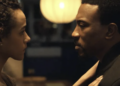
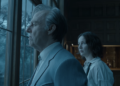
An adult man walks into his doctor’s office to receive a circumcision–it almost sounds like the beginning of a joke setup. Any man would be nervous to enter this office, but Alexander Saul’s film, Snipped, adds another layer of complication. His lead character is converting to Judaism but he realizes that his doctor is Muslim. There is tension in the air, but director Alexander Saul strived to create a film that bridges division in any way possible.
When a film is based on a personal experience, you can immediately tell. As Snipped unfolds, it does so in an authentic way, as if we are seeing Saul back in the doctor’s office waiting room.
“I’ve been working through my conversation to Judaism for the last few years,” Saul explains. “My father is Jewish and my mother is Christian, and, in Denmark, we only had one place where you can get circumsised and that was at a Muslim clinic. When I went in, I wasn’t afraid at all, but then, suddenly, it hit me with everything going on in the world. I got so paranoid, and I told Rebecca [Pruzan] about it–she saw the potential for a film. I was not proud of that paranoia, but I think that’s why a film like this is so important. I wanted to make something that works against the division in the media.”
Saul knew that his film had to take up both that real feel of tension while also leaning into the comedy of the situation. When you see any adult man bring up this procedure–whether in real life or in a film or episode of television–it is met with that amusing blend of fear and the funny.
“The subject matter is pretty funny, so when I directed it, the whole focus was not to play that,” he says. “I treated it as a serious film, because the subject matter has such a funny edge to it. If I went too serious, it would create more tension. You have to play the honesty of the moment. The comedy is already there.”
“We had one problem during filming and that was the sound of Alexander laughing, because we were ruining the sound,” Pruzan, a producer of the film, reveals. “With everything going on in the world right now, we understand how there is some reluctance and tension when people start watching the film, but once one person starts laughing, other people join in too. It gives people permission to enjoy it. In a lot of the screenings we’ve attended, the laughing is infectious and you can feel how it affects the room.”
Snipped showcases how our fears can take over our emotions. Leading up to this man’s procedure, he is handed an iPad with Fruit Ninja to distract him, but the idea of playing that game during that surgery (with those sound effects) is enough to break some of the viewers’ tension. Saul built an ensemble that’s more tightly bound than one might think at first glance.
 “I actually gave small direction to the actors,” Saul says. “Louis [Bodnia Anderson] and I know each other quite well since we worked on another film, but I just had to give some reminders in the moment. He would be lying back, and I was like, ‘Just imagine you have a blade aganst your penis.’ It was funny to give the direction since I’ve worked with them before. Louis has such strong comic timing.
We cast Louis first, and Rebecca and I had to put our heads together to find the actor to play his father. Rebecca actually suggested Nicholas Bro, who is one of the msot famous actors that we have in Denmark–I thought it was a long shot. Rebecca set up a meeting between us, and there was chemistry right away. Our personalities actually translated well from real life to the script. We didn’t have to work on creating the relationship between them, because it was naturally there.”
“They also look a bit like each other,” Pruzan says. “They truly became father and son, so it was hard to tell. When we drove to set in the morning, you could tell something was locked in between them.”
As one might imagine, there have been a lot of conversations after every screening of Saul’s film. Pruzan is thankful at how the film is reaching people and sparking chatter throughout this year’s short festival circuit, and Saul mentions some of the research they did to make sure that everyone felt welcome to laugh and experience Snipped as a uniting experience.
“We worked very closely with a political consultant, who grew up Muslim, who just knows a lot about this subject matter,” Saul says.
“It’s a relief that you can cover this subject matter,” Pruzan says. “It’s so sad to hear about what’s going on every single day. There’s so much hatred and conflict, so to have a film that, in a short time, can cover this tension from a positive angle is important to us. I have people coming up to us to say that this film is a relief for them. I think some people are surprised to learn how much research we put into this film, especially with the Muslim culture. Neither of us were raised within that world, so it’s not in our backbone. We’ve done our best to make sure that we are doing it with respect. Even the music was composed by a Palestinian lute player. When they worked with the Jewish clarinet player, the sound melded together, and it really felt like magic. This wasn’t a film about conflict, and we never questioned the authenticity on either side.”