The story of the Heaven’s Gate cult was well reported by news organizations and closely followed by true crime aficionados. The 2020 documentary series Heaven’s Gate: Cult of Cults received solid reviews and drew extensive viewership. Due to the cult’s ubiquity, one might think that a dramatization of one of the largest mass suicides (39 members took their lives) in U.S. history might be unnecessary. Having seen Cult of Cults, and now The Leader, I can say without reservation that The Leader is the strongest depiction of the events surrounding the group and their self-inflicted demise.
The Heaven’s Gate cult was started in 1972 by Marshall Applewhite (Tim Blake Nelson) and Bonnie Nettles (the great Vera Farmiga). The cult lasted until 1997, when Applewhite and 38 other members committed suicide through a toxic mix of alcohol and prescription medication. The tenets of their faith were an odd mix of new age philosophy and the belief that extraterrestrials would take them to heaven.
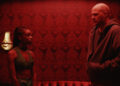
If you watched Applewhite (who went by “Do,” pronounced “doe”) and Nettles (or “T,” as she went by) speak to their flock, it would be almost impossible to believe anyone would follow either of them. Marshall comes off as a pie-in-the-sky optimist, which is fine, but he projects in a goofy, untethered-to-reality manner (Nelson absolutely nails his affect). Nettles, by contrast, is strident and almost entirely bereft of charisma. Yet somehow, his weird warmth and her force of will combine to create two halves of a compelling leadership base for those who fell under their spell.
And how do people buy into this? It’s easy for those of us who’ve never been at risk of falling into a cult to understand how others would, especially when the group in question seems so obviously off its head. To that point, there’s a scene midway through the film when the group’s most loyal member (well played by Jim Parsons) picks up two recruits on a quiet road in the dark of night. The man and the woman get into the backseat and strike up a conversation. He asks her, “What are you running from?” She looks back at him quizzically. He continues, “We’re all running from something.”
If we think of each of us as a small island floating through the world, many of these patches of sand and trees are made up of misfits. People who don’t feel they belong anywhere are desperate to find meaning and, therefore, susceptible to the sincerity and certainty of people the rest of us would laugh off with a wave of a hand. The need to be seen, to be cared for, and to have something to believe in cannot be underestimated.
A group like Heaven’s Gate has insular intentions. They may want to grow their ranks, but not to cause harm to others. They seek higher ground through the worship of an idea and those who espouse it. But in many ways, cults like Heaven’s Gate have several parallels with terrorist groups. Those who are radicalized are often alone, rudderless, and looking for purpose. That same confidence and belief that draws one into a cult is not so different than that which creates a terror cell. They all just want to belong.
For better than half the film, the cult comes off as, to some degree, fairly benign. That’s not to say any of the restrictions the members adhere to (strange diets, enforced chastity, abandoning their outside families) are healthy, but they are far from the worst of the worst…for a while.
Around the 100-minute mark, the film makes a turn into much darker territory. When one member breaks the vow of chastity, he commits to an in-house castration. Director Michael Gallagher juxtaposes the castration with Bonnie’s cancer surgery. Marshall and Bonnie repeatedly tell their members they control their “vehicles” (AKA their bodies).
In the case of the randy flock member, he takes control of his vehicle because he can’t control his vehicle as it is. As for Bonnie, well, her biology has made some decisions without her. In both cases, the flesh has been found to be weak, just in different ways. Bonnie’s cancer diagnosis unmoors Marshall and sends him spiraling to an even higher level of delusion. Yet. Despite how obviously his tether has weakened, the flock continues to follow. It’s as if they crossed a “no turning back” line long ago. Those remaining 38 probably didn’t even know when they crossed it.
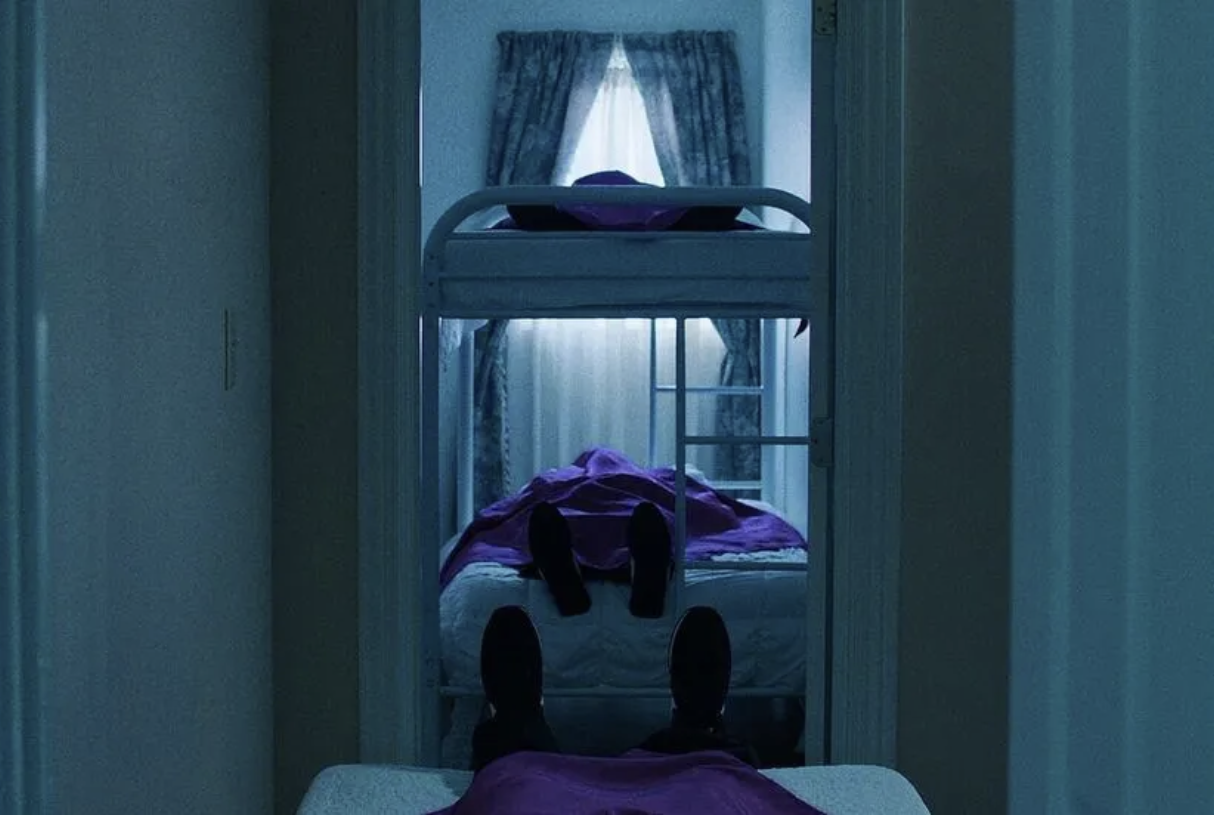
The final forty minutes of The Leader become something of a horror movie. Joseph Bishara’s pensive, foreboding score has been seeding the destination all along–creating discontent even when nothing overly dramatic is taking place on screen. When we finally arrive at the place we all knew we were going, we land on the moment with a hushed, exhausted sigh. Our shoulders drop, and our mouths gap slightly. “How could it have gotten to this point?” we may ask ourselves.
But the answer had already been given to us some time ago in the back of that car.
“We’re all running from something.”
Some of us just aren’t strong enough to run in a better direction.
Lou Reed once wrote and sang:
You know, some people got no choice
and they can never find a voice
to talk with that they can even call their own
So the first thing that they see
that allows them the right to be
why they follow it, you know, it’s called bad luck.
Damn bad.
The Leader screened at the Virginia Film Festival on October 24, 2026