Sound Mixer John Cook and sound editor and mixer James Parnell are having a great year. They both have been nominated for Emmys for their work on HBO’s DTF St. Louis and HBO Max’s Hacks. And James also has another nomination for Prime Video’s Fallout. With so many different types of shows, a different kind of soundscape was required for each of them, and they have to adjust to the rhythms of each showrunner. Being with the Hacks team the longest, they tell first hand how dedicated they are to getting everything right–from the big emotional payoffs to getting the perfect clap.
The Contending: You both did Hacks, a straight up comedy series and DTF St. Louis, a deep introspective drama. Were there major differences in how you approached them?
John Cook: Hacks tended to be a little faster paced with a lot of focus on timing, and DTF tended to be more moody and have a lot more space. That created different technical challenges and required more subtleties in taking care of dialogue to leave space for James to do his work.
James Parnell: Hacks is very strictly a comedy and the spoken word is where the jokes live. A lot of what I was doing was supporting the story, sound effects-wise, wherever I could. But then any time there was a joke where they wanted to make sure a punchline came across, I was steering out of the way of John. An example of this was if they were outside on the Vegas Strip joking around, I wanted to make certain that I wasn’t interfering with the lines of dialogue that were communicating the jokes. I was pulling back on city traffic or any additional noises like birds. Or if they’re in a restaurant, just getting the restaurant clatter out of the way to make sure that those jokes punched really hard. And I think one of the really cool things that John and his crew built up over the five seasons of mixing Hacks is when those music cues come in they hit super hard. You know, we’ve had our moment. We’ve established the jokes. We’re going to a new scene where you know Deborah or Ava is going to be doing something interesting. The music queues are louder than most shows with the needle drops.
I think that that is a different sort of dynamic than DTF, which as John was saying, is much more slow-paced. We really had moments between the lines of dialogue too steep in the sound design. As a listener of the show you get accustomed to the world of DTF St. Louis that we’re building. And tonally, it was a very different show because our three principal characters are all going through their own midlife crises. And I think the interplay between them and how they interact in the world is very different. If they’re in the grocery store we don’t have a ton of people talking to one another. It’s almost like they’re walking through this world sonically where you hear the sounds of the cash registers and the shopping carts. But there’s not a lot of hubbub going on. I think that really helps sonically to lean into this feeling of loneliness and isolation that you feel during those moments. I think that stripping out elements and playing up the subtleties, as John said, really leaned into this mood that our showrunner wanted to establish with the show.
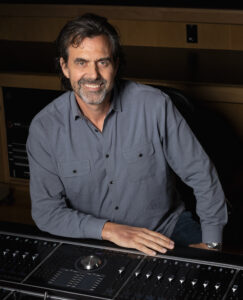
John Cook: I was gonna say that one cool through line that we’ve talked about in different interviews is that we have been working with the Hacks team for years and had built up trust with them. With DTF, it was a new client for us. So there was a building of trust and trying to understand what rules Steven Conrad was developing about sound and how it supports the story and trying to figure out that sweet spot for him. He definitely had a unique rhythm. He is very much a wordsmith, and there was this wonderful repetition of lines from his characters.
James Parnell: From a sound effects perspective it’s kind of adjacent to what John was saying, the way Steven would write. We would be in the interview rooms and Donoghue would say something like, “Okay, at 9 pm, you went to the Smernitch home.” Then Clark would say, “Yes,” and Donoghue would continue with, “So you’re saying when you went to the Smernitch home at 9pm you did this.” And then he would restate and restate. That whole time we’re stewing in that scene, feeling the intensity and awkwardness. That was our through line in sound effects to wherever we could to build that tension. Like when Floyd tells Clark he knows about the affair. They would be sitting in this vacant gym, and you’d hear a door close. Anything we could do to build the tension and up the stakes in those scenes was our directive.
The Contending: The episode of DTF St. Louis that got the Emmy nomination is where Floyd learns about the affair. It is also where we get the clips of him in the city as we’re finally building up to the reveal about what happened to his penis. Then there is one scene I remember with Floyd in the closet watching and then running out to save the blind man. Was there something particular about that episode that stood out for you guys?
James Parnell: That scene you mentioned I believe it’s Floyd watching Jason and Carol through the closet, and John’s certainly playing a lot with perspective on the dialogue, putting it outside the closet so you feel sonically with the ambiences like you’re in the closet with Floyd. Then the moment that he spots the blind kid who’s walking to his homecoming, he has to immediately interrupt and run out. Which, on a side note, this is the best episode to encapsulate Floyd’s character. Here he is wanting his buddy Clark to have this great experience, and for him to be a part of it. Something that’s so counterculture to anything that I think any one of us would be comfortable with. Then spotting someone who’s in need and rushing out and taking the time to guide him to where he needs to be, All the while just being totally okay with what’s happening in the hotel room.
In terms of the dynamics, there’s this big music moment, and then we dive right into this virtually silent moment with this kid who is both blind and also uses sign language to communicate. So we’re playing the Foley of the sound of the cloth and the hands interacting. Other than that, it is the music John’s playing, and the gentle laughing from the pool. I think it’s those moments of dynamics that really let you sink into the story and digest what you’re seeing on screen, and have the impact of a very stripped back soundscape that drives home this intimate moment between the characters and builds your fondness for them.
John Cook: In some of the interviews I’ve heard with Steven and the picture editors they like to talk about how you have this murder mystery. But ultimately all the characters, even though they’re flawed in a lot of ways, are sweet, kind people. A lot of their mistakes are just based on loneliness and a desire to be loved. That’s not necessarily a sound thing, but that’s part of why we picked that episode. That scene out by the pool shows off who Floyd really is and encapsulates all of those sweet parts.
James Parnell: That other scene you mentioned about him in the city, that was much more built out in terms of sound. You’ve got the sound of the train pulling in, birds going crazy, he walks out, there’s traffic everywhere. So it’s an interesting episode because it juxtaposes these fully built out sound moments and then these quiet ones.
The Contending: James, you have Fallout as well that you were nominated for. Anything you want to say about that?
James Parnell: So the whole world of Fallout is post-apocalyptic so everything needed to sound worn, rusted, and also have a fifties patina. It was just very busy from a track layout perspective. I had winds, and for every little gust of wind that would kick dust up, we had to have specific gusts of wind with dust attached to it, and do a lot of processing on the dust. Then weirdly, in one of the episodes, where they’re on the Alaskan front, taking those sound recordings and kind of de-clicking them to sound like snow, because sand can actually sound a lot like blowing snow that hits your face.
The Contending: The episode for Hacks that was nominated was The Garden. I remember it has Deborah walking through an empty Madison Square Garden with that wonderful music playing while accentuating that sadness, and then the devastating conversation she has with Bob Lipka. So we got this big emotional quiet moment, and then we end the episode, of course, with probably one of the loudest scenes in the history of the show. What can you tell about making this episode?
John Cook: Something I’ve talked about over the years about Hacks is that building the crowds is really important to me personally. So the Central Park concert at the end of the show was really fun to build out. It’s a pretty short scene, but making sure that the size of the crowd was conveyed properly came from building the proper loop group and sound effects that our sound supervisor, Brett Hinton, created for us. It created that immersive quality as well as the echo on Deborah’s voice as she tries to play Central Park. Those crowds were especially fun for me.
James Parnell: It’s funny, because the auditorium was the polar opposite. You’re expecting this roar of MSG and she’s walking down this empty hallway. So sound-wise it was just giving that hallway the right sense of space, putting reverb on her footsteps to really accentuate the fact that she’s walking through almost a deserted hallway with the exception of the popcorn vendor. Then with her walking up the steps and onto the stage at MSG, and hearing Bob Lipka’s hand claps just reverberating–that was a a bit of a dance between John and me figuring out what reverb he was using for Bob’s voice, and trying to match that sonic quality on the hand claps. It was like a combination of baking the reverb onto the file itself, and then adding additional reverb for the space. But making it feel empty and to feel Deborah’s ultimate low, and then at the end, her triumphant double middle finger to the man, was great fun.
John Cook: The Hacks creators were very specific about what they wanted in those handclaps. Brett went out and re-recorded the hands, because we tried to play Foley, and it wasn’t hitting, so we tried to play cut hand claps. Then it ended up being a combination of both of them. They were that dedicated.
The Contending: The finale of Hacks has so many great emotional moments with the actors. What was it like to work on?
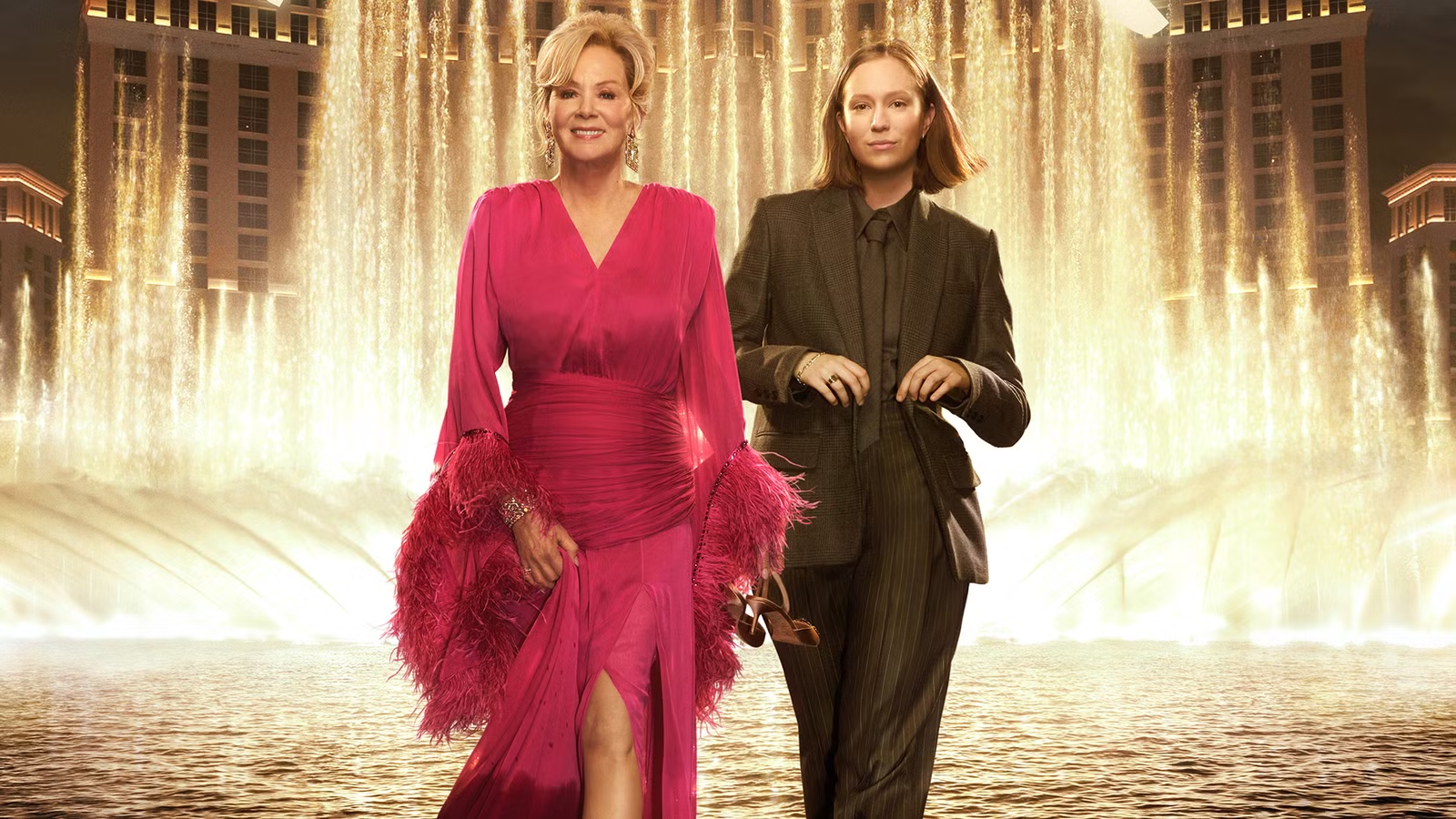
James Parnell: It was just wonderful to be part of it and help put it together. That whole ending when we are hearing Barbara Streisand and Judy Garland mashup up “Get Happy / Happy Days Are Here Again” as we see Deborah and Ava walking in Paris with that shot of the Eiffel Tower, and then zoom down, and we’re in Las Vegas with the shot of the Paris hotel. If you look at my Pro Tools edit session, there’s a ton of fantastic edits, where the Parisian bikes go by as they do their oner, and people walking and holding bread from the bakery. Then when we were on Las Vegas Boulevard with the Bellagio fountains going off and our sound designer Daniel Coleman cut every stream of the Bellagio fountains so it was accounted for. It really was a great scene to lean into the music and play up the kind of friendship that Ava and Deborah had.
John Cook: The opening scene was very nostalgic of the very first episode of Hacks, where Deborah does a performance and then walks backstage. So to do a new take on that with Ava, starting her career as a director, was really fun. Those oner scenes are always a good time, trying to make sure that the loop group is all right. It was a nice bookend with Ava moving up.
Hacks and DTF St. Louis are streaming on HBO Max. Fallout is available on Prime Video.