There are two things that I couldn’t help but connect in Lily Platt’s unexpected, disarming short film, Crisis Actor. When we are avoiding overwhelming emotions, sometimes we do things that we don’t even know we are capable. That can come in the form of lying right to someone’s face or simply making up yet another excuse to put off dealing with something we have been pushing off time and time again. The other is how our bodies don’t know when our minds are making something up or playing around. With its clever writing, Crisis Actor craftily reveals truths to its characters and its audience.
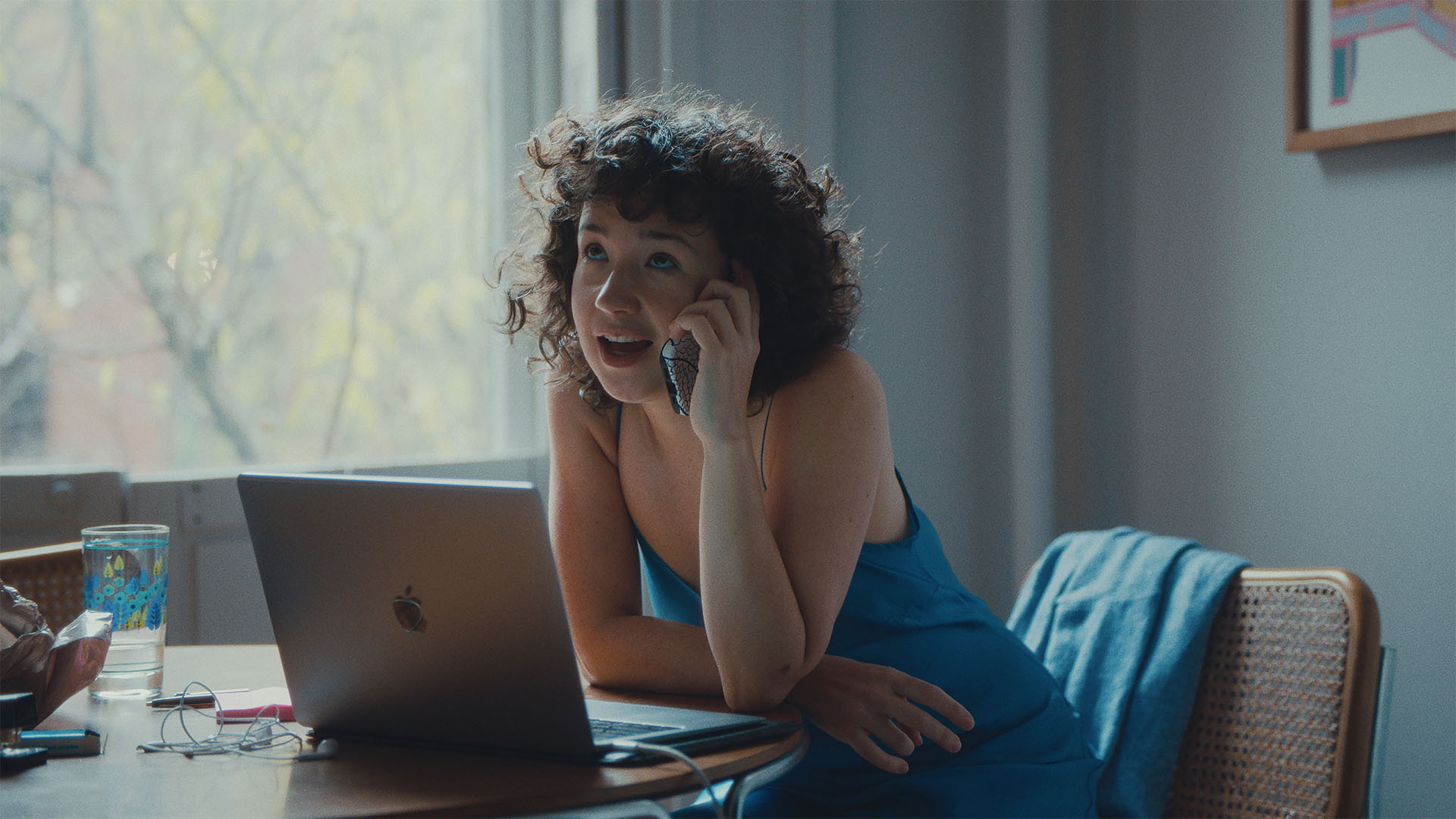
Sarah Steele’s Celine is still feeling the ripples of her break-up, but that isn’t going to stop her from having a little fun. Platt’s film opens with Celine disputing a credit card charge for a piece of lingerie that she’s literally wearing on her body. We control the things we can, don’t we? What’s a little chaos to take the edge off?
When we see Celine at a routine doctor visit, Platt really gets to flex her muscles as she balances tone beautifully. Celine receives a startling diagnosis, and she goes to pieces before hitting on the younger, good-looking doctor in the room. Everyone else can’t seem to contain their nervous laughter, and that’s when we learn that Celine is an actor “portraying a standardized patient.” As she deals with her own personal life, though, Celine is a bit of a loose canon, and she is anything but standard. When she stumbles into a random AA meeting because of a cute guy, Celine gets a reality check.
For the most part, Platt keeps her film light and colorful, and we wonder if Celine’s slight acting out is just a byproduct of how she feels or whether she needs a reality check. Steele has always carried an affability about her that makes people trust her on screen–we need another Nicole Holofcener collab as soon as possible. She wears Celine’s unpredictable edges well, and she and Phillip Ettinger have a curious, flirty chemistry together.
We tend to equate the small word “crisis” with something much more troublesome, but perhaps we should consider alternative outcomes. Can a crisis lead to a positive breakthrough?



![James Cusati-Moyer On the World Premiere of ‘Sacred Creatures’ at Edinburgh International Film Festival [VIDEO]](https://thecontending.com/wp-content/uploads/2026/08/SC_MicRay_10_Courtesy-Nicolas-Villegas-H-120x86.jpg)