Writer-director Zach Cregger returns with a twisted variation on classic fairy tales in Weapons. Check out our Weapons review!
By now, you’ve heard it: the least you know about Zach Cregger’s Weapons, the better. And that’s entirely true. Weapons unfolds like a classic Stephen King novel, one that’s impossible to put down until you know the secret at the end. So, naturally, you’re probably not going to want to read this analysis of the film until you’ve seen it. But once you have, come back and read my Weapons review.
Writer-director Zach Cregger (Barbarian) returns with a very special film that defies expectations at nearly every turn. You know the story. At 2:17am one night, 17 children run out of their house, arms askew as if pretending to fly, and disappear into the darkness. Weeks pass, and the tight-knit community is ravaged by the children’s sudden absence.
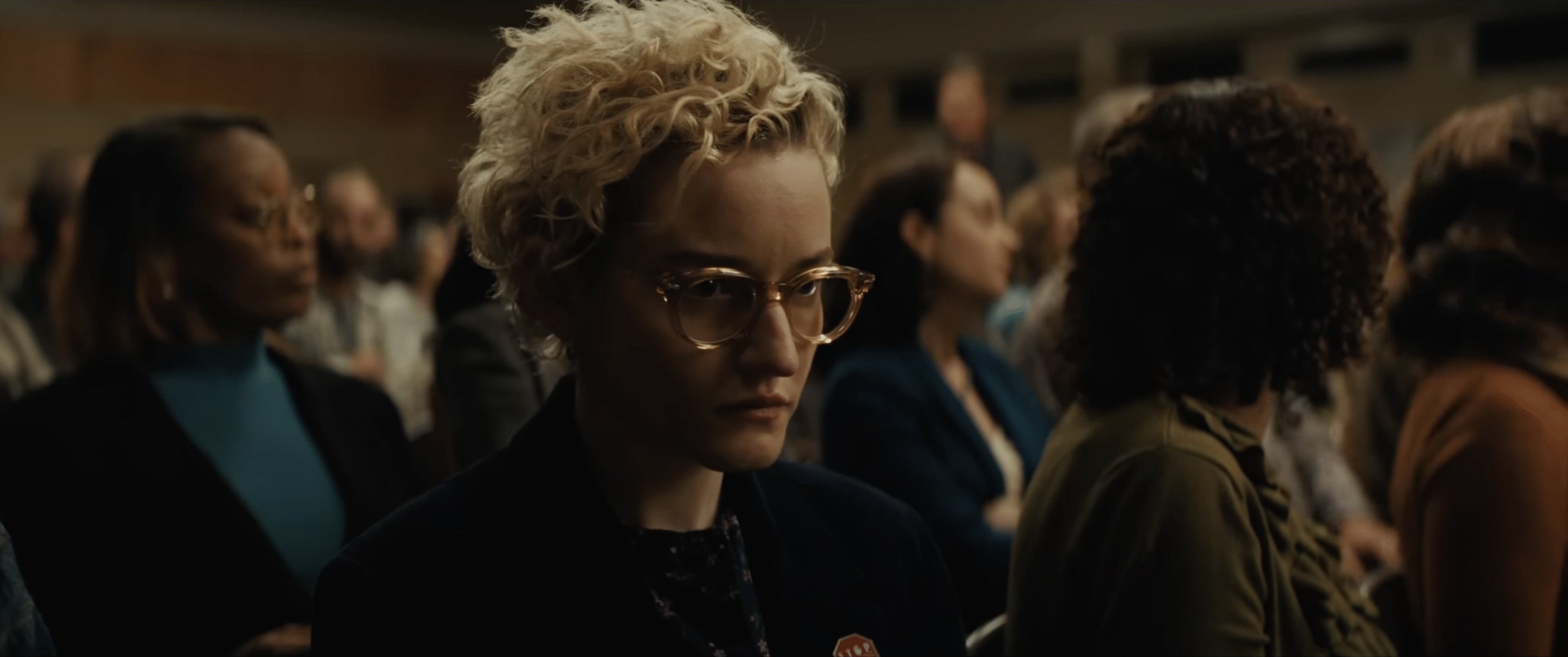
The first misdirection comes early. Based on the trailers, you’d think Julia Garner was the star of the film. As the teacher of all 17 children (one did not disappear), Garner becomes the object of derision and suspicion. Needing a scapegoat, everyone seems to blame her. However, the film takes a multi-layered approach to the material, more Paul Thomas Anderson’s Magnolia than Robert Altman. The main perspective soon shifts to other players in the drama: Josh Brolin’s broken parent, Alden Ehrenreich’s complex police officer, Austin Abrams’s drug addict, Benedict Wong’s principal, and eventually Cary Christopher’s Alex, the Garner’s last remaining student who may hold the key to the mystery.
And that’s all I’ll say about the plot.
What Cregger does here is slightly miraculous. He takes elements of classic fairy tales (the Pied Piper, Hansel and Gretel, etc), and layers them over a story about grief and trauma. His writing allows for ample character development akin to similar development in Stephen King’s novels. Each vignette allows both varied perspective of the central mystery and room for the characters to breathe. To show how they cope (or mostly fail to cope) with the children’s disappearance. His script, a complex puzzle box that gradually unfolds through the different vantage points, stands as one of the very best of the year.
His direction massages the script in intriguing ways. Like Barbarian, Weapons understands that the best horror stems from characters. He offers a few jump scares, but it’s largely not that kind of horror film. Rather, Cregger anchors the horror within the familiar, the mundane. That is until he lets loose toward the end, allowing the darker fairy tale elements to finally take control of the narrative.
Amy Madigan (Field of Dreams) shines in the latter part of the film as the more mystical elements take over. She plays Gladys, young Alex’s great-aunt who comes to live with his family as she can no longer care for herself. Madigan appears unrecognizable in elaborate makeup and cartoonish wigs and unsettles with her unsettling overt kindness. Yet, even as the plot veers toward the insane, she anchors events with a committed, fully realized horror performance.
But the real star of the film is Zach Cregger who solidifies himself as one of horror’s finest filmmakers. What he achieves here lives in a far higher place than Barbarian. Weapons is, in every way, a far better film. One that elevates horror to a darker, more sinister, more real place. By the wonderfully outlandish end (a big swing that avoids traditional horror clichés not everyone will appreciate), you’ll understand you’re in the hands of a master filmmaker. Even if you don’t know exactly what you’ve just seen, you know you’ve seen something special, and that is the greatest feeling of all.
Weapons screens in theaters nationwide.