In our The Housemaid review, Clarence holds up the Paul Feig-directed film to another high concept potboiler adaptation and finds it lacking.
Director Paul Feig envisions The Housemaid, based on the international bestseller by Freida McFadden, as a fun piece of high concept trash. That’s really all the source novel is — an addictive attempt at pulp fiction that propels the reader with meaty surprises and twists. So, it makes perfect sense that he would approach the material as such. Yet, despite good performances from largely miscast leads, you can’t help but imagine that The Housemaid could have been more.
I’m not saying Feig could have performed alchemy as Francis Ford Coppola did by fashioning The Godfather from its pulpy origins. But I do think the right director could have elevated the material in a similar way that Barbet Schroeder did in 1992 with Single White Female. Pulpy trash films can aspire to pulpy trash art. Feig, himself, approached pulpy trash art direction with A Simple Favor. Whatever inspired him in that Anna Kendrick / Blake Lively confection feels sadly absent here.
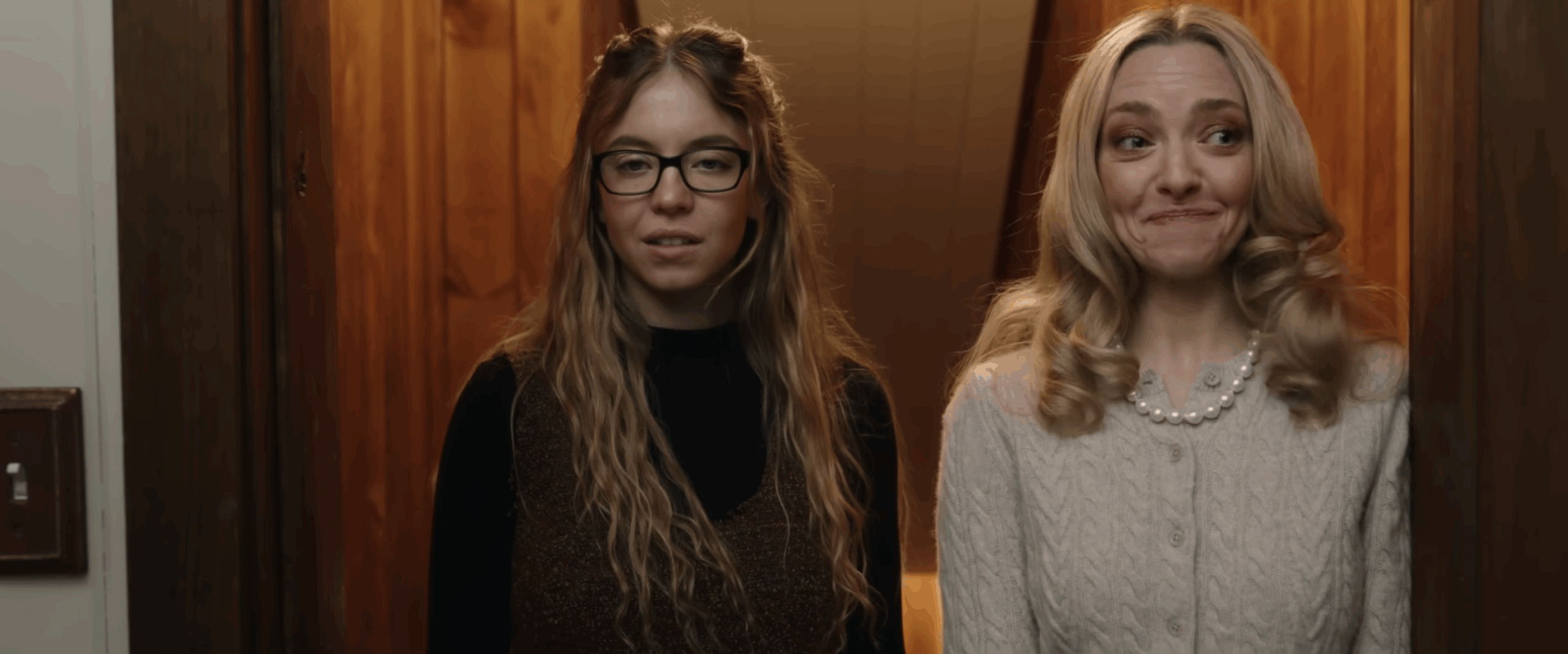
The Housemaid stars Sydney Sweeney as Millie, a young woman with a past applying for an unlikely position as housekeeper for the Winchester family of Long Island. Nina Winchester (Amanda Seyfried) initially appears sweet and unexpectedly kind. Of course, as Millie wins the coveted job (she’s living in her car and the job affords her the opportunity to live in the Winchester estate), things begin to unravel. Nina appears severely bipolar, and her bitchy / campy friend circle doesn’t hold back in gossiping about her stint in a mental hospital. She torments Millie, giving her conflicting assignments, accusing her of stealing, and destroying the house at every opportunity. Somehow, the seemingly incredibly understanding husband, Andrew (Brandon Sklenar), looks the other way as Nina continues to rage against Millie.
But as is typical with these things, there’s far more going on under the surface.
Look, I’m not going to tell you that I didn’t have fun watching The Housemaid. Even though I’d recently read the novel, there’s still a campy thrill at watching Seyfried hurl milk cartons or plates across the kitchen. My initial problem with the film existed in its wildly miscast main trio. All give fine performances, particularly Seyfried who confidently uses her large eyes to convincingly portray someone who may be completely insane. But none feel right for the material. Feig and screenwriter Rebecca Sonnenshine omit a vital trait in Nina — her deliberate larger size. I imagine they didn’t want to engage in “fat shaming,” but by casting a very petite Seyfried, they compromise the hellish and ludicrous depths at which she’ll go to… well, let’s just leave it at that.
On paper, Sweeney brings what she needs to with the role. Millie needs to be attractive and desirable but a little bit unhinged. A little bit of a loose cannon. And Sweeney delivers on that front, but she doesn’t have the capability as an actress to bring anything else to the material. She’s innocently seductive when she needs to be. She’s sad and flabbergasted with gusto. And she of course oozes sexuality. But there’s nothing beneath that surface. Finally, Sklenar brings the necessary good looks to Andrew, but he, too, feels miscast. He’s much more suited to the outdoor ruggedness of his role on 1923 than to the waspy New England tech bro he’s supposed to play. The novel’s Andrew lives in fear of compromising his mother’s (here played by the great Elizabeth Perkins) exacting appearance-based standards. Andrew should be good looking but not nearly as jacked as Sklenar is. Think a more conventionally good looking Tom Hiddleston. Sklenar’s physique makes the film’s wild ending, entirely different from the novel, physically impossible.
Feig, too, feels ill-fitted for the material. Far more suited to comedy, he seems to want to bring a winking love of camp to this material as he did to much greater effect in A Simple Favor. But for the majority of the film, he keeps it very straightforward. You can feel his inner struggle with how to treat the material, and he chooses the blandest path possible.
That said, the film is still fun. It just could have been so much more. Barbet Schroeder took a similarly trashy page-turner novel (SWF Seeks Same by John Lutz) and elevates it into a “roommate from hell” minor classic of the early 1990s. Granted, I believe he was inspired by the depths at which co-conspirator Jennifer Jason Leigh took her role. There, no one seemed to tell Leigh the film was trashy, and she attacked it with a vigorous fervor. She should have been nominated for an Academy Award, in my opinion. She’s so good that she elevates those around her, allowing Schroeder to explore a compelling narrative in high art fashion. It’s a very trashy film with ludicrous plot turns, but it all works in a trash art context.
The Housemaid needed to go deeper. It needed to not be afraid to insult. It needed to revel in the oddities of the wasp culture. Instead, Feig plays it safe, fashioning an enjoyable film that never dips beneath the surface.
The Housemaid plays exclusively in theaters nationwide starting December 19.