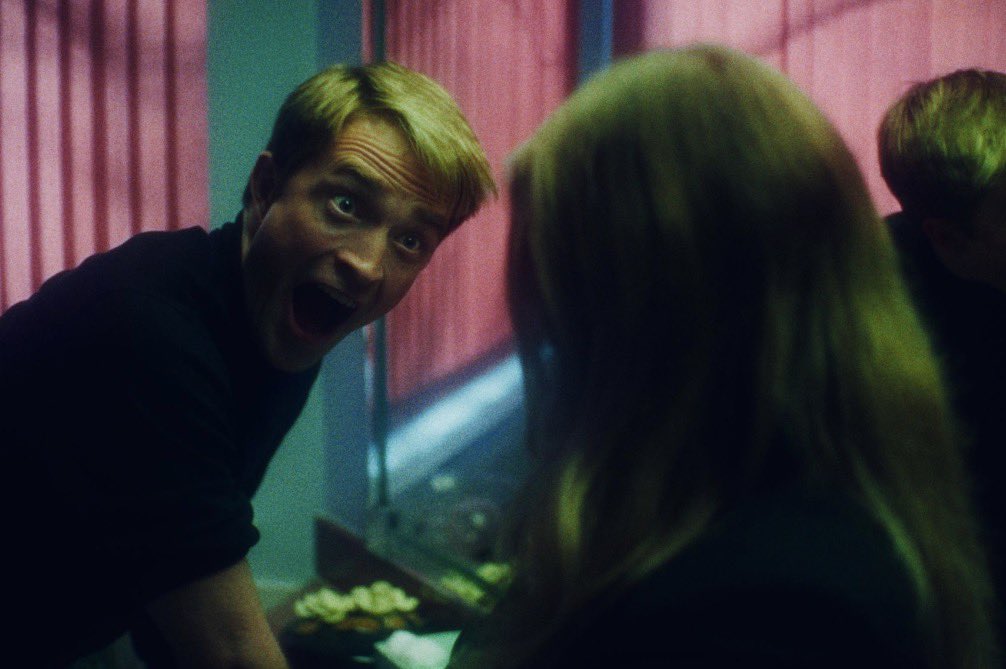
Production sound mixer Chris Welcker talks to The Contending about his work on ABC’s What Would You Do? helped steer the sound in A24’s Primetime.
Chris Welcker is game for any kind of sound project. From Daisy Jones & the Six to The Thing about Pam, to even his Oscar-nominated work for Sinners, Welcker is interested in projects that push him, and Lance Oppenheim’s Primetime offered a new kind of challenge.
“I think my biggest thing is looking for projects that are a little bit more than just like the typical dialogue recording,” said Welcker. “Something that adds a little interest and complexity and requires more thought. So music movies tend to be a big one for me. I really love working on musical projects, but anything where there’s a unique perspective that I can bring to the project that is what I look for.”
While it isn’t a musical project, Primetime offered something unique to Welcker, working with a cutting-edge director’s depiction of the blurred lines between TV and online predators.
“It’s cool working with a first-time director for a feature film. [Lance] brings a very unique perspective coming from his documentaries. And his documentaries are so bizarre and interesting. Having an opportunity to work with somebody with a unique kind of vision is always cool. I feel like reading the script and understanding what he was going for with this project gave me opportunities to think outside of the box.”
Connecting What Would You Do? to Primetime
And Welcker’s ideas were well-received, as he got to implement some experimentations into the To Catch a Predator sound. He would know what reality TV sounds like, since he worked on ABC’s What Would You Do? (yes, the very show that tried to steal Merritt Weaver’s Andie in the film).
On What Would You Do?, Welcker says they paid actors to take up space so they could put the mics in different areas, with these extras essentially becoming moveable recording devices.
“One of the things I remember [about working on that show] is just making the sound for people who aren’t aware they’re being filmed. You want to get as good, as clean, recordings as possible. But the nature of it is that the recordings are not going to be great. You’re going to be relying on subtitles a lot of times, too. You kind of know there’s a strategy to whatever the story is that they’re trying to create and what they’re trying to capture. And so by knowing that, you know there’s going to be an entrance of this person and then they’re going to go to this area.”
Welcker simulated low-fidelity sound to add authenticity, to make the audience feel more immersed and to lean in a little bit harder to hear things.
“The cool thing about this project is that because it shifts, it’s not just a hidden camera. But as an audience member, you’re now in the hidden camera world. To create that sound that can shift along with the image was a big goal of mine. And then there’s the crew that’s actually shooting the To Catch a Predator show. We played a lot of those recordings of the hidden camera stuff through a speaker that was played in the room, so then we were capturing it in the hidden camera stuff in another sort of lo-fi way but in that sonic space of the feature film world and then capturing the dialogue at the same time. It’s a nice little merging of the two sonic worlds.”
Primetime Baseball Scene Almost Struck Out
What was Welcker’s most challenging scene? Surprisingly, it was the rooftop catch, where Chris (Robert Pattinson) and Decoy Dan (Skyler Gisondo) toss a baseball back and forth in a windstorm.
“You could hear the chain, like the chain link fence that was just in the background, rattling constantly. And everybody was a little concerned, ‘Are we going to have to replace all this dialogue?’ We pulled all the tricks out of our bag to be able to record that one. Working with the camera team and the costumes department to be able to hide a microphone that had kind of a crazy amount of wind protection on it, just so we could get those close-up recordings of Rob’s voice and have that really intimate kind of feel that that scene required. That was probably the most challenging one.”
Primetime is in theaters.