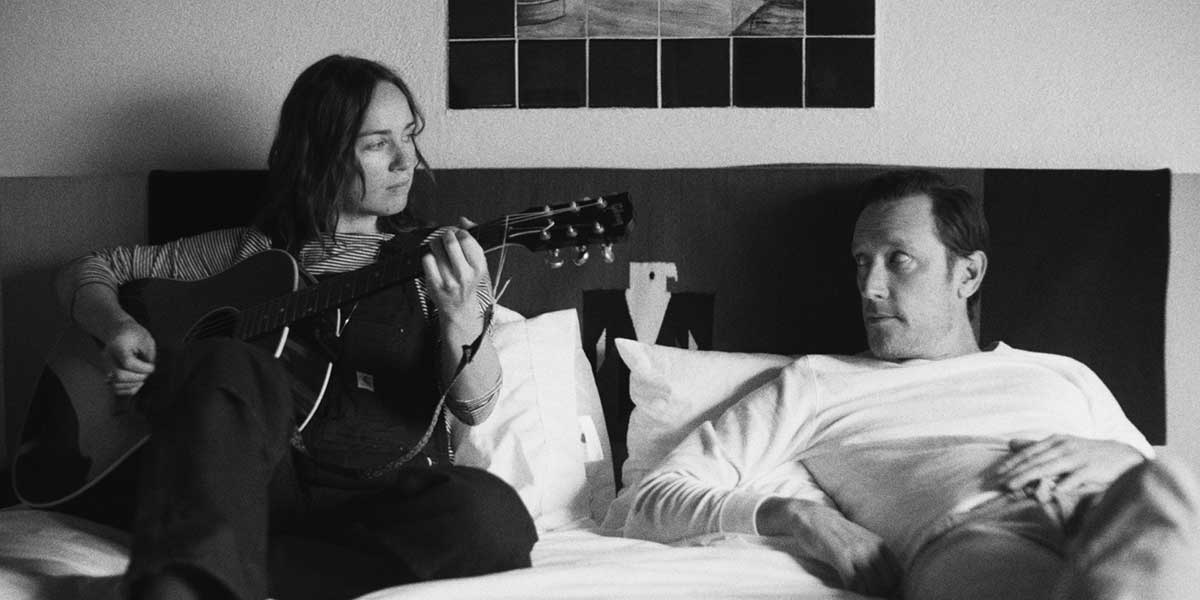
“We fell in love hard and fast,” says Zella Day in the opening conversation of Andrew Morgan’s Bleeding Hearts, but the candor doesn’t stop there. Day’s relationship with musician, collaborator, and partner, Jesse Woods, feels like something very easy to discuss openly, as if they are prepared for everyone to constantly ask them what it must be like love one another while they write music that may or may not reflect that love. Is there a clear point where romance begins and the working relationship takes over? Or does it meld together easily into one large beating ball of emotion? Morgan’s film is refreshingly honest and wildly enrapturing, as it reinforces the notion that putting yourself on the line can lend itself to the purest form of creation.
When you listen to Woods and Day perform together as Chapparelle, the band they created alongside producer Beau Bedford, their voices melt into one another like a much-needed embrace. Their tones glide and push up into each other like lovers tumbling down a picturesque scene or like a rushed kiss as you fumble for your keys to get some privacy inside–hey, it all depends on how you want to view that kind of affection, right? It’s remarkable to hear Woods and Day singing separately throughout Bleeding Hearts, proving that our identities are completely our own until we meet someone who can yank a new kind of sound out of us. “When you’re falling in love, there’s this process of shutting out the world and creating your own,” Day says. “We really created a soundtrack to that time.”
This pair speaks so plainly and positively about one another before we delve into their pasts. Woods–tall, soft-spoken, and stoic–refers to Day as the most positive person that he’s ever been around. We hear him mostly in voiceover, we can hear his eyes growing wider in fondness of her. “She’s a force of nature,” he says, and we can see that every minute she’s on screen. Day expresses that she never feels like she has to lessen herself in order to fit into Woods’ life. He just lets her be–the kind of thing we hear when couples have such comfort around one another.
Zella was a success before the age of 20 when her first album was released after venturing off to Nashville to play for producers–all before she could even get a driver’s license. She admits that everything in her early career felt too produced and when we see images of her younger self, we almost don’t recognize her. Day walked away from Coachella and guest spots on Conan, because it didn’t feel like she was going in the direction that she wanted–she was capable of so much more. She later admits that the more she inches closer to that authenticity, the more centered she feels.
Jesse grew up in the church and rarely listened to secular music, but when he saw Michael Jackson on television or heard Nirvana on the radio, it inspired him to play the guitar and write songs. “I wanted to find something to do for a living that felt like every day your job was to be inspired.”
The creation of Chapparelle, according to Day, feels like a safe place, but Morgan’s film is wise to allow the stress of a tour and an album release trickle into this kind of narrative. She reveals to us that she wishes that he would be more excited for things for them as a couple, and he tells her that he isn’t going to plan out every small thing to say to the press. You cannot grow or learn more about yourself without friction, and Morgan’s film doesn’t fool us by only showing us the sunny sections of a traditional love story. They worry about the financial strain of the tour and Bedford worries if creating a musical group with a real-life couple could get messy if the couple breaks up. The film is not naive or gullible as we see Day and Woods in the midst of conflict but Morgan has a knack for capturing intimacy like when we see them quietly apologize to each other before they go on stage for a performance.
Gorgeously shot in black-and-white, Morgan’s film, lensed by Helen Cassell and Lance Kuhns, never sacrifices grit as we go through the 70-city tour and spend time in recording studios and travel by car. I even equated the white of the photography with the brightness of love’s possibility but the darker hues remind us that nothing can every be too rosy or sunny. Seeing Day record “Heart Broke Holiday” is one of the doc’s many musical highlights.
Do you have a favorite song about love? How has that song changed as you have gotten older or your relationship circumstances have changed? Music can become such a deep part of us that we feel it in our bones, and Bleeding Hearts goes one step further as we witness the deep meaning by such a loving partnership. Morgan’s film is an exhilaratingly compassionate and inspiring story about how the stories behind the music are even more meaningful.