
Had I not known that Hulu’s Furious was loosely based on Black Widow, a mostly forgotten potboiler from 1987, I would have scarcely believed it. Directed by Bob Rafelson, Black Widow told a noirish tale of a federal agent (Debra Winger) tracking a woman (Theresa Russell) who married rich men who suddenly die. It’s a dirty little noir with psychosexual overtones.
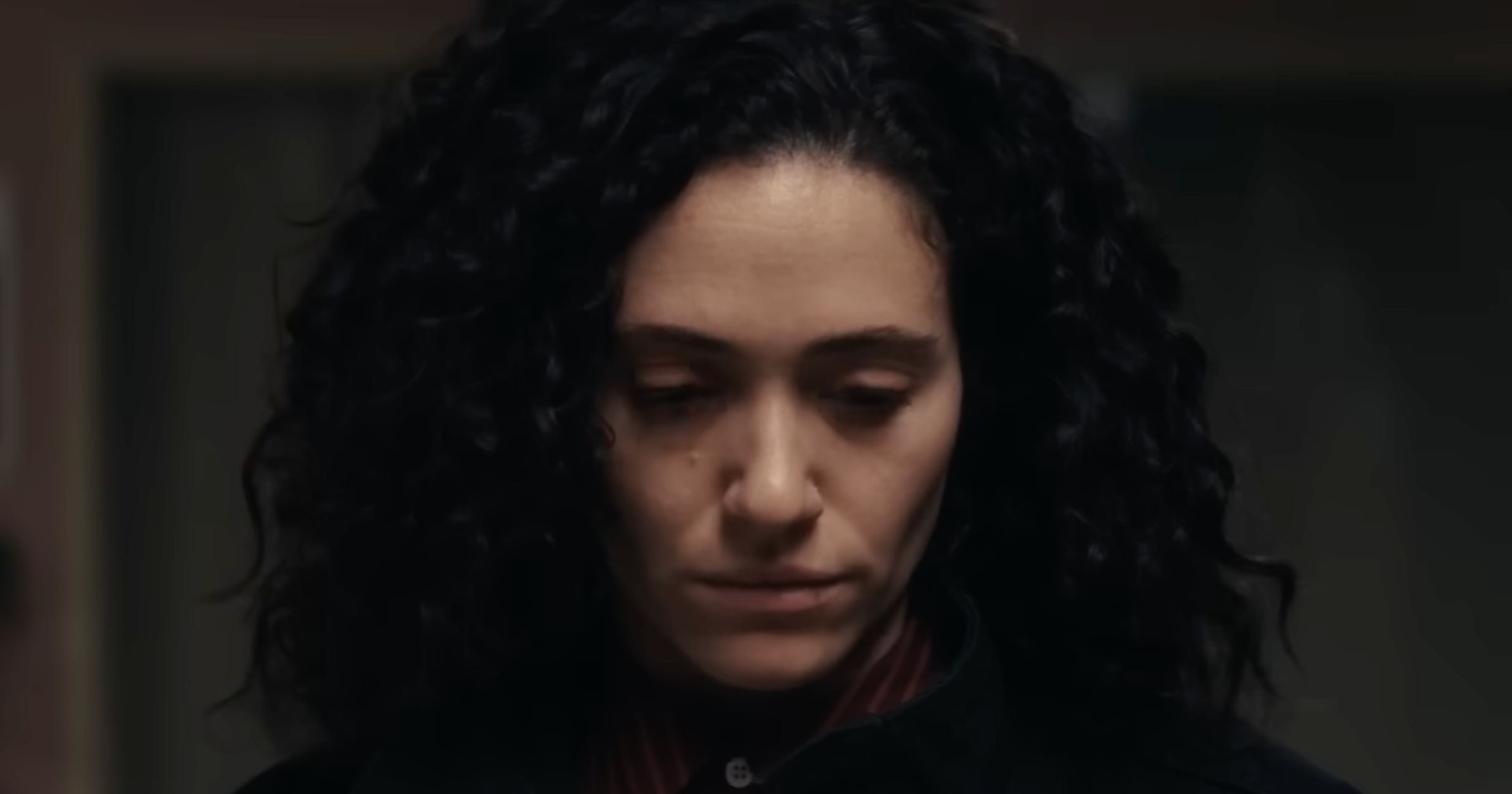
Furious stars Emmy Rossum as Alice, an FBI agent tracking a young woman named Catherine (Lola Petticrew) whom she suspects of killing powerful men. But that’s where the similarities end. Alice may be on the hunt for a man-killer, but the motivations are completely different from those in Black Widow. Catherine is hunting men who took part in an Epstein-esque sex trafficking ring that she was a victim of. She isn’t a murderous gold digger; she’s an avenging angel. At least that’s how Alice comes to quietly see Catherine over the course of the series. Alice has more than just sympathy for Catherine; she has a budding admiration.
Alice’s growing affection for Catherine comes in no small part from being taken advantage of as a teenager. Tragically, Alice’s damage extends into adulthood. After being abused by her ex-boyfriend (Jake Lacey), an NYPD detective, Alice finds men on dating apps to rough her up before having sex. It’s the only way she can get off. One of the most moving scenes in the early part of Furious takes place when her quasi-partner on the case, an NYPD detective (played by the ever-reliable Scoot McNairy), sits in her bathroom while she showers. The shower is the place where her ex-boyfriend would attack her, and she doesn’t feel safe getting clean.
If this all sounds quite lurid, I understand. There’s really no way of contextualizing the basic story of Furious without making it sound as such. What allows the show to rise above its pulpy description is just how seriously it takes female trauma. Catherine and Alice are victims, and their injuries never stop hurting. Yet, in each their own way, they fight back against the world of men, just on different sides of the law. As Alice, Rossum finally finds her second career-defining role after leaving Fiona and Shameless behind in 2019. Whatever bruises Alice has suffered, they pale in comparison to the wounds she carries beneath her skin. Petticrew, who was so marvelous as an IRA member in 2024’s Say Nothing, completely sheds her Belfast accent, proving themself as an actor with extraordinary range. Catherine is no supervillain; she’s not even a villain. She’s an achingly vulnerable young woman who sees the men that abused her and says, This far. No Further. The back and forth between Petticrew and Rossum is masterfully acted, as they see more than a little something of themselves in each other.
It would be saying something if one were to recognize Rossum’s and Petticrew’s characters as two of the most well-drawn and fascinating female characters in recent memory. But Furious doesn’t stop there. Quincy Tyler Bernstine gives a flat-out stunner of a performance as Nora, an alcoholic mid-level FBI agent who both supports and undermines Alice. While I’ve seen Bernstine in a few productions before, nothing prepared me for her stoic, barbed-wire line readings here. Nora is a true original character, and Bernstine plays her to the hilt, in a bravura performance that is a genuine high-wire act. There are so many moments when Bernstine could have overplayed her hand, slipped into caricature, or unintentional comedy. Never once does she.
Furious was created and co-written by the brilliant showrunner of Dying For Sex, Elizabeth Meriwether. As in Dying For Sex, Meriwether proves herself a subversive talent who can upend the tearjerker genre as well as the thriller. It’s no surprise, considering Meriwether’s background, that the female characters are well drawn, but it should also be no surprise how well the male characters are written. McNairy gets plenty of grace notes as Rossum’s partner and confidant. In the finale, McNairy’s detective states that the only thing he’s ever been good at is looking at things that other people can’t. But the images of the worst of life have made him weary, and you can hear it in his voice and see it in his face.
With The White Lotus, All Her Fault, and now Furious, it appears that Jake Lacey has cornered the market on handsome assholes who not only work out a lot, but aren’t as smart as they think they are. His ex-boyfriend, who uses any means at his disposal to get to Alice, is another arrow in his toxic quiver. Better still is Steve Way as Alden, Catherine’s boyfriend of a sort. Way lives with congenital muscular dystrophy, and while he and his character may be confined to a wheelchair, that doesn’t get in the way of him giving one of the best (and drollest) performances of the year, as a man whose body may be a cage, but his mind is as sharp as a rapier. Alden knows he can never have a conventional physical relationship with Catherine, and he also knows she is into something bad, but just as she accepts him, he accepts her.
The 2026 Emmys haven’t even been announced yet, but Furious has already laid down a marker for 2027. I don’t know if I can even count all the categories it might compete in, but the number is well into the teens, at least. Furious is a staggering work that bends rationale and viewer expectation at will. There are scenes of black comedy (much of it supplied by Bernstine and Way) that are worthy of spit takes, and drama that makes you hold your breath. It also has a willingness to take chances, right down to the final shot, when a knowing smile is shared between two women intent on breaking more than just a cycle; they are out to break the wheel.
In the best possible way, Furious is a weird show that feels like nothing else on television. As it lurches and leans, simmers and boils, and whispers and howls, running the full gamut of the storytelling spectrum, I felt nothing less than awe. This show takes massive swings and somehow connects every time. If there is a better series that debuted this year, I haven’t seen it.