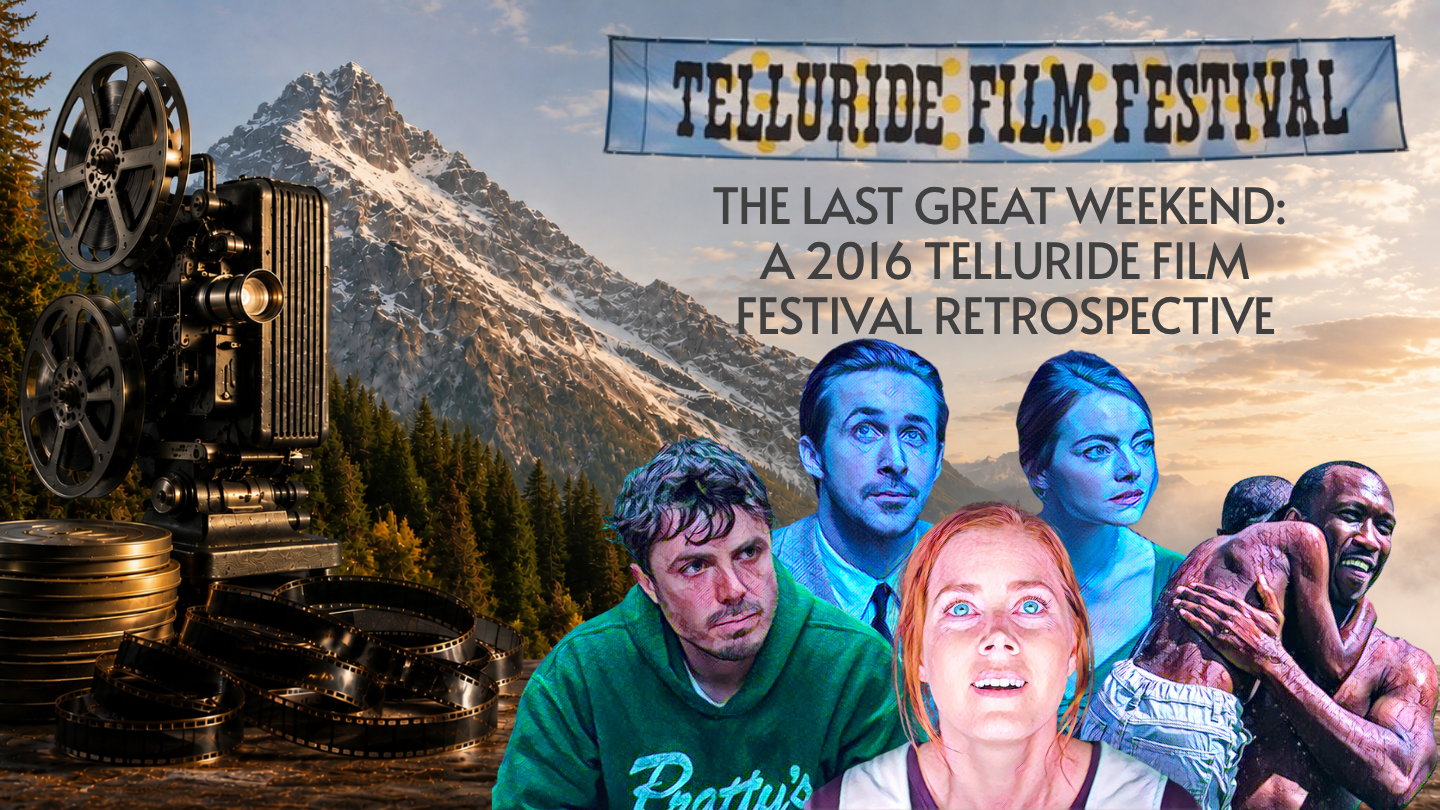
Some festivals you cover. A rare few you carry with you for the rest of your life.
Ten years on, the 43rd Telluride Film Festival is less the memory of a quick visit to the San Juan mountain village and more a reverie I can still wander back into every so often.
From September 2 through 5, 2016, that little mining town at 8,750 feet did something I’ve never quite seen it do before or since: it put four films destined to become modern classics on screen across a single long weekend. La La Land and Arrival rolled into town fresh off their Venice bows. Manchester by the Sea arrived as the Sundance heartbreaker everyone was already whispering about. And Moonlight quietly, almost secretly, held its world premiere. We didn’t know yet that two of them would end the season at the center of the most infamous envelope mishap in Oscar history. We only knew, sitting in those dark rooms, that we were watching something we didn’t yet have the words for. You could feel it moving through the room before anyone could name it.
I can’t explain why that festival stayed with me without admitting what else was happening at the time. 2016 was the year everything in my life seemed to break right at once. It was the year my hometown Cavaliers finally ended Cleveland’s long championship drought, the year I built a home, the year my writing career started to feel like it was taking off. It was, plainly, the best year of my life. And it was easily the best year Telluride has offered since I started covering the festival in 2015. A decade later, I still find myself circling back to those four films, trying to understand what made that weekend so special.

Some films comfort you. Manchester by the Sea does something braver: it sits with you in the grief and refuses to look away. Manchester had already premiered at Sundance that January, but in the thin mountain air of Telluride, it played like a wound reopening. Kenneth Lonergan’s film peels back its grief in onion-level layers, revealing one tragedy after another until you finally understand the full weight of what Lee Chandler (Casey Affleck) is carrying. And yet there is something almost unbearably beautiful in its honesty, in the way it sets that grief against the gray Atlantic light of Cape Ann and the North Shore of Massachusetts Bay.
Affleck gives a performance that remains unmatched in the decade since. His Lee is a New England handyman hemmed in by a guilt-ridden past and an uncertain future, a man who has decided that some things cannot be survived, only endured. The film’s most quietly devastating moment comes when he admits to his nephew, played by Lucas Hedges, that he can’t beat it. There is no breakthrough, no repair. That refusal is the whole point. This is not a film about getting over something. It is about finding a way to keep living inside the grief, and that honesty is what makes it Lonergan’s defining masterpiece, honored soon after with a well-deserved Oscar for Best Original Screenplay.
Affleck received one of the three Silver Medallion tributes handed out that year, and I was in the room to watch Lonergan present the honor to his star. Affleck spoke about working construction during high school, admitted he can hardly stand to watch his own films once they’re finished, and said his favorite part of the work isn’t the shooting at all but the conversations between takes, sitting with the cast and director, peeling back the mind of the character he’s playing. It was a telling admission from an actor whose greatness lies in exactly that excavation. A few months later he would win the Academy Award for Best Actor, one of the most deserving wins the category has produced this century, and a reminder that he is among the greatest actors of his generation.
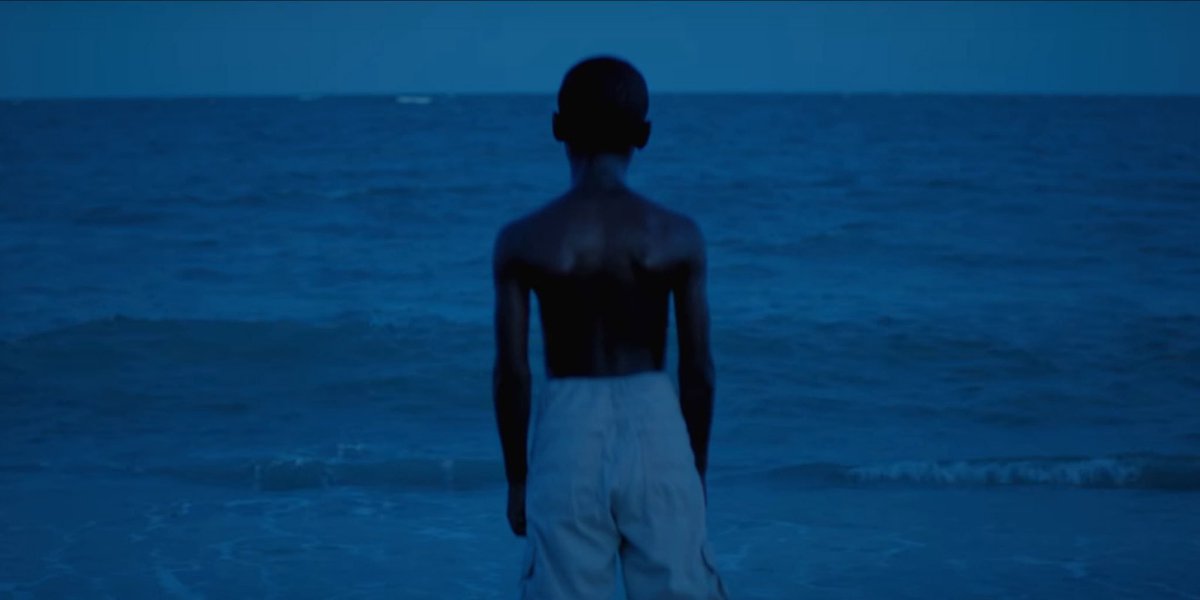
If Manchester was the wound, Moonlight was the revelation. Barry Jenkins had been part of the Telluride family for roughly fourteen years by 2016, first as a participant in the Student Symposium, then as a staff member, and eventually as a festival emcee who moderated Q&As, hosted discussions, and helped curate the short-film programs. So when Telluride’s own brought his baby home to make its world premiere, it was nothing short of special. To have been part of the very first audience to see this film is something I will always carry with me.
Moonlight is an extraordinary, deeply personal story told with remarkable intimacy, empathy, and artistry. The way Jenkins transforms Chiron’s journey through identity, masculinity, sexuality, and belonging into something at once so specific and so universal is what made it a defining classic. Its three-act structure lets us watch a life take shape through moments rather than plot, a boy becoming a man in three luminous windows. James Laxton’s cinematography and Nicholas Britell’s score are dreamlike and haunting, lending the film an emotional texture you feel more than watch, most notably the use of blue against black skin in the moonlight, an image I still return to.
The performances feel lived-in rather than acted, none more so than Mahershala Ali’s, whose presence is felt far longer than his brief screentime should allow. As the father figure Juan, he embodies the quiet, immeasurable importance of a good man in a boy’s life, and he would go on to win the Academy Award for Best Supporting Actor. What I reflect on most, though, is that final diner reunion, two grown men circling the tenderness they were never allowed to name, saying everything by saying almost nothing at all. It is Moonlight in miniature: restrained, aching, and unforgettable.
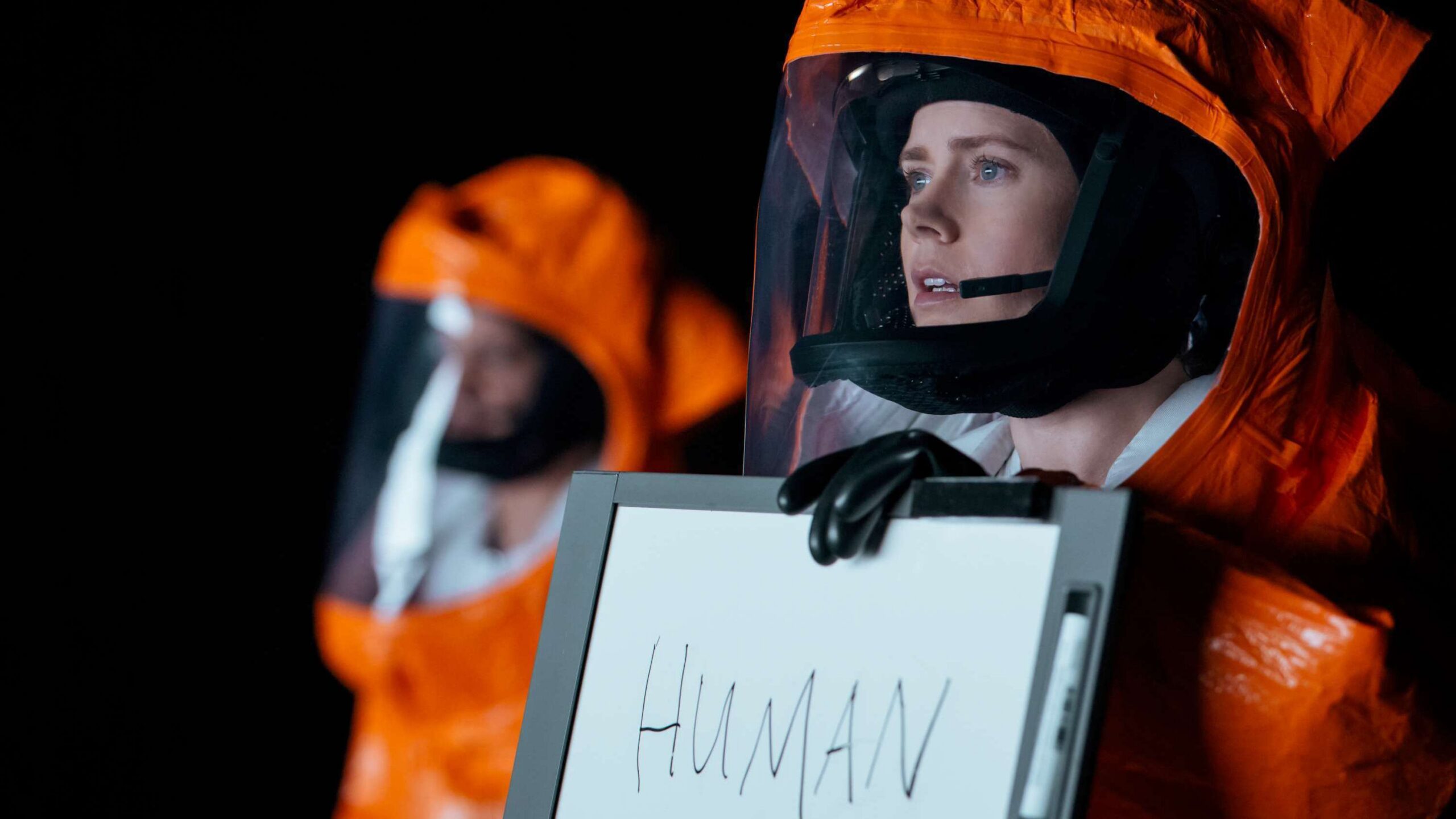
One of my favorite memories of that weekend was the Amy Adams tribute. She was there to receive one of the three Silver Medallion honors, and I was lucky enough to be in the room. She spoke about how much she loved working with Denis Villeneuve and said Arrival was one of only two scripts she had ever read and instantly known she had to make. She loved Louise, describing her as somehow every woman and, in a way new to her, a reflection of herself. She talked candidly about her process, calling the level of preparation almost worrisome, with the lost sleep and forgotten meals that came as she disappeared into a role. And she left us with something like a blessing: a reminder not to let the small things that don’t matter weigh you down or keep you from your joy.
Then we saw the film, and her words hung over it. Because Arrival asks that very question, only bigger. If you could see the grief coming, every joy and every heartbreak laid out in advance, would you still choose the life that leads there? Villeneuve builds the whole film on time itself, opening with what appear to be flashbacks before gradually, breathtakingly, revealing them to be something far more profound. It is masterful storytelling, using its ambitious structure not as a puzzle to be solved but as a way to make us experience Louise’s understanding of time alongside her. As she learns to decipher the heptapods’ circular language, she begins to experience her entire life at once, and the film gradually turns its science-fiction premise into something deeply human. It is cerebral without ever becoming cold, exploring love, loss, and the choice to embrace a life even when you know how it will end. Watching it that night, surrounded by people discovering it at the same moment I was, I kept thinking about Adams’ words about joy and the small stuff. The film landed with a weight I don’t think it would have carried anywhere else. It remains, to this day, the career-best work of both Adams and Villeneuve.
I’ll say this much as a critic: Adams gives a gut-wrenching performance that confirms, like Affleck, that she is one of the finest actors of her generation, and that the Academy left her off its ballot remains, in my eyes, the most egregious snub of the century. I’d argue she should have won that year, if not for another brilliant turn from a fellow redhead. But what I carry from Arrival isn’t the review. It’s the memory of hearing her talk about disappearing into a role, and then watching her do exactly that, in a dark mountain theater, surrounded by people who knew they were seeing something rare.
And then there was La La Land.
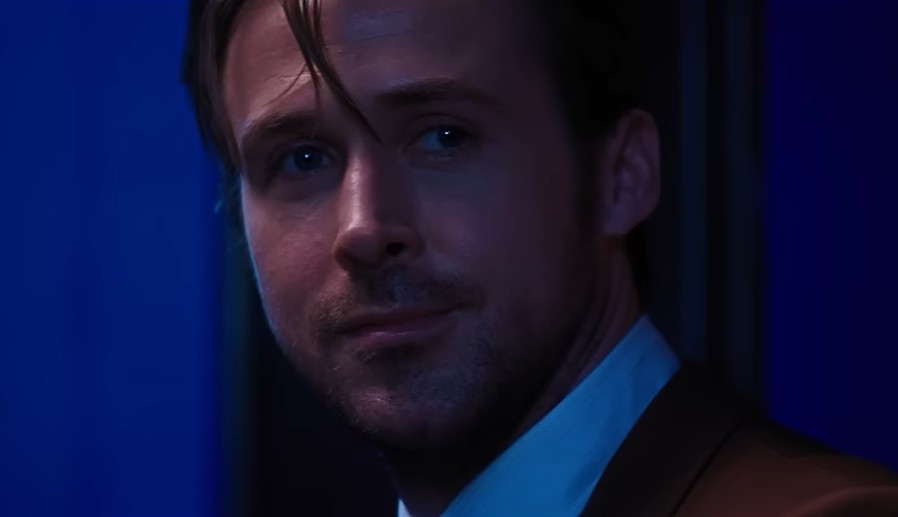
I have spent a decade telling anyone who will listen that this is the best film I have seen since 2007, and I rewatched it recently, as I did with the other three, fully expecting it to hold up. It more than did. La La Land still has every ounce of the magic it held that night in Telluride. It remains, for me, an all-timer, not just one of the best films of its era but one of my favorite films ever made.
Part of why I love it so fiercely is that it is exactly the kind of movie we mean when we say “they don’t make ’em like that anymore.” It reaches back for the romance, the craft, and the sincerity of old Hollywood and fuses them with something distinctly modern and unforgettable. From its very first frame, Damien Chazelle announces his ambition. The opening number, “Another Day of Sun,” establishes the film as a full-throated musical, and when it ended, the Telluride audience burst into applause, a room full of people realizing all at once what they were in for. My favorite sequence comes soon after, “A Lovely Night,” as Mia and Sebastian dance in the fading light overlooking Los Angeles and begin, almost against their will, to fall for each other.
Chazelle uses color throughout as an emotional language, a way of painting his characters’ moods, dreams, and shifting hearts directly onto the screen. It is a glorious throwback to the Technicolor musicals of classic Hollywood, to the vivid, expressive palettes of The Umbrellas of Cherbourg, Singin’ in the Rain, and An American in Paris, films where color could communicate feeling and conjure a world more romantic than our own. Two years later, following his First Man screening at the 2018 festival, another film that would top my year-end list, I got the chance to speak with Chazelle himself. He was cordial and genuinely excited to talk, and I naturally bridged the conversation to how much La La Land meant to me. He was as down to earth as they come, still a fan first, visibly passionate about the history of both cinema and the Oscars. It only deepened my affection for the film.
Of course, none of it works without the incredible chemistry of Emma Stone and Ryan Gosling. Stone won her first Academy Award for the role, and she has never been better nor more bewitching than she is as Mia. But it is the ending that undoes me every time. That final alternate-life montage, the vision of everything that might have been, followed by the last look Mia and Sebastian share across the club, contains both the fulfillment of their love and the heavy loss of letting it go. They achieved the dreams they inspired in each other, just not the life they once imagined together. In that single glance, they acknowledge what was, what might have been, and why they will always love each other. There is no bitterness in it. Only gratitude, love, and acceptance. That closure is what devastates me: the chance to honor what they meant to one another without any need to reunite. A quiet goodbye without resentment. Here’s to the fools who dream.
La La Land would go on to earn a then-record-tying fourteen Academy Award nominations, and for most of that season it was clearly their movie (winner of the PGA, DGA, BAFTA, Golden Globe, ACE, CCA, ADG, CAS, MPSE, and CDG) until, suddenly and infamously, it wasn’t. The envelope mix-up itself I’ve never read as anything more than an honest mistake by two acting icons, simple as that. The more interesting question is how La La Land lost at all after dominating the entire season. It walked away with six Oscars that night, Chazelle for Best Director, Stone for Best Actress, Linus Sandgren for his gorgeous cinematography, David Wasco and Sandy Reynolds-Wasco for production design, and Justin Hurwitz, whose music is the heart and soul of the film, for both his all-time Original Score and Original Song (“City of Stars”). Six wins place it in rarefied air, trailing only Cabaret and Gravity for the most Oscars ever won by a film that did not win Best Picture and placing it in a five-way tie for third-most wins without the top prize. My own belief is that the mood of the country shifted beneath it. Trump’s election and inauguration changed the emotional weather of that awards season, and Moonlight increasingly became the film of that moment. And you know what? Moonlight makes for a magnificent Best Picture winner, and Chazelle still took home Best Director alongside his leading lady. A fine outcome, in the end. And yet, after all this time, my heart is still dancing somewhere on that observatory floor.
I’ve called La La Land the best film I’ve seen since 2007, and I should explain what I mean by that year. For me, 2007 was the last truly great year for movies, top to bottom, a staggering depth of ambition and craft that no year since has matched. There have been great films in the years that followed, of course, but never that same volume of all-timers, never that same richness across the whole slate.
Which is what makes 2016, and that Telluride weekend in particular, feel so precious in hindsight. It was something like terminal lucidity: that final, startling burst of clarity before the end. After 2007, the decline was slow enough that we barely noticed it happening. The mid-budget movie began to disappear. Original ideas became harder to finance as established IP became the safer bet. Streaming began to reshape the theatrical experience, while corporate consolidation made risk increasingly difficult to justify. Good movies were still being made, though sparingly, and great filmmakers were still making them, but the ecosystem that had once allowed such work to thrive was beginning to erode.
But that is precisely why I hold these four films so close. Manchester by the Sea, Moonlight, Arrival, and La La Land did not arrive that weekend as competitors. That is the quiet magic of Telluride: it comes before the madness of the Oscar race, before the campaigns and the discourse and the endless arguing over which film is better. In the mountains, it wasn’t about ranking these four masterpieces against each other. We were simply celebrating all four at once, grateful to be in the room, aware in some unspoken way of how lucky we were to be experiencing them together. It would be months before the season turned them into rivals. That weekend, they were just four extraordinary films, and we were just an audience that got to be among the first to see them.
It was, as I said at the start, the best year of my life, and maybe that is why the films and the memory have fused so completely that, like Louise decoding the heptapods’ language, I can no longer tell where one ends and the other begins. Ten years later, I think I’ve finally found the words we were reaching for in the dark that weekend. It was simply this: we were witnessing the last, brilliant flare of something we didn’t yet know we were losing. But every autumn, as the leaves turn and the festival lights come up in that little mining town, I feel the same thing rise in me again, even now, even at what may be the medium’s lowest ebb. It is hope. Hope that somewhere out there is another weekend like that one, another year like 2016, waiting to remind us all why we fell in love with the movies in the first place.